Scores for all instruments: 16,000+ (active and growing), over 236,000 pages.
All genres and levels: Jazz & Blues, Rock & Pop, Classical & Contemporary, Film & Musicals;
books & biographies; methods, études, play-along tracks (MP3) for Jazz & Rock.
Access & benefits: US$15.99 one-time payment, valid for lifetime, full Library access.
Table of Contents
Art Garfunkel: The Angelic Tenor Who Defined an Era
Please, subscribe to our Sheet Music Library. Sheet music should be accessible and affordable for all musicians, from professionals to absolute beginners.
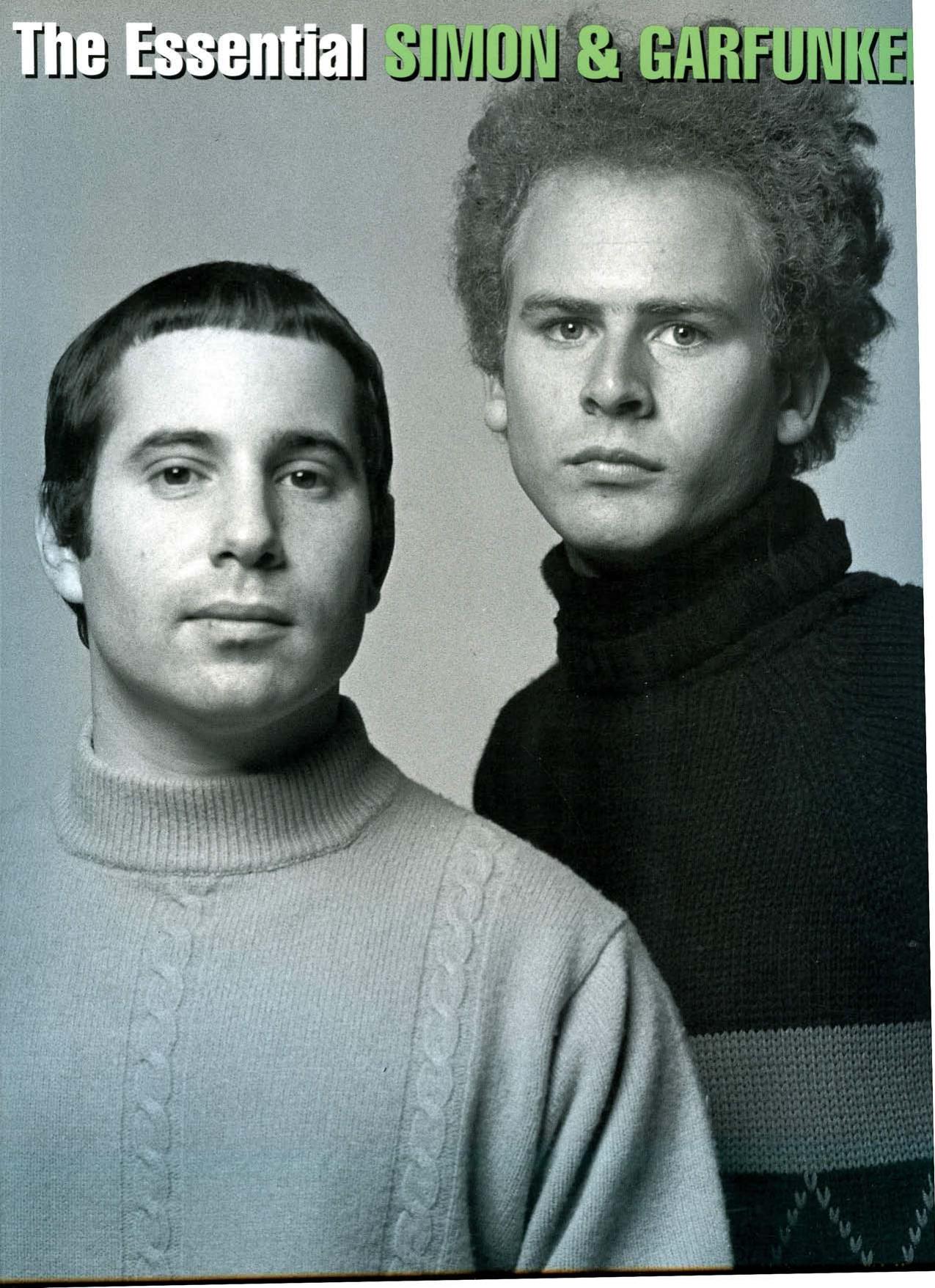
Born on November 5, 1941, in Forest Hills, Queens, New York, Arthur Ira “Art” Garfunkel is one of the most recognizable and beloved voices in the history of popular music. As one half of Simon & Garfunkel, he helped to craft the soundtrack of the 1960s, lending his ethereal, choirboy-like tenor to some of the most enduring songs ever written. Yet his legacy extends far beyond that iconic duo. Garfunkel has enjoyed a distinguished solo career, appeared in acclaimed films, published poetry and a memoir, and weathered profound personal and vocal challenges with remarkable resilience. On the occasion of his birthday, this article explores the full arc of his life and art: his biography, his singular musical style, his greatest recordings, his work in cinema, his collaborations, his influences and legacy, and the awards that have honored his contributions.


The best sheet music download from our Library.
For the price of a single songbook, get a full Sheet Music Library!
Early Life: The Voice Before the Fame
Art Garfunkel was born into a middle-class Jewish family in Forest Hills, Queens. His father, Jacob “Jack” Garfunkel, was a traveling salesman who had earlier worked as an actor; his mother, Rose (née Pearlman), was a homemaker. Art was the middle of three sons, with an older brother, Jules, and a younger brother, Jerome. His paternal grandparents had immigrated to the United States from Iași, Romania, and the family was of Romanian-Jewish descent. From a very young age, music was a central part of his life. He often sang in synagogue, and his love of singing began in the first grade, when he would linger in the stairwell to enjoy the echo of his own voice.
A crucial turning point came when his father brought home an early wire recorder. Garfunkel would spend hours singing into it, recording and playing back his performances to listen for flaws and improve. This early self-analysis instilled in him a lifelong commitment to vocal precision and beauty. At his bar mitzvah in 1954, he performed as a cantor, singing over four hours of repertoire for his family. His formal musical education was not limited to the synagogue; he also sang in school choirs and was a member of an all-male a cappella group, the Columbia Kingsmen, during his time at Columbia University, where he initially studied architecture before earning a BA in art history and later an MA in mathematics education.
Search your favorite sheet music in the Sheet Music Library Catalog
It was in the sixth grade at PS 164 that Garfunkel met Paul Simon. Both boys were cast in a school production of Alice in Wonderland, and their friendship was forged through a shared love of music. Garfunkel’s pure, high voice made a deep impression on Simon, who was inspired to learn guitar and begin writing songs. In their teens, they formed the duo Tom & Jerry, scoring a minor hit in 1957 with “Hey, Schoolgirl.” Though the pair temporarily parted ways during their college years, their destinies were already intertwined.
The Simon & Garfunkel Years: Harmony That Changed Pop
In 1963, the two friends reunited and began performing under their own names. Their debut album, Wednesday Morning, 3 A.M. (1964), was a commercial failure, and the duo briefly split. However, fate intervened when producer Tom Wilson overdubbed electric instruments onto the song “The Sound of Silence.” Re-released as a single, it shot to number one in 1965, launching one of the most celebrated careers in folk-rock history. Over the next five years, Simon & Garfunkel released a string of classic albums: Sounds of Silence, Parsley, Sage, Rosemary and Thyme, Bookends, and the monumental Bridge Over Troubled Water.
While Paul Simon was the primary songwriter, Garfunkel’s role was far from passive. He served as the duo’s vocal arranger, meticulously working out who would sing which part and how each song would be shaped. His contributions were instrumental in defining their signature sound. He is credited with writing the arrangement for “The Boxer,” creating the evocative audio montage “Voices of Old People” on Bookends, and writing the counter-melody poem “Canticle” for “Scarborough Fair/Canticle”. His soaring, ethereal tenor on songs like “Bridge Over Troubled Water” became the emotional centerpiece of the duo’s music, earning him recognition as the “Voice of Generations”.
The relationship between the two men was complex and often strained, and they split in 1970 at the height of their success. Yet the music they made together—songs like “Mrs. Robinson,” “The Boxer,” “Homeward Bound,” and “America”—remains a cornerstone of the American songbook.
Musical Style and the Art of Harmony
Art Garfunkel’s musical identity is inextricably linked to his extraordinary voice. Critics and fellow musicians have long described it as a “beautiful countertenor,” a “pure and beautiful tenor,” and an “airy, keening tenor” capable of taking a song to epic vocal heights. His vocal range allowed him to soar into a high register with a sweetness and clarity that was both otherworldly and deeply human. James Taylor, a friend and collaborator, noted that Garfunkel brought “sweetness and wonder to his classic harmonies with Paul Simon, a delicacy that defined those songs, and some of the hopes of the late Sixties”.
Garfunkel’s approach to harmony was meticulous and instinctive. He described his goal as “controlled beauty,” a standard he learned from listening to opera stars like Enrico Caruso. “I love a song with a high, pole-vault peak,” he explained, and that philosophy is evident in the dramatic, ascending melodies of “Bridge Over Troubled Water” and “All I Know”. His harmonies were not mere background support; they were integral to the emotional architecture of the songs. The interplay between Simon’s earthier, narrative-driven vocals and Garfunkel’s angelic upper register created a tension and a transcendence that became the duo’s trademark. In his solo work, that voice took center stage, often surrounded by lush, carefully arranged soft-rock productions that highlighted its unique timbre.
The fragility of that instrument became a poignant part of his story. In 2010, Garfunkel was diagnosed with vocal cord paresis, a condition that left one vocal cord stiffer than the other and caused him to temporarily lose his middle range. He was forced to stop singing for a period and faced the possibility that he might never perform again. Through gradual rehabilitation, he returned to the stage, his voice now bearing the marks of age and experience, yet still capable of reaching into his upper register with a haunting, husky beauty.
The Essential Songs and Compositions
The catalogue of songs associated with Art Garfunkel is remarkably rich. With Simon & Garfunkel, he gave voice to some of the most poetic and resonant songs of the 1960s. “The Sound of Silence” was the breakthrough, its haunting melody and Garfunkel’s crystalline delivery capturing the alienation of a generation. “Mrs. Robinson” became an anthem of youthful rebellion and romantic confusion, forever tied to the film The Graduate. “Scarborough Fair/Canticle” showcased the duo’s mastery of traditional folk forms, with Garfunkel’s counter-melody adding a layer of timeless mystery. “The Boxer” built to a soaring, emotionally cathartic chorus, while “Bridge Over Troubled Water” stands as perhaps the ultimate testament to Garfunkel’s vocal power—a gospel-inflected ballad that builds from a quiet piano introduction to a majestic, choir-like crescendo, earning the duo multiple Grammy Awards.
His solo career produced its own share of enduring classics. His debut solo album, Angel Clare (1973), featured the Jimmy Webb-penned “All I Know,” a top-ten hit that became a signature song. His second album, Breakaway (1975), was his most commercially successful, yielding a platinum record and a UK number one with his cover of “I Only Have Eyes for You.” The album also included the poignant “My Little Town,” a reunion with Paul Simon that became a top-ten hit. In 1978, he released “Bright Eyes,” the theme song for the animated film Watership Down. Written by Mike Batt, the song became a major hit in the UK, topping the charts and adding another beloved ballad to his repertoire. Other notable solo singles include “Second Avenue,” “Break Away,” and his affecting cover of Sam Cooke’s “(What a) Wonderful World,” which featured backing vocals from both Paul Simon and James Taylor.
Music in Films: Beyond the Soundtrack
Art Garfunkel’s music has always had a cinematic quality, and it is fitting that some of his most memorable contributions have been tied to the silver screen. The most famous example is, of course, The Graduate (1967). Director Mike Nichols used several Simon & Garfunkel songs to score the film, and the juxtaposition of their folk-rock melancholy with the story of Benjamin Braddock’s post-graduation ennui became a defining moment in film music history. Garfunkel’s voice is inseparable from the film’s identity, particularly in the iconic final scene set to “The Sound of Silence.” Interestingly, it was Garfunkel who first mentioned Simon’s early song sketches to Nichols, helping to initiate the collaboration.
His film work extended beyond the duo. In 1978, he performed the title song “Bright Eyes” for Watership Down, a song that became a massive hit in the UK and remains a cult favorite. In 1989, he contributed “We’ll Never Say Goodbye” to the soundtrack of the film Sing. He performed “Two Sleepy People” for Penny Marshall’s A League of Their Own (1992), and his rendition of “Always Look on the Bright Side of Life” appeared on the soundtrack of As Good as It Gets (1998). These contributions demonstrate his enduring appeal to filmmakers seeking a voice that can convey both innocence and profound emotion.
Collaborations: A Life in Duets and Concept Albums
While his partnership with Paul Simon is the defining collaboration of his career, Garfunkel has worked with a remarkable array of artists across genres. In 1975, he reunited with Simon for “My Little Town,” and the two would continue to reunite periodically for concerts, most notably the legendary Concert in Central Park in 1981, which drew over half a million people, and the “Old Friends” reunion tours of the early 2000s. Their relationship has been famously turbulent, but recent years have brought reports of emotional reconciliation and renewed friendship.
Beyond Simon, Garfunkel has collaborated with some of the biggest names in music. He contributed vocals to the Crosby, Stills, Nash & Young song “Daylight Again” in 1980. He sang a duet with James Taylor on “Crying in the Rain” and worked with Leah Kunkel on “I Have a Love” from West Side Story. In 1986, he took on the central role of “The Baker” in Mike Batt’s ambitious concept album “The Hunting of the Snark,” performing alongside Roger Daltrey, Cliff Richard, Julian Lennon, Deniece Williams, and Captain Sensible, with the London Symphony Orchestra. More recently, he collaborated with Maia Sharp and Buddy Mondlock on the 2002 album Everything Waits to Be Noticed, a project that showcased his continued willingness to explore new creative avenues.
Influences and Legacy: The Singer’s Singer
Art Garfunkel’s influences are as diverse as his own body of work. He has cited a wide range of artists who shaped his “breathy velvet style,” including Johnny Mathis, Joan Baez, Enrico Caruso, The Everly Brothers, Sam Cooke, The Hi-Lo’s, and Ricky Nelson. He also spoke of his admiration for Nat King Cole and Bing Crosby, whose ease of delivery he sought to emulate. The Everly Brothers were a particularly profound early influence, their close two-part harmonies serving as a template for the young duo of Tom & Jerry.
His legacy, however, is defined less by those who influenced him and more by those he influenced. Rolling Stone ranked him 86th on its list of the 100 Greatest Singers of All Time, and his peers speak of him with awe. James Taylor wrote, “He is a pure and beautiful tenor voice, and there really is no one like him”. His singing has been cited as an influence by artists such as Cat Stevens and James Taylor himself. More broadly, Simon & Garfunkel’s harmonious blend of folk, rock, and poetic lyricism had an immediate and lasting effect on the music that followed, touching everyone from Joni Mitchell and Crosby, Stills & Nash to Fleetwood Mac, and inspiring the indie folk revival of later decades through artists like The Shins and Fleet Foxes.
Garfunkel is often celebrated as the “Voice of Generations,” an architect of modern popular culture whose work helped to define the emotional landscape of the 1960s and beyond. His voice—clear, earnest, and capable of both delicate tenderness and soaring power—remains a benchmark for singers seeking to marry technical precision with emotional truth.
Awards and Honors: A Lifetime of Recognition
Art Garfunkel’s achievements have been recognized with the highest honors in the music industry. Through his solo and collaborative work, he has earned eight Grammy Awards, including a Lifetime Achievement Award. The awards are a testament to the enduring quality of his recordings.
His Grammy wins include the 1971 Album of the Year for Bridge Over Troubled Water, as well as Record of the Year, Song of the Year, and Best Arrangement Accompanying Vocalist(s) for the title track. He also won Record of the Year in 1969 for “Mrs. Robinson” and a Grammy for Best Original Score Written for a Motion Picture for The Graduate. Several of his recordings have been inducted into the Grammy Hall of Fame, including “The Sound of Silence” (2004), “Mrs. Robinson” (1999), Parsley, Sage, Rosemary and Thyme (1999), and “Bridge Over Troubled Water” (1998).
In 1990, Garfunkel and Paul Simon were inducted into the Rock and Roll Hall of Fame, cementing their place in music history. They were also inducted into the Vocal Group Hall of Fame in 2006. Garfunkel received a Golden Globe nomination for his acting performance in Carnal Knowledge (1971), and in 2015, he was honored with the German Sustainability Award for his commitment to environmental causes. In 2008, he was ranked 86th on Rolling Stone’s list of the 100 Greatest Singers of All Time, a fitting tribute to a voice that has touched millions.
Later Life, Poetry, and the Enduring Voice
In recent years, Art Garfunkel has continued to perform, tour, and create, even as he has navigated the challenges of aging and vocal recovery. His 2017 autobiography, “What Is It All but Luminous: Notes from an Underground Man,” offered a candid and poetic look at his life, his friendship with Paul Simon, and his artistic journey. He has also published poetry, and his intellectual curiosity—which once led him to pursue a doctorate in mathematics education—remains a defining part of his character.
He has spoken openly about the depression he experienced after the death of his girlfriend Laurie Bird in 1979, and about the fear and frustration of his vocal cord paresis. Yet his return to the stage has been a testament to his resilience and his deep love for singing. Though his voice may no longer possess the flawless, ethereal purity of its youth, it carries the weight and wisdom of a life fully lived. As one critic noted after a 2017 performance, even in its “ravaged yet ravishing” state, his voice can still “conjure up worlds of song”.
Art Garfunkel’s story is one of extraordinary talent, complex partnerships, and enduring artistry. He was the voice that gave flight to Paul Simon’s words, the harmony that made the melodies soar, and a solo artist who carried that singular sound into new territories. As he celebrates another birthday, his legacy is secure: he is, and will remain, one of the most distinctive and beloved voices in the history of popular music.
Browse in the Sheet Music Library:
Or browse in the categories menus & download the Library Catalog PDF: