Scores for all instruments: 16,000+ (active and growing), over 236,000 pages.
All genres and levels: Jazz & Blues, Rock & Pop, Classical & Contemporary, Film & Musicals;
books & biographies; methods, études, play-along tracks (MP3) for Jazz & Rock.
Access & benefits: US$15.99 one-time payment, valid for lifetime, full Library access.
Table of Contents
The Life and Music of Astor Piazzolla
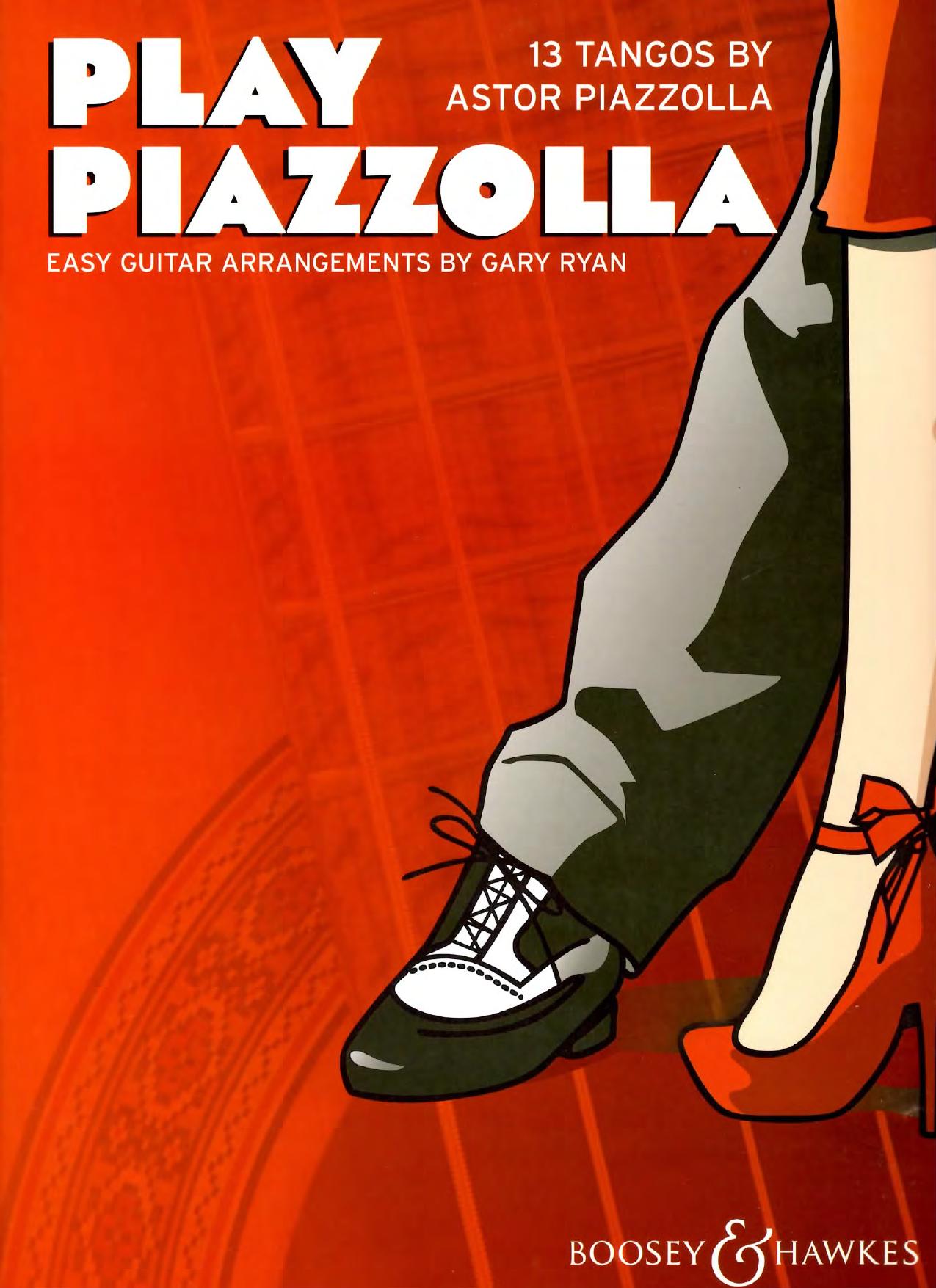
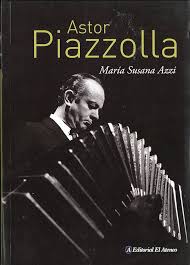

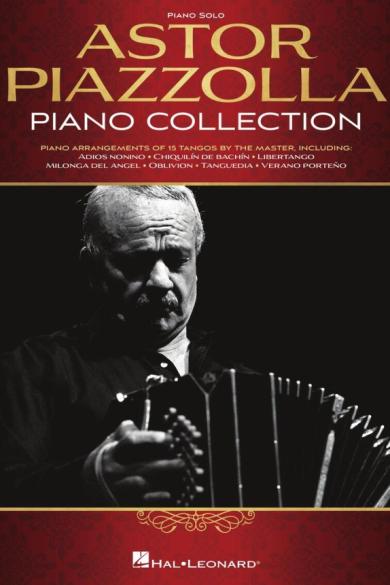
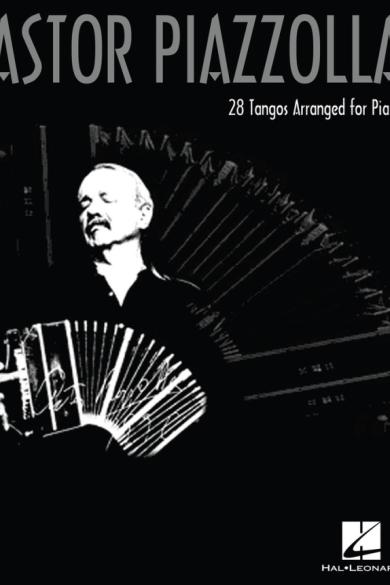
The best sheet music download from our Library.
The tango is a complex popular genre that involves dance, music, poetry, philosophy, narrative and drama. It also joins African, American and European cultural and aesthetic elements. The study of the tango offers a key to understanding the melting pot that formed Argentine society. Between 1821 and 1932, Argentina was the world’s second largest recipient of immigration (the USA being first and Canada third). The tango would become the national music of Argentina, a metaphor for diverse sonorities and plural voices, and the expression of a profound emotional repertoire.
Please, subscribe to our Sheet Music Library. Sheet music should be accessible and affordable for all musicians, from professionals to absolute beginners.
During the nineteenth century, many leading composers introduced nationalist elements in their music, in part as a reaction to the dominance of German music. Mikhail I. Glinka’s A Life for the Tsar (1836) began a Russian nationalist movement in music, which was sustained by Mussorgsky, Balakirev, Rimsky-Korsakov, and Prokofiev. The compositions of Lizst expressed the Hungarian spirit, which Bartók and Kodály later intensified. Smetana, Dvorák, and Janácek used Bohemian melodies and rhythms. Norway had Grieg; Finland, Sibelius; and Spain had Falla, Albéniz, and Granados. By the twentieth century, England had Holst and Vaughan Williams; the USA had Copland, Gershwin, Ives, and Bernstein; Brazil had Villa-Lobos; and Argentina had Ginastera and Piazzolla.
Astor Piazzolla (1921-92) was a classically trained composer of modern tangos, whose music reflected and inspired the deepest of feelings. He often said he had three teachers: Alberto Ginastera, Nadia Boulanger and Buenos Aires. Although Piazzolla retained the tango’s essential spirit, he wrote tangos for listeners, and he introduced dissonance, chromatic harmony and a wider range of rhythms. His music, too complex for most conservative tangueros, was strongly resisted by the purists. The story goes that in the 1950s, when Piazzolla was conducting a symphony, a musician in the orchestra remarked, “I assume you have nothing to do with this Piazzolla who plays tangos?”
Search your favorite sheet music in the Sheet Music Library Catalog
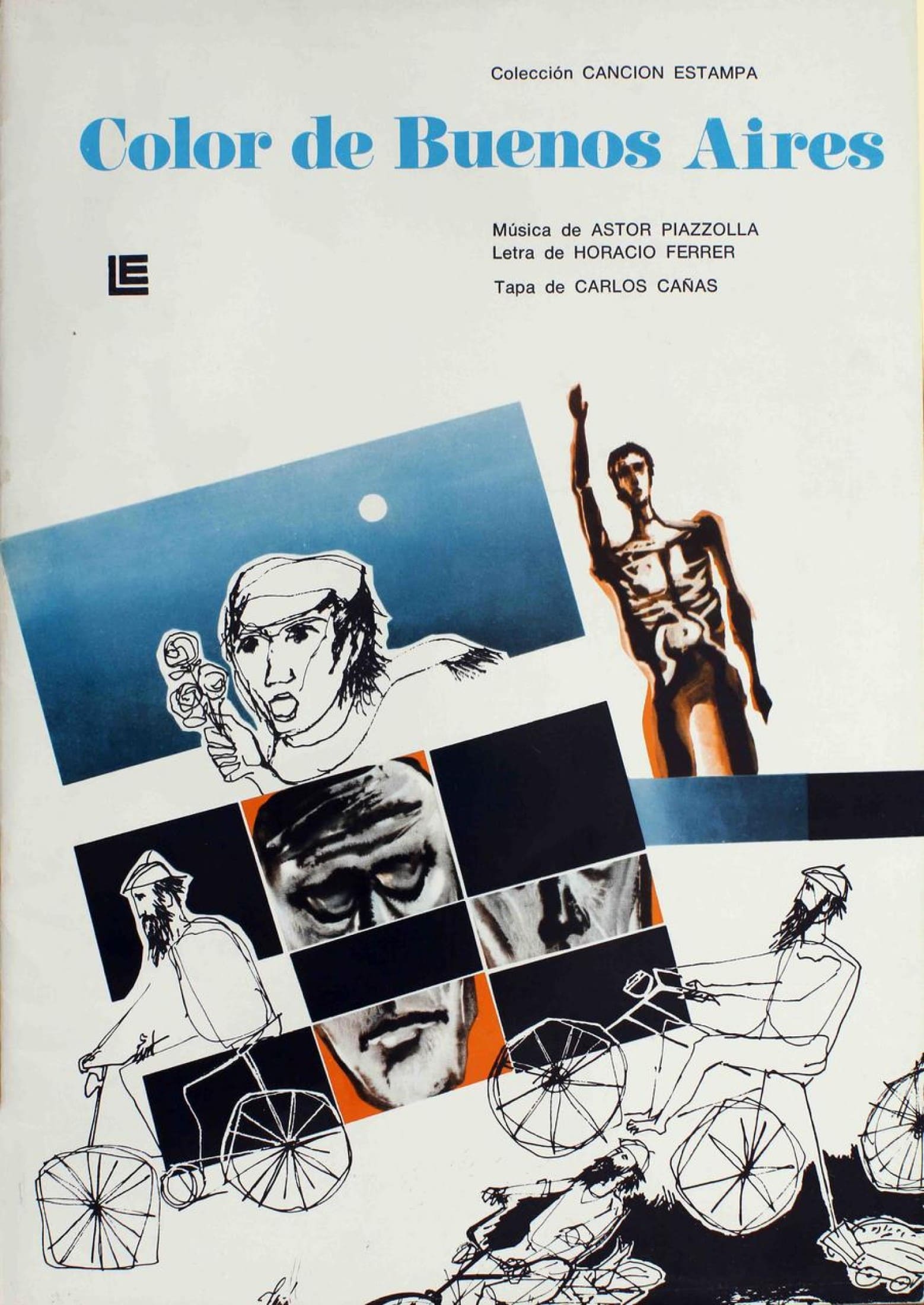
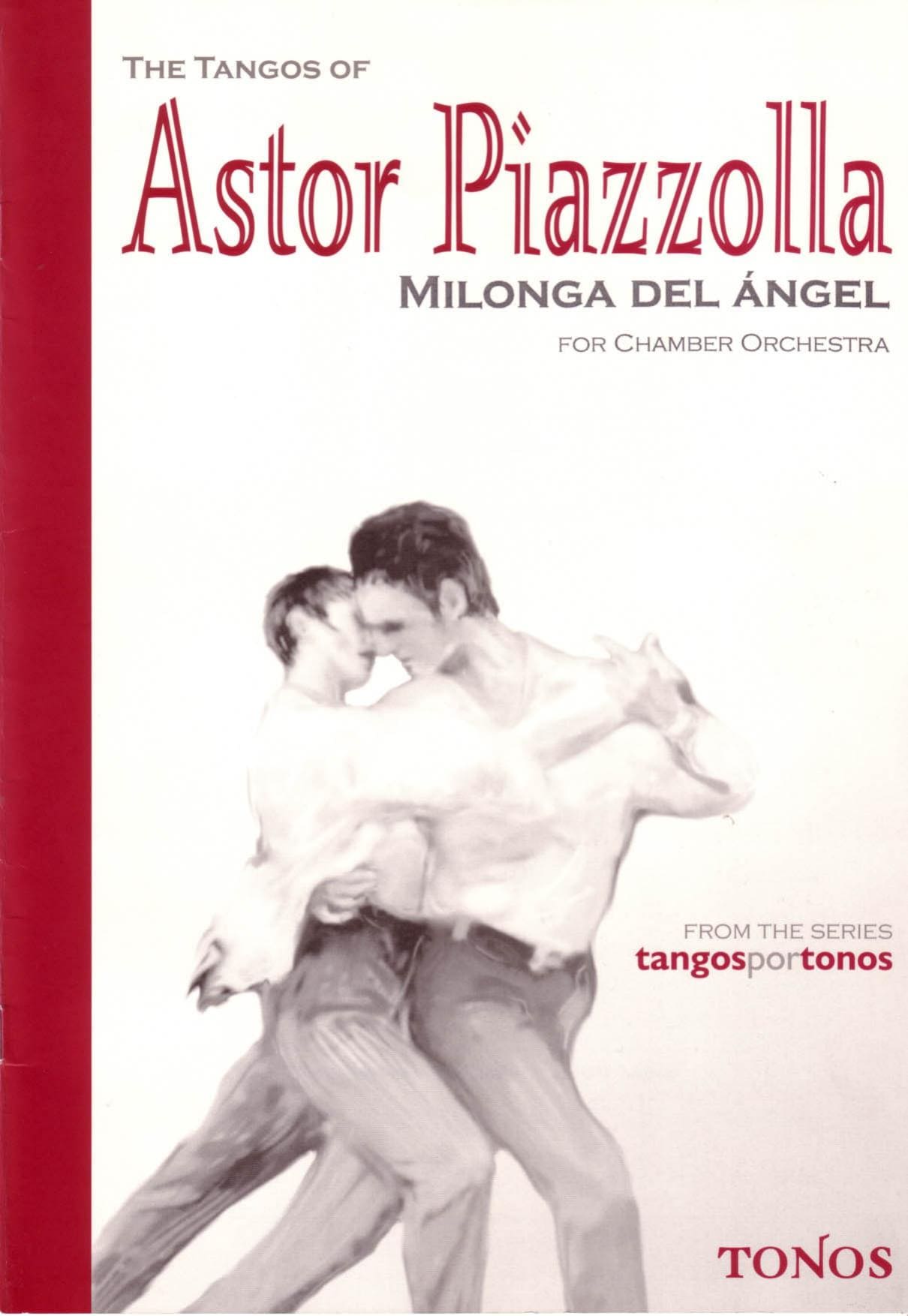

Nevertheless, the audience for Piazzolla’s work is wide, and includes classical music lovers, jazz fans, and even rock musicians. His compositions combine elements from jazz, the tango, and classical music, particularly Bartók and Stravinsky. Piazzolla achieved a rare symbiosis between composed and improvised elements, which gives his music distinct individuality and appeal. Paquito D’Rivera described Piazzolla’s music as a “vehicle to fuse Latin music with jazz,” and likened it to the “bebop” style invented by Dizzie Gillespie, Charlie Parker and Thelonious Monk.
Although bebop was solidly grounded in earlier jazz styles, it was considered revolutionary. Piazzolla’s “new tango” was in tune with a new Argentina, which had different issues and sonorities. During Piazzolla’s lifetime, Buenos Aires changed dramatically, from a pequeña aldea to a modern metropolis within a global village. My recent book, Le Grand Tango, is the first full-scale biography of Astor Piazzolla. It is based on four years of research and over two hundred interviews—with his fellow musicians, family members, friends and other associates.
Piazzolla was an Argentine and a cosmopolitan, who felt at home in New York, Paris, Milan, Rome, Buenos Aires, and Punta del Este. Writing this book was a four-year adventure, during which I traveled to Europe, North America and Uruguay. Astor Piazzolla himself recorded more than eight hundred pieces, one fourth of his total production, and I had the extraordinary opportunity to hear all of his recorded music. Piazzolla is recognized by the SACEM (Societé des Auteurs, Compositeurs et Éditeurs de la Musique, in Paris) as an unusually prolific composer. Astor Piazzolla was born in Mar del Plata, Argentina, of Italian stock in 1921. His grandparents had immigrated from the north and south of Italy: from Lucca in Tuscany, and Trani in the Puglia region. Astor’s parents, Vicente Piazzolla and Asunta Manetti, were Argentines, but they moved the family to New York when he was four.
Consequently, Astor grew up on the Lower East Side, and he learned the tango from listening to his father’s records of Carlos Gardel and Julio De Caro. Astor’s father played accordion and guitar; he occasionally performed in Italian festivals, and composed at least one tango. When Astor was eight, his father bought him a second- hand bandoneon. As he told the story, an uncle, Octavio Manetti, was visiting New York when they saw the squeezebox in a shop window, on sale for $18. When the bandoneon was presented to him, Astor remembers, he gazed at it a long time before daring to press the buttons.
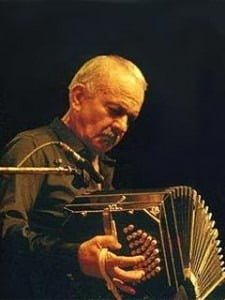
The bandoneon is a large, square-ended type of German concertina, best known for its role in tango orchestras. Instead of keyboards, it has buttons: 38 buttons for the right hand and 33 for the left. Each button can produce two notes, through inflating or deflating the squeezebox. While the accordion is an extroverted instrument, the bandoneon is introverted. It has a grave sonority that seems to express nostalgia and melancholy, emotions typical of immigrants to Argentina in the early twentieth century. It is hard to imagine a tango concert without a bandoneon: it is the quintessential tango instrument. During the Depression, the Piazzollas returned to Mar del Plata for a few months. Astor took some bandoneon lessons with the Pauloni brothers, learning basic techniques, as well as yeites tangueros (tricks of 2 playing).
On return to New York, Piazzolla and a friend began making frequent visits to Harlem to listen to Cab Calloway and Duke Ellington. Years later, he recalled how they would stand outside the Cotton Club to hear Calloway performing. By this time, Astor was studying music with an Argentine pianist, Andrés D’Aquila, and a few months later, with Terig Tucci, a bandoneonist and arranger. His father sent him to a harmonica academy, and Astor played the bandoneon in public several times. Béla Wilda, a pupil of Sergei Rachmaninoff, happened to live near the Piazzolla family. Once Astor got to know her, he listened to her playing Bach for hours. After this, he learned to play Bach and Chopin on the bandoneon.
There were many other influences in Astor’s musical development. As a boy, he was paid $25 to play a newspaper vendor in the film “El día que me quieras” (1935), which starred the famous tango singer Carlos Gardel. Years later, Piazzolla said, “Everything gets under your skin! My rhythm accents are even like the Jewish popular music I heard at weddings.”5 The 3-3-2 rhythmic arrangement is heard in klezmer music. This pattern resembles the 3-3-2 accents—with emphasis on the first, fourth and seventh eighth notes in a 4/4 bar—that derive from the milonga and the habanera, which gave rise to the tango. The Piazzollas finally returned to Mar del Plata in 1937, when Astor was sixteen. There he heard hours of tango music on the radio, mainly the bands conducted by Julio De Caro, Osvaldo Pugliese, Pedro Maffia, Pedro Laurenz, Elvino Vardaro, Miguel Caló, Alfredo Gobbi, and Ciriaco Ortiz.
These musicians had created new arrangements for traditional tango melodies, adding sophisticated harmony and counterpoint. Astor continued piano studies in Mar del Plata until he was eighteen, and then moved to Buenos Aires, becoming a bandoneonist for several tango bands. Every night he would go to the Café Germinal to listen to Aníbal “Pichuco” Troilo. One night Troilo was looking for a new bandoneonist, and asked him to audition. Piazzolla performed Gershwin’s Rhapsody in Blue, and was hired on the spot. Piazzolla worked with Troilo as a bandoneonist and arranger for six years, from 1939 through 1944.
They sometimes disagreed; Troilo preferred simplicity and danceable music, and Piazzolla was always trying to incorporate intricate arrangements. Troilo would tell him flatly, “No, my boy, that isn’t tango.” Although Troilo’s disapproval hurt him, Astor continued to play as he wished. Even in playing style, they differed: Troilo sat and held the bandoneon in the traditional manner, but Piazzolla stood and balanced the instrument on his leg. In 1942, Piazzolla married Odette (Dedé) Wolff. Two children were born— Diana Irene in 1943 and Daniel Hugo in 1945. Their young family led a happy, tranquil life in Buenos Aires. Piazzolla and the “three Ds” (Dedé, Diana and Daniel) enjoyed excursions to cinemas and restaurants. The children soon learned to respect their father’s need for silence while he composed at home.
In 1946, Piazzolla formed his first band. It should be mentioned that although he played in many nightspots, Piazzolla never lost his distaste for them. He resisted the lifestyle of his peer group, many of whom lived with women who frequented the cabarets. Piazzolla was not tempted by cabaret-girls, and his father had instilled in him a horror of venereal disease. Indeed, Piazzolla had become an intensely dedicated and disciplined musician. Sometimes after playing with Troilo at the Tibidabo until four in the morning, he would attend rehearsals three hours later with the Orquesta Filarmónica at the Colón Opera House.
Astor Piazzolla earnestly wanted to master classical composition. When Arthur Rubinstein was visiting Buenos Aires in 1940, Astor rang his doorbell and presented him with one of his scores. Rubinstein suggested that he study with Alberto Ginastera, a leading Argentine composer who was, in fact, Piazzolla’s contemporary. Piazzolla became Ginastera’s first pupil, taking lessons very early in the morning. Ginastera directed Astor to analyze scores by Stravinsky and Bartók. Bartók had systematically explored Hungarian peasant music, but created a universal music that reflected the influences of Liszt, Strauss, Debussy, and Stravinsky.
Argentina underwent radical political change after the election of populist Juan Domingo Perón, who served as president from 1946 to 1955. A number of tango artists openly supported Perón, but conductors who refused to join the Peronist party were banned from giving radio performances. Although Piazzolla’s band continued to perform in the city and suburbs, he dissolved it in mid-1949, almost certainly due to political pressure.9 Perón’s government not only broke with traditional labor politics and social practices, but it even promoted new styles of entertainment and nightlife.
The government took control of radio broadcasts in 1946, and from 1951, television broadcasting as well. For the first time in Argentina, workers literally took over urban public space. Public demonstrations often turned into festivals, with masses of people dancing and drinking in the streets. Among crowds of dancing couples, the steps of the tango became shorter and the music louder. Perón, aware of the tango’s popularity, liked to be photographed in the company of musicians and to attend an occasional tango festival. Argentina’s economy was slowly decaying, but few seemed to worry as long as there was money to spend. In some ways “Peronism” contributed to the popularization of the tango; there is certainly a historical juxtaposition. Argentina became closed to the world, and yet its popular culture flourished. Perón was authoritarian, a manipulator, a gattopardo, whose regime broke with traditions of every kind. Perón’s policies brought radical change that affected everything in Argentina, including the performing arts.
The old Argentine economy had been based on agricultural exports. To incorporate the working class and internal migrants into the political system, Argentina needed to industrialize. Perón’s totalitarian regime introduced the compre nacional, a policy of favoring Argentine products, with a subsequent ban on imports. In August 1953, número vivo (live performance) was made obligatory in every cinema. The national film industry was promoted. A regulation was passed that—of any performing group (larger than a trio) had to be Argentines. Likewise, 75% of the artists heard on the radio had to be Argentine. Another regulation restricted the amount of recorded music on broadcasts to only 30%, which created more jobs for Argentine performers and limited the business of recording companies.
Piazzolla’s music was well received in a populist era, even though he was an admitted anti-Peronist. The 1940s became the golden decade of the tango, and Piazzolla was its revolutionary. By the early 1950s, Piazzolla had written several classical works. He stopped playing the bandoneon for a few years, and devoted himself to writing film music.
In 1953, a German conductor and violist, Hermann Scherchen, visited Buenos Aires. Scherchen had founded the Berlin Society for New Music in 1918, and was an ardent champion of twentieth century music, especially that of Schoenberg and Webern. Piazzolla took some lessons in orchestration from him. Soon after, Piazzolla competed for the Fabien Sevitsky Prize and won a one-year scholarship to study with Nadia Boulanger in Paris. At the same time, his wife Dedé won an award to study with André Lohte, an influential teacher and critic of modern art who founded the Académie Montparnasse. Thus the family moved to Paris in 1954. To study with Nadia Boulanger was an extraordinary opportunity for Piazzolla. Her students included composers such as Copland, Harris, Thomson, Carter, Quincy Jones, Berkeley and Piston. (A large collection of her correspondence with students is preser ved at the Bibliothèque Nationale in Paris.)
However, Boulanger soon told Piazzolla that his music was “well written, but lacked feeling”—a verdict she handed out to most pupils. This disheartened Piazzolla greatly, and for a while he walked the streets and poured out his woes to friends. Boulanger soon forced him out of his malaise by asking about the music he played in Argentina. When Piazzolla reluctantly mentioned the tango, she exclaimed, “I love that music! But you don’t play the piano to perform tangos. What instrument do you play?” Piazzolla reluctantly told her he played the bandoneon. Boulanger reassured him that she had heard the instrument in music by Kurt Weill, and Stravinsky himself appreciated its qualities. Then she persuaded Piazzolla to play one of his tangos on the piano, and he chose “Triunfal.” At the eighth bar, Boulanger took him by the hands and told him firmly, “This is Piazzolla! Don’t ever leave it!”
Piazzolla recorded his new tangos with a string orchestra drawn from the Paris Opera. The Argentine jazz pianist Lalo Schifrin also featured in the group, but he soon had to go on tour, and was replaced by Martial Solal, the greatest European jazz pianist. In Paris, Piazzolla heard, among other bands, Gerry Mulligan and his ensemble. A baritone saxophonist and arranger, Mulligan is among the most versatile figures in modern jazz. What Piazzolla recalled was “the happiness onstage. It was like a party: the sax played, the drums played, the whole thing passed to the trombone; they were happy.” “Swing” was a word Piazzolla used to mean rhythmic consciousness.
“Those who don’t know what swing means to music, cannot perform,” he would say. The New Grove Dictionary of Jazz explains swing as follows: [A]lthough basic to the perception and performance of jazz, swing has resisted concise definition or description. Most attempts at such refer to it as primarily a rhythmic phenomenon, resulting from the conflict between a fixed pulse and the wide variety of actual durations and accents that a jazz performer plays against the pulse. Clearly other proper-ties are also involved, of which one is probably the forward propulsion imparted to each note by a jazz player through manipulation of timbre, attack, vibrato, intonation, or other means; this combines with the proper rhythmic placement of each note to produce swing in a great variety of ways.
To free the tango from its traditional patterns, Piazzolla began to use novel tonecolors and rhythms, as well as dissonant harmonies to give the music more nuances. The classical tango sextet consisted of two bandoneons, two violins, double bass and piano. Piazzolla enlarged it with a cello and an electric guitar, and in 1955, he founded the Octeto Buenos Aires. Never before had a tango ensemble incorporated an electric guitar. The electric guitarist was Horacio Malvicino, who recalls that he even received death threats. In 1957, after hearing Bartók’s Second Violin Concerto, Piazzolla composed Tres Minutos con la Realidad, which is somewhat reminiscent of Stravinsky’s Rite of Spring. “The overriding feature of Stravinsky from first to last is rhythm… from the primitive (Les Noces) to the sophisticated (Rite of Spring)… [rhythm] is the mainspring of his work.” In September 1955, Perón had finally been ousted from power and efforts began to “deperonize” Argentina.
This led to drastic changes in broadcasting and the performing arts. Buenos Aires in the late 1950s was not an ideal setting for Piazzolla to create and disseminate his music. Disheartened, he left for New York in early 1958. A few months later, Dedé, Daniel and Diana followed him. They lived at 202 West 92nd Street. Several New York agents and publishers liked the music Piazzolla showed them. They suggested tailoring it to American taste, and an LP was planned.
While living in New York, Piazzolla was able to meet and work with outstanding popular musicians like Tommy Dorsey, Glenn Miller, Ray Noble, and Paul Whiteman. Johnny Richards, a pioneer of progressive jazz, asked to hear his records. Piazzolla visited Birdland on Broadway several times. An admirer of cool jazz, he felt identified with this movement.
In Argentina, traditional tangueros perceived his music as emotionally cool, although this is far from true. Drama, passion, melancholy, and nostalgia are always present in Piazzolla’s music. He particularly admired Stan Getz, Miles Davis, Stan Kenton, Gil Evans, the Modern Jazz Quartet, George Shearing and Dave Brubeck. In cool jazz, improvised counterpoint underwent a revival. Piazzolla incorporated these resources in his music; his musicians also had some freedom to improvise, which has been quite unusual in traditional tango.
On one occasion, Piazzolla attended a reception for Victoria Ocampo, the grande dame of Argentine letters, at the Metropolitan Club in New York. Igor Stravinsky was among her friends. When a frail-looking Stravinsky entered the hall, Piazzolla remembered that “it was like looking at God.” When finally introduced, he managed to stammer, “Maestro, I am a long-distance pupil of yours,” and Stravinsky gave him a warm handshake. In late 1959, Piazzolla learned that his father had died in Argentina. After attending the funeral and returning to New York, he went into complete isolation and composed Adiós Nonino, which became his bestknown work. Piazzolla eventually wrote at least twenty arrangements of this piece. His favorites were those written for his Nonet, an electronic group of the mid-1970s, and for his second Quintet.
On returning to Buenos Aires in 1960, Piazzolla started the Quinteto Nuevo Tango, consisting of bandoneon, piano, violin, guitar and double bass.
His most productive period was the 1960s, when he also developed new forms. During this decade, Piazzolla’s music began to attract worldwide attention for its distinctive qualities. The compositions were a combination of contrapuntal voices and instruments, each of significance in itself, resulting in a coherent texture. Bach, the greatest master of polyphonic music, was perhaps Piazzolla’s greatest model. Piazzolla composed for his soloists, a community of musicians, as well as for audiences. But in the end, he composed and performed primarily for himself. Several explosive confrontations with the press brought Piazzolla considerable notoriety during these years, and his private life was in turmoil. Finally, in February of 1966, Piazzolla left Dedé and the children. The rupture of his marriage took family and friends by surprise.
Astor Piazzolla did not fully recover his emotional stability for at least ten years. The “Club 676” made its mark in Buenos Aires. Piazzolla and his Quintet played every night. It became a lively meeting-place for Argentine musicians and foreign visitors. Among them were the Israel Chamber Orchestra, the Philadelphia Symphony, the Vegh Quartet, the Modern Jazz Quartet, Tommy Dorsey and his band, and Brazilian stars like Mayssa Matarazzo, João Gilberto, and Os Cariocas. The Stan Getz Quartet played at “676” in September 1965. During the evening Getz asked a young vibraphonist, Gary Burton, to play My Funny Valentine as a solo. Piazzolla marveled at Burton’s original style of improvisation, which is quite distinct from other vibraphone players, reminiscent of both country music and Latin styles.
Burton also recalled listening to the Quintet: “Hearing Astor’s group was an amazing experience... Most national music remains fairly simple, with the exception of jazz and tango. I bought four or five of his records in Argentina, because you couldn’t find them in America. For twenty years, I remained a fan. We met again when he came to see me play with Chick Corea in Paris, in 1982. He just walked up after the concert and said, Hello. Do you remember me? And I told him I’d been listening to his records all these years. And he said, Would you be interested in doing a project together? And I said I would love to, any time. But I didn’t hear from him after that for about two years. He was very excited and energetic, and later I discovered he was like that a lot of the time. He’d already written all the music.
He said, When I flew home, I was all excited, I could just hear the music. I went ahead, I couldn’t stop, I just had to do it. He had written the whole concert. Without having a chance to talk about it. That scared me. So I was expecting a long rehearsal, a couple of days, to really get this music. And the first day, we rehearsed for about two hours, and suddenly, he said, Well, it’s enough for today, let’s go eat. And the next day was the first concert. I was amazed that we got through all the music without getting lost, or having a problem. But we did. To me, he was warm and wonderful, he loved my playing and he constantly complimented me and made me feel good about everything. There is a certain quality about very major, independent musicians, a certain kind of charisma. Astor had it. With Astor, I learned a sense of drama. The tango has this wonderful constant changing of mood. It goes fast, then slow; it’s powerful, then subtle – it’s very dramatic.”
In 1967, Piazzolla began a collaboration with the talented poet Horacio Ferrer. Their first major work, a short opera, was María de Buenos Aires. The premiere performance starred the singer Amelita Baltar, who became Piazzolla’s companion for the next seven years. In 1969 they scored an amazing hit with the song Balada para un loco (Ballad for a Madman), which became popular throughout Latin America. This song had nothing in common with the traditional tango song, in theme, style, rhyme or rhythm. Its surreal, witty and very contemporary lyrics tell a story of unusual length. This was so far from the traditional model that it drew a line forever between the pre-Piazzolla and the post-Piazzolla tango. Even today, traditional tangueros dislike this song intensely. When it was premiered at Luna Park, the audience threw coins disapprovingly at the singer. Four days later, however, 200,000 records had been sold. Piazzolla and Ferrer collaborated on several other modern classics.
In 1972-73, Piazzolla signed a contract with the Municipality of Buenos Aires to form a Nonet, which was among the best of his groups, only rivaled by the first and second Quintets. In 1974, Piazzolla explored jazz fusion with Gerry Mulligan, recording Reunión Cumbre (Summit Meeting), one of his most successful albums. “Gerry used to laugh in disbelief when the royalty checks came each year,” recalled his wife Franca.
During the 1970s, most instruments in popular music were highly amplified, and their sounds often modified electronically. The Fender-Rhodes electric piano was introduced, and the electric bass guitar replaced the traditional double bass.
Piazzolla was influenced by jazz-rock, particularly by Chick Corea’s Return to Forever rock band, in which Corea played synthesizers and various electronic gadgets and pedals. Piazzolla created an Electronic Octet, which did not last long; his European audience preferred the acoustic sounds of his previous ensembles. In 1976, Piazzolla’s Octet gave a concert at Carnegie Hall sponsored by the Argentine Embassy. But he continued performing more in Europe and Latin America than in the USA. In 1976, on the day he became 55 years old, Piazzolla met the attractive Laura Escalada, and they remained together for the rest of his life.
In 1978, he went back to his most successful format and established the Second Quintet: bandoneon, violin, double bass, electric guitar and piano. Piazzolla was ready to embark on countless international tours, in Europe, Japan, and the Americas. He won international acclaim, and started to make money for the first time in his life. He composed music for several European filmmakers: Jeanne Moreau, Alain Delon, Nadine Trintignant, Marco Bellocchio, and Helvio Soto. He collaborated with the Soviet dancers Vladimir Vassiliev and Ekaterina Maximova; Vassiliev had asked his permission to use Adiós Nonino in a film he wished to make of a Somerset Maugham short story. And he wrote chamber and symphonic music.
Paul Badde gives us a beautiful description of Piazzolla onstage: “He has become one with his instrument.... And so, he continues to hold on to it in a double-fisted grip, as if grasping the horns of a bull, digs deep into the music, slams on both sides of the bandoneon in spite of its protestations, pulls it apart abruptly, pushing, pressing and oppressing it, hangs on to the keys like a race car driver navigating a hairpin bend, then lets single notes glide down his shin—while deftly turning a page with his left hand—then catches them at the bottom and pulls them to the top with him. He sighs, breathes, whispers, cries and thinks with the thing, rests in its melodies, dreams himself into it, makes the bellows tremble by tapping the beat on the black wood, and then looking down at it all of a sudden in surprise, as if he was holding a screaming, roaring, irrepressible life form in his hands.... He dances with the instrument, rides it standing still, and finally jumps up high in the air like a kicking pony let loose in the springtime. Triumphantly, he pulls apart the bandoneon three feet above his head, like a brilliant magician showing off his last card, like a victorious Laocoön pulling off another defeat of the dragon.... Piazzolla really has no choice: he must play.”
In the ‘80s, Piazzolla and Laura bought a house at Punta del Este, Uruguay, where they could spend the summer. Piazzolla composed on the piano, and he reveled in the tranquil atmosphere of a resort that reminded him of the Mar del Plata of his youth. Piazzolla was intense as a musician, and just as intense was his outdoor life. Now that he had a chance to fish for shark, he found that it answered a deep existential need. “All the rage I have inside—I take my revenge on a shark.” He loved barbecues and intimate dinners with friends. Released from the pressure of hectic world tours, he bicycled, shopped at the supermarket, and enjoyed Laura’s company. In 1984 and 1985 Piazzolla had an extraordinary collaboration with Milva, a great Italian singer, who could convey the drama of his tangos.
Milva remembers Piazzolla as “very serious, very professional,” and one who gave her a “musical richness that will remain with me all my life.” In 1986, his Quintet performed at several jazz festivals - Ravenna, Nice, Pescara, and Montreux. Piazzolla was now constantly rubbing shoulders with jazz musicians he admired, like Miles Davis, Lionel Hampton, Pat Metheny, Michel Petrucciani and Jim Hall. The Quintet and Gary Burton leapt across the globe to Japan. At the Sapporo jazz festival, the highly talented guitarist Al Di Meola met Piazzolla. “Astor and I developed a relationship as friends and mutual admirers, one that I’ll always treasure,” says Di Meola.
In 1987, Piazzolla and the Quintet performed before an audience of 4,000 people in Central Park. Reviews were eulogistic. Gil Evans later told him it was “one of the most incredible concerts of my life.” A few days later Piazzolla was at Princeton University to record his Bandoneon Concerto with the St. Luke’s Orchestra, conducted by his old friend Lalo Schifrin. That same year, Piazzolla attended a concert of the Kronos Quartet, and went backstage to compliment the musicians. “I asked him if I could call him in a few days,” recalls David Harrington, founder of Kronos. “I did call him in a few days. By then he had finished Four for Tango, and he said: ‘shall I send it to you?’” The Kronos Quartet decided to include it on their next album, Winter Was Hard, recorded in November 1987.26 Piazzolla’s health deteriorated, and he cancelled his quintet. In 1988, he had quadruple bypass surgery, performed by the ambidextrous Dr. Fernández Aramburu. The operation took about three and a half hours, and three weeks later he was given a clean bill of health.
In 1989, he established a sextet, with two bandoneons, piano, double bass, guitar, and cello. Piazzolla looked tired, and he tired easily. But as always, he had plans. He was thinking of future tours and concerts. He had to write a piece Mstislav Rostropovich had commissioned. When they met, Piazzolla asked if he could add a bandoneon to the planned cello-piano-guitar-percussion line-up. “If you play it yourself, certainly,” replied Rostropovich. Piazzolla and Laura were in Paris, getting ready to attend the Sunday mass at Notre Dame, when he had a cerebral hemorrhage. It was August 5, 1990. Laura and his children, Daniel and Diana, agreed that Astor should return to Argentina.
A twentythree month ordeal followed, until his death in Buenos Aires on July 4, 1992. Piazzolla’s international reputation has climbed during the years since his death. His music has been played and recorded by a wide variety of groups, including the Kronos Quartet, the Assad brothers, and the G-String Quartet. Piazzolla albums have been made by jazz giants like Al Di Meola and Gary Burton, and by classical artists like Rostropovich, Daniel Barenboim, Emanuel Ax, Yo-Yo Ma, Gidon Kremer, and the cellists of the Berlin Philharmonic Orchestra. Pablo Ziegler was Piazzolla’s pianist in the second Quintet (1978-88). He has written about the character of the tango: “Tango is the music that represents us, and it is also humor, play, dance, roguishness. It is our canyengue (street language), equivalent to swing plus slang. Defying and exhibitionist, the authentic tango expresses mugre (filth) and roña (fight).
It is provocation, sensuality, ease, and a quarrelsome temper. The dialect of a porteño is boastful and humorous. A compadrito (young hoodlum of the slums) is a daring man. Coming from the marginal origins of tango dancing, the mugre and the canyengue turned into music. They became a note, an inflexion, a challenge and a provocation. No matter the context, tango must express camorra (provocation), which is how its roots are preserved.
Piazzolla has very sophisticated compositions, and at the same time, they are mugrosas. Such mugre can be felt, in spite of the intricacy with which those tangos were written or whether the language was contemporary, impressionist or expressionist. Tango has always been related with fighting, with roña, with guys breaking the law.
One plays this music on the borderline between tango and chamber music. This is perceived through the accents and the manner in which it is played. Piazzolla took this music toward more refined levels, keeping a hard-hitting, provocative edge. Whether it is transformed strictly into chamber music or reminiscence, you can hear something more solemn and distant. Astor’s music is erudite like European music, with the addition of all those elements that constitute the essence of tango. Those borderline guys started tango in the suburbs. During the day, wearing alpargatas (footwear of the poor), they worked delivering charcoal or milk. At night they disguised themselves to go dancing. They put on cross-buttoned suits, slouch hats and booted shoes. The funny way of walking comes from there, as if their feet were hurting. It was an artificial posture: ‘Look at me, here I am.’ A caricature mimicking a wellto- do guy.”
Violin effects, percussion, and improvisation come from the lower classes, but the music is bourgeois. Piazzolla is both the product of a tradition and the rupture of that tradition. Astor Piazzolla had no political banner or affiliations, but he spoke to audiences in a new language. Although he never typed himself, he was a polyclassiste. For Piazzolla, the burning question was,
“Do you or don’t you like my music?”
He never compromised his standards to cater to commercial interests.
“My dream,” he once said, “is to introduce my music and my country’s music all over the world.”
Browse in the Sheet Music Library:
Or browse in the categories menus & download the Library Catalog PDF:
Works
Ensembles
- Orquesta Típica (in English: Piazzolla's Traditional Orchestra), also known as the 1946 Orchestra, 1946–50.
- Orquesta de Cuerdas (in English: String Orchestra), 1955–58.
- Octeto Buenos Aires (in English: Buenos Aires Octet) 1955–58.
- Jazz Tango Quintet, 1959.
- Quinteto (in English: Quintet), also known as the first Quintet, 1960–70.
- Nuevo Octeto (in English: New Octet), 1963.
- Conjunto 9 (in English: Ensemble 9), aldo known as Noneto, 1971–72 & 1983.
- Conjunto Electronico (in English: Electronic Ensemble), also known as Electronic Octet, 1975.
- Quinteto Tango Nuevo (in English: New Tango Quintet), alsi known as the second Quintet, 1979–91.
- Sexteto Nuevo Tango (in English: New Tango Sextet), 1989–91.
Film music
- Con los mismos colores [es], 1949
- Bólidos de acero, 1950
- El Cielo en las manos, 1950
- Stella Maris [es], 1953
- Sucedió en Buenos Aires [es], 1954
- Los tallos amargos, 1955
- Marta Ferrari, 1956
- Continente blanco [es; fr], 1957 (also known as Le Conquérant solitaire and Operación Antártida)
- Historia de una carta, 1957
- Una viuda difícil, 1957
- Violencia en la ciudad [es], 1957
- Operación Antartida, 1958
- Dos basuras, 1958
- Sábado a la noche, cine [es], 1960
- Las furias, 1960
- Quinto año nacional, 1961
- Detrás de la mentira, 1962
- Los que verán a Dios, 1963
- La fin del mundo [es], 1963
- Paula Cautiva, 1963
- Extraña ternura, 1964
- Con gusto a rabia [es], 1965
- Las locas del conventillo, 1966
- Los pirañas, 1967
- Crimen sin olvido, 1968
- La fiaca, 1969
- Breve cielo, 1969
- Pulsación, 1969
- Con alma y vida, 1970
- La ñata contra el vidrio, 1972
- Todo nudez será castigada, 1973
- Viaje de bodas, 1975
- Lumière, 1976
- Cadaveri eccelenti, 1976
- Il pleut sur Santiago, 1976
- ¿Qué es el otoño?, 1977
- Quand la ville s’éveille, 1977
- Armaguedón, 1977
- A Intrusa, 1979
- El infierno tan temido, 1980
- Volver [es], 1982
- Somos?, 1982
- Neon City [de], 1982
- Bella Donna, 1983
- Cuarteles de invierno, 1984
- Enrico IV, 1984
- El exilio de Gardel: Tangos, 1985
- Sur, 1988
- 12 Monkeys, 1995
- Happy Together, 1997
Discography
- Two Argentinians in Paris (with Lalo Schifrin, 1955)
- Sinfonía de Tango (Orquesta de Cuerdas, 1955)
- Tango progresivo (Buenos Aires Octeto, 1957)
- Octeto Buenos Aires (Octeto Buenos Aires, 1957)
- Astor Piazzolla (Orquesta de Cuerdas, 1957)
- Tango in Hi-Fi (Orquesta de Cuerdas, 1957)
- Adiós Nonino (1960)
- Piazzolla Interpreta A Piazzolla (Quinteto, 1961)
- Piazzolla ... O No? (Vocals by Nelly Vázquez [es], Quinteto, 1961)
- Nuestro Tiempo (Vocals by Héctor De Rosas, Quinteto, 1962)
- Tango Contemporáneo (Nuevo Octeto, 1963)
- Tango Para Una Ciudad (Vocal by Héctor De Rosas, Quinteto, 1963)
- Concierto en el Philharmonic Hall de New York (Quinteto, 1965)
- El Tango [es] (Jorge Luis Borges – Astor Piazzolla; Edmundo Rivero, Orquesta and Quinteto, 1965)
- La Guardia Vieja (1966)
- La Historia del Tango. La Guardia Vieja (Orquesta, 1967)
- La Historia del Tango. Época Romántica (Orquesta, 1967)
- ION Studios (1968)
- María de Buenos Aires (Orquesta, 1968)
- Piazzolla En El Regina (Quinteto, 1970)
- Original Tangos from Argentina Vol. 1 & 2 (solo bandeneon, 1970)
- Pulsación (Orquesta, 1970)
- Piazzolla-Troilo (Dúo de Bandoneónes, 1970)
- Concerto Para Quinteto (Quinteto, 1971)
- La Bicicleta Blanca (Amelita Baltar y Orquesta, 1971)
- En Persona (recitations by Horacio Ferrer, Astor Piazzolla, 1971)
- Música Popular Contemporánea de la Ciudad de Buenos Aires. Vol.1 & 2 (Conjunto 9, 1972)
- Roma (Conjunto 9, 1972)
- Libertango (Orquesta, 1974)
- Piazzolla and Amelita Baltar (1974)
- Summit (Reunión Cumbre) (with Gerry Mulligan, Orquesta, 1974)
- Suite Troileana-Lumiere (Orquesta, 1975)
- Buenos Aires (1976)
- Il Pleut Sur Santiago (Orquesta, 1976)
- Piazzolla & El Conjunto Electrónico (Conjunto Electrónico, 1976)
- Piazzolla en el Olimpia de Paris (Conjunto Electrónico, 1977)
- Chador (1978)
- Lo Que Vendrá (Orquesta de Cuerdas and Quinteto Tango Nuevo, 1979)
- Piazzolla-Goyeneche En Vivo, Teatro Regina (Quinteto Tango Nuevo, 1982)
- Oblivion (Orquesta, 1982)
- Suite Punta Del Este (Quinteto, 1982)
- Live in Lugano (Quinteto, 1983)
- SWF Rundfunkorchester (1983)
- Concierto de Nácar – Piazzolla en el Teatro Colón (Conjunto 9 y Orquesta Filarmónica del Teatro Colón, 1983)
- Live in Colonia (Quinteto Tango Nuevo, 1984)
- Montreal Jazz Festival (Quinteto Tango Nuevo, 1984)
- The Vienna Concert (Quinteto Tango Nuevo, 1984), CD: 1991.
- Enrico IV (soundtrack to the film of the same name, 1984)
- Green Studio (1984)
- Teatro Nazionale di Milano (1984)
- El Exilio de Gardel (soundtrack to the film of the same name, Quinteto, 1986)
- Tango: Zero Hour (Quinteto Tango Nuevo, 1986)
- Tristezas de un Doble A (Quinteto Tango Nuevo, 1986), Vienna, Konzerthaus, CD: 1991.
- Central Park Concert (Quinteto, 1987)
- Concierto para Bandoneón – Tres Tangos with the Orchestra of St. Luke's, Lalo Schifrin (conductor), Princeton University (1987)
- The New Tango (with Gary Burton, Atlantic, 1987)[28]
- The Rough Dancer and the Cyclical Night (Tango Apasionado) (1987)
- Sur (soundtrack of the film of the same name, Quinteto, 1988)
- Live in Tokyo 1988 (Quinteto Tango Nuevo, 1988)
- La Camorra (Quinteto Tango Nuevo, 1989)
- Luna. Live in Amsterdam (Sexteto Nuevo Tango, 1989)
- Lausanne Concert (Sexteto Nuevo Tango, 1989)
- Live at the BBC (Sexteto Nuevo Tango, 1989)
- Famille d'Artistes (1989)
- Hommage a Liege: Concierto para bandoneón y guitarra/Historia del Tango (1988) with Liège Philharmonic Orchestra conducted by Leo Brouwer. The concerto was performed by Piazzolla with Cacho Tirao, the Historia by Guy Lukowski and Marc Grawels.
- Bandoneón Sinfónico (1990)
- Five Tango Sensations (Astor Piazzolla and the Kronos Quartet, 1991)
- Original Tangos from Argentina (1992)
- Lausanne Concert (Sexteto Nuevo Tango, 1993)
- Central Park Concert 1987 (Quinteto, 1994)
- El Nuevo Tango de Buenos Aires (Quinteto, 1995)
- 57 Minutos con la Realidad (Sexteto Nuevo Tango, 1996)
- Tres Minutos con la Realidad (Sexteto Nuevo Tango, 1997)
"Adiós Nonino" Astor Piazzolla y su Quinteto Tango Nuevo - Vredenburg Music Hall, Utrecht, 1984
ASTOR PIAZZOLLA: Bandoneón. FERNANDO SUAREZ PAZ: Violín HÉCTOR CONSOLE: Contrabajo OSCAR LÓPEZ RUIZ: Guitarra eléctrica PABLO ZIEGLER: Piano