Scores for all instruments: 16,000+ (active and growing), over 236,000 pages.
All genres and levels: Jazz & Blues, Rock & Pop, Classical & Contemporary, Film & Musicals;
books & biographies; methods, études, play-along tracks (MP3) for Jazz & Rock.
Access & benefits: US$15.99 one-time payment, valid for lifetime, full Library access.
Table of Contents
Bob Dylan: The Voice of a Generation
Born May 24, 1941 — Duluth, Minnesota
Biography: From Hibbing to Eternity
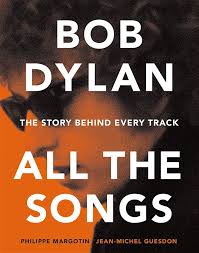
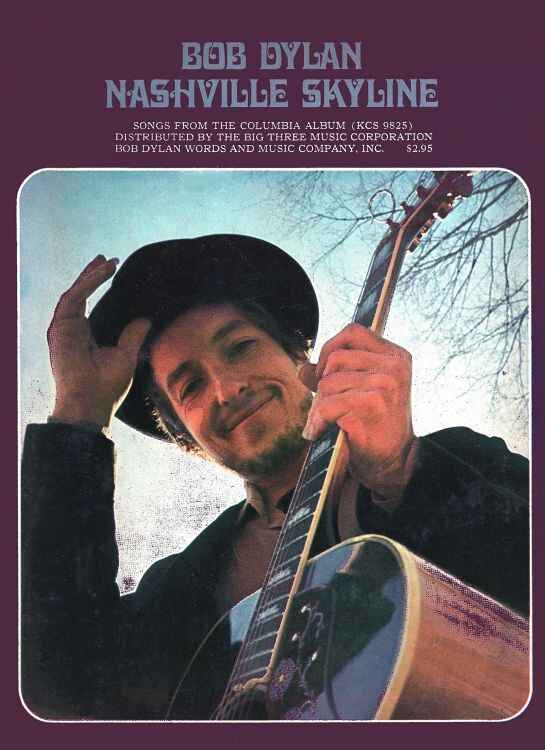
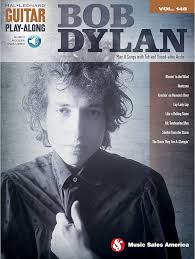
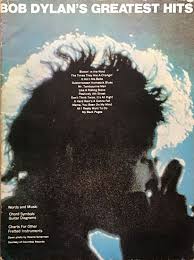
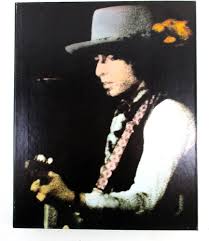
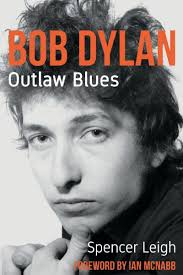
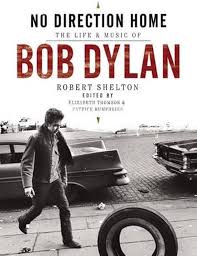

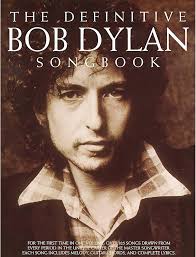




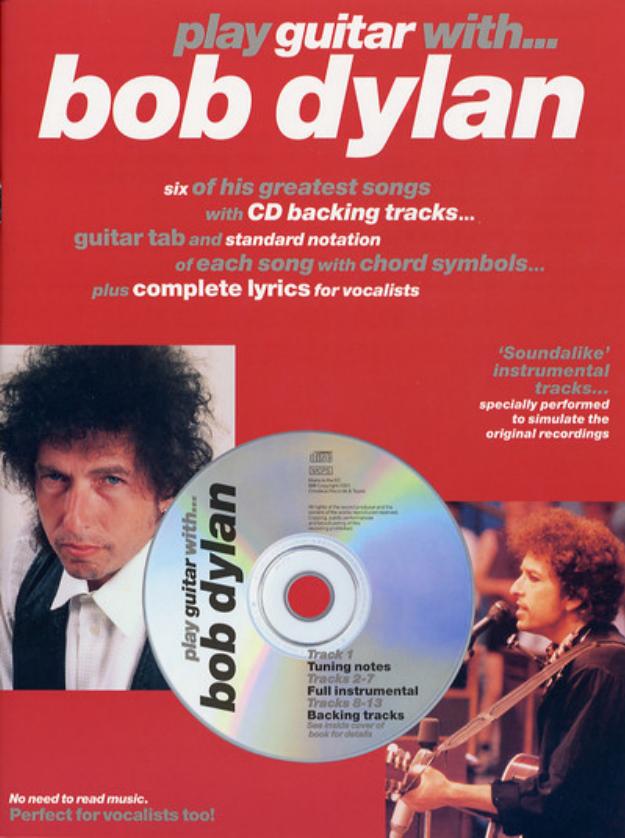


The best sheet music download from our Library.
Bob Dylan, Robert Allen Zimmerman was born on May 24, 1941, in Duluth, Minnesota, the first son of Abraham and Beatrice "Beatty" Stone Zimmerman, a Jewish family of Eastern European descent. Shortly after his birth, the family moved to the small iron-mining town of Hibbing, Minnesota, where young Robert would spend his formative years. It was a landscape of cold winters, working-class grit, and the long static hum of the radio — a medium that would shape him profoundly.
From childhood, Dylan was consumed by music. He taught himself piano and guitar as a teenager, absorbing the country sounds of Hank Williams, the rhythm and blues of Little Richard, and the rock and roll electricity of Buddy Holly. At just fifteen, he was performing in local bands, displaying an unusual intensity and hunger for expression beyond what Hibbing could offer.
In 1959, Dylan enrolled at the University of Minnesota in Minneapolis, where he was briefly exposed to the bohemian Dinkytown folk scene. He began performing at coffeehouses, and it was during this period that he reinvented himself — legally changing his name to Bob Dylan, reportedly in homage to the Welsh poet Dylan Thomas. He dropped out of university after less than a year, driven by a singular obsession: to reach New York City and meet his idol, Woody Guthrie.
He arrived in Greenwich Village in January 1961, a twenty-year-old in a corduroy cap, and made an immediate impression on the tightly-knit folk community. He visited the hospitalized Guthrie multiple times, played the Village's coffeehouses with relentless dedication, and was discovered by music critic Robert Shelton, whose New York Times review in September 1961 opened the doors at Columbia Records. Producer John Hammond — the man who had signed Billie Holiday and would later sign Bruce Springsteen — offered Dylan a contract after a single audition.
His self-titled debut album appeared in 1962 and sold poorly. But The Freewheelin' Bob Dylan (1963) changed everything. With compositions like "Blowin' in the Wind" and "A Hard Rain's A-Gonna Fall," Dylan announced himself as the moral conscience of a generation caught between the Civil Rights Movement, the Cold War, and Vietnam.
Throughout the 1960s, Dylan's biography became inseparable from the biography of an era. His romantic relationships — with Joan Baez (who became both his partner and his musical champion), with Suze Rotolo (whose influence shaped his protest writing), and later with Sara Lownds (whom he married in 1965 and with whom he had four children) — fed directly into his art. His alleged motorcycle accident in July 1966 near Woodstock, New York, remains shrouded in myth; Dylan used the event as a retreat from public life, re-emerging transformed.
In the 1970s, Dylan endured creative highs (Blood on the Tracks, 1975), the spectacle of the Rolling Thunder Revue tour, a difficult divorce from Sara, and a surprising conversion to born-again Christianity that produced three gospel albums. The 1980s were commercially uneven but creatively restless. The 1990s saw his critical resurrection with Good as I Been to You (1992) and the Grammy-winning Time Out of Mind (1997), a meditation on mortality and longing.
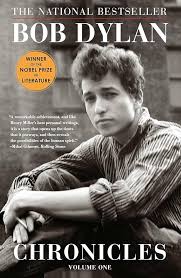
The 21st century has been remarkably prolific. Dylan released acclaimed albums, published his memoir Chronicles: Volume One (2004), won the Nobel Prize in Literature in 2016 — the first musician to receive the honor — and has continued touring well into his eighties as part of what fans call the Never Ending Tour, which began in 1988 and has involved over 3,000 performances.
Please, subscribe to our Sheet Music Library.
Musical Style and Aesthetic Vision
Bob Dylan's musical style defies any single classification. He has worked across folk, country blues, rock and roll, gospel, country, Tin Pan Alley pop, rockabilly, and jazz — never settling into one territory for long. What unifies his work is not genre but voice: a nasal, weathered, expressively impure instrument that operates more like a storytelling apparatus than a conventional singing voice.
His early style was rooted in the acoustic folk tradition — finger-picked guitar patterns derived from Woody Guthrie and Dave Van Ronk, harmonica playing in the style of the great blues harpists, and melodies borrowed from traditional British and Appalachian folk music. His protest songs of 1962–64 are essentially topical folk with an extraordinary literary dimension.
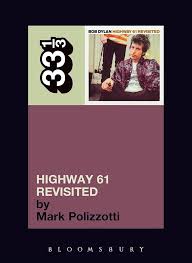
The seismic shift came in 1965. When Dylan plugged in at the Newport Folk Festival — backed by the Paul Butterfield Blues Band — and played amplified electric rock, folk purists booed. It was a pivotal cultural rupture. The albums Bringing It All Back Home (1965), Highway 61 Revisited (1965), and Blonde on Blonde (1966) represent the peak of his electric period: a hallucinatory fusion of blues, rock, surrealism, and Beat poetry. His backing band during much of this era — The Hawks, who would become The Band — brought an earthy, rootsy muscularity that grounded his visionary lyricism.
Later stylistic migrations include the country simplicity of Nashville Skyline (1969), the dense symbolism of Blood on the Tracks (1975), the hard-driving rock of Infidels (1983), and the organic, atmospheric production of Time Out of Mind (1997), produced by Daniel Lanois.
Chord Progressions and Music Harmony
Dylan's harmonic language is deceptively simple yet deeply effective. He is not a technically complex guitarist or pianist in a jazz sense, but his use of harmony serves his lyrical and emotional purposes with unerring instincts.
Core harmonic vocabulary:
- I–IV–V progressions: The backbone of folk and blues, Dylan uses these relentlessly but transforms them through rhythm, lyrical density, and arrangement. "Blowin' in the Wind" is a straightforward I–IV–V in the key of D (D–G–A), yet the melody and phrasing make it feel inevitable and resonant.
- Modal folk harmony: Many early Dylan songs use modal scales — Dorian or Mixolydian — drawn from traditional folk music, giving them an ancient, timeless quality. "Masters of War" uses a minor drone structure derived from British modal folk.
- Blues-based structures: Songs like "Highway 61 Revisited" and "Tombstone Blues" follow 12-bar blues patterns adapted for rock. His E-minor and A-minor guitar shapes create a bluesy tension that his nasal delivery amplifies.
- Extended verse structures: Dylan's use of the "talking blues" form — a rapid-fire rhythmic speaking/singing over a simple chord vamp — allows him to pack extraordinary lyrical density into songs. "Subterranean Homesick Blues" is essentially a rap avant la lettre.
- Nashville tuning and alternate voicings: On Blonde on Blonde and later albums, Dylan's guitar voicings became richer, sometimes using open tunings or Nashville-style high-strung guitars that created distinctive jangly textures.
- Gospel harmony: His born-again period introduced dense choral harmonies, II–V–I jazz-influenced chord movements, and gospel call-and-response structures, particularly on Slow Train Coming (1979) and Saved (1980).
- Tin Pan Alley progressions: On Shadows in the Night (2015) and Fallen Angels (2016) — his Sinatra-era standards covers — Dylan works with lush ii–V–I jazz harmonies, revealing an unexpected affinity for the Great American Songbook.
His arrangement sensibility evolved from spare acoustic folk to dense rock orchestration to stripped-down Americana, each era finding harmonic colors suited to its emotional content.
Influences
Dylan's list of acknowledged and discernible influences is vast:
- Woody Guthrie: The foundational inspiration — both musically and ideologically. Guthrie's Dust Bowl ballads, his social conscience, and his rootless American troubadour persona were Dylan's first template.
- Robert Johnson and the Delta Blues: Johnson's dark imagery, open guitar tunings, and mythic lyricism fed directly into Dylan's blues sensibility.
- Hank Williams: Country heartbreak, plain-spoken imagery, and the melancholy of the American South.
- Little Richard and Elvis Presley: The primal electricity of rock and roll that Dylan synthesized with folk tradition.
- The Beat Generation — Jack Kerouac, Allen Ginsberg, Gregory Corso: Ginsberg became a personal friend and mentor; Kerouac's On the Road and stream-of-consciousness aesthetics infused Dylan's surrealist period.
- Arthur Rimbaud and symbolist poetry: Rimbaud's hallucinatory imagery appears throughout Dylan's mid-60s work. Dylan has cited Illuminations as transformative.
- William Blake: Visionary, prophetic voice; moral allegory encoded in lyric beauty.
- Bertolt Brecht and Kurt Weill: Theatrical alienation and political sharpness, especially in the protest songs.
- Traditional British and Irish folk music: The Child Ballads, murder ballads, and modal folk songs that Dave Van Ronk introduced Dylan to in Greenwich Village.
- Muddy Waters, Howlin' Wolf, John Lee Hooker: Electric Chicago blues that fueled his mid-60s rock turn.
Relationships with Other Artists
Dylan's artistic relationships form a rich web that shaped 20th-century popular music:
- Joan Baez: Dylan's partner from roughly 1962–65, Baez was already a major folk star when she championed the young Dylan, bringing him onstage at her concerts and introducing him to national audiences. Their relationship — tumultuous, competitive, deeply creative — produced some of his most biting personal songs. Their reunion on the Rolling Thunder Revue (1975–76) was documented by Scorsese.
- The Band: Levon Helm, Robbie Robertson, Rick Danko, Richard Manuel, and Garth Hudson served as Dylan's electric backing group from 1965–66 and then collaborated on The Basement Tapes (recorded 1967, released 1975) and Planet Waves (1974). Their earthy Americana sound was a formative influence on roots rock.
- George Harrison: A close friend and fellow Traveling Wilbury. Harrison's slide guitar appears on several Dylan recordings, and the two shared a reverence for roots music and spirituality.
- The Traveling Wilburys: The 1988–90 supergroup Dylan formed with Harrison, Tom Petty, Roy Orbison, and Jeff Lynne produced two beloved albums and stands as a high point of late-career Dylan camaraderie.
- Allen Ginsberg: Mentor, friend, and spiritual companion across decades. Ginsberg appeared in Dylan's Renaldo and Clara (1978) and the Rolling Thunder Revue documentary, and their dialogue about poetry and prophecy runs through Dylan's entire career.
- Bruce Springsteen: Springsteen has repeatedly named Dylan as his central influence — his first album was literally pitched to Columbia as "the new Dylan." Their occasional collaboration represents a passing of the torch in American rock mythology.
- Elvis Costello, Patti Smith, Tom Waits: All artists who absorbed Dylan's literary approach to songwriting and carried it forward.
Legacy
Bob Dylan's legacy is without parallel in popular music. He single-handedly elevated the status of the songwriter — in the early 1960s, singers interpreted other people's material; Dylan made the idea of the singer-songwriter as poet-intellectual central to rock culture.
His influence flows in multiple directions:
- Literary: He demonstrated that popular song could bear the full weight of serious literary ambition — surrealism, allegory, dense symbolism, and narrative complexity.
- Political: He gave the protest song a durability and artistry that transcended its moment. "Blowin' in the Wind" and "The Times They Are A-Changin'" became anthems with a permanence folk music rarely achieves.
- Cultural: His transformation from acoustic folk to electric rock in 1965 remains the most consequential stylistic pivot in rock history, validating constant reinvention as an artistic strategy.
- The Nobel Prize: The Swedish Academy's 2016 award — citing his creation of "new poetic expressions within the great American song tradition" — formally recognized what many had long argued: that Dylan's lyrics constitute a major body of literature.
Generations of artists — from Joni Mitchell to Kendrick Lamar, from Nick Cave to Adele — have named Dylan as foundational. The concept of the singer-songwriter as self-mythologizing, autobiographically opaque artist is largely his invention.
Works and Discography
Studio Albums (Selected)
| Year | Album | Notable Tracks |
|---|---|---|
| 1962 | Bob Dylan | "Song to Woody," "House of the Risin' Sun" |
| 1963 | The Freewheelin' Bob Dylan | "Blowin' in the Wind," "Don't Think Twice, It's All Right" |
| 1964 | The Times They Are A-Changin' | "The Times They Are A-Changin'," "With God on Our Side" |
| 1964 | Another Side of Bob Dylan | "It Ain't Me, Babe," "My Back Pages" |
| 1965 | Bringing It All Back Home | "Subterranean Homesick Blues," "Mr. Tambourine Man" |
| 1965 | Highway 61 Revisited | "Like a Rolling Stone," "Desolation Row" |
| 1966 | Blonde on Blonde | "Visions of Johanna," "Just Like a Woman," "Rainy Day Women" |
| 1967 | John Wesley Harding | "All Along the Watchtower," "I Dreamed I Saw St. Augustine" |
| 1969 | Nashville Skyline | "Lay Lady Lay," "Girl from the North Country" (with Cash) |
| 1974 | Planet Waves | "Forever Young," "Going, Going, Gone" |
| 1975 | Blood on the Tracks | "Tangled Up in Blue," "Simple Twist of Fate," "Idiot Wind" |
| 1976 | Desire | "Hurricane," "Isis," "Sara" |
| 1979 | Slow Train Coming | "Gotta Serve Somebody," "When You Gonna Wake Up" |
| 1983 | Infidels | "Jokerman," "Sweetheart Like You" |
| 1989 | Oh Mercy | "Most of the Time," "Man in the Long Black Coat" |
| 1997 | Time Out of Mind | "Not Dark Yet," "Cold Irons Bound," "Make You Feel My Love" |
| 2001 | Love and Theft | "Mississippi," "High Water (For Charley Patton)" |
| 2006 | Modern Times | "Thunder on the Mountain," "Workingman's Blues #2" |
| 2012 | Tempest | "Tempest," "Pay in Blood," "Early Roman Kings" |
| 2020 | Rough and Rowdy Ways | "Murder Most Foul," "I Contain Multitudes," "False Prophet" |
Most Famous Compositions and Performances
"Blowin' in the Wind" (1963) — Possibly the most widely performed protest song ever written. Its rhetorical questions ("How many roads must a man walk down...") have made it a universal anthem of social conscience.
"The Times They Are A-Changin'" (1964) — A generational call to arms. Its opening lines are among the most quoted in rock history.
"Mr. Tambourine Man" (1965) — A hallucinatory journey into pure sound and symbol; covered memorably by The Byrds, whose jangly electric arrangement became a template for folk-rock.
"Like a Rolling Stone" (1965) — Frequently cited as the greatest rock song ever recorded. Its six-minute length shattered radio conventions; its organ riff, snarling delivery, and devastating refrain define the electric Dylan.
"Desolation Row" (1965) — An eleven-minute surrealist panorama featuring characters from history, mythology, and literature. One of the most ambitious compositions in popular music.
"Visions of Johanna" (1966) — A masterpiece of yearning and hallucination from Blonde on Blonde. Greil Marcus called it the most fully realized piece in Dylan's canon.
"All Along the Watchtower" (1967) — Jimi Hendrix's cover (1968) became arguably more famous than Dylan's own; Dylan later adopted Hendrix's arrangement in live performance.
"Tangled Up in Blue" (1975) — A narrative poem told from shifting perspectives, chronologically scrambled, drawn from the dissolution of his marriage.
"Hurricane" (1975) — A gripping ten-minute indictment of the wrongful imprisonment of boxer Rubin "Hurricane" Carter; one of the great protest songs of the 1970s.
"Not Dark Yet" (1997) — A late-period meditation on mortality, exhaustion, and the fading light — widely considered one of his finest achievements.
"Murder Most Foul" (2020) — A seventeen-minute elegy for John F. Kennedy and the America of the early 1960s, released during COVID-19 lockdowns to enormous impact.
Works in Film
Dylan's relationship with cinema is multifaceted — as a soundtrack contributor, actor, and subject:
- Don't Look Back (1967) — D.A. Pennebaker's landmark cinema vérité documentary of Dylan's 1965 British tour. One of the most important music documentaries ever made.
- Eat the Document (1972) — Dylan and Howard Alk's own film of the 1966 world tour, unreleased officially for decades but widely circulated.
- Pat Garrett and Billy the Kid (1973) — Sam Peckinpah cast Dylan as "Alias" in this revisionist western; Dylan composed the soundtrack, including "Knockin' on Heaven's Door."
- Renaldo and Clara (1978) — Dylan's four-hour experimental film drawn from the Rolling Thunder Revue. Divisive, chaotic, and fascinating.
- Hearts of Fire (1987) — A largely forgotten fiction film in which Dylan plays a rock star; critically panned.
- Masked and Anonymous (2003) — A film Dylan co-wrote and starred in, set in a dystopian America. Cult status, polarized critics.
- I'm Not There (2007) — Todd Haynes's radical biopic in which six different actors (including Cate Blanchett, Heath Ledger, and Richard Gere) portray different facets of Dylan's persona. A masterwork of biographical cinema.
- The 30th Anniversary Concert Celebration (1993) — Filmed tribute concert featuring performances by nearly every major artist of the era.
Documentaries
- Don't Look Back (1967, D.A. Pennebaker) — The definitive fly-on-the-wall portrait.
- No Direction Home (2005, Martin Scorsese) — An epic three-and-a-half-hour examination of Dylan's life from 1961 to 1966, featuring extraordinary archive footage and interviews. Widely considered the definitive documentary.
- The Rolling Thunder Revue: A Bob Dylan Story by Martin Scorsese (2019) — A playful, semi-fictional documentary about the 1975–76 tour, mixing real footage with invented characters and fabricated memories. A meditation on myth-making itself.
- Bob Dylan: 65 Revisited (2007, D.A. Pennebaker) — Previously unreleased footage from the 1965 tour.
- Once Were Brothers: Robbie Robertson and the Band (2019) — Covers the Dylan-Band alliance from the musicians' perspective.
The Nobel Prize and Literary Recognition
When the Swedish Academy awarded Dylan the Nobel Prize in Literature in 2016, it triggered an international debate about the boundaries of literature. Dylan's initial silence — he did not acknowledge the prize for weeks — was characteristically enigmatic. When he finally delivered his Nobel lecture (in audio format, in June 2017), it was a stunning piece of writing in itself: a meditation on storytelling, Moby-Dick, the Odyssey, and the folk tradition that shaped him. He quoted Buddy Holly, Herman Melville, and Homer in the same breath.
The lecture made the strongest possible case for Dylan's own argument: that the song — at its greatest — participates in the oldest human literary tradition, carrying moral weight, narrative complexity, and emotional truth that belong to the realm of literature.
The Ongoing Bob Dylan
Bob Dylan turns 85 today — and he continues to tour, to record, and to mystify. Few figures in the history of American culture have sustained such a high level of creative output across such an extended period, or reinvented themselves so radically and so often. He sold his entire song catalog to Universal Music Publishing Group in 2020 for a reported $300 million — a transaction that acknowledged the extraordinary commercial and cultural value of what he created — and yet the Never Ending Tour rolls on.
To speak of Dylan's "legacy" implies a completed project; but Dylan himself refuses completion. His greatest achievement may be the demonstration that an artist can remain genuinely alive to new possibility across a career of six decades — that the voice, however weathered, however changed, still has something urgent to say.
As he wrote in "It's Alright, Ma (I'm Only Bleeding)" in 1965 — a line that has outlasted most of the century's public rhetoric:
"He not busy being born is busy dying."
Bob Dylan has spent eighty-five years being born.
Search your favorite sheet music in the Sheet Music Library Catalog
Bob Dylan: Shadow Kingdom
Track List:
| 1. | "When I Paint My Masterpiece" | 4:25 |
|---|---|---|
| 2. | "Most Likely You Go Your Way and I'll Go Mine" | 3:32 |
| 3. | "Queen Jane Approximately" | 5:14 |
| 4. | "I'll Be Your Baby Tonight" | 3:04 |
| 5. | "Just Like Tom Thumb's Blues" | 4:26 |
| 6. | "Tombstone Blues" | 5:00 |
| 7. | "To Be Alone with You" | 3:10 |
| 8. | "What Was It You Wanted" | 5:03 |
| 9. | "Forever Young" | 3:15 |
| 10. | "Pledging My Time" | 3:50 |
| 11. | "The Wicked Messenger" | 2:56 |
| 12. | "Watching the River Flow" | 3:00 |
| 13. | "It's All Over Now, Baby Blue" | 2:49 |
| 14. | "Sierra's Theme" | 4:23 |
Personnel:
- Bob Dylan – vocals, guitar, harmonica
- Jeff Taylor – accordion
- Greg Leisz – guitar, pedal steel guitar, mandolin
- Tim Pierce – guitar
- T-Bone Burnett – guitar
- Ira Ingber – guitar
- Don Was – upright bass
- John Avila – electric bass
- Doug Lacy – accordion
- Steve Bartek – additional acoustic guitar
Browse in the Sheet Music Library:
Or browse in the categories menus & download the Library Catalog PDF: