
Table of Contents
Scores for all instruments: 16,000+ (active and growing), over 236,000 pages.
All genres and levels: Jazz & Blues, Rock & Pop, Classical & Contemporary, Film & Musicals;
books & biographies; methods, études, play-along tracks (MP3) for Jazz & Rock.
Access & benefits: US$15.99 one-time payment, valid for lifetime, full Library access.
Happy birthday, Carly Simon, born on this day in 1943
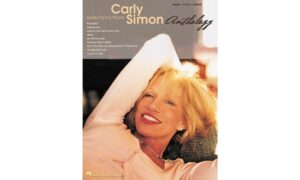
The best sheet music download from our Library.
Please, subscribe to our Sheet Music Library.
Carly Simon: The Confessional Poetess of Soft Rock – A Comprehensive Retrospective
I. Biography
Early Life and Aristocratic Musical Roots
Carly Elisabeth Simon was born on June 25, 1945, in New York City (though some earlier sources mistakenly cite 1943, biographers have since confirmed 1945). She was born into the upper echelons of New York’s cultural elite. Her father, Richard L. Simon, was the co-founder of the prestigious publishing house Simon & Schuster, as well as an accomplished classical pianist. Her mother, Andrea Heinemann Simon, was a singer and a civil rights activist. Growing up in the affluent Riverdale neighborhood of the Bronx, Carly was the third of four children, alongside sisters Joanna and Lucy, and brother Peter.
Carly’s heritage was uniquely diverse for the time; she is of Jewish, African-Cuban, and French descent, a mélange that exposed her early to a broad spectrum of cultural expressions. The Simon household was brimming with intellectuals, artists, and musicians. Her father’s piano playing filled the home, and her mother’s activism introduced Carly to the social upheavals of the 1960s. This environment fostered a deep-seated need for artistic expression. She attended the Riverdale Country School and later Sarah Lawrence College, though she left before graduating to pursue music full-time.
From The Simon Sisters to a Solo Breakthrough
Carly’s entry into the music industry was a family affair. In 1964, she formed a folk duo with her sister Lucy, aptly named The Simon Sisters. They secured a minor hit with the children’s song "Winkin', Blinkin' and Nod," which charted modestly in 1964. However, the duo’s momentum was interrupted when Lucy married and moved to California.
In 1966, Carly’s burgeoning talent caught the eye of Albert Grossman, the legendary manager of Bob Dylan and Janis Joplin. Grossman secured her a deal and set her up with the backing band The Band for recording sessions. These sessions, while promising, were ultimately shelved, leaving Carly in a professional limbo. It wasn’t until 1970 that she found her footing, signing with Elektra Records. Her self-titled debut album, Carly Simon, was released in February 1971. The lead single, "That's the Way I've Always Heard It Should Be," co-written with film critic Jacob Brackman, was an instant sensation. Its cynical take on marriage and societal expectations resonated profoundly with a generation questioning traditional norms, propelling it to the Top 10.
The Golden Era of the 1970s
The 1970s belonged to Carly Simon. In November 1971, she released Anticipation, the title track of which became a Top 40 hit. The album achieved Gold status within two years, and Carly was awarded the Grammy for Best New Artist in 1972.
Her commercial and critical pinnacle arrived in November 1972 with the release of No Secrets. The album exploded onto the charts, driven by the enigmatic, scathing, and utterly captivating single "You're So Vain." The song spent five weeks at No. 1 on the Billboard Hot 100, becoming an anthem of the era. The album also yielded the hit "The Right Thing to Do," a tender love song written about her then-boyfriend.
In November of that same year, she married fellow singer-songwriter James Taylor, creating what was then considered the "royal couple" of soft rock. They collaborated on the 1974 hit "Mockingbird" from her album Hotcakes, which also featured "Haven't Got Time for the Pain." The mid-1970s saw continued success with Playing Possum (1975), though Another Passenger (1976) received a more lukewarm reception.
However, 1977 marked a massive resurgence. She was tapped to sing the theme for the James Bond film The Spy Who Loved Me. The resulting track, "Nobody Does It Better," became an international smash, reaching No. 2 on the Billboard charts and becoming one of the most iconic Bond themes in history.
The 1980s and a Cinematic Turn
The 1980s proved transitional. Her 1981 album Torch was a departure, consisting entirely of covers of pre-rock pop standards. While critically respected, it sold less than her earlier work. However, Carly proved her mettle by pivoting to film soundtracks. In 1986, she wrote and performed "Coming Around Again" for the Mike Nichols film Heartburn.
This resurgence climaxed in 1988. For the film Working Girl, she composed "Let the River Run." It was a powerful, uplifting anthem that earned her the Academy Award for Best Original Song, the Golden Globe, and the Grammy Award. She became the first artist in history to win these three major awards for a song written, composed, and performed entirely by a single artist.
Later Years and Enduring Presence (1990s–Present)
Carly continued to release music steadily through the 1990s, including My Romance (1990), Have You Seen Me Lately (1990), and Letters Never Sent (1994), the latter exploring deeply personal themes related to her therapy and past relationships. In 1994, she was inducted into the Songwriters Hall of Fame. In 2004, "You're So Vain" was inducted into the Grammy Hall of Fame.
In the 2000s and 2010s, she remained active, collaborating with a new generation, including a notable duet with Taylor Swift at a New York charity concert, and even collaborating with the virtual band Gorillaz. She has faced personal battles, including breast cancer and struggles with stage fright, but her creative output has never ceased, proving her resilience as an artist.
II. Music Style
Genre and Sonic Identity
Carly Simon’s music is primarily classified as Pop Rock and Soft Rock, deeply infused with elements of Folk, Singer-Songwriter confessional, and Jazz. Her sound is a nuanced tapestry that avoids the bombast of arena rock in favor of intimate, living-room textures. She builds her tracks around acoustic guitars, lush string arrangements (often orchestrated by legendary arranger Richard Perry), and warm, understated rhythm sections.
Vocal Qualities
Possessing a Contralto vocal range (one of the rarest female voice types), Simon’s voice is characterized by its rich, dark, and slightly husky timbre. Music critics frequently describe her tone as a "creamy" or "honeyed" alto, but one that carries an underlying edge of vulnerability and longing. She possesses a remarkable ability to convey emotional conflict—joy tinged with anxiety, or romance shadowed by skepticism—simply through the placement of a breath or the subtle cracking of a note.
The Confessional and Literary Style
If there is a stylistic hallmark that defines Carly Simon, it is her lyrical "confessional" approach. Following in the footsteps of Joni Mitchell but carving her distinct path, Simon treats her songs as public diary entries. She writes about neuroses, romantic fantasies, failed relationships, family discord, and internal psychological turmoil with startling openness. In songs like "That's the Way I've Always Heard It Should Be," she articulates a fear of domesticity that was nearly taboo for women to express in the early 70s. In "Haven't Got Time for the Pain," she showcases a wry maturity. Her style is deceptively complex; the catchy, radio-friendly melodies often mask the razor-sharp psychological acuity of her lyrics.
III. Chord Progressions and Music Harmony
Carly Simon’s harmonic language is a fascinating blend of accessible pop sensibility and sophisticated jazz-tinged chromaticism. She did not reinvent the wheel of harmony, but she perfected the art of using non-diatonic chords to create a specific mood.
Key Characteristics of Her Harmonic Approach
- The Use of Suspended Chords (Sus2 and Sus4): Carly frequently uses suspended chords to create a sense of emotional suspension or unresolved tension. For example, in "Anticipation," the use of suspended chords (often played on an acoustic guitar tuned to Drop D) creates a shimmering, expectant quality that perfectly mirrors the lyrical theme of waiting for a lover.
- Chromatic Mediants and Major/Minor Shifts: She frequently borrows chords from the parallel minor key. For instance, in a song in C Major, she will frequently introduce an Eb Major or Ab Major chord. This shift yields a sudden, dramatic shift in emotional color.
- Extended Chords (7ths, 9ths, 11ths): In her more jazz-inflected work, such as the Torch album or "Bewitched," she uses Major 7ths, Minor 9ths, and flattened 5ths to create a sensual, hazy, and nocturnal atmosphere.
Analyzing Iconic Progressions
- "You're So Vain": The song is famously in the key of C# Minor. The iconic opening riff is built on a descending bass line (C# - B - A - G#). The harmony cleverly utilizes the Neapolitan chord (D Major in the key of C# minor) and the subdominant minor. The pre-chorus features an unexpected harmonic shift into a major key area (E Major), lifting the tension before descending back into the minor key for the chorus, mimicking the psychological rise and fall of obsession.
- "Anticipation": This song utilizes a Drop D tuning (D A D G B E), which allows for open-string drones against fretted chords. The progression often hovers around D, G, Em, and A, but the harmonic richness comes from the "hammer-on" pull-offs against the resonant open strings. The Asus4 chord resolves to A, then snaps back, creating a rhythmic and harmonic "tug" that gives the song its visceral momentum.
- "Coming Around Again": The harmony here uses the Plagal Cadence (IV-I) heavily, giving it a comforting, hymn-like quality. It employs a C - Cmaj7 - Am - Am9 - F - F11+ progression. The use of the Cmaj7 and Am9 adds a lush, dreamy sheen to the otherwise straightforward pop structure, reinforcing the nostalgic and weary-yet-hopeful tone of the lyrics.
IV. Relationship with Other Artists
The James Taylor Dynamic
The most consequential relationship of Carly’s life and career was with James Taylor. Their marriage (1972–1983) was tabloid gold, representing the romantic ideal of the sensitive singer-songwriter. Musically, they were symbiotic. Taylor featured on several of her tracks, notably the duet "Mockingbird," which became a massive hit. However, the collaboration was fraught with the intense pressures of fame, substance abuse (primarily on Taylor’s side), and jealousy. Their split heavily influenced Taylor's album That's Why I'm Here and Carly's emotionally raw Letters Never Sent.
The "You're So Vain" Subject: Warren Beatty and Others
Carly has famously played a cat-and-mouse game with the public regarding the identity of the man in "You're So Vain." She confirmed that the second verse refers to Warren Beatty (with whom she had a brief relationship), who she described as "vain, but not that vain." She has also hinted that the title refers to a composite of several men from the early 1970s, including record executives and Hollywood power players. This mystery created a unique, decade-spanning interactive relationship with her fans and the press.
The Singer-Songwriter Cohort
She was deeply embedded in the 1970s Laurel Canyon and New York scene. She was close friends with Carole King, and the two represented the vanguard of women breaking through the male-dominated singer-songwriter genre. She worked with legendary producer Richard Perry, who produced No Secrets and maximized her crossover appeal. Her debut album featured session work by Robbie Robertson, Levon Helm, and Rick Danko of The Band, connecting her to the rootsy, Americana side of rock.
Collaborations with Modern Artists
Unlike many of her peers who retreated into nostalgia, Carly actively sought intergenerational collaboration. She performed with Taylor Swift (a massive fan who often cites Simon as an influence), and in a striking move, she collaborated with the virtual band Gorillaz on the track "The Joplin Spider," showcasing her willingness to experiment with modern electronic and alternative sounds.
V. Influences
Influences on Carly Simon
Carly’s musical DNA is drawn from a wide variety of genres. She was heavily influenced by Joni Mitchell’s poetic intimacy and folk stylings. She was also a devotee of the Brill Building songwriting tradition, particularly the work of Carole King and Gerry Goffin. The bluesy, raw vocal delivery of Bessie Smith and the jazz phrasing of Billie Holiday are audible in her more torchy numbers. Additionally, her father’s classical piano playing instilled in her a deep appreciation for melodic structure and harmonic nuance.
Influence on Legacy (Her Legacy to Others)
Carly Simon’s influence on the next generations of musicians is profound and specific.
- Taylor Swift: Swift has explicitly stated that Simon’s No Secrets was a blueprint for her own album Red. The way Simon used a catchy pop hook to mask devastatingly honest lyricism about narcissistic men is a template Swift has perfected.
- Tori Amos: The confessional, piano-driven intensity and the exploration of feminine neurosis in Amos’s work owes a debt to Simon.
- Sara Bareilles and Jason Mraz: Both artists have cited Simon’s melodic pop sensibility and lyrical wit as foundational influences on their own acoustic-pop stylings.
- Vanessa Carlton: The combination of pop structure with sophisticated piano counter-melodies is a direct lineage from Simon.
VI. Legacy
Carly Simon’s legacy extends far beyond her impressive sales figures (5 Platinum albums in the US). She fundamentally altered the perception of women in rock music. Before Simon, female artists were often pigeonholed as either "girl singers" interpreting others' songs or as superficial pop stars. Simon proved that a woman could write complex, psychologically real, and commercially successful music without sacrificing femininity or sophistication.
Cultural Significance
She gave a voice to the complex modern woman of the 1970s—someone who was intellectually sharp, sexually liberated, but emotionally vulnerable. Her music was the soundtrack to the sexual revolution and the women's liberation movement, not as protest music, but as the internal monologue of women navigating new freedoms and old insecurities.
Awards and Honors
- Grammy Awards: Best New Artist (1972), Best Female Pop Vocal Performance ("You're So Vain," 1973), Best Song Written for Visual Media ("Let the River Run," 1989).
- Academy Awards: Best Original Song ("Let the River Run," 1988).
- Golden Globes: Best Original Song ("Let the River Run," 1988).
- Songwriters Hall of Fame (Inducted 1994).
- Grammy Hall of Fame (Inducted for "You're So Vain," 2004).
She is the first artist in history to win a Grammy, an Oscar, and a Golden Globe for a song she wrote and performed solo.
VII. Works: The Major Albums and Discography
Studio Albums (Selected Discography):
- 1971: Carly Simon (Gold)
- 1971: Anticipation (Gold)
- 1972: No Secrets (Platinum)
- 1974: Hotcakes (Gold)
- 1975: Playing Possum (Gold)
- 1976: Another Passenger
- 1978: Boys in the Trees (Platinum)
- 1979: Spy (Gold)
- 1980: Come Upstairs
- 1981: Torch
- 1983: Hello Big Man
- 1985: Spoiled Girl
- 1987: Coming Around Again
- 1990: My Romance
- 1990: Have You Seen Me Lately
- 1994: Letters Never Sent
- 1997: Film Noir
- 2000: The Bedroom Tapes
- 2002: Christmas Is Almost Here
- 2005: Moonlight Serenade
- 2008: This Kind of Love
- 2009: Never Been Gone
Compilations:
- The Best of Carly Simon (1975)
- Clouds in My Coffee 1965–1995 (1995 – a comprehensive career retrospective box set).
VIII. Works on Film (Soundtracks)
Carly Simon’s contribution to film is arguably as significant as her pop career. She possesses a rare talent for translating narrative emotion into song.
- "Nobody Does It Better" – The Spy Who Loved Me (1977)
- This was the first Bond theme to be performed by a major female pop star. The song was so successful that it was nominated for an Academy Award and remains one of the most beloved entries in the Bond canon. Its lush string arrangement and Carly’s breathy, seductive delivery set a new standard for cinematic love themes.
- "Coming Around Again" – Heartburn (1986)
- Directed by Mike Nichols and starring Meryl Streep and Jack Nicholson, the film deals with marital infidelity. Simon’s song, with its longing refrain "Coming around again," perfectly encapsulates the cyclical nature of heartbreak and reconciliation.
- "Let the River Run" – Working Girl (1988)
- This is her crowning cinematic achievement. The song is an energetic, gospel-influenced pop anthem that underscores the film’s themes of female ambition and rising above socio-economic constraints. The use of a children’s choir adds an uplifting, triumphant innocence. It won the Oscar, Golden Globe, and Grammy.
- Other Contributions:
- She wrote the theme for the television sitcom Mad About You (the theme "Married to Me").
- Her song "Touched by the Sun" was inspired by the life of Princess Diana.
IX. Most Known Compositions and Performances
- "You're So Vain": The definitive performance of her career. The intricate guitar arpeggios, the orchestral swell, and her envious, scornful vocals make it a Top 500 "Greatest Songs of All Time" by Rolling Stone magazine.
- "Anticipation": Famous for its single repeated guitar motif and Carly's pitch-perfect internal rhyme schemes. It was famously used in a television commercial for Heinz ketchup, re-popularizing the song for the MTV generation.
- "Mockingbird": The live performances of this song with James Taylor were electric. Their vocal interplay—playful, competitive, and loving—made it a staple of 1970s concert duets.
- "You Belong to Me": A 1978 hit that showcased a more rhythmic, R&B-inflected side of her voice.
- "Coming Around Again" / "Itsy Bitsy Spider": Often performed live as a medley, it showcases her charm and her ability to weave childhood innocence into adult reflection.
X. Documentaries
- Carly Simon: No Secrets(BBC Studios / Eagle Rock Entertainment):
- This is the definitive documentary on the artist. It features extensive, intimate interviews with Carly discussing the making of her most iconic album, No Secrets. In the documentary, she reveals previously unheard demo tapes and performs the "missing fourth verse" to "You're So Vain" on her piano, giving fans unprecedented insight into her creative process. The film also features archival footage of her relationship with James Taylor and her interactions with producer Richard Perry.
- Carly Simon: Into White (PBS, American Masters style): While not an official American Masters episode, many PBS affiliates have aired documentaries exploring her career trajectory, specifically focusing on her intersection with the New York literary and artistic elite.
- She has also appeared as a talking head in numerous documentary retrospectives on the 1970s music scene, James Bond theme history, and the singer-songwriter genre.
XI. Conclusion
Carly Simon is far more than a relic of 1970s soft rock; she is a permanent archetype in the American musical canon. Her legacy is built on a startling contradiction: the ability to write radio-friendly, massively popular music that feels intensely private, secret, and personal. She taught a generation of songwriters that vulnerability is not weakness, but a weapon of connection.
From the hushed, confessional tone of her early folk years to the towering cinematic triumph of "Let the River Run," Simon has consistently demonstrated an uncanny ability to articulate the complex interior lives of women navigating love, ambition, and disappointment. Her struggles with stage fright, her turbulent personal life, and her eventual triumph over them only reinforce the human connection her music fosters. Her songs are not just hits; they are weathered artifacts of emotional truth. In the history of popular music, few have managed to balance the weight of personal truth with the flight of pop accessibility quite like Carly Simon. Her work remains not just timeless, but essential.
Search your favorite sheet music in the Sheet Music Library Catalog
Discography
Main article: Carly Simon discography
Carly Simon - The Best of Carly Simon | Carly Simon Greatest Hits (Full Album)
Track List: 0:00 That's The Way I've Always Heard It Should Be 04:15 The Right Thing to Do 0:07:12 Mockingbird 0:11:23 Legend In Your Own Time 0:15:08 Haven't Got Time for the Pain 0:18:58 You're so Vain 0:23:20 We Have No Secrets 0:27:17 Night Owl 0:31:04 Anticipation 0:34:23 Attitude Dancing
Browse in the Sheet Music Library:
Or browse in the categories menus & download the Library Catalog PDF: