Scores for all instruments: 16,000+ (active and growing), over 236,000 pages.
All genres and levels: Jazz & Blues, Rock & Pop, Classical & Contemporary, Film & Musicals;
books & biographies; methods, études, play-along tracks (MP3) for Jazz & Rock.
Access & benefits: US$15.99 one-time payment, valid for lifetime, full Library access.
Table of Contents
Happy birthday, Cat Stevens, born on this day in 1948.

The best sheet music download from our Library.
Please, subscribe to our Sheet Music Library.
Browse in the Sheet Music Library:
Or browse in the categories menus & download the Library Catalog PDF:
Cat Stevens: The Troubadour's Journey from Pop Star to Peace-Seeker (Born July 21, 1948)
Born Steven Demetre Georgiou on July 21, 1948, in London's bustling Marylebone district to a Greek Cypriot father and Swedish mother, the artist the world would come to know as Cat Stevens, and later Yusuf / Cat Stevens, embarked on a musical and spiritual odyssey unlike any other. His story is one of meteoric early fame, profound artistic reinvention, deep spiritual searching, controversial withdrawal, and a poignant, resonant return. On this day marking his birth, we delve deep into the life, music, and enduring legacy of this singular voice.
I. Biography: From the West End to the World
Growing up above his parents' Moulin Rouge café in Shaftesbury Avenue, young Steven was immersed in a vibrant cultural stew. The sounds of the bustling West End, Greek folk melodies, Swedish lullabies, and the burgeoning rock 'n' roll scene all shaped his early musical consciousness. He learned piano and guitar, drawing inspiration from artists like the Beatles (particularly Paul McCartney), Bob Dylan, Nina Simone, and musical theatre.
- Early Stardom as "Steve Adams" & "Cat Stevens" (Mid-1960s): Dropping out of Hammersmith College of Art, he pursued music full-time. Initially performing as "Steve Adams," he soon adopted the stage name Cat Stevens – inspired by a girlfriend who said his eyes changed like a cat's, and the surname Stevens for its familiarity. Producer Mike Hurst discovered him, leading to his debut single, "I Love My Dog" (1966). While the song hinted at his later folk leanings, it was the immediate follow-up, the Kinks-influenced "Matthew and Son" (1967), that catapulted him to teen idol status in the UK. The album of the same name, and its successor New Masters, were packed with ornate, orchestrated pop gems ("Here Comes My Baby," "The First Cut Is the Deepest") showcasing his precocious songwriting talent.
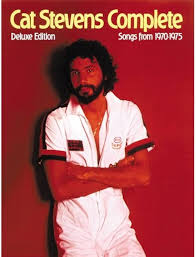
- Near-Death and Transformation (Late 1960s): By 1968, the pressures of fame and the restrictive nature of his pop image took their toll. Contractual disputes compounded his disillusionment. A pivotal moment came in late 1968 when he contracted tuberculosis. Confined to hospital for months, facing mortality at just 20, he underwent a profound existential crisis. This brush with death became the catalyst for a complete artistic and personal transformation. He re-evaluated his life, began meditating, reading philosophy and spiritual texts, and started writing songs reflecting his deeper search for meaning.
- The Golden Age: Folk-Rock Troubadour (1970-1978): Re-emerging in 1970 with the album Mona Bone Jakon, Stevens presented a radically different sound: stripped-back, acoustic-based, introspective folk-rock. Gone were the orchestras; in their place were intimate vocals, intricate fingerpicking, and lyrics grappling with spirituality, love, loss, and the human condition. This album, featuring gems like "Lady D'Arbanville" and "Trouble," laid the foundation. It was followed by the era-defining Tea for the Tillerman (1970) and Teaser and the Firecat (1971). These albums, masterfully produced by Paul Samwell-Smith (ex-Yardbirds), became global phenomena. Songs like "Wild World," "Father and Son," "Peace Train," "Morning Has Broken," and "Moonshadow" transcended genre, becoming anthems for a generation searching for peace and authenticity. His sound matured further with Catch Bull at Four (1972), Foreigner (1973 - featuring a daring 18-minute suite), Buddha and the Chocolate Box (1974), Numbers (A Pythagorean Theory Tale) (1975), Izitso (1977 - incorporating early synths), and Back to Earth (1978). He toured extensively, his concerts known for their intimacy and powerful connection with the audience.
- Conversion to Islam and Departure from Music (1977-2006): A near-drowning incident off the coast of Malibu in 1975 intensified his spiritual quest. Introduced to the Qur'an by his brother, he found profound resonance in its message. In 1977, he formally converted to Islam, adopting the name Yusuf Islam in 1978. By 1979, fulfilling a promise and seeking a life dedicated to faith, family (he married and had children), and humanitarian work (he founded Muslim Aid in 1985), he abandoned his secular music career. He sold his guitars and donated the proceeds to charity. This decision shocked the music world and his legions of fans. His subsequent decades were focused on Islamic education (founding schools), philanthropy, and creating Islamic devotional songs (nasheeds). His involvement in the 1989 Salman Rushdie fatwa controversy (where statements perceived as supporting Ayatollah Khomeini's call were later clarified and regretted) created significant controversy and a travel ban to the US until 2006.
- The Return: Yusuf / Cat Stevens (2006-Present): Spurred by his son bringing a guitar back into the house and a renewed desire for peaceful dialogue after 9/11, Yusuf cautiously returned to secular music. His 2006 album An Other Cup marked a significant comeback, blending his signature sound with mature reflections on faith and the modern world. He began performing again, often under the combined name Yusuf / Cat Stevens. Subsequent albums like Roadsinger (To Warm You Through the Night) (2009), Tell 'Em I'm Gone (2014 - exploring blues roots), and The Laughing Apple (2017 - revisiting early songs) demonstrated a revitalized artist. His 2014 induction into the Rock and Roll Hall of Fame was a powerful moment of recognition. Recent works like the 2020 album Tea for the Tillerman² (reimagining his classic) and 2023's King of a Land continue his creative journey, proving his songwriting and message remain potent. He received the Man of Peace Award in 2022.

II. Music Style: The Sound of Searching
Cat Stevens' music, particularly during his 1970s peak, is instantly recognizable and deeply influential:
- Acoustic Foundation: The core is almost always acoustic guitar, often in open tunings (especially DADGAD – crucial for songs like "The Wind," "Hard Headed Woman," "Moonshadow"). This created resonant, droning textures and unique chord voicings. Fingerpicking patterns are intricate and rhythmic.
- Vocal Character: His voice is warm, expressive, and slightly raspy, capable of conveying deep intimacy ("How Can I Tell You"), yearning ("The Wind"), playful joy ("Moonshadow"), and profound wisdom ("Father and Son"). He often employed gentle falsetto and nuanced phrasing.
- Arrangement & Texture: While primarily acoustic, his arrangements are rich. Key elements include:
- Piano: Often providing harmonic foundation and melodic counterpoint ("Morning Has Broken," "Sad Lisa").
- Bass: Usually melodic and supportive, often played by long-time collaborator Bruce Lynch or Larry Steele.
- Drums/Percussion: Often understated, favoring congas, bongos, and light kit work (Alun Davies, often his second guitarist, also played percussion). Harvey Burns and Gerry Conway were key drummers.
- Orchestration: Unlike his 60s work, strings (arranged by Del Newman) were used sparingly but effectively for emotional swell ("Tuesday's Dead," "How Can I Tell You").
- Backing Vocals: Often featuring himself layered or female vocalists (e.g., Linda Lewis, P.P. Arnold) adding warmth and depth.
- Genre Fusion: Primarily folk-rock, but seamlessly incorporating elements of:
- Pop: Catchy melodies and accessible structures.
- Blues: Underlying grooves and vocal inflections ("Another Saturday Night").
- Gospel: Evident in the hymnal quality of "Morning Has Broken."
- World Music: Hints of Middle Eastern and Greek influences, especially post-conversion and in his later work.
- Soft Rock: Particularly in the mid-70s albums.
Search your favorite sheet music in the Sheet Music Library Catalog
III. Improvisational Licks and Guitar Approach
While not known for extended solos like rock guitar heroes, Stevens' guitar work is foundational and often features subtle improvisational elements within his rhythmic patterns and intros/outros:
- Open Tuning Embellishments: In DADGAD and other open tunings (like open D or open G), he exploited the drone strings (the low D and A in DADGAD). Runs often involved:
- Hammer-ons/Pull-offs: Creating flowing, harp-like figures around the open strings ("The Wind" intro).
- Slide Licks: Subtle use of slide (often on acoustic) for emotive effect, particularly on lower strings within the open tuning framework ("Hard Headed Woman").
- Chordal Embellishments: Adding grace notes and suspensions within chord shapes, creating movement without changing the fundamental chord ("Moonshadow" verse groove).
- Fingerpicking Variations: His patterns weren't always rigid. Live performances, especially, showed variations in the picking order or added passing notes within the pattern for dynamic expression. Listen to different live versions of "Wild World" for subtle shifts.
- Melodic Counterpoint: Often, his guitar lines would weave a secondary melody underneath his voice, particularly in intros and instrumental breaks. This wasn't blazing speed but thoughtful melodic interplay ("How Can I Tell You" guitar figure).
- Blues Inflections: On more blues-oriented tracks ("Another Saturday Night," later work like "Big Boss Man" on Tell 'Em I'm Gone), he employed bent notes, double-stops, and simple pentatonic-based phrases, albeit within his characteristic acoustic framework.
- Live Spontaneity: Concert recordings reveal a greater willingness to extend intros, vary tempos slightly, and add improvised vocal ad-libs or guitar fills compared to the meticulously crafted studio versions.
IV. Chord Progressions and Music Harmony: Simplicity with Depth
Stevens' harmonic language is often deceptively simple, relying on strong diatonic progressions but imbued with emotional weight through context, voicing, and melody:
- Open Tuning Voicings: This is paramount. Chords in DADGAD (e.g., Dsus4, D, Asus4, G) sound inherently richer and more resonant than standard tuning equivalents. A simple I-IV-V progression takes on a different, often more spacious or mystical quality. The drone strings create constant harmonic suspension.
- Folk Foundation: Reliance on primary chords (I, IV, V) and common folk progressions:
- I - V - vi - IV: Used famously in "Peace Train" (D - A - Bm - G).
- I - vi - IV - V / I - vi - ii - V: The backbone of countless pop/folk songs, used effectively by Stevens ("Wild World" - C - Am - F - G).
- vi - IV - I - V: Creates a poignant, slightly melancholic feel ("The Wind" - Bm - G - D - A).
- Modal Flavor: Open tunings and specific chord choices often lend a modal feel, particularly Mixolydian (flattened 7th) and Dorian (raised 6th), adding a timeless, slightly ambiguous quality ("Moonshadow," "Sitting").
- Suspensions and Added Tones: He frequently used sus2 and sus4 chords, especially in open tunings where they are easy to form. These chords create tension and release, adding harmonic interest without complexity (e.g., Dsus4 resolving to D). Added 9ths were also common.
- Borrowed Chords (Mode Mixture): Occasionally borrowing chords from the parallel minor, most notably the iv (minor iv) chord in a major key. This creates a sudden, deep poignancy:
- "Father and Son": The heartbreaking shift from C major to A minor (
C | Am) in the father's section ("Look at me…"). The Am (the vi chord) feels borrowed from C minor here, creating immense emotional weight. The chorus uses a strong I - V - vi - IV (C - G - Am - F). - "Morning Has Broken": Primarily in F major, uses the borrowed iv chord (Bbm) beautifully ("Praise for the sweetness…"), adding a hymn-like gravity.
- "Father and Son": The heartbreaking shift from C major to A minor (
- Verse-Chorus Contrast: Often used simpler, sometimes repetitive chord sequences in verses to focus on storytelling, building to harmonically richer or more dynamic choruses ("Where Do the Children Play?").
- Relative Major/Minor Shifts: Smoothly moving between relative keys (e.g., C major and A minor) for emotional contrast, a staple of his songwriting toolkit.
V. Influences: Roots and Branches
- Early: The Beatles (melody, structure), The Kinks (English character, early sound), Bob Dylan (lyrical depth, folk transition), Nina Simone (soul, piano), Music Hall/Show Tunes (theatricality, early songcraft), Greek Folk Music (melodic sensibility).
- Folk/Rock Era: Nick Drake (introspective guitar style), Joni Mitchell (open tunings, confessional songwriting), Van Morrison (spiritual yearning, Celtic soul), Crosby, Stills, Nash & Young (harmony, acoustic blend), Blues (Howlin' Wolf, Muddy Waters - groove, feel).
- Spiritual: The Bible (pre-Islam, evident in imagery), Qur'an (post-conversion, guiding philosophy), Rumi and Sufi poets (spirituality, love), Eastern Philosophies (during his searching period).
VI. Legacy: An Enduring Resonance
Cat Stevens/Yusuf Islam's legacy is multifaceted and profound:
- Songwriting Pinnacle: He crafted some of the most enduring, universally relatable songs of the 20th century. "Father and Son," "Wild World," "Peace Train," "Morning Has Broken," "Moonshadow," "The First Cut Is the Deepest" (covered endlessly) are cultural touchstones.
- Folk-Rock Architect: His early 70s work defined the introspective, acoustic singer-songwriter movement. His use of open tunings influenced generations of guitarists.
- Voice of a Generation: He perfectly captured the searching spirit, idealism, and occasional disillusionment of the early 70s. His songs offered comfort, wisdom, and a call for peace and introspection.
- Spiritual Journey Personified: His dramatic life arc – from pop star to seeker to devout Muslim stepping away from fame – remains a fascinating narrative about art, faith, and identity. His return bridges these worlds.
- Humanitarian: His decades of dedicated charity work, particularly in education and disaster relief through Muslim Aid and his own foundations, form a significant part of his legacy.
- Enduring Influence: Artists ranging from Fleet Foxes, Bon Iver, and Iron & Wine to Rod Stewart, Sheryl Crow, 10,000 Maniacs, and even heavy metal bands (who often cover "Father and Son") cite his influence. His songs continue to be covered extensively.
- Symbol of Dialogue: His later career, performing as Yusuf / Cat Stevens and speaking about peace and understanding between faiths and cultures, positions him as a unique bridge-builder in a divided world.
VII. Major Works & Filmography
- Key Albums: Mona Bone Jakon (1970), Tea for the Tillerman (1970), Teaser and the Firecat (1971), Catch Bull at Four (1972), Foreigner (1973), Buddha and the Chocolate Box (1974), Numbers (1975), Izitso (1977), Back to Earth (1978), An Other Cup (2006), Roadsinger (2009), Tell 'Em I'm Gone (2014), The Laughing Apple (2017), Tea for the Tillerman² (2020), King of a Land (2023).
- Nasheeds/Islamic Works: The Life of the Last Prophet (1995), Prayers of the Last Prophet (1999), A Is for Allah (2000).
- Filmography (Music Contributions):
- Harold and Maude (1971): Landmark use of his music. "Don't Be Shy," "If You Want To Sing Out, Sing Out," "Trouble," "Where Do the Children Play?," "Tea for the Tillerman" are integral to the film's tone.
- Remember (2015): Contributed "Don't Blame Them."
- Extremely Loud & Incredibly Close (2011): "The Wind" featured prominently.
- We Bought a Zoo (2011): "Don't Be Shy" featured.
- Numerous documentaries and TV shows feature his music constantly.
VIII. Discography (Selective Overview)
- As Cat Stevens (1960s): Matthew and Son (1967), New Masters (1967)
- As Cat Stevens (1970s Peak): Mona Bone Jakon (1970), Tea for the Tillerman (1970), Teaser and the Firecat (1971), Catch Bull at Four (1972), Foreigner (1973), Buddha and the Chocolate Box (1974), Numbers (1975), Izitso (1977), Back to Earth (1978)
- As Yusuf Islam (Nasheeds): The Life of the Last Prophet (1995), Prayers of the Last Prophet (1999), A Is for Allah (2000)
- As Yusuf / Cat Stevens (Return): An Other Cup (2006), Roadsinger (To Warm You Through the Night) (2009), Tell 'Em I'm Gone (2014), The Laughing Apple (2017), Tea for the Tillerman² (2020), King of a Land (2023)
- Live Albums: Saturnight (Live in Tokyo) (1974), Majikat (Earth Tour 1976) (2004), Acoustic (2004 - early BBC sessions), Tell 'Em I'm Gone: The Deluxe Edition (incl. live tracks) (2014), King of a Land (Tour Edition) (2023)
IX. Most Known Compositions & Performances
- Songs: "Matthew and Son," "The First Cut Is the Deepest," "Lady D'Arbanville," "Wild World," "Father and Son," "Moonshadow," "Peace Train," "Morning Has Broken," "Can't Keep It In," "Sitting," "Oh Very Young," "Another Saturday Night," "Hard Headed Woman," "(Remember the Days of the) Old Schoolyard," "Just Another Night," "Don't Be Shy," "If You Want To Sing Out, Sing Out," "Where Do the Children Play?"
- Iconic Performances:
- Island Records "Presents" Session (1970): Intimate performances filmed for promo, capturing the raw essence of Mona Bone Jakon.
- BBC "In Concert" (1971): Captured the Teaser era magic.
- "Harold and Maude" Soundtrack Integration: His music became the film's soul.
- "Majikat" Earth Tour (1976): Elaborate stage show documented on film.
- Live Aid (1985): Surprise reunion performance (as Yusuf Islam) of "Father and Son" with

Yusuf / Cat Stevens – Father and Son (Live at KCET, 1971)
Cat Stevens performs Father and Son live in 1971.