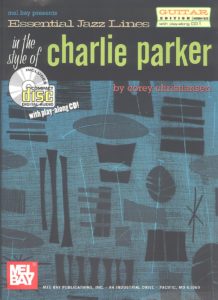
Scores for all instruments: 16,000+ (active and growing), over 236,000 pages.
All genres and levels: Jazz & Blues, Rock & Pop, Classical & Contemporary, Film & Musicals;
books & biographies; methods, études, play-along tracks (MP3) for Jazz & Rock.
Access & benefits: US$15.99 one-time payment, valid for lifetime, full Library access.
Table of Contents
Remembering Charlie Parker (1920-1955), pioneering co-creator of the bebop
Charles Parker Jr.—known to the world as Bird, or sometimes Yardbird—might be the most revolutionary figure jazz has ever produced. In a life that lasted only thirty-four years, he did nothing less than transform an art form. He wasn't merely an exceptional alto saxophonist; alongside Dizzy Gillespie, Parker was the principal architect of bebop, a musical language that shifted jazz from a popular dance music into a complex, virtuosic art form for serious listening.
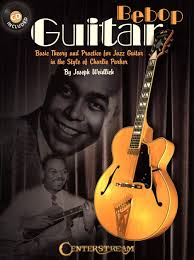
Please, subscribe to our Sheet Music Library. Sheet music should be accessible and affordable for all musicians, from professionals to absolute beginners.
His impact reshaped not only jazz but the entire landscape of twentieth-century music, and his influence continues to be felt decades after his death. Parker was a paradox: a tireless woodshedder who practiced for fifteen hours a day in his youth, yet a deeply troubled man whose life was marked by addiction. He was a brilliant melodist and an innovator of dizzying harmonic complexity. He is an icon of the Beat Generation, a symbol of the uncompromising artist, and, above all, a musical genius whose work remains endlessly studied and celebrated.

Full Biography
Early Life and Kansas City Roots
Charles Christopher Parker Jr. (Charlie Parker) was born on August 29, 1920, in Kansas City, Kansas, but he grew up in the bustling, jazz-soaked environment of Kansas City, Missouri, near the famous intersection of 15th and Olive Street. At the time, Kansas City was a vibrant musical hub, a hotbed of swing and blues that would deeply influence Parker's developing ear. His father, Charles Parker Sr., was a Pullman waiter who also dabbled as a pianist, dancer, and singer on the Theatre Owners Booking Association circuit, but he was largely absent, and his parents separated in 1930 due to his alcoholism and the Great Depression. His mother, Adelaide “Addie” Bailey, who had Choctaw and African-American heritage, worked nights at the local Western Union office to support the family.
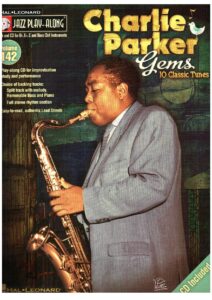
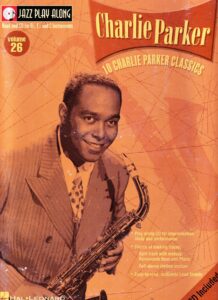
Parker began playing the baritone horn at the age of eleven before settling on the alto saxophone. A young trombone player named Robert Simpson taught him the basics of improvisation. Parker's early musical attempts were not always successful. At one jam session with the Count Basie Orchestra, a teenage Parker lost track of the chord changes. Drummer Jo Jones, disgusted, removed a cymbal from his kit and threw it at the floor near Parker's feet as a signal to leave the stage. Rather than giving up, the humiliation fueled him to practice with a legendary intensity. He withdrew from high school in December 1935 and joined the local musicians' union, committing his life to music.
The "Woodshedding" Period and Epiphany
Parker's famous “woodshedding” period began in earnest. He would spend three to four years practicing up to fifteen hours a day, running through every tune in every key. The breakthrough came in 1939 during a jam session at a Harlem chili house. Parker described the moment in the interview collection Hear Me Talkin’ to Ya:
“I’d been getting bored with the stereotyped changes (harmonies) that were being used all the time….I found that by using the higher intervals of a chord as a melody line and backing them with appropriately related changes I could play the thing I’d been hearing. I came alive.”
This realization—that the higher intervals of chords (ninths, elevenths, and thirteenths) could be used as primary melodic material, and that chords could be substituted freely—became the cornerstone of bebop. By the early 1940s, Parker had honed his voice and joined the band of pianist Jay McShann. While touring with McShann's band, he recorded his first solos, and his childhood nickname “Yardbird” was shortened to “Bird”.
The Bebop Revolution in New York
In New York, Parker began sitting in with a new generation of musicians at after-hours clubs in Harlem like Minton's Playhouse and Monroe's Uptown House. It was here, alongside trumpeter Dizzy Gillespie, pianist Thelonious Monk, and drummer Kenny Clarke, that the new music coalesced into bebop. Bebop was the antithesis of commercial swing: small combos, blistering tempos, complex harmonic structures, and a rhythmic language that emphasized off-beats and irregular accents. Parker and Gillespie were the dynamic frontline, pushing each other to ever-higher levels of invention. The famous 1945 sessions for the Savoy and Guild labels—featuring Gillespie, Miles Davis, and Max Roach—produced early bebop masterpieces like “Ko-Ko,” “Billie's Bounce,” and “Now's the Time”.
Personal Struggles and the Camarillo State Hospital
Despite his professional success, Parker's life was a constant struggle with heroin addiction and alcoholism, habits he had developed as a teenager. His addictions led to unreliable behavior, financial troubles, and a series of personal and professional crises. In July 1946, following a nervous breakdown exacerbated by his addictions, Parker was committed to the Camarillo State Mental Hospital in California for six months. This period gave rise to the poignant composition “Relaxin' at Camarillo,” a blues that reflects on his time in the institution. His famous recording sessions for the Dial label around this time were often chaotic, with Parker visibly unwell, yet they captured some of his most searing and intense playing.

Final Years and Legacy
After his release from Camarillo, Parker formed a quintet with Miles Davis that produced some of the most revered recordings in his discography, including “Scrapple from the Apple” and “Donna Lee.” In the late 1940s, he controversially recorded Charlie Parker with Strings, a series of lush, orchestral ballads that revealed his ability to be both a powerful bebopper and a soulful, lyrical interpreter. However, his health continued to decline due to his lifestyle.
On March 12, 1955, while watching a television variety show at the New York apartment of his friend and patron, the Baroness Pannonica de Koenigswarter, Parker died of complications from pneumonia and a bleeding ulcer. His official age was thirty-four, though the ravages of his life made him appear much older. Jazz critic and historian Gary Giddins famously wrote of his passing: “Parker's death was a shock, and it was a cliché. He had been living on borrowed time for years”. The words “Bird Lives!” became a rallying cry, scrawled on walls across New York, marking his ascension from a brilliant musician into a transcendent legend.
Music Style and Theory
To understand Parker’s music, one must move past the surface-level description of “fast and complex.” His true innovation was a systematic rethinking of the fundamental building blocks of jazz—harmony, melody, rhythm, and form.
Harmony and Tonality: The Bird Landscape
Parker’s approach to harmony was arguably his most significant and lasting contribution. His realizations liberated jazz from the standard chord progressions of the swing era.
Chord Substitution and the “Bird Blues”
Parker popularized the technique of chord substitution—replacing a given chord with another, more complex or unexpected one—to add harmonic interest and facilitate more adventurous melodic lines. He pioneered rapid passing chords, new variants of altered chords, and a host of chord substitutions that created surprising harmonic motion.
This is nowhere more evident than in his approach to the twelve-bar blues. The “Parker Blues” (or “Bird Changes”) adds a series of II-V chord progressions to the standard form, allowing for a cascade of new harmonic possibilities. His tunes “Now’s the Time” and “Billie’s Bounce” are built on simpler blues changes; “Blues for Alice” and “Cheryl” are advanced, reharmonized blues forms.
Chromaticism
Parker's most radical idea was his realization that the twelve notes of the chromatic scale could lead melodically to any key, freeing him from the diatonic scales that had previously confined jazz improvisation. He used chromatic approach notes and enclosures to decorate the harmony, creating lines that were both fluid and harmonically clear.
Treatment of Tonality
Parker’s tonal world was a functional harmony but was stretched to its breaking point. He wrote melodies that sometimes implied harmonies different from those of the rhythm section. He almost exclusively used the major scale against tonic chords but would frequently incorporate the fourth and major seventh, which were considered dangerously dissonant in earlier styles. Parker’s tone was clean, penetrating, and versatile—hard and biting on up-tempo be-bop tunes, yet sweet and plaintive on ballads.
Melodic and Formal Style: The Architecture of a Solo
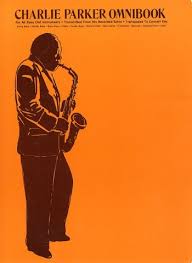
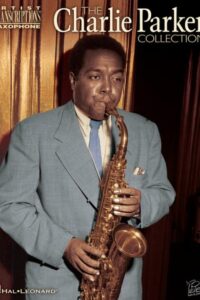
Parker's melodic language is so distinctive that it has been codified in books like the Charlie Parker Omnibook, a collection of sixty transcribed solos that serves as a bible for jazz students.
Thematic Improvisation
Scholars have extensively studied Parker's style and concluded that it is based on an extensive network of melodic formulas, sometimes called "Parkerisms" or "licks". These small, recognizable melodic cells are combined, recombined, and adapted to fit different harmonic contexts in his improvisations. Importantly, Parker went beyond merely pasting formulas together. He would often create variations on the original melody of a tune (the “head”), weaving fragments of it into his solos—a technique known as thematic improvisation.
Rhythm
Parker’s rhythmic language is the engine of bebop. He used a stream of eighth notes, punctuated by unexpected accents and rests, to create a forward momentum that was almost breathless. He favored the backbeat (accents on the second and fourth beats) and introduced a fluidity to phrasing that often “crossed the bar line,” creating phrases that began and ended in metrically surprising places.
Encounters with Other Artists
Parker’s genius was forged in collaboration.
- Dizzy Gillespie: The partnership between Parker and Gillespie is the central relationship of bebop. The trumpeter's high-register virtuosity and harmonic daring perfectly complemented Parker's alto sax. Together they created the bebop language, co-wrote tunes like “Anthropology” and “Salt Peanuts,” and their 1945 sessions together are foundational documents of the music. They also feuded and eventually went their separate ways, but their music together remains a pinnacle of jazz.
- Miles Davis: A young Miles Davis was part of Parker's quintet in the late 1940s, a role that placed him at the center of the bebop revolution. The famously reserved Davis honed his voice in the shadow of Bird’s intensity. Their collaborations produced the “Birth of the Cool” sides, which pointed toward a cooler, more relaxed style of jazz.
- Max Roach: Drummer Max Roach was Parker’s rhythmic soulmate. Roach’s propulsion, his use of the ride cymbal, and his ability to drop “bombs” (unexpected accents on the snare and bass drum) created the perfect rhythmic bed for Parker’s long, weaving lines.
- Thelonious Monk: As one of the house pianists at Minton’s, Monk was a fellow architect of bebop. Monk’s idiosyncratic, percussive style and his use of dissonance were a perfect foil for Parker. They famously recorded together on several occasions, though Parker was not always comfortable with Monk’s highly individualistic approach.
- Lester Young: Parker’s most important early influence was tenor saxophonist Lester Young. Young’s light tone, horizontal improvisational style (which focused on melodic variation rather than vertical chord outlining), and his characteristic “Prez” vocabulary provided a crucial model for Parker as he moved away from the heavier swing style.
List of Works (Discography)
Charlie Parker left behind a relatively small but extraordinarily potent body of recorded work. A full list of his approximately 500 studio master recordings would fill this article, but here is a breakdown of the key categories and a selection of his most important original works.
Original Compositions
Parker was a significant composer, and his tunes are core standards in the jazz repertoire, often based on the harmonic structures of existing Tin Pan Alley songs or blues progressions. Key original works include:
- Anthropology (with Dizzy Gillespie): Based on “I Got Rhythm” changes.
- Au Privave: A staple blues.
- Barbados: A blues at medium tempo.
- Billie's Bounce: One of Parker’s most famous blues head, its seemingly simple melody is a masterpiece of phrasing.
- Blues for Alice: A classic “Bird Blues” with rapid-fire chord changes.
- Cheryl: A distinctive blues line.
- Confirmation: A challenging and beautiful contrafact, highly regarded for its melodic intricacy.
- Donna Lee (often credited to Miles Davis, but widely attributed to Parker): A breakneck, virtuosic line built on the changes of “(Back Home Again in) Indiana.”
- K.C. Blues: A classic 12-bar blues.
- Ko-Ko: A Parker masterpiece: a blazing improvisation on “Cherokee” changes.
- Moose the Mooche: A bright and boppish tune on “I Got Rhythm” changes.
- Now's the Time: A simple yet powerful riff blues, one of the most famous and widely quoted jazz melodies.
- Ornithology: His best-known contrafact, written on “How High the Moon” changes, a classic bebop line.
- Parker's Mood: A minor blues, recorded as a slow and deeply expressive solo tour de force.
- Relaxin' at Camarillo: A blues reflecting on his hospital stay.
- Scrapple from the Apple: A contrafact on “Honeysuckle Rose” changes; features a cleverly constructed melody.
- Yardbird Suite: Parker’s signature tune, a beautiful and lyrical composition.
Works on Films and Documentaries
Parker’s life and music have been the subject of numerous films and documentaries.
Documentaries
- Celebrating Bird: The Triumph of Charlie Parker (1987): The definitive documentary, this film was the first and only authorized chronicle of Parker's life. Directed by Gary Giddins and Kendrick Simmons, it features interviews with Dizzy Gillespie, Roy Haynes, Jay McShann, and Parker's childhood sweetheart and first wife, Rebecca Parker Davis. It also includes the only surviving TV appearance of Parker and Gillespie performing “Hot House”.
- Bird Now (1988): A Belgian documentary by Marc Huraux, shot in New York in English, featuring interviews with family, friends, and fellow musicians, including Dizzy Gillespie and Chan Parker.
- Bird Lives! The Charlie Parker Memorial Concert Songbook (2019): A film that focuses on interpretations of Parker's compositions from memorial concerts.
Fictional Film Portrayals
- Bird (1988): Clint Eastwood's lush, impressionistic biopic starring Forest Whitaker as Parker. The film was praised for its performances and musical authenticity but criticized for focusing heavily on Parker's drug addiction.
- The Last of the Blue Devils (1986): A documentary on Kansas City jazz that features archival footage of Parker.
- *Parker’s music has also been featured in dozens of films including “Whiplash” (2014), “La La Land” (2016), and “The Talented Mr. Ripley” (1999).
Discography
Parker primarily recorded for three record labels: Savoy, Dial, and Verve. A full list of his master takes is extensive, but the following box sets are the definitive chronicles of his studio output.
- The Complete Savoy & Dial Master Takes (2000): A 3-CD set that collects all the master takes from Parker’s seminal 1940s sessions.
- Complete Charlie Parker on Dial (1996): A 4-CD box set featuring all 89 master and alternate takes from the Dial sessions (1946-1947).
- Bird: The Complete Charlie Parker on Verve (1988): A massive 10-CD box set that documents his later career for Verve (1948-1954), including the “With Strings” sessions, his big band recordings, and his tours with Jazz at the Philharmonic.
His studio albums, primarily issued on 10-inch LPs in the 1950s, include Charlie Parker with Strings (1950), South of the Border (1952), Big Band (1953), and his final studio album, The Cole Porter Songbook (1954).
Most Known Compositions and Recordings
In a 1954 radio interview, Parker, when asked about his influence, said, "I had no idea that it was that much different. Ever since I’ve been learning music, I thought it should be very clean, very precise and more or less to the people, you know - something they could understand, something that was beautiful". The following represent the most celebrated and influential of his recordings.
- Now's the Time (1945): One of the essential bebop blues heads.
- Ko-Ko (1945): A historic recording; Parker’s unaccompanied improvisation on “Cherokee” at a breakneck tempo was a revelation.
- Ornithology (1946): The quintessential bebop contrafact, with a famous, fast-paced head.
- Scrapple from the Apple (1947): A brilliant composition that combines two popular song melodies, “Honeysuckle Rose” and “I Got Rhythm.”
- Parker's Mood (1947): A slow, expressive blues that shows Parker’s depth as a ballad player.
- Billie's Bounce (1945): A fun, bright blues with a memorable, catchy melody.
- Yardbird Suite (1946): Parker’s beautiful and lyrical signature tune.
- Just Friends (1949): The definitive recording from his “With Strings” sessions; a slow ballad that showcases his lush, melodic side.
- Confirmation (1953): One of Parker’s most sophisticated compositions, a challenging and harmonically dense melody.
- Au Privave (1951): A classic mid-tempo blues, recorded in a famous session with Dizzy Gillespie and Thelonious Monk.
Covers in Modern Music and Famous Performers
Parker's influence stretches far beyond jazz and across genres.
Modern Covers
- Hip-Hop and Electronic Music: Parker’s music has been heavily sampled by hip-hop and electronic artists. “Yardbird Suite” has been sampled by De La Soul and A Tribe Called Quest. El-P sampled “Bird of Paradise” on his track “Constellation (Heavenly Bodies)”.
- Rock and Pop: The rock band The Doors incorporated elements of Parker’s music, with Robby Krieger citing Parker as a major influence. Grateful Dead guitarist Jerry Garcia was a devotee and often quoted Parker in his solos. Modern artists like the Pat Leary & Thomas Kelleher duo have released modern covers of “Orinthology” .
- Re-Imaginings: The album Bird Up: The Charlie Parker Remix Project (2003) featured remixes of Parker’s music by contemporary artists.
Famous Performers of His Music
Parker’s compositions and style have been interpreted by countless musicians across all instruments.
- Saxophonists: John Coltrane, Sonny Rollins, Cannonball Adderley, Lee Konitz, Ornette Coleman, Michael Brecker, Kenny Garrett, and Joshua Redman.
- Trumpeters: Dizzy Gillespie, Miles Davis, Chet Baker, Clifford Brown, Fats Navarro, Freddie Hubbard, Wynton Marsalis.
- Pianists: Bud Powell, Thelonious Monk, Herbie Hancock, Chick Corea, Keith Jarrett, Brad Mehldau.
- Guitarists: Charlie Christian, Joe Pass, Wes Montgomery, Pat Martino, John Scofield.
- Bassists and Drummers: Ray Brown, Charles Mingus, Max Roach, Art Blakey, Roy Haynes.
Last Works
Parker’s final years were marked by a precipitous decline in his health, but they still yielded significant and powerful music.
- The Cole Porter Songbook (1954): Recorded in New York City in March and December of 1954, this is Parker’s last completed studio album. It features his interpretations of Cole Porter standards, and while his playing is still inventive, it is often softer, slower, and more introspective than his earlier work, perhaps reflecting his physical state.
- Unissued Takes: Numerous live sessions and unissued alternate takes from his final years have been collected on albums like Bird's Eyes: Last Unissued, Vol. 11 (2007), which features recordings from concerts in Paris and Roubaix, France, in May 1949, a period when he was still playing with phenomenal power and creativity.
Search your favorite sheet music in the Sheet Music Library Catalog
Musical tributes
Legacy
Charlie Parker’s legacy is immeasurable. He is the “Bird” who taught the world that a jazz musician could be a serious composer, a virtuoso, and an intellectual artist, not merely a popular entertainer. His music was the foundation upon which virtually all of post-war jazz was built, from hard bop and cool jazz to free jazz and fusion. Generations of musicians have been raised on the Omnibook, learning his language of rhythmic displacement, harmonic substitution, and melodic invention. As jazz critic Kevin Whitehead noted, Parker “was so influential, even players of other instruments wanted that sound”. His centenary in 2020 was celebrated worldwide as “Bird 100,” a testament to an artist whose music continues to be as challenging, rewarding, and ecstatic as it was when it first exploded onto the scene.
Charlie Parker died at 34, but as the graffiti said, Bird Lives. He lives in every jazz musician who seeks to push the boundaries, in every saxophone student who struggles to master a Parker lick, and in every listener who hears the sheer joyful audacity of a melody like “Ornithology” or the aching soul of “Parker’s Mood.” He transformed an art form, and his music has never stopped.
Browse in the Sheet Music Library:
Or browse in the categories menus & download the Library Catalog PDF:
Charlie Parker - "My Little Suede Shoes" (C.P. Sextet - 1951)
Personnel: Charlie Parker, alto saxophone Walter Bishop Jr., piano Teddy Kotick, bass Roy Haynes, drums Luis Miranda, congas Jose Mangual, bongos.