Scores for all instruments: 16,000+ (active and growing), over 236,000 pages.
All genres and levels: Jazz & Blues, Rock & Pop, Classical & Contemporary, Film & Musicals;
books & biographies; methods, études, play-along tracks (MP3) for Jazz & Rock.
Access & benefits: US$15.99 one-time payment, valid for lifetime, full Library access.
Table of Contents
Remembering Dizzy Gillespie (1917-1993)


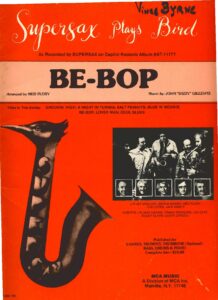
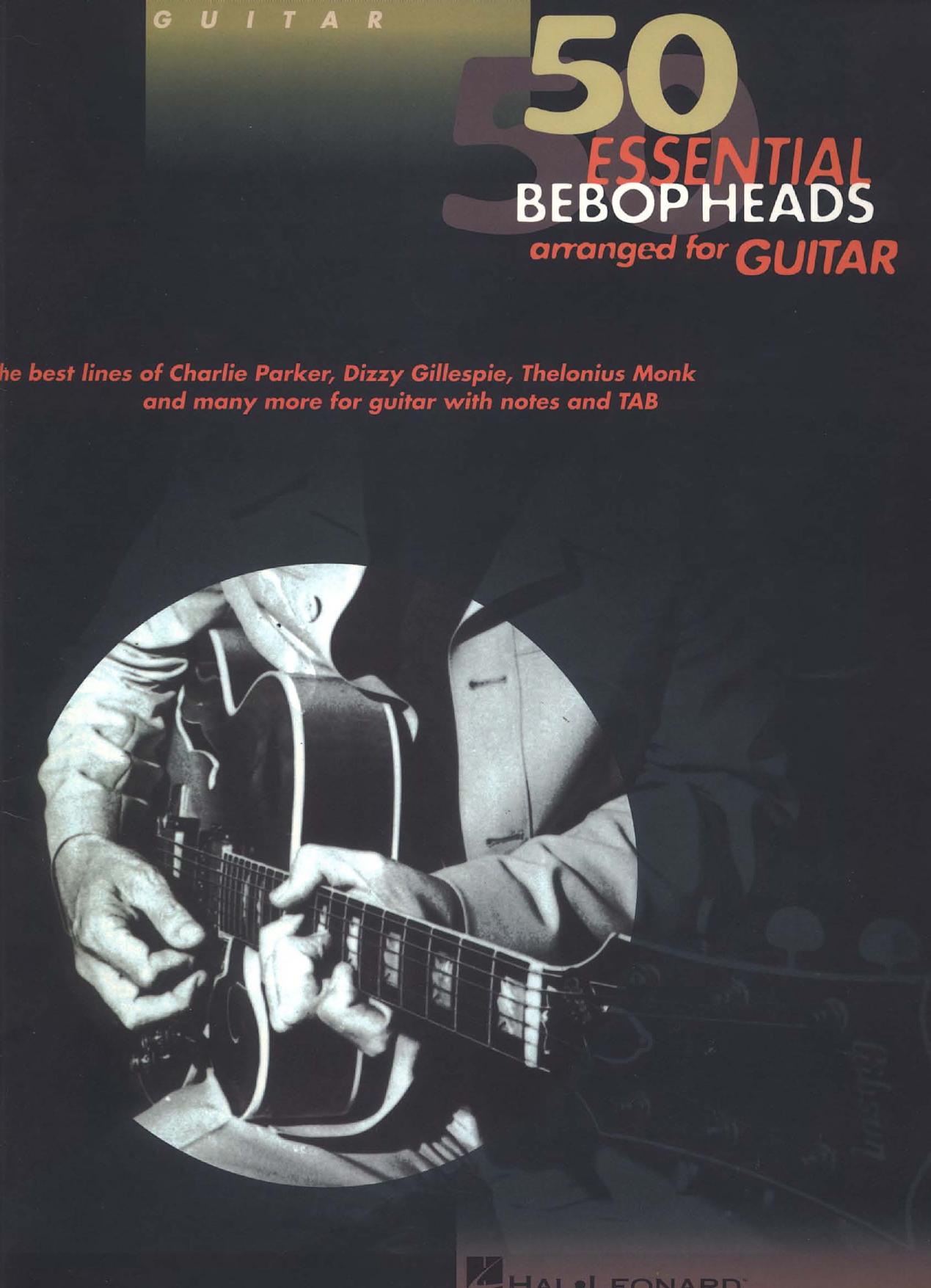
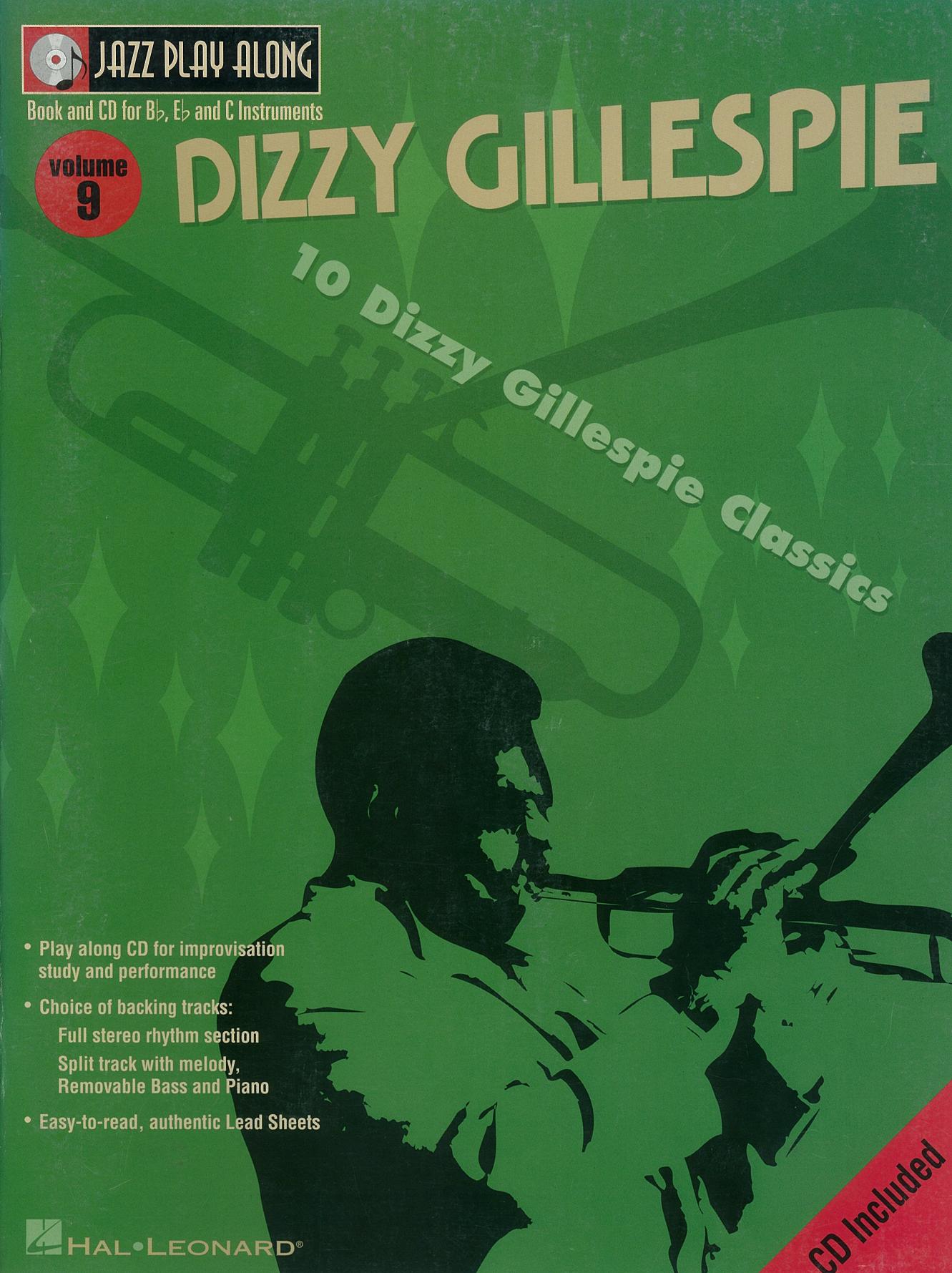
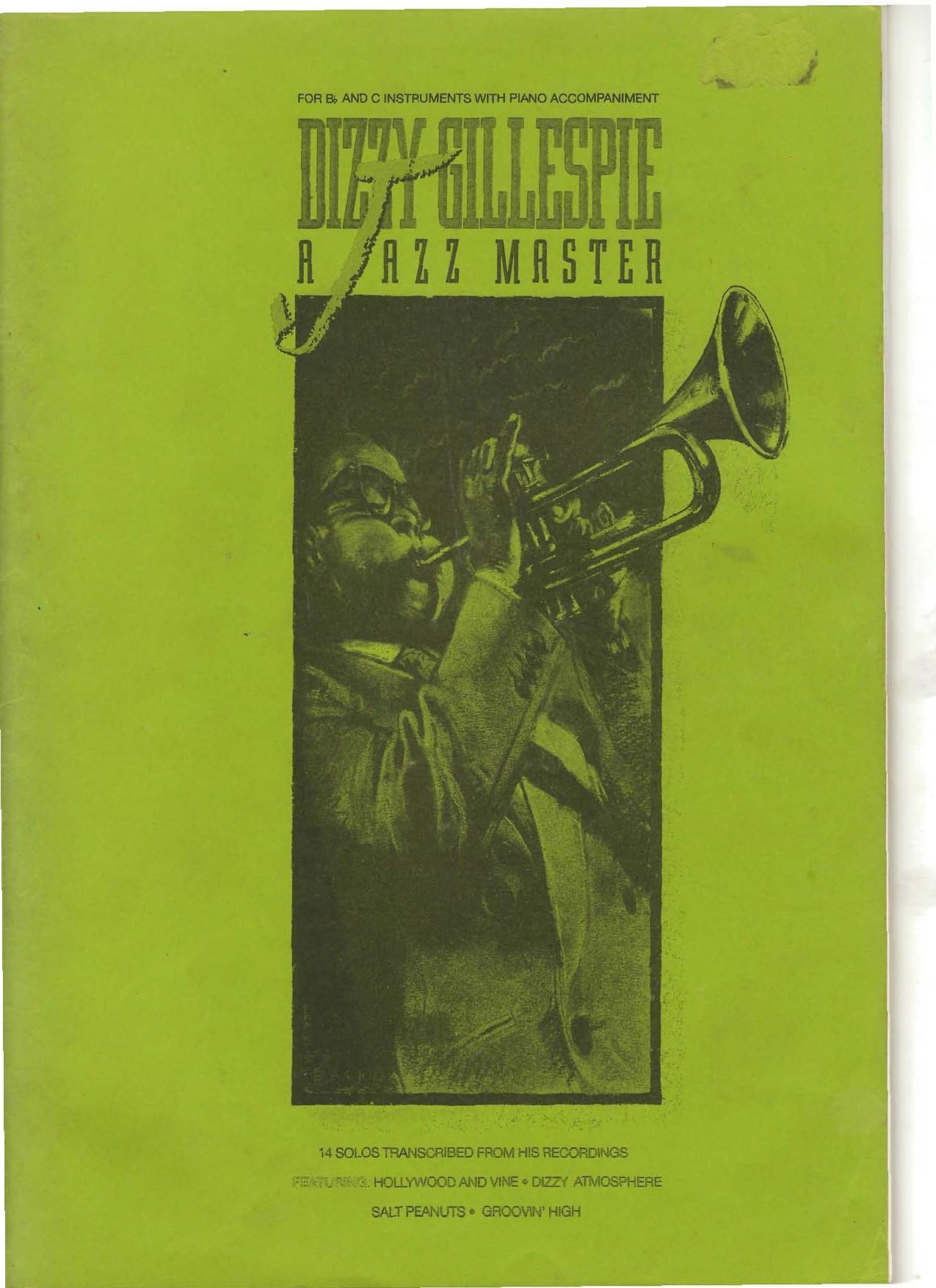
Please, subscribe to our Sheet Music Library. Sheet music should be accessible and affordable for all musicians, from professionals to absolute beginners.
Dizzy Gillespie: The Architect of Modern Jazz
John Birks "Dizzy" Gillespie (October 21, 1917 – January 6, 1993) stands as one of the most transformative figures in the history of American music. With his iconic bent trumpet, ballooning cheeks, and impish grin, Gillespie possessed perhaps the most recognizable face in jazz. But beneath the showmanship lay a musical revolutionary who fundamentally changed the way jazz was played, heard, and understood. Alongside Charlie Parker, Gillespie was the primary architect of bebop—the complex, lightning-fast style that shattered the conventions of swing and ushered in the era of modern jazz. He then reinvented himself again, becoming a founding father of Afro-Cuban jazz and a global ambassador for American music. His career spanned more than five decades, during which he composed some of the most enduring standards in the jazz repertoire, mentored generations of trumpet players, and brought jazz to audiences around the world. He was, in the words of the White House, a "national treasure".
The best sheet music download from our Library.
Biography
John Birks Gillespie was born on October 21, 1917, in Cheraw, South Carolina, the youngest of nine children. His father, James Gillespie, was a bricklayer, pianist, and bandleader who instilled in his children a love of music. Young John began playing piano at the age of four and demonstrated such natural aptitude that he received a music scholarship to the Laurinburg Institute in North Carolina. It was there that he began playing the trumpet, an instrument that would become his lifelong voice.
At age 18, Gillespie moved with his family to Philadelphia, where he joined Frankie Fairfax's band. It was during this period that he acquired his famous nickname—"Dizzy"—a moniker that reflected his playful, unpredictable onstage antics. In 1937, he moved to New York City and joined Teddy Hill's big band, replacing his idol Roy Eldridge. This was a pivotal moment: Gillespie was stepping into the shoes of the trumpeter he most admired, and he would soon surpass even that model.
Gillespie's tenure with Cab Calloway's orchestra from 1939 to 1941 was both formative and famously tumultuous. Calloway, a bandleader of the old school, disapproved of Gillespie's adventurous soloing and mischievous behavior. The relationship ended explosively when, after being falsely accused of throwing a spitball, Gillespie stabbed Calloway in the thigh with a pocket knife and was promptly fired. Remarkably, the two men later became lifelong friends and often retold the story with great relish.
The early 1940s found Gillespie freelancing with an extraordinary array of musicians: Ella Fitzgerald, Benny Carter, Coleman Hawkins, Lucky Millinder, and the Earl Hines orchestra. In 1940, he met a young saxophonist named Charlie Parker, and the two began jamming together in the legendary after-hours sessions at Minton's Playhouse in Harlem. Alongside Thelonious Monk, Kenny Clarke, and other restless young musicians, Gillespie and Parker developed a radically new approach to jazz that would soon be labeled "bebop". As Quincy Jones later observed, "What they did was like nitroglycerine, electricity. They broke all the rules, changed the world concert of American music".
In 1940, Gillespie married Lorraine Willis, a dancer he had met in 1937. They remained together for the rest of his life. Their daughter, Jeanie Bryson, born in 1958, would become a jazz singer in her own right.
The 1945-46 group that Gillespie and Parker co-led set the formal template for bebop. Their legendary concert at Massey Hall in Toronto in 1953, which also featured Bud Powell, Charles Mingus, and Max Roach, remains one of the most celebrated live recordings in jazz history.
In 1953, Gillespie's trumpet was accidentally bent when someone fell on its stand backstage. He discovered that he liked the altered sound and had trumpets specially made with the bell bent upward at a 45-degree angle from then on. This bent bell became his signature, both visually and sonically.
Gillespie endured decades of chronic pain from the 1937 horseback riding accident, but he never stopped performing, composing, or traveling. He died on January 6, 1993, in Englewood, New Jersey, at the age of 75.
Musical Style
Gillespie's musical style represents a quantum leap in the evolution of jazz. Building on the virtuosic foundation laid by Roy Eldridge, he added layers of harmonic and rhythmic complexity previously unheard in the music. Where swing-era trumpeters like Louis Armstrong and Eldridge had played melody-driven lines over relatively simple chord changes, Gillespie approached improvisation as a form of intellectual and emotional exploration.
His playing was characterized by extraordinary technical facility—he could execute lightning-fast runs, wide interval leaps, and complex arpeggiations with seemingly effortless precision. But technical prowess was never an end in itself. Gillespie used his virtuosity in service of musical expression, weaving intricate melodic lines that danced nimbly through the harmonic structure of a tune.
Gillespie was also a pioneer of scat singing, using his voice as an instrument in its own right. His scat solos were melodic and rhythmic marvels, often mimicking the complexity of his trumpet improvisations. This vocal dimension added another layer to his already multifaceted artistry.
His personality was integral to his style. With his beret, horn-rimmed spectacles, bent horn, pouched cheeks, and light-hearted demeanor, Gillespie was the hipster who most personified bebop. He was a natural public relations man for this challenging new music, using his humor and showmanship to win over audiences who might otherwise have been baffled by its harmonic complexity.
Chord Progressions and Music Harmony
Gillespie's harmonic innovations were central to the bebop revolution. He approached chord progressions not as fixed frameworks but as springboards for exploration. As one analysis notes, he "showed ways to play more freely, in a sense being more chromatic, over functional-harmonic arranged chord progressions".
His compositions are masterclasses in harmonic ingenuity. "A Night in Tunisia," arguably his most iconic piece, is "built around minor harmony, approached through tritone substitution". The chord progression of the "B" section follows a standard cycle-of-fifths variation that "alternates minor and major 7th chords starting on v7(b5) (functioning as a ii chord of III) and descends to III before dropping a half-step to the ii7(b5) of i". This sophisticated harmonic architecture gives the piece its exotic, mysterious quality.
"Groovin' High," another Gillespie standard, "consists entirely of chord progressions found in numerous tunes," but he arranged them in ways that created new harmonic landscapes. "Dizzy Atmosphere," recorded with Charlie Parker in 1945, is "based on the chord progression found in George Gershwin's 'I Got Rhythm,' or 'rhythm changes' as referred to in jazz". Gillespie and Parker took this familiar framework and infused it with new harmonic and rhythmic life.
The Afro-Cuban compositions that Gillespie pioneered with Chano Pozo introduced entirely new harmonic approaches. "Manteca," co-written with Pozo in 1947, features a 28-bar structure with "22 bars static harmony then trumpet solo," creating a hypnotic vamp that allows for extended improvisation. This fusion of African-derived rhythmic patterns with jazz harmony opened new avenues for musical expression.
Gillespie's harmonic approach was deeply informed by his study of chords at the piano. He began "adding flatted fifths and other harmonic subtleties to his fast runs and big leaps", creating a vocabulary of extended harmonies—ninths, elevenths, thirteenths, and altered chords—that became the lingua franca of modern jazz.
Relationships with Other Artists
Gillespie's collaborative relationships were central to his artistic development and legacy. His partnership with Charlie Parker was perhaps the most consequential in jazz history. The two "musical twins" first played together in the bands of Earl Hines and Billy Eckstine in the early 1940s, and their 1944-46 group set the formal template for bebop. Their interplay was telepathic: Parker's sinuous, chromatic saxophone lines wove through Gillespie's angular, harmonically dense trumpet phrases in a dialogue that redefined the possibilities of jazz improvisation.
The Cuban trumpeter Mario Bauza was another crucial influence—Gillespie called him his "musical father". Bauza introduced Gillespie to Afro-Cuban rhythms and connected him with Chano Pozo, the conga player with whom Gillespie would create the Afro-Cuban jazz revolution.
Gillespie's influence on younger trumpeters was immense. He taught and mentored generations of players, including Miles Davis, Fats Navarro, Clifford Brown, Lee Morgan, Arturo Sandoval, Jon Faddis, and Chuck Mangione. Each of these musicians, in turn, developed their own distinctive voices, but all carried forward elements of Gillespie's technical and harmonic approach.
His relationships extended beyond the jazz world. He performed with and befriended Louis Armstrong, Duke Ellington, Ella Fitzgerald, Lionel Hampton, and Billie Holiday. He collaborated with Randy Weston, Max Roach, Miriam Makeba, and Paquito D'Rivera. He commissioned George Russell's "Cubano Be, Cubano Bop," which featured the great Chano Pozo.
Influences
Gillespie's primary early influence was Roy Eldridge, the trumpeter who bridged the gap between Louis Armstrong and the bebop generation. Gillespie called Eldridge "the Messiah of our generation" and openly admitted to copying his style early in his career. Eldridge's virtuosic, aggressive approach to the trumpet provided the technical foundation upon which Gillespie built his own innovations.
Louis Armstrong was another crucial influence. Gillespie admired Armstrong's ability to "build a story out of his solos"—a lesson in narrative structure that Gillespie never forgot, even as he pushed jazz into far more complex harmonic territory.
Mario Bauza's influence cannot be overstated. As the architect of Afro-Cuban jazz, Bauza provided Gillespie with the rhythmic vocabulary and cultural connections that would lead to the creation of Cubop.
Classical music also played a role. Gillespie's study of harmony at the piano, his exploration of extended chords, and his willingness to incorporate dissonance and chromaticism all reflect a mind that was open to the full range of Western musical tradition.
Legacy
Gillespie's legacy is vast and multi-faceted. He is remembered as one of the primary creators of both the bebop and Afro-Cuban revolutions, meaning that he "twice fundamentally changed the way jazz improvisation was done". His influence extends across genres and generations.
In the words of Quincy Jones, Gillespie and Parker "broke all the rules, changed the world concert of American music". Gillespie himself, with characteristic confidence, declared: "The music of Charlie Parker and me laid a foundation for all the music that is being played now…. Our music is going to be the classical music of the future".
His efforts as a trumpeter, composer, bandleader, and teacher resulted in "some of jazz's most timelessly innovative moments during his 50-plus years in the public limelight". He was one of the first musicians to actively incorporate elements of Afro-Cuban music into jazz, and he pioneered the modern big band format long after the swing era ended.
Gillespie was also a cultural diplomat. He was the first jazz artist to be sent abroad under the auspices of the United States government, spreading American goodwill and good music around the world. He toured Africa, the Middle East, and Latin America, often returning not only with fresh musical ideas but with musicians who would go on to achieve world renown.
His honors include the Grammy Lifetime Achievement Award (1989), the National Medal of Arts (1989), Kennedy Center Honors (1990), and fourteen honorary degrees.
Major Works
Gillespie's compositions number in the dozens and include some of the most enduring standards in the jazz repertoire. His major works span multiple genres and periods.
Bebop Standards
- "A Night in Tunisia" (1942) – His most iconic composition, combining bebop with exotic harmonic and rhythmic elements.
- "Groovin' High" (1945) – A bebop classic built on familiar chord progressions arranged in innovative ways.
- "Salt Peanuts" (1944) – A bebop anthem featuring his famous scat vocals.
- "Woody 'n' You" – One of his earliest and most enduring compositions.
- "Con Alma" – A later composition that became a jazz standard.
Afro-Cuban Classics
- "Manteca" (1947) – Co-written with Chano Pozo, this piece fused jazz harmony with Afro-Cuban rhythms.
- "Tin Tin Deo" – Another Afro-Cuban standard co-written with Pozo.
- "Guachi Guaro" (also known as "Soul Sauce") – A Latin jazz classic.
Suites and Extended Works
- "Gillespiana" (1960) – A suite composed with Lalo Schifrin that reflected his evolution toward orchestral jazz.
- "Cubano Be, Cubano Bop" – Commissioned from George Russell and featuring Chano Pozo.
Film and Television
Gillespie appeared in numerous films and television shows throughout his career. His film appearances include:
- Jivin' in Be-Bop (1946) – A feature film showcasing Gillespie and his orchestra, described as "a swinging variety show packed with amazing songs and wonderful performances".
- The Cool World (1964) – A film about Harlem youth for which Gillespie composed the score.
- High Society (1956) – Though not a starring role, his presence in this classic film musical is notable.
He appeared as a guest on numerous television programs and was the subject of several documentaries.
Discography
Gillespie's recorded output spans over 150 sessions from 1937 to 1992. His discography as a leader is extensive.
Key Studio Albums
- Afro (1954, Norgran) – A seminal fusion of jazz with Latin rhythms.
- Dizzy and Strings (1954) – Showcasing his lyrical side.
- Roy and Diz (1954) – With his idol Roy Eldridge.
- Bird and Diz (1952) – With Charlie Parker.
- Dizzy and Getz (1954) – With Stan Getz.
- Gillespiana (1961) – With Lalo Schifrin.
- The Winter in Lisbon (1990) – His last studio album, intended as a film soundtrack.
Live Recordings
- Dizzy Gillespie at Newport – Documenting his legendary festival appearances.
- Massey Hall Concert (1953) – The legendary concert with Parker, Powell, Mingus, and Roach.
His discography, including reissues and compilations, totals over 800 entries across formats.
Most Known Compositions and Performances
"A Night in Tunisia"
Undoubtedly Gillespie's most famous composition, "A Night in Tunisia" was written in the early 1940s during a stint with Benny Carter's band at Kelly's Stables on 52nd Street. The piece "exhibits Afro-Cuban rhythms and the sound of bebop when the style was still new to many ears". Its exotic harmonic structure and memorable melody have made it one of the most recorded jazz standards of all time.
"Manteca"
Co-written with Chano Pozo in 1947, "Manteca" is a landmark of Afro-Cuban jazz. Its driving rhythmic groove, built on a hypnotic bass vamp and congas, represents a fusion of African and American musical traditions that would influence generations of Latin jazz musicians.
"Salt Peanuts"
This bebop classic is as famous for Gillespie's scat vocals as for its complex melody. The title phrase, sung in his distinctive voice, became a signature of his live performances.
"Groovin' High"
A quintessential bebop composition that demonstrates Gillespie's ability to transform familiar harmonic progressions into something new and exciting.
Live Performances
Gillespie was legendary for his live performances. His concerts at Birdland (1951), the Newport Jazz Festival (1957), and Massey Hall (1953) are among the most celebrated in jazz history. His 1978 White House performance of "Salt Peanuts" for President Carter remains a memorable moment in American cultural history.
Documentaries
Several documentaries have explored Gillespie's life and music:
- Dizzy Gillespie (1964) – Directed by Les Blank, this was Blank's first documentary and "a lively portrait of one of the greatest trumpet players of all time".
- A Night in Havana: Dizzy Gillespie in Cuba (1992) – This documentary captures Gillespie's trip to Cuba and "celebrates the life and work of jazz pioneer Dizzy Gillespie," featuring performances and "quiet reflections on the importance of Afro-Cuban music to his art and sense of self".
- The Life and Music of Dizzy Gillespie – A documentary directed by Gene A. Davis.
- Groovin' High: The Life of Dizzy Gillespie – Alyn Shipton's definitive biography, which serves as a comprehensive documentary of his life.
Gillespie's autobiography, To Be or Not to Bop (written with Al Fraser), is also essential reading, featuring interviews with contemporaries including Miles Davis, Ella Fitzgerald, and Thelonious Monk.
Dizzy Gillespie was more than a musician
Dizzy Gillespie was more than a musician; he was a force of nature who reshaped American music in his image. As a trumpeter, he expanded the technical and expressive possibilities of his instrument. As a composer, he created some of the most enduring standards in the jazz repertoire. As a bandleader, he nurtured and inspired generations of musicians. As a cultural ambassador, he brought jazz to the world and brought the world's rhythms back to jazz.
His career spanned more than five decades, from the swing era through bebop, Afro-Cuban jazz, and beyond. He never stopped evolving, never stopped exploring, never stopped surprising. He was, in the words of one biographer, "the musical heir to Louis Armstrong" who "created the basic jazz trumpet-playing style and dazzled aficionados and popular audiences alike for over 50 years".
Gillespie's legacy is secure. His music continues to be performed and recorded. His innovations continue to inform the work of jazz musicians around the world. And his spirit—playful, irreverent, brilliant, and generous—continues to inspire. As he once said, with characteristic modesty and truth: "I don't have to worry about my legacy. My legacy is my music."
Dizzy Gillespie Sextet - Be-Bop (Dizzy's Fingers) • World of Jazz
John Birks ‘Dizzy’ Gillespie (21 October 1917 – 6 January 1993) was an American jazz trumpeter and bandleader. In the 1940’s Gillespie, with Charlie Parker, became a major figure in the development of bebop and modern jazz. He taught and influenced many other musicians, including trumpeters Miles Davis, Jon Faddis, Fats Navarro, Clifford Brown, Arturo Sandoval, Lee Morgan, Chuck Mangione and balladeer Johnny Hartman. The Dizzy Gillespie Sextet was one of the pivotal small-group configurations led by trumpeter Dizzy Gillespie. The sextet's recordings are foundational to modern jazz, featuring tracks like "Groovin' High," "Blue 'n' Boogie," and "Salt Peanuts". This live performance was recorded on 10th of July 1981 at the North Sea Jazz Festival in The Hague, The Netherlands.
Browse in the Sheet Music Library:
Or browse in the categories menus & download the Library Catalog PDF:
Dizzy Gillespie and Sonny Stitt are Groovin' High
Groovin' High (Gillespie). Belgium, 1974. Dizzy Gillespie, trumpet; Sonny Stitt, alto saxphone; Al Gaffa, guitar and Mickey Roker, drums.