Scores for all instruments: 16,000+ (active and growing), over 236,000 pages.
All genres and levels: Jazz & Blues, Rock & Pop, Classical & Contemporary, Film & Musicals;
books & biographies; methods, études, play-along tracks (MP3) for Jazz & Rock.
Access & benefits: US$15.99 one-time payment, valid for lifetime, full Library access.
Table of Contents
Ekseption band (1967-1989)
The best sheet music download from our Library.
Please, subscribe to our Sheet Music Library.
The Seeds of a Symphony: From The Jokers to Ekseption
The story of Ekseption begins in 1958 in Haarlem, Netherlands, with a high-school band named The Jokers. Formed by a group of friends—bassist Hans Alta, drummer Tim Griek, guitarist/saxophonist Huib van Kampen, and trumpeter Rein van den Broek—they started by playing covers of popular songs. In 1965, the band rebranded as The Incrowd, inspired by a Ramsey Lewis song, but soon discovered another Dutch band had already claimed the name. By 1967, they had settled on the name Ekseption, a unique spelling that hinted at their future as musical outliers.
The lineup remained fluid, with saxophonist/flutist Rob Kruisman joining as an early bandleader. The group played a mix of jazz, pop, and R&B covers at local clubs. However, a pivotal moment came in 1968 when Rein van den Broek was impressed by the keyboard skills of classically trained musician Rick van der Linden and invited him to join the group. Van der Linden, a graduate of The Hague Conservatory, had previously played with several jazz and pop groups, bringing a new level of sophistication.

Search your favorite sheet music in the Sheet Music Library Catalog
The newly solidified band's big break came in 1968 when they entered the prestigious Loosdrecht Jazz Concours. Winning the first prize earned them a record deal with Phonogram, a subsidiary of Philips Records. With producer Tony Vos at the helm, the band prepared to record their debut album. By this time, the founding members Hans Alta and Tim Griek had been replaced by bassist Cor Dekker and drummer Peter de Leeuwe, setting the stage for the band's classic era.
A Decade of Classical Rock
Ekseption's signature sound was forged from a triumvirate of influences: Rick van der Linden's classical training, the band's jazz-R&B foundation, and the emerging progressive rock movement. The catalyst was a 1969 concert by The Nice, a British band known for their flamboyant, rock-driven reinterpretations of classical music. Deeply impressed, the group abandoned their R&B roots and decided to focus solely on producing 'classical rock'—modern rock-band re-interpretations of classical works.
Van der Linden’s classical keyboard style, the core of Ekseption’s sound, came from his conservatory training in piano, organ, harmony, and counterpoint. He was deeply influenced by Baroque composers like Bach, whom he considered a progressive and misunderstood genius. This classical foundation was combined with the rhythmic drive of a rock rhythm section, the improvisational freedom of jazz, and the powerful, often dominant brass of van den Broek’s trumpet and various saxophonists. The result was a style that blended symphonic rock, classical crossover, and jazz fusion into mostly instrumental compositions.
A Deep Dive into the Harmony
The band’s technique typically involved taking a classical theme—a melody or motif—and arranging it for a rock ensemble, maintaining the essential harmonic framework while adding electric energy, a strong backbeat, and jazz-inspired improvisation. On tracks like "A La Turka," classical harmonic movement is combined with a rock band’s rhythmic punch and tempo (at a brisk 172 BPM) in keys like E Minor. Similarly, "Sabre Dance" carries a frantic energy in the key of F, played at a breakneck 188 BPM. This creative borrowing extended beyond structure; they re-voiced classical chords with electric instruments and heavy Hammond organ, creating a dense, powerful texture. Rick van der Linden was particularly noted for his masterful ability to reharmonize pieces, adding richness and complexity while retaining their iconic feel.
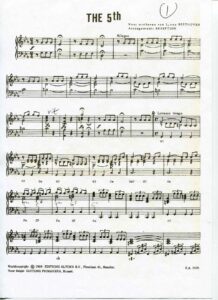
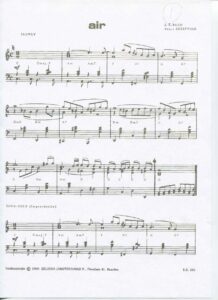
The success of their formula was immediate. Their debut single, an adaptation of Beethoven’s "The Fifth," became an unexpected hit, followed quickly by successes with "Rhapsody in Blue" and Bach’s "Air". This chart success solidified Rick van der Linden's role as the band's artistic leader. Their second album, Beggar Julia's Time Trip (1969), won the prestigious Edison Award for Album of the Year, and their first five studio albums all achieved gold status in the Netherlands.
The Changing Roster
Despite its success, Ekseption was defined by constant change, with Rein van den Broek as the sole constant member on every album.
- Foundation & Leadership: The initial core was van den Broek (trumpet), van der Linden (keyboards), Cor Dekker (bass, died 2005), and Peter de Leeuwe (drums, vocals).
- Key Departures and Eras: Rob Kruisman, unhappy with the new classical direction, left in 1969, followed by co-founder Huib van Kampen. The early 1970s saw vocalists briefly join, including Michel van Dijk (later of Alquin) and Steve Allet, before the band returned to being fully instrumental after their third album. After the album Trinity (1973), Rick van der Linden was forced out of the band he had led. This marked a turning point.
- The Later Years: Van der Linden's successor, keyboardist Hans Jansen, had a different musical background leaning more toward jazz-fusion, and the band’s subsequent work on albums like Bingo, Mindmirror, and Back to the Classics shifted away from their classic sound and saw their commercial fortunes wane. The band experienced several revivals and name changes—including Spin in the mid-70s and Ekseption '78—before ultimately disbanding in 1989 after periods of inactivity.
A Legacy Forged in Rock and Classical
Ekseption’s legacy is that of a pioneering act in the classical-rock and progressive rock genres. They are considered one of the Netherlands’ most successful progressive rock bands. Alongside British bands like The Nice and Emerson, Lake & Palmer (ELP), they helped define a genre that sought to bring the complexity of classical music to a rock audience.
Their influence is particularly noted for bridging classical traditions and progressive rock, which helped influence the genre's development in continental Europe. Following van der Linden's departure, much of the band steered into jazzier terrain, a direction that prefigured the work of later fusion groups. Their ability to make highbrow classical pieces accessible through electric guitars, synthesizers, and a prominent brass section remains their key innovation. Their enduring appeal is such that their catalog has been kept alive through legacy compilations, remasters, and box sets like Planet Ekseption (13CD), which includes their first 9 albums remastered from the original tapes.
Chronological Albums
| Year | Album Title | Notes |
|---|---|---|
| 1969 | Ekseption | Debut studio album |
| 1970 | Beggar Julia's Time Trip | Edison Award winner |
| 1971 | Ekseption 3 | Third studio album |
| 1971 | 00.04 | Fourth studio album |
| 1972 | Ekseption 5 | Their only U.S. release |
| 1973 | Trinity | Last album with Rick van der Linden |
| 1974 | Bingo | Shift to more commercial sounds |
| 1975 | Mindmirror | Leaning towards fusion |
| 1976 | Back to the Classics | Last pre-hiatus album |
| 1981 | Dance Macabre | Comeback album |
Key Singles & Performances
- The 5th (Beethoven): The band's breakthrough hit, a powerful rock arrangement of Beethoven's Fifth Symphony.
- Air (Bach): A successful follow-up single adapting Bach’s iconic "Air on the G String".
- Sabre Dance (Khachaturian): A frantic and energetic cover of the classical piece.
- Rhapsody in Blue (Gershwin): Their jazz-rock version of the American classic.
- Peace Planet (Bach): Another notable Bach adaptation.
- Dharma for One: A cover of a Jethro Tull song, showcasing their rock influences.
In terms of performances, Ekseption became a staple of the European festival circuit. A notable appearance was on May 21, 1972, at Insel Grün in Germersheim, Germany, where they shared the bill with Pink Floyd, Uriah Heep, and the Strawbs, among others. They also performed at major festivals throughout the decade, often alongside acts like Yes, Procol Harum, and Barclay James Harvest.
Works on Film & Documentaries
Information about the band's direct involvement in films and dedicated documentaries is scarce. However, a film titled The story of Ekseption was released on DVD in 2003 with a runtime of 2 hours and 38 minutes, suggesting a comprehensive documentary-style video biography.
While the band's music has not been widely used in major films, their extensive back catalog is available in high-resolution audio via streaming services like Qobuz and Apple Music. For those interested in their story, the Ekseption.eu fan site is an excellent resource, featuring detailed discography, lineup histories, and scans of vintage articles and interviews.
In conclusion, Ekseption stands as a vital chapter in progressive rock history. They were a band that, for a golden period, brilliantly synthesized the worlds of classical music and rock, earning gold records, critical acclaim, and a dedicated following that continues to celebrate their innovative spirit today.
Browse in the Sheet Music Library:
Or browse in the categories menus & download the Library Catalog PDF:
Ekseption - Best Of
Ekseption was a Dutch rock band active from 1967 to 1989, playing mostly-instrumental progressive rock and classical rock. The band knew some commercial success in the 1970s, having Dutch top ten hit singles with their adaptations of Beethoven's "Fifth" and Bach's (Celebrated) "Air". The second album, Beggar Julia's Time Trip (1969), won the Dutch Edison Award for album of the year, and the first five albums all went gold.
Track List:
1.Nocturne 2.Faith 03:35 3.The Cat 06:58 4.Again 10:17 5.Your Home 12:39 6.Jesu Joy 17:29 7.Signal 20:32 8.Summertime 24:43 9.Pearl 27:06 10.Thoughts 29:25 11.Impromptu 33:19 12.Wildflower 36:08