Scores for all instruments: 16,000+ (active and growing), over 236,000 pages.
All genres and levels: Jazz & Blues, Rock & Pop, Classical & Contemporary, Film & Musicals;
books & biographies; methods, études, play-along tracks (MP3) for Jazz & Rock.
Access & benefits: US$15.99 one-time payment, valid for lifetime, full Library access.
Table of Contents
Who was Francis Lai?
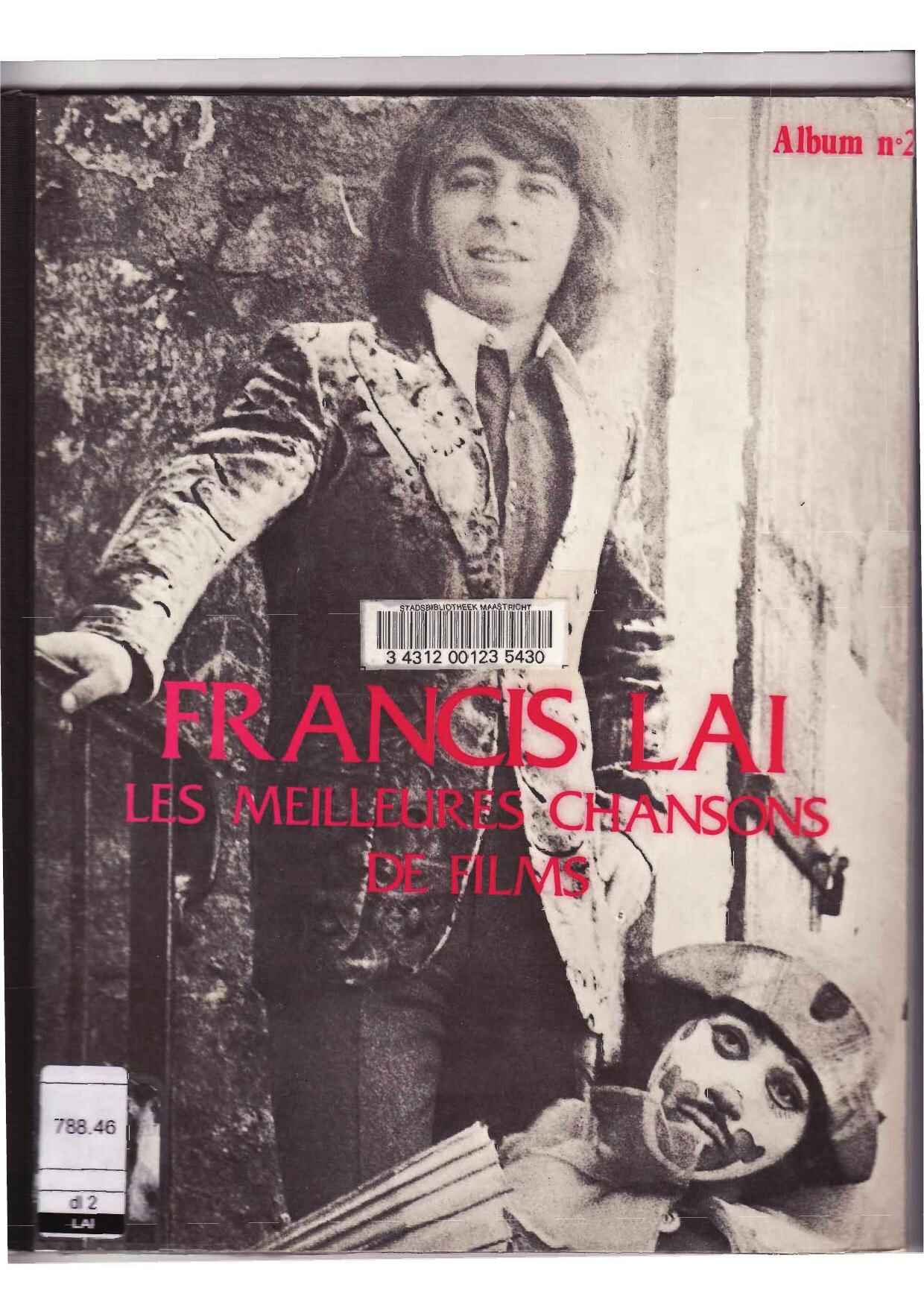
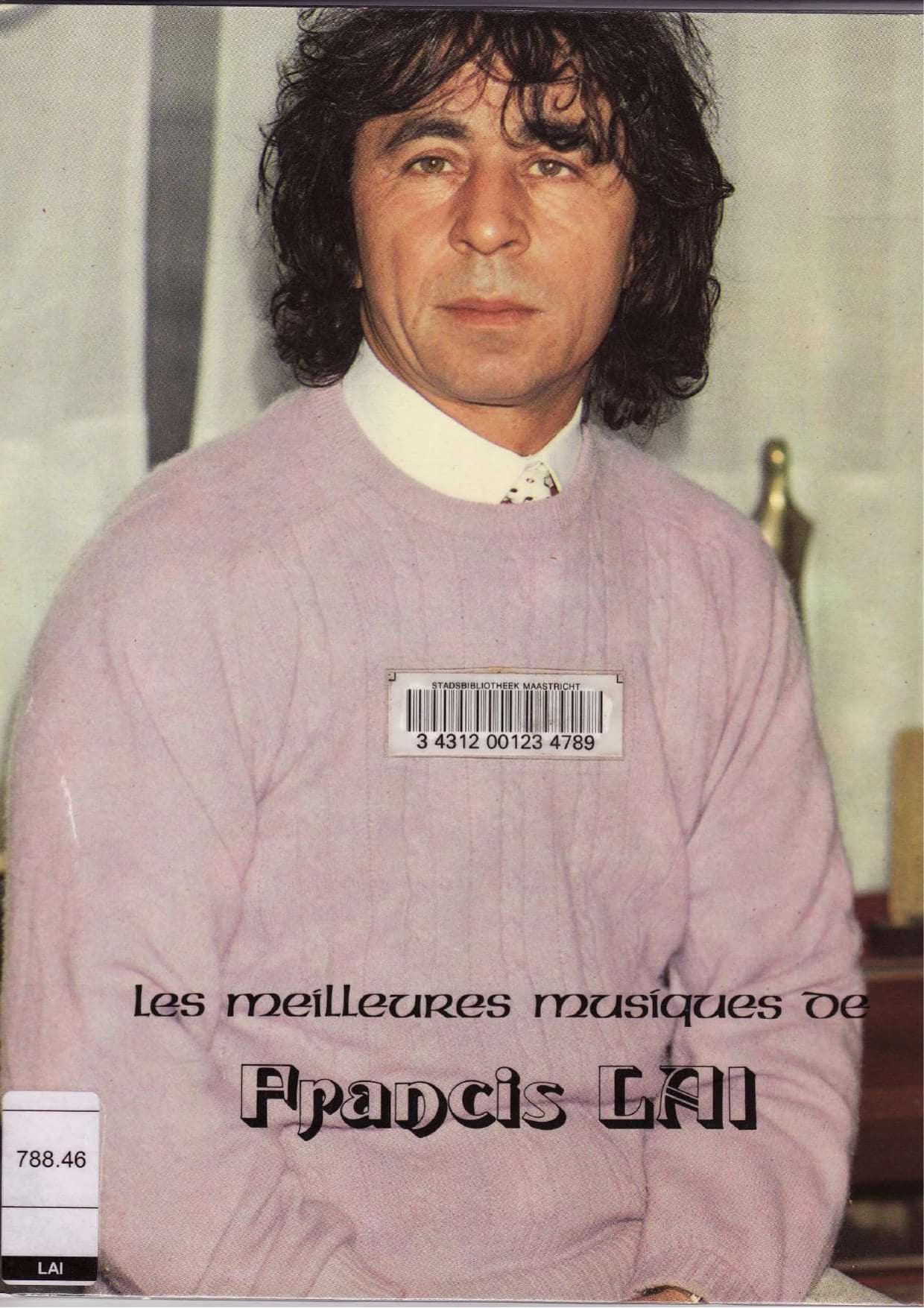


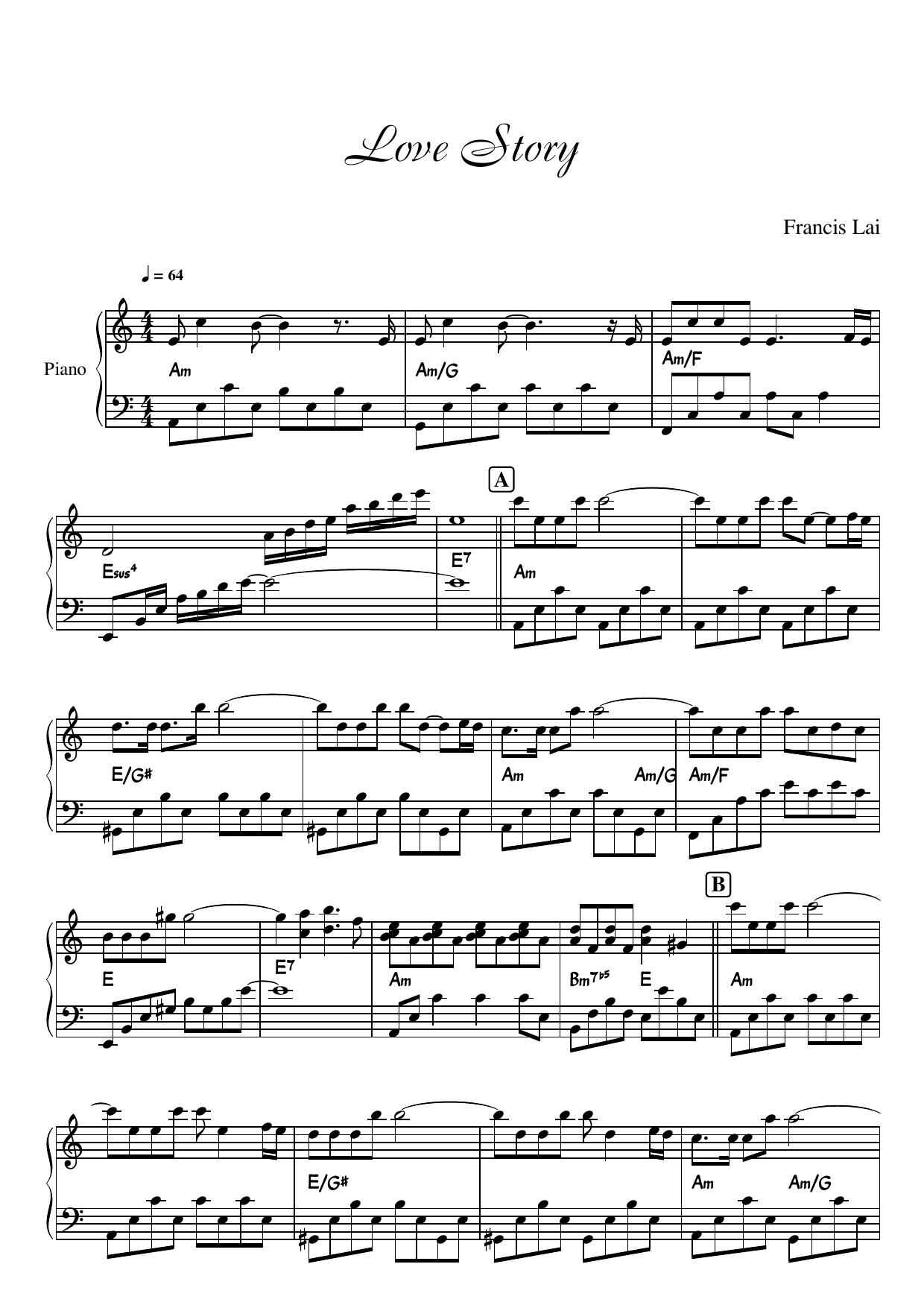
The best sheet music download from our Library.
Francis Lai: The Melodic Maestro Who Defined Cinematic Romance
In the pantheon of film composers, few names evoke the scent of sea spray, the warmth of a summer afternoon, or the poignant ache of lost love quite like Francis Lai. If Ennio Morricone gave the Western its haunting, primal voice and John Williams gave adventure its orchestral bombast, then Francis Lai gave romance its most tender, bittersweet breath. His music is not merely a backdrop to cinema; it is a parallel narrative, an emotional undercurrent that can make a simple glance between two characters feel like the climax of a lifetime.
Please, subscribe to our Sheet Music Library. Sheet music should be accessible and affordable for all musicians, from professionals to absolute beginners.
Francis Lai was a French-Italian accordionist and composer whose prolific output—over 600 songs and more than 100 film scores—defined the aesthetic of the French New Wave’s more commercially successful, romantic offshoots. He is best known for the Oscar-winning score of Love Story (1970) and the iconic theme of A Man and a Woman (1966), but his oeuvre is a vast, shimmering ocean of melody. This article delves deep into the life, style, techniques, influences, and enduring legacy of this extraordinary musician, offering a comprehensive exploration of a man who turned vulnerability into a global language.
Biography—From Nice to the World Stage
Early Years and Self-Taught Virtuosity
Francis Albert Lai was born on April 26, 1932, in Nice, in the sun-drenched French Riviera. His parents were gardeners of Italian descent, and his upbringing was modest. Crucially, Lai was largely self-taught. He did not attend the prestigious Paris Conservatoire; instead, he taught himself to play the piano and, most importantly, the accordion, which would become his signature instrument. Growing up in the vibrant, bustling atmosphere of Nice, he absorbed the sounds of Italian folk music, street musicians, and the burgeoning jazz scene that was sweeping across Europe.
Search your favorite sheet music in the Sheet Music Library Catalog


In his early twenties, Lai moved to Paris, the epicenter of French artistic life. He found work playing the accordion in the bohemian clubs and cabarets of Montmartre, a neighborhood teeming with artists, poets, and musicians. It was here that his virtuosity on the accordion attracted the attention of the legendary singer, Édith Piaf, the "Little Sparrow." Piaf hired him as an accompanist, and for several years, Lai toured with her, learning the ropes of show business at the highest level. This experience was invaluable—not only did it hone his skills as a performer, but it also introduced him to the emotional directness of the French chanson.
The Claude Lelouch Connection
The turning point in Lai’s career arrived in 1965. A mutual friend introduced him to director Claude Lelouch, a young filmmaker looking for a fresh sound. Lelouch was working on a small, modestly budgeted film called Un homme et une femme (A Man and a Woman). He invited Lai to his editing suite to watch the rough cut. The director played the footage silently and asked Lai to improvise on the spot. Intuitively grasping the melancholic yet hopeful romance of the story, Lai began to play a simple, haunting melody on the piano. Lelouch was mesmerized. The synergy was immediate, and a partnership was born.
The film and its score became a global phenomenon. A Man and a Woman won the Palme d'Or at the 1966 Cannes Film Festival and went on to win two Academy Awards (Best Screenplay and Best Foreign Language Film). While Lai was not nominated for that film, the theme became a runaway international hit, selling millions of copies and establishing him as a major composer overnight.
Hollywood Success and the "Love Story" Era
Lai's ascent was meteoric. Hollywood called, and in 1970, he composed the score for Arthur Hiller’s Love Story, starring Ali MacGraw and Ryan O'Neal. The film was a cultural juggernaut, and Lai’s score—particularly the main theme—became inseparable from its tear-jerking narrative. The song "Where Do I Begin" (lyrics by Carl Sigman) was sung by Andy Williams and became a perennial standard. Lai won the Academy Award for Best Original Score and a Golden Globe for the film.
Throughout the 1970s, Lai worked at a feverish pace, bouncing between Europe and Hollywood. He composed for Lelouch's lavish films (Le Voyou, Live for Life) and collaborated with international directors like Sidney Lumet (The Anderson Tapes), René Clément (Les Félins), and Barbet Schroeder (L'ours en peluche). He also worked with legendary French actor Jean-Paul Belmondo on multiple films, including Le Magnifique and Le Casse.
Later Years and Quiet Retirement
By the 1980s and 1990s, Lai's style began to feel slightly out of sync with the era's synthesizer-heavy, bombastic soundtracks. He worked less frequently but remained active, scoring Lelouch's films well into the 2000s, including Les Uns et les Autres (Bolero) and Les Misérables (1995). His final film score was for Lelouch's Le courage d'aimer in 2005.
Francis Lai passed away on November 7, 2018, in Paris at the age of 86. His death marked the end of an era, but his music remains as timeless as the cinematic emotions he so beautifully captured.
Musical Style, Licks, and Harmony
The "Lai Sound": Simplicity as Sophistication
At the heart of Francis Lai's music lies a paradox: extreme simplicity that yields profound emotional complexity. His melodies are often so straightforward that they feel like folk songs you've known your whole life. However, this apparent simplicity is deceptive. Lai was a master of musical architecture, using repetition and subtle variation to build emotional catharsis.
1. The Dominance of the Minor Key:
Lai had an unerring instinct for the melancholy. The majority of his iconic themes are written in minor keys (e.g., Love Story is in A minor, A Man and a Woman is in D minor). He didn’t use the minor key for tragedy in a dramatic sense, but for nostalgia—a sweet, reflective sadness that acknowledges loss but celebrates the beauty of the feeling itself.
2. Modal Harmonies:
While he was a self-taught musician, Lai’s harmonic language often leaned into Modal Jazz influences. He frequently used the Dorian and Aeolian modes, giving his music a cool, slightly detached, yet deeply atmospheric quality. Instead of complex chord substitutions, he relied on strong, modal vamps (a repeating chord progression) that allowed the melody to float freely on top.
3. The "Lai Cadence" (Ostinato & Pedal Points):
One of Lai’s signature harmonic moves is the use of a pedal point or ostinato in the bass. For instance, in the Love Story theme, the left hand plays a persistent, rocking figure (A - E - A - E) while the right hand plays a lyrical, moving melody. This creates a sense of "yearning" and "groundedness" simultaneously. The listener feels emotionally swept away, yet the music never loses its rhythmic anchor. This technique is a direct derivative of Baroque music (like Pachelbel’s Canon) filtered through a 20th-century cinematic lens.
4. The Influence of Bossa Nova:
Lai was heavily influenced by the Brazilian Bossa Nova movement (he was a contemporary of Antonio Carlos Jobim). You can hear this in his syncopated, gentle rhythms and the way he uses flutes and acoustic guitars to create a soft, "breathing" texture. This is particularly evident in scores like Vivre pour vivre.
Licks and Instrumentation
- The Descending Bass Line: Lai loved a walking, descending bass line that falls diatonically (e.g., A - G - F - E). This creates a sense of "falling into feeling."
- Harmonic 9ths and 11ths: Even in his simple chord structures, he would often add color tones like the major 7th, 9th, or sharp 11th to give the harmony a jazzy, modern sheen. This prevented his music from sounding saccharine.
- The Accordion as a Lead Voice: Unlike many composers who used the accordion for folk effects, Lai used it as a solo instrument of immense tenderness. He exploited the instrument's ability to glide between notes, creating a sound that mimics the human voice—sighing, breathing, and crying.
- The Piano and Orchestral Layers: His arrangements typically placed the piano at the forefront, supported by a lush but restrained string section. He rarely used brass for power; instead, he used woodwinds (flutes and oboes) for pastel colors.
Influences – The Roots of Romanticism
Francis Lai’s musical DNA is a rich blend of several distinct traditions:
- French Chanson: Directly inherited from his time with Piaf, the chanson tradition taught him that music must serve the lyric—even if there are no words, the melody must "sing" in a narrative, conversational way.
- Jazz and Cool Jazz: The influence of Miles Davis's Elevator to the Gallows (a French jazz score) and the American West Coast jazz scene is evident in his harmonies and his use of space and silence.
- Italian Melody: His Italian heritage shows in his gift for lyrical, operatic, expansive melodies. He shares a kinship with composers like Nino Rota, though Rota was often more playful and whimsical, while Lai was more introspective and melancholic.
- Classical Minimalists: Before Philip Glass or Steve Reich became household names, Lai was utilizing minimalist repetition to create hypnotic, meditative states in his long-form underscore.
Legacy—The Sound of an Era
Francis Lai's legacy is multifaceted. He is frequently cited as the architect of the "Romantic Mood Music" genre that dominated the 1970s. His influence can be heard in the works of later composers like Yann Tiersen (Amélie), who shares Lai's affection for the accordion and French nostalgia, and Alexandre Desplat, who possesses Lai's gift for delicate melodic phrasing.
Lai demonstrated that a film score did not have to be complex or architecturally grand to be effective. It had to be felt. He legitimized the use of popular song structures in serious cinema, blurring the line between pop music and classical composition. His music became the sonic definition of "l'amour fou" (mad love) for generations of moviegoers.
Furthermore, he was a pioneer of the "theme" concept. The Love Story theme is not just a piece of music; it is a cultural shorthand for tragic romance. He proved that a single, hummable melody could propel a film's commercial success more than any marketing campaign.
Key Works and Filmography
Francis Lai composed for over 120 films. Below is a curated list of his most significant works, categorized by era.
The Lelouch Classics (1960s-1970s)
| Film Title (Year) | Description |
|---|---|
| A Man and a Woman (1966) | The masterpiece. Features the famous "bah-dah-dah-dah" theme played on piano and harmonica. The score is a suite of romantic vignettes. |
| Live for Life (1967) | Starring Yves Montand and Candice Bergen. A more psychedelic and experimental score, mixing bossa nova and contemporary pop. |
| Le Voyou (1970) | A crime caper with a playful, jazzy undertone. |
| Happy New Year (1973) | A heist film with a lush, melancholic waltz theme. |
The Hollywood Triumphs
| Film Title (Year) | Description |
|---|---|
| Love Story (1970) | The definitive tearjerker. The score is simple, relentless in its melodic beauty, and emotionally devastating. |
| The Anderson Tapes (1971) | Sean Connery and a jazz-funk infused score that showcases Lai's versatility with a more rhythmically aggressive sound. |
| Hot Rock (1972) | A comedic heist film starring Robert Redford, with a quirky, upbeat theme. |
| The Three Musketeers (1973) | He provided a lush, swashbuckling, romantic score for the Richard Lester films. |
Later Works (1980s-2000s)
| Film Title (Year) | Description |
|---|---|
| Les Uns et les Autres (1981) | Also known as Bolero. An epic mosaic of music and dance through the 20th century. Lai composed a sweeping, historical score. |
| Edith and Marcel (1983) | A film about Piaf and Cerdan, where Lai paid tribute to his mentor. |
| Les Misérables (1995) | Lelouch's adaptation. Lai's score is more traditional and orchestral, matching the grandeur of the story. |
Discography – A Starter Guide
For the new listener, Lai’s discography can seem overwhelming. Here is a list of essential albums (soundtracks) to own:
- Un Homme et Une Femme (1966) – The soundtrack that started it all. Pure, classic, and essential.
- Love Story (1970) – The iconic album. The piano version of "Where Do I Begin" is a must-hear.
- Vivre pour Vivre (1967) – A beautiful, slightly more upbeat and jazzy effort.
- Le Casse (1971) – Also known as The Burglars. This features a groovy, funk-laced track called "Dirty Money," showing his range.
- Bilitis (1977) – A soft-focus, sensual score for a softcore film that became a huge success in Japan. Features the beautiful theme "Bilitis."
Documentaries and Archival Footage
Due to his reserved nature, Francis Lai did not frequently appear in extensive biographical documentaries in his later years. However, several resources provide deep insight into his life and work:
- "Francis Lai: Un voyage en musique" – A documentary produced by French television (France Télévisions) shortly before his death. It features interviews with Claude Lelouch and includes rare footage of Lai playing the piano in his apartment.
- "Les Enfants de la Télé" (Archives) – French TV archives contain many clips of Lai performing live on variety shows like Midi Première in the 1970s.
- Claude Lelouch Interviews – Almost every interview with Lelouch includes extensive discussion of his friendship with Lai. The DVD bonus features for A Man and a Woman are particularly insightful.
- YouTube Archives – Search for "Francis Lai interview" or "Francis Lai documentaire" to find 5-10 minute newsreel clips from the 1970s that capture his youthful, shy demeanor.
Video Showcase – Most Known Compositions (Links to Search)
While I cannot provide clickable links, here are the official/viral performances you can easily find on YouTube, Vimeo, or Dailymotion to experience the depth of his work:
- "Love Story (Where Do I Begin)" – Theme: Search for the official live performance by Lai on piano (often with the Royal Philharmonic). The video where he plays it alone in a studio is particularly moving.
- "A Man and a Woman" – Theme: Look for the clip of the film's final scene set to the music, or the live performance featuring the trumpet/harmonica melody.
- "Bilitis" – Theme: There is a beautiful video featuring a montage of soft photography set to this gentle, pastoral flute piece.
- "Le Courage d’Aimer" – Theme: A late-career masterpiece that sounds like a modern update of his Love Story sound.
- "Dirty Money" (from Le Casse): For a change of pace, watch the clip of this energetic, syncopated heist track. It showcases his versatility beyond romance.
- "Happy New Year" – Theme: A melancholic waltz, often found in videos with scenes from the classic film.
Harmonica and the Art of the "Cry"
It is worth delving deeper into one specific "lick" that defines Lai: the use of the Harmonica. In A Man and a Woman, the harmonica (played by Jean-Claude Borelly) acts as the "male voice," while the piano acts as the "female voice." They engage in a call-and-response, a musical conversation. This technique—personifying instruments to represent lovers—is Lai's greatest contribution to cinematic narrative.
The harmonic progressions he used over these dialogues were often based on the II-V-I (Two-Five-One) jazz progression, but he slowed the tempo down to a crawl, stretching the harmony over bars. This creates a "suspension" effect, where the music feels like it's perpetually leaning forward, yearning for resolution, but delaying it until the final bar of the phrase.
Francis Lai: The Heartbeat of Cinema
Francis Lai was not an innovator of revolutionary musical techniques; he was an innovator of feeling. In an industry often preoccupied with technical complexity, Lai stood firm on the belief that the best music is the music that makes the heart skip a beat. He gave us the music to cry to, to fall in love to, and to remember life by.
His legacy is secured not just in his Oscar or his Golden Globes, but in the millions of listeners who, upon hearing the opening notes of Love Story, instantly feel a lump in their throat. He composed the soundtrack to the world's collective romantic consciousness. He transformed the humble accordion into a vehicle of profound elegance. And he proved, beyond a shadow of a doubt, that the simplest melody, played with the deepest conviction, can echo through eternity.
Francis Lai left us in 2018, but his music remains: a timeless, whispering breeze from the French coast, forever reminding us of the beauty of being human.
Major Awards:
- 1971 Academy Award for Best Original Score (Love Story)
- 1971 Golden Globe Award for Best Original Score (Love Story)
- 1971 Golden Globe Award for Best Original Song ("Where Do I Begin" - shared with Carl Sigman)
- BAFTA nominations and several César Award nominations.
Key Collaborators:
- Claude Lelouch (Director)
- Carl Sigman (Lyricist)
- Jean-Paul Belmondo (Actor)
- Édith Piaf (Singer)
Total Works: Over 600 songs, 120+ film scores.
Francis Lai - Best Collection
00:00:00 Scene D’amour 00:03:55 Emmauelle 2 00:08:00 Seduction 00:10:54 Bilitis 00:14:20 A Love Theme 00:18:37 Emotion 00:23:21 Love Story 00:27:16 Madly 00:30:25 Widow’s Nest 00:34:38 Child Under a Leaf 00:37:14 Le Petit Matin 00:40:48 Concerto Pour La Fin D'un Amour
Browse in the Sheet Music Library:
Or browse in the categories menus & download the Library Catalog PDF: