
Scores for all instruments: 16,000+ (active and growing), over 236,000 pages.
All genres and levels: Jazz & Blues, Rock & Pop, Classical & Contemporary, Film & Musicals;
books & biographies; methods, études, play-along tracks (MP3) for Jazz & Rock.
Access & benefits: US$15.99 one-time payment, valid for lifetime, full Library access.
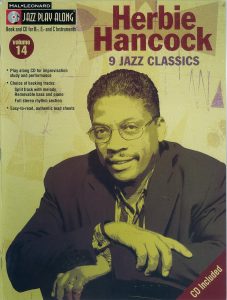
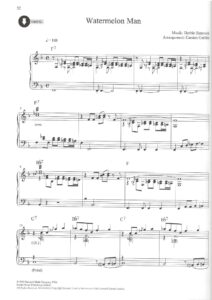
Herbie Hancock Watermelon Man, piano solo arr. sheet music, Noten, partitura, partition, spartiti
The best sheet music download from our Library.






Please, subscribe to our Sheet Music Library. Sheet music should be accessible and affordable for all musicians, from professionals to absolute beginners.
Browse in the Sheet Music Library:
Or browse in the categories menus & download the Library Catalog PDF:
About "Watermelon Man"
"Watermelon Man" is a jazz standard written by Herbie Hancock for his debut album, Takin' Off (1962).
Hancock's first version was recorded in a hard bop style, featuring solos by trumpeter Freddie Hubbard and saxophonist Dexter Gordon. A single release reached #12 on Billboard's Bubbling Under chart in March 1963. Afro-Cuban percussionist Mongo Santamaría subsequently released a version, with vocals, which became a surprise hit, reaching No. 10 on the Hot 100 in April 1963. Santamaría's recording was inducted into the Grammy Hall of Fame in 1998. Hancock later recorded a funk version of "Watermelon Man" for the album Head Hunters (1973).
Hancock wrote the piece to help sell his debut album as a leader, Takin' Off (1962), on Blue Note Records; it was the first piece of music he had ever composed with a commercial goal in mind. The popularity of the piece, due primarily to Mongo Santamaría's version, paid Hancock's bills for five or six years. Hancock did not feel the composition was a sellout, however, describing it as one of his strongest pieces structurally.
"Watermelon Man" is written in a sixteen-bar blues form. Recalling the piece, Hancock said, "I remember the cry of the watermelon man making the rounds through the back streets and alleys of Chicago. The wheels of his wagon beat out the rhythm on the cobblestones." The tune drew on elements of R&B, soul jazz, and bebop.
Herbie Hancock joined bassist Butch Warren and drummer Billy Higgins in the rhythm section, with Freddie Hubbard on trumpet and Dexter Gordon on tenor saxophone. Hancock's chordal work draws from the gospel tradition, while he builds his solo on repeated riffs and trilled figures.
Other versions
"Watermelon Man" has become a jazz standard, and has been recorded over two hundred times:
- In 1963, Jamaican trumpeter Baba Brooks and his band recorded "Watermelon Man Ska."
- In 1964, David Bowie's band 'The Manish Boys' played the song live, but no recorded version is known.
- In 1965, Manfred Mann released it as a track on their EP The One in the Middle.
- In 1969 Big Mama Thornton gave her interpretation at the Newport Folk Festival (Newport, RI).
- In 2003, pianist David Benoit covered the song from his album Right Here, Right Now.
Mongo Santamaría version
After pianist Chick Corea left Afro-Cuban jazz percussionist Mongo Santamaría's band, Hancock served as a temporary replacement for a weekend engagement at a nightclub in The Bronx. During this engagement, Hancock played "Watermelon Man" for Santamaría at Donald Byrd's urging. Santamaría started accompanying him on his congas, the rest of the band joined in, and the small audience slowly got up from their tables and started dancing. Santamaría later asked Hancock if he could record the tune. On December 17, 1962, he recorded a three-minute version, suitable for radio, where he joined timbalero Francisco "Kako" Baster and Victor Venegas on bass in a cha-cha beat, while drummer Ray Lucas performed a backbeat. With the enthusiasm of record producer Orrin Keepnews, the band re-recorded the song and released it as a single under Battle Records.
The single reached number 10 on Billboard in April 1963. Santamaría subsequently included the track on his album Watermelon Man! (1963). Santamaría's recording is sometimes considered the beginning of the boogaloo genre, a fusion of Afro-Cuban jazz and R&B.