
Scores for all instruments: 16,000+ (active and growing), over 236,000 pages.
All genres and levels: Jazz & Blues, Rock & Pop, Classical & Contemporary, Film & Musicals;
books & biographies; methods, études, play-along tracks (MP3) for Jazz & Rock.
Access & benefits: US$15.99 one-time payment, valid for lifetime, full Library access.
Table of Contents
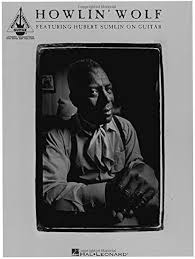
The best sheet music download from our Library.
Remembering Howlin' Wolf, born on this day 1910
Howlin’ Wolf didn’t just sing the blues — he became the blues. His voice was a force of nature: a gale-force growl, an unearthly howl that could slide from a subterranean rumble to a piercing falsetto in a single breath. Standing six-foot-three and weighing close to 300 pounds, Chester Arthur Burnett was an intimidating, even frightening performer — he crawled on all fours, scaled the curtains, and fixed the audience with eyes that seemed to stare straight through you. Yet behind the terrifying stage persona was a disciplined professional who guarded his money, looked after his band, and refused to fall for the industry traps that devoured so many of his peers. To explore Howlin’ Wolf’s life and music is to enter a world where the primal Delta meets the electric roar of Chicago, and where one man’s moan and his guitarist’s stinging, needle-sharp licks changed the course of popular music.

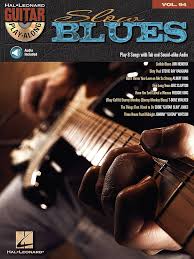
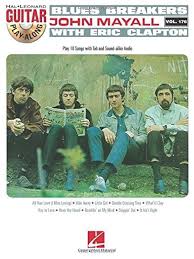
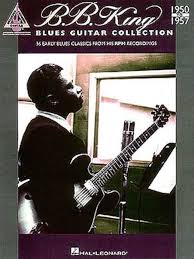
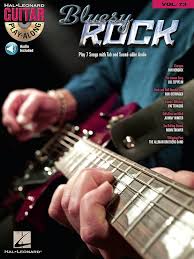


Please, subscribe to our Sheet Music Library.
1. The Early Years: From the Delta to West Memphis
Chester Arthur Burnett was born on June 10, 1910, in White Station, Mississippi, not far from the legendary crossroads of Clarksdale. His childhood was harsh: his mother Gertrude, a street singer, threw him out of the house when he was still a boy, and his stepfather was brutally abusive. At thirteen, Chester walked away and moved in with his father, Dock Burnett, on a plantation in the fertile Delta flatlands. It was there that the blues found him.
A chance meeting with Charley Patton, the pioneer of the Delta blues, changed everything. Patton was a showman of the first order, playing guitar behind his head, between his legs, and singing with a rough, passionate voice. The young Burnett was mesmerized and begged Patton to teach him. Patton showed him the rudiments of bottleneck slide guitar and the art of capturing an audience. Wolf would later say, “Charley Patton taught me everything I know.”
A second key mentor was the harmonica wizard Sonny Boy Williamson II (Aleck “Rice” Miller), who happened to marry Burnett’s half-sister. Williamson taught him the fundamentals of the harmonica, and the two traveled the Delta together. By the late 1930s, Burnett was performing at juke joints and fish fries, developing his trademark vocal style — part field holler, part animal cry — and honing his slide guitar under the name “Howlin’ Wolf.”
After serving in the U.S. Army during World War II (he was stationed in the States, reportedly driving trucks), Wolf moved to West Memphis, Arkansas. There he farmed by day and, by the late 1940s, began hosting a wildly popular 15-minute radio show on station KWEM. He would sing live, advertise tractors, and promote his gigs at local clubs. It was in West Memphis that he assembled his first electric band — featuring guitarist Willie Johnson, whose raucous, distorted tone would become a blueprint for electric blues — and caught the ear of a young producer named Sam Phillips.
2. Rise to Fame with Chess Records
Sam Phillips, who would later launch Sun Records and discover Elvis Presley, recorded Howlin’ Wolf in his Memphis studio in the summer of 1951. The results were nothing less than seismic. “Moanin’ at Midnight” and “How Many More Years” were cut with Willie Johnson’s fuzzed-out guitar and Wolf’s voice rattling the walls. Phillips famously said, “This is where the soul of man never dies.” He sold the masters to Chess Records in Chicago, and “How Many More Years,” with its stop-time groove and Wolf’s explosive howl, shot to number 4 on the Billboard R&B charts.
By 1952, Leonard Chess had coaxed the Wolf to Chicago. Initially, the transition was rocky; Wolf’s raw Arkansas band didn’t immediately gel with the more polished session cats in the city. But a series of personnel changes solidified the line-up that would make history. In 1954, a young guitarist named Hubert Sumlin joined the group, and over the next two decades he and Wolf forged one of the most profound partnerships in blues history. The Chicago years produced a torrent of electric blues masterpieces, all recorded for Chess and largely written or arranged with the brilliant bassist and songwriter Willie Dixon.
Even as Muddy Waters dominated the Chicago scene, Wolf remained a fierce rival — and the two men shared a complex, respectful but competitive relationship. While Muddy’s band was often tighter and more urbane, Wolf’s music retained a raw, threatening edge that seemed to shake the very walls of the nightclubs.
3. The Wolf’s Voice and Musical Style
At the center of everything was that voice. Howlin’ Wolf’s vocal instrument was massive in range, texture and emotion. He could roar from the depths of his belly, float into a ghostly falsetto, and collapse into a low, conspiratorial moan — often within a single phrase. His delivery owed as much to the field hollers of the nineteenth century as to the amplified age; he stretched syllables across multiple bars, lagged behind the beat, and attacked a note as though it had personally offended him. This was not just singing — it was total physical expression. On stage, the sounds were matched by his prowling, crawling, howling persona, making him one of the most electrifying performers who ever lived.
The Guitar Sound: Willie Johnson and Hubert Sumlin
In the early Chess sessions, it was Willie Johnson’s slashing, heavily overdriven guitar that set the template. Johnson played with a fierce, primitive attack, coaxing a near-fuzz tone from his amp on “How Many More Years” — years before distortion pedals existed. He often used a bottleneck slide to double Wolf’s vocal lines, creating a keening, vocal-like wail.
But the definitive Wolf guitar foil was Hubert Sumlin. Sumlin’s playing was groundbreaking: he played a Fender Telecaster with light strings, a thumbpick, and his bare fingers, snapping and popping strings with a percussive sharpness. He rarely used a flatpick, allowing him to combine bass notes with delicate, staccato treble stings. His solos were conversational — they answered Wolf’s howls, commented on the lyrics, and took flight in unpredictable directions. Sumlin’s style is a masterclass in brevity: short, knife-like phrases full of wide bends, shimmering vibrato, and the strategic use of silence.
Signature Licks and Improvisation
To understand the Wolf-Sumlin chemistry, you have to look at the songs themselves:
- “Smokestack Lightnin’” (1956) – Although Willie Johnson is on guitar here, the track defines Wolf’s one-chord, trance-blues approach. The lick is a droning open E with a slide sliding up to the twelfth fret and a descending phrase on the D string, mimicking a train whistle. Wolf moans and howls over the hypnotic riff, improvising lyrics that shift with every performance.
- “Killing Floor” (1964) – Sumlin’s intro riff is pure electricity: a tight A5 shuffle, muting the strings and then letting a bent seventh ring out. His solo is built from repeated bent notes on the G and B strings, almost chirping, and sudden double-stop slides. It’s an improvisation that feels like it’s teetering on the edge, yet it swings relentlessly.
- “Spoonful” (1960) – Over a slow, menacing bass line (written by Willie Dixon), Sumlin uses tremolo picking and long, sustained bends that cry and quiver. His solo consists of a series of bent notes, some reaching a full tone or more, held and shaken with vibrato. He answers Wolf’s “just a spoonful” with a single searing note, leaving space for the voice.
- “The Red Rooster” (1961) – Unusually, Sumlin plays slide guitar with a capo high up the neck, mimicking a bottleneck. His slide work is achingly vocal, descending in a lazy, weeping line. Wolf’s voice croons softly, then rises into falsetto, and the guitar echoes each statement.
- “Wang Dang Doodle” (1960) – Sumlin’s solo here is a string of stinging, bent upbeats that cut through the party atmosphere. He pinches the high E and B strings, creating a series of call-and-response phrases with Wolf’s exuberant shouts.
The improvisation was never random: Sumlin once said, “I play what I feel, but I listen to Wolf’s voice and I answer him. I’m singing through the guitar.” That interplay — the way Wolf’s vocal growl would trigger a barbed-wire retort from the Telecaster — defines their sound.
Rhythm and Arrangement
The Wolf’s Chicago recordings are masterclasses in groove. Bassist Willie Dixon and drummers like Sam Lay or Fred Below built deep, steady patterns, often using stop-time breaks (as in “Spoonful” or “Moanin’ at Midnight”) to let Wolf’s voice punch through. Pianists such as Otis Spann and Lafayette Leake added rolling boogie-woogie bass lines or brooding minor chords, as on “Evil (Is Going On),” which is built around a dark E-minor figure — a rarity in the typically major-key Chicago blues.
Wolf himself played guitar on some early cuts and on stage later in life, using a primitive bottleneck style. His playing was simple but deeply rhythmic; he would lay down a chugging groove and let the band orbit around it. But he was wise enough to know his greatest instrument was his voice, and he increasingly handed guitar duties to his sidemen.
4. Key Collaborators: Willie Dixon, Hubert Sumlin and the Chess Family
Willie Dixon was the master architect behind many of Wolf’s most famous recordings. As a songwriter, producer, and bassist for Chess, Dixon penned “Spoonful,” “Little Red Rooster,” “Back Door Man,” “I Ain’t Superstitious,” “Wang Dang Doodle,” and “Evil.” He understood Wolf’s persona perfectly, writing songs that played to the singer’s menacing size and voice. Despite their professional success, the relationship was not always easy; Wolf distrusted the music business and clashed with Dixon over credits and royalties. Still, Dixon’s songs gave Wolf material that would be covered endlessly by rock bands for decades.
Hubert Sumlin was more than a sideman; he was Wolf’s musical son. Wolf treated him with a gruff paternalism — scolding him, but also fiercely loyal. Sumlin’s style evolved in tandem with Wolf’s voice, and their interplay on stage was telepathic. Wolf would yell, “Play it, Hubert!” and Sumlin would unleash a flurry of notes that seemed to sprout directly from the howl that preceded it.
The Chess Brothers — Leonard and Phil — ran the label with a mix of business savvy and genuine love for the blues. They paired Wolf with top Chicago session men, including pianist Otis Spann, drummers Fred Below and Earl Phillips, and guitarist Jody Williams (who played on “Evil”). They also engineered the notorious “Super Blues” sessions that brought together Wolf, Muddy Waters, and Bo Diddley for a ramshackle, chaotic jam album. Later, the British Invasion led to the London Howlin’ Wolf Sessions (1971), a fascinating collision of generations. Backed by Eric Clapton, Steve Winwood, Bill Wyman, Charlie Watts, and Ringo Starr, Wolf cut re-recordings of his classics. He was reportedly frustrated by the rock stars’ habit of overplaying and straying from the groove — he barked at Clapton for soloing too long — but the album introduced his music to a massive new white audience and went gold.
5. Essential Songs and Landmark Recordings
Though almost everything Wolf recorded in his prime is worth hearing, a handful of tracks define his legacy:
- “How Many More Years” (1951) – The debut that shook the world. That pounding boogie, Wolf’s explosive howl, and Willie Johnson’s distorted guitar heralded the arrival of modern electric blues.
- “Moanin’ at Midnight” (1951) – The B-side is just as monumental, a swampy, minor-tinged trance with Wolf’s moans and Johnson’s slide twisting in the shadows.
- “Evil (Is Going On)” (1954) – A slow-burning warning in E minor, driven by an insistent piano riff and Jody Williams’ stinging guitar. The lyrics paint a picture of domestic paranoia that feels timeless.
- “Smokestack Lightnin’” (1956) – The quintessential Wolf groove. The one-chord train rhythm, the sliding guitar, and those wordless falsetto howls make it perhaps the most hypnotic blues recording ever. It charted again in the UK in 1964 and has been covered by countless artists.
- “Spoonful” (1960) – Dixon’s metaphor for desire set to a brooding bass riff. Sumlin’s solo is a study in economy and passion. Cream’s 1966 cover stretched it into a psychedelic jam, but the original’s tension is unmatched.
- “Wang Dang Doodle” (1960) – A raucous house-party anthem where Wolf shouts out a cast of wild characters. The call-and-response between voice and guitar makes it impossible not to move.
- “Back Door Man” (1961) – A strutting, dangerous tale of clandestine lovers, famously covered by The Doors. Dixon’s lyric and Sumlin’s pithy fills create a perfect pocket.
- “Little Red Rooster” (1961) – Sumlin’s slide weeps, Wolf’s voice croons and crows. The Rolling Stones took it to number one in the UK in 1964, and their version introduced the song — and the Wolf — to millions.
- “I Ain’t Superstitious” (1961) – Driven by a funky, off-kilter riff, with Wolf’s voice growling about black cats and bad luck. Later reimagined by Jeff Beck and others, but never bettered.
- “Killing Floor” (1964) – Wolf’s own composition, built on a monster A5 riff that Sumlin stabs and bends into submission. Jimi Hendrix performed it at Monterey; Led Zeppelin borrowed its lyrics and feel for “The Lemon Song.” It remains one of the most electrifying openings in blues.
- “Three Hundred Pounds of Joy” (1966) – An uptempo celebration of Wolf’s sheer physicality, full of humor and swagger. The horn arrangement adds a layer of polished Chicago soul.
- “Goin’ Down Slow” – Though a St. Louis blues standard, Wolf’s interpretation — with his gut-wrenching recitation and slow-burning despair — makes it his own.
6. Discography Highlights
Howlin’ Wolf’s catalog was largely built on singles, but his albums are essential listening:
Studio/Live Albums
- Moanin’ in the Moonlight (1959) – A compilation of early singles, including “Moanin’ at Midnight,” “How Many More Years,” “Smokestack Lightnin’,” and “Evil.” The raw birth of the legend.
- Howlin’ Wolf (1962) – Often called “The Rockin’ Chair Album” for its iconic cover photo, this is arguably the greatest single blues LP. Contains “Spoonful,” “The Red Rooster,” “Wang Dang Doodle,” “Back Door Man,” and “Shake for Me.” No filler, all killers.
- The Real Folk Blues (1966) and More Real Folk Blues (1967) – Chess compilations that gathered singles and unreleased cuts, including “Killing Floor,” “Poor Boy,” and “I’ll Be Back Someday.”
- The Super Super Blues Band (1968) – A joint jam session with Muddy Waters and Bo Diddley. Messy, loose, and fun, capturing a summit of Chicago giants.
- The Howlin’ Wolf Album (1969) – An infamous attempt to update Wolf’s sound with psychedelic rock elements. Wolf hated it, and the cover famously shows him pointing at the words “This is Howlin’ Wolf’s new album. He doesn’t like it.” The music is fascinatingly weird, but it’s not the place to start.
- Message to the Young (1971) – A more organic attempt to modernize, featuring soul and funk influences. Contains the poignant “If I Were a Bird.”
- The London Howlin’ Wolf Sessions (1971) – The British super-session that brought Wolf to a rock audience. For purists, it’s patchy, but highlights like “Rockin’ Daddy” and “I Ain’t Superstitious” crackle with energy.
- Live and Cookin’ at Alice’s Revisited (1972) – A blistering live set from a Chicago club, capturing the raw power of the Wolf-Sumlin dynamic in front of an audience.
- The Back Door Wolf (1973) – His last studio album, featuring the title track and a funky take on “Coon on the Moon.” It’s the sound of an aging giant still willing to experiment.
For newcomers, the best entry points are the 1962 Howlin’ Wolf album and the comprehensive Chess box set Howlin’ Wolf: The Chess Box (1991), which collects over 70 tracks across his entire career.
7. The Wolf on Screen: Documentaries, Television and Film
Howlin’ Wolf’s charisma translates vividly to film:
- The Howlin’ Wolf Story – The Secret History of Rock & Roll (2003) – Directed by Joe Lauro, this is the definitive documentary. It features rare performance footage, interviews with Hubert Sumlin, Willie Dixon, Sam Phillips, and members of Wolf’s family. The film traces his life from the Delta to his final days, illustrating how his sound infected rock and roll.
- American Folk Blues Festival (1960s) – The European tours were beautifully filmed and show Wolf in his prime. Clips of him performing “Shake for Me” and “I’ll Be Back Someday” in sharp suits, prowling the stage, are utterly mesmerizing.
- Shindig! (1965) – A legendary television moment. The Rolling Stones, then at the peak of their early fame, refused to perform on the prime-time show unless Howlin’ Wolf was booked as well. Wolf appeared, sang “How Many More Years,” and stared down the camera while the Stones sat at his feet. It was a passing of the torch and a bow of deep respect.
- Cadillac Records (2008) – A fictionalized account of Chess Records, with Eamonn Walker delivering a ferocious, jittery performance as Wolf. While the film takes liberties with history, Walker’s physical transformation and vocal intensity capture something of the man’s spirit.
- Martin Scorsese Presents the Blues (2003) – Wolf appears in several episodes, notably in “Godfathers and Sons,” which explores the Chicago scene and its impact on hip-hop. Marc Levin’s film uses Wolf’s music as a symbol of bedrock authenticity.
- Newport Folk Festival (1966) – Footage of Wolf in a straw hat, fronting a band that includes Sumlin, delivering a searing set to a mixed folk and blues audience, is a highlight of that era.
Additional archival gems, including his raucous performance of “Dust My Broom” on a flatbed truck in the 1966 documentary The Blues, can be found on DVD compilations and YouTube.
8. Legacy and Influence on Rock and Blues
Howlin’ Wolf’s shadow stretches across the entire history of rock music. The Rolling Stones practically built their early reputation on his songs: their cover of “Little Red Rooster” hit number one in the UK, and they emulated Wolf’s stop-time groove and menacing vocal phrasing. When they appeared on Shindig!, they genuflected before him, and Keith Richards later said, “Wolf is one of the founding fathers of rock and roll.”
Cream’s version of “Spoonful” turned the simmering original into an extended improvisational vehicle that became a cornerstone of heavy rock. The Doors covered “Back Door Man” on their debut album, with Jim Morrison channeling Wolf’s primal eroticism. Jimi Hendrix played “Killing Floor” live at Monterey, and Led Zeppelin’s “The Lemon Song” borrowed heavily from the same track’s lyrics and structure. Captain Beefheart, a keen student of the blues, modeled his multi-octave vocal gymnastics on Wolf’s growl-to-falsetto leaps. In subsequent generations, artists as diverse as The Black Keys, Jack White, and Nick Cave have cited Wolf as a foundational influence.
Wolf was inducted into the Blues Hall of Fame in 1980, the Rock and Roll Hall of Fame in 1991, and multiple songs — including “Smokestack Lightnin’,” “Spoonful,” and “The Red Rooster” — have been honored by the Grammy Hall of Fame. Yet his legacy isn’t contained in awards; it breathes in every guitarist who understands that one well-placed bent note says more than a hundred fast ones, and in every singer who grasps that the blues is not just about sadness, but about a voice that refuses to be silenced.
Chester Burnett was a man of contradictions — a ferocious performer who quietly paid his band’s health insurance; a wild, intimidating presence who treasured domestic stability; a traditionalist who reluctantly experimented with psychedelia and funk. The music he made as Howlin’ Wolf remains some of the most essential American art ever recorded. To listen to “Smokestack Lightnin’” on a sweltering night, to hear Hubert Sumlin’s Telecaster bite through the air and that moaning, rising voice call out from some ancient place, is to understand why Sam Phillips said the soul of man never dies. The Wolf is still howling, and we’re all still listening.
Howlin' Wolf Discography
Albums
- 1959: Moanin' in the Moonlight (Chess) 1951–1958 recordings
- 1962: Howlin' Wolf (Chess) 1957–1962 recordings
- 1962: Howling Wolf Sings the Blues (Crown) 1951–1952 RPM recordings
- 1965: The Real Folk Blues (Chess) 1956–1965 recordings
- 1967: More Real Folk Blues (Chess) 1953–1956 recordings
- 1968: The Super Super Blues Band (Chess) with Muddy Waters and Bo Diddley
- 1969: The Howlin' Wolf Album (Cadet Concept)
- 1971: Message to the Young (Chess)
- 1971: The London Howlin' Wolf Sessions (Chess)
- 1972: Chester Burnett A.K.A. Howlin' Wolf (Chess) 1951–1965 recordings
- 1972: Live and Cookin' (Chess)
- 1973: The Back Door Wolf (Chess)
- 1974: London Revisited (Chess) split album with Muddy Waters
- 1975: Change My Way (Chess) 1958–1966 recordings
- 1977: The Legendary Sun Performers: Howlin' Wolf (Charly)
- 1979: Heart Like Railroad Steel (Memphis & Chicago Blues 1951–57) (Blues Ball)
- 1979: Can't Put Me Out (Chicago 1956–72, Volume II) (Blues Ball)
- 1984: Muddy & the Wolf (Chess) split album with Muddy Waters
- 1984: His Greatest Sides, Volume One (Chess)
- 1991: The Chess Box—Howlin' Wolf (Chess/MCA)
- 1991: Howlin' Wolf Rides Again (Flair/Virgin)
- 1994: Ain't Gonna Be Your Dog (Chess Collectibles, Vol. 2) (Chess/MCA)
- 1997: His Best (Chess/MCA); reissued as The Definitive Collection (Geffen, 2007)
- 1999: His Best, Vol. 2 (Chess/MCA)
- 2011: Smokestack Lightning (The Complete Chess Masters 1951–1960) (Hip-O Select/Geffen)
Search your favorite sheet music in the Sheet Music Library Catalog
Howlin' Wolf "Smokestack Lightning" Live 1964 (Reelin' In The Years Archives)
This is the only known filmed version of "Smokestack Lightning" by Howlin' Wolf. This was shot in England during the famed American Folk Blues Festival tours and features the legendary Hubert Sumlin on guitar. In addition to other great Howlin' Wolf footage, our archive houses many iconic blues performances from Muddy Waters, Lightning Hopkins, Sonny Boy Williamson, Willie Dixon, Son House, Mississippi Fred McDowell, John Lee Hooker, Big Mama Thornton, T-Bone Walker and Buddy Guy.
Browse in the Sheet Music Library:
Or browse in the categories menus & download the Library Catalog PDF: