Table of Contents
Scores for all instruments: 16,000+ (active and growing), over 236,000 pages.
All genres and levels: Jazz & Blues, Rock & Pop, Classical & Contemporary, Film & Musicals;
books & biographies; methods, études, play-along tracks (MP3) for Jazz & Rock.
Access & benefits: US$15.99 one-time payment, valid for lifetime, full Library access.
Music History Events: Jazz albums recorded June 1 & 2
John Coltrane - Crescent (1964)
Crescent is a studio album by the jazz musician and composer John Coltrane. It was released in July 1964 through the label Impulse!. Alongside Coltrane on tenor saxophone, the album features McCoy Tyner (piano), Jimmy Garrison (double bass) and Elvin Jones (drums) playing original Coltrane compositions.
Coltrane does not solo at all on side two of the original LP; the ballad "Lonnie's Lament" instead features a long bass solo by Garrison. The album's closing track is an improvisational feature for Jones (with sparse melodic accompaniment from Coltrane's tenor sax and Garrison's bass at the song's beginning and end): Coltrane continued to explore drum/saxophone duets in live performances with this group and on subsequent recordings such as the posthumously released Interstellar Space (with Rashied Ali).

Track listing
All songs composed by John Coltrane and published by Jowcol Music (BMI)
Side one
"Crescent" – 8:41
"Wise One" – 9:00
"Bessie's Blues" – 3:22
Side two
"Lonnie's Lament" – 11:45
"The Drum Thing" – 7:22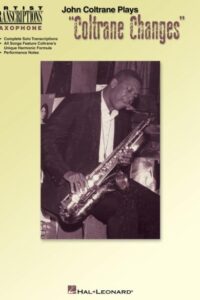
Personnel
John Coltrane Quartet
John Coltrane – tenor saxophone
McCoy Tyner – piano
Jimmy Garrison – double bass
Elvin Jones – drums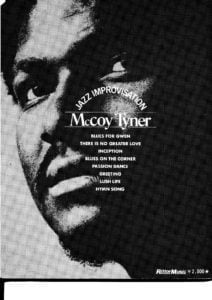
Miles Davis - On the Corner (1972)
On the Corner is a studio album by the American jazz trumpeter, bandleader, and composer Miles Davis. It was recorded in June and July 1972 and released on October 11 of that year by Columbia Records. The album continued Davis' exploration of jazz fusion, and explicitly drew on the funk of Sly Stone and James Brown, the experimental music of Karlheinz Stockhausen, the free jazz of Ornette Coleman, and the work of collaborator Paul Buckmaster.
Recording sessions for the album featured a changing lineup of musicians including bassist Michael Henderson, guitarist John McLaughlin, and keyboardists Chick Corea and Herbie Hancock, with Davis playing his trumpet through a wah-wah pedal.
Miles Davis and producer Teo Macero then spliced and edited various takes into compositions. The album's packaging did not credit any musicians, in an attempt to make the instruments less discernible to critics. Its artwork features Corky McCoy's cartoon designs of urban African-American characters.
On the Corner was in part an effort by Davis to reach a younger African-American audience who had largely left jazz for funk and rock music; instead, due to Columbia's lack of target marketing, it was one of Davis' worst-selling albums, and was scorned by jazz critics and many of Davis' contemporaries at the time of its release. It would be Davis's last studio album of the 1970s conceived as a complete work; subsequently, he recorded haphazardly and focused on live performance before temporarily retiring in 1975.
Critical and popular reception of On the Corner has improved dramatically with the passage of time. Many outside the jazz community have since called it an innovative musical statement anticipating subsequent developments in styles including funk, jazz, post-punk, electronica, and hip-hop. In 2007, On the Corner was reissued as part of the six-disc box set The Complete On the Corner Sessions.
Track list: 1. "On the Corner/New York Girl/Thinkin' One Thing and Doin' Another/Vote for Miles" - 0:00 2. "Black Satin" - 19:58 3. "One and One" - 25:19 4. "Helen Butte/Mr. Freedom X" - 31:30
Personnel
Miles Davis – electric trumpet with wah-wah pedal
Michael Henderson – bass guitar with wah-wah pedal[51][better source needed]
Don Alias – drums, percussion
Jack DeJohnette – drums
Billy Hart – drums
Al Foster – drums
James Mtume – percussion
Carlos Garnett – soprano saxophone, tenor saxophone
Dave Liebman – soprano saxophone, tenor saxophone
Bennie Maupin – bass clarinet
Chick Corea – Fender Rhodes electric piano, ARP Axxe synthesizer[52]
Herbie Hancock – Fender Rhodes electric piano, organ
Harold Ivory Williams, Jr. – Fender Rhodes electric piano
Lonnie Liston Smith – Fender Rhodes electric piano[53]
Cedric Lawson – organ
Dave Creamer – electric guitar
John McLaughlin – electric guitar
Khalil Balakrishna – electric sitar
Collin Walcott – electric sitar
Paul Buckmaster – electric cello with wah-wah pedal[52]
Badal Roy – tabla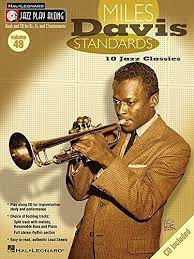
Cliff Jordan (1957)
Cliff Jordan is an album by American jazz saxophonist Clifford Jordan recorded on June 2, 1957, and released on Blue Note later that year. The septet features horn section Lee Morgan, Curtis Fuller and John Jenkins, and rhythm section Ray Bryant, Paul Chambers and Art Taylor.
Track listing
All compositions by Cliff Jordan, except as noted.
Side 1
"Not Guilty" – 11:43
"St. John" (John Jenkins) – 8:18
Side 2
"Blue Shoes" (Curtis Fuller) – 9:38
"Beyond the Blue Horizon" (W. Franke Harling, Leo Robin, Richard A. Whiting) – 6:59
"Ju-Ba" (Lee Morgan) – 3:55
Personnel:
Musicians
- Lee Morgan – trumpet
- Curtis Fuller – trombone
- John Jenkins – alto saxophone
- Cliff Jordan – tenor saxophone
- Ray Bryant – piano
- Paul Chambers – bass
- Art Taylor – drums

Eric Dolphy - Last Date (1964)
Last Date is a live album by jazz musician Eric Dolphy released in early 1965 on Limelight Records. It was recorded on June 2, 1964, in Hilversum, North Holland, shortly after Dolphy had settled in Paris, France, following a tour with Charles Mingus. Dolphy is accompanied by the Misha Mengelberg trio on the album. (It was one of Mengelberg's first appearances on record). The audience was an invited group of recording executives and studio personnel.
The final track, "Miss Ann", is followed by a brief excerpt from an interview recorded by Michiel de Ruyter for Dutch radio, in which Dolphy states: "when you hear music, after it's over, it's gone in the air, you can never capture it again."
Following the recording, Dolphy wrote to the members of the trio concerning plans to work with them again. However, he died on June 29 from diabetic shock. Two days after Dolphy's death, drummer Han Bennink received a letter from him containing details regarding a proposed engagement at the Café Montmartre in Copenhagen.
Despite its title, Last Date was not Dolphy's last recorded performance, as he participated in sessions with Donald Byrd, Nathan Davis, and other musicians in mid-June 1964. These recordings were issued on Naima, released in 1987, Unrealized Tapes (1988), Last Recordings (1999), The Complete Last Recordings: In Hilversum & Paris 1964 (2010), and Paris '64 (2018).
Ten years after the recording of Last Date, while cleaning his apartment, Mengelberg found a rehearsal tape containing a recording of an 18-minute runthrough of "Epistrophy" at Cafe de Kroon, Eindhoven, Netherlands from the day before the concert. Mengelberg sent the tape to Bennink, along with a letter requesting that he release it on the Instant Composers Pool label. The track was issued on LP by ICP in 1975, backed by a recording of Mengelberg playing a duet with his parrot, Eeko.
Last Date was the inspiration for the 1991 Dolphy documentary of the same name, directed by Hans Hylkema, written by Hylkema and Thierry Bruneau, and produced by Akka Volta. The film includes video clips from Dolphy's TV appearances, plus interviews with the members of the Mengelberg trio as well as Jaki Byard, Buddy Collette, Ted Curson, Richard Davis, Roy Porter, Gunther Schuller, and Dolphy's fiancé Joyce Mordecai.

Track listing
All compositions by Eric Dolphy except where noted.
Side 1
"Epistrophy" (Monk) – 11:15
"South Street Exit" – 7:10
"The Madrig Speaks, the Panther Walks" – 4:50 (also known as "Mandrake")
Side 2
"Hypochristmutreefuzz" (Mengelberg) – 5:25
"You Don’t Know What Love Is" (Raye/De Paul) – 11:20
"Miss Ann" – 5:25
Personnel
Eric Dolphy – bass clarinet (on "Epistroph" and "Hypochristmutreefuzz"), flute (on "South Street Exit" and "You don't know what Love is", alto saxophone (on "The Madrig Speaks, the Panther Walks" and "Miss Ann")
Misha Mengelberg – piano
Jacques Schols – double bass
Han Bennink – drums
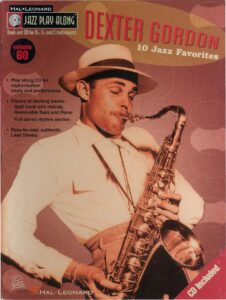
Dexter Gordon - One Flight Up (1964)
One Flight Up is an album by American jazz saxophonist Dexter Gordon recorded on June 2, 1964, in Paris and released on Blue Note the following year. The session featured Donald Byrd on trumpet, pianist Kenny Drew, bassist Niels-Henning Ørsted Pedersen, and drummer Art Taylor.
Track List:
Tanya 00:00 Coppin' the Haven 18:19 Darn That Dream 29:34 Kong Neptune 37:04
Personnel:
Dexter Gordon – tenor saxophone
Donald Byrd – trumpet (tracks 1 & 2)
Kenny Drew – piano
Niels-Henning Ørsted Pedersen – bass
Art Taylor – drums
Released Mid-September 1965 Recorded June 2, 1964, CBS Studios, Paris
Search your favorite sheet music in the category of Jazz, Blues, Soul, & Gospel.


Search your favorite sheet music in the Sheet Music Library Catalog
Search your favorite sheet music in the category of Jazz, Blues, Soul, & Gospel.

Browse in the Sheet Music Library:
Or browse in the categories menus & download the Library Catalog PDF: