Table of Contents
Scores for all instruments: 16,000+ (active and growing), over 236,000 pages.
All genres and levels: Jazz & Blues, Rock & Pop, Classical & Contemporary, Film & Musicals;
books & biographies; methods, études, play-along tracks (MP3) for Jazz & Rock.
Access & benefits: US$15.99 one-time payment, valid for lifetime, full Library access.
Music History Events: Jazz albums recorded June 5, 6 & 7
June 5
Miles Davis - 'Round About Midnight (1956)
'Round About Midnight is a studio album by the jazz trumpeter and composer Miles Davis with his quintet. It was released by Columbia Records in March 1957, and is Davis's first record on the label. The recording took place at Columbia's New York studio in three sessions between October 1955 and September 1956.
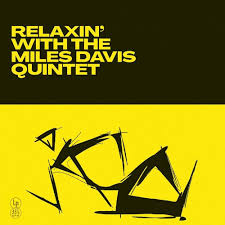
The best sheet music download from our Library.
Personnel:
Bass – Paul Chambers
Drums – "Philly Joe" Jones
Piano – Red Garland
Tenor Saxophone – John Coltrane
Trumpet – Miles Davis
Track Lisy: A1 'Round Midnight 0:00 A2 Ah-Leu-Cha 5:57 A3 All Of You 11:51 B1 Bye Bye Blackbird 18:54 B2 Tadd's Delight 26:52 B3 Dear Old Stockholm 31:21
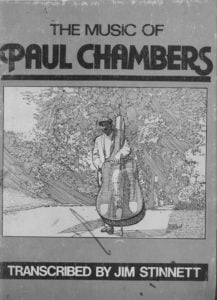
Please, subscribe to our Sheet Music Library. Sheet music should be accessible and affordable for all musicians, from professionals to absolute beginners.
Bill Barron - Modern Windows Suite (1961)
Modern Windows (subtitled A Jazz Suite from the New "Soul" by Bill Barron) is an album by saxophonist Bill Barron which was recorded in 1961 and first released on the Savoy label. The album was reissued on CD combined with The Tenor Stylings of Bill Barron in 2000.
Bill Barron – Modern Windows. Original 1962 US MONO (Savoy Records – MG-12163) Original Jazz Vinyl Composed By, Arranged By Bill Barron
Personnel:
Ted Curson, trumpet
Jay Cameron, baritone sax
Bill Barron, tenor sax
Kenny Barron, piano
Eddie Kohn, bass
Pete Laroca, drums
Recorded on June 5, 1961, at Medallion Studios.
Track List:
Side A 00:00 Men At Work 06:57 Tone Colors 14:39 Dedication To Wanda 18:55 Keystone Side B 25:31 Noodlin' 31:34 Duality 38:39 Self Portrait 43:14 Persian Street Scene

Bill Evans Trio - How My Heart Sings! (1962)
How My Heart Sings! is an album recorded by jazz pianist Bill Evans with bassist Chuck Israels and drummer Paul Motian in 1962 during the same sessions as the previously released album Moon Beams. As Evans explains in the album's liner notes, the first release "comprised material selected for its mood quality and which was entirely of a ballad nature .... Conversely, the selections represented here are primarily of a more 'moving' kind, though there is in the trio's approach to all material a desire to present a singing sound."
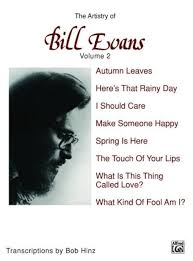
Track listing:
- "How My Heart Sings" (Earl Zindars) – 4:59
- "I Should Care" (Sammy Cahn, Axel Stordahl, Paul Weston) – 4:55
- "In Your Own Sweet Way" (Dave Brubeck) – 6:59
- "In Your Own Sweet Way" [alternate take - bonus track] – 5:54
- "Walking Up" (Bill Evans) – 4:57
- "Summertime" (George Gershwin, Ira Gershwin, DuBose Heyward) – 6:00
- "34 Skidoo" (Evans) – 6:22
- "Ev'rything I Love" (Cole Porter) – 4:13
- "Show-Type Tune" (Evans) – 4:22
Personnel:
- Bill Evans - Piano
- Chuck Israels - Bass
- Paul Motian - Drums
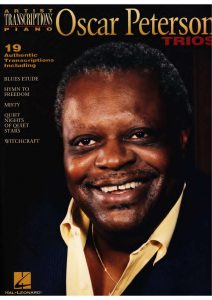
Oscar Peterson and Jon Faddis (1975)
Oscar Peterson and Jon Faddis is a 1975 studio album by the Canadian jazz pianist Oscar Peterson, featuring the American trumpeter Jon Faddis.
Track listing
- "Things Ain't What They Used to Be" (Mercer Ellington, Ted Persons) – 10:23
- "Autumn Leaves" (Joseph Kosma, Johnny Mercer, Jacques Prévert) – 6:51
- "Take the 'A' Train" (Billy Strayhorn) – 7:58
- "Blues for Birks" (Jon Faddis, Oscar Peterson) – 7:22
- "Summertime" (George Gershwin, Ira Gershwin, DuBose Heyward) – 7:28
- "Lester Leaps In" (Lester Young) – 6:25
Personnel
Recorded June 5, 1975:
- Oscar Peterson - piano
- Jon Faddis - trumpet
- Norman Granz - producer
Anthony Braxton - Willisau (Quartet) 1991 (1991)
Willisau (Quartet) 1991 is a 4CD box set by American composer and saxophonist Anthony Braxton recorded live and in the studio in 1991 and released on the hatART label.

Track listing
All compositions by Anthony BraxtonDisc One:
"No. 160(+5) +40j" – 13:22
"No. 23 M (+10)" – 16:02
"No. 158 (+96) +40l" – 17:28
"No. 40a" – 13:29
"No. 40b" – 11:34
Disc Two:
"No. 161" – 17:22
"No. 159" – 17:04
"No. 23c +32 +105b (+30)" – 9:10
"No. 23 M (+10)" – 13:46
"No. 40m" – 12:03
Disc Three:
"No. 67 (+147+96)" – 15:03
"No. 140 (+147 +139 + 135)" – 17:04
"No. 34a" – 8:24
"No. 20+86" – 12:13
"No. 23g (+147+30)" – 5:55
Disc Four:
"No. 69 (0) + 135" – 12:47
"No. 69b" – 23:48
"No. 107b (+96)" – 10:27
"No. 101" – 12:02
Personnel
- Anthony Braxton – sopranino saxophone, alto saxophone, clarinet, flute
- Marilyn Crispell – piano
- Mark Dresser – bass
- Gerry Hemingway – drums, marimba

June 6
Charlie Parker & Dizzy Gillespie - Bird and Diz (1950)
Bird and Diz is a studio album by jazz saxophonist Charlie Parker and trumpeter Dizzy Gillespie. It was recorded primarily on June 6, 1950, in New York City. Two tracks featured on the original pressing, "Passport" and "Visa", were recorded by Parker, without Gillespie and with different personnel than the other tracks, in March and May 1949. The album was originally issued in 1952 in 10" format as a collection of 78 rpm singles on the Verve subsidiary label Clef Records.
Although produced by Norman Granz, known for large ensembles at the time, the album contains compositions performed with the standard bebop instrumentation of saxophone, trumpet, piano, bass, and drums. In a 1952 four-star review of Bird and Diz, a DownBeat magazine columnist wrote of Granz's contribution to the album's sound, stating "Though there is no mention of bop in Norman Granz'[s] notes, we owe him a salvo for reminding us through this LP that this music is still very much alive." It is the final collaborative studio recording by Parker and Gillespie, and has been reissued several times by Verve and PolyGram Records.
Personnel
- Charlie Parker - saxophone (Complete Album)
- Dizzy Gillespie - trumpet (except tracks A4 & B4)
- Curley Russell - bass (except on tracks A4 & B4)
- Buddy Rich - drums (except tracks A4 & B4)
- Thelonious Monk - piano (except tracks A4 & B4)
- Tommy Potter - bass (on tracks A4 & B4)
- Carlos Vidal - bongo (on track B4)
- Max Roach - drums (tracks A4 & B4)
- Al Haig - piano (tracks A4 & B4)
- Tommy Turk - trombone (track B4)
- Kenny Dorham - trumpet (tracks A4 & B4)

Wes Montgomery - A Day in the Life (1967)
A Day in the Life is an album by the jazz guitarist Wes Montgomery, released in 1967. It reached number one on the Billboard Jazz album chart and number 2 on the R&B album chart. It also reached number 13 on the Billboard Top LP's. The single "Windy" became his biggest Hot 100 hit, peaking at number forty-four.

Personnel
Wes Montgomery – guitar
Herbie Hancock – piano
Ron Carter – bass
Grady Tate – drums
Ray Barretto – percussion
Jack Jennings – percussion
Joe Wohletz – percussion
Ray Alonge – French horn
Phil Bodner – woodwind
Julius Brand – violin
Peter Buonconsigilio – violin
Mac Ceppos – violin
Lewis Eley – violin
Harry Glickman – violin
Harry Katzman – violin
Leo Krucczek – violin
Sylvan Shulman – violin
Gene Orloff – violin
Tosha Samaroff – violin
Jack Zayde – violin
Harry Urbont – violin
Harold Coletta – viola
Emanuel Vardi – viola
George Marge – flute
Joe Soldo – flute
Romeo Penque – flute
Margaret Ross – harp
Alan Shulman – cello
Charles McCracken – cello
Stanley Webb – flute, woodwind
Miles Davis - On the Corner (1972)
On the Corner is a studio album by the American jazz trumpeter, bandleader, and composer Miles Davis. It was recorded in June and July 1972 and released on October 11 of that year by Columbia Records. The album continued Davis' exploration of jazz fusion, and explicitly drew on the funk of Sly Stone and James Brown, the experimental music of Karlheinz Stockhausen, the free jazz of Ornette Coleman, and the work of collaborator Paul Buckmaster.
Recording sessions for the album featured a changing lineup of musicians including bassist Michael Henderson, guitarist John McLaughlin, and keyboardists Chick Corea and Herbie Hancock, with Davis playing his trumpet through a wah-wah pedal.
Miles Davis and producer Teo Macero then spliced and edited various takes into compositions. The album's packaging did not credit any musicians, in an attempt to make the instruments less discernible to critics. Its artwork features Corky McCoy's cartoon designs of urban African-American characters.
On the Corner was in part an effort by Davis to reach a younger African-American audience who had largely left jazz for funk and rock music; instead, due to Columbia's lack of target marketing, it was one of Davis' worst-selling albums, and was scorned by jazz critics and many of Davis' contemporaries at the time of its release. It would be Davis's last studio album of the 1970s conceived as a complete work; subsequently, he recorded haphazardly and focused on live performance before temporarily retiring in 1975.
Critical and popular reception of On the Corner has improved dramatically with the passage of time. Many outside the jazz community have since called it an innovative musical statement anticipating subsequent developments in styles including funk, jazz, post-punk, electronica, and hip-hop. In 2007, On the Corner was reissued as part of the six-disc box set The Complete On the Corner Sessions.
Track list: 1. "On the Corner/New York Girl/Thinkin' One Thing and Doin' Another/Vote for Miles" - 0:00 2. "Black Satin" - 19:58 3. "One and One" - 25:19 4. "Helen Butte/Mr. Freedom X" - 31:30
Personnel
Miles Davis – electric trumpet with wah-wah pedal
Michael Henderson – bass guitar with wah-wah pedal[51][better source needed]
Don Alias – drums, percussion
Jack DeJohnette – drums
Billy Hart – drums
Al Foster – drums
James Mtume – percussion
Carlos Garnett – soprano saxophone, tenor saxophone
Dave Liebman – soprano saxophone, tenor saxophone
Bennie Maupin – bass clarinet
Chick Corea – Fender Rhodes electric piano, ARP Axxe synthesizer[52]
Herbie Hancock – Fender Rhodes electric piano, organ
Harold Ivory Williams, Jr. – Fender Rhodes electric piano
Lonnie Liston Smith – Fender Rhodes electric piano[53]
Cedric Lawson – organ
Dave Creamer – electric guitar
John McLaughlin – electric guitar
Khalil Balakrishna – electric sitar
Collin Walcott – electric sitar
Paul Buckmaster – electric cello with wah-wah pedal[52]
Badal Roy – tabla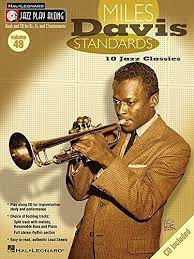
Zoot Sims and the Gershwin Brothers (1975)
Zoot Sims and the Gershwin Brothers is a 1975 studio album by American jazz saxophonist Zoot Sims, featuring the music of George and Ira Gershwin.
Track listing:
- "The Man I Love" – 6:26
- "How Long Has This Been Going On?" – 2:16
- "Lady be Good!" – 4:37
- "I've Got a Crush on You" – 3:01
- "I Got Rhythm" – 7:09
- "Embraceable You" – 4:52
- "'S Wonderful" – 4:40
- "Someone to Watch Over Me" – 3:46
- "Isn't It a Pity?" – 3:27
- "Summertime" (George Gershwin, Ira Gershwin, DuBose Heyward) – 5:25
- "They Can't Take That Away from Me" – 4:33
All music composed by George Gershwin and all lyrics written by Ira Gershwin except where noted.

Personnel:
- Zoot Sims – saxophone
- Oscar Peterson – piano
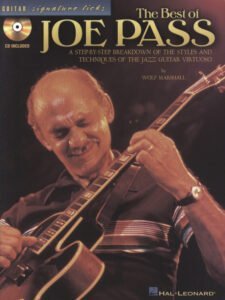
- Joe Pass – guitar
- George Mraz – double bass
- Grady Tate – drums
June 7
John Coltrane - Africa/Brass (1961)
Africa/Brass is a studio album by the jazz saxophonist and composer John Coltrane. It was released on September 1, 1961 through Impulse! Records. Coltrane's working quartet is augmented by a larger ensemble that brings the total to twenty-one musicians. Its big band sound, with the unusual instrumentation of French horns and euphonium, presented music very different from anything that had been associated with Coltrane to date. While critics originally gave it poor ratings, more recent jazz commentators have described it as "amazing" and as a "key work in understanding the path that John Coltrane's music took in its final phases." It is Coltrane's first release for Impulse!.
Track listing
Original release
All tracks are written by John Coltrane except as noted.
Side one
- "Africa" 16:28
Total length: 16:28
Side two - "Greensleeves" TraditionalMcCoy Tyner (arr.) 10:00
- "Blues Minor" 7:22
Personnel
John Coltrane – soprano and tenor saxophone
Booker Little – trumpet
Julius Watkins, Bob Northern, Robert Swisshelm – french horn
Bill Barber – tuba
Pat Patrick – baritone saxophone
Eric Dolphy – alto saxophone, bass clarinet, flute
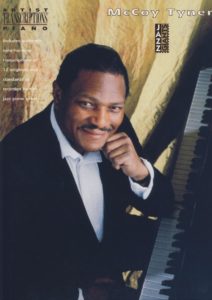
McCoy Tyner – piano
Reggie Workman – bass
Elvin Jones – drums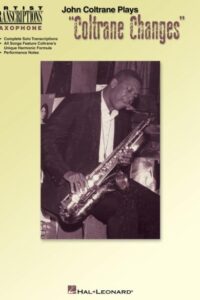
Miles Davis - Nefertiti (1967)
Nefertiti is an album by the American jazz musician Miles Davis, released in March 1968 by Columbia Records. It was recorded at Columbia's 30th Street Studio over four dates between June 7 and July 19, 1967, and was Davis's last fully acoustic album. Davis himself did not contribute any compositions to the album; three of the six tracks are by tenor saxophonist Wayne Shorter, two by pianist Herbie Hancock, and one by drummer Tony Williams.
Track List:
0:00 1. "Nefertiti" (Wayne Shorter) 7:53 2. "Fall" (Wayne Shorter) 14:30 3. "Hand Jive" (Tony Williams) 23:26 4. "Madness" (Herbie Hancock) 30:58 6. "Riot" (Herbie Hancock) 34:04 7. "Pinocchio" (Wayne Shorter)
Personnel
The Miles Davis Quintet
- Miles Davis – trumpet
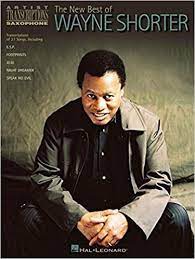
- Wayne Shorter – tenor saxophone
- Herbie Hancock – piano
- Ron Carter – double bass
- Tony Williams – drums
Charlie Haden - The Golden Number (1976)
The Golden Number is an album of four duets by bassist Charlie Haden recorded in 1976 and released on the Horizon label in 1977. It was the second of Haden's two duet releases on Horizon, the previous being Closeness (1976). Haden’s duet partners are trumpeter Don Cherry (also playing flute), tenor saxophonist Archie Shepp, pianist Hampton Hawes and alto saxophonist Ornette Coleman (here playing trumpet). Hawes died shortly before the album’s release, and Haden dedicated the work to him in the liner notes.
Track listing
All compositions by Charlie Haden except as indicated
- "Out of Focus" - 7:27
- "Shepp's Way" - 12:07
- "Turnaround" (Ornette Coleman) - 7:52
- "Golden Number" - 12:28
- Recorded at Kendun Recorders in Burbank, California, on June 7, 1976, (track 1), at Village Recorder in Los Angeles on August 21, 1976, (track 3) and at Generation Sound in New York City on December 19 (track 4) and December 20 (track 2), 1976.
Personnel
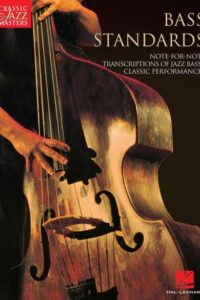
- Charlie Haden — double bass
- Don Cherry — pocket trumpet, flute (track 1)
- Archie Shepp — tenor saxophone (track 2)
- Hampton Hawes — piano (track 3)
- Ornette Coleman — trumpet (track 4)
Joe Lovano Quintet - Village Rhythm (1988)
Village Rhythm is a studio album by the American jazz saxophonist Joe Lovano recorded in 1988 and released on the Italian Soul Note label.
Track listing
No. Title Length
- "Village Rhythm" 6:22
- "Birds of Springtime Gone By" 5:54
- "Dewey Said" 6:16
- "Chelsea Rendez-Vous" 5:36
- "Variations of a Theme" 3:14
- "His Dreams" 6:51
- "T'Was to Me Part 1: Celebration of Life Everlasting" 2:46
- "T'Was to Me Part II: Theme" 2:21
- "Sleepy Giant" 5:56
- "Duke Ellington's Sound of Love" (Charles Mingus) 4:51
- "Spirit of the Night" 6:31
Recorded at Sound Ideas Studios in New York City on June 7, 8 & 9, 1988
Personnel
Joe Lovano – tenor saxophone, soprano saxophone
Tom Harrell – trumpet
Kenny Werner – piano
Marc Johnson – bass
Paul Motian – drums
Search your favorite sheet music in the category of Jazz, Blues, Soul, & Gospel.



Search your favorite sheet music in the Sheet Music Library Catalog
Search your favorite sheet music in the category of Jazz, Blues, Soul, & Gospel.
Browse in the Sheet Music Library:
Or browse in the categories menus & download the Library Catalog PDF: