
Scores for all instruments: 16,000+ (active and growing), over 236,000 pages.
All genres and levels: Jazz & Blues, Rock & Pop, Classical & Contemporary, Film & Musicals;
books & biographies; methods, études, play-along tracks (MP3) for Jazz & Rock.
Access & benefits: US$15.99 one-time payment, valid for lifetime, full Library access.
Table of Contents
Antonio Carlos Jobim How Insensitive Insensatez Jazzy Piano Solo sheet music, Noten, partitura
The best sheet music download from our Library.
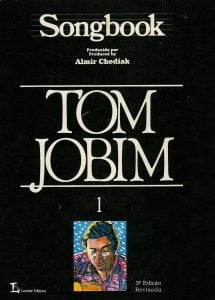
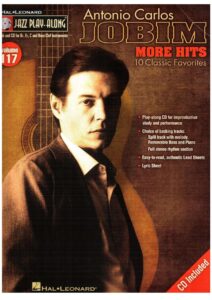
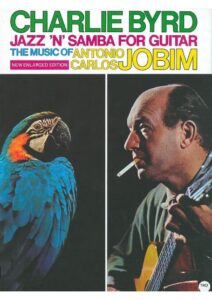
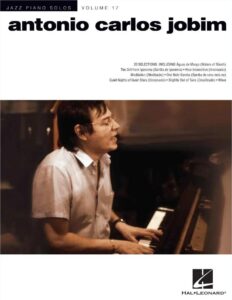





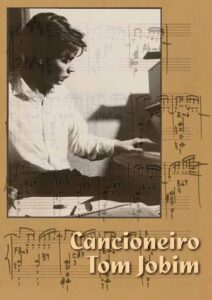

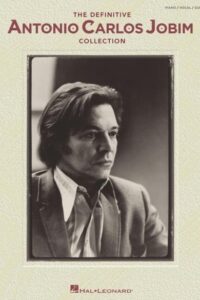
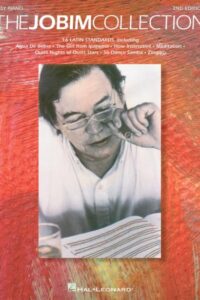
Please, subscribe to our Sheet Music Library.
Search your favorite sheet music in the Sheet Music Library Catalog
"Insensatez" (known in English as "How Insensitive") is one of Antônio Carlos Jobim's most celebrated compositions, a cornerstone of the bossa nova and jazz standard repertoire. It's a song built on a poignant story of missed connection and emotional distance, wrapped in one of the most beautiful and recognizable melodies in Brazilian music.
Origins and Composition
- The Team: The music was composed by Antônio Carlos Jobim, with the original Portuguese lyrics written by his frequent collaborator, Vinícius de Moraes. The English version, titled "How Insensitive," was penned by Norman Gimbel.
- Musical Inspiration: The song's haunting melody is famously inspired by Frédéric Chopin's Prelude No. 4 in E minor, Op. 28. Jobim adapted the classical piece's melancholic, descending harmonic structure into the gentle, syncopated rhythm of bossa nova.
- Release: The song was first recorded and released by João Gilberto in October 1961, and Jobim's own version was released on his 1963 album, The Composer of Desafinado, Plays. The English version by Peggy Lee followed in February 1964.
The Meaning of the Title
The title itself carries a key nuance. While the English version is "How Insensitive," the Portuguese word "Insensatez" translates more accurately to "Foolishness," "Absurdity," or "Folly". The song's narrator is reflecting on their own foolishness and emotional coldness in a past moment of love. The English title, "How Insensitive," captures this feeling of regret from the perspective of the person who failed to respond.
The Story in the Lyrics
The lyrics tell a simple, heartbreaking story of a missed opportunity. The narrator describes a moment when someone confessed their love, but they reacted with "icy silence" and emotional distance. Only later, looking back, do they realize the gravity of their mistake and the pain they caused, reflecting on their own "insensitivity" or "foolishness."
Legacy and Notable Recordings
"How Insensitive" has become a timeless standard, with over 700 recorded versions in multiple languages.
| Artist | Album / Year | Notes |
|---|---|---|
| João Gilberto | João Gilberto (1961) | The first recorded version |
| Antônio Carlos Jobim | The Composer of Desafinado, Plays (1963) | Jobim's own iconic piano version |
| Peggy Lee | In Love Again! (1964) | First release of the English adaptation |
| Frank Sinatra & Jobim | Francis Albert Sinatra & Antônio Carlos Jobim (1967) | A legendary collaboration |
| Wes Montgomery | Tequila (1966) | An acclaimed instrumental guitar rendition |
| Ella Fitzgerald | Ella Abraça Jobim (1981) | A masterful interpretation |
| Jobim & Sting | Antônio Brasileiro (1994) | Jobim's final album, featuring Sting on vocals |
Its sophisticated harmony and deep lyrical themes have allowed it to be interpreted in countless styles, from jazz to classical, proving its enduring appeal.
Chord structure
The chord structure of "Insensatez" ("How Insensitive") is a masterclass in sophisticated harmony. It's built on a 32-bar form, typically in the key of D minor, though it's often played in other keys as well.
What makes it harmonically rich is its use of descending bass lines, chromatic mediants, and substitute dominants, all woven into a structure that's both beautiful and complex.
Chord Progression (Key of D minor)
The exact chords can vary between different recordings and lead sheets. Here is one of the most common and definitive progressions for the first 8 bars, which establishes the song's main theme.
| Bar(s) | Chord(s) | Harmonic Function & Notes |
|---|---|---|
| 1 | Dm7 | Tonic (i). The home chord of D minor. |
| 2 | C#dim7 | Leading-tone chord (vii°). A diminished chord that creates tension and leads back to the tonic. It acts as a substitute for an A7b9 chord. |
| 3 | Cm6 | Submediant (bVI). A surprising and melancholic shift to a chord from the parallel minor key (D natural minor). |
| 4 | Bm7b5 | Half-diminished (ii° of A minor). Continues the descending bass line (D - C# - C - B) and builds more tension. |
| 5 | Bbmaj7 | Subdominant (bVI of F). A deceptive resolution, moving to a bright, major chord that is far from the home key. |
| 6 | Ebmaj7 | Neapolitan (bII). Another unexpected major chord, adding to the song's yearning quality. |
| 7 | Em7b5 | Half-diminished (ii° of D minor). A return to a chord that functions within the home key. |
| 8 | A7#5 | Dominant (V7). The classic tension chord that sets up the return to the tonic Dm7. |
Harmonic Analysis
- Chopin's Influence: The song's harmony is heavily inspired by Frédéric Chopin's Prelude No. 4 in E minor. The descending chromatic bass line (D - C# - C - B) is a direct nod to the classical piece.
- Tonal Centers: While the key is D minor, the harmony frequently suggests other keys, especially in the bridge. For example, the progression
Bbmaj7 - Ebmaj7 - Em7b5 - A7can be heard as a temporary modulation to the key of F major. - Tritone Substitution: The
C#dim7chord in bar 2 is a classic example. It shares the same tritone (F and B) as an A7 chord, functioning as a substitute dominant that resolves beautifully to Dm. - Diminished Chords: As the analysis suggests, diminished chords in this song are often "dominant chords in disguise". The
C#dim7is anA7b9, and a similar principle applies to other diminished chords in the progression.
Antônio Carlos Jobim's influence on music is monumental and multifaceted, extending far beyond his role as the "father of bossa nova." He fundamentally reshaped popular music, jazz, and even classical music, leaving a legacy that continues to inspire musicians worldwide.
The Architect of Bossa Nova
Jobim's most direct impact was as the primary founder of bossa nova. He took the vibrant, extroverted rhythms of the traditional Brazilian samba and transformed them into a more intimate, sophisticated, and harmonically rich music style.
His collaboration with singer-guitarist João Gilberto and poet-lyricist Vinícius de Moraes was crucial. The 1958 recording of Jobim's song "Chega de Saudade" by Gilberto is widely recognized as the first bossa nova single, which helped launch the genre. By the early 1960s, Jobim's music was being played around the world.
A Lasting Influence on Jazz
Bossa nova became a major jazz subgenre, largely through Jobim's compositions. His songs gave jazz musicians in the 1960s a "strikingly original alternative" to the traditional American songbook.
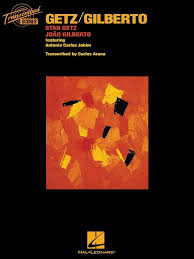
- The "Getz" Connection: The genre's international breakthrough came when American jazz saxophonist Stan Getz recorded Jobim's "Desafinado," followed by the global hit "The Girl from Ipanema" with Astrud and João Gilberto. The album Getz/Gilberto became the first jazz album to win a Grammy for Album of the Year.
- A Jazz Standard: Jobim's songs, including "Wave," "Corcovado (Quiet Nights of Quiet Stars)," and "Triste," have become international jazz standards. Jazz icons like Frank Sinatra, Ella Fitzgerald, Sarah Vaughan, Tony Bennett, Dizzy Gillespie, and Joe Henderson all recorded his music. Frank Sinatra himself said, "Tom must compose. Without him, we have nothing to sing".
A Global Pop and Vocal Phenomenon
Jobim's influence permeated mainstream pop music, introducing Brazilian sounds to a global audience.
- A Cultural Ambassador: He helped turn the cultural spotlight on Brazil in the 1950s and 60s. It has been said that he symbolizes his country to the rest of the world, much like George Gershwin does for the United States.
- Global Standards: His songs were not just jazz hits but global pop phenomena. They were recorded by some of the most iconic vocalists of the 20th century. His influence continues to inspire contemporary artists like Sting, will.i.am, John Legend, and Diana Krall.
Classical & "Serious" Music Roots
Jobim was not just a pop songwriter; he was a highly trained musician who wrote both popular and "serious" music, including symphonic works. His sophisticated harmonic language was influenced by a wide range of classical composers:
- Brazilian Classical: He was particularly inspired by the music of Heitor Villa-Lobos.
- European Masters: He drew heavily from French impressionists like Claude Debussy and Maurice Ravel, as well as Frédéric Chopin and Igor Stravinsky. He even based the harmony of "Insensatez" on a Chopin prelude.
- American Jazz & Pop: He was also influenced by the music of George Gershwin and the big band sounds of American swing.
A Pioneer in Brazilian Music (MPB)
In Brazil, Jobim was at the vanguard of the Música Popular Brasileira (MPB) movement. He was one of the main architects of a profound evolutionary transformation in Brazilian popular music, flouting convention and introducing a new level of modernity. His influence on subsequent generations of Brazilian artists, from Gilberto Gil to Milton Nascimento, is immeasurable.
Film Music
Jobim also made significant contributions to film. In 1959, his collaboration with Vinícius de Moraes on the score for the film Orfeu Negro (Black Orpheus) won an Academy Award for Best Foreign Film and brought him worldwide attention.
In short, Jobim's broader influence lies in his unique ability to synthesize diverse musical traditions—Brazilian folk, classical, and jazz—into a timeless, sophisticated, and deeply emotional songbook that has become a permanent and cherished part of the global musical landscape.
Browse in the Sheet Music Library:
Or browse in the categories menus & download the Library Catalog PDF:
Discography and compositions
Main article: Antônio Carlos Jobim discography
| Studio albums 1963: The Composer of Desafinado, Plays (Verve) 1965: The Wonderful World of Antônio Carlos Jobim (Warner Bros.) 1967: A Certain Mr. Jobim (Warner Bros.) 1967: Wave (CTI/A&M) 1970: Stone Flower (CTI) 1970: Tide (A&M) 1973: Jobim (MCA) 1976: Urubu (Warner Bros.) 1980: Terra Brasilis (Warner Bros.) 1987: Passarim (Verve) 1995: Antônio Brasileiro (Columbia) 1995: Inédito (Ariola) 1997: Minha Alma Canta (Lumiar) | Collaborations 1954: Sinfonia do Rio de Janeiro (Continental), with Billy Blanco 1956: Orfeu da Conceição (Odeon), with Vinicius de Moraes 1957: "O Pequeno Príncipe" (Festa), an audiobook, whose soundtrack Jobim composed 1961: Brasília – Sinfonia Da Alvorada (Columbia), with Vinicius de Moraes 1964: Getz/Gilberto (Verve) 1964: Caymmi visita Tom (Elenco/Polygram/Philips), with Dorival Caymmi 1967: Francis Albert Sinatra & Antônio Carlos Jobim (Reprise) 1974: Elis & Tom (Philips), with Elis Regina 1977: Miúcha & Antônio Carlos Jobim (RCA), with Miúcha 1979: Miúcha & Tom Jobim (RCA), with Miúcha 1981: Edu & Tom (Philips), with Edu Lobo 1983: Gabriela (RCA), original soundtrack from the movie "Gabriela, Cravo e Canela" |