
Scores for all instruments: 16,000+ (active and growing), over 236,000 pages.
All genres and levels: Jazz & Blues, Rock & Pop, Classical & Contemporary, Film & Musicals;
books & biographies; methods, études, play-along tracks (MP3) for Jazz & Rock.
Access & benefits: US$15.99 one-time payment, valid for lifetime, full Library access.
Table of Contents
Happy birthday, John Mellencamp, born on this day in 1951
Born on October 7, 1951, in the small industrial town of Seymour, Indiana, John J. Mellencamp has spent over five decades carving out a singular place in American music. He is not merely a rock star; he is a storyteller, a painter, a social activist, and a self-proclaimed rebel who has consistently refused to fit neatly into the music industry's expectations. His journey from a young soul band frontman to a Rock and Roll Hall of Fame inductee is a quintessential American tale of grit, reinvention, and an unwavering commitment to the people and places that shaped him.
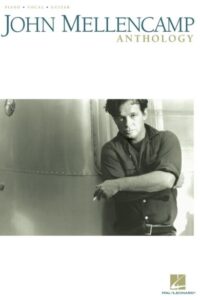
The best sheet music download from our Library.
Early Life and the "Cougar" Years
Mellencamp's story begins in the American heartland. Born with spina bifida, a condition requiring corrective surgery in infancy, he developed a resilient spirit early on. He formed his first band, Crepe Soul, at just 14 and was gigging in local bars, fronting a soul band. After a stint at Vincennes University and a series of local bands, including a glam-rock outfit named Trash, he decided to pursue music seriously, traveling to New York City to land a record deal.
His professional career began in 1976 with the release of The Chestnut Street Incident. However, his manager, Tony DeFries, insisted he adopt the stage name "Johnny Cougar," believing "Mellencamp" was too difficult to market. This decision would haunt and frustrate him for years. After a few commercially unsuccessful albums, he finally broke through in 1979 with his first hit, "I Need A Lover".
The early 1980s were a period of transition and identity-building. His 1982 album, American Fool, was a make-or-break moment. It became the year's best-selling album, propelled by the infectious "Hurts So Good" and the iconic "Jack & Diane". Though he was still performing as John Cougar, his songwriting was beginning to reflect a deeper, more observational voice. It was during this period that he began to reclaim his identity, and by the mid-80s, he was billed as John Cougar Mellencamp, a name that reflected his journey. By the early 1990s, "Cougar" was finally gone, and he was simply John Mellencamp.
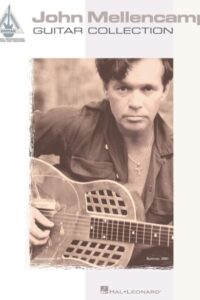
Please, subscribe to our Sheet Music Library. Sheet music should be accessible and affordable for all musicians, from professionals to absolute beginners.
Musical Style and The Heartland Rock Sound
Mellencamp is often described as the progenitor of heartland rock, a genre that distills folk, rock and roll, blues, and country into something distinctly Midwestern. His musical style is a "heartland blend of Stonesy hard rock and folk," characterized by traditional instrumentation and a plainspoken, almost startlingly direct writing style. Critics have noted his sound is grounded in influences like Creedence Clearwater Revival, Stax-Volt soul, the Rolling Stones, and Motown, often built on a foundation of basic, three-chord rock.
A defining feature of his sound, especially from the mid-1980s onwards, was the integration of folk instruments. On albums like The Lonesome Jubilee, violin and accordion became primary harmony instruments, matching the sound of acoustic and electric guitars. This evolution was a deliberate move to "rusticate and backdate" his music, adding folky instruments to his band and modeling his newer songs on Woody Guthrie, Johnny Cash, and the blues. The result was a rich, textured sound that could be both anthemic and intimate.
Search your favorite sheet music in the Sheet Music Library Catalog
Harmony and Vocal Collaborations
Mellencamp's own voice—often described as "tobacco-seasoned," gravelly, and full of character—is a central part of his music's identity. His genius, however, also lies in his use of harmony and collaboration. He has consistently used guest vocalists to add new dimensions to his songs. The interplay of his rough-hewn lead vocals with a sweeter, contrasting harmony is a recurring and effective technique.
He has collaborated with a diverse array of artists. In "Battle of Angels," he harmonizes with Carlene Carter, their voices blending "like a blend of whiskey and honey". On the Life, Death, Love and Freedom album, Little Big Town's Karen Fairchild features prominently as a harmony vocalist, particularly on the duet "A Ride Back Home," elevating the song with her vocals. Perhaps his most celebrated recent collaboration is with Bruce Springsteen on "Wasted Days." The two rock legends take turns with lead vocals and sing in harmony over a jangly, country-rock-leaning melody, a pairing that critics have hailed as a highlight of his later career.
The Essential Songs and Compositions
Mellencamp's catalog is a treasure trove of American songwriting. His biggest hits are more than just pop songs; they are cultural touchstones. Here are some of his most essential compositions:
- "Jack & Diane" (1982): His only number-one single, this song perfectly captures the bittersweet nature of young love and the fleeting nature of youth in a small town. Its iconic handclap rhythm and timeless story have made it a permanent fixture in American culture.
- "Pink Houses" (1983): A powerful, observational anthem that contrasts the promise of the American Dream with the stark realities faced by ordinary people. The line "Ain't that America" became a rallying cry for a generation.
- "Small Town" (1985): An anthem for anyone from a small town, the song celebrates the pride, comfort, and occasional frustration of growing up in a place where everyone knows your name. It remains one of his most beloved live performances.
- "Rain on the Scarecrow" (1985): The title track from the album Scarecrow, this song was a searing indictment of the farm foreclosure crisis that was devastating rural America. It was the catalyst for the creation of Farm Aid.
- "R.O.C.K. in the U.S.A. (A Salute to 60's Rock)" (1986): A joyful, good-timey smash that pays homage to the artists who inspired him. It was a top-5 hit and remains a staple of his concerts.
- "Cherry Bomb" (1987): A nostalgic look back at youth and first experiences, driven by a catchy, harmonica-laced melody. It perfectly captures the feeling of looking back on a simpler time.
- "Authority Song" (1983): An incredibly catchy track about youthful defiance and the struggle against authority figures. It's a perfect blend of his rock and roll energy and his rebellious spirit.
- "Lonely Ol' Night" (1985): A top-10 hit that taps into a unique combination of loneliness and hope, fitting perfectly with the ethos of the Scarecrow album.
- "Wild Night" (1994): A fantastic cover of the Van Morrison classic, turned into a sultry duet with Me'Shell Ndegeocello. It showcased his excellent taste in cover material and his ability to score a hit nearly two decades into his career.
Music in Film and Acting
Mellencamp's relationship with Hollywood has been selective and purposeful. His most significant contribution to film is arguably the soundtrack for the 1992 film Falling From Grace, which he also starred in and directed. Though the film received mixed reviews, the soundtrack was critically acclaimed as a "brilliant collection of original folk-rock tunes". The album was a collaborative masterpiece, featuring an eclectic group of folk and country artists including John Prine, Dwight Yoakam, Nanci Griffith, and Joe Ely. The centerpiece was "Sweet Suzanne," performed by the one-off supergroup the Buzzin' Cousins, which consisted of Mellencamp, Prine, Yoakam, Ely, and James McMurtry. Mellencamp also produced the soundtrack and contributed his own performances, including "It Don't Scare Me None" and "Nothing's For Free".
His music has also been prominently featured in other films. His song "Jack & Diane" was inspired by his own experiences and later used in the 2000 film The Perfect Storm, for which he also contributed vocals to the soundtrack composed by James Horner. More recently, his music was used in the documentary Saving the Hoosier: The Fight for America's Forests.
Collaborations and the Buzzin' Cousins
Beyond his work on soundtracks, Mellencamp has a rich history of musical collaborations. He co-wrote the song "Take a Look at My Heart" with John Prine, a track that also features Bruce Springsteen on backup vocals. In the early 2000s, he formed the ad-hoc supergroup The Buzzin' Cousins with John Prine, Dwight Yoakam, Joe Ely, and James McMurtry. Described as his "lark of an answer to the Travelin' Wilburys," the group recorded the song "Sweet Suzanne" for the Falling From Grace soundtrack, a collaboration that critics wished would have produced more music.
His most notable recent collaboration is with Bruce Springsteen. Their 2021 single "Wasted Days" and their subsequent work together on the 2022 album Strictly a One-Eyed Jack (which features three Springsteen collaborations) have been hailed as a meeting of two of rock's greatest storytellers. Their live performances of "Wasted Days" have become legendary moments, showcasing their mutual respect and shared musical legacy.
Influences and Legacy
Mellencamp's work is steeped in the American literary and musical tradition. He has absorbed the influence of writers like Faulkner, Williams, and Steinbeck, and his own story could have been pulled from their pages. Musically, his most profound influence is folk icon Woody Guthrie. Mellencamp has cited Guthrie as a major inspiration, and his own brand of working man's heartland rock can be traced directly to Guthrie's populist spirit. In 2018, he was awarded the Woody Guthrie Prize, recognizing his use of artistic gifts to spread a positive message of hope, equality, and freedom.
His legacy is immense. He has sold over 60 million albums worldwide and has been nominated for 13 Grammy Awards, winning one. He was inducted into the Rock and Roll Hall of Fame in 2008 and the Songwriters Hall of Fame in 2018. He holds the record for the most tracks by a solo artist to hit number one on the Hot Mainstream Rock Tracks chart, with seven. More than just commercial success, his legacy is one of social impact. As a co-founder of Farm Aid in 1985, he has helped raise nearly $80 million to support family farmers and promote a resilient agricultural system.
His influence extends to a new generation of artists. He has been cited as an influence by musicians like John Mayer, Keith Urban, and Jason Isbell. As Billy Joel said when inducting him into the Rock Hall, "Stay ornery, stay mean. We need you to be pissed off. People need to hear a voice like yours to echo the discontent in the heartland".
Painting and Other Endeavors
Music is only one facet of Mellencamp's artistic expression. He is a serious painter, and his work has been exhibited in galleries and published in portfolios. A self-curated book of his work, John Mellencamp: Paintings and Assemblages, was published by Rizzoli New York. His paintings often reflect the same themes of small-town life, social struggle, and American identity that permeate his music.
He continues to live and work in Bloomington, Indiana, remaining true to his Midwestern roots. In 2023, he released his 25th studio album, Orpheus Descending, recorded at his own Belmont Mall Studio. He remains a vital and active artist, with tours planned and new music on the horizon, proving that his voice—passionate, plainspoken, and rebellious—is as necessary today as it was when he first emerged from Seymour, Indiana, decades ago.
Browse in the Sheet Music Library:
Or browse in the categories menus & download the Library Catalog PDF:
Listen to John Mellencamp music on Spotify
Honors and awards
Mellencamp has won one Grammy Award (Best Male Rock Performer for "Hurts So Good" in 1983) and has been nominated for 12 others. He has also been awarded the Nordoff-Robbins Silver Clef Special Music Industry Humanitarian Award (1991), the Billboard Century Award (2001), the Woody Guthrie Award (2003), and the ASCAP Foundation Champion Award (2007). On October 6, 2008, Mellencamp won the prestigious Classic Songwriter Award at the 2008 Q Awards in London, England. Mellencamp was inducted into the Songwriters Hall of Fame on June 14, 2018. On August 30, 2018, Mellencamp was given the Woody Guthrie Prize in Tulsa, Oklahoma.
On September 9, 2010, Mellencamp received the Americana Lifetime Achievement Award in Nashville. On July 30, 2012, at San Jose State University, Mellencamp was honored with the John Steinbeck Award, given to those individuals who exemplify the spirit of "Steinbeck's empathy, commitment to democratic values, and belief in the dignity of the common man."
On April 27, 2016, the American Society of Composers, Authors and Publishers (ASCAP) presented Mellencamp with its prestigious Founders Award at the 33rd annual ASCAP Pop Music Awards in Los Angeles. The ASCAP Founders Award goes to pioneering ASCAP songwriters who have made exceptional contributions to music by inspiring and influencing their fellow music creators. "For the last four decades, John Mellencamp has captured the American experience in his songs," said ASCAP President Paul Williams. "His infectious melodies and compassionate lyrics, wrapped in workingman's rock, crystallize life's joys and struggles and illuminate the human condition. A national treasure, he's also one of the truly great music creators that can make us care, move, clap, and sing along."
In June 2019, WhyHunger awarded Mellencamp the ASCAP Harry Chapin Humanitarian Award, which shines a spotlight on artists who have proven their commitment to striving for social justice and creating real change in combating hunger worldwide.
Mellencamp was inducted into the Rock and Roll Hall of Fame's Class of 2008. The induction ceremony took place in New York City on March 10, 2008. He was inducted by his good friend Billy Joel, who asked Mellencamp to induct him into the Rock Hall back in 1999 (he had to opt out because of another commitment, so Ray Charles inducted Joel). During his induction speech for Mellencamp, Joel said:
Don't let this club membership change you, John. Stay ornery, stay mean. We need you to be pissed off and restless because no matter what they tell us—we know this country is going to hell in a handcart. This country's been hijacked. You know it, and I know it. People are worried. People are scared, and people are angry. People need to hear a voice like yours that's out there to echo the discontent that's out there in the heartland. They need to hear stories about it. They need to hear stories about frustration, alienation, and desperation. They need to know that somewhere out there somebody feels the way that they do in the small towns and in the big cities. They need to hear it. And it doesn't matter if they hear it on a jukebox, in the local gin mill, or in a goddamn truck commercial because they ain't gonna hear it on the radio any more. They don't care how they hear it as long as they hear it good and loud and clear the way you've always been saying it all along. You're right, John, this is still our country.On October 18, 2024, a statue of Mellencamp was unveiled on the campus of Indiana University Bloomington.
Discography
Main article on Wikipedia: John Mellencamp discography
Studio albums
- Chestnut Street Incident (1976)
- A Biography (1978)
- John Cougar (1979)
- Nothin' Matters and What If It Did (1980)
- American Fool (1982)
- The Kid Inside (1983) (recorded in 1977)
- Uh-huh (1983)
- Scarecrow (1985)
- The Lonesome Jubilee (1987)
- Big Daddy (1989)
- Whenever We Wanted (1991)
- Human Wheels (1993)
- Dance Naked (1994)
- Mr. Happy Go Lucky (1996)
- John Mellencamp (1998)
- Rough Harvest (1999)
- Cuttin' Heads (2001)
- Trouble No More (2003)
- Freedom's Road (2007)
- Life, Death, Love and Freedom (2008)
- No Better Than This (2010)
- Plain Spoken (2014)
- Sad Clowns & Hillbillies (2017)
- Strictly a One-Eyed Jack (2022)
- Orpheus Descending (2023)