
Scores for all instruments: 16,000+ (active and growing), over 236,000 pages.
All genres and levels: Jazz & Blues, Rock & Pop, Classical & Contemporary, Film & Musicals;
books & biographies; methods, études, play-along tracks (MP3) for Jazz & Rock.
Access & benefits: US$15.99 one-time payment, valid for lifetime, full Library access.
Table of Contents
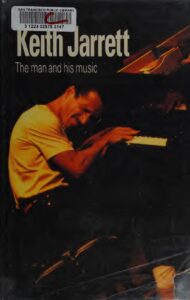
Keith Jarrett and Gurdjieff & De Hartmann's music
Search your favorite sheet music in the Sheet Music Library Catalog
Please, subscribe to our Sheet Music Library.
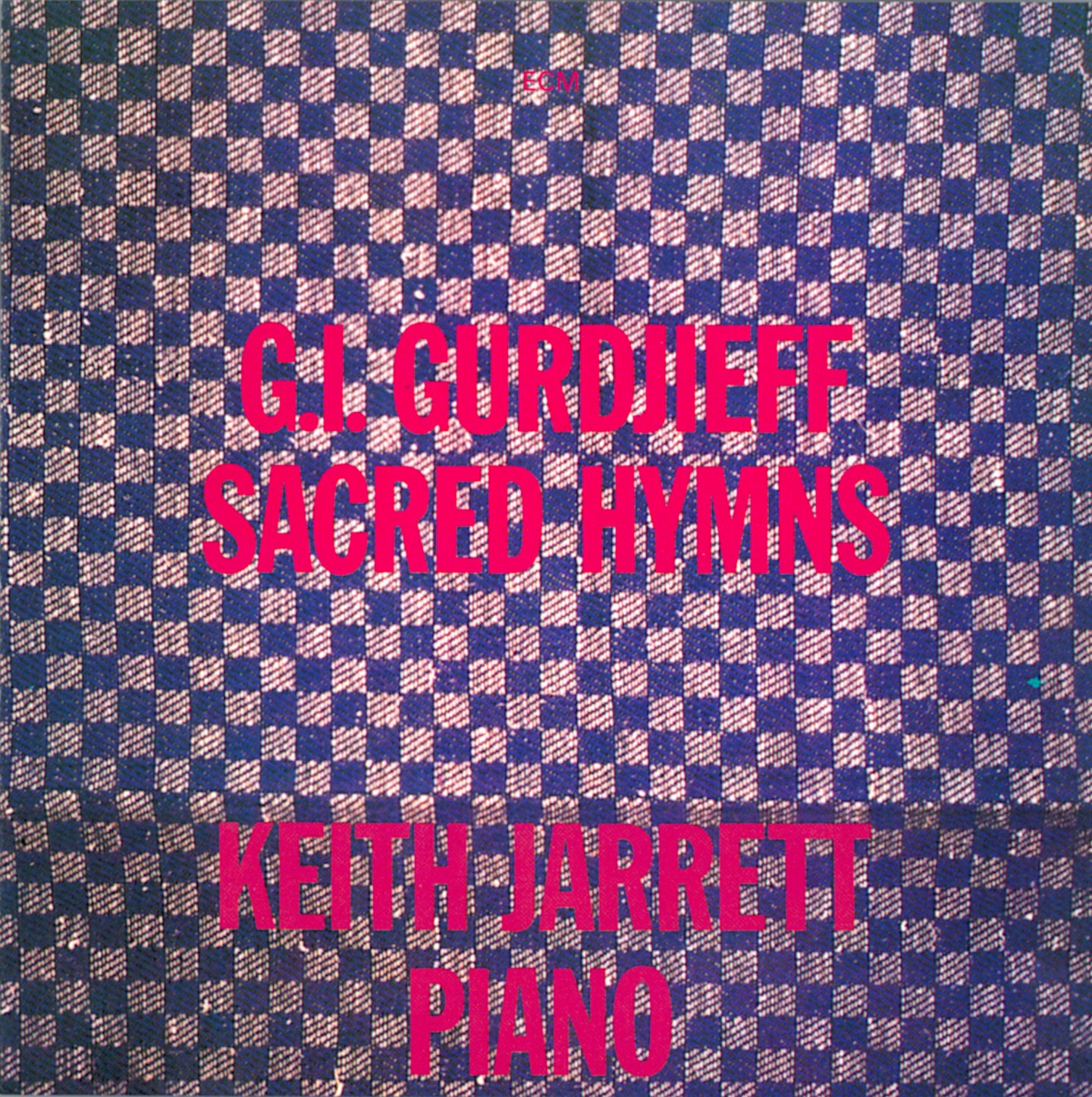
Pianist Keith Jarrett recorded the album Gurdjieff: Sacred Hymns in March 1980, performing the spiritual and philosophical compositions of spiritual teacher George Gurdjieff.
About the Collaboration and Album
- The Composer: George Gurdjieff was a mystic and philosopher who created the "Fourth Way" spiritual system. He composed music in the 1920s with Russian composer Thomas de Hartmann.
- The Music: The pieces draw from Middle Eastern folk traditions, Caucasian music, and Russian Orthodox liturgy.
- Jarrett's Approach: Instead of his usual energetic jazz improvisations, Jarrett plays with serene dignity, deep reverence, and stark simplicity.
- Release: Produced by Manfred Eicher, the 15-track album was released on ECM Records in September 1980.
George Gurdjieff’s music was never intended as mere entertainment; it was a core tool for spiritual awakening, designed to shock listeners out of what he called "waking sleep" and force a deeper, deliberate state of consciousness.
Here is a breakdown of the unique musical style and the philosophy behind his compositions.
The Philosophy: Objective Art
Gurdjieff distinguished between subjective art (most modern art) and objective art.
The best sheet music download from our Library.
- Subjective Art: Created from the artist's personal feelings and interpreted differently by every listener based on their own mood or background.
- Objective Art: Created with exact mathematical precision to produce a predictable, universal psychological and physiological effect on any human being who hears it. Gurdjieff claimed that true objective music could act as an exact science, transmitting specific spiritual truths directly to the listener's subconscious without the distortion of language.
The Musical Style: East Meets West
Gurdjieff could not write standard Western musical notation. In the 1920s, he collaborated closely with the classical Russian composer Thomas de Hartmann, who painstakingly translated Gurdjieff’s whistled, hummed, or single-finger piano melodies into fully realized piano arrangements.
The resulting music possesses distinct stylistic traits:
- Sacred and Liturgical Roots: Much of the music is deeply influenced by the ancient, hidden traditions Gurdjieff encountered during his youth, including Essene communities, Greek Orthodox liturgy, and secret Sufi brotherhoods.
- Middle Eastern and Central Asian Scales: The melodies frequently abandon Western major and minor scales, utilizing the microtones, shifting centers, and modal structures found in traditional Kurdish, Persian, Armenian, and Caucasian folk music.
- Hypnotic Monophony: Many pieces emphasize a single, hauntingly beautiful melodic line over simple, repetitive harmonic drones or chords. This removes emotional sentimentality and demands absolute focus.
- Abrupt Disruption: The music frequently shifts rhythms or leaves sudden silences. This mimics Gurdjieff's "Stop Exercise" in his spiritual teachings, designed to break automatic habits and force the listener into the present moment.
Connection to "The Movements"
Gurdjieff’s compositions were fundamentally intertwined with his Movements—a series of highly complex, sacred dances or gymnastic exercises. He used these dances to harmonize the three human centers: the intellectual, the emotional, and the physical. The music served as the precise rhythmic and vibrational engine that guided practitioners through these strict, mathematically calculated postures.
Gurdjieff’s "Fourth Way" philosophy and his esoteric concepts of sound have quietly exerted a massive influence on the jazz world. While Keith Jarrett stands out as the only major jazz icon to dedicate an entire album to Gurdjieff’s music, several other legendary musicians utilized Gurdjieff’s concepts to reshape how they approached improvisation, performance, and cosmic awareness.
1. Sun Ra (The Interstellar Mystic)
The eccentric, avant-garde keyboardist and big-band leader Sun Ra was heavily fascinated by Gurdjieff’s writings.
- The Connection: Sun Ra read Gurdjieff's major text, Beelzebub's Tales to His Grandson, which frames spiritual lessons through an outer-space lens.
- The Application: This deeply fed Sun Ra's personal mythos—claiming he was from Saturn and sent to redeem Earth through music. Like Gurdjieff, Sun Ra ran his "Arkestra" as a rigid, communal discipline, forcing his musicians into exhausting rehearsals to break down their egos and habitual ways of playing, aiming to channel pure "cosmic" vibrations.
2. The Fourth Way (The Band)
In the late 1960s, a highly influential early jazz-fusion group formed in San Francisco and literally named themselves The Fourth Way, directly after Gurdjieff's spiritual system.
- The Members: Led by New Zealand-born pianist Mike Nock and featuring violinist Michael White, bassist Ron McClure, and drummer Eddie Marshall.
- The Application: The band fused acoustic jazz improvisation with electronic amplification, aiming to capture the attentive, hyper-aware states of consciousness championed by Gurdjieff. Songs like "Dance of the Mechanical Man" directly referenced Gurdjieff's idea that ordinary humans function as unconscious automatons until awakened.
3. Charles Lloyd (The Spiritual Seeker)
Saxophonist Charles Lloyd—in whose quartet a young Keith Jarrett actually rose to fame in the late 1960s—was also deeply immersed in Western esoteric traditions and Gurdjieff.
- The Application: Lloyd viewed jazz not as entertainment, but as an act of prayer and self-realization. The heavy presence of Gurdjieffian ideas in Lloyd's inner circle in the late '60s is widely cited as the bridge that initially introduced Keith Jarrett to Gurdjieff's literature.
Beyond Jazz: The Progressive Rock Parallel
While not strictly jazz, it is impossible to talk about Gurdjieff’s musical legacy without mentioning Robert Fripp (founder of King Crimson) and ambient pioneer Brian Eno. Fripp was an active student of J.G. Bennett (a direct disciple of Gurdjieff). Fripp structured his famous "Guitar Craft" seminars completely around Gurdjieffian principles—using punishing picking exercises and strict physical postures to force guitarists out of automatic physical habits and into a state of total present-moment awareness.
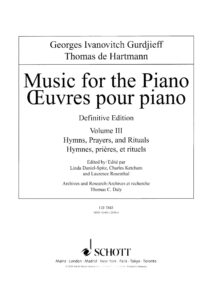
Background to the Piano Music
The majority of piano music was written between 29 July 1925 and 1 May 1927 in both
the large salon and the Movements hall or ‘Study House’ at the Prieuré. An unusual
musical collaboration took place between the eccentric, hard-edged Gurdjieff, who had little classical music training, and his pupil, the aristocratic Ukrainian Thomas de
Hartmann, who was classically trained in composition by Anton Arensky and Sergei
Taneiev (who was a pupil of Tchaikovsky), and in piano technique by Anna Esipova-
Leschetizky, a teacher of Prokofiev. Gurdjieff would whistle or play melodies and rhythms on the piano with one finger, and de Hartmann would spontaneously arrange these for piano.
De Hartmann attributed the music wholly to Gurdjieff; “It is not my music; it is his. I
have only picked up the Master’s handkerchief”, though de Hartmann’s own compositional voice can be detected in the harmonies constructed. The compositional process was carried out before all Gurdjieff’s pupils at the Prieuré, and pianist Elan Sicroff suggests that this audience played an essential role in the birth of this music. He argues that in esoteric terms, when composing, Gurdjieff and de Hartmann were able to harness the ‘finer energies’ of the audience, produced from the ‘inner work’ undergone throughout the day. It is unclear how many pieces were composed altogether; 156 pieces have been published, but in the course of this research it has become apparent that more were notated in both draft and full form.
Readings and Emotions
The piano music was played at the Prieuré in conjunction with group readings o Gurdjieff’s first and principal book Tales. Indeed three titles of pieces feature names of characters from Tales, “Rejoice, Beelzebub,” “The Bokharian Dervish Hadji-Asvatz-Troov” and “Atarnakh, Kurd Song,” and one is dedicated to a character from his second book Meetings With Remarkable Men (henceforth Meetings), “For Professor Skridlov.” Pupils’ accounts suggest that the piano music was intended to express emotionally the intellectual ideas of Gurdjieff’s writings. American art critic Carl Zigrosser, who visited the Prieuré in 1927, wrote in New Republic in 1929 that he was told that the pieces that evoked early church music were “composed for the prayers and invocations in his book, under the general title of Temple Music. It is said that he plans to compose a body of music which will express the same meaning, in the world of emotions, that he is expressing for the mind in his book, making the two complementary to each other” .
It is also reported that Gurdjieff’s pupil and editor Alfred R. Orage was disappointed during a trip to New York to be without piano music to accompany the reading of a chapter of Tales, “since in it the ideas are realized emotionally as in the book they are realized intellectually”. Further, J. G. Bennett states, “Gurdjieff said that certain ideas could be grasped only if the emotions are tuned into them. He composed music to be played before the reading of particular chapters, and demonstrated the difference in understanding that this made possible”.
These accounts accord with Gurdjieff’s teaching on 5 the relationship between the three ‘centres’ and one’s understanding of something; if more than one centre is engaged one gains a better understanding of a given thing, or can “hear new things in a new way”. The piano music, then, was understood to enable a greater understanding of the ideas in Tales (itself a literary cultural product) by accessing an emotional response in pupils. Music Cultivating the Emotions As previously mentioned, music was the primary vehicle through which Gurdjieff cultivated the ‘emotional centre.’ Listening to music is generally considered chiefly as an emotional experience. The rise and fall of melodies, and the use of certain keys, modes and harmonic progressions can quickly and powerfully affect listeners’ emotions based on their own previous associations and experiences with music.
It has been shown that the piano music was understood to enable a better understanding of Tales, but the music must also have been aimed at generally cultivating the ‘emotional centre,’ since work on the ‘emotional centre’ was considered key to spiritual development. Pupil C. S. Nott states, “Gurdjieff constantly reminded his pupils, ‘you must feel, you must feel, your mind is a luxury. You must suffer remorse in your feelings’.
To ‘feel’ was important because Gurdjieff argued that the desire to change, the most basic requirement for ‘work on the self,’ comes from ‘essence’, which is the ‘centre of gravity’ of the ‘emotional centre’ . Further, Gurdjieff taught that when this centre functions at full capacity (making it the quickest of the centres), the ‘higher centres’ (two additional centres) can begin to work. This demonstrates the soteriological significance of a cultivated ‘emotional centre.’ Different emotional reactions commonly occur while listening to music, and these may have served to illustrate to Gurdjieff’s pupils how easily one’s emotions are swayed by external stimuli, and how swiftly the attention of the ‘emotional centre’ can wander from the activity at hand to other activities like daydreaming and using imagination. In short, listening to music made it possible for pupils to examine the habitual behaviours of the ‘emotional centre,’ which Gurdjieff no doubt hoped would lead to the devastating realisation that there is nothing permanent within oneself.
Once pupils became aware of the mechanics of the ‘emotional centre,’ the objective must have been to struggle against these behaviours by listening to music in a new way. Indeed, accounts indicate that pupils were instructed to listen to music with control, avoiding habitual reactions and identifications. Pupil Elizabeth Bennett proudly commented that she loved Wagner’s Tristan and Isolde, but during a performance was able to “remain free”, and pupil C. S. Nott states that when listening to Gurdjieff’s music “one did not wallow in emotional daydreams as one is apt when hearing music in general” (There is a similar idea behind Gurdjieff’s ‘stop exercise,’ where pupils were given a signal to suddenly stop whatever they were doing and freeze, ensuring that they refrained from becoming absorbed in it).
The control exercised at these moments of listening could then be applied to other situations. Work on emotions was essential to ‘work on the self,’ and, according, to Ouspensky, “…the study of emotions 6 and the work on emotions became the basis of the subsequent development of the whole system”. Two Categories of Music The early twentieth century was a time of great musical innovation in Europe, but Gurdjieff did not engage with the new musical language of, for example, Igor Stravinsky, Arnold Schoenberg and Anton Webern; indeed he denounced contemporary artistic trends . Instead, he used a musical language influenced by his travels and childhood experiences as a chorister, with recourse to de Hartmann’s compositional skills, to further his pupils’ spiritual development. Gurdjieff’s piano music can be divided into two general categories.
First is the music inspired by Asian and Middle Eastern musical traditions encountered on his travels and in the cultural melting pot of Kars, his hometown in Armenia. (In Meetings Gurdjieff claims to have travelled for twenty years through Central Asia and the Middle East, though these travels are largely unsubstantiated and Sophia Wellbeloved suggests that the autobiographical narrative in Meetings is symbolic and cannot be taken literally, Wellbeloved 2010).
For Gurdjieff, these pieces probably served to remind his pupils of truth or ‘essence’ that contemporary society has lost; in Meetings he speaks of his admiration for Asia, where ancient knowledge containing truth had been preserved through faithful transmission through the generations. These pieces loosely reflect Asian and Middle Eastern folk melodies and rhythms. According to the titles of pieces, the traditions that particularly influenced Gurdjieff are the Greek, Kurdish, Persian, Armenian, Tibetan and Arabian.
However, these pieces often bear little resemblance to the traditional sounds of the music of the peoples claimed in titles. Perhaps Gurdjieff was not able to accurately match the music he remembered with places of origin, having heard it many years prior to composition. Or he may have used these titles to give the impression that he had travelled widely, when in reality he may not have. According to researcher Gert-Jan Blom, at least on one occasion the music does fit the title. Blom compared Gurdjieff’s piano piece “Kurd Melody for Two Flutes” with a field recording of flute music by Kurdish shepherds and states that the structure, mode and rhythm were identical.
There is a further and more pressing problem with the titles. In original manuscripts some pieces have titles written in Russian, presumably Gurdjieff’s titles, but many pieces are simply dated and left untitled in the same way as many of Gurdjieff’s Movements. However, some of these untitled pieces were given titles during the Schott publication process. Michel de Salzmann, who oversaw the Schott project after his mother Jeanne’s death, had the final say on these new titles. There is no indication in the Schott volumes as to which titles are Gurdjieff’s and which were newly devised, and this creates problems for the researcher in this field These pieces are often in a major key, which is uncharacteristic of his music as a whole, and are mostly short, uncomplicated, and characterised by tuneful melodies. Also in this category are pieces inspired by the music of the Sayyids, proverbial descendents of Mohammad.

These introverted pieces frequently embody a two-part structure, traditional to many regions of the Middle East, beginning with a monodic (single melodic line) 7 taksim or improvisation on a mode, and underpinned by a drone-like tremolo (rapidly repeating note) in the left hand. This leads to the second part; a slow rhythmic dance. The two parts are traditionally seen to signify the invocation of higher forces and then the expression of these forces in the world.
Another style of music is his ‘dervish’ pieces, characterized by emphatic dance rhythms and decorative melodies. Dervishes belong to a range of Islamic orders, such as the Mevlevi and the Chishti, in which devotional exercises are linked to musical forms. The second category of pieces represent Gurdjieff’s most solemn musical expressions and are commonly referred to by writers as ‘hymns’ because they loosely resemble Russian Orthodox Church hymns, with which Gurdjieff and de Hartmann were both familiar from childhood, and also because Gurdjieff used the term ‘hymn’ in some titles. The hymn style was the musical language most familiar to Gurdjieff as his only musical training was as a youth singing in the Cathedral choir at Kars municipal school where he witnessed Dean Borsh composing canticles for the choir.
He used the hymn style as a musical foundation that he could then adapt for his own purposes. Musical devices employed that reflect Russian Orthodox hymns include the use of homophony (where parts move to the same rhythm), church modes (tones arranged in particular scales), open fourth and fifth intervals, low bass lines, and melodies that reflect liturgical incantations. However, mild dissonance, unpredictable harmonic shifts and cadences (which are chords comprising the closing of a musical phrase), and asymmetrical melodic phrases are devices that break from traditional hymn patterns. Gurdjieff’s hymns are generally long, slow and unsettling, requiring thorough attention and patience from the listener.
How the Hymns Can be Situated Within Gurdjieff’s Teaching Methods As discussed earlier, Gurdjieff was concerned with creating conditions that would cause friction and expose pupils to their fragmented states, arousing in them a desire to struggle against the habits of each centre. De Hartmann argues, “Every activity in the Work showed clearly that the aim was never for outer results, but for inner struggle,” and that Gurdjieff ultimately worked towards developing people’s ‘beings’.
It was explained that pupils understood the purpose of the piano music as a medium in which to express emotionally the ideas in Tales, leading to a more complete understanding of these ideas. This is one interpretation of the music’s purpose. However, an analysis of the music reveals another way in which it was intended to affect listeners. It will be shown how through specific musical devices Gurdjieff jolts the listener out of a passive acceptance of the music, enlivening the listener’s efforts to listen. It will then be demonstrated that musical devices in Gurdjieff’s piano music can be likened to both the linguistic devices of Tales and the choreographic devices in the Movements.
All of these devices were intended to bring attention and effort by challenging and disrupting practitioners’ habitual behaviours. This is an idea inspired by Sophia Wellbeloved’s examination of the ways in which the semantic and narrative complexities of Tales demand a form of hermeneutical process from its reader. The idea is that the enormous effort and attention required of the reader, through the peculiar linguistic devices Gurdjieff employs, prevents a passive reading of the text, and that this 8 is ultimately intended to transform the reader and affect their ‘being’.
Musical Devices that Disrupt Emotional and Listening Habits It will be argued that musical devices typical of Gurdjieff’s hymns work to destabilize the listener, bringing attention and effort to the process of listening. Almost all of Gurdjieff’s hymns illustrate the devices discussed below, but they are most obvious in the ten hymns that form Hymns From a Great Temple and the ‘Easter’ hymns. As the hymns loosely resemble traditional church hymns, Gurdjieff was able to play with listeners’ ‘mechanical’ preconceptions and expectations of the music.
Most of Gurdjieff’s listeners at the Prieuré were Russian, English and American, and would have been familiar with hymn music. By taking a conventional musical form in which people were familiar, Gurdjieff could bring about a tension between the anticipated and the actual course of the music. For example, it is conventional in hymnody (and Western classical music) for melodies to appear in uniform patterns, usually in three or four-bar patterns, but in Gurdjieff’s hymns melodic phrases are often odd lengths, due to shifting metres that prevent any symmetry, or to a lack of bar lines altogether.
Melodic phrases sometimes even begin on a beat other than the first of the bar, which confuses the pulse of the melody and unsettles the listener. Further, melodies most often lack clear harmonic direction due to an unconventional use of cadences, meaning that the listener is constantly left wondering where the piece is going. The function of the cadence in traditional Western harmony is strong as it subordinates rhythmic patterns, metres and melodic lines, but in Gurdjieff’s hymns unpredictable cadences mean that the music sounds disoriented and the listener’s tendency to respond is inhibited.
These devices might explain why listeners, particularly those well-versed in music, frequently describe Gurdjieff’s music as challenging, or even boring, to listen to. Gurdjieff music researcher Wim van Dullemen played the Gurdjieff music to a range of people and found that professional musicians and others well-versed in classical Western music considered the music boring.
The hymns further challenge listeners’ habitual ways of listening while keeping them attentive through dissonant, seemingly out-of-place notes or striking contrasts in dynamics. Both of these techniques can be found in “Easter Hymn and Procession in the Holy Night”, one of his longest and most enigmatic hymns. Between bars 19 and 37 dramatic dynamic contrasts keep changing the mood, creating a feeling of restlessness. (Although most dynamic markings were much later included in pieces by de Hartmann in preparation for publication, one can assume that these were originally Gurdjieff’s performance indications to de Hartmann).
The second half of the hymn is characterised by a meditative three-crotchet motif in the bass, but two dissonant chords eerily break the calm mood in bars 63 and 67, where a clash occurs between an E natural and an E flat. Gurdjieff simply will not allow the listener to get comfortable and fall into their usual state of slumber.
Browse in the Sheet Music Library:
Or browse in the categories menus & download the Library Catalog PDF: