
Scores for all instruments: 16,000+ (active and growing), over 236,000 pages.
All genres and levels: Jazz & Blues, Rock & Pop, Classical & Contemporary, Film & Musicals;
books & biographies; methods, études, play-along tracks (MP3) for Jazz & Rock.
Access & benefits: US$15.99 one-time payment, valid for lifetime, full Library access.
Table of Contents
The best sheet music download from our Library.
Leonard Cohen: The Godfather of Gloom and Grace
Remembering Leonard Cohen, born on this day in 1934 (1934-2016)
Search your favorite sheet music in the Sheet Music Library Catalog
Leonard Cohen - Hallelujah (Official Live in London 2008)

Please, subscribe to our Sheet Music Library. Sheet music should be accessible and affordable for all musicians, from professionals to absolute beginners.
Born on September 21, 1934, in Westmount, Quebec, Leonard Norman Cohen emerged as one of the most singular and revered voices in all of 20th and 21st-century art. He was a poet before he was a songwriter, a novelist before he was a performer, and a seeker long before he became, for many, a sage. His work, characterized by its deep spiritual inquiry, unflinching melancholy, wry humor, and profound humanity, transcends the boundaries of music to become a universal meditation on what it means to be human—to love, to lose, to have faith, to doubt, and to endure.
Biography: From Montreal to Mount Baldy
Cohen’s journey began in an affluent Jewish family. His father, Nathan, a prominent clothier, died when Leonard was nine years old, an event that would later inform the themes of loss and inheritance in his work. As a teenager, he learned guitar and formed a country-folk group called the Buckskin Boys, but his first true love was poetry. He attended McGill University, where he became president of the debating union and won the McNaughton Prize in creative writing.
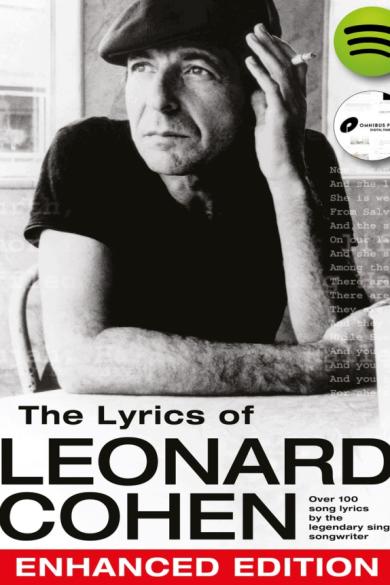


Browse in the Sheet Music Library:
Or browse in the categories menus & download the Library Catalog PDF:
His early literary career was promising. His first collection of poetry, Let Us Compare Mythologies (1956), was published as part of the McGill Poetry Series while he was an undergraduate. He spent the late 1950s at Columbia University in New York and immersed himself in the burgeoning folk scene of Greenwich Village, though he remained on its intellectual periphery. He returned to Canada, settling on the Greek island of Hydra in 1960 with Marianne Ihlen (his muse for "So Long, Marianne"). There, he published the poetry collection The Spice-Box of Earth (1961) and the novels The Favourite Game (1963) and Beautiful Losers (1966). The latter, a wild, experimental, and sexually explicit work, was a critical success but a commercial failure.
Frustrated by his financial prospects as a writer, and inspired by the folk revival and artists like Bob Dylan, Cohen moved to the United States in 1966 to pursue a career as a songwriter. His break came when Judy Collins recorded his songs "Suzanne" and "Dress Rehearsal Rag," bringing him to the attention of Columbia Records producer John Hammond (who had signed Dylan and Bruce Springsteen). His debut album, Songs of Leonard Cohen (1967), immediately established his unique, world-weary persona.
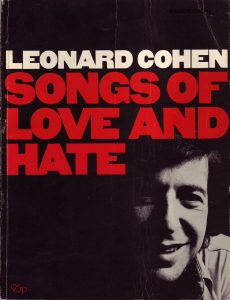
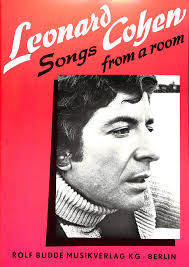
The 1970s saw a prolific output of albums—Songs from a Room (1969), Songs of Love and Hate (1971), New Skin for the Old Ceremony (1974), and Death of a Ladies' Man (1977), the latter a chaotic and critically panned collaboration with Phil Spector. The 1980s brought a shift towards a more synthesized, contemporary sound with albums like Various Positions (1984), which contained the future standard "Hallelujah," a song initially ignored by his label.
In the 1990s, Cohen underwent a radical personal transformation. Weary of the music industry and grappling with depression, he entered the Mount Baldy Zen Center near Los Angeles in 1994. He was ordained as a Rinzai Buddhist monk in 1996, taking the name Jikan, which means "silence." This was not a conversion from Judaism but an deepening of his lifelong spiritual exploration.

His retreat was interrupted by a shocking discovery: his long-time manager, Kelley Lynch, had embezzled most of his life's savings, leaving him with little to nothing. This financial necessity forced him back on tour in 2008, an event that catalyzed one of the most triumphant late-career resurgences in music history. His world tours from 2008-2013 were hailed as masterclasses of performance and connection. He released two final studio albums of immense power, Old Ideas (2012) and You Want It Darker (2016), which served as a profound and clear-eyed meditation on his impending death. He passed away on November 7, 2016, just weeks after the release of You Want It Darker. A posthumous album, Thanks for the Dance, was released in 2019.
Music Style and Harmony: The Architecture of Melancholy
Cohen's music style is a unique fusion of folk, chamber music, and art song, all built upon a foundation of poetic lyricism.
Vocal Delivery: The most immediate identifier is his voice. The young Cohen had a pleasant, if limited, baritone. Over the decades, it weathered into a profound, gravelly basso profondo, a "granite voice soaked in brandy," as one critic put it. He didn't sing so much as incant, chant, and speak-sing. This delivery forced the listener to focus on the words, each one weighted with meaning.
Instrumentation and Arrangement: His early work was sparse: acoustic guitar, often fingerpicked in a flamenco-influenced style, accompanied by subtle strings or a female backing vocal. As his career progressed, he incorporated more elements: synthesizers (1980s), layered male backing vocals (the famed "Cohenites"), and rich orchestral arrangements. The later albums, particularly You Want It Darker, are masterpieces of atmospheric, minimalist production, often overseen by his son, Adam Cohen.
Chord Progressions and Harmony: Cohen was not a virtuoso musician, but he was a master of mood. His harmonic language is often deceptively simple, relying on cyclical, folk-based progressions that create a hypnotic, meditative effect.
- Droning and Open Strings: His guitar style made extensive use of open strings and capos, creating droning, resonant textures. A song like "Suzanne" is built around a simple, repeating fingerpicked pattern with a droning open bass string, giving it a timeless, nautical feel.
- Minor Keys and Modal Flavor: He heavily favored minor keys (D minor, for instance, is often called "the key of melancholy" and was a Cohen staple). He also used modal interchange, borrowing chords from the parallel minor or major key to create unexpected emotional shifts. "Hallelujah" is a masterclass in this: its progression (C, Am, C, Am, F, G, C, G) is simple, but the way the melody and lyrics interact with these basic chords creates a complex narrative of sacred and profane love.
- Cyclical Structures: Many Cohen songs are not built on traditional verse-chorus-bridge structures but are cyclical, mantra-like repetitions. "Famous Blue Raincoat" or "Who by Fire" (which borrows its structure from the Jewish prayer "Unetanneh Tokef") are built on patterns that revolve and return, mimicking the cycles of thought, regret, and prayer.
Improvisational Licks: The Lyrical, Not the Musical

It is crucial to understand that Leonard Cohen’s improvisation was seldom musical in the traditional, instrumental sense. He did not play guitar solos. His improvisation was lyrical and arrangement-based.
- Lyrical Rewrites: Cohen was notorious for writing dozens, sometimes over a hundred, verses for a single song. He would improvise and refine lyrics over years, even decades. "Hallelujah" famously had around 80 drafted verses. In performance, he would often switch out verses, creating new narrative nuances and emotional emphases for different tours or moods. This was his primary form of improvisation: a constant, living evolution of his poetry.
- Vocal Phrasing: His speak-sing delivery was inherently improvisational. He would stretch syllables, pause for dramatic effect, and speak lines that on record were sung, constantly playing with the rhythm and emphasis of his words to find new meaning. Listen to different live versions of "A Thousand Kisses Deep" to hear how he recites the poem over a fixed musical bed, each time with a different cadence and gravity.
- Arrangement Evolution: His songs were radically rearranged over time. Compare the synth-pop version of "Dance Me to the End of Love" from Various Positions to the lush, string-heavy version that became his concert opener decades later. The musical landscape of the song was improvised upon and evolved by his brilliant musical directors, like Roscoe Beck and Javier Mas.
Cooperation with Other Artists
Cohen was a generous collaborator who inspired fierce loyalty and profound interpretations from other artists.
- Judy Collins: His earliest and most crucial champion, she introduced his songs to the world.
- Jennifer Warnes: A backing singer for Cohen, her 1987 tribute album Famous Blue Raincoat: The Songs of Leonard Cohen was instrumental in revitalizing interest in his work during a quieter period. Her voice is the sublime counterpart to his on albums like Various Positions.
- Sharon Robinson: A co-writer and producer on Cohen's later albums (Ten New Songs, Dear Heather). Their collaboration yielded some of his most beloved late-career work, including "Boogie Street" and "Alexandra Leaving."
- The Cohenites: His long-time backing vocalists, including Sharon Robinson, the Webb Sisters (Charley and Hattie), and Perla Batalla, became an integral part of his live sound, providing angelic counterpoint to his earthly growl.
- Javier Mas: A Spanish bandurria and laud player whose virtuosic, flamenco-inspired playing became the central instrumental voice of Cohen's live performances in the 21st century.
- Cover Artists: His songs have been covered by everyone from Nina Simone ("Suzanne") and Jeff Buckley ("Hallelujah") to Nick Cave and the Bad Seeds ("Avalanche") and R.E.M. ("First We Take Manhattan"). These covers are a testament to the immense flexibility and depth of his songwriting.
Influences and Legacy
Influences on Cohen:
- Poetry: Federico García Lorca (to whom he often paid tribute), W.B. Yeats, Irving Layton.
- Music: Country and Western, Flamenco music, European folk music, the Hebrew cantorial music of his youth.
- Literature & Philosophy: The Bible (a constant source of imagery), Jewish mysticism, Buddhist texts, Beat poetry.
Cohen's Legacy:
Leonard Cohen's legacy is immeasurable. He is the bridge between the literary café and the concert hall. He created a space for deep, intellectual, and spiritual inquiry in popular song. Furthermore, he is the patron saint of the beautifully defeated, offering not empty hope but a dignified solidarity in struggle.
Leonard Cohen influenced countless songwriters who prioritize lyricism and emotional depth, including:
- Nick Cave & The Bad Seeds: The gothic storytelling and biblical imagery.
- PJ Harvey: The raw, unflinching exploration of human nature.
- Lana Del Rey: The cinematic melancholy and vintage glamour.
- Antony Hegarty (Anohni): The soaring, tragic vocals and spiritual yearning.
- The National & Arcade Fire: The intellectual, literary approach to indie rock.
His most famous song, "Hallelujah," has taken on a life of its own, becoming a modern hymn covered by hundreds of artists across every genre.
Works and Filmography
Major Literary Works:
- Let Us Compare Mythologies (Poetry, 1956)
- The Spice-Box of Earth (Poetry, 1961)
- The Favourite Game (Novel, 1963)
- Flowers for Hitler (Poetry, 1964)
- Beautiful Losers (Novel, 1966)
- Stranger Music: Selected Poems and Songs (1993)
- Book of Longing (Poetry and Drawings, 2006)
Filmography:
Cohen's relationship with film was multifaceted.
- As Subject: Leonard Cohen: I'm Your Man (2005) is a tribute documentary and concert film featuring artists like U2 and Nick Cave. Marianne & Leonard: Words of Love (2019) explores his relationship with Marianne Ihlen.
- As Contributor: His music has been featured in countless films, often to powerful effect. Key examples include McCabe & Mrs. Miller (1971, uses songs from first two albums), Pump Up the Volume (1990, "Everybody Knows"), Shrek ("Hallelujah"), and Watchmen (2009, "Hallelujah" and "The Future").
- As Actor/Writer: He had a small role in the TV series Miami Vice and contributed to the script and music for the film Night Magic (1985).
Discography
- Songs of Leonard Cohen (1967)
- Songs from a Room (1969)
- Songs of Love and Hate (1971)
- Live Songs (1973)
- New Skin for the Old Ceremony (1974)
- Death of a Ladies' Man (1977)
- Recent Songs (1979)
- Various Positions (1984)
- I'm Your Man (1988)
- The Future (1992)
- Ten New Songs (2001)
- Dear Heather (2004)
- Old Ideas (2012)
- Popular Problems (2014)
- You Want It Darker (2016)
- Thanks for the Dance (2019)
Most Known Compositions and Performances
- "Suzanne": His de facto calling card, a perfect fusion of sacred and profane imagery.
- "So Long, Marianne": A bittersweet, joyful-sounding farewell to a great love.
- "Bird on the Wire": An anthem of flawed humanity and a promise to try harder.
- "Famous Blue Raincoat": A haunting epistolary song of a love triangle, filled with ambiguity and regret.
- "Hallelujah": His magnum opus, a song that dissects the broken and glorious nature of love, faith, and art.
- "I'm Your Man": A witty, swinging, and utterly devoted declaration of service in love.
- "Everybody Knows": A cynical, grooving, and brutally honest assessment of the modern world.
- "Dance Me to the End of Love": A song of love that uses the imagery of musicians playing as a ship goes down, finding beauty in the face of oblivion.
- "Tower of Song": A wry, self-deprecating, and deeply wise meditation on the art of songwriting and aging.
- "You Want It Darker": His final, chilling, and accepting farewell, a collaboration with the almighty and his own mortality.
Leonard Cohen’s work is not a refuge from the darkness of the world, but a guide for how to live within it. He looked into the abyss with clear eyes and found there, not answers, but a strange and comforting beauty. He was, as he described himself, "the little jew who wrote the bible," and his songs remain a sacred text for those who find their truth in the cracks between the sacred and the profane, between the sorrow and the light.
Browse in the Sheet Music Library:
Or browse in the categories menus & download the Library Catalog PDF:
Leonard Cohen - 20 Greatest Hits
Listen to Leonard Cohen's music on Spotify
Works
Discography
Main article on Wikipedia: Leonard Cohen discography
Studio albums
All albums released on Columbia Records.
- Songs of Leonard Cohen (1967)
- Songs from a Room (1969)
- Songs of Love and Hate (1971)
- New Skin for the Old Ceremony (1974)
- Death of a Ladies' Man (1977)
- Recent Songs (1979)
- Various Positions (1984)
- I'm Your Man (1988)
- The Future (1992)
- Ten New Songs (2001)
- Dear Heather (2004)
- Old Ideas (2012)
- Popular Problems (2014)
- You Want It Darker (2016)
- Thanks for the Dance (2019)
Publications
Collections
Cohen, Leonard (1956). Let Us Compare Mythologies. . Drawings by Freda Guttman. Montreal: Contact Press.
The Spice-Box of Earth. Toronto: McClelland & Stewart, 1961.
Flowers for Hitler. Toronto: McClelland & Stewart, 1964.
Parasites of Heaven. Toronto: McClelland & Stewart, 1966.
Selected Poems 1956–1968. Toronto: McClelland & Stewart, 1968.
The Energy of Slaves. Toronto: McClelland and Stewart, 1972. ISBN 0-7710-2204-2 ISBN 0-7710-2203-4 New York: Viking, 1973.
Death of a Lady's Man. Toronto: McClelland & Stewart, 1978. ISBN 0-7710-2177-1 London, New York: Viking, Penguin, 1979. – reissued 2010
Book of Mercy. Toronto: McClelland & Stewart, 1984. – reissued 2010
Stranger Music: Selected Poems and Songs. London, New York, Toronto: Cape, Pantheon, McClelland & Stewart, 1993. ISBN 0-7710-2230-1
Book of Longing. London, New York, Toronto: Penguin, Ecco, McClelland & Stewart, 2006. (poetry, prose, drawings) ISBN 978-0-7710-2234-0
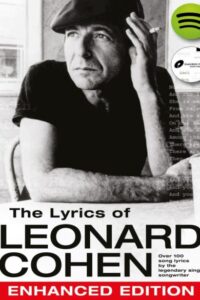
The Lyrics of Leonard Cohen. London: Omnibus Press, 2009. ISBN 0-7119-7141-2
Poems and Songs. New York: Random House (Everyman's Library Pocket Poets), 2011.
Fifteen Poems. New York: Everyman's Library/Random House, 2012. (eBook)
The Flame. London, New York, Toronto: Penguin, McClelland & Stewart, 2018. (poetry, prose, drawings, journal entries)
Novels
- The Favourite Game. London, New York, Toronto: Secker & Warburg, Viking P, McClelland & Stewart, 1963. Reissued as The Favourite Game. Toronto: McClelland & Stewart [New Canadian Library], 1994. ISBN 978-0-7710-9954-0
- Beautiful Losers. New York, Toronto: Viking Press, McClelland & Stewart, 1966. Toronto: McClelland & Stewart [New Canadian Library], 1991. ISBN 978-0-7710-9875-8 McClelland & Stewart [Emblem], 2003.ISBN 978-0-7710-2200-5
- A Ballet of Lepers: A Novel and Stories. McClelland & Stewart, 2022. ISBN 9780771018145.
Filmography
- Ladies and Gentlemen... Mr. Leonard Cohen (1965) – documentary co-directed by Don Owen and Donald Brittain
- Angel (1966), actor—experimental animated short directed by Derek May
- Poen (1967), narrator—short film featuring four readings from his novel Beautiful Losers
- The Ernie Game (1967), singer – feature film directed by Don Owen
- Leonard Cohen: Bird on a Wire (1974) – documentary directed by Tony Palmer during Cohen's 1972 European tour. The film premiered in 1974 at the Rainbow Theatre in Cohen's cut; a restored director's cut from footage discovered in 2009 was released on DVD in 2010 and re-released theatrically in 2017.
- Song of Leonard Cohen (1980) – documentary directed by Harry Rasky for CBC filmed during Cohen's 1979 European tour. Rasky also wrote a book about the film: The Song of Leonard Cohen.
- I Am a Hotel (1983), actor, writer, produced – made for TV short musical film, directed by Allan F. Nicholls. Golden Rose Award in Montreux, Switzerland.
- Night Magic (1985), lyricist, screenplay – film musical
- Miami Vice (1986), actor – S2E17, episode "French Twist"
- Songs from the Life of Leonard Cohen (1988) – full-length concert of Royal Albert Hall 1988 performance intercut with interview footage. Produced by the BBC and CMV Enterprises. Released in VHS PAL and NTSC tapes and on laser-disc.
- The Tibetan Book of the Dead Part I: A Way of Life; The Tibetan Book of the Dead Part II: The Great Liberation (1994), narrator – documentary on Bardo Thodol directed by Yukari Hayashi [nl]. Released on DVD in 2004.
- Message to Love (1995) – concert documentary on the Isle of Wight Festival 1970 including a live performance of his song "Suzanne".
- Spring 96. Leonard Cohen Portrait (1996) – documentary directed by Armelle Brusq shot at the Mount Baldy Zen Center. Released as home video by SMV Enterprises in VHS and DVD.
- The Favourite Game (2003) – Canadian film adaptation of the novel directed by Bernar Hebert
- Leonard Cohen: I'm Your Man (2005) – documentary and concert film directed by Lian Lunson
- Leonard Cohen. Under Review 1934-1977 (2007) and Leonard Cohen. Under Review 1978-2006 (2008)—documentary interviews with "an independent critical analysis". DVDs released by MVD Entertainment Group in the US and by Chrome Dreams Companies in the UK. First re-released as The Early Years; the second as After the Gold Rush; both re-released as Leonard Cohen. Complete Review (2012, 151 mins) and re-cut as Lonesome Heroes (110 mins). Unauthorised.
- Marianne & Leonard: Words of Love (2019) – documentary directed by Nick Broomfield. Unauthorised.
- Hallelujah: Leonard Cohen, A Journey, A Song (2021) – documentary directed by Daniel Geller and Dayna Goldfine