
Scores for all instruments: 16,000+ (active and growing), over 236,000 pages.
All genres and levels: Jazz & Blues, Rock & Pop, Classical & Contemporary, Film & Musicals;
books & biographies; methods, études, play-along tracks (MP3) for Jazz & Rock.
Access & benefits: US$15.99 one-time payment, valid for lifetime, full Library access.
Table of Contents
Who was Leonard Cohen (1934-2016)?
Please, subscribe to our Sheet Music Library. Sheet music should be accessible and affordable for all musicians, from professionals to absolute beginners.
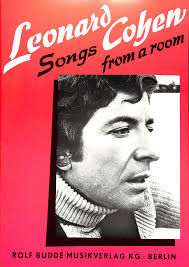
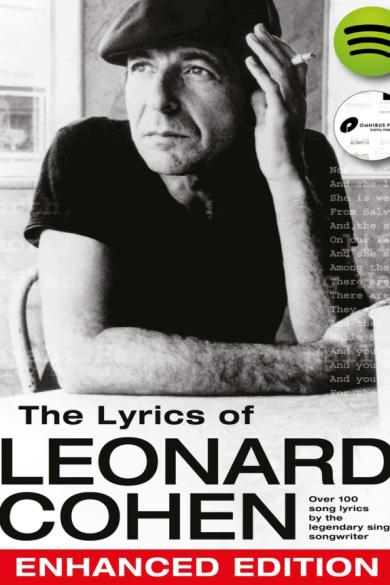

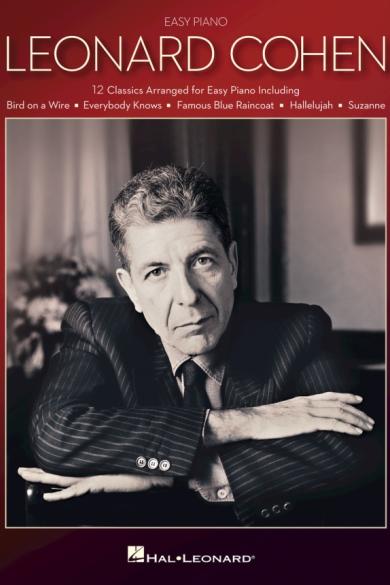
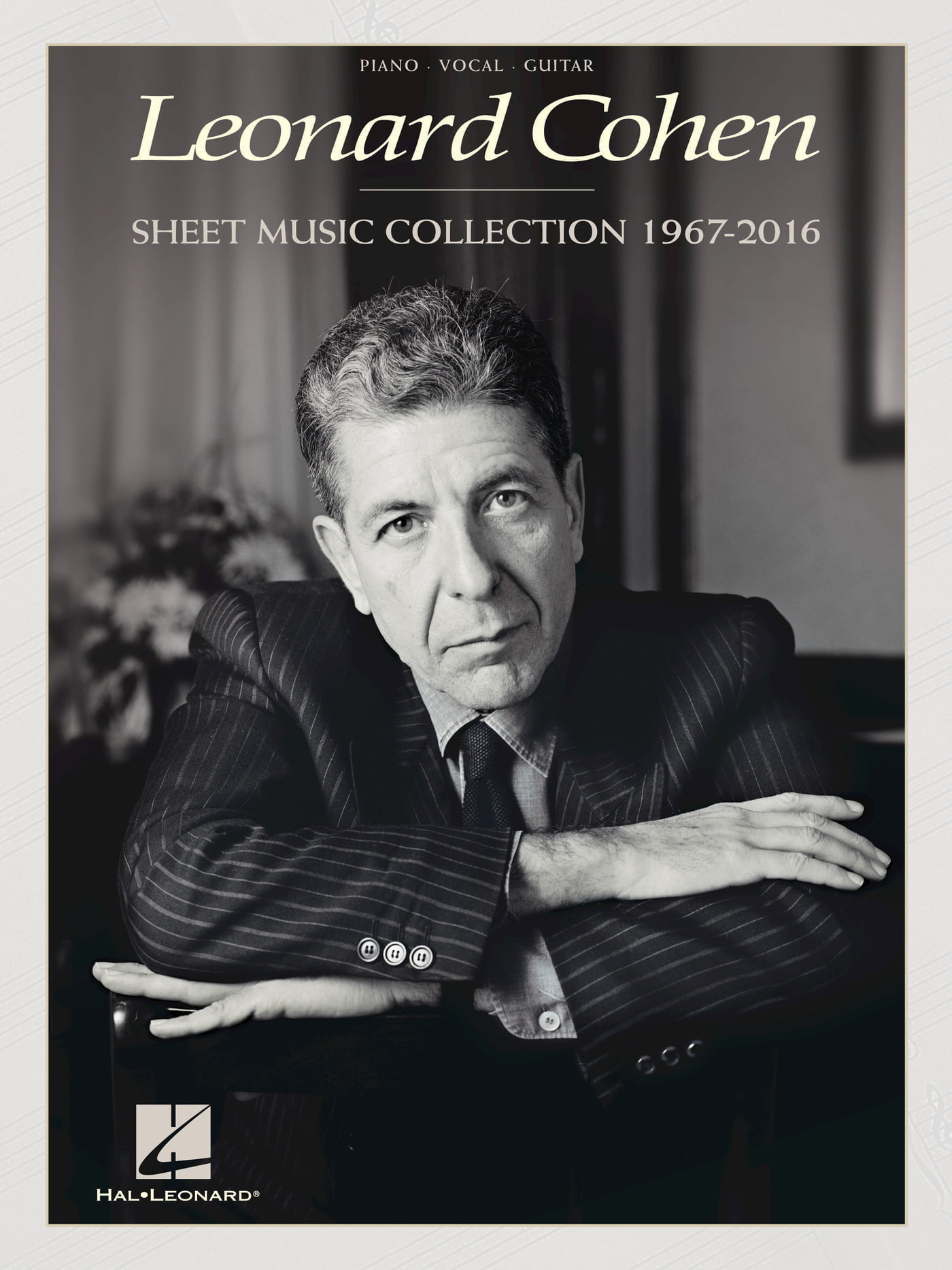

Leonard Cohen: The Poet Laureate of the Human Condition
The best sheet music download from our Library.
Leonard Norman Cohen occupies a singular place in the landscape of modern culture. He was, in turn and often simultaneously, a poet, a novelist, a songwriter, a singer, and a spiritual seeker. He was never a conventional pop star; his voice was a gravelly, limited baritone, and his melodies were often deceptively simple. Yet, over a career that spanned more than five decades, he crafted a body of work of such emotional depth, lyrical precision, and spiritual inquiry that it transcended the boundaries of genre and generation. He was the "high priest of pathos" and the "godfather of gloom," but also a man of profound wit, self-deprecating humor, and an unyielding commitment to the craft of song. From his emergence in the folk clubs of Greenwich Village in the late 1960s to his remarkable late-career renaissance as a global touring artist, Leonard Cohen proved that vulnerability, intelligence, and a relentless search for meaning could be the most powerful forces in popular music.
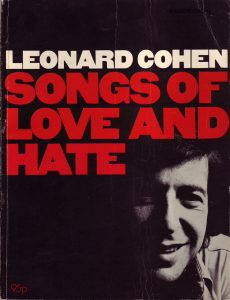
Biography: From Montreal to the World Stage
Leonard Norman Cohen was born on September 21, 1934, into a prosperous, middle-class Jewish family in the anglophone enclave of Westmount, Montreal. His father, Nathan, owned a successful clothing store, and his mother, Marsha, was the daughter of a Talmudic scholar. This heritage—a blend of commercial pragmatism and deep religious scholarship—would inform both his sartorial elegance and his lifelong engagement with spiritual texts. A defining trauma occurred when Cohen was just nine years old: his father died. The event cast a long shadow over his life and work, seeding themes of loss, absence, and mortality that would recur throughout his career. In an early, poignant act of secular ritual, the young Cohen buried a piece of his father’s bow tie in the backyard after the funeral.
Cohen’s artistic inclinations emerged early. He learned to play the guitar and formed his first folk group, the Buckskin Boys, at seventeen, reasoning with characteristic candor that "guitars impress girls". His literary talents were equally precocious. He enrolled at McGill University in 1951 to study English Literature and published his first collection of poetry, Let Us Compare Mythologies, in 1956. His poetry was well-received, and a second volume, The Spice Box of Earth (1961), established his reputation as a serious literary voice. Using a grant and the royalties from his writing, Cohen traveled to Europe, eventually settling on the Greek island of Hydra. There, in a whitewashed house overlooking the sea, he lived with his Norwegian muse, Marianne Ihlen, and wrote prolifically. It was a period of idyllic simplicity and intense creative output.
Search your favorite sheet music in the Sheet Music Library Catalog
During this time, he published his first novel, The Favourite Game (1963), and its follow-up, Beautiful Losers (1966). The latter, a formally daring and sexually explicit work, caused a scandal in Canada, with one reviewer infamously calling it "the most revolting book ever written in Canada". Despite the controversy, it cemented his reputation as a major literary provocateur. However, Cohen soon realized that poetry and experimental fiction, while critically respected, were not financially viable. In 1966, at the age of thirty-two, he made the decisive move to New York City to pursue a career as a songwriter.
His timing was fortuitous. The folk music boom was in full swing. The folk singer Judy Collins, whom Cohen had met on the Montreal folk circuit, recorded his song "Suzanne" and turned it into a minor hit in 1966, a full year before Cohen himself would release a record. Her support and that of Columbia Records executive John Hammond—who had previously signed Bob Dylan—led to a record deal. In December 1967, at the age of thirty-three, Leonard Cohen released his debut album, Songs of Leonard Cohen. Its bleak, introspective tone and Cohen’s weary, semi-spoken intonation were hardly the stuff of conventional pop success, but the album became a cult classic, tapping into a new, literate audience hungry for depth and authenticity.
The follow-up, Songs from a Room (1969), and Songs of Love and Hate (1971) solidified his cult status. The latter was his most commercially successful album to date, featuring stark, emotionally raw tracks like "Famous Blue Raincoat" and "Joan of Arc". Despite a paralyzing fear of live performance, Cohen toured extensively in this period, including a legendary, highly-charged appearance at the 1970 Isle of Wight Festival, where his quiet, reflective set managed to captivate a volatile crowd of 600,000 people.
The later 1970s saw Cohen experiment with his sound. The 1977 album Death of a Ladies’ Man, a chaotic collaboration with producer Phil Spector, was an experience Cohen later disowned, describing it as a "miscalculation". He returned to a more acoustic, contemplative sound with Recent Songs (1979), which incorporated jazz, Eastern, and Mediterranean influences. The 1980s marked a period of reinvention. The synth-driven I’m Your Man (1988) introduced him to a new generation of listeners, with its iconic opening track, "First We Take Manhattan," and the wry, worldly title song. Its 1992 follow-up, The Future, was a dark, prophetic album that cemented his status as a cultural sage, with its title track and the anthemic "Anthem" becoming concert staples.
Following the release of The Future, Cohen retreated from the public eye. In 1996, he was ordained as a Zen Buddhist monk at the Mount Baldy Zen Center in California, taking the name Jikan, meaning "silent one". He spent several years in seclusion, a period that he later said helped lift a lifelong depression. His silence was broken in the early 2000s. He discovered that his longtime manager had embezzled most of his savings, forcing him to return to touring and recording out of financial necessity. What began as a pragmatic decision became one of the most celebrated artistic comebacks in music history. Albums like Ten New Songs (2001), Dear Heather (2004), Old Ideas (2012), Popular Problems (2014), and You Want It Darker (2016) were met with widespread critical acclaim. His tours between 2008 and 2013 were triumphant, with Cohen, then in his late seventies, performing for over three hours a night to enraptured audiences worldwide. Leonard Cohen died on November 7, 2016, at his home in Los Angeles, at the age of 82, just weeks after the release of his final studio album.
Musical Style and Technique
Leonard Cohen was not a musician in the conventional sense. He was a poet who used music as a vehicle for his verse. His approach to singing was less about technical prowess and more about communication. He possessed a limited vocal range and a gruff, unpolished timbre, yet he wielded his voice with incredible nuance and authority. Critic Bruce Eder described him as "one of the most fascinating and enigmatic … singer-songwriters of the late '60s," noting his "weary intonation" and his ability to connect with audiences across four decades. His delivery was often described as a "somnambulist hipster" whisper, a "deep and smoky" sound that seemed to impart a tantalizing secret.
As a guitarist, Cohen was similarly unconventional. He developed a unique fingerpicking style, often described as "Spanish-y," which he used to create simple, hypnotic, and repetitive accompaniment patterns. He was not a virtuoso improviser; an analysis of his playing reveals a harmonically straightforward approach, largely based on arpeggiating the notes of the underlying triad and connecting them with scale passages. His solos were not about flashy technique but about reinforcing the harmonic structure and mood of the song. This minimalist, almost meditative approach to the guitar provided a stark, uncluttered backdrop for his lyrics, ensuring that the words always remained the focal point.
His song structures were equally idiosyncratic. While often built on traditional verse-chorus forms, Cohen was not afraid to abandon conventional pop conventions. He would write dozens of verses for a single song, paring them down to the most essential ones for a recording. His melodies were often deceptively simple, built on small, stepwise intervals that made his songs accessible and easy to remember, yet capable of carrying immense emotional weight. This combination of a limited, conversational vocal style, a hypnotic guitar technique, and a poet's sensitivity to language created a sound that was uniquely and instantly recognizable.
Harmony
Cohen’s harmonic language was, on the surface, straightforward. He favored major and minor triads, often moving between them in predictable patterns. However, within this simplicity, he achieved remarkable emotional complexity. His most famous song, "Hallelujah," is a masterclass in harmonic storytelling. The song is written in the key of C major and, as the lyrics themselves declare, moves through a famous progression: "the fourth, the fifth, the minor fall, the major lift" (IV – V – vi – IV). This progression, moving from a state of relaxation (I) to a colorful subdominant (IV), to a tense dominant (V), to a melancholic minor (vi), and then back to a major chord, creates a cycle of tension and release that perfectly mirrors the song's themes of love, loss, and transcendence.
In his earlier, folk-based work, the harmony was often modal or drone-like, creating a sense of timelessness and stasis. As his career progressed, he incorporated more sophisticated harmonic elements. The 1979 album Recent Songs blended his acoustic style with jazz and Mediterranean influences, introducing more complex chord voicings and unusual modulations. The synth-pop productions of the 1980s, particularly on I’m Your Man, used harmony in a more rhythmic, driving way, but the underlying chord progressions often remained deceptively simple. Cohen’s genius was not in inventing new chords, but in using familiar harmonic structures to support lyrics of extraordinary depth and resonance. His harmonies were never ostentatious; they were always in service of the song.
Best Songs and Compositions
Leonard Cohen’s catalog is a treasure trove of literate, emotionally devastating, and spiritually searching songs. Several, however, stand as monuments of the songwriter’s art.
"Suzanne" (1967): The song that introduced Cohen to the world, "Suzanne" is a perfect confluence of the spiritual and the sensual. Based on his real-life encounters with the dancer Suzanne Verdal in Montreal, it paints a vivid, dreamlike portrait of a woman who "feeds you tea and oranges that come all the way from China" and leads the narrator to a place by the river where "she shows you where to look among the garbage and the flowers". It is a song of longing and revelation, and it remains one of his most covered and beloved compositions.
"Bird on the Wire" (1969): A prayer-like confession, this song is a masterpiece of imagery and humility. The title image came from Cohen’s time on Hydra, where he saw birds perched on newly installed telephone wires. The song is a plea for forgiveness and a vow of fidelity, containing the immortal lines: "I swear by this song / And by all that I have done wrong / I’ll make it all up to thee". It has been covered by artists as diverse as Willie Nelson, Johnny Cash, and Aaron Neville, and was a favorite of Cohen’s to open his concerts.
"Famous Blue Raincoat" (1971): An enigmatic and haunting ballad, this song is written in the form of a letter to a love rival. It is a masterclass in narrative ambiguity, blurring the lines between the narrator, the "other man," and the woman they both love. The song’s power lies in its atmosphere of regret, weariness, and a strange, generous brotherhood. Jennifer Warnes, a close collaborator, titled her entire 1987 album of Cohen covers after this song, cementing its status as a cornerstone of his work.
"Chelsea Hotel #2" (1974): This song is a stark, unsentimental account of a sexual encounter with Janis Joplin at the famous Chelsea Hotel in New York. It is a beautifully encapsulating portrait of the desperation of fame, the loneliness of hotel rooms, and the fleeting comfort of strangers. Its unflinching honesty and its melancholic melody make it one of Cohen’s most emotionally direct songs.
"Hallelujah" (1984): The song for which he is perhaps most famous, "Hallelujah" is a modern hymn that has transcended its origins to become a standard of the American songbook. Cohen reportedly wrote nearly eighty verses for the song before settling on the final version. It weaves together biblical stories of King David and Samson with a raw, personal meditation on love, sex, and faith. While Cohen’s original recording was a sparse, meditative drone, it was Jeff Buckley’s dramatic, anthemic 1994 cover that transformed the song into a global phenomenon. It has since been covered hundreds of times and used in countless films and television shows, solidifying its place as an enduring classic.
"Anthem" (1992): This song is a celestial, bittersweet summation of Cohen’s themes and a pinnacle of his understanding of human defeat. Its most famous line—"There is a crack, a crack in everything / That’s how the light gets in"—has become a mantra of hope and resilience for millions. It is a song about acceptance, imperfection, and the possibility of grace in a broken world.
"You Want It Darker" (2016): The title track from his final album, released just weeks before his death, is a stark, powerful confrontation with mortality. Recorded with a choir from the Montreal synagogue of his youth, the song is a direct address to God, a final testament from an artist who faced the end with the same unflinching honesty that defined his entire career.
Music in Films
Leonard Cohen’s music has an inherently cinematic quality. Its evocative lyrics, atmospheric arrangements, and Cohen’s world-weary voice seem to demand visual accompaniment. Though he only scored one film directly—the 1983 surrealist drama I Am a Hotel—his songs have been used in over 300 films and television episodes, making him one of the most licensed artists in modern cinema.
The most famous early use of his music was in Robert Altman’s masterpiece McCabe & Mrs. Miller (1971). Altman used four songs from Cohen’s first album as a "temp track" during editing, and the result was so perfect that he kept them in the final film. The songs, particularly "The Stranger Song" and "Sisters of Mercy," fused with the film’s wintry, dreamlike images to create a haunting, narcotic atmosphere that redefined the possibilities of the movie soundtrack. As critic Owen Gleiberman wrote, the songs didn’t just define the movie; "they all but became the movie".
Since then, Cohen’s songs have become shorthand for a certain kind of profundity and emotional gravity. "Everybody Knows" was used to brilliant effect as the cynical, apocalyptic theme for the dark comedy Exotica (1994) and the satirical Pump Up the Volume (1990). "Waiting for the Miracle" provided the haunting centerpiece for Oliver Stone’s Natural Born Killers (1994). "Hallelujah" has been featured in numerous films and TV shows, from Shrek to The West Wing, becoming a ubiquitous cultural touchstone. German director Rainer Werner Fassbinder was an early adopter, using Cohen’s songs in several of his films, including Beware of a Holy Whore (1971). More recently, Cohen’s music was central to the 2011 film Take This Waltz, which was inspired by his song of the same name, and the 1998 film Kiss the Sky featured eight of his songs on its soundtrack.
Collaborations
Throughout his career, Cohen collaborated with a wide range of artists, often serving as a mentor and generous creative partner. His most significant and enduring musical partnership was with the singer Jennifer Warnes. They met in 1971, and she went on to appear on half a dozen of his albums, often as a vocal arranger, creating the ethereal, choir-like backing vocals that became a signature of his sound. Her distinctive, bright voice served as the perfect foil for his dark, warm baritone. Her 1987 album Famous Blue Raincoat, a collection of Cohen interpretations, was a critical and commercial success that introduced his music to a wider audience.
Another crucial collaborator was Sharon Robinson, who co-wrote several songs with Cohen, including the entirety of the album Ten New Songs (2001). Her background in R&B and her intuitive understanding of his work helped shape the sound of his later albums. Cohen also collaborated with Phil Spector on the infamous Death of a Ladies’ Man (1977), an experience he described as a "miscalculation" but one that remains a fascinating, if chaotic, document of two geniuses at odds.
His influence and collaborative spirit extended beyond his own recordings. He wrote songs for other artists, including "Summertime" for Diana Ross and "Come Spend the Morning" for Lee Hazlewood. He performed a memorable duet of "Tower of Song" with U2 for the 1995 tribute album Tower of Song and the accompanying film Leonard Cohen: I’m Your Man. In 1989, producer Hal Willner engineered a remarkable television team-up between Cohen and the legendary jazz saxophonist Sonny Rollins for a performance of "Who by Fire". His songs have been covered by an astonishing array of artists, from Judy Collins and Nina Simone to Johnny Cash, Jeff Buckley, k.d. lang, Rufus Wainwright, and Nick Cave, each finding their own meaning in his words.
Influences and Legacy
Main article on Wikipedia: List of awards and nominations received by Leonard Cohen
Leonard Cohen’s influences were as much literary and spiritual as they were musical. He was a voracious reader, and his work is steeped in the language of the King James Bible, the poetry of Federico García Lorca, and the novels of James Joyce and Henry Miller. His Jewish heritage was a constant source of imagery and inquiry, and his later studies in Zen Buddhism profoundly shaped his perspective on suffering, acceptance, and the self. Musically, he drew from the folk tradition of the 1960s, but he was also inspired by the French chanson, country music, and the Great American Songbook.
His legacy is immense and multi-faceted. As a songwriter, he is considered one of the greatest of the twentieth century, a peer of Bob Dylan and Joni Mitchell. As critic Bruce Eder noted, he is "second, possibly, only to Bob Dylan in terms of influence". His songs have been covered more than 300 times, and his impact on artists like Nick Cave, Suzanne Vega, and Rufus Wainwright is immeasurable. He was inducted into the Rock and Roll Hall of Fame in 2008, the Songwriters Hall of Fame in 2010, and received a Grammy Lifetime Achievement Award. He also won the Prince of Asturias Award for Literature and the Glenn Gould Prize in 2011, and was the first recipient of the PEN New England Song Lyrics of Literary Excellence Award in 2012.
But beyond the awards, his true legacy lies in the profound connection he forged with listeners. He gave voice to the complexities of the human heart—to desire, regret, loneliness, faith, and the stubborn persistence of hope. His humility, his humor, and his unwavering commitment to his art, even in the face of his own demons, made him a figure of profound inspiration. As the Cambridge University Press volume The World of Leonard Cohen notes, his "singular voice has permanently altered our cultural landscape".
Leonard Cohen - Hallelujah (Official Live in London 2008)
Additional Information: Poetry, Novels, and Spiritual Seeking
Before he ever stepped into a recording studio, Leonard Cohen was an accomplished and respected literary figure. His first collection of poetry, Let Us Compare Mythologies (1956), was published when he was just twenty-one. He followed it with The Spice Box of Earth (1961), which established his reputation as a serious poet. His two novels, The Favourite Game (1963) and Beautiful Losers (1966), were formally experimental and explored themes of identity, sexuality, and spirituality. Beautiful Losers remains a cult classic, praised for its visionary prose and its unflinching exploration of the sacred and the profane. He continued to publish poetry throughout his life, including Flowers for Hitler (1964), Book of Longing (2006), and his final posthumous collection, The Flame (2018). In a remarkable act of artistic integrity, he declined the Governor General’s Award for his Selected Poems 1956-1968, stating that "the poems themselves forbid it absolutely".
Cohen’s spiritual journey was a central pillar of his life and work. Born into an Orthodox Jewish family, he remained deeply connected to his faith, even as he explored other traditions. In the 1970s, he became interested in Buddhism, and in 1996, he was ordained as a Zen monk at the Mount Baldy Zen Center, taking the name Jikan, or "silent one". He spent several years in intensive practice, a period that he credited with helping him overcome the chronic depression that had plagued him for much of his life. This spiritual seeking was not an escape from the world but a way of engaging with it more deeply, and it infused his later work with a sense of equanimity and grace. He was a true renaissance man—a poet, a novelist, a musician, a painter, and a seeker—whose life and art were inseparable, and whose legacy continues to grow with each passing year.
Discography
Main article: Leonard Cohen discography
Studio albums
All albums released on Columbia Records.
- Songs of Leonard Cohen (1967)
- Songs from a Room (1969)
- Songs of Love and Hate (1971)
- New Skin for the Old Ceremony (1974)
- Death of a Ladies' Man (1977)
- Recent Songs (1979)
- Various Positions (1984)
- I'm Your Man (1988)
- The Future (1992)
- Ten New Songs (2001)
- Dear Heather (2004)
- Old Ideas (2012)
- Popular Problems (2014)
- You Want It Darker (2016)
- Thanks for the Dance (2019)
Publications
Collections
- Cohen, Leonard (1956). Let Us Compare Mythologies. [McGill Poetry Series]. Drawings by Freda Guttman. Montreal: Contact Press.
- The Spice-Box of Earth. Toronto: McClelland & Stewart, 1961.[227]
- Flowers for Hitler. Toronto: McClelland & Stewart, 1964.[227]
- Parasites of Heaven. Toronto: McClelland & Stewart, 1966.[227]
- Selected Poems 1956–1968. Toronto: McClelland & Stewart, 1968.[227]
- The Energy of Slaves. Toronto: McClelland and Stewart, 1972. ISBN 0-7710-2204-2 ISBN 0-7710-2203-4 New York: Viking, 1973.[227]
- Death of a Lady's Man. Toronto: McClelland & Stewart, 1978. ISBN 0-7710-2177-1 London, New York: Viking, Penguin, 1979.[227] – reissued 2010
- Book of Mercy. Toronto: McClelland & Stewart, 1984.[227] – reissued 2010
- Stranger Music: Selected Poems and Songs. London, New York, Toronto: Cape, Pantheon, McClelland & Stewart, 1993.[227] ISBN 0-7710-2230-1
- Book of Longing. London, New York, Toronto: Penguin, Ecco, McClelland & Stewart, 2006.[227] (poetry, prose, drawings) ISBN 978-0-7710-2234-0
- The Lyrics of Leonard Cohen. London: Omnibus Press, 2009.[227] ISBN 0-7119-7141-2
- Poems and Songs. New York: Random House (Everyman's Library Pocket Poets), 2011.
- Fifteen Poems. New York: Everyman's Library/Random House, 2012. (eBook)
- The Flame. London, New York, Toronto: Penguin, McClelland & Stewart, 2018. (poetry, prose, drawings, journal entries)
Novels
- The Favourite Game. London, New York, Toronto: Secker & Warburg, Viking P, McClelland & Stewart, 1963.[227] Reissued as The Favourite Game. Toronto: McClelland & Stewart [New Canadian Library], 1994. ISBN 978-0-7710-9954-0
- Beautiful Losers. New York, Toronto: Viking Press, McClelland & Stewart, 1966. Toronto: McClelland & Stewart [New Canadian Library], 1991. ISBN 978-0-7710-9875-8 McClelland & Stewart [Emblem], 2003.[227] ISBN 978-0-7710-2200-5
- A Ballet of Lepers: A Novel and Stories. McClelland & Stewart, 2022. ISBN 9780771018145.
Filmography
- Ladies and Gentlemen... Mr. Leonard Cohen (1965) – documentary co-directed by Don Owen and Donald Brittain
- Angel (1966), actor – experimental animated short directed by Derek May
- Poen (1967), narrator – short film featuring four readings from his novel Beautiful Losers[228]
- The Ernie Game (1967), singer – feature film directed by Don Owen[229]
- Leonard Cohen: Bird on a Wire (1974) – documentary directed by Tony Palmer during Cohen's 1972 European tour. The film premiered in 1974 at the Rainbow Theatre in Cohen's cut;[230][231] a restored director's cut from footage discovered in 2009 was released on DVD in 2010[232] and re-released theatrically in 2017.[233]
- Song of Leonard Cohen (1980) – documentary directed by Harry Rasky for CBC filmed during Cohen's 1979 European tour. Rasky also wrote a book about the film: The Song of Leonard Cohen.
- I Am a Hotel (1983), actor, writer, produced – made for TV short musical film, directed by Allan F. Nicholls.[234] Golden Rose Award in Montreux, Switzerland.
- Night Magic (1985), lyricist, screenplay – film musical
- Miami Vice (1986), actor – S2E17, episode "French Twist"[235]
- Songs from the Life of Leonard Cohen (1988) – full-length concert of Royal Albert Hall 1988 performance intercut with interview footage. Produced by the BBC and CMV Enterprises. Released in VHS PAL and NTSC tapes and on laser-disc.
- The Tibetan Book of the Dead Part I: A Way of Life; The Tibetan Book of the Dead Part II: The Great Liberation (1994), narrator – documentary on Bardo Thodol directed by Yukari Hayashi [nl]. Released on DVD in 2004.
- Message to Love (1995) – concert documentary on the Isle of Wight Festival 1970 including a live performance of his song "Suzanne".
- Spring 96. Leonard Cohen Portrait (1996) – documentary directed by Armelle Brusq shot at the Mount Baldy Zen Center. Released as home video by SMV Enterprises in VHS and DVD.
- The Favourite Game (2003) – Canadian film adaptation of the novel directed by Bernar Hebert
- Leonard Cohen: I'm Your Man (2005) – documentary and concert film directed by Lian Lunson
- Leonard Cohen. Under Review 1934-1977 (2007) and Leonard Cohen. Under Review 1978-2006 (2008) – documentary interviews with "an independent critical analysis". DVDs released by MVD Entertainment Group in the US and by Chrome Dreams Companies in the UK. First re-released as The Early Years; the second as After the Gold Rush; both re-released as Leonard Cohen. Complete Review (2012, 151 mins) and re-cut as Lonesome Heroes (110 mins). Unauthorised.
- Marianne & Leonard: Words of Love (2019) – documentary directed by Nick Broomfield. Unauthorised.
- Hallelujah: Leonard Cohen, A Journey, A Song (2021) – documentary directed by Daniel Geller and Dayna Goldfine
Listen to Leonard Cohen music on Spotify
Browse in the Sheet Music Library:
Or browse in the categories menus & download the Library Catalog PDF: