Scores for all instruments: 16,000+ (active and growing), over 236,000 pages.
All genres and levels: Jazz & Blues, Rock & Pop, Classical & Contemporary, Film & Musicals;
books & biographies; methods, études, play-along tracks (MP3) for Jazz & Rock.
Access & benefits: US$15.99 one-time payment, valid for lifetime, full Library access.
Table of Contents
Happy heavenly birthday, Franz Liszt, born on this day in 1811
The best sheet music download from our Library.


Please, subscribe to our Sheet Music Library. Sheet music should be accessible and affordable for all musicians, from professionals to absolute beginners.
Franz Liszt: The Architect of the Modern Pianist and the Prophet of Musical Modernity
Few figures in the history of Western music loom as large—or as provocatively—as Franz Liszt. He was, by turns and often simultaneously, the most celebrated piano virtuoso of the nineteenth century, a tireless champion of other composers’ music, the inventor of the symphonic poem and the piano recital, a deeply religious abbé, and a harmonic visionary whose late works anticipated the breakdown of tonality itself. To reduce Liszt to the “rock star” of the Romantic era, as popular culture often does, is to capture only the surface of a career that unfolded, as the musicologist Alan Walker has observed, “simultaneously in six directions”. He was a pianist, composer, conductor, teacher, writer, and benefactor whose influence radiated across the entire musical world of the nineteenth century and well into the twentieth.
Search your favorite sheet music in the Sheet Music Library Catalog


I. A Life in Four Movements: The Biography of Franz Liszt
Early Life and the Making of a Prodigy (1811–1827)
Franz Liszt was born on October 22, 1811, in the village of Raiding, in the Kingdom of Hungary (now part of Austria), into a German-speaking family in the service of the Esterházy princes. His father, Adam Liszt, was a talented amateur musician who played piano, violin, cello, and guitar, and who had personal connections with Haydn, Hummel, and even Beethoven. Recognizing his son’s extraordinary gifts, Adam began teaching Franz the piano at the age of six. The boy’s progress was astonishing. He gave his first public performance at the age of nine and soon became famed as a child prodigy.
In 1822, the family moved to Vienna, where the eleven-year-old Liszt studied piano with Karl Czerny—the most celebrated pedagogue of the day—and composition with Antonio Salieri, the aging court composer who had once taught Beethoven and Schubert. Legend has it that at one of Liszt’s Vienna concerts, Beethoven, then deaf and near the end of his life, embraced the boy and kissed him on the forehead, a symbolic passing of the torch that Liszt would invoke throughout his career. In 1823, the family moved to Paris, then the musical capital of Europe, where Liszt hoped to enter the Conservatoire. He was barred from admission because he was a foreigner, but he quickly conquered Parisian society as a performing sensation.
The death of Adam Liszt in 1827 was a devastating blow. At sixteen, Franz found himself the sole support of his mother. He threw himself into teaching and performing, but the loss also plunged him into a period of existential doubt. He became fascinated with religion and briefly contemplated entering the priesthood—a tension between the sacred and the secular that would define his entire life.
The Years of Transcendental Execution and Lisztomania (1830–1847)
The July Revolution of 1830 electrified Paris and awakened in Liszt a lifelong sympathy for liberal and humanitarian causes. It was also around this time that he encountered three figures who would transform his artistic trajectory. The first was Niccolò Paganini, whose violin recital in 1831 left Liszt “stupefied.” The violinist’s seemingly superhuman technique—double stops, ricochet bowing, left-hand pizzicato, harmonics—convinced Liszt that the piano, too, could be made to sound like an entire orchestra, and he resolved to become “the Paganini of the piano”. The second was Hector Berlioz, whose Symphonie fantastique (1830) revealed to Liszt the possibilities of programmatic music and radical orchestration. The third was Frédéric Chopin, whose poetic refinement tempered Liszt’s natural flamboyance and taught him the value of nuance and restraint.
In 1833, Liszt entered into a passionate liaison with the Countess Marie d’Agoult, a highly educated woman who left her husband to live with him. They had three children: Blandine (1835), Cosima (1837)—who would later marry Richard Wagner—and Daniel (1839). The relationship, which Liszt later described as a “necessary storm,” lasted until 1844.
The period from 1839 to 1847 was Liszt’s Glanzzeit, or “glory days”. He toured Europe relentlessly, giving more than a thousand concerts and becoming the first true solo piano celebrity in history. He invented the modern piano recital—the word “recital” itself was his coinage—by performing entire programs from memory, playing with the piano turned sideways so that audiences could see his profile and hands, and refusing to use sheet music. His concerts became scenes of mass hysteria. In Berlin, in December 1841, women fought over his handkerchiefs and velvet gloves, wore his portrait on brooches and cameos, and scrambled for locks of his hair. The German poet Heinrich Heine coined the term “Lisztomania” in 1844 to describe this frenzy, which he regarded as a “veritable insanity, one unheard of in the annals of furor”. Liszt was the first musician in history to inspire a fan culture that we would now recognize as akin to Beatlemania or the mania surrounding modern pop stars.
Yet Liszt was not merely a showman. He used his fame to promote the music of others. He was the first pianist to program Beethoven’s late sonatas—including the “Hammerklavier,” then considered unplayable and incoherent—alongside works by Schubert, Schumann, Berlioz, and Wagner. His recitals were as much acts of advocacy as displays of virtuosity. As the musicologist Alan Walker has emphasized, Liszt was “a champion of knotty works that mystified the public”.
Weimar: The Years of Maturity and Innovation (1848–1861)
In 1847, at the height of his fame, Liszt abruptly abandoned the concert stage. He had met Princess Carolyne zu Sayn-Wittgenstein, a Polish noblewoman of formidable intellect and ambition, who persuaded him to devote himself to composition. In 1848, he accepted the post of Kapellmeister at the court of Weimar, a small German duchy with a glorious cultural past (Goethe and Schiller had lived there) but a modest musical present. Over the next thirteen years, Weimar became one of the most vibrant musical centers in Europe.
It was in Weimar that Liszt produced the works on which his reputation as a composer chiefly rests. He invented the symphonic poem—a single-movement orchestral work with a literary or pictorial program—and composed twelve of them, including Ce qu’on entend sur la montagne (after Victor Hugo), Tasso: Lamento e Trionfo, Les Préludes (after Lamartine), Orpheus, Prometheus, and Mazeppa. He also completed the Faust Symphony and the Dante Symphony, the monumental Piano Sonata in B minor (1852–53), the Années de pèlerinage (Years of Pilgrimage), and a vast array of songs and choral works.
As a conductor, Liszt introduced seminal scores to the German public, most famously Wagner’s Lohengrin, which he conducted at its premiere in 1850. He also championed the music of Berlioz and Schumann, and he wrote extensively as a critic and essayist, producing program notes and polemics that articulated the aesthetic of the “New German School” (Neudeutsche Schule) and its ideal of Zukunftsmusik, or “music of the future”.
Rome, Weimar, Budapest: The Final Years and the Abbé Liszt (1861–1886)
In 1861, Liszt left Weimar for Rome, partly to escape the scandal surrounding his daughter Cosima’s affair with Wagner, and partly to pursue a long-cherished spiritual vocation. In 1865, he received the four minor orders of the Catholic Church and was thereafter known as the Abbé Liszt. He composed a series of sacred works, including the oratorios Die Legende von der heiligen Elisabeth and Christus, and his music took on an increasingly austere, experimental character.
From 1869 onward, Liszt divided his time among Rome, Weimar, and Budapest. In Weimar, he held his famous masterclasses, which became a pilgrimage site for aspiring pianists from across Europe and America. He taught some four hundred students over forty years and never accepted payment for lessons, guided by his principle of génie oblige—the obligation of genius. In Budapest, he became the first president of the newly founded National Hungarian Royal Academy of Music in 1875, cementing his status as a national hero.
Liszt’s final years were marked by personal sorrow and increasing isolation. His son Daniel died in 1859, his daughter Blandine in 1862, and his relationship with Cosima and Wagner was strained by their affair and marriage. Yet he continued to compose, producing some of his most radical works—Nuages gris (1881), La lugubre gondola (1882–85), Bagatelle sans tonalité (1885), and the Csárdás macabre (1882)—pieces that pushed harmony to the brink of atonality. He died on July 31, 1886, in Bayreuth, while attending the Wagner festival, of pneumonia. Cosima, still bitter over her father’s disapproval of her union with Wagner, reportedly refused to allow him to be buried in Bayreuth, and his funeral was a quiet affair. Yet the legacy he left behind was immense.
II. The Musical Style and Technique of Franz Liszt
The Pianistic Revolution
Liszt’s significance as a pianist cannot be overstated. He was, in the words of the New York Times critic, “a colossal pianist, the most awesome virtuoso of his era, who in his playing and his compositions for piano pushed the boundaries of technique, texture and sound”. But his virtuosity was not merely a matter of speed and volume. Liszt fundamentally reconceived the physical relationship between the pianist and the instrument. Where the older Viennese school had emphasized independent finger action and a relatively fixed hand position, Liszt developed a “global” technique in which energy flowed from the whole body—torso, shoulders, arms, and fingers—into the keys. He used circular motions, weight transfer, and flexible wrists to produce a sound of unprecedented richness and variety, treating the piano as an extension of the body rather than an external mechanism.
This physical liberation was placed at the service of an orchestral conception of the piano. Liszt sought to reproduce the colors of the orchestra—brass, strings, woodwinds, harps, and timpani—on a single instrument. He achieved this through a vast expansion of pianistic resources: thunderous octave passages, rapid leaps across the keyboard, crossing of hands, chains of trills, sweeping arpeggios, and a sophisticated use of the sustaining pedal to create layers of resonance. His Transcendental Études (final version 1851) remain among the most daunting works in the repertoire, while La Campanella (based on a theme by Paganini) and the Hungarian Rhapsodies combine diabolical difficulty with irresistible theatrical flair.
The Invention of the Recital and the Masterclass
Liszt’s innovations extended beyond technique to the very format of musical performance. Before Liszt, concerts were typically mixed programs featuring several performers, with the pianist often playing facing the audience from a position where his hands were hidden. Liszt changed all of this. He performed alone for the entire evening, played from memory, and positioned the piano so that the audience could see his profile and hands. He coined the term “recital” to describe these events and effectively invented the solo piano recital as we know it today. His dramatic stage presence—sweeping gestures, tossed gloves, and flowing hair—transformed the concert into a theatrical event and made the performer a celebrity in the modern sense.
Equally influential was Liszt’s invention of the masterclass. In his later years in Weimar, he taught groups of advanced students in open sessions that were attended by curious observers and fellow musicians. Rather than focusing on technical drills, Liszt worked on interpretation, style, and the spiritual content of the music. The masterclass became a model for advanced musical pedagogy that persists to this day.
The Composer’s Style: Thematic Transformation and Program Music
As a composer, Liszt’s most distinctive structural innovation was the technique of thematic transformation. Rather than building large-scale works from multiple contrasting themes, he would take a single motif and subject it to a series of metamorphoses—altering its rhythm, harmony, texture, and character to create the illusion of multiple themes while preserving an underlying unity. This technique is the backbone of the Piano Sonata in B minor, the Faust Symphony, and the symphonic poems. In the Sonata, for example, the entire half-hour work grows from a handful of motivic cells—a descending scale, a tritone leap, a lyrical motif—which are transformed to generate the contrasting sections of what is essentially a single-movement work with the proportions of a four-movement symphony.
Liszt’s program music—music that tells a story or evokes a scene—was equally influential. His symphonic poems are not mere illustrations but psychological dramas in which literary or pictorial ideas are translated into purely musical processes. Les Préludes, his most popular orchestral work, is a meditation on life as a series of preludes to death, based on a poem by Lamartine. Mazeppa depicts the terrifying ride of the Ukrainian hero strapped to a wild horse, while Orpheus is a serene hymn to the civilizing power of art. In all of these works, Liszt dissolves the traditional symphonic structure into a continuous, freely unfolding narrative shaped by the program.
III. Harmony: The Double Syntax and the Road to Modernity
Chromaticism and the Augmented Triad
Liszt’s harmonic language is one of the most fascinating and forward-looking aspects of his art. Even in his virtuoso works of the 1830s and 1840s, he displayed a fondness for chromaticism that went far beyond the diatonic conventions of his contemporaries. He was particularly drawn to the augmented triad, a chord that, because of its symmetrical structure, can be used to pivot to remote keys and to create a sense of instability and ambiguity. He also made extensive use of the Hungarian gypsy scale—with its augmented second interval—which gave his Hungarian Rhapsodies and other works a distinctly exotic flavor.
The Late Works: “Nuages gris” and the Dissolution of Tonality
The most radical harmonic experiments of Liszt’s career came in his final decade, after 1870. In works such as Nuages gris (1881), La lugubre gondola (1882–85), Unstern! (1881), Bagatelle sans tonalité (1885), and the Csárdás macabre (1882), Liszt abandoned traditional tonality in favor of a sparse, fragmented harmonic language that anticipates the expressionism of Schoenberg and the modernism of Bartók and Stravinsky.
Nuages gris is the most famous example. Its texture is pared down to bare “gestures” and “fragments”: an opening linear unfolding characterized by a striking tritone, an almost motionless tremolando, chords slipping chromatically downward, and octaves inching chromatically upward. The piece carries a G-minor key signature, but its final sonority is ambiguous, and the work ends unresolved, leaving the listener with “a momentary impression of ominous ‘gray clouds’”. The Bagatelle sans tonalité goes even further, dispensing with a key signature altogether and hovering in a harmonic no-man’s-land that has no clear tonal center.
“Double Syntax”: The Harmonic Bridge Between Past and Future
Modern scholars have coined the term “double syntax” to describe Liszt’s harmonic practice. Unlike Wagner, whose chromaticism tends toward a continuous, goal-directed motion that ultimately dissolves tonality, Liszt combined functional diatonic harmony with non-functional chromaticism in a way that preserves tonal anchors while opening up spaces of ambiguity and experiment. This “double syntax” allowed him to move freely between the worlds of convention and innovation, and it helps explain why his music can sound both deeply traditional and strikingly modern. The harmonic language of the late piano works—with their unresolved dissonances, whole-tone formations, and exploration of the lower registers—was a direct precursor to the harmonic revolutions of the twentieth century.
Liszt: Liebestraum No. 3, Notturno with sheet music, Noten, partitura, spartiti, partition, 楽譜 乐谱
IV. The Best Compositions and Songs
Main article on Wikipedia: Musical works of Franz Liszt
See also: List of compositions by Franz Liszt
Piano Works
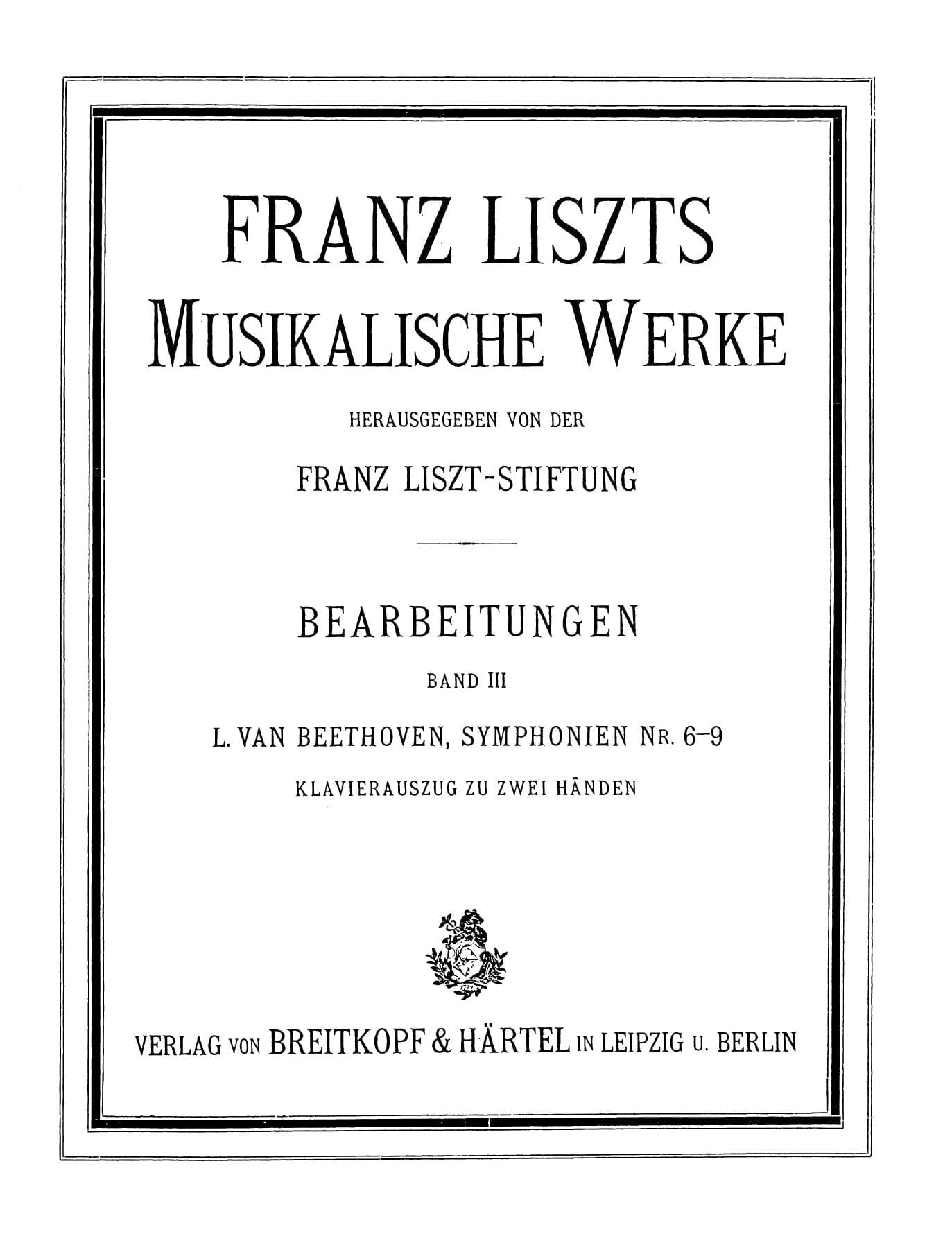
Liszt’s output for piano is vast and varied, encompassing original compositions, transcriptions, paraphrases, and arrangements. Among the essential works are:
- Piano Sonata in B minor (1852–53) : Liszt’s only piano sonata and one of the summits of the Romantic piano repertoire. It is a single-movement work of immense length and technical difficulty that employs “double-function” form—simultaneously a one-movement structure and a composite of the traditional four movements—and is unified by thematic transformation.
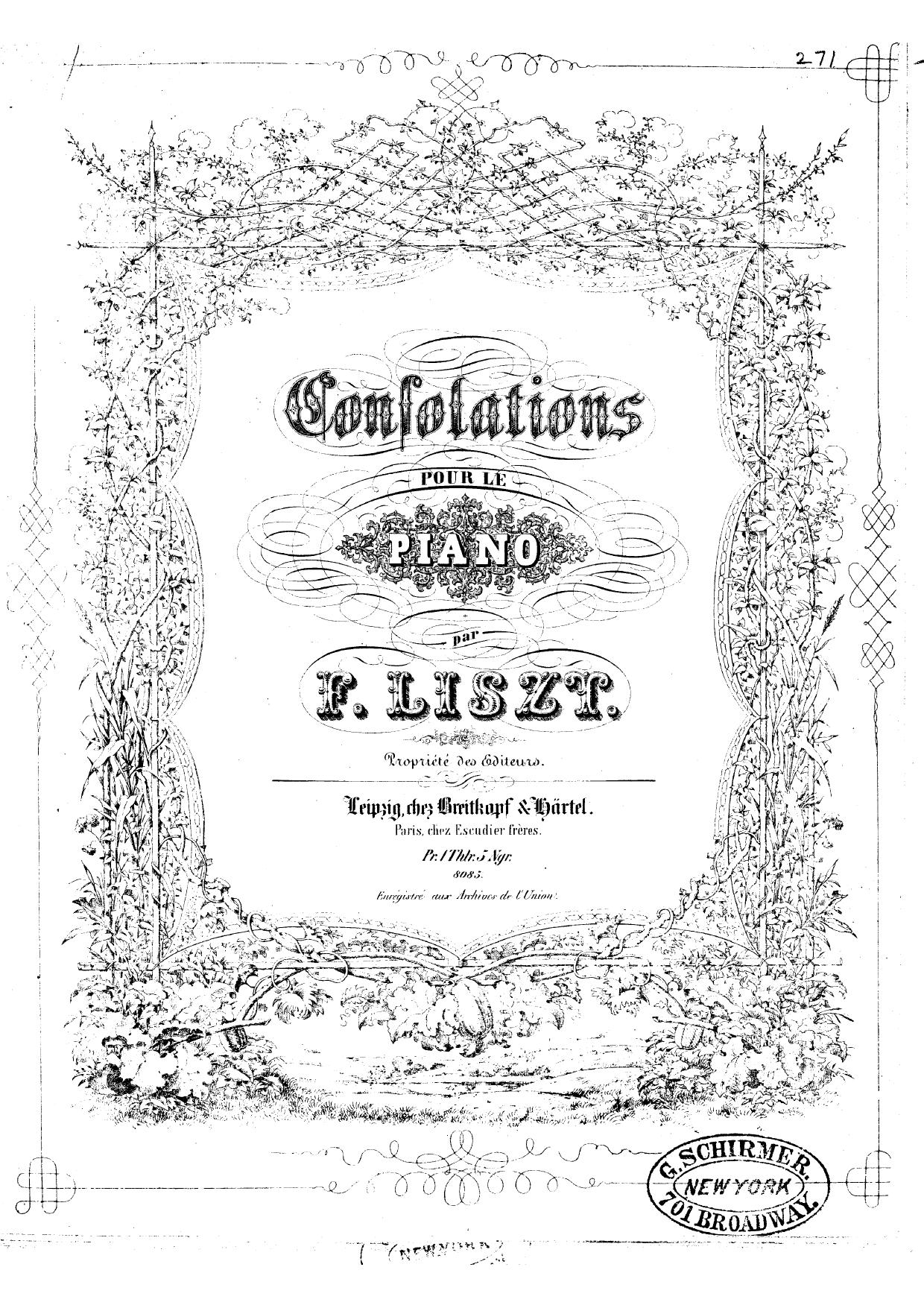
- Années de pèlerinage (Years of Pilgrimage, 1835–1877) : A three-volume collection of poetic and descriptive pieces inspired by Liszt’s travels in Switzerland and Italy. The second volume includes the famous Sonetto 104 del Petrarca and the dazzling Après une lecture du Dante (the “Dante Sonata”).
- Transcendental Études (final version 1851) : Twelve études of extraordinary difficulty that explore the furthest reaches of piano technique. The fourth, Mazeppa, and the fifth, Feux follets (Will-o’-the-wisps), are particularly celebrated.
- Hungarian Rhapsodies (1846–1885) : Nineteen works based on Hungarian folk and gypsy melodies. No. 2 in C-sharp minor is the most famous, a staple of cartoon soundtracks and virtuoso recitals.
- Liebesträume (Dreams of Love, 1850) : Three nocturnes, of which No. 3 in A-flat major is one of Liszt’s most beloved and frequently performed pieces.
- Mephisto Waltz No. 1 (1860) : A diabolical dance inspired by the Faust legend, full of demonic energy and technical display.
- La Campanella (1851) : A Paganini étude based on the final movement of Paganini’s Second Violin Concerto, renowned for its bell-like effects and treacherous leaps.
- Late works: Nuages gris, La lugubre gondola, Bagatelle sans tonalité, Csárdás macabre, and Unstern! represent the radical, experimental side of Liszt’s genius.
Orchestral Works
- Symphonic Poems (1848–1858) : Twelve works, including Les Préludes, Tasso, Orpheus, Prometheus, Mazeppa, and Hunnenschlacht. These works invented a new genre and exerted a profound influence on Richard Strauss, Sibelius, and many others.
- Faust Symphony (1854–1857) : A three-movement symphony depicting the characters of Faust, Gretchen, and Mephistopheles, with a choral finale. It is one of Liszt’s most ambitious and deeply felt works.
- Dante Symphony (1855–1856) : A two-movement symphony inspired by Dante’s Divine Comedy, culminating in a Magnificat for female chorus.
- Piano Concertos No. 1 and No. 2: Both are staples of the concerto repertoire, combining brilliant solo writing with imaginative orchestration.
Vocal and Choral Works
Liszt composed approximately eighty German lieder, as well as songs in French, Italian, and Hungarian. Although often overshadowed by his piano music, his songs are distinguished by their sensitive declamation, rich piano accompaniments, and harmonic boldness. Among the finest are:
- Die Loreley (1841) : A setting of Heine’s ballad, one of Liszt’s most celebrated songs, admired for its detailed accompaniment that follows every change of mood in the poem.
- Die drei Zigeuner (The Three Gypsies) : Perhaps his most famous song, with a distinctly Hungarian flavor.
- Freudvoll und leidvoll : A Goethe setting that uses a half-step as a structural element, revealing Liszt’s harmonic sophistication even in miniature.
- Petrarch Sonnets : Settings of three sonnets by Petrarch, which also exist in piano versions in the Années de pèlerinage.
- Es muss ein Wunderbares sein : An epigrammatic song of great tenderness.
- Die Vätergruft (Uhland): A powerful ballad for baritone, ranked by some critics alongside the greatest German ballads.
Liszt’s sacred choral works, including the Graner Messe (Hungarian Coronation Mass), the Missa Choralis, and the oratorios Die Legende von der heiligen Elisabeth and Christus, are among the most important religious compositions of the nineteenth century, combining operatic drama with deep devotional feeling.
V. Liszt in Film: A Composer for the Cinema
Liszt’s music has been used in more than 170 films, making him one of the most frequently quoted classical composers in cinema history. His music’s combination of dramatic intensity, emotional directness, and sheer spectacle makes it ideally suited to the screen.
Among the most notable examples:
- Letter from an Unknown Woman (1948, Max Ophüls) : Liszt’s Un sospiro is played on screen by Louis Jourdan and serves as a central motif in this romantic masterpiece.
- The Cat Concerto (1946, Tom and Jerry) : This Academy Award–winning animated short features Tom the cat performing Liszt’s Hungarian Rhapsody No. 2, a classic collision of high culture and slapstick.
- Who Framed Roger Rabbit (1988, Robert Zemeckis) : The same Hungarian Rhapsody No. 2 accompanies a manic cartoon piano duel, introducing Liszt to a new generation.
- Eyes Wide Shut (1999, Stanley Kubrick) : Kubrick used Liszt’s Nuages gris to unforgettable effect in his final film, exploiting the piece’s eerie, unresolved harmonic atmosphere.
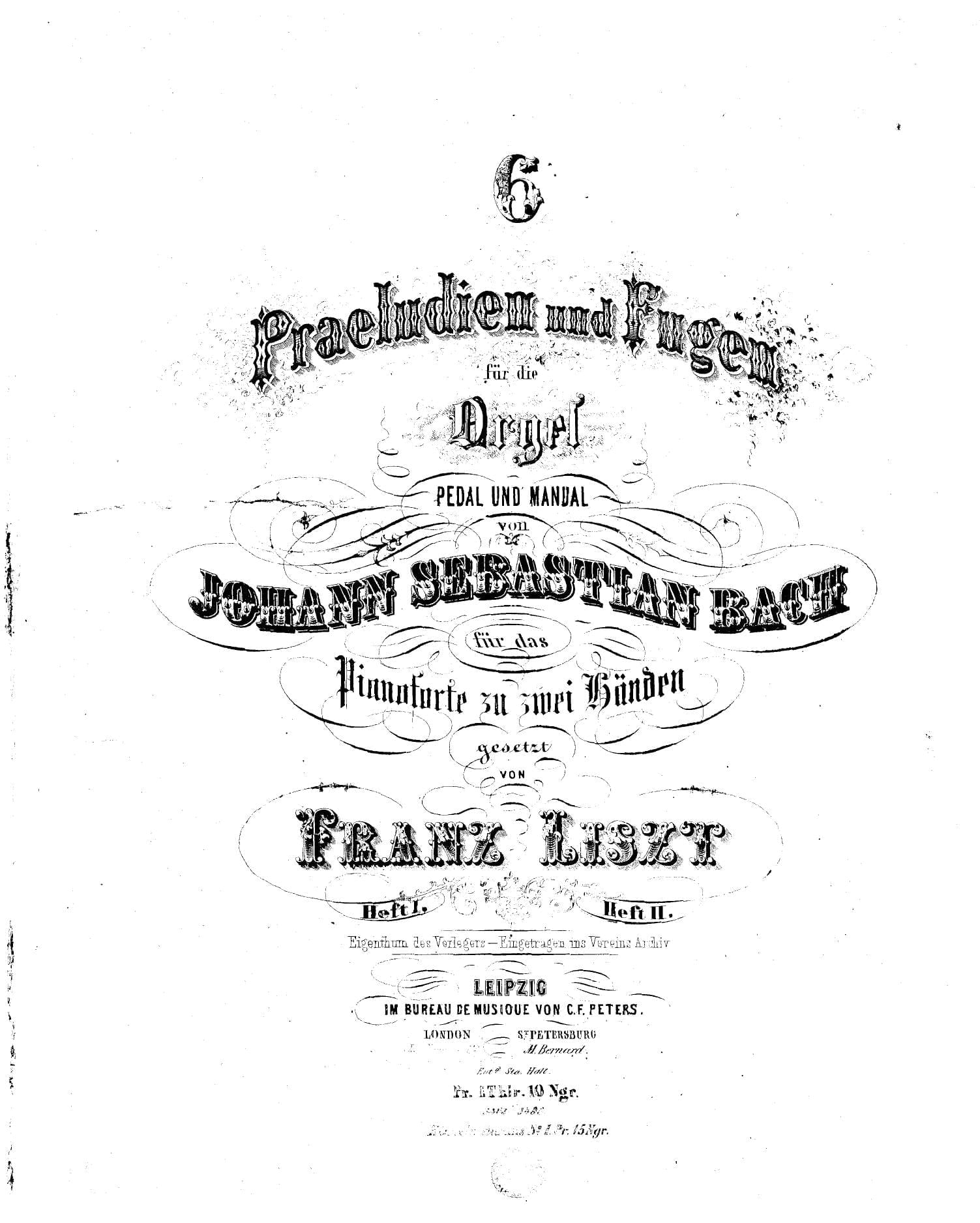
- Hannibal Rising (2007, Peter Webber) : The film features Liszt’s piano transcription of Bach’s Prelude and Fugue in A minor, BWV 543.
- Lisztomania (1975, Ken Russell) : A surreal, extravagant biopic starring Roger Daltrey of The Who as Liszt, with a soundtrack built around Liszt’s music and featuring cameo appearances by Ringo Starr as the Pope. The film is a cult classic and a testament to Liszt’s enduring status as a pop-culture icon.
- All About Eve (1950) : Liszt’s Liebestraum No. 3 is used in this Hollywood classic.
- The Majestic (2001) : Hungarian Rhapsody No. 2 appears in this Frank Darabont film.
Liszt’s music has also been used extensively in television, from The West Wing to Animaniacs, Tiny Toon Adventures, and countless documentaries and commercials.
VI. Collaborations and Relationships: Liszt and His Circle
Wagner: Friendship, Betrayal, and Legacy
No relationship was more consequential for Liszt—personally and artistically—than his friendship with Richard Wagner. They met in Paris in 1840, when Liszt was already the most famous pianist in Europe and Wagner was an unknown, debt-ridden composer. Liszt recognized Wagner’s genius immediately and became his most powerful advocate. He conducted the premieres of Lohengrin (1850) and Tannhäuser (1849) in Weimar, sent Wagner money during his years of exile in Switzerland, transcribed his operas for piano, and wrote essays promoting his ideas.
The relationship was shattered, however, when Wagner seduced Liszt’s daughter Cosima, who was married to Liszt’s protégé, the conductor Hans von Bülow. Liszt was furious and did not speak to Wagner for years. The rift was eventually healed, and Liszt remained a champion of Wagner’s music to the end of his life. But the personal betrayal left deep scars, and Cosima’s refusal to allow her father to be buried in Bayreuth was a final, bitter irony.
Berlioz, Chopin, Paganini, and the “New German School”
Liszt’s relationships with Berlioz and Chopin were equally formative. Berlioz became a close friend and ally in the fight for program music and orchestral innovation; Liszt’s piano transcription of the Symphonie fantastique is a monument of the transcriber’s art. Chopin, by contrast, was a more ambivalent figure. The two pianists admired each other—Chopin praised Liszt’s playing, and Liszt was deeply affected by Chopin’s poetic sensibility—but their temperaments and aesthetics were fundamentally different. Chopin’s refined, intimate art stood in contrast to Liszt’s theatricality, and their friendship was marked by mutual respect tinged with rivalry.
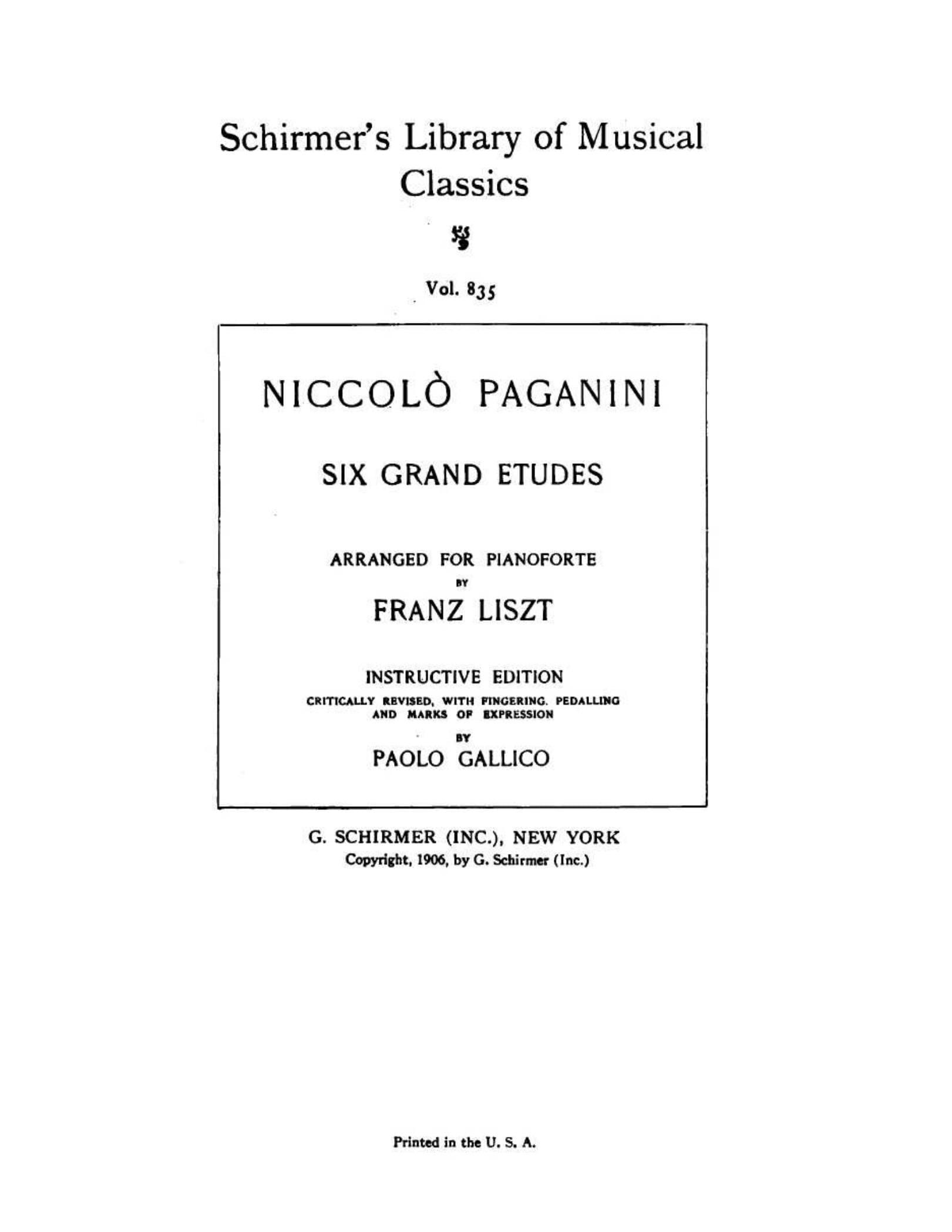
Paganini was the catalyst for Liszt’s virtuoso revolution, but he was also a rival on the concert stage. Liszt’s Grandes études de Paganini (1851) are both a homage to the violinist and an attempt to surpass him on the piano. Other important collaborators and contemporaries included the violinists Karol Lipiński and Henryk Wieniawski, the pianist Anton Rubinstein (with whom Liszt once sight-read a two-piano fantasia at a moment’s notice), and the composers Camille Saint-Saëns, who revered Liszt as a mentor, and Hector Berlioz, who remained a lifelong friend.
Liszt as Teacher and Mentor
Liszt’s influence as a teacher was incalculable. His masterclasses in Weimar attracted pianists from around the world, and his students—including Hans von Bülow, Carl Tausig, Sophie Menter, Eugen d’Albert, Moriz Rosenthal, and many others—carried his legacy into the twentieth century. He never charged for lessons, believing that genius carried an obligation to serve art and humanity. His pedagogical approach emphasized interpretation and expression over mere technical display, and his concept of the masterclass as a public event in which advanced students learned from watching and listening to one another became a model for modern conservatory education.
VII. Influences and Legacy: Liszt’s Shadow on the Twentieth Century
The Bridge to Modernism
Liszt’s influence on the music of the twentieth century is difficult to overstate. His late harmonic experiments—the unresolved dissonances of Nuages gris, the atonal explorations of the Bagatelle sans tonalité, the whole-tone and octatonic inflections of Csárdás macabre—anticipated the breakdown of tonality and the rise of musical modernism. Béla Bartók, who revered Liszt as the greatest Hungarian composer, acknowledged his debt to Liszt’s harmonic language, and Claude Debussy and Maurice Ravel were both influenced by Liszt’s use of exotic scales, whole-tone harmonies, and coloristic piano writing. Alexander Scriabin, whose synesthetic mysticism and advanced harmonic language pushed tonality to its limits, also owed a debt to Liszt’s late style.
The Lisztian Lineage in Pianism
Liszt’s pianistic legacy is equally profound. His students and their students—a lineage that includes Busoni, Rosenthal, d’Albert, and, in later generations, Claudio Arrau, Vladimir Horowitz, and György Cziffra—carried his interpretive tradition into the recording era. Ferruccio Busoni, perhaps the most intellectually ambitious of Liszt’s successors, explicitly modeled his career on Liszt’s example, emulating his activities as a transcriber, composer, and pedagogue, and promoting Liszt’s music at a time when it was considered of merely “tangential importance”. The modern piano recital, the masterclass, and the very idea of the pianist as a cultural hero all bear the imprint of Liszt’s example.
Liszt as a Cultural Icon
Beyond music, Liszt’s influence extends into the broader culture. He was the first musician to achieve the status of a mass-culture celebrity, and the phenomenon of “Lisztomania” has become a touchstone for discussions of fandom, charisma, and the commodification of artistic genius. His writings—on music, aesthetics, and the social role of the artist—helped shape the ideology of the “New German School” and the concept of Zukunftsmusik, or “music of the future,” which influenced Wagner, Strauss, and the entire progressive wing of nineteenth-century music. His philanthropy—he gave generously to charities, funded monuments to Beethoven, and supported struggling composers and performers—embodied his belief that art has a moral and social mission.
VIII. Additional Information: The Many Faces of Liszt
Liszt the Writer
Liszt was a prolific writer of essays, program notes, and criticism. His writings on Berlioz, Wagner, Schumann, and the music of the gypsies are important documents of nineteenth-century musical aesthetics. He also wrote a book on the music of the Hungarian gypsies (Des Bohémiens et de leur musique en Hongrie, 1859) that, despite its controversial racial theories, played a role in shaping the image of Hungarian national music.
Liszt published a number of prose works and letters over the course of his life, including his 1863 Life of Chopin. Many scholars have doubted that he was their sole author, suggesting that the writings ascribed to Liszt were written partly or solely by Countess Marie d'Agoult or Princess Carolyne, but there is no consensus on this matter. It is known that the programs for some of his symphonic poems were ghost-written.
One of Liszt's notable written works was his biography of Chopin, started less than a month after Chopin's funeral. F. Chopin was serialised in the journal La France musicale in 1851 and published in book form the following year, having been edited by Carolyne. The book was poorly received. Liszt had approached Chopin's sister Ludwika and pupil Jane Stirling for information, but they had been uncooperative, finding the timing of his enquiries so soon after Chopin's death to be insensitive. As a result, the work contained several factual inaccuracies. Nevertheless George Sand, who features prominently in one of the chapters, admired the book. English translations garnered attention in the US and UK over the subsequent two decades, leading to a second edition in 1879. Once again Liszt asked Carolyne to help, but her contribution was so extensive that Liszt considered it over-involvement, going so far as to describe the book as having been "written by Carolyne".
One significant essay by Liszt is "De la situation des artistes" ("On the situation of artists"), which was serialised in the Parisian Gazette musicale in 1835. This work calls for the reform of theatres: Liszt perceived the physical buildings to be unsafe and unpleasant, and their managers to be incompetent. He argues that they would book the cheapest variety of acts without concern for artistic merit, leading to subpar concert experiences. Furthermore, owners would blacklist performers who had appeared at a rival venue. Liszt was also concerned about the lack of professionalism of educational institutions, which were run by unqualified teachers and charged high tuition. In his view, their courses lacked rigour, and had an undue preference for older music over that of living composers.
During his Weimar years, Liszt wrote essays for audiences on Harold in Italy, Lohengrin and Alfonso und Estrella. In addition he wrote the book Des Bohémiens et de leur musique en Hongrie (translated as The Gypsy in Music) about the Romani and their influence on Hungarian folk music. This work proved controversial in the country, with Hungarians disputing Liszt's assertion that Romani communities were responsible for a large contribution to the native music. The second edition, published in 1881, contains antisemitic passages included by Princess Carolyne.
Liszt also worked until at least 1885 on a treatise on modern harmony entitled Sketches for a Harmony of the Future. Arthur Friedheim, a pupil of Liszt's at the time, remembered seeing it among Liszt's papers at Weimar. Liszt told Friedheim that the time was not yet ripe to publish the manuscript. This treatise has since been lost.
Liszt the Conductor
As a conductor, Liszt was a pioneer of the modern interpretive approach. He conducted without a score when possible, emphasized fidelity to the composer’s intentions, and championed works that were considered difficult or obscure. His performances of Beethoven’s symphonies, Berlioz’s dramatic works, and Wagner’s operas set new standards for orchestral conducting in the mid-nineteenth century.
Liszt the Abbé
Liszt’s religious vocation was not a late-life whim but a lifelong preoccupation. As a young man, he had considered the priesthood; in his later years, he took minor orders and devoted himself increasingly to sacred music. His Christus oratorio and Via Crucis (the Stations of the Cross) are profound expressions of Catholic faith, and his late works are infused with a sense of spiritual desolation and otherworldly hope.
Teaching
For Liszt's notable students, see List of music students by teacher: K to M § Franz Liszt.
From 1827 until the last month of his life, Liszt gave lessons in composition and piano playing. He wrote in 1829 that his schedule was "so full of lessons that each day, from half-past eight in the morning till 10 at night, I have scarcely breathing time". Estimates of the total number of pupils he taught range as high as over 400, although some of these may only have had one lesson, or perhaps even none at all.
The Paradox of Liszt
Liszt remains a paradoxical figure. He was a showman who became a monk, a virtuoso who wrote music of radical austerity, a cosmopolitan who became a Hungarian nationalist, a friend of Wagner who was betrayed by him, and a man who was both the most celebrated and the most misunderstood composer of his age. The critic and composer Robert Schumann, who was initially suspicious of Liszt’s showmanship, came to admire his seriousness and his dedication to art. Wagner, despite their falling-out, acknowledged that he had learned more from Liszt’s harmonic experiments than he cared to admit. And the twentieth-century composer and critic Virgil Thomson once remarked that Liszt was “the greatest of all musical politicians”—a tribute to his tireless advocacy for the music of others.
Liszt
Franz Liszt was more than a composer or a pianist; he was a force of nature. He transformed the piano from a salon instrument into an orchestra of infinite colors. He invented the recital, the masterclass, the symphonic poem, and the concept of the musician as a cultural hero. He pushed harmony to the edge of tonality and, in doing so, opened the door to the twentieth century. He championed the music of Beethoven, Schubert, Berlioz, and Wagner, often at his own expense, and he taught a generation of pianists who carried his legacy across the globe. His music, at once thrilling and profound, virtuosic and visionary, continues to fascinate performers and audiences alike. Whether heard in the concert hall, on a film soundtrack, or through the crackling surface noise of a historical recording, the sound of Liszt is unmistakable—the sound of a genius who refused to be confined by the conventions of his age, and who, in the words of Alan Walker, “was the towering musical figure of the nineteenth century”.
Liszt Fantasy On Beethoven's The Ruins Of Athens S. 389 Piano solo (sheet music, Noten, partitura)
Browse in the Sheet Music Library:
Or browse in the categories menus & download the Library Catalog PDF:
The Best of Liszt
Tracklist: 0:00:00 Liszt - Consolations, S. 172: No. 3 in D-Flat Major (Live) Vadim Chaimovich 0:04:46 Liszt - Liebesträume, S. 541: No. 3 in A-Flat Major Giovanni Umberto Battel 0:10:32 Liszt - 3 Études de concert, S. 144: No. 3, Un Sospiro Luke Faulkner 0:16:18 Liszt - 12 Lieder von Franz Schubert: No. 9, Ständchen (Serenade) Vadim Chaimovich 0:22:06 Liszt - Ave verum corpus, S. 44 (Live) Carlo Balzaretti 0:24:26 Liszt - Le rossignol (Air russe de A. Alyabyev), S. 250/1 0:29:06 Liszt - Liebeslied (Widmung von Robert Schumann), S. 566 0:33:26 Liszt - 12 Lieder von Franz Schubert, S. 558: No. 8, Gretchen am Spinnrade Irina Bogdanova 0:37:45 Liszt - Grandes études de Paganini, S. 141: No. 3, Allegretto "La campanella" Rogerio Tutti
0:42:44 Liszt - Valses oubliée, S. 215: No. 1, Valse Vadim Chaimovich 0:45:47 Liszt - 2 Konzertetüden, S. 145: No. 1, Waldesrauschen 0:51:22 Liszt - 2 Konzertetüden, S. 145: No. 2, Gnomenreigen Paolo Ceccarini 0:54:49 Liszt - 2 Légendes, S. 175: No. 1, St François d'Assise: La Prédication aux Oiseaux 1:04:04 Liszt - 2 Légendes, S. 175: No. 2, St François de Paule: Marchant sur les Flots Giusy Caruso 1:12:53 Liszt - Soirées de Vienne, S. 427: No. 6, Allegro con strepito Luca Rasca 1:19:16 Liszt - Stabat Mater, S. 172b Giusy Caruso 1:27:06 Liszt - Valse de l'Opéra "Faust" de Charles Gounod, S. 407 Irina Bogdanova 1:37:39 Liszt - Mephisto Waltz No. 1, S. 514 Luca Rasca 1:49:34 Mozart - Confutatis maledictis und Lacrymosa aus Mozarts Requiem, S. 550 Giusy Caruso 1:55:30 Liszt - Isolda's Love-Death, S. 447 (After Richard Wagner's Isoldes Liebestod) Vadim Chaimovich 2:03:39 Liszt - Années de Pèlerinage II, S. 161: No. 7, Après une Lecture du Dante. Fantasia quasi Sonata Giusy Caruso