Scores for all instruments: 16,000+ (active and growing), over 236,000 pages.
All genres and levels: Jazz & Blues, Rock & Pop, Classical & Contemporary, Film & Musicals;
books & biographies; methods, études, play-along tracks (MP3) for Jazz & Rock.
Access & benefits: US$15.99 one-time payment, valid for lifetime, full Library access.
Table of Contents

Michael Nyman: The Architect of Post-Minimalist Emotion
The best sheet music download from our Library.
Please, subscribe to our Sheet Music Library. Sheet music should be accessible and affordable for all musicians, from professionals to absolute beginners.
Few contemporary composers have forged a musical language as instantly recognizable—or as fiercely debated—as Michael Nyman. For over five decades, the British composer, pianist, librettist, and musicologist has constructed a sonic universe built on relentless rhythmic drive, lush diatonic harmony, and a provocative attitude toward musical ownership. While his name is forever linked to the haunting, Oscar-winning score for Jane Campion’s The Piano, Nyman’s artistic identity is far more complex. He is a former music critic who coined the very term “minimalism” in a musical context; a musical archaeologist who quarries the past to build the future; and a composer who, despite his international fame, insists he would “prefer to write an opera or a string quartet than a film score any day.” This is the story of a musical maverick who transformed the repetition of minimalism into a vehicle for profound emotional expression and cinematic grandeur.



Biography: From Musicologist to Minimalist Pioneer
Michael Laurence Nyman was born on March 23, 1944, in Stratford, East London. His musical education was rigorous and rooted in the Western classical tradition. He studied piano, harpsichord, and music history at the Royal Academy of Music from 1961 to 1964, with composition studies under Alan Bush and harpsichord under Geraint Jones. He then pursued musicology at King’s College, London, under the renowned scholar Thurston Dart, graduating in 1967 with a deep expertise in English Baroque music, particularly the works of Purcell and Handel.
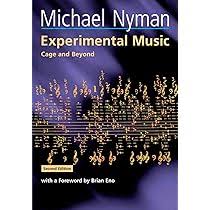
The mid-1960s proved to be a period of profound disillusionment. In 1964, after encountering the strict serialism of the European avant-garde at Wardour Castle, Nyman abandoned his ambitions as a composer and entered a decade of creative silence. During this time, he established himself as a formidable music critic, writing for publications such as The Spectator, The Listener, and New Statesman between 1968 and 1978. It was in a 1968 article for The Spectator that Nyman became the first writer to apply the term “minimalism” to music, specifically in reference to the then largely unknown works of Steve Reich and Terry Riley. His landmark 1974 book, Experimental Music: Cage and Beyond, further cemented his reputation as a vital intellectual force, analyzing the work of John Cage and the nascent American experimental movement with unparalleled clarity.
Nyman’s return to composition was catalyzed by his work as a musicologist and his immersion in the experimental scene. He performed with Cornelius Cardew’s Scratch Orchestra and Gavin Bryars’ Portsmouth Sinfonia, befriending Brian Eno in the process. The turning point came in 1976 when his friend and colleague Harrison Birtwistle commissioned him to create arrangements of eighteenth-century Venetian songs for a production of Carlo Goldoni’s play Il Campiello at the National Theatre. The ensemble assembled for this project, initially called the Campiello Band, soon became the Michael Nyman Band—an ensemble that remains the primary vehicle for his music to this day. That same year, Brian Eno released Nyman’s Decay Music on his Obscure label, featuring the nearly hour-long minimalist piano piece 1-100, originally written for a film by Peter Greenaway.
The Greenaway Years and the Birth of a Cinematic Language
The 1976 collaboration with Peter Greenaway on 1-100 was the seed of one of the most significant composer-director partnerships in modern cinema. Nyman had known Greenaway since the early 1960s and learned from him the crucial necessity of isomorphism—a rigorous structural correspondence between music and image. Their first feature film collaboration, The Draughtsman’s Contract (1982), was a revelation. Its score, audaciously inspired by the music of Henry Purcell, was an international success and solidified Nyman’s reputation. This began a remarkable run of eleven films together, including A Zed & Two Noughts (1985), Drowning by Numbers (1988), the controversial The Cook, the Thief, His Wife & Her Lover (1989), and culminating in Prospero’s Books (1991).
During this period, Nyman also emerged as a formidable composer for the concert hall and opera house. His first opera, The Man Who Mistook His Wife for a Hat (1986), adapted from Oliver Sacks’ neurological case study, premiered at the Institute of Contemporary Arts in London. He composed his first three string quartets between 1987 and 1989, and received major commissions for works like La Traversée de Paris (1989), celebrating the bicentenary of the French Revolution, and Musique à Grande Vitesse (1993) for the inauguration of the Paris-to-Lille TGV line.
The Piano and Global Acclaim
The watershed moment of Nyman’s career arrived in 1993 with Jane Campion’s The Piano. The film won the Palme d’Or at Cannes, and Nyman’s score became a global phenomenon, selling over three million copies worldwide and earning him an Ivor Novello Award. The music, based largely around nineteenth-century Scottish folk melodies, was a masterclass in restrained emotional power. Nyman specifically tailored the piano part for actress Holly Hunter, whom he considered a skilled pianist, and strengthened the string section of his band to give the score a more traditionally symphonic sweep. The soundtrack’s success introduced Nyman to a vast new audience, though he has noted a downside: “there are a lot of people around… who don’t look for my music beyond The Piano”.
Musical Style and Technique: The Architecture of Repetition
Michael Nyman’s music defies easy categorization, existing in a unique space that fuses the structural rigor of American minimalism with a distinctly European, Baroque-inflected sensibility. His style is built upon several interconnected pillars: modular construction, tonal harmony, relentless rhythm, and a radical approach to musical quotation.
Harmony: Tonal, Diatonic, and Chromatic Extremes
At the heart of Nyman’s sound is a rejection of the atonal orthodoxy that dominated post-war European composition. Strongly influenced by American minimalists like Steve Reich and Philip Glass, Nyman embraced tonal and modal harmony, but he forged a path distinct from his transatlantic counterparts. His harmonic language is fundamentally diatonic, often built on the simplest functional turns and major-minor contrasts. However, he frequently subverts this simplicity by introducing sudden chromatic inflections, transposing a motif into a distant key, or altering the modes of chords (for instance, shifting a triad from major to minor) to create tension.
This use of harmonic stasis is a hallmark of his style. Rather than relying on traditional functional harmony to drive the music forward, Nyman often builds his structures over a repeating ground bass or a static harmonic field. The harmony becomes a fixed, almost architectural space within which melodic and rhythmic transformations can occur. In works like his operatic adaptation of The Tempest, Noises, Sounds and Sweet Airs, the contrast between the diatonic purity associated with the innocent characters (Miranda, Ferdinand) and the chromatic complexity of the villain Caliban (though in Nyman’s reading, a complex figure) creates a rich psychological landscape.
The Piano Concerto (1993) exemplifies his mature harmonic approach. Adapted from The Piano score, it is a work of “post-minimalist rhythmic drive and melodic lyricism”. The concerto toys with the duality of the “cleanly diatonic and the more muddily chromatic,” creating a work that is at once accessible and structurally sophisticated. A detailed analysis of the concerto reveals its narrative arc as a “comedy” in the classical sense—a progression from entrapment to freedom, mirrored by the harmonic and thematic evolution from restrictive folk-derived material to a more liberated, chromatic expression.
The Art of Quotation: A Musical Archaeologist
Perhaps the most distinctive—and controversial—aspect of Nyman’s technique is his intertextual approach to composition. While American minimalists pursued abstraction and objectivity, Nyman provocatively embraced quotation, allusion, and outright borrowing. He has been both praised for his ingenuity and criticized for “parasitic borrowing” and “relentless self-borrowing”. Nyman composes, in the words of scholar Pwyll ap Siôn, “with his ear towards the past as if it were a rich quarry to mine, working like a musical archaeologist, uncovering artefacts and chiselling fresh and vibrant sonic edifices out of them”.
This technique manifests in multiple ways:
- Direct Quotation and Re-composition: Nyman will take a fragment from a historical work—a Mozart aria, a Purcell ground bass, a Schumann melody—and subject it to his own minimalist processes of repetition, rhythmic displacement, and re-orchestration. His breakthrough work, In Re Don Giovanni (1977), takes the famous Catalogue Aria from Mozart’s opera and transforms it into a pulsating, obsessive minimalist study.
- Stylistic Allusion: He does not always quote directly but often writes music that sounds as if it could belong to a Baroque or Classical composer, filtering eighteenth-century idioms through a late-twentieth-century minimalist sensibility.
- Self-Quotation: Nyman frequently recycles his own material. Themes from his film scores are reworked into standalone concert works (most famously The Piano Concerto), and earlier pieces form the harmonic foundation for new ones. The orchestral accompaniment for his opera Facing Goya, for example, is based on his earlier piece In Re Don Giovanni.
This approach is not born of creative exhaustion but of a postmodern belief that originality lies not in inventing new material from nothing, but in finding new contexts and meanings for pre-existing material. As Nyman’s aesthetic defies the concept of originality, it follows the hallmark trends of postmodernism: reinterpretation, collage, and the blurring of boundaries between “high” and “low” art.
Rhythm and Structure: The Minimalist Engine
Nyman’s music is propelled by an insistent, motoric pulse. He often uses repeating rhythmic cells, typically built on steady quarter, eighth, or sixteenth notes, to create an almost physical sense of momentum. This rhythmic drive, influenced by rock music as much as by Reich and Glass, gives his music a visceral, dance-like quality.
His structures are often modular, built from distinct blocks of musical material that are repeated, layered, and gradually transformed. The principle of thematic variation is central; a simple melodic idea is subjected to a series of transformations in timbre, harmony, and orchestration, creating a sense of continuous evolution within a static framework. This can result in long spans of music that feel both hypnotically still and intensely active—a paradox that lies at the core of his appeal.
Major Works: Beyond the Film Score
While Nyman’s film music is his most widely known output, his catalogue is vast and varied, encompassing operas, concertos, string quartets, song cycles, and multimedia works.
Film Scores
Besides his compositions Michael Nyman is also a filmmaker, having made over 80 films, his first shot in 1968.
Nyman’s cinematic work extends far beyond his partnership with Greenaway.
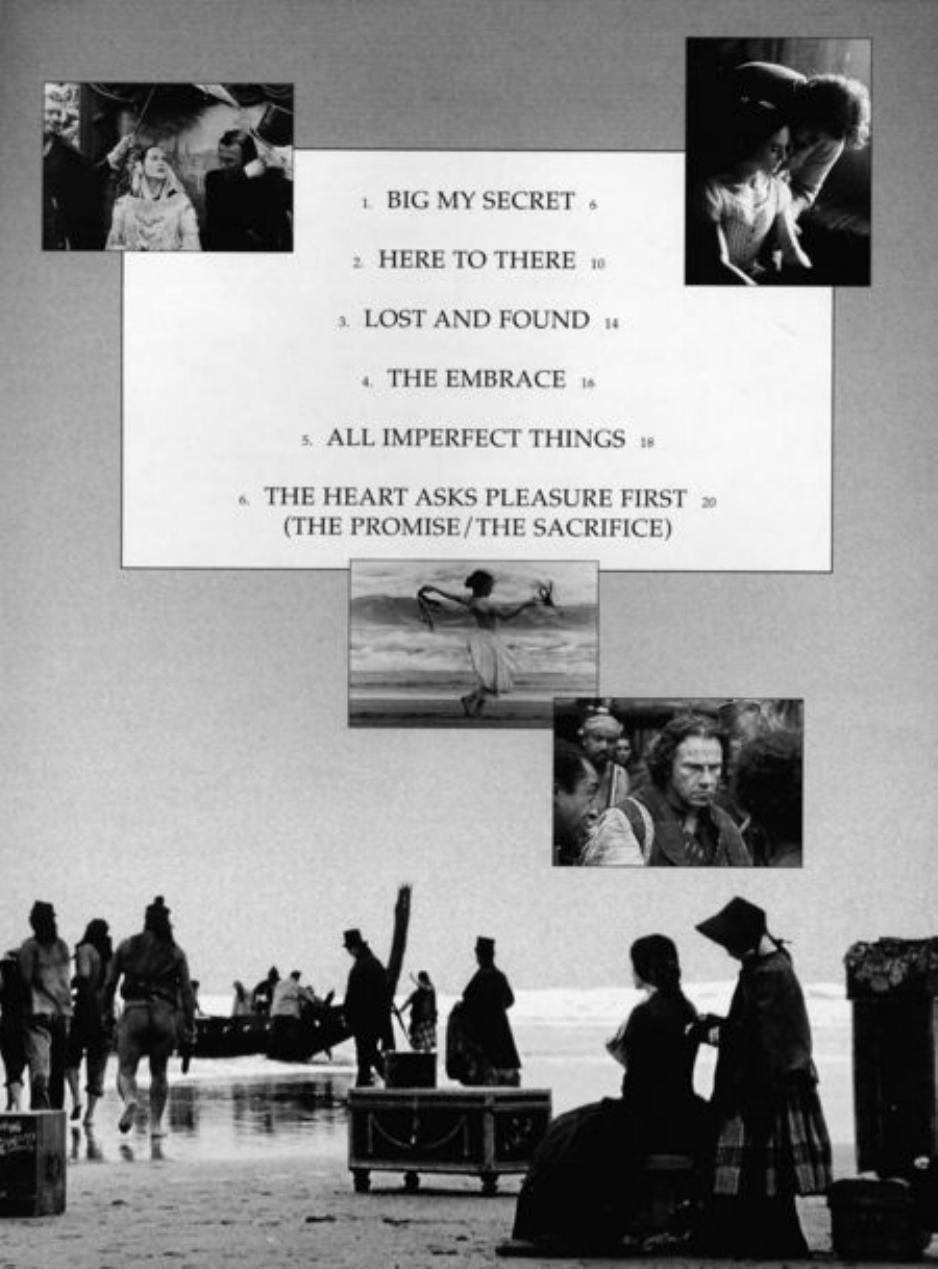
- The Piano (1993): The score remains his most iconic, a work of profound emotional depth and melodic beauty. Its themes, such as “The Heart Asks Pleasure First” and “Big My Secret,” have become modern classics.
- The Greenaway Collaborations (1982-1991): From the Baroque pastiche of The Draughtsman’s Contract (featuring the beloved “Chasing Sheep Is Best Left to Shepherds”) to the dark, operatic intensity of The Cook, the Thief, His Wife & Her Lover, these scores defined the sound of art-house cinema in the 1980s.
- Gattaca (1997): Nyman’s score for Andrew Niccol’s sci-fi drama is a masterclass in restrained, melancholic beauty, perfectly capturing the film’s themes of genetic destiny and human yearning.
- Other Notable Scores: He has also composed for The End of the Affair (1999), The Claim (2000), Wonderland (1999), and The Libertine (2004).
- Silent Film Scores: A significant later project involved composing new scores for the three major silent films of Soviet pioneer Dziga Vertov, including the groundbreaking Man with a Movie Camera (2002).
Operas and Music Theatre
Nyman’s operas explore intellectual and often controversial themes, from neurology to art history and genetic engineering.
- The Man Who Mistook His Wife for a Hat (1986): A chamber opera based on Oliver Sacks’ case study, exploring the tragic and fascinating world of a man with visual agnosia.
- Facing Goya (2000): A sprawling, conceptual opera that tracks an art banker’s search for Goya’s missing skull, delving into themes of racial stereotyping, genetic profiteering, and cloning.
- Man and Boy: Dada (2003): Based on the life of Dada artist Kurt Schwitters.
- Love Counts (2005): Another opera exploring the complexities of human perception and relationships.
Concert and Chamber Works
- The Piano Concerto (1993): A cornerstone of his orchestral output, transforming the film score into a dramatic, single-movement concert work.
- String Quartets: Nyman has composed at least five string quartets. Quartets 1-4 are typically based on pre-existing material (by Mozart, Schumann, etc.), while String Quartet No. 5 (2011) was his first to be based on entirely original material, marking a significant new phase in his chamber music.
- Concertos: He has written concertos for various instruments, including trombone, harpsichord, saxophone, cello, and violin (the latter premiered by Gidon Kremer).
- Symphonies: In his later years, Nyman has turned to the symphony, with Symphony No. 11: Hillsborough Memorial (2014) being a notable example of his engagement with contemporary social issues.
- Other Significant Works: Six Celan Songs (1990) for singer Ute Lemper, MGV (Musique à Grande Vitesse) (1993), and War Work: 8 Songs with Film (2014).
Collaborations: A Musical Omnivore
Nyman’s collaborative spirit is wide-ranging, reflecting his belief in music as a fluid, boundary-crossing art form.
- The Michael Nyman Band: The core of his musical practice, a flexible ensemble that has been his primary interpreter for over four decades.
- Film Directors: Beyond Greenaway and Campion, he has worked with Patrice Leconte, Neil Jordan, Michael Winterbottom, Volker Schlöndorff, and Andrew Niccol.
- Popular Musicians: He collaborated with Blur’s Damon Albarn on the score for Ravenous (1999). He also worked with soul singer David McAlmont on the album The Glare (2009), where McAlmont wrote lyrics and vocal lines to Nyman’s pre-existing music.
- World Music: His album Sangam (2012) is a profound collaboration with Indian classical musicians, including Khyal singers Rajan and Sajan Misra and electric mandolinist U. Shrinivas.
- Experimental and Electronic: He has collaborated with the Motion Trio (accordionists), visual artist Carsten Nicolai (Alva Noto), and performed with Evan Parker.
Influences and Legacy
Michael Nyman’s influences are a diverse tapestry. The English Baroque tradition, particularly Henry Purcell, is a constant touchstone, providing a wellspring of melodic and harmonic material. American minimalism, specifically the work of Steve Reich, Terry Riley, and Philip Glass, provided the structural and rhythmic foundation for his mature style, even as he sought to differentiate himself from it. The experimental tradition of John Cage and Cornelius Cardew, which he championed as a critic, informed his open-minded approach to form and collaboration. Finally, the structuralist cinema of Peter Greenaway taught him the power of isomorphic construction, where music and image are locked in a mutually reinforcing embrace.
His legacy is multifaceted. As a musicologist and critic, he fundamentally shaped the discourse around minimalism and experimental music in Britain. As a composer, he demonstrated that minimalist techniques could be harnessed to create music of immense emotional power and popular appeal, bridging the gap between the concert hall and the cinema. His music has been criticized for its borrowing, but this very approach has also been defended as a sophisticated form of postmodern intertextuality, enriching his work with layers of historical resonance. He is one of the most successful and widely recognized living composers, often compared to Philip Glass in his ability to reach a vast global audience. In 2008, he was made a Commander of the British Empire (CBE) for his services to music.
Additional Information
- MN Records: Since 2005, Nyman has run his own record label, MN Records, which has released over sixty titles, giving him complete control over his recorded legacy.
- Writings: His collected writings were published in 2013, offering a vital window into his intellectual development.
- Multimedia: He has ventured into video and cinematic works, directing the multiscreen installation NYman with a Movie Camera (2010).
Michael Nyman:
Michael Nyman is a composer who has consistently defied expectations. He is a minimalist who quotes Baroque masters, a film composer who yearns for the opera house, and a musical archaeologist who builds the future from the fragments of the past. His music, with its relentless pulse, lush harmonies, and haunting melodies, has the power to be both intellectually stimulating and deeply moving. Whether he is soundtracking the silent struggles of a Victorian draughtsman, the passionate turmoil of a mute Scottish pianist, or the genetic anxieties of a dystopian future, Nyman’s voice remains unmistakable. He has created a body of work that is not merely a collection of pieces, but a coherent, endlessly fascinating sound-world—a testament to the enduring power of repetition, transformation, and the audacious act of making something new from something old.
Search your favorite sheet music in the Sheet Music Library Catalog
Search your favorite Sheet Music of Film, movie and musicals.
Select discography
Studio albums
- Decay Music (Obscure, 1976)
- Michael Nyman (Piano, 1981)
- The Draughtsman's Contract (Charisma, 1982)
- The Kiss and Other Movements (Editions EG, 1985)
- A Zed & Two Noughts (That's Entertainment, 1985)
- The Man Who Mistook His Wife for a Hat (CBS, 1987)
- Drowning by Numbers (Venture, 1988)
- La Traversée de Paris (Criterion, 1989)
- The Cook, the Thief, His Wife & Her Lover (Venture, 1989)
- String Quartets 1–3 (Argo, 1991)
- Prospero's Books (Decca, 1991)
- The Michael Nyman Songbook (Decca, 1992)
- Time Will Pronounce (Argo, 1993)
- The Piano (Venture, 1993)
- The Piano Concerto/MGV (Argo, 1994)
- Noises, Sounds & Sweet Airs (Argo, 1995)
- After Extra Time (Venture, 1996)
- Concertos (EMI, 1997)
- The Suit and the Photograph (EMI, 1998)
- Wonderland (Virgin Venture, 1999)
- Facing Goya (Warner, 2002)
- Sangam: Michael Nyman Meets Indian Masters (Warner, 2003)
- Man and Boy: Dada (MN, 2005)
- Acts of Beauty/Exit no Exit (MN, 2006)
- Love Counts (MN, 2007)
- 8 Lust Songs: I Sonetti Lussuriosi (MN, 2008)
Michael Nyman: Complete Piano Music (Full Album) played by Jeroen van Veen
Tracklist:
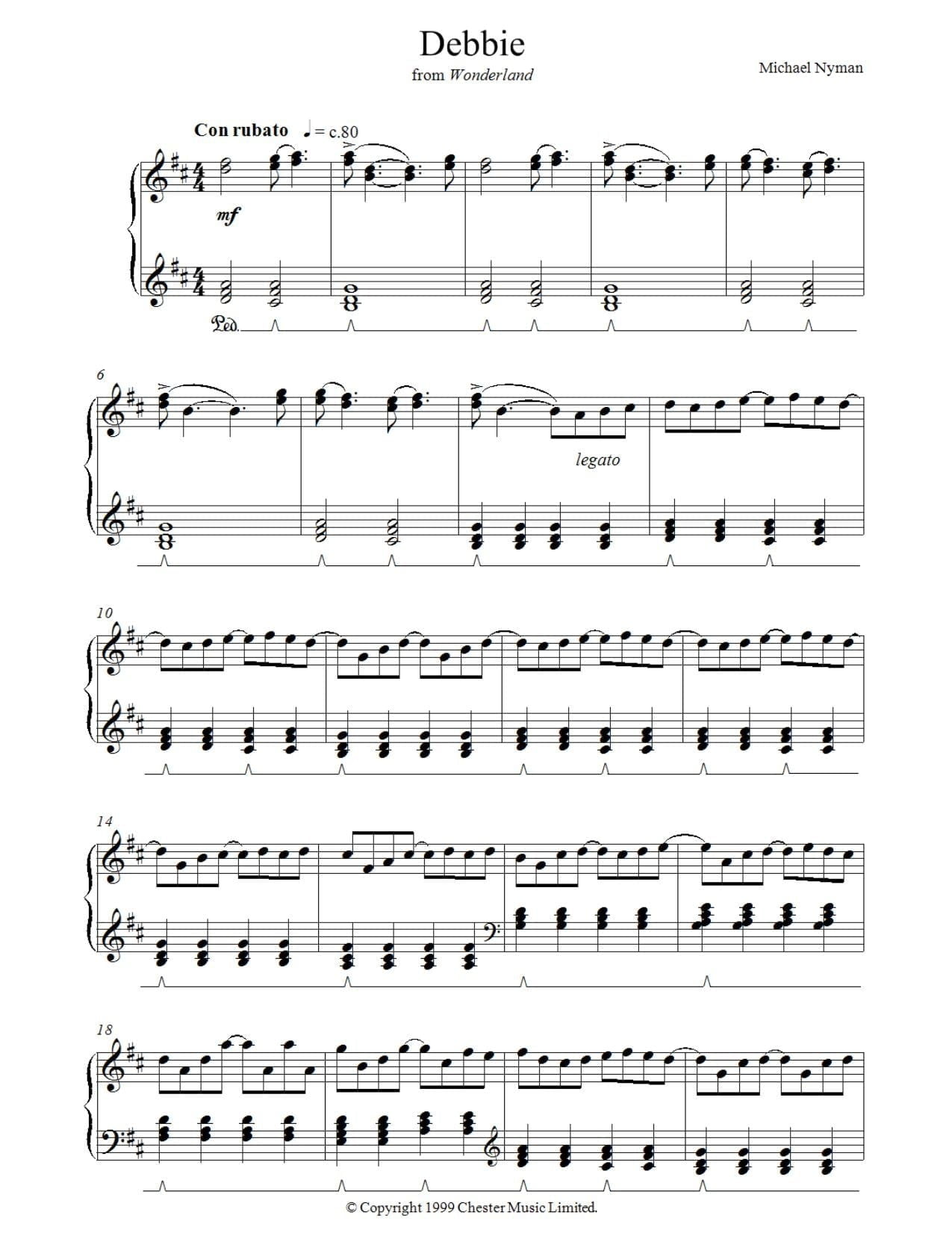
0:00:00 The Heart Asks Pleasure First I 0:04:16 Lost And Found 0:07:32 All Imperfect Things 0:11:14 The Promise 0:14:22 Big My Secret 0:18:24 The Mood That Passes Through You 0:21:43 Deep Sleep Playing 0:23:54 The Embrace 0:26:16 Silver-fingered Fling 0:30:39 Here to There 0:32:18 The Attraction of The Pedalling Ankle 0:38:22 The Heart Asks Pleasure First II
0:41:28 Jack 0:44:00 Franklyn 0:46:28 Nadia 0:49:52 Debbie 0:54:49 Bill 0:57:05 Odessa Beach 1:00:56 Diary of Love 1:04:23 Digital Tragedy 1:07:16 Fly Drive 1:08:14 The Morrow 1:12:41 The Departure 1:16:29 The Exchange 1:19:59 Why? 1:23:09 The Schoolroom 1:25:13 If 1:29:40 Goodbye Moortie 1:32:35 Chatterbox Waltz 1:35:03 Candlefire 1:38:33 Chasing Sheep Is Best Left to Shepherds 1:42:44 Sheep ‘N’ Tides 1:45:14 Time Lapse