Scores for all instruments: 16,000+ (active and growing), over 236,000 pages.
All genres and levels: Jazz & Blues, Rock & Pop, Classical & Contemporary, Film & Musicals;
books & biographies; methods, études, play-along tracks (MP3) for Jazz & Rock.
Access & benefits: US$15.99 one-time payment, valid for lifetime, full Library access.
Table of Contents
Happy birthday, Milton Nascimento, born on this day in 1942
Milton Nascimento: The Voice of Minas Gerais and the Soul of Brazilian Music
Please, subscribe to our Sheet Music Library. Sheet music should be accessible and affordable for all musicians, from professionals to absolute beginners.
Few voices in the history of popular music carry the weight of an entire landscape, a people, and a spiritual longing within a single breath. Milton Nascimento, born on October 26, 1942, in Rio de Janeiro, is one such artist. To hear him sing is to hear the rolling hills of Minas Gerais, the collective yearning of a generation under dictatorship, and the ethereal cry of a soul unbound by genre. Celebrated by Elis Regina with the immortal phrase, “If God had a voice, it would be Milton’s,” Nascimento has spent over six decades crafting a body of work that transcends the boundaries of Brazilian popular music (MPB), jazz, rock, and classical traditions. He is not merely a singer or a songwriter; he is a sonic architect of the Brazilian interior, a collective leader of the Clube da Esquina, and a global ambassador for a music that is at once deeply local and profoundly universal.
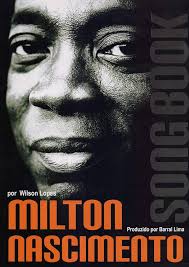
The best sheet music download from our Library.
Biography: From Orphan to Icon
Milton Nascimento’s origin story is as poignant as his music. Born in Rio de Janeiro to a maid, Maria Nascimento, he was adopted as a toddler by his mother’s former employers, Josino Brito Campos—a bank employee, mathematics teacher, and electronics technician—and Lília Silva Campos. The couple brought him to Três Pontas, a small town in the state of Minas Gerais, where he would spend his formative years. This upbringing in the rural interior, far from the cosmopolitan hubs of Rio and São Paulo, proved foundational. His adoptive mother sang in a choir, and the angelic choruses of the Catholic Church, alongside the operettas and Ella Fitzgerald records that filled his home, seeped into his musical consciousness. His father’s tinkering with electronics and running a local radio station gave the young Milton early access to the airwaves, where he occasionally worked as a DJ.
Search your favorite sheet music in the Sheet Music Library Catalog
Nascimento’s professional path began in earnest when he moved to Belo Horizonte at nineteen, singing wherever he could. His breakthrough arrived through the advocacy of Elis Regina, who recorded his composition “Canção do Sal” in 1966. Regina’s endorsement led to a national television appearance and, in 1967, a pivotal performance at Brazil’s International Song Festival with “Travessia,” which won second place and the award for best performer. That same year, he released his self-titled debut album, marking the beginning of a discography that would eventually span nearly thirty studio albums.
The year 1972 marked a tectonic shift, not only for Nascimento but for Brazilian music as a whole. He released Clube da Esquina (Corner Club), a sprawling double album created with a collective of musicians and poets from Minas Gerais, including Lô Borges, Márcio Borges, Fernando Brant, and Ronaldo Bastos. The album was a revelation—a seamless fusion of Brazilian folk traditions, bossa nova, rock, jazz, and classical music, all filtered through a distinctly Minas Gerais sensibility of saudade (longing) and experimentation. It produced enduring standards like “Cais” and “Cravo é Canela,” and its influence would echo through generations of musicians in Brazil and abroad. A sequel, Clube da Esquina 2, followed in 1978, expanding the collective’s palette and featuring collaborators like Elis Regina and Chico Buarque.
Musical Style and Harmony: A Baroque Soul in a Modal Landscape
Nascimento’s music defies easy categorization, existing in a liminal space between the popular and the erudite, the local and the global. At its core lies a startling synthesis of influences: the folk strains of rural Minas Gerais and African rhythms, the harmonic sophistication of European classical music, the improvisational spirit of jazz, and the melodic directness of the Beatles and bossa nova. This hybridity is not a superficial pastiche but a deeply organic language, one that the critic and scholar Tullio Mesquita Cunha has analyzed through the lens of modal jazz composition.
The harmonic architecture of Nascimento’s compositions is one of his most distinctive signatures. Rather than relying on the functional tonality of traditional popular song, his work is characterized by a pervasive modality, a trait that sets him apart from many of his contemporaries. His songs frequently employ the Dorian and Aeolian modes, creating an atmosphere that is at once ancient and modern, melancholic and hopeful. A hallmark of his style is the use of parallel chord movement—the shifting of entire chord structures in parallel motion, often with the bass on the root of the chord. This technique, combined with chromatic approaches and modal interchange, gives his music a sense of constant, kaleidoscopic color. For instance, in songs like “Milagre dos Peixes,” one can hear a radical shift into parallel chord patterns that suggest a deep engagement with both classical Impressionism and jazz harmony.
This harmonic sophistication is inextricably linked to his voice, an instrument of almost otherworldly capabilities. Critically described as possessing a “liquid-amber baritone” that can rise to an “otherworldly falsetto,” Nascimento’s voice is a study in contrasts. It can be a deep, brooding growl, earthy and grounded in the rural accents of his youth, before leaping into a soaring, bird-like cry that seems to emanate from a different realm entirely. His use of vocalizes—wordless, melodic flights—functions as another layer of instrumental color, often doubling or intertwining with saxophones, guitars, or keyboards. This vocal elasticity allows him to inhabit the emotional core of a song, whether he is expressing the collective anguish of political oppression or the quiet ecstasy of spiritual transcendence.
The Essential Compositions: A Canon of Brazilian Standards
While Nascimento’s catalogue is vast, a handful of songs have become cornerstones of the Brazilian songbook, continually reinterpreted by new generations of artists.
- “Travessia” (1967): The song that launched his national career is a masterclass in melancholy and melodic invention. Written with Fernando Brant, it speaks of the suffering of love and the anguish of empty days, its shifting harmonies mirroring the emotional turbulence of its narrator.
- “Nada Será Como Antes” (1971): A collaboration with Ronaldo Bastos, this song became an anthem of resistance during Brazil’s military dictatorship. Its title, “Nothing Will Be As It Was,” carries a double meaning—a promise of change and a warning of loss—set against a deceptively gentle, folk-inflected melody.
- “Fé Cega, Faca Amolada” (1974): Another Bastos partnership, this track is a more overtly political statement. Its title translates roughly to “Blind Faith, Sharpened Knife,” and its driving, rock-tinged arrangement channels the urgency and danger of the era.
- “Maria, Maria” (1978): Perhaps his most universally beloved composition, written with Fernando Brant. It is a hymn to the resilience of the Brazilian woman, a celebration of everyday strength that transcends its specific cultural context. Its soaring chorus and infectious rhythm have made it a staple of Brazilian popular culture.
- “Canção da América” (1980): A song of friendship and farewell, this has become a standard for graduation ceremonies and parting gatherings across Brazil. Its simple, heartfelt melody, often performed with vocal groups like Boca Livre, underscores Nascimento’s ability to write songs of profound communal resonance.
- “Clube da Esquina nº 2”: Originally an instrumental piece on the 1972 album, this haunting melody was later given lyrics and became a symbol of the collective’s enduring legacy. Its gentle, rolling guitar figure is one of the most recognizable motifs in Brazilian music.
Beyond these vocal classics, Nascimento’s compositional range extends to ambitious works like Missa dos Quilombos (1982), a mass-oratorio dedicated to the history of Black Brazilians from slavery to the present, and Txai (1991), an album that incorporated the folk music of Amazonian tribes to draw attention to the plight of indigenous peoples and the destruction of the rainforest.
Search your favorite sheet music in the Sheet Music Library Catalog
Music for the Cinema: A Visual Dimension
Nascimento’s cinematic contributions, while less widely known than his albums, reveal another facet of his creative curiosity. His first major foray into film was composing the soundtrack for Mozambican director Ruy Guerra’s Os Deuses e os Mortos (1970). Nascimento also acted in the film, and the experience directly influenced his 1970 album Milton, which incorporated songs like “Maria Três Filhos” and “Canto Latino” from the project. The soundtrack was later recognized with a award for Best Music at the Gramado Film Festival.
Decades later, his music reached a new, younger global audience through his contribution to the soundtrack of the animated film Rio 2 (2014). He performed the song “Favo de Mel,” a track that also featured the body percussion group Barbatuques, placing his unmistakable voice within a vibrant, contemporary Hollywood production. His work has also been featured in documentaries, including a film about the soccer player Tostão, and his compositions have appeared in numerous Brazilian and international films, cementing his status as a musician whose sound is uniquely suited to visual storytelling.
Collaborations: The Collective Spirit
A defining characteristic of Nascimento’s career is his profound commitment to collaboration. He has often stated that he does not like to work alone, and his discography is a testament to this belief. The Clube da Esquina was itself a collective, but his reach extends far beyond Minas Gerais.
His most celebrated international partnership began in 1974 when jazz saxophonist Wayne Shorter met Nascimento. The following year, they released Native Dancer, an album that many consider one of the most influential jazz recordings of the 1970s. This collaboration introduced Nascimento to the global jazz audience and led to further work with icons like Herbie Hancock, who appeared on Nascimento’s 1977 album Milton alongside Airto Moreira and Raul de Souza. He has also collaborated with Peter Gabriel, Paul Simon, James Taylor, and Quincy Jones, and his music has been covered by jazz greats like Sarah Vaughan.
Within Brazil, his partnerships are equally legendary. His creative kinship with Chico Buarque produced the classic “O que será (A flor da pele),” a song later covered by Claude Nougaro. He has worked closely with Milton Nasciamento’s frequent lyricists, particularly Fernando Brant, Márcio Borges, and Ronaldo Bastos, whose words provide the perfect counterpoint to his melodies. More recently, he has bridged generational and stylistic divides with the 2024 album Milton + esperanza, a collaboration with jazz bassist and singer Esperanza Spalding that features guest appearances from Paul Simon, Dianne Reeves, Lianne La Havas, and Maria Gadú, among others. This late-career work demonstrates his continued relevance and his enduring desire to create in dialogue with other artists.
Influences and Legacy: A World Treasure
Milton Nascimento’s influences are a mosaic of the 20th century. He drew from the crooners of American popular song, the harmonic innovations of bossa nova and jazz, the raw energy of rock and roll, and the sacred music of the Catholic Church. Yet he transformed these inputs into something entirely his own, a sound that the American press has rightly described as a “Brazilian national treasure” and, more accurately, a “world’s treasure”.
His legacy is multifaceted. As a vocalist, his ethereal falsetto and deeply expressive range have influenced a generation of singers, and his style has been cited as an inspiration by American groups like Earth, Wind and Fire, who sought to imbue their sound with a “Latin American flavor”. As a composer, his harmonic language—modal, parallel, and chromatically rich—has expanded the vocabulary of Brazilian popular music, offering a sophisticated alternative to the more conventional tonal structures of MPB. As a political and spiritual figure, his music provided a center of ideological resistance during the darkest years of the military dictatorship, and his later works on indigenous rights and Black Brazilian history cemented his role as an artist with a profound social conscience.
His accolades include five Grammy Awards, including the 1998 Grammy for Best World Music Album for Nascimento, as well as multiple Latin Grammy nominations and wins. His 2024 album with Esperanza Spalding earned a Grammy nomination for Best Jazz Vocal Album, proving that his creative flame continues to burn brightly. In 2022, as he celebrated his 80th birthday, his native Brazil and the global music community honored a career that had fundamentally altered the course of Latin music, infusing it with a perpetual nostalgia and a boundless, experimental spirit.
Milton Nascimento is more than a musician; he is a conduit. Through his voice, the isolation of Minas Gerais becomes a universal landscape of longing. Through his harmonies, the complexities of jazz and classical music become accessible and emotionally immediate. Through his collaborations, the solitary act of songwriting becomes a collective celebration of community. On this, his birthday, we celebrate a man whose music, like the Travessia he sang of in 1967, continues to guide us across the uncertain waters of life, offering not easy answers but a profound, beautiful, and enduring companionship.
Discography
Milton Nascimento Live at North Sea Jazz Festival 1994
Browse in the Sheet Music Library:
Or browse in the categories menus & download the Library Catalog PDF: