Table of Contents
Scores for all instruments: 16,000+ (active and growing), over 236,000 pages.
All genres and levels: Jazz & Blues, Rock & Pop, Classical & Contemporary, Film & Musicals;
books & biographies; methods, études, play-along tracks (MP3) for Jazz & Rock.
Access & benefits: US$15.99 one-time payment, valid for lifetime, full Library access.
Ennio Morricone "The Legend" Download his complete sheet music from our Library.
Tracklist:
1 The Sicilian Clan (From "The Sicilian Clan") 00:00 - 03:56 2 Cinema paradiso (From "Cinema paradiso") 03:58 - 06:23 3 La califfa (From "The Lady Caliph") 06:25 - 09:01 4 Romanzo (From "1900") 09:03 - 13:08
5 Estasi (From "The Mercenary") 13:10 - 15:12 6 Love Theme for Nata (From "Cinema paradiso") 15:14 - 19:22 7 L'arena (From "The Mercenary") 19:24 - 24:06 8 Romanza quartiere (From "Quartiere") 24:08 - 27:46 9 Un amico (From "Revolver") 27:48 - 30:23
10 Ninna nanna per adulteri (From "Cuore di mamma") 30:25 - 33:27 11 The Trio (From "The Good, the Bad and the Ugly") 33:29 - 40:41 12 Il pinguino (From "Vamos a matar, compañeros") 40:43 - 43:40 13 Come Maddalena (From "Maddalena") 43:42 - 52:52 14 The Strong (From "The Good, the Bad and the Ugly") 52:54 - 55:16 15 My Fault? (From "My Name is Nobody") 55:18 - 01:00:06
16 La messicana (From "Vamos a matar, compañeros") 01:00:09 - 01:02:46 17 Face to Face - Interlude (From "Face to Face") 01:02:48 - 01:05:28 18 Minacciosamente lontano (From "The Hellbenders") 01:05:30 - 01:08:14 19 Il segreto (From "Il segreto") 01:08:15 - 01:10:56 20 The Sundown (From "The Good, the Bad and the Ugly") 01:10:58 - 01:12:10 21 Childhood and Manhood (From "Cinema paradiso") 01:12:12 - 01:14:25 22 Tema di Ada (From "Novecento - 1900") 01:14:27 - 01:19:16 23 Barbablu'... Romantico (From "Barbablu'") 01:19:18 - 01:22:48 24 La cena (From "La califfa") 01:22:50 - 01:25:31
25 Abolisson (From "Queimada") 01:25:33 - 01:30:38 26 Notte di giorno (From “Una lucertola con la pelle di donna”) 01:30:40 - 01:35:25 27 Mosca addio (From "Mosca addio") 01:35:27 - 01:40:17 28 In ogni casa una storia (From "Quartiere") 01:40: 19 - 01:43:55 29 Amore come dolore (From "Le foto proibite di una signora per bene") 01:43:57 - 01:50:05 30 Irene (From "The Untouchables") 01:50:07 - 01:53:43
31 Il colore dei suoi occhi (From "La disubbidienza") 01:53:45 - 01:58:14 32 Via Mala: Silvie momento d'amore (From "Via Mala") 01:58:16 - 02:01:44 33 Love Scene 1 (From "Increase and Multiply") 02:01:46 - 02:07:38 34 Una fotografia (From "L'alibi") 02:07:40 - 02:10:12 35 Canzone senza parole (From "Farewell Moscow) 02:10:15 - 02:13:06
36 La Banchiera (From "The Lady Banker") 02:13:07 - 02:16:04 37 Falsa tranquillità (From "La monaca di Monza") 02:16:06 - 02:19:12 38 Lei una voce (From "The Law of the Desert) 02:09:14
Please, subscribe to our Sheet Music Library.
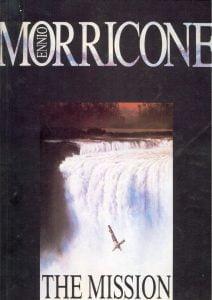
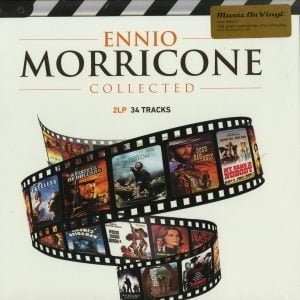
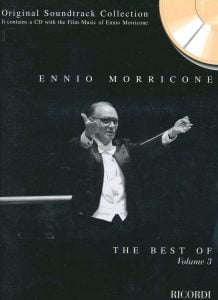
Browse in the Sheet Music Library:
Or browse in the categories menus & download the Library Catalog PDF:

Film sheet music download here.
Who was Ennio Morricone?
Ennio Morricone (10 November 1928 – 6 July 2020) was an Italian composer, orchestrator, conductor, trumpeter, and pianist who wrote music in a wide range of styles. With more than 400 scores for cinema and television, as well as more than 100 classical works, Morricone is widely considered one of the most prolific and greatest film composers of all time.
He received numerous accolades including two Academy Awards, three Grammy Awards, three Golden Globes, six BAFTAs, ten David di Donatello, eleven Nastro d'Argento, two European Film Awards, the Golden Lion Honorary Award, and the Polar Music Prize.


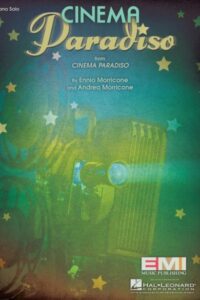
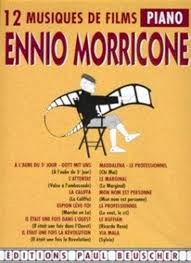


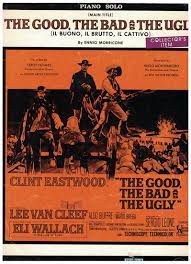
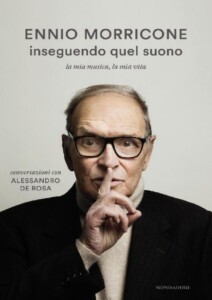
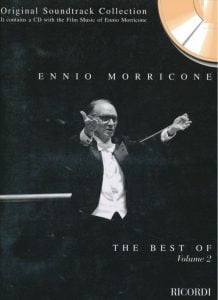
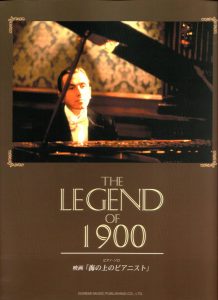
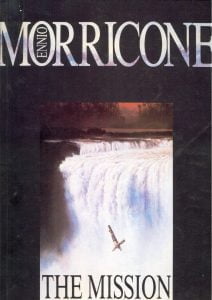

His filmography includes more than 70 award-winning films, all of Sergio Leone's films from A Fistful of Dollars on, all of Giuseppe Tornatore's films since Cinema Paradiso, Dario Argento's Animal Trilogy, as well as The Battle of Algiers (1966), 1900 (1976), La Cage aux Folles (1978), Le Professionnel (1981), The Thing (1982), The Key (1983) by Tinto Brass and Tie Me Up! Tie Me Down! (1989). He received the Academy Award for Best Original Score nominations for Days of Heaven (1978), The Mission (1986), The Untouchables (1987), Bugsy (1991), Malèna (2000) and The Hateful Eight (2015), winning for the last. He won the Academy Honorary Award in 2007.
His score to The Good, the Bad and the Ugly (1966) is regarded as one of the most influential soundtracks in history. It was inducted into the Grammy Hall of Fame in 2008.
After playing the trumpet in jazz bands in the 1940s, Ennio Morricone became a studio arranger for RCA Victor and in 1955 started ghost-writing for film and theatre. Throughout his career, he composed music for artists such as Paul Anka, Mina, Milva, Zucchero, and Andrea Bocelli. From 1960 to 1975, he gained international fame for composing music for Westerns and—with an estimated 10 million copies sold—Once Upon a Time in the West is one of the best-selling scores worldwide. From 1966 to 1980, he was a main member of Il Gruppo, one of the first experimental composers collectives. In 1969, he co-founded Forum Music Village, a prestigious recording studio. He continued to compose music for European productions, such as Marco Polo, La piovra, Nostromo, Fateless, Karol, and En mai, fais ce qu'il te plait.
Morricone composed for Hollywood directors such as Don Siegel, Mike Nichols, Brian De Palma, Barry Levinson, William Friedkin, Oliver Stone, Warren Beatty, John Carpenter, and Quentin Tarantino. He has also worked with directors such as Bernardo Bertolucci, Mauro Bolognini, Tinto Brass, Giuliano Montaldo, Roland Joffé, Wolfgang Petersen, Roman Polanski, Henri Verneuil, Mario Bava, Lucio Fulci, Umberto Lenzi, Gillo Pontecorvo, and Pier Paolo Pasolini.
His best-known compositions include "The Ecstasy of Gold", "Se telefonando", "Man with a Harmonica", "Here's to You", "Chi mai", "Gabriel's Oboe", and "E più ti penso". He has influenced many artists including Hans Zimmer, Danger Mouse, Dire Straits, Muse, Metallica, Fields of the Nephilim, and Radiohead.