Scores for all instruments: 16,000+ (active and growing), over 236,000 pages.
All genres and levels: Jazz & Blues, Rock & Pop, Classical & Contemporary, Film & Musicals;
books & biographies; methods, études, play-along tracks (MP3) for Jazz & Rock.
Access & benefits: US$15.99 one-time payment, valid for lifetime, full Library access.
Table of Contents
Who was Nino Rota (1911-1979)?
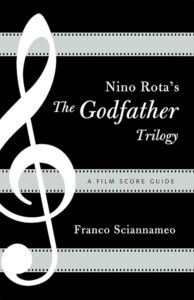
The best sheet music download from our Library.
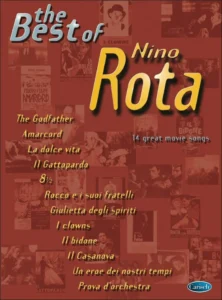
Please, subscribe to our Sheet Music Library. Sheet music should be accessible and affordable for all musicians, from professionals to absolute beginners.
Nino Rota: The Melodist of Modern Cinema
Few composers have shaped the emotional memory of the cinema as profoundly, and as invisibly, as Nino Rota. His name may not carry the immediate public recognition of a John Williams or an Ennio Morricone, yet his melodies are woven into the fabric of twentieth-century culture with a permanence that few artists of any discipline can claim. The lilting, fatalistic waltz of The Godfather; the melancholy trumpet of La Strada; the circus-like delirium of 8½; the doomed romance of Zeffirelli’s Romeo and Juliet—these are not merely film scores.
They are the emotional architecture of some of the most beloved films ever made, and they bear the unmistakable imprint of a singular musical imagination. Rota was, in the words of Federico Fellini, his most precious collaborator, a musician with “a geometric imagination, a musical approach worthy of celestial spheres”. Over a career that produced more than 150 film scores, ten operas, five ballets, and a substantial body of concert music, Rota remained a stubbornly independent traditionalist, a melodist of Mozartean grace and a harmonist of deceptive simplicity, whose work continues to define the sound of Italian cinema and, by extension, the sound of cinematic nostalgia itself.
Search your favorite sheet music in the Sheet Music Library Catalog


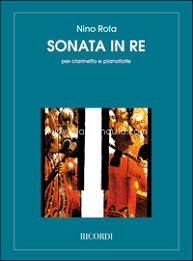

Biography: From Child Prodigy to Conservatory Director
Giovanni “Nino” Rota Rinaldi was born on December 3, 1911, in Milan, into a family steeped in music. His maternal grandfather, Giovanni Rinaldi, was a composer, and his mother, Ernesta Rota Rinaldi, had abandoned a career as a pianist to nurture her son’s precocious talent. That talent announced itself with astonishing speed. Rota composed the music for a fairy tale of his own invention, Il mago doppio, at the age of eight, and by eleven had written an oratorio, L’infanzia di San Giovanni Battista, which was performed in Milan and Paris as early as 1923. At twelve, he enrolled at the Milan Conservatory, studying under Giacomo Orefice and later Ildebrando Pizzetti, before completing his studies in Rome at the Accademia di Santa Cecilia under Alfredo Casella.
Encouraged by Arturo Toscanini, a close friend of his grandfather, Rota moved to the United States in 1930, spending two formative years at the Curtis Institute of Music in Philadelphia. There he studied composition with Rosario Scalero and conducting with Fritz Reiner, absorbing the disciplined craft and orchestral clarity that would later distinguish his film work. He returned to Italy, earned a degree in literature from the University of Milan with a thesis on the Renaissance theorist Gioseffo Zarlino, and embarked on a dual career as a composer and educator.



In 1937, Rota began teaching at the Liceo Musicale in Taranto, and two years later moved to the Conservatorio Niccolò Piccinni in Bari. In 1950, he became its director, a position he held for nearly three decades, until 1977. This remarkable institutional stability—unusual for a figure of such prolific creative output—provided the financial and psychological security that allowed Rota to pursue his composing career with a freedom that few of his contemporaries enjoyed. He was, in the words of his former student Riccardo Muti, a composer who “always stayed nobly above” the ideological battles of musical modernism, “in the certainty of his own metier, his own kind of music”.
Rota’s personal life remained largely private. He had one daughter, Nina, from a relationship with the pianist Magdalena Longari. He died in Rome on April 10, 1979, at the age of sixty-seven, from coronary thrombosis. At Fellini’s funeral, the director’s widow, Giulietta Masina, asked trumpeter Mauro Maur to play Rota’s Improvviso dell’Angelo in the Basilica di Santa Maria degli Angeli e dei Martiri—a final, wordless testament to the bond between the two men.
The Fellini Partnership: A Complete, Total Harmony
The collaboration between Nino Rota and Federico Fellini is one of the defining artistic partnerships of the twentieth century, comparable in its intimacy and productivity to that of Strauss and Hofmannsthal, or Lennon and McCartney. It began in 1952 with Lo sceicco bianco (The White Sheik) and continued without interruption until Prova d’orchestra (Orchestra Rehearsal) in 1979—fifteen films in all, a body of work that essentially created the sonic vocabulary of Fellini’s cinematic universe.
What made the partnership so extraordinary was its counterintuitive nature. Fellini famously did not play Rota’s music during the shooting of his films, and Rota, for his part, did not need to see the images to compose. As Fellini recalled, “He had no need to see images from my movies. When I asked him about the melodies he had in mind to comment on one sequence or another, I clearly realized he was not concerned with images at all. His world was inner, inside himself, and reality had no way to enter it”. The music was not illustrative in any literal sense; it was, rather, a parallel creation, an independent emotional argument that entered into dialogue with Fellini’s images and, in doing so, deepened and complicated them.
The range of that dialogue was extraordinary. In La Strada (1954), Rota’s score—built around the heart-rending theme associated with Gelsomina, played on a lone, melancholic trumpet—captured both the tragic drama and the quirky comic poignancy of the circus people on the road. The score for La Dolce Vita (1960) was, by contrast, a “kaleidoscopic” and “unstable symphony to the teeming metropolis,” flitting “fitfully from discordant strings and hectic glockenspiels to lean oboe solos”. For 8½ (1963), Rota produced what many consider the quintessence of his Fellini work: a score that shifts “seamlessly between circus-like exuberance, waltz themes, nostalgic swings, and poignant melodies,” perfectly mirroring the film’s dreamlike, autobiographical ambivalence. And in Amarcord (1973), he created a suite of themes that seemed to emerge directly from the collective memory of an Italian provincial childhood, by turns bawdy, tender, and absurd.
The Fellini-Rota collaboration was not without its tensions, but those tensions were productive. Rota’s penchant for pastiche and self-quotation—what one critic called his “indifference to prevailing musical fashions”—meant that he was constantly recycling and recontextualizing his own material, a practice that some found disconcerting but that Fellini understood as essential to the composer’s method. The music was never merely new; it was always in conversation with the past, with the traditions of Italian opera, folk song, brass band music, and dance hall waltz that formed the substratum of Rota’s musical consciousness. This was precisely what Fellini needed: a music that could evoke the weight of cultural memory while remaining utterly immediate and accessible.
The Wider Cinematic Canvas: Visconti, Zeffirelli, Coppola
Further information on Wikipedia: Nino Rota discography
If Fellini was Rota’s most intimate collaborator, he was far from his only one. Rota’s filmography includes work for virtually every major Italian director of his era, as well as for several important international figures. His association with Luchino Visconti produced one of his most admired scores: Il Gattopardo (The Leopard, 1963), a film about the decline of the Sicilian aristocracy during the Risorgimento. Rota’s music for The Leopard is “noble, melancholic and sober,” in the words of director Damiano Michieletto, “perfectly attuned to the film’s reflection on decline, transition and historical inevitability”. The celebrated ballroom waltz—which Rota orchestrated around music by Giuseppe Verdi—is “a perfect distillation of declining aristocratic elegance, at once beautiful and already nostalgic”. The score alternates between Baroque and Romantic idioms, blending grandeur with a subtle, pervasive sadness.
For Franco Zeffirelli, Rota composed the music for two Shakespeare adaptations that became defining versions for a generation: The Taming of the Shrew (1967) and Romeo and Juliet (1968). The latter yielded one of his most enduring melodies, the love theme known as “A Time for Us,” which became a worldwide popular hit; Henry Mancini’s instrumental rendition reached number one in the United States in 1969. The Romeo and Juliet score was a “florid symphony” drawing on Rota’s classical background for its lush themes, deploying “swaggering hunting horn for the amorous swain” and “mournful lute for the awakening girl”. It demonstrated Rota’s capacity to write music of genuine Renaissance and Elizabethan flavor without lapsing into antiquarianism—a skill that also served him well in his score for The Taming of the Shrew.
The most commercially consequential collaboration of Rota’s career, however, was with Francis Ford Coppola on The Godfather (1972) and The Godfather Part II (1974). Coppola, an Italian American director seeking to root his epic of Mafia power in the soil of Sicilian tradition, found in Rota’s music the perfect vehicle for that cultural memory. The score’s central themes—the “Godfather Waltz,” the “Love Theme” (often called “Sicilian pastorale”), and the “New Godfather” theme—are studies in understated menace and elegiac sorrow. The waltz, in particular, is a piece of music that “sizzles with Sicilian sleaze no matter how many times you see the film,” its “famous three-four step snakes insinuatingly and hypnotically as a cobra, spitting as it lilts”.
Rota’s score for The Godfather was nominated for an Academy Award, but the nomination was famously revoked when it was discovered that he had recycled a theme from a previous score, written two decades earlier for the film Fortunella—a practice that was entirely characteristic of his compositional method but that violated the Academy’s rules regarding originality. The irony was compounded when Rota went on to win the Oscar for The Godfather Part II, a score that was, if anything, even more deeply indebted to his earlier Italian work. The American Film Institute later ranked his Godfather score number five on its list of the greatest film scores of all time, a recognition that transcended the Academy’s bureaucratic quibble.
Musical Style and Technique: The Art of Deceptive Simplicity
Nino Rota’s musical style is one of the most immediately recognizable in all of film music, yet it is also one of the most difficult to analyze precisely. Its surface is deceptively simple—a fact that led some critics, particularly in the context of the ideological battles of postwar modernism, to dismiss him as a lightweight or a reactionary. As the conductor and Rota champion Riccardo Muti observed, Rota was “accused of being old-fashioned” during years when musical composition was dominated by the “dictatorship” of the Second Viennese School. But the simplicity was, in fact, the product of an extraordinarily sophisticated craft, a deliberate renunciation of complexity in favor of direct emotional communication.
Neoclassical Foundations and Melodic Primacy
At the core of Rota’s aesthetic was an unwavering commitment to melody. The composer himself acknowledged that his style, “anchored in the classical and romantic traditions,” displayed “great melodic skill and a busy rhythmic life”. His most durable works are those in which a memorable, often deceptively simple tune carries the emotional weight of the entire composition. The scholar Dr. Carl Alexander Vincent has identified the “pre-eminence of melodic line” as the first of Rota’s compositional “fingerprints,” followed by a harmonic language that “supports and drives the music to structural points,” multiple stylistic influences operating within an “intertextual framework,” and an “immediacy in the projection, and importantly in the communication to the listener, of differing emotions”.
Rota’s neoclassicism was not the acidic, ironic neoclassicism of Stravinsky or the neo-Baroque of Casella, though both composers were important influences. It was, rather, a warm, Mediterranean neoclassicism, rooted in the Italian operatic and instrumental traditions and characterized by what one analyst called “a directness of expression embedded in a neoclassical style that constantly celebrates a landscape-in-sound”. His concert works—the piano concertos, the symphonies, the chamber music—share this aesthetic: they are “simple and direct,” displaying “great melodic skill and a busy rhythmic life,” but they also reveal a harmonic language that can be more adventurous than his film scores, with “occasional daring excursions into dodecaphony” and a “harmonic harshness” that surfaces in certain works.
Harmony: Tonal Functionality, Modality, and the Art of the Pastiche
Rota’s harmonic language was fundamentally tonal, but it was a tonality enriched and complicated by modal inflections, chromaticism, and a willingness to borrow from a wide range of historical styles. The composer’s own description of his approach as “tonal functionality supplemented with modality” captures the essence of his harmonic practice: he worked within traditional tonal frameworks but constantly inflected them with modal colors—Dorian, Phrygian, and Aeolian shadings that gave his music its characteristic blend of sweetness and melancholy. His harmonic language “supports and drives the music to structural points,” providing a sense of direction and arrival without ever becoming merely functional or predictable.
One of the most distinctive features of Rota’s harmonic style was his use of borrowed or quoted material. His “penchant for pastiche of various past styles” was noted even by sympathetic critics, and it sometimes “turned into outright quotation of his own earlier music or even others’ music”. The most famous example is his use of the Larghetto from Dvořák’s Serenade for Strings in E major as a theme for a character in La Strada. This practice was not mere laziness or a failure of invention; it was, rather, an essential dimension of Rota’s aesthetic, a way of embedding his music in a web of historical and personal associations that gave it a depth and resonance beyond the immediate dramatic moment. The pastiche was the point: it was how Rota created the sense of memory, of cultural inheritance, of a world in which the past is never entirely past.
Rhythm, Orchestration, and the “Circus” Aesthetic
Rota’s rhythmic language was lively and characterful, often drawing on the dance forms—waltz, mazurka, galop, tarantella—that populate the Italian popular and theatrical traditions. His scores are full of “moduli ritmici” (rhythmic modules) that give them their propulsive energy, and his orchestration is marked by a keen sense of instrumental color and dramatic timing. He was particularly fond of the brass band sonorities, the solo trumpet, the mandolin, and the accordion—instruments that carried associations of Italian street music, circus, and popular festivity. The “circus” aesthetic that pervades so much of his work for Fellini is not a superficial decorative choice; it is a fundamental dimension of his musical imagination, a way of embracing the theatricality, the absurdity, and the pathos of human existence.
This orchestral sensibility was rooted in his classical training and his deep knowledge of the operatic repertoire. Rota’s film scores have the “structure and thematic depth of an opera,” as the conductor Leonardo Sini has observed, and his concert works often have an “almost cinematic grandeur”. The boundary between his “serious” and “popular” output was, in practice, highly permeable: ideas, themes, and formal strategies migrated freely between the concert hall and the cinema, enriching both.
The Best Compositions: A Selective Survey
Film Scores
La Strada (1954). The score that first brought Rota widespread international recognition remains one of his most beloved. Its central theme, associated with Gelsomina, is a model of Rota’s art: a simple, unforgettable melody, played on a solitary trumpet, that carries within it the entire tragicomic world of Fellini’s film. The score’s combination of circus music, popular song, and melancholic lyricism established the template for the Fellini-Rota collaborations that would follow.
La Dolce Vita (1960). A “kaleidoscopic” score that captures the frenetic, fragmented energy of Rome’s Via Veneto in the late 1950s. Rota moves effortlessly between dissonant modernism (the opening helicopter sequence), jazz-inflected nightclub music, and moments of stark, almost sacred simplicity. The main theme, with its descending chromatic line, is a perfect evocation of the film’s blend of glamour and spiritual emptiness.
8½ (1963). Perhaps the most complete realization of the Fellini-Rota aesthetic, the 8½ score is a continuous stream of musical invention: circus marches, waltzes, nostalgic ballads, and avant-garde textures, all held together by Rota’s unerring sense of dramatic pacing. The “La Passerella d’addio” (the final parade of characters) is a moment of pure musical-theatrical magic, a summation of the film’s themes of memory, creativity, and acceptance.
The Leopard (1963). Rota’s score for Visconti’s epic is a masterpiece of historical evocation. The ballroom waltz, built on Verdi’s music, is one of the most moving sequences in all of cinema, a dance of death for a dying aristocracy. The score’s alternation between Baroque and Romantic idioms, its combination of grandeur and melancholy, makes it one of Rota’s most emotionally complex achievements.
Romeo and Juliet (1968). The love theme, “A Time for Us,” became a global pop standard, but the entire score is a triumph of Rota’s neoclassical craft. The music captures the youthful ardor, the tragic inevitability, and the Renaissance setting of Shakespeare’s play with a directness and beauty that have made it one of the most beloved film scores of all time.
The Godfather (1972) and The Godfather Part II (1974). Rota’s scores for Coppola’s epics are masterclasses in the art of musical understatement. The “Godfather Waltz,” with its insinuating three-four rhythm and its dark, Sicilian coloring, is a theme of almost unbearable menace, while the “Love Theme” is a melody of pure, aching nostalgia. The score for Part II, which won the Academy Award, deepens and darkens the musical language of the first film, incorporating flashback sequences set in Sicily that allowed Rota to draw even more deeply on his Italian folk and operatic roots.
Concert Works
Further information: List of compositions by Nino Rota and List of film scores by Nino Rota
Piano Concerto in C (1959–60). A “pleasant and unpretentious” work that begins with “a beguiling tune of Mozartean simplicity and grace” and proceeds through a set of variations and a finale in the style of Prokofiev’s Classical Symphony. It is a perfect introduction to Rota’s concert music: witty, elegant, melodically generous, and deeply rooted in the classical tradition.
Piano Concerto in E “Piccolo mondo antico” (1978). A more openly nostalgic and neo-Romantic work, written near the end of Rota’s life. Its lyrical intensity and harmonic warmth reveal the composer looking back on his career and his cultural inheritance with a mixture of tenderness and regret.
Fifteen Preludes (1964). A set of miniatures for solo piano that represents “Rota at his most spirited, various, and mature”. Each prelude is a small gem of character and mood, ranging from the “yearning” lyricism of the second prelude to the “jovial bustle” of the fifth.
Variations and Fugue on the Name of Bach. A set of fourteen variations that find Rota “at his neoclassical best,” giving “his classical hat a slightly rakish tilt” while avoiding “all facility”. The concluding fugue is a demonstration of Rota’s contrapuntal mastery, a reminder that beneath the melodist’s surface lay a rigorous and disciplined craftsman.
Collaborations Beyond the Cinema
Although Rota’s most famous collaborations were with film directors, he also worked with a wide range of musicians and artists in other fields. His operas were performed at La Scala, the Santa Fe Opera, and other major houses; his ballets were choreographed by Maurice Béjart; and his concert works were championed by conductors such as Riccardo Muti (his former student) and Bruno Maderna.
In the realm of popular music, Rota’s themes were adopted and adapted by jazz and rock musicians, most notably on the 1981 tribute album Amarcord Nino Rota, produced by Hal Willner. The album featured a remarkable roster of artists—Carla Bley, Muhal Richard Abrams, Steve Lacy, Bill Frisell, Jaki Byard, Deborah Harry, and Chris Stein, among others—all interpreting Rota’s Fellini music through their own distinctive idioms. The project demonstrated the extraordinary adaptability of Rota’s melodies: as jazz critic Kevin Whitehead noted, “Nino Rota’s musical personality was so strong—in his Fellini scores, especially—as long as the musicians minded his melodies, all the diverse approaches would fit together”. Carla Bley’s long suite from 8½ was a particular highlight, revealing how Rota’s “melodies feed her own taste for circus-y excess, shifting instrumental colors, sideways harmonies and ballroom dance beats”.
Influences and Legacy
Nino Rota’s influences were as eclectic as his output. He drew on the Italian operatic tradition (Verdi, Puccini), the neoclassical school of Casella and Pizzetti, the Russian ballet scores of Stravinsky and Prokofiev, and the popular music of the Italian streets and dance halls. But he synthesized these influences into a style that was unmistakably his own—a style that, in turn, became one of the most pervasive influences on subsequent film composers.
His impact on the history of film music is difficult to overstate. Danny Elfman has frequently cited Rota as a major influence, particularly on his scores for the Pee-Wee films. The Italian cinema’s tradition of melodic, emotionally direct scoring—carried forward by composers such as Ennio Morricone and Nicola Piovani—owes a profound debt to Rota’s example. And his music continues to be used by contemporary directors: Gus Van Sant employed Rota’s music in Paranoid Park (2007), and Michael Winterbottom used several Rota selections in Tristram Shandy: A Cock and Bull Story (2005).
Rota’s legacy in the concert hall has been slower to consolidate, but it is steadily growing. His piano concertos, symphonies, and chamber works are being rediscovered by a new generation of performers and listeners, who are finding in them a body of music that is not merely “film music by another name” but a distinctive and rewarding contribution to the twentieth-century neoclassical repertoire. The scholarly literature on Rota has also expanded, with major studies by Richard Dyer and Franco Sciannameo examining his film scores in depth. Academic conferences and centenary celebrations in 2011 brought renewed attention to his non-cinematic compositions, revealing the full range of a composer too often reduced to a handful of famous themes.
Nino Rota: The Melodist as Architect of Memory
Nino Rota was, in the deepest sense, a composer of memory. His music does not merely accompany images; it creates the emotional conditions in which images become memories, in which the present moment of the film is suffused with the weight of the past. Whether he was writing a waltz for a dying Sicilian prince, a circus march for a confused film director, or a love theme for two doomed teenagers in Verona, Rota’s melodies had the power to make the fleeting permanent, to transform the ephemeral stuff of cinema into something that feels like it has always existed.
His technical mastery—the neoclassical discipline, the modal harmonic language, the brilliant orchestration, the uncanny sense of dramatic timing—was placed entirely at the service of emotional communication. He was, in the words of Fellini, a collaborator of “complete, total harmony,” a musician whose inner world was so rich and so coherent that it could enter into dialogue with the visions of the greatest filmmakers of his age and emerge not diminished but enhanced. The simplicity that some critics mistook for naivety was, in fact, the highest form of sophistication: the ability to say profound things in a language that everyone could understand. In an age of musical and cinematic complexity, Nino Rota remained faithful to the radical power of a beautiful melody—and in doing so, he ensured that his music would endure as long as there are ears to hear it.
Browse in the Sheet Music Library:
Or browse in the categories menus & download the Library Catalog PDF:
Nino Rota - Movie Theme Songs | Orchestral Film Music
All tracks performed by: Orchestra da Camera Fiorentina Director: Giuseppe Lanzetta TRACKLIST The Godfather 00:00 The Leopard Valzer Verdi 04:06 Mazurca 06:18 Galoppo 07:58 Valzer del commiato 09:34 Lo Sceicco Bianco, La Strada, Amarcord, 8 e 1/2 12:38.