
Scores for all instruments: 16,000+ (active and growing), over 236,000 pages.
All genres and levels: Jazz & Blues, Rock & Pop, Classical & Contemporary, Film & Musicals;
books & biographies; methods, études, play-along tracks (MP3) for Jazz & Rock.
Access & benefits: US$15.99 one-time payment, valid for lifetime, full Library access.
Table of Contents
Happy birthday, Ornella Vanoni, born on this day in 1934
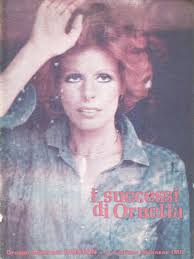
The best sheet music download from our Library.
Ornella Vanoni: The Unmistakable Voice of Italian Song
Born in Milan on September 22, 1934, Ornella Vanoni spent more than seven decades shaping the sound of Italian popular music. She was a theatrical actress before she was a singer, a jazz stylist before she was a pop star, and a restless interpreter who moved between the Milanese underworld, Brazilian bossa nova, French chanson, and American jazz without ever losing the smoky, intimate timbre that made her voice instantly recognizable. When she died at her home in Milan on November 21, 2025, at the age of 91, Italian Prime Minister Giorgia Meloni described her as “a unique artist who leaves us with an unrepeatable artistic heritage.” She had sold more than 55 million records, recorded over 100 albums, and become the only Italian artist ever to win the prestigious Tenco Award twice—both as a songwriter and as a performer.
Please, subscribe to our Sheet Music Library. Sheet music should be accessible and affordable for all musicians, from professionals to absolute beginners.
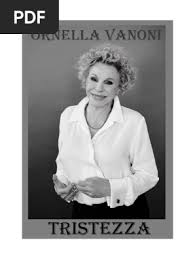
Early Life and Theatrical Beginnings
Vanoni was born into a well-to-do Milanese family and was educated in schools across Italy and Europe. Her first love was the theater. She enrolled in the Accademia d’Arte Drammatica at Milan’s Piccolo Teatro, where the legendary director Giorgio Strehler became her mentor and, for a time, her partner. Under Strehler’s direction, she performed in works by Bertolt Brecht, and it was he who first encouraged her to sing. Vanoni later wrote that stepping onto the Piccolo’s stage for the first time was the moment she “became who [she] truly was”.
Her musical career began in earnest around 1956, when Strehler asked her to sing during the intervals of a production. The songs she chose were drawn from the Milanese criminal underworld—vivid, often brutal narratives of love, betrayal, and violence among the city’s underclass. These “canzoni della mala,” or underworld songs, scandalized audiences and attracted the attention of censors, but they also gave Vanoni her first nickname: la cantante della mala, the singer of the underworld.
Search your favorite sheet music in the Sheet Music Library Catalog
From the Underworld to the Mainstream
The early 1960s brought a decisive turn. Vanoni met the Genoese singer-songwriter Gino Paoli, with whom she began a passionate personal and creative relationship. Paoli wrote “Senza fine” specifically for her, and when Vanoni recorded it in 1961, the song became an international success and the beginning of a lifelong artistic dialogue between the two. The song’s title—literally “Without End”—became a kind of signature for Vanoni’s career, a phrase that critics and obituary writers would return to again and again to describe her seemingly inexhaustible artistic vitality.
Throughout the 1960s, Vanoni became a fixture of Italy’s televised song festivals. She participated in the Sanremo Music Festival eight times between 1965 and 2018, finishing second in 1968 with “Casa Bianca” and placing fourth on three separate occasions. She also won the Neapolitan Song Festival in 1964 with “Tu sì ‘na cosa grande”. During this period, she recorded a string of hits that would become staples of the Italian songbook: “Io ti darò di più,” “La musica è finita,” “Tristezza,” “Domani è un altro giorno,” and “Una ragione di più”.
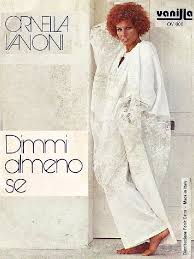
Musical Style and Harmonic Language
Vanoni’s musical identity was built on contradiction and synthesis. She was, at various points in her career, labeled a jazz singer, a pop singer, a chansonnière, and a bossa nova interpreter. In truth, she was all of these things, and her art consisted in the ability to draw from multiple traditions while remaining unmistakably herself.
Her earliest formation was in jazz. She grew up listening to the Great American Songbook and was deeply influenced by Billie Holiday, whose phrasing and emotional directness shaped Vanoni’s own approach to a lyric. This jazz foundation gave her a rhythmic flexibility that distinguished her from many of her contemporaries. As one critic observed, her singing was characterized by “a subtlety that infiltrates the words and their meaning,” making her “the perfect vehicle for a lyricism that in abandonment…”. She could stretch a phrase, delay a resolution, or reharmonize a melody in ways that revealed new meanings in familiar songs.
Her harmonic vocabulary was equally eclectic. In the 1960s and 1970s, she worked extensively with the producer and lyricist Sergio Bardotti, who introduced her to Brazilian music and helped her adapt bossa nova classics into Italian. The 1976 album La voglia la pazzia l’incoscienza l’allegria, recorded with Vinícius de Moraes and Toquinho, stands as one of the finest examples of this cross-cultural exchange—a “precious meeting between Italy and Brazil” in which Vanoni’s voice became the perfect vehicle for the saudade at the heart of the bossa nova tradition.
Her later work moved toward a more atmospheric, jazz-inflected sound. The 1983 album Uomini featured the legendary baritone saxophonist Gerry Mulligan, whose playing added a new dimension to Vanoni’s sophisticated pop. In the 1990s and 2000s, she continued to collaborate with jazz musicians, including Paolo Fresu, with whom she recorded the 2020 album Argilla—a work praised for its “harmonic awareness” and its ability to make the voice “a harmonic director and artisan of sound”.
Essential Songs and Compositions
Any survey of Vanoni’s finest work must begin with “Senza fine.” Written by Gino Paoli during their love affair, the song is a deceptively simple declaration of eternal love, carried by a melody that seems to float above its harmonies. Vanoni’s recording transformed it into a standard, and it was later used as the central theme of Billy Wilder’s film Avanti!. The song’s Italian title— “Without End”— became a metaphor for Vanoni’s own career, which seemed to defy the passage of time.
“L’appuntamento” is arguably her most famous recording. An Italian adaptation of the Brazilian song “Sentado à Beira do Caminho,” with lyrics by Bruno Lauzi, it tells the story of a woman waiting for a lover who may or may not arrive. Vanoni’s performance captures the oscillation between hope and despair with extraordinary precision, and the song found a new global audience when it was featured in Steven Soderbergh’s Ocean’s Twelve in 2004.
“Una ragione di più,” written with Franco Califano and others, is a stark, unsentimental account of the end of a relationship. Vanoni’s delivery is “firm and fragile” at once, refusing victimhood while acknowledging pain. “La musica è finita,” presented at Sanremo in 1967, is a classic of Italian melodic song, its title— “The Music Is Over”— acquiring a poignant resonance in the context of Vanoni’s career as a singer of endings and farewells.
Other essential recordings include “Tristezza,” her 1967 breakthrough cover of a Brazilian song that became one of her biggest hits; “Eternità,” her 1970 Sanremo entry that transformed a potentially overwrought declaration of eternal love into something private and knowing; and “Domani è un altro giorno,” a song of resilience and hope that became an anthem for generations of Italian listeners.
International Collaborations and Film Music
Vanoni’s collaborators read like a who’s who of twentieth-century music. Beyond Gino Paoli and Vinícius de Moraes, she worked with the American jazz giants Gil Evans, Herbie Hancock, and George Benson. She recorded with Gerry Mulligan, Ron Carter, and the American arranger Bob Rose. In the 1990s, she collaborated with a new generation of Italian songwriters, including Ivano Fossati, who wrote “Buontempo” for her. Her 2021 album Unica featured duets with contemporary artists including Elodie and Ditonellapiaga, and a posthumous 2026 collection, Vivere il mio concerto più bello!, brought together live performances and studio recordings with artists as diverse as Elisa, Mahmood, Fiorella Mannoia, and Paolo Fresu.
Her relationship with cinema was equally rich. “Senza fine” was used as the theme for Billy Wilder’s Avanti!, and “L’appuntamento” appeared in Ocean’s Twelve and in Duccio Tessari’s 1973 poliziottesco Tony Arzenta, starring Alain Delon. In 2021, the Venice Film Festival awarded her the Soundtrack Stars Award, honoring her “extraordinary voice” and her contribution to the relationship between music and film. The award citation praised her as “an icon of Italian songwriting” whose “unmistakable vocal timbre and innate elegance” made her the ideal recipient.
Influences and Legacy
Vanoni’s influences were as varied as her repertoire. She drew from the jazz tradition of Billie Holiday and Sarah Vaughan, the theatricality of Bertolt Brecht and Kurt Weill, the melodic craft of Gino Paoli and Sergio Bardotti, and the rhythmic sophistication of Brazilian music. She was also, crucially, an interpreter rather than merely a performer—a singer who could take a song written by someone else and make it entirely her own. As Treccani noted, she was the Italian artist who recorded the most considerable number of covers, a statistic that might seem surprising until one considers the range and depth of her interpretive gifts.
Her legacy is multifaceted. She was the first woman to win the Tenco Award for best singer-songwriter, and remains the only woman to have won it twice. She was named a Grand Officer of the Order of Merit of the Italian Republic in 1993. In 1999, she became the first artist in Sanremo’s history to receive a career award. But beyond the awards, her true legacy lies in the music itself—a body of work that continues to be discovered by new generations. When “L’appuntamento” plays in Ocean’s Twelve, or when a young Italian singer covers “Senza fine,” Vanoni’s voice is not merely remembered; it is actively in dialogue with the present.
She was, in the words of one tribute, “free, ironic, and above all undisciplined.” She refused to be confined by genre, by age, or by expectation. Her red curls, her elegant style, and her candid, often unpredictable humor made her a fixture of Italian cultural life well into her eighties and nineties. And her voice—that intimate, smoky, unmistakable instrument—remains one of the defining sounds of Italian music in the twentieth century and beyond.
Browse in the Sheet Music Library:
Or browse in the categories menus & download the Library Catalog PDF:
Listen to Ornella Vanoni music on Spotify
Discography
Main article on Wikipedia: Ornella Vanoni discography
Studio albums
- Ornella Vanoni (1961)
- Le canzoni di Ornella Vanoni (1963)
- Caldo (1965)
- Ornella (1966)
- Ornella Vanoni (1967)
- Ai miei amici cantautori (1968)
- Io sì – Ai miei amici cantautori n.2 (1970)
- Appuntamento con Ornella Vanoni (1970)
- Un gioco senza età (1972)
- Dettagli (1973)
- Ornella Vanoni e altre storie (1973)
- Quei giorni insieme a te (1974)
- A un certo punto... (1974)
- La voglia di sognare (1974)
- Uomo mio, bambino mio (1975)
- La voglia, la pazzia, l'incoscienza, l'allegria (1976)
- Più (1976)
- Io dentro (1977)
- Io fuori (1977)
- Vanoni (1978)
- Ricetta di donna (1980)
- Duemilatrecentouno parole (1981)
- Uomini (1983)
- Ornella &... (1986)
- O (1987)
- Il giro del mio mondo (1989)
- Quante storie (1990)
- Stella nascente (1992)
- Sheherazade (1995)
- Argilla (1997)
- Un panino una birra e poi... (2001)
- ...E poi la tua bocca da baciare (2001)
- Sogni proibiti: Ornella e le canzoni di Bacharach (2002)
- Noi, le donne noi (2003)
- Ti ricordi? No non mi ricordo (2004)
- Più di me (2008)
- Più di te (2009)
- Meticci (Io mi fermo qui) (2013)
- Unica (2021)
- Diverse (2024)