Scores for all instruments: 16,000+ (active and growing), over 236,000 pages.
All genres and levels: Jazz & Blues, Rock & Pop, Classical & Contemporary, Film & Musicals;
books & biographies; methods, études, play-along tracks (MP3) for Jazz & Rock.
Access & benefits: US$15.99 one-time payment, valid for lifetime, full Library access.
Philip Glass - Islands (from Glassworks) piano solo sheet music
Please, subscribe to our Sheet Music Library. Sheet music should be accessible and affordable for all musicians, from professionals to absolute beginners.
The best sheet music download from our Library.
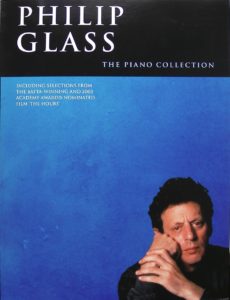
Glassworks by Philip Glass
Glassworks work is a chamber music in six movements by Philip Glass .
It is considered a paradigmatic work of his compositional style. After his larger-scale concerts and stage works, Glassworks was Philip Glass's successful attempt to create a more pop-oriented body of work, "suitable for listening with a Walkman", with considerably shorter and more accessible pieces composed for the studio. of recording. The studio album was released in 1982.
Movements
- I. Opening (piano (with horn at the end)) 6'24"
- II. Floe (2 flutes, 2 soprano saxophones, 2 tenor saxophones, 2 horns, synthesizer) 5'59"
- III. Island (2 flutes, 2 soprano saxophones, tenor saxophone, bass clarinet, 2 horns, viola, cello, synthesizer) 7'39"
- IV. Rubric (2 flutes, 2 soprano saxophones, 2 tenor saxophones, 2 horns, synthesizer) 6'04"
- V. Façades (2 soprano saxophones, synthesizer, viola, cello) 7'20" - Originates from the soundtrack of the film Koyaanisqatsi , but was ultimately not used for the film; it is performed as a standalone piece (ISWC T-010.461. 089-0).
- SAW. Closing (flute, clarinet, bass clarinet, horn, viola, cello, piano) 6'03" - Repeat of Opening.
"Opening"
"Opening" employs eighth note triplets, on an eighth note base, over whole notes in 4/4 time . Formally it is made up of three groups of four bars of three or four chords repeated four times each, ABC:||ABC, which then merges with the following movement , "Floe" with the entrance of the horns.
"Floe"
The movement ( Floe translates as iceberg) presents two formally identical sections. Although highly rhythmic in character, the melodic implications of "Floe" come from the orchestration employed. There is no modulation , just a harmonic progression repeated over and over again. The overlapping of layers of timbral contrast is characteristic of the piece as a whole.