Table of Contents
Chaplin: his music in films
The best sheet music download from our Library.
Scores for all instruments: 16,000+ (active and growing), over 236,000 pages.
All genres and levels: Jazz & Blues, Rock & Pop, Classical & Contemporary, Film & Musicals;
books & biographies; methods, études, play-along tracks (MP3) for Jazz & Rock.
Access & benefits: US$15.99 one-time payment, valid for lifetime, full Library access.

Please, subscribe to our Sheet Music Library.
Chaplin, the Unseen Conductor: An Exhaustive Examination of Charlie Chaplin, the Composer
Prologue: The Silent Voice
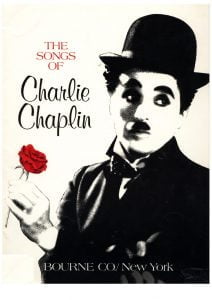
In the collective consciousness, Charlie Chaplin is a figure of silent perfection: a twitching mustache, a bamboo cane, a pair of oversized boots navigating a treacherous world. He is cinema’s most iconic image of the pre-sound era. Yet this image is profoundly paradoxical, for the true engine of Chaplin’s art was never silent. It was auditory, melodic, and orchestral. Charlie Chaplin, the man who famously resisted dialogue until the very last breath of the silent era’s corpse, was not just a filmmaker who dabbled in music; he was a deeply intuitive, wildly gifted, and singularly determined composer who scored virtually every foot of his classic feature films himself. His is the only name in the history of cinema to hold the triple threat of starring, directing, and composing simultaneously over a period of decades. This article seeks to re-center the conversation around Charles Spencer Chaplin, the musician—a man who couldn’t read or write musical notation fluently, yet composed some of the most enduring melodies of the 20th century, creating a symphonic voice for a character who never spoke a word.

Part I: The Music Hall Orphan (1889–1913)
To understand Chaplin’s music, one must first understand the vibrations of the South London streets. Born on April 16, 1889, to music hall entertainers, melody was literally his inheritance. His father, Charles Chaplin Sr., was a baritone known for “dramatic and descriptive” songs; his mother, Hannah Hill, was a soubrette and actress under the stage name Lily Harley. Chaplin’s earliest memory was of the sickly sound of his mother’s voice. On a fateful night at the Aldershot canteen, five-year-old Charlie watched his mother lose her voice mid-performance. The stage manager, recognizing the charismatic child, ushered him onstage to replace her. Young Charlie sang a popular song, “Jack Jones,” and the audience showered him with coins, which he cleverly stopped mid-song to collect, perfectly mimicking the street performers he’d watched. This wasn't just his theatrical debut; it was the birth of his musical identity—a performer who understood that melody and movement were interchangeable currencies.
Hannah’s subsequent mental breakdown and Charles Sr.’s alcoholism plunged the family into the workhouses of Lambeth. During these destitute years, music became a psychic escape. Chaplin taught himself the rudiments of the violin by threading hairs from a horsehair sofa through a piece of wood. He would practice on the roof of the workhouse hospital, serenading the sky. Later, he would scrape together money to buy a real violin and a cello, practicing up to seven hours a day. He never learned to read music in a formal sense, but he developed a photographic ear. He would listen to the buskers, the barrel organs, and the sentimental ballads of the gaslit pubs—the poignant, schmaltzy music of the late Victorian and Edwardian eras. This distinct, bittersweet tonality would become the foundational DNA of his entire compositional oeuvre. He was not a student of the conservatory; he was a child of the gutter, humming along to the universe’s dissonance and finding within it an unexpected harmony.
Part II: From Karno to Keystone: The Rhythm of Silence (1914–1930)
When Chaplin joined Fred Karno’s Speechless Comedians, he wasn't just learning pantomime; he was learning the geometry of rhythm. Karno’s slapstick was brutal and balletic, a violent ballet requiring split-second timing. In Chaplin’s mind, comedy was already a form of music. He described his acrobatic pratfalls as "syncopation," a physical ragtime. He carried a violin with him on the troupe’s American tours, constantly improvising.
When he arrived in Hollywood in 1914 and began churning out shorts for Keystone, Essanay, and Mutual, the concept of a "film score" was primitive. Music was provided by a pianist at the theater, or a phonograph. But Chaplin, even then, was meticulously controlling the tempo of his action. He soon realized that sending out cue sheets—instructions for a specific waltz, march, or a generic "hurry" number—wasn't sufficient. By the time he reached First National and built his own studio on La Brea Avenue, he was supervising the music for his shorts. For The Kid (1921), he composed the principal theme, a haunting, fragile melody that perfectly captured the melancholy of the glass-paned childhood.
However, the 1920s were a laboratory. In A Woman of Paris (1923), a serious drama in which he didn’t star, he experimented with music’s narrative power without the Tramp’s distraction. He tasked his musical director, Eric James, with sourcing and adapting classical pieces, but the dramatic emotional architecture of the score was entirely Chaplin’s design. This was his conservatory.
Then came The Gold Rush (1925). Originally released with a compiled score, Chaplin revisited it in 1942 when he re-released the film. Here, he committed a radical act: he excised the old compilation score and replaced it entirely with his own continuous, composed narration. He wrote the music, he recorded it, and he performed it as the narrator, speaking the text over his own orchestral backdrop. This was the turning point. For the "Dance of the Rolls" sequence, where the Tramp spears two bread rolls with forks and performs a little ballet of the feet, Chaplin didn't just use generic music; he choreographed the dance to a precise musical phrasing, creating a kinetic pas de deux between the visual and the auditory. The music wasn't an accompaniment; it was the dance floor.
Part III: The Method of the Maestro: "Hum It, and I'll Play It"
As the industry panicked and transitioned to the "talkies," Chaplin remained defiant. In 1931, he released City Lights, a silent film in a world that was suddenly noisy. But Chaplin had a secret weapon: a synchronized music and sound effects track. He was no longer relying on a cinema pianist to interpret his mood; he was the cinema pianist.
It is here we must shatter the biggest myth of Chaplin’s compositional process. The notion that he simply "hummed a few tunes" to an arranger is a vast oversimplification. The process was a grueling, obsessive, often tyrannical collaboration. Chaplin’s genius was not in technical orchestration—he could not transcribe—but in the absolute precision of his melodic invention and his structural sense. He surrounded himself with a dedicated team of musical secretaries and orchestrators, most notably David Raksin, Meredith Willson, and later, Eric James.
The method was this: Chaplin would sit at a piano and pick out a tune with one or two fingers, or he would hum a phrase. If the arranger harmonized it in a way he disliked, he would scream, "No, no, no! Not that chord!" The arranger might try a major, then a minor. "No! That one in the middle!" It was the search for the "grey" chord, the one that hovered ambiguously between joy and absolute sorrow. He would insist on a violin sliding up to a note rather than hitting it cleanly, because he wanted it to "weep." He would ask for a cello to "sigh." He had no vocabulary for the orchestral colors, but he had an unerring ear for them. He once held up a recording session for hours—at a cost of thousands of dollars—because the oboe player was playing the note "too yellow." He wanted a "blue" sound. A baffled David Raksin finally realized Chaplin meant he wanted the reed to sound less like a conventional oboe and more like a thin, melancholy street instrument. Raksin adjusted the player’s mouthing, and Chaplin beamed, "That's it! That's the color!"
Chaplin would also dance. He would act out the scene for the orchestra, his feet tapping out the counterpoint, his body swaying the rubato, and the musicians would have to "play the movement." He was essentially a conductor of visual music. The total score for City Lights took more than a year of six-day weeks to complete. Chaplin famously kept the orchestra in the studio for 52 recording sessions. He was a relentless perfectionist. If a cue didn't make the audience weep exactly at the frame he intended, it was scrapped, re-written, and re-recorded. He was composing not for the ear alone, but for the tear duct and the funny bone simultaneously.
Part IV: The Compositional Voice: The Chaplinesque Sound
What defines a Chaplin composition? It is the distillation of the late-Romantic tradition, filtered through the unpretentious street music of his London childhood, and elevated by a profoundly cinematic sense of leitmotif.
1. The Melodic Cell:
Chaplin’s melodies are almost always deceptively simple. They are built on step-wise motion and small intervallic leaps, making them instantly hummable. The main theme of Limelight is essentially a simple descending scale pattern, yet it contains an oceanic depth of regret. His ear for the "hook" was indistinguishable from his eye for a gag. Both relied on a perfect, irreducible simplicity.
2. The Tchaikovsky Connection:
There is a deep structural affinity with Tchaikovsky, whom Chaplin once cited as his favorite composer. The waltz is the central form of Chaplin’s pathos. The 3/4 time signature was his signature. The Tramp’s gait was a waltz step—a wobble, a recovery, a slide—and his music follows suit. Pieces like "The Terry Theme" from Limelight or the love theme from The Gold Rush are waltzes that constantly threaten to fall apart, held together only by their yearning melody. They are the sound of a man dancing on the edge of an abyss.
3. Contrast and Counterpoint:
Chaplin never “Mickey-Moused” his comedy (a term for strict synchronization where every action has a musical sound effect). Instead, he applied an aesthetic of elegant counterpoint. In the famous boxing match in City Lights, the Tramp is a human pretzel, weaving in and out of the ropes. The music is not a cartoonish "boing" and "pow," but a graceful, light classical dance. This disconnect between the balletic music and the chaotic violence on screen created a high comic art. Conversely, in his sad scenes, the music often understates. When the Tramp is rejected, the music does not bludgeon the audience with melodrama; it offers a quiet, consoling cello solo, providing the dignity the character lacks in the narrative.
4. The "Smile" Paradox:
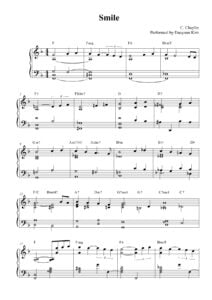
The most famous example of his musical philosophy is "Smile." The melody comes from the sequence in Modern Times (1936) where the Gamin (Paulette Goddard) says goodbye to the Tramp. The tune isn't a happy one; it is a minor-key ascension that struggles to resolve. It is a musical representation of hope against all evidence. When John Turner and Geoffrey Parsons added the lyrics in 1954, the line "Smile, though your heart is aching" perfectly verbalized Chaplin’s 40-year artistic mission. The music of the Tramp never lies. It admits the pain first, then suggests the smile. It is the sound of a man whistling in the dark. Chaplin’s musical signature is the grace note of defiance.
Part V: Encounters with the Pantheon
Because Chaplin was the most famous man in the world, his living room became a salon for the 20th century’s greatest composers. These encounters reveal his profound insecurities and his stubborn artistic integrity.
Igor Stravinsky (1937):
The Russian modernist visited Chaplin in Hollywood. Chaplin, ever the nervous host, decided to demonstrate his own musical abilities by playing the piano. He improvised a piece that he felt sounded "modern." Stravinsky listened patiently, then asked, "Who composed that?" "I did," replied Chaplin. Stravinsky complimented it, thinking it was a professional piece. Chaplin was ecstatic but terrified. He later described playing for Stravinsky as appearing before a judge. The two became friends, but the story highlights Chaplin’s lifelong impostor syndrome regarding the intellectual elite. He viewed his own untrained music as a "bastard art" next to the giants, which drove him to work even harder.
Arnold Schoenberg (1935):
The father of atonality had fled Nazi Germany and found himself a neighbor of Chaplin’s in Beverly Hills. They played tennis, but music was a battleground. Schoenberg attempted to explain his 12-tone technique to Chaplin. "I don't understand a word of it," Chaplin admitted freely. He asked Schoenberg why he didn't write music that made people feel good. Schoenberg replied sternly that art must reflect the pain of the times. Chaplin argued that the pain was precisely why people needed beauty. Chaplin’s music never progressed past 1910 harmonically. He had no interest in the Second Viennese School. His rejection of Schoenberg’s methodology was not a lack of intelligence, but a clear-eyed philosophical stance: the Tramp was the common man, and the common man needed the tonic. He needed resolution. Chaplin’s music is a lifelong rebellion against atonality, a pursuit of the cadence that finally feels like home.
Hanns Eisler (1940s):
The German composer and Communist activist, a student of Schoenberg, secretly collaborated with Chaplin on The Circus re-release and likely consulted on Monsieur Verdoux. Eisler praised Chaplin’s "precise amateurism," noting that Chaplin understood the social function of music better than most Hollywood hacks. However, their relationship soured after Eisler was brought before the House Un-American Activities Committee. Under pressure, Eisler publicly criticized Chaplin’s wealth and "sentimentalism," a betrayal that deeply wounded Chaplin. Yet, Eisler’s book Composing for the Films remains one of the sharpest analyses of why Chaplin’s scores work: because they retain the autonomy of music rather than slavishly imitating the picture.
Claude Debussy (Pre-1918):
In a lesser-known encounter, Debussy reportedly saw Chaplin’s early screen work and described him as a "cubist." Chaplin, in turn, revered the French Impressionists. There is a touch of Clair de Lune in the shimmering strings of the Limelight score—not a direct copy, but a shared sense of dreaming in sound. Chaplin’s orchestration, often executed by others to his specifications, frequently employs the harp and the celeste to create a silver, magical soundscape. This texture—the sound of starlight on a city sidewalk—is the Impressionist legacy.
Part VI: The Talkies: The Music Speaks
1. City Lights (1931): The Opera of the Mute
The score for City Lights is a full-blown narrative opera. The film famously opens with two dignitaries unveiling a statue, speaking in a garbled "kazoos" sound (parodying talkies). The joke is that music and sound effects convey meaning better than words. The core of the score is the blind flower girl’s theme. When the Tramp first sees her, a violin solo rises over a string bed. It’s a theme of pure, idealistic love, based on Chaplin’s reworking of José Padilla’s "La Violetera." (Chaplin later lost a plagiarism lawsuit regarding this, though he argued it was a different song; regardless, the emotional context he gave the melody transformed it entirely). The climax, when the now-seeing girl recognizes the Tramp by the touch of his hand, is scored with a massive orchestral swell that miraculously avoids bathos because the melody has earned its resolution through 80 minutes of careful thematic development. It is arguably the most perfect marriage of image and music in film history.
2. Modern Times (1936): The Nonsense Song
Modern Times is a masterpiece of sound design. The factory whistle, the radio speakers, the feeding machine—they are all musical instruments in Chaplin’s industrial symphony. The score incorporates mechanistic effects, yet the moment that defines Chaplin’s musical genius is the "Nonsense Song." In his screen career as the Tramp, he never spoke. In Modern Times, he sings. Improvised on the spot, the lyrics are a mix of fake French and Italian gibberish:
"Se bella giu satore / Je notre so cafore / Je notre si cavore / Je la tu la ti la twah!"
This wasn't just a gag. It was a declaration of his artistic philosophy. The meaning of the words didn't matter; the rhythm, the phrasing, and the pantomime of the melody were universal. The Tramp sings the song to sell the Gamin’s hope, and in doing so, Chaplin proves that song is superior to speech. The gibberish song is a masterpiece of linguistic jazz, proving that music is the only universal language.
3. The Great Dictator (1940): Brahms and the Barber
Here, music is weaponized. The most iconic musical sequence in the film is Hynkel (Hitler) performing a ballet with an inflatable globe. Chaplin chose the prelude to Act I of Wagner’s Lohengrin for this scene. The soaring, holy German Romanticism contrasts with Hynkel’s simian, grasping obsession, achieving a profound satirical deconstruction of Fascism’s appropriation of high art. Later, the barber shaves a customer precisely to the rhythm of Brahms’s "Hungarian Dance No. 5." This is Chaplin’s peak of physical syncopation. Every razor swipe, every flick of the brush, is a percussion instrument. Chaplin didn't just borrow Brahms; he choreographed it, consumed it, and made it his own. The original score, composed by Chaplin and Meredith Willson, features the "Falling Leaves" theme—a delicate, melancholic motif for the Jewish ghetto that proves Chaplin could capture the weight of genocide in a handful of strings.
4. Monsieur Verdoux (1947): The Cynical Waltz
The score for Monsieur Verdoux is darker, more acidic. The romantic waltzes of the Tramp era are twisted into something morbid. The music lures the audience into sympathy for a serial killer. Chaplin’s use of the flute here is eerie; it whistles past the graveyard. It is the sound of the Little Tramp’s soul decomposing into a bourgeois monster.
5. Limelight (1952): The Swan Song
Limelight is Chaplin’s most musically autobiographical work. He composed an entire ballet sequence for the film, driven by the "Terry Theme." The story of the score is the story of love lost. Chaplin met actress Joan Barry before the war, and out of that tumultuous period, a delicate waltz was born, originally titled "The Prima Donna." He stored it for decades. When he wrote Limelight, the tale of a dying clown and a suicidal ballerina, he resurrected the theme. The melody was allegedly subconsciously borrowed from a Spanish song, leading to a bizarre legal case decades later, but musically, it is pure Chaplin—a descending chromatic line of heartbreak. The score won him an Academy Award, but not until 1973. Blacklisted and exiled to Switzerland, Limelight did not screen in Los Angeles until 1972. When it finally did, the Academy awarded the 83-year-old Chaplin the Oscar for Best Original Dramatic Score—the longest gap between a film’s creation and its victory.
Part VII: The Lyricists and The Singers
Chaplin was a lyricist of surprising dexterity, though he rarely received sole credit during his active years. He wrote words as he wrote music—by feel, focusing on the open vowels and emotional directness of the music hall.
"Smile":
The instrumental theme from Modern Times waited two decades for its words. In 1954, John Turner and Geoffrey Parsons penned the lyrics. Chaplin approved them, and the song took on a life of its own. Nat King Cole’s 1954 recording transformed the melody into a jazz-pop standard. It was Michael Jackson’s favorite song; he recorded a seminal version for the HIStory album and later cited Chaplin as a spiritual model. Judy Garland’s rendition turned it into a battle hymn of the broken. More recently, artists like Barbra Streisand and Lady Gaga have performed it, pulling it back to its operatic roots.
"This Is My Song":
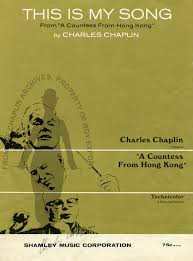
Written for A Countess from Hong Kong (1967), this was Chaplin’s late-career hit. With lyrics by Lee Philpott, the song was recorded by Petula Clark and hit #1 in the UK. It is an unabashedly sentimental waltz, a throwback to the Edwardian era released in the summer of psychedelic rock. Its success was a vindication of Chaplin’s stubborn tonal conservatism.
"Eternally":
The "Terry Theme" from Limelight was given lyrics by Turner and Parsons and became "Eternally." In the hands of singers like Sarah Brightman or Engelbert Humperdinck, it becomes a massive, operatic pop ballad.
"Swing Little Girl":
For the 1969 re-release of The Circus, an 80-year-old Chaplin sat down and wrote lyrics and a new song. Watching him sing this in his cracked, aging, but perfectly pitched voice over footage of his 39-year-old self performing impossible stunts is one of the most devastating moments in cinema. It is a duet across time, the old man singing farewell to the sprite. It is Chaplin’s last great recorded vocal performance.
Part VIII: The Discography and Film List
Chaplin’s musical canon is a sprawling archive, mostly reconstructed from his films.
Original Scores for Films (Composer/De Facto Composer):
- The Kid (1921)
- A Woman of Paris (1923)
- The Gold Rush (1925, re-scored 1942)
- The Circus (1928, re-scored 1969)
- City Lights (1931)
- Modern Times (1936)
- The Great Dictator (1940)
- Monsieur Verdoux (1947)
- Limelight (1952)
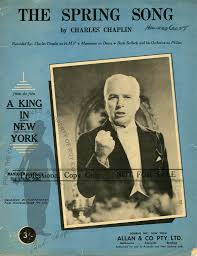
- A King in New York (1957)
- The Chaplin Revue (1959) – re-scoring of First National shorts
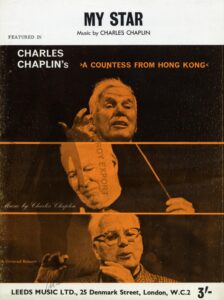
- A Countess from Hong Kong (1967)
Essential Recordings and Compilations:
- Chaplin’s Limelight (Coral, 1952) – Features Chaplin conducting, with narration by Chaplin.
- The Charlie Chaplin Music Book (CBS, 1972) – A comprehensive recording.
- The Essential Charlie Chaplin (RCA Victor, 1990s) – The definitive digital compilation of his themes.
- Chaplin: The Film Music (Chandos Movies, 2006) – Full, lush orchestral recordings by the BBC Philharmonic, conducted by Carl Davis, who painstakingly reconstructed the scores from Chaplin’s shoddy written parts and recordings.
- The Chaplin Revue (Score by Eric Spears/Chaplin).
- Swing High, Little Girl (Single, 1969).
Most Known Compositions:
- "Smile" (Theme from Modern Times)
- "Eternally" / "Terry’s Theme" (Theme from Limelight)
- "This Is My Song" (Theme from A Countess from Hong Kong)
- "The Violetera" / "Flower Girl Theme" (Theme from City Lights)
- "Swing Little Girl" (Theme from The Circus re-release)
- "Falling Star" (Theme from The Great Dictator)
- "The Nonsense Song" (from Modern Times)
- "The Kid’s Theme"
- "Mandolin Serenade" (from A King in New York)
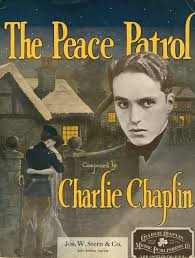
- "Peace Patrol" (1917, his first published composition).
Part IX: The Legacy: The Shadow of the Conductor
Chaplin’s influence on modern film scoring is immense, though often uncredited because his style fell out of fashion during the post-war jazz and atonality booms. However, the return of neo-romanticism in film scoring in the 1980s, led by John Williams, is a return to the Chaplin template. When Williams scored E.T., he was essentially doing Chaplin: large, sweeping, emotional melodies that validate the inner life of a strange, lonely creature. The entire philosophy of the "emotional anchor" score—where the audience is told by the music that something is sad even if the characters don't show it—was perfected by Chaplin.
In popular music, the Chaplin mythos is a constant muse. Beyond the endless covers of "Smile," his image and music have been sampled in hip-hop and electronic music. The themes of loneliness and resilience in his melodies resonate deeply with singer-songwriters. The 1992 biopic Chaplin, directed by Richard Attenborough and starring Robert Downey Jr., relied heavily on the original Chaplin compositions. John Barry’s score for the film cleverly wove Chaplin’s themes into his own, but the centerpiece of the film’s emotional advertising was the Chaplin original "Smile," bridging the man and his myth.
The Charlie Chaplin Archives in Bologna, Italy, are a testament to his compositional mania. The archive contains over 12,000 documents related to his music—scraps of paper with hummed notes scratched in a secret code, annotated conductor sheets smeared with his blue grease pencil, and endless reels of recording sessions where he can be heard screaming, humming, and weeping along with the orchestra. These papers have allowed modern composers like Timothy Brock to restore his scores to their intended glory. Brock, the foremost modern interpreter of Chaplin’s music, conducts live orchestral screenings of Chaplin’s films globally. He notes that Chaplin’s scores are deceptively difficult. "They are written against the orchestra. If a scene drops, the music soars. The syncopation is lethal. It requires a ballet dancer's sense of rhythm, not just a conductor's."
Part X: The Last Cadence
In his final years at the Manoir de Ban in Vevey, Switzerland, music was Chaplin’s primary companion. He would sit at his beloved piano, the same one he’d composed on for decades, and play the old waltzes. He composed new music for the re-release of his older works, a peculiar act of retroactive scoring. He was determined that the Tramp would not be left to the mercy of tinny, out-of-tune theater pianists. He wanted to orchestrate his own memory.
The 1969 re-issue of The Circus is the most poignant of these. The 80-year-old man composing for the 39-year-old man. In the opening credit sequence, Chaplin’s voice, worn thin by age but rich with character, sings "Swing High, Little Girl." It’s a dialogue between the artist at the end of his life and the art that remains eternally young. He died on Christmas Day, 1977. The tramp died, but the music didn't.
Charlie Chaplin couldn't read music, but he spoke it fluently. He composed not for the academy, but for the heart. He knew that a G-string sliding up a half-step could capture the lump in a throat better than a line of dialogue. He knew that the ridiculous movement of a tramp’s mustache was funnier when accompanied by a celeste. In the final analysis, the Little Tramp was never truly silent. He was a conductor without a baton, composing the soundtrack to the human comedy—a suite of waltzes, weeping violins, and laughing bassoons that, a century later, still scores our own falls from grace and our stubborn, defiant smiles.