Table of Contents
The Best of Chopin
THE BEST OF CHOPIN:
00:00 Douze études, Op. 25: No. 1 in A-Flat Major “Aeolian Harp” Giovanni Umberto Battel 02:28 Nocturnes, Op. 27: No. 2 in D-Flat Major, Lento sostenuto Rogerio Tutti 08:25 Nocturnes, Op. 9: No. 2 in E-Flat Major, Andante Giovanni Umberto Battel 13:55 Nocturnes, Op. 9: No. 1 in B-Flat Minor 20:32 Nocturne in C-Sharp Minor, Op. Posth., B. 49 25:15 Nocturne in E Minor, Op. Posth. 72, No. 1 Vadim Chaimovich
30:18 Nocturnes, Op. 27: No. 1 in C-Sharp Minor, Larghetto Rogerio Tutti 35:36 Nocturnes, Op. 48: No. 1 in C Minor, Lento 42:36 Nocturnes, Op. 55: No. 1 in F Minor, Andante 47:42 Nocturnes, Op. 15: No. 2 in F-Sharp Major 51:42 Waltzes, Op. 70: No. 2 in F Minor 54:47 Waltz in E Minor, B. 56 Vadim Chaimovich 57:45 Fantaisie impromptu in C-Sharp Minor, Op. 66 1:03:51 Waltzes, Op. 69: No. 1 in A-Flat Major, Farewell Waltz 1:07:54 Waltzes, Op. 34: No. 2 in A Minor, Grande valse brillante Rogerio Tutti
1:13:23 Mazurkas, Op. 33: No. 4 in B Minor 1:18:44 24 Preludes, Op. 28: No. 4 in E Minor 1:21:03 24 Préludes, Op. 28: No. 15 in D-Flat Major, “Raindrop” Vadim Chaimovich 1:27:37 Berceuse in D-Flat Major, Op. 57 1:33:15 Andante spianato in G Major, Op. 22 Giovanni Umberto Battel 1:38:47 Ballade No. 4 in F Minor, op. 52 Vadim Chaimovich
1:51:35 Études, Op. 10: No. 1 in C Major, “Waterfall” 1:53:41 Études, Op. 10: No. 2 in A Minor, “Chromatique” 1:55:32 Études, Op. 10: No. 3 in E Major, “Tristesse” 1:59:52 Études, Op. 10: No. 4 in C-Sharp Minor, “Torrent” 2:02:02 Études, Op. 10: No. 5 in G-Flat Minor, “Black Keys” 2:03:57 Études, Op. 10: No. 6 in E-Flat Minor, “Lament” 2:07:25 Études, Op. 10: No. 7 in C Major, “Toccata” 2:09:12 Études, Op. 10: No. 8 in F Major, “Sunshine” 2:11:51 Études, Op. 10: No. 9 in F Minor 2:13:54 Études, Op. 10: No. 10 in A-Flat Major 2:16:08 Études, Op. 10: No. 11 in E-Flat Major, “Arpeggio” 2:18:25 Études, Op. 10: No. 12 in C Minor, “Revolutionary” Rogerio Tutti
2:21:19 Grande polonaise brillante in E-Flat Major, Op. 22 2:30:43 Polonaise-fantaisie in A-Flat Major, Op. 61 2:44:47 Piano Sonata No. 2 in B-Flat Minor, Op. 35: I. Grave. Doppio movimento 2:52:54 Piano Sonata No. 2 in B-Flat Minor, Op. 35: II. Scherzo 3:01:00 Piano Sonata No. 2 in B-Flat Minor, Op. 35: III. Marche funèbre. Lento 3:10:41 Piano Sonata No. 2 in B-Flat Minor, Op. 35: IV. Finale Giovanni Umberto Battel
Search the best Chopin’s sheet music, books, and arrangements in the Library.
Search your favorite sheet music in the Sheet Music Library Catalog
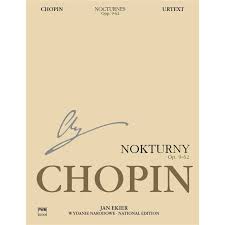
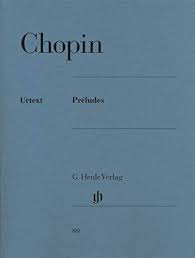
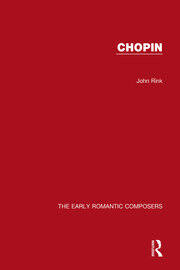
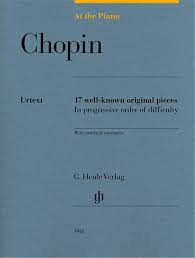
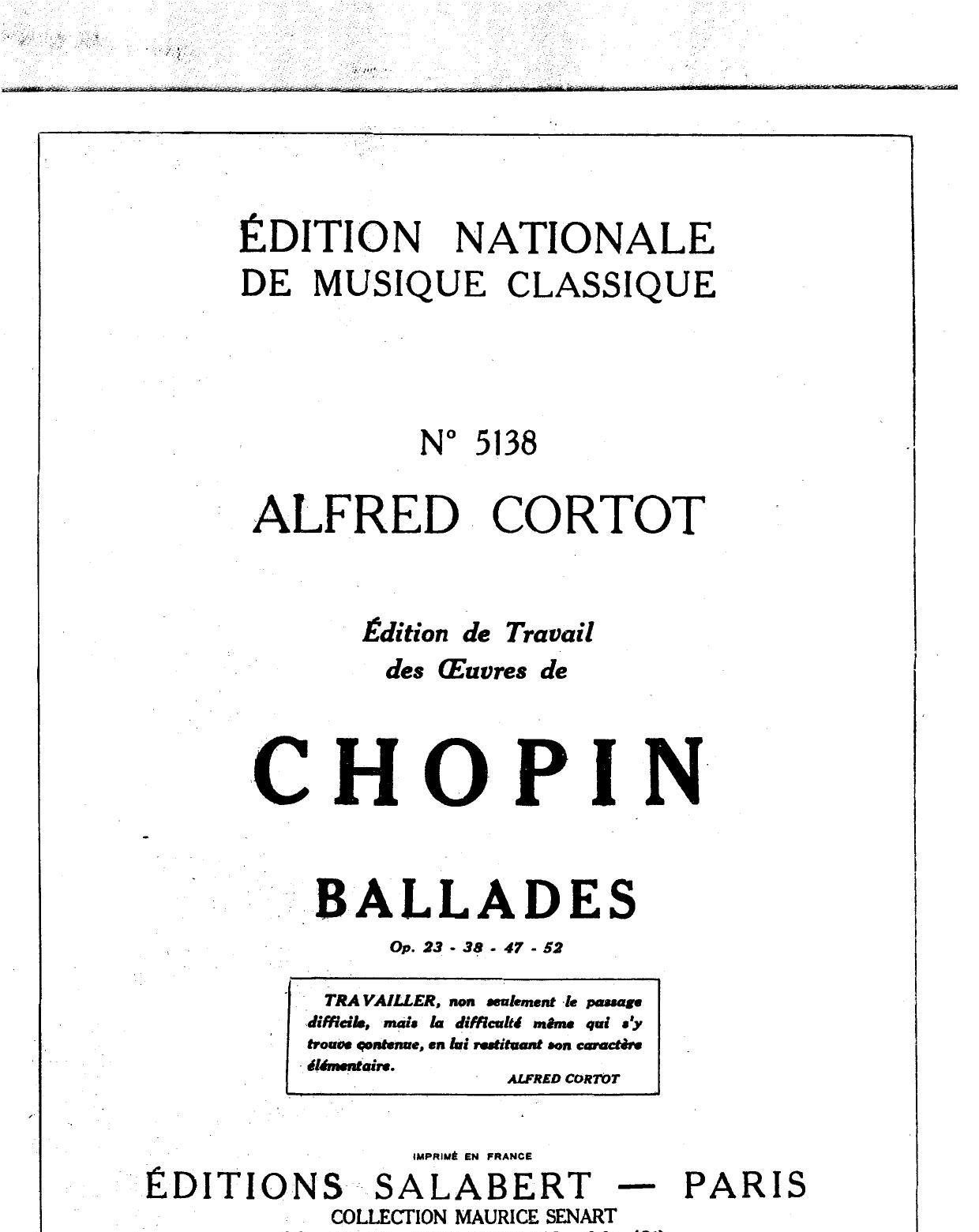
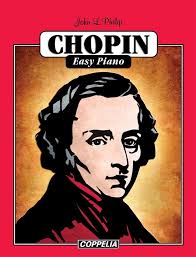


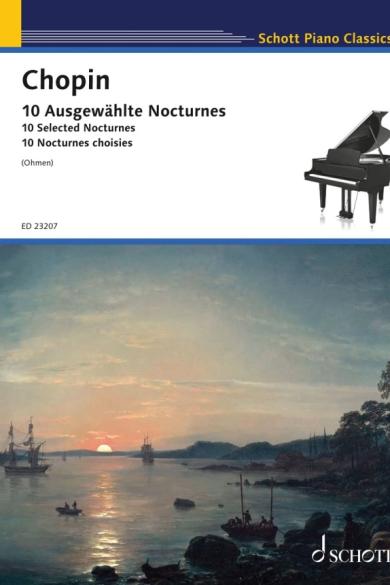
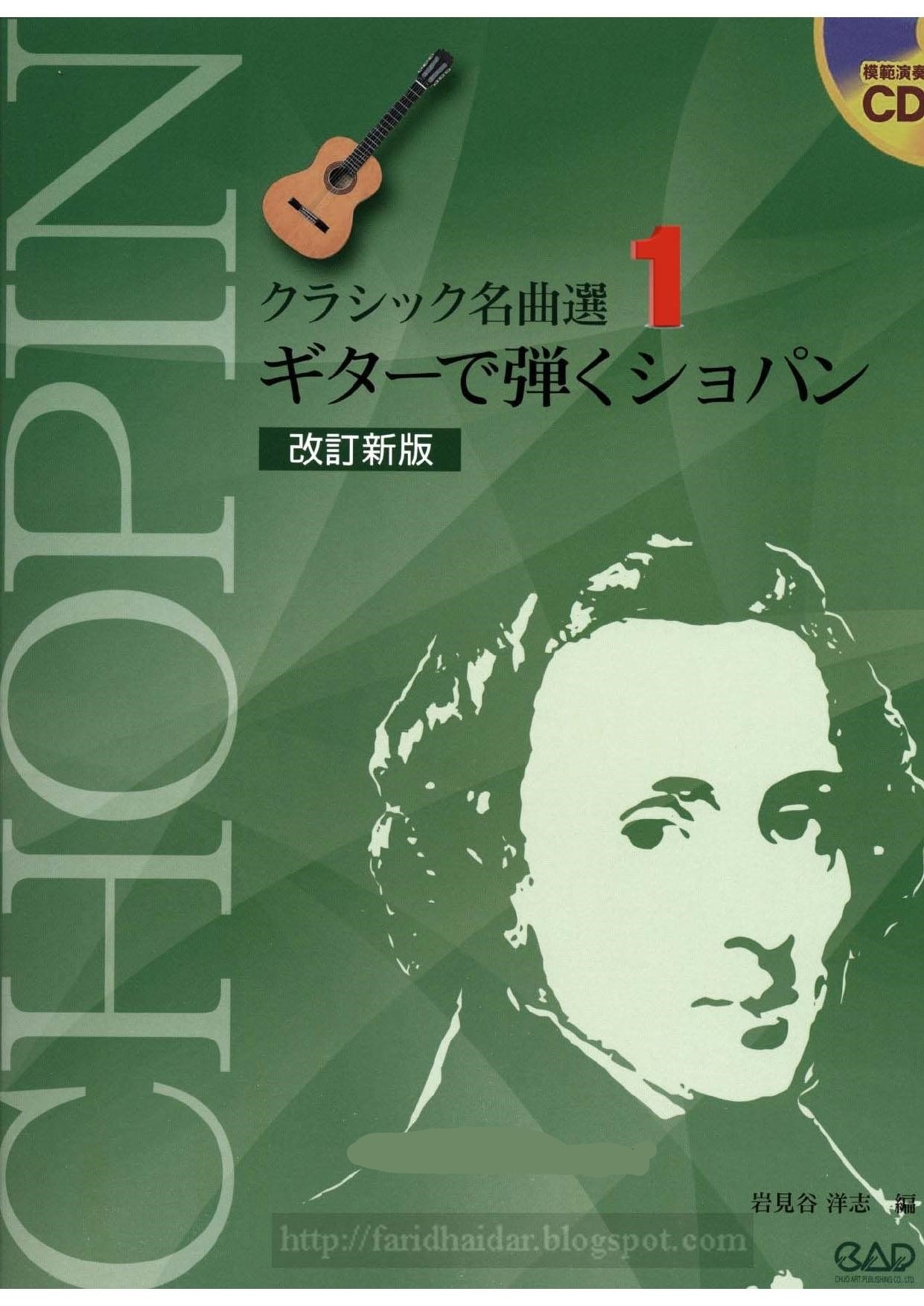
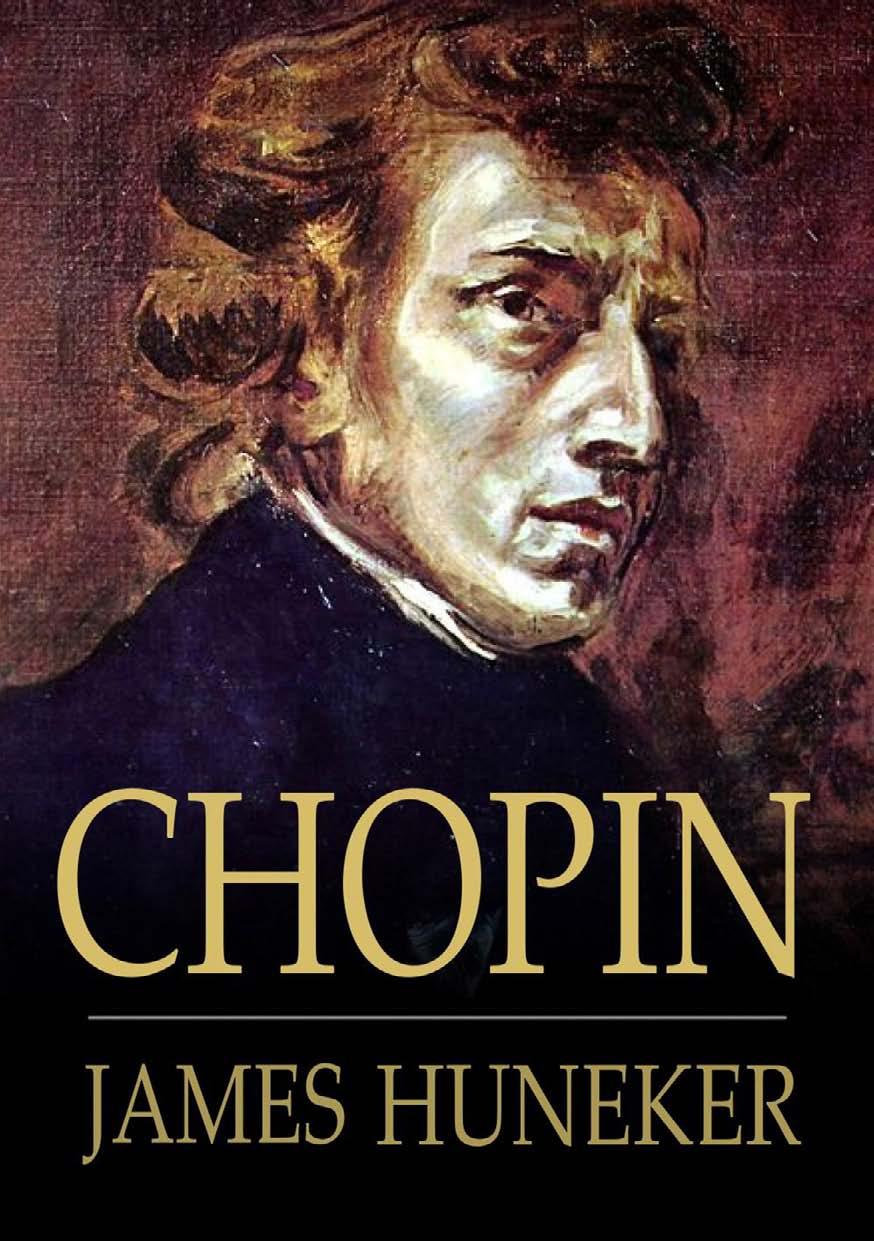

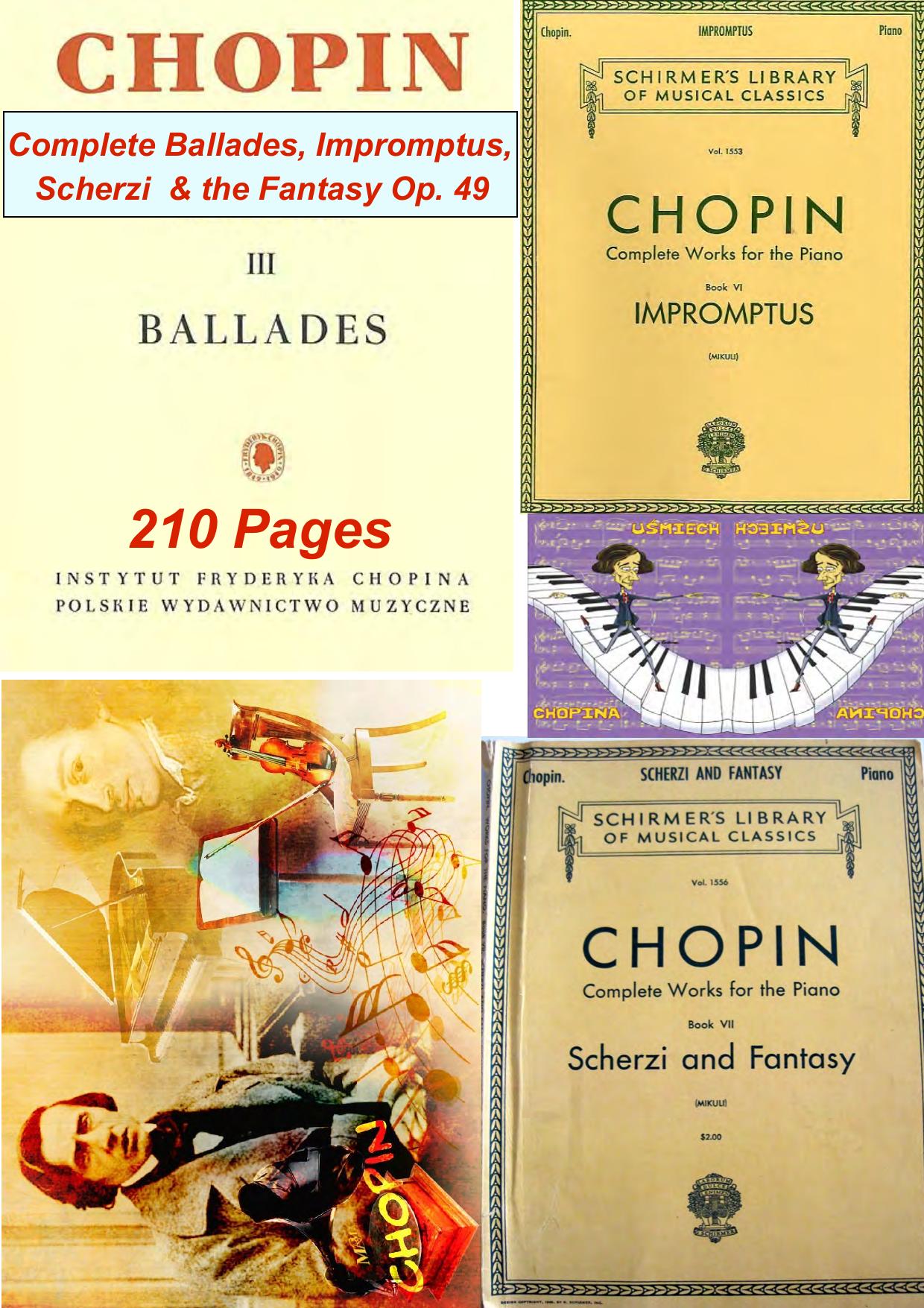
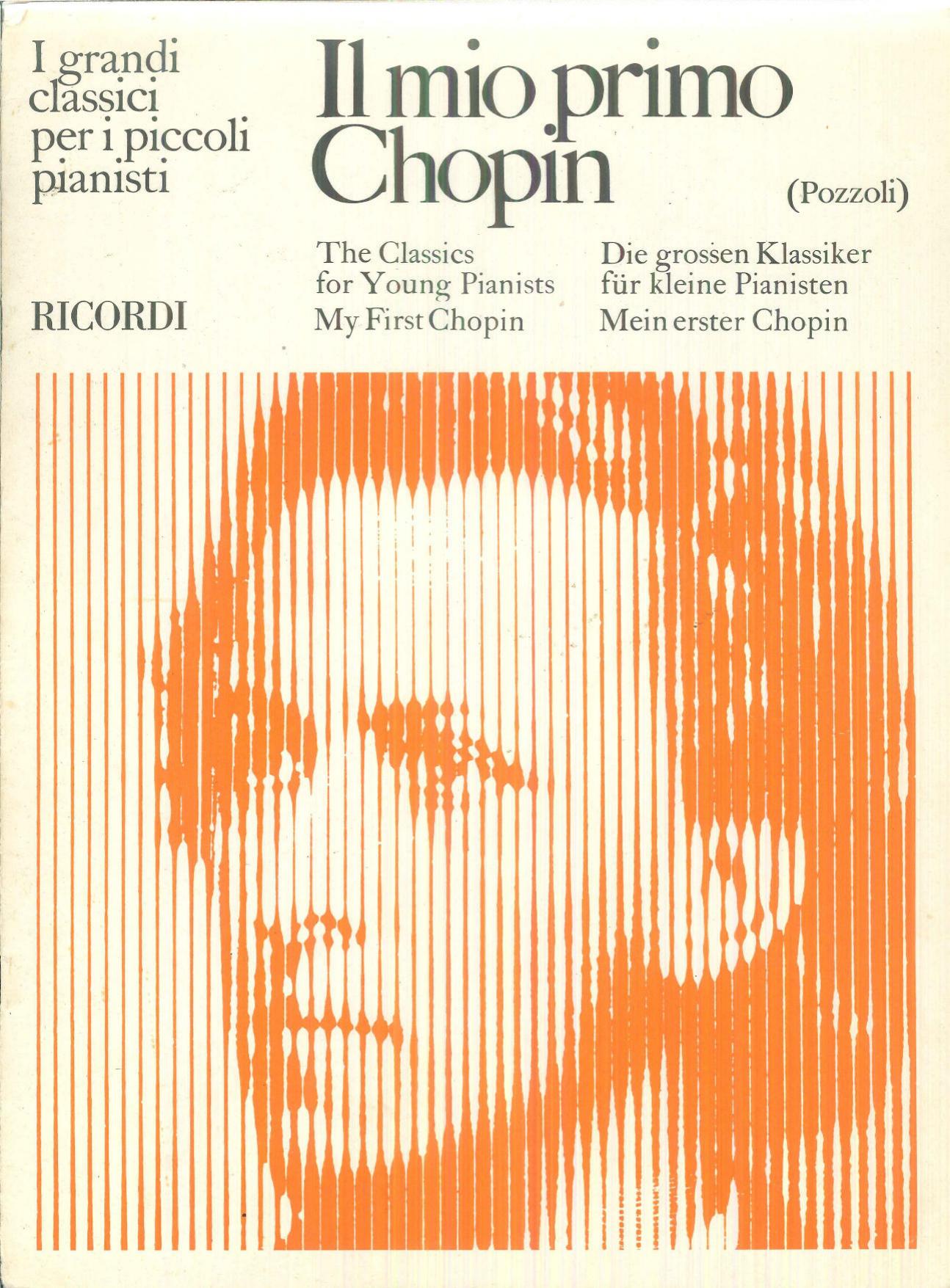
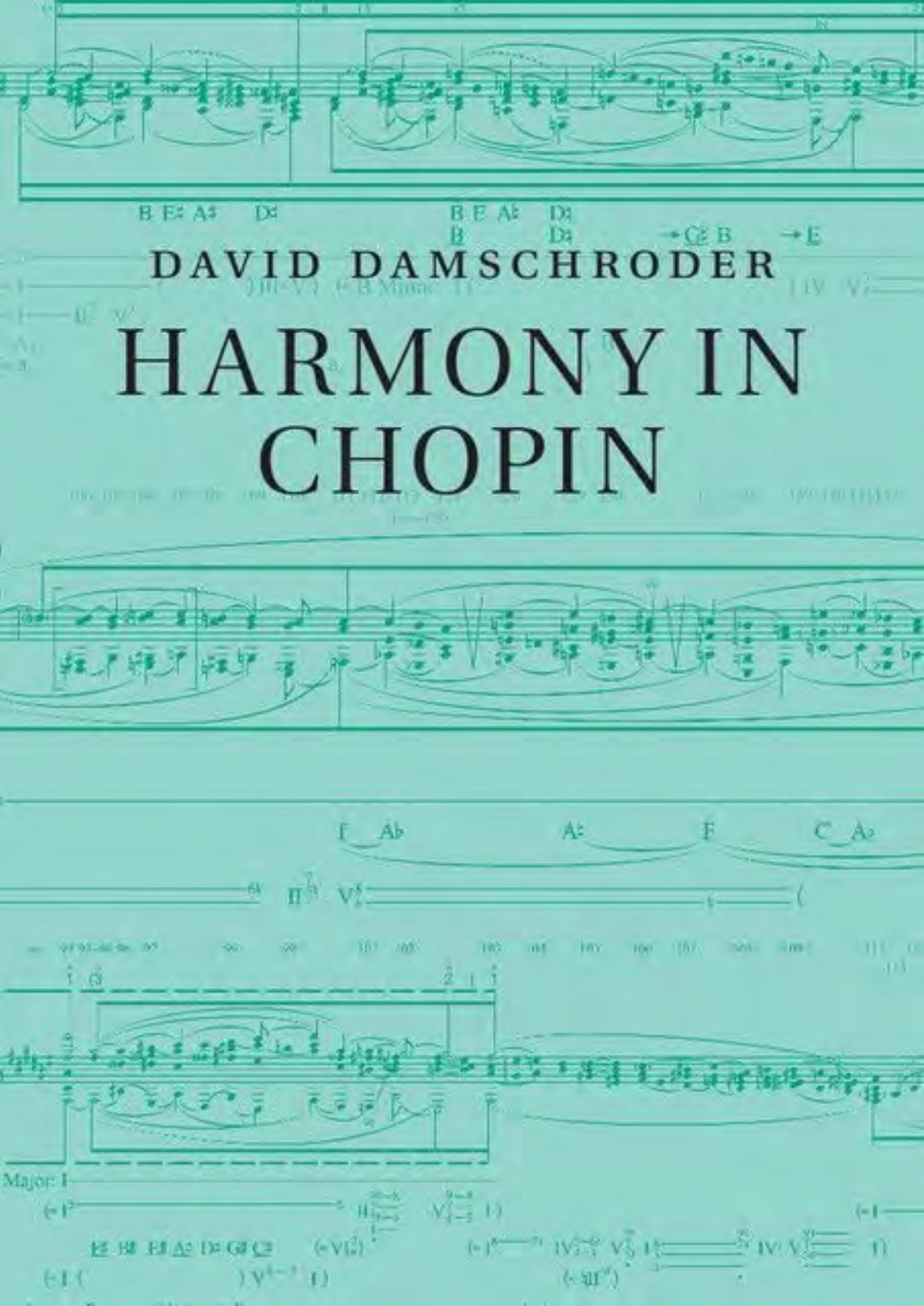
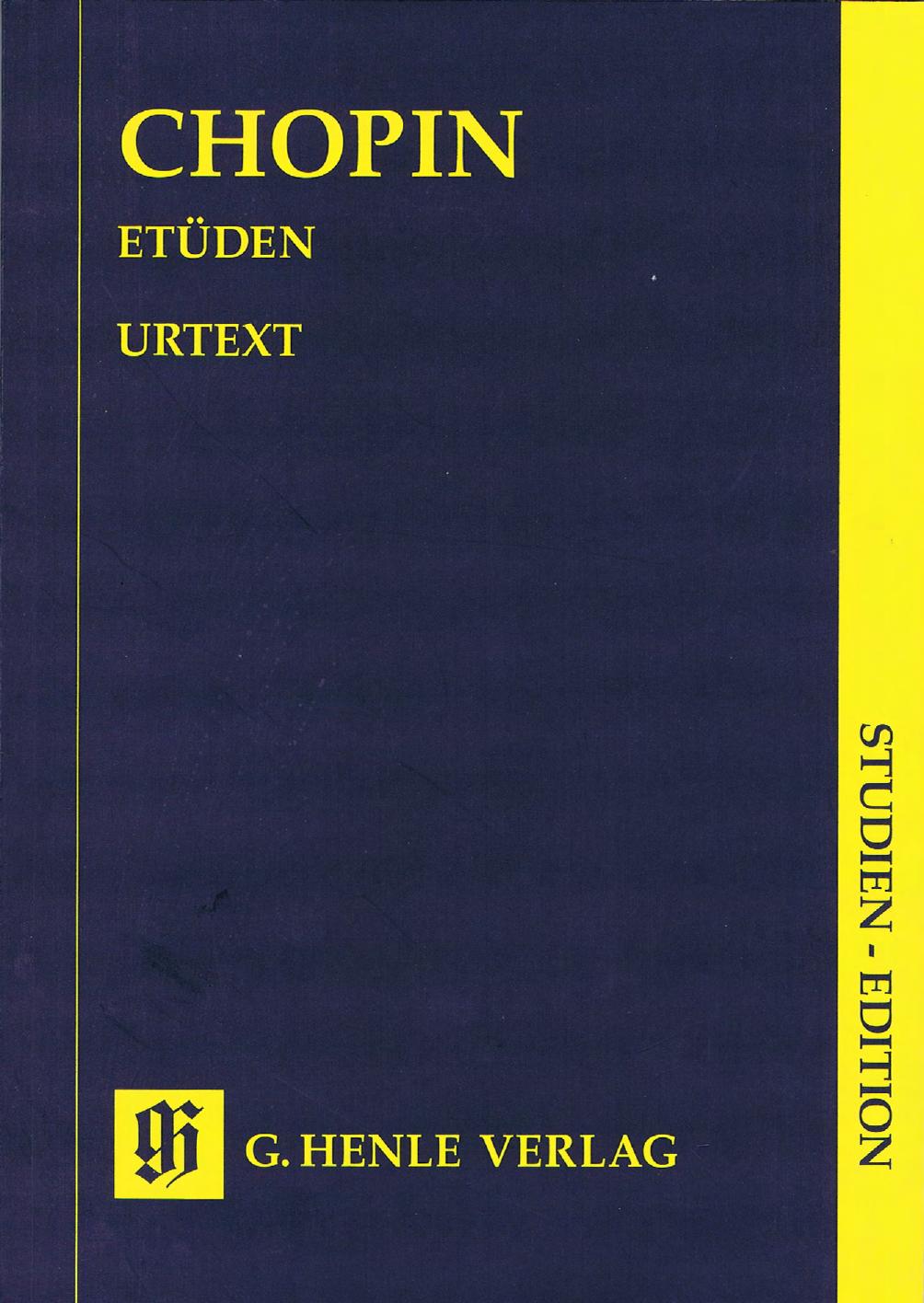
Scores for all instruments: 16,000+ (active and growing), over 236,000 pages.
All genres and levels: Jazz & Blues, Rock & Pop, Classical & Contemporary, Film & Musicals;
books & biographies; methods, études, play-along tracks (MP3) for Jazz & Rock.
Access & benefits: US$15.99 one-time payment, valid for lifetime, full Library access.
Please, subscribe to our Sheet Music Library. Sheet music should be accessible and affordable for all musicians, from professionals to absolute beginners.
Who was Chopin (1810-1849)?

Frédéric Chopin (1810–1849) is one of classical music's most beloved and enigmatic figures. He was a composer who lived for the piano and tragically died young, leaving behind a body of work that redefined the expressive boundaries of a single instrument. He was not merely a composer, but a tone poet who could capture the full spectrum of human emotion—from the dazzling brilliance of a Parisian ballroom to the deep, aching nostalgia for his native Poland. His unique style, combining unprecedented harmonic daring with an almost vocal lyricism, forever changed the course of piano music.
A Prodigy's Dawn in Warsaw
Frédéric François Chopin (or Fryderyk Franciszek Chopin, as he is known in his native Poland) was born on March 1, 1810, in the village of Żelazowa Wola, about thirty miles west of Warsaw. His father, Nicholas, was a French émigré who worked as a tutor to aristocratic families, and his mother, Tekla Justyna Krzyżanowska, was a cultured Polish woman who introduced the young Frédéric to music and the piano. By the age of six, he was already trying to reproduce what he heard and create new tunes, revealing a precocious musical instinct.
Formal lessons soon began. Chopin's first teacher was the 61-year-old Wojciech Żywny, a violinist and all-around musician who provided a simple but astute instruction. Żywny quickly recognized that his pupil had outgrown him and wisely allowed the boy's original approach to the piano to develop unhindered by strict academic rules. Chopin's talent blossomed with extraordinary speed. At seven, he wrote his first composition, a Polonaise in G minor, which was printed and soon became a local sensation. By the age of eight, he was performing at charity concerts, and at eleven, he played for Tsar Alexander I in Warsaw.
After six years of tutelage, Żywny declared he could teach his prodigy no more. Chopin then continued his musical education in theory and composition with Józef Elsner, a learned musician and the director of the Warsaw Conservatory. The young composer spent his holidays visiting the estates of his friends' families across Poland, immersing himself in the country's cultural riches and, most importantly, its folk music, which would prove to be a lifelong source of inspiration.
Chopin officially enrolled at the Main School of Music at Warsaw University in 1826, graduating three years later with the assessment "extraordinary aptitude, a musical genius". In 1829, he made a successful debut in Vienna, and upon his return, began work on his two piano concertos. His first trip to Vienna in 1829 was a resounding success, winning over the public and earning a review from the young Robert Schumann that ended with the prophetic phrase, "Hats off, gentlemen, a genius".
The best sheet music download from our Library.
The Great Emigration and Life in Paris
In November 1830, just weeks after leaving Poland for a planned concert tour, Chopin learned of the outbreak of the November Uprising against Russian rule. Heartbroken and unable to return, he became an unwilling émigré, part of Poland's "Great Emigration." After a brief and dispiriting stay in Vienna, he arrived in Paris in the autumn of 1831, just as the uprising was crushed, an event that brought on a nervous breakdown and solidified his resolve to start a new life abroad.
His early months in Paris were difficult, but Chopin's breakthrough came on February 26, 1832, with his highly anticipated debut at the Salle Pleyel. The concert was a triumph, immediately establishing his name in the pianistic pantheon. Chopin was soon swept up into the glittering social and musical life of the French capital. He became a sought-after teacher for the aristocracy, supporting himself by selling his compositions and giving piano lessons. Unlike the extroverted showmanship of his contemporary Franz Liszt, Chopin gave only about 30 public performances in his remaining 19 years, preferring the more refined and intimate atmosphere of the private salon. There, he was at his most powerful, improvising for small, invited audiences of the elite.
He also forged close friendships with the leading artists of the day, including Liszt, the composer Hector Berlioz, the poet Heinrich Heine, and the painter Eugène Delacroix. He became a member of an exclusive world where he could pursue his art on his own terms.
The Tempestuous Love with George Sand
In 1836, Chopin was introduced to the formidable French writer Amantine Dupin, better known by her masculine pen name, George Sand. Sand was a controversial figure in Parisian society, known for her progressive novels, her men's clothing, and her open defiance of social convention. Their relationship, which began in earnest in 1838, was one of the most famous and complex love stories in musical history. Sand gave Chopin the domestic stability he needed to compose and cared for him as his health, long plagued by what was likely tuberculosis, began to fail.
The most famous episode of their nine-year relationship was a disastrous winter trip to the island of Majorca in 1838–39. Sand had planned the trip as a romantic escape to warm Mediterranean sunshine, hoping it would improve Chopin's fragile health. Instead, they found themselves living in a cold, damp, abandoned monastery in Valldemosa. The locals became hostile when they suspected Chopin had a contagious disease, and Sand was forced to make nightmare journeys to the mainland for supplies. Despite the ordeal, it was during this "holiday from hell" that Chopin completed his famous set of 24 Preludes, Op. 28, although it became one of the most unproductive periods of his life. The couple returned to Paris embittered, and their fraught relationship finally ended in 1847.
A Musical World Entirely His Own: Style and Innovation
Chopin's compositional output is astonishingly focused: virtually everything he wrote was for the piano. He took existing genres and either transformed them beyond recognition or invented entirely new ones. His style is characterized by a perfect storm of innovation, making his music instantly recognizable.
Melody and the Bel Canto Influence: Perhaps his most revolutionary idea was to make the piano sing. He was profoundly influenced by the bel canto (beautiful singing) style of Italian opera, particularly the music of Vincenzo Bellini. His melodies are not simply sequences of notes; they are long, lyrical vocal lines, filled with subtle embellishments, sighs, and dramatic rises and falls, designed to be caressed with a pianist's touch.
Harmonic Language: Chopin expanded the harmonic language of music more than almost any composer before Wagner. He ventured far beyond the simple major and minor chords of his predecessors, weaving in daring chromaticism, sudden modulations to distant keys, and complex, often dissonant, chord progressions to create unique and emotionally charged tonal landscapes. His harmonies are never abstract exercises; they are always in service of a profound emotional expression, creating moments of surprising beauty, aching suspense, or dramatic conflict.
Rubato and Rhythmic Freedom: Chopin was a pioneer of tempo rubato, a flexible approach to rhythm where the right hand (carrying the melody) might wander expressively while the left hand (providing the accompaniment) maintains a stricter tempo. He was one of the first composers to use the actual word rubato as a performance direction, making it an explicit part of his musical language. This creates an effect of spontaneous, improvisatory freedom, as if the music is being dreamed up on the spot—a hallmark of his style.
Polish Rhythms and Nationalism: Chopin never forgot his homeland. He is the Polish composer par excellence, not by using folk tunes directly, but by distilling the very essence of Polish dance rhythms into his art. His Mazurkas (over 50 of them) are not dance-hall pieces; they are poetic, introspective, and often melancholy meditations on the traditional folk dance, full of surprising harmonies and asymmetrical rhythms. His Polonaises, by contrast, are grand, heroic, and often militaristic, evoking the proud spirit of an idealized, noble Poland. The most famous, the "Heroic" Polonaise in A-flat major, Op. 53, is a tour-de-force of raw, defiant power.
Genres Transformed:
- Nocturne: While the Irish composer John Field invented the nocturne genre, Chopin took it to undreamed-of heights of sophistication. These "night pieces" are exquisitely lyrical, with a right-hand melody that soars and weeps over a left-hand accompaniment of broken chords and arpeggios. The most famous, the Nocturne in E-flat major, Op. 9, No. 2, remains a beloved entry point into his world.
- Étude: Before Chopin, études were often dry, mechanical exercises. Chopin transformed them into miniature tone poems that are as demanding of the pianist's artistic soul as they are of their technique. Each of his 24 Études (Opp. 10 and 25) not only isolates a specific technical problem (like playing in thirds, chromatic scales, or rapid arpeggios) but also creates a powerful, unified artistic statement.
- Ballade: Chopin is credited with inventing the instrumental ballade, a form of one-movement "storytelling" without words, filled with dramatic contrast, narrative tension, and an epic, often pyrotechnical conclusion. His four ballades, especially the famous Ballade No. 1 in G minor, are cornerstones of the piano repertoire.
Final Days and Immortal Legacy
Chopin’s last years were marked by a steep decline in his health. The final rupture with George Sand in 1847 devastated him. His last public concert took place in February 1848, and that summer he traveled to England and Scotland, a taxing journey that further weakened him. He returned to Paris in near-destitute condition.
Frédéric Chopin died on the morning of October 17, 1849, at his apartment in the Place Vendôme. He was only 39 years old. At his own request, Mozart's Requiem was sung at his funeral at the Church of the Madeleine. Chopin’s body was buried at the Père Lachaise Cemetery in Paris, but his sister Ludwika smuggled his heart back to Warsaw, where it was sealed in a pillar at the Church of the Holy Cross, fulfilling his deepest wish to return to Poland in spirit.
Chopin’s influence on composers who followed is nothing short of monumental. In Russia, Sergei Rachmaninoff and Alexander Scriabin were steeped in his musical language, his harmonic daring and virtuosic figurations echoing throughout their own works. In France, Claude Debussy and Maurice Ravel revered his sensitivity to sonority and his ability to create an entire world of impressionist color within a single piano piece. He is a foundational pillar of the Romantic piano, a composer whose music continues to cast a spell on millions around the world.
A Discography of the Poet (Selective)
There are countless recordings of Chopin's music, but a few cycles stand as landmarks:
- Arthur Rubinstein (RCA Victor): The definitive, aristocratic, and warm-hearted survey of almost the complete works. Rubinstein's Chopin is life-affirming and masterfully polished.
- Krystian Zimerman (Deutsche Grammophon): Modern recordings of staggering clarity, intelligence, and pianistic perfection, often performed on period instruments. His recordings of the concertos and ballades are legendary.
- Maurizio Pollini (Deutsche Grammophon): Known for his intellectual, often austere, and breathtakingly precise interpretations, especially of the Études.
- Martha Argerich (Various): Recordings of blistering, white-hot intensity and spontaneous passion. Her live recordings of the Preludes and Sonatas are electrifying.
- Complete Works Box Sets: Complete boxes include the 17-CD set from Brilliant Classics, the Deutsche Grammophon complete edition combining their finest recordings, and the acclaimed Ian Hobson complete cycle.
Documentaries: The Man on Film
- Chopin: The Women Behind the Music (BBC, 2010): A documentary presented by pianist James Rhodes, exploring the significant female influences in Chopin's life and art as part of his 200th-anniversary celebrations.
- The Life and Work of Frederic Chopin (Academy Media, 2011): A standard biography that traces his short life and provides an overview of his musical works.
- Chopin Saved My Life (BBC, 2012): An emotional documentary exploring the powerful and transformative effect of Chopin's Ballade No. 1 on two ordinary people.
- Frederic Chopin and George Sand (Ciné Qua Non Films): A semi-documentary that uses dancers and actors to dramatize the composer's tumultuous romantic relationship with the writer George Sand, structured around a performance of his Cello Sonata.
Further Reading
For those who wish to delve deeper, several authoritative biographies are available:
- Fryderyk Chopin: A Life and Times by Alan Walker: The most comprehensive modern biography, updated with new scholarly findings.
- Chopin: Prince of the Romantics by Adam Zamoyski: A definitive, insightful, and highly readable account by a distinguished historian.
- Chopin: The Man and His Music by Herbert Weinstock: A classic study that combines a full-length biography with a history and analysis of every known surviving composition.
Frédéric Chopin was a unique artist. In a period defined by massive orchestras and grandiose gestures, he turned inward, finding an entire universe of expression within the eighty-eight keys of a single piano. His music remains timeless because it speaks directly to the heart—not with the voice of an era, but with the eternal, whispering voice of a true poet.
The best sheet music download from our Library.
Browse in the Sheet Music Library:
Or browse in the categories menus & download the Library Catalog PDF: