Table of Contents
Aaron Copland “Piano Concerto Jazz Concerto”
Piano Concerto Jazz Concerto 1. Andante sostenuto (0:00) 2. Molto moderato – Allegro assai (6:29) Earl Wild, piano. Symphony of the Air. Aaron Copland, conductor.
Search the best Copland’s sheet music, books, and arrangements in the Library.
Search your favorite sheet music in the Sheet Music Library Catalog
Scores for all instruments: 16,000+ (active and growing), over 236,000 pages.
All genres and levels: Jazz & Blues, Rock & Pop, Classical & Contemporary, Film & Musicals;
books & biographies; methods, études, play-along tracks (MP3) for Jazz & Rock.
Access & benefits: US$15.99 one-time payment, valid for lifetime, full Library access.
Please, subscribe to our Sheet Music Library. Sheet music should be accessible and affordable for all musicians, from professionals to absolute beginners.
Who was Aaron Copland (1900-1990)?
The best sheet music download from our Library.
Please, subscribe to our Sheet Music Library. Sheet music should be accessible and affordable for all musicians, from professionals to absolute beginners.
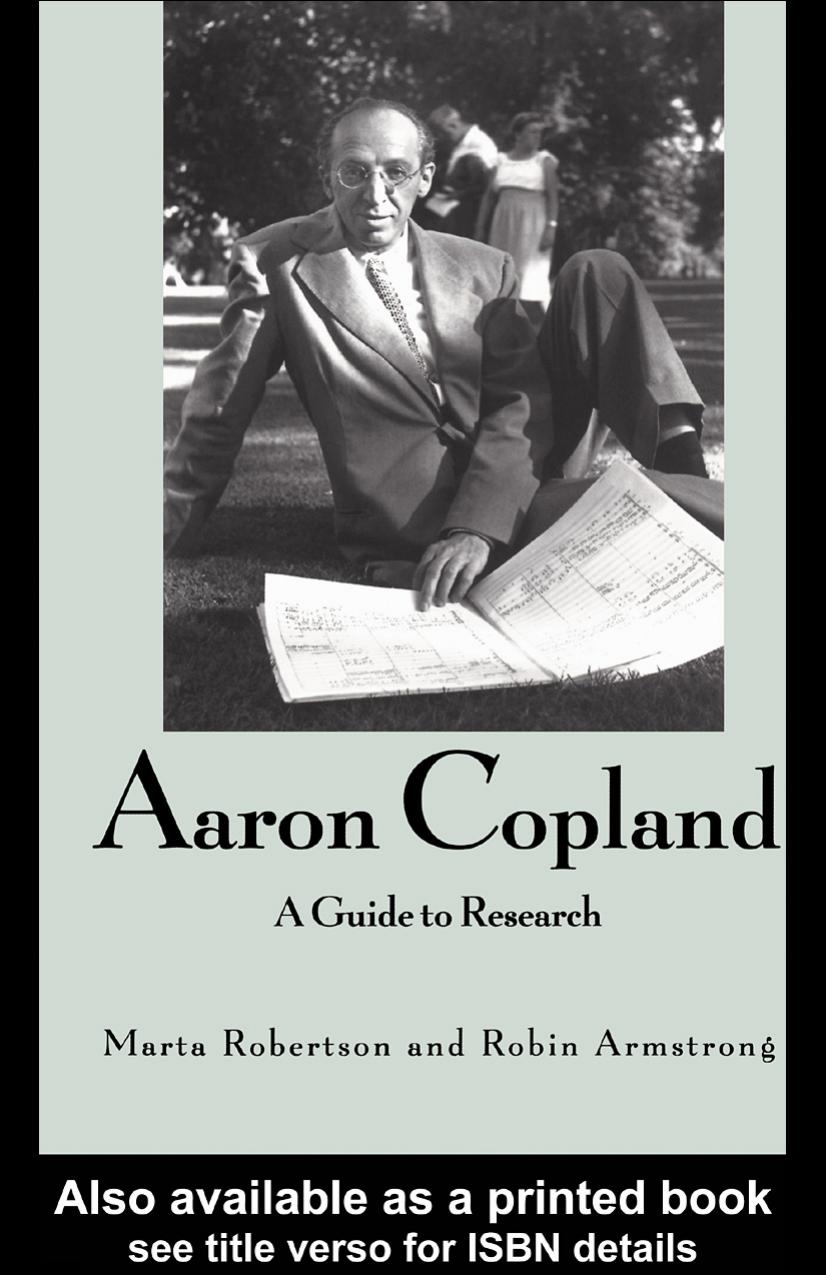
Aaron Copland (1900–1990) is often called the “Dean of American Composers,” and for good reason. Over a career that spanned nearly seven decades, he forged a musical language that seemed to embody the vast landscapes, democratic ideals, and unassuming directness of the United States. Yet behind the wide-open sonorities of Appalachian Spring or the sturdy brass of Fanfare for the Common Man lies a much more complex figure: a modernist, a serialist, a conductor, a writer, and a teacher whose influence shaped generations.
Biography: The Making of an American Voice
Brooklyn Beginnings and Parisian Awakening
Copland was born on 14 November 1900 in Brooklyn, New York, the youngest of five children in a Jewish family of Lithuanian and Russian heritage. His parents owned a modest department store, and music, though present, was not a central pursuit. Yet by his early teens, Copland had decided to become a composer, taking harmony and counterpoint lessons with Rubin Goldmark, a conservative teacher who insisted on Germanic models.
In 1921, Copland travelled to France to attend the newly founded American Conservatory at Fontainebleau. There he encountered Nadia Boulanger, the legendary pedagogue who became his most important mentor. Boulanger not only drilled him in rigorous analysis and orchestration but also opened his ears to Stravinsky, Fauré, and the notion that an American composer could find a distinct voice. It was for Boulanger that he wrote his first major work, the Symphony for Organ and Orchestra (1924), a piece that already mixed jazz rhythms with dissonant harmony, startling audiences on both sides of the Atlantic.


The Modernist Firebrand
Returning to the United States in the mid‑1920s, Copland threw himself into the promotion of new music. He co‑founded the Copland‑Sessions Concerts, helped organise the League of Composers, and wrote with a combative, forward‑looking edge. Works like the Piano Concerto (1926) and the Piano Variations (1930) are lean, percussive, and angular — a deliberate break from European Romanticism. Audiences often found them harsh. The Piano Variations, in particular, is a granite‑hard masterpiece that signals a composer unwilling to compromise.
The Populist Turn and War Years
The Great Depression and the rise of fascism pushed Copland, like many artists, toward a more accessible idiom. He wished to speak to a broad public without sacrificing craft. This “populist” period yielded the works for which he is most beloved. Drawing on cowboy songs, Latin American dance, Shaker melodies, and American folk traditions, he created ballets that mythologised the nation’s frontier: Billy the Kid (1938), Rodeo (1942), and Appalachian Spring (1944, Pulitzer Prize). Lincoln Portrait (1942), with its spoken text, became a wartime morale‑booster, while Fanfare for the Common Man (1942) distilled his heroic style into three minutes of brass and percussion.
Copland also scored films for Hollywood — Of Mice and Men (1939), Our Town (1940), The Red Pony (1948), and The Heiress (1949, Academy Award) — bringing his trademark economy and emotional restraint to the screen.
Late Experiments and the Elder Statesman
By the 1950s, Copland had grown restless with the populist manner. He began to incorporate Schoenbergian twelve‑tone techniques, though he did so with his own lyrical twist. The Piano Quartet (1950), Connotations (1962), and Inscape (1967) are serial works that still breathe with Copland’s distinctive air. For some, these pieces represent a second summit; for others, a retreat into abstraction.
After the 1970s, Copland composed almost nothing new, but his activity as a conductor — especially of his own music — flourished. He toured the world, making dozens of recordings and receiving honorary degrees and medals, including the Presidential Medal of Freedom and a Congressional Gold Medal. Copland died on 2 December 1990 in Peekskill, New York, leaving behind a legacy that, in critic Harold Schonberg’s words, was “what America sounds like.”
Musical Style: The Copland Sound
Copland’s style is not a monolith; it evolved dramatically. But certain fingerprints reappear across all his periods.
Harmony: Open, Quartal, and Bimodal
Above all, Copland’s harmony is defined by sparse textures and open intervals. Instead of dense tertian chords, he favoured quartal and quintal harmonies — stacks of perfect fourths and fifths. This creates the “wide‑open spaces” effect so often called “Coplandesque.” He also employed bimodality, superimposing two different triads or modes to suggest ambiguity and breadth. Listen to the beginning of Appalachian Spring, where a simple A major triad is gently rocked against a pedal note, instantly evoking dawn over a prairie.
Melody: Angular Yet Singable
Copland’s melodies can be of two types: the sharp, disjunct lines of his modernist works (full of tritones and wide leaps), and the folk‑inspired, stepwise tunes of his populist pieces. In the latter, he frequently borrowed or imitated American folk songs. The use of “Simple Gifts” in Appalachian Spring is his most famous borrowing, but he also quoted cowboy tunes like “Goodbye, Old Paint” and “Git Along, Little Dogies.” His own original melodies — such as the opening of Rodeo — often sound so authentic that listeners assume they are traditional.
Rhythm: Jazz, Syncopation, and Changing Metres
Copland’s early fascination with jazz left a permanent mark. The Piano Concerto and Music for the Theatre (1925) bristle with syncopations, blue notes, and a brash urban energy. Even his later “Americana” works use polyrhythms and irregular phrase lengths that owe a debt to jazz as well as to Stravinsky. El Salón México (1936) draws on Mexican folk rhythms, while the Danzón Cubano (1942) offers a Latin‑flavoured rhythmic complexity. Note too his fondness for abruptly shifting metre — a bar of 5/8 suddenly appearing in a 4/4 context — which keeps the music nervously alive.
Orchestration: Clarity and Transparency
Copland’s orchestration is the opposite of the lush late‑Romantic soup. He separates choirs of instruments, often reducing the ensemble to chamber‑like subgroups. The result is a remarkable transparency. In Billy the Kid, the percussion alone — woodblock, snare drum, bass drum — paints the gunfight with cinematic precision. The brass writing in Fanfare for the Common Man has become iconic: not because it is loud, but because the spacing of the intervals makes the chords ring like a great bell.
Copland’s Vocabulary in the Hands of Players
Aaron Copland was not an improviser. Unlike his contemporary Duke Ellington or his friend Leonard Bernstein, he did not spontaneously create at the keyboard for an audience. Yet the question of “improvisation licks” connected to Copland is a fascinating one, approached from three angles.
1. Copland’s Own “Licks”: Characteristic Gestures
In the language of jazz musicians, a “lick” is a short, reusable melodic phrase. Copland’s music is full of such gestures that have been extracted, imitated, and internalised by improvisers. Among the most common are:
- The Rising Fourth‑Fifth Motif: A melody that leaps up a perfect fourth, then a perfect fifth, suggesting open country. You hear it at the start of Billy the Kid and countless film soundtracks thereafter. It is the core of the “Copland‑sound” lick.
- The “Pastoral” Pentatonic Turn: A simple pentatonic line, often in the strings or flute, that moves stepwise and returns on itself — the quiet “morning music” from Appalachian Spring is the archetype.
- Syncopated Horn Riffs: In his jazz‑influenced works, Copland writes accented off‑beats for brass that have the swagger of a big‑band shout chorus. The Piano Concerto’s first movement is a goldmine of these phrases.
- Fanfare Figures: The opening of Fanfare for the Common Man — that upward leap followed by a descending scale — has become a lick that jazz players quote, either explicitly or in spirit, as a nod to heroism.
2. Jazz and the Copland Repertoire
Although Copland did not write for jazz combos, his concert pieces have been reinterpreted by jazz artists. The Clarinet Concerto (1948), written for Benny Goodman, occupies a special place. Composed as a seamless two‑movement work (a languid, lyrical first section joined by a cadenza to a swinging, rhythmically exuberant second), it explicitly invites a jazz‑inflected freedom. Goodman, for whom the concerto was tailor‑made, played it with a dancing, almost klezmer‑like lilt. Many clarinettists today treat the cadenza as a space for modest improvisation, embellishing the written lines with slides and quasi‑jazz ornaments.
In the broader improvisation world, Copland’s harmonic world — steeped in open fourths, mixed modes, and static pedal points — provides a ready canvas. Pianists and guitarists often use “Copland changes” as a backdrop for modal improvisation: a bass pedal, a slowly shifting quartal voicing on top, and free melody in the right hand. Guitarist Bill Frisell’s Americana‑tinged albums, for instance, do not quote Copland directly but breathe the same wide‑open sonorities that Copland pioneered. Saxophonist John Zorn has also cited Copland’s stark, spacious textures as an influence on his own extended‑form compositions.
3. The Piano Concerto’s “Jazz” Improvisation Myth
The Piano Concerto (1926) is often called a “jazz concerto,” and indeed its second movement, marked Molto moderato but with an increasingly boisterous, ragtime‑like character, sounds like a stride pianist duking it out with a pit orchestra. While Copland notated every note, the feel is so authentically improvisatory that performers must inhabit a looser, rubato‑driven swing to make the music convincing. For decades, classical pianists have had to learn to “fake” a jazz improvisation style in this movement, borrowing phrasing, articulation, and even note‑bending tricks from early jazz players. In this sense, Copland’s score contains an implicit improvisation lesson.
Cooperation with Other Musicians
Copland’s collaborative spirit was essential to his career. He believed music was a social act and placed himself amid a network of dancers, poets, conductors, and performers.
- Nadia Boulanger: More than a teacher, she was a lifelong mentor and friend. Copland’s organ symphony was written for her, and he later conducted it with her as soloist. Their correspondence shows a deep intellectual bond.
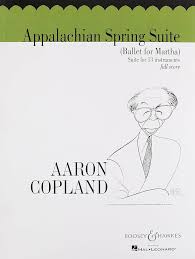
- Martha Graham: The choreographer commissioned Appalachian Spring, originally titled Ballet for Martha, and their collaboration became one of the defining artistic partnerships of the 20th century. Copland famously wrote the music without knowing the title; Graham later gave it its evocative name.
- Agnes de Mille: The choreographer of Rodeo worked closely with Copland on the scenario and timing. De Mille’s flair for storytelling and Copland’s cinematic pacing resulted in a ballet that feels both theatrical and symphonic.
- Benny Goodman: The “King of Swing” commissioned the Clarinet Concerto, though he allowed Copland free rein. Goodman’s premiering of the work with the NBC Symphony (led by Fritz Reiner) was a huge success, and Goodman continued to champion it.
- Leonard Bernstein: Perhaps Copland’s most famous friendship. Bernstein considered Copland a father figure and played, conducted, and recorded his music with fierce loyalty. It was under Bernstein’s baton that many Copland works entered the standard repertoire. Their correspondence is filled with warmth, gossip, and artistic passion.
- Samuel Barber, Virgil Thomson, Roy Harris, and others: Copland was a central node in the “commando squad” of American composers. He programmed their works, performed them, wrote about them, and provided encouragement and practical advice. His quiet advocacy helped establish a distinctly American school of concert music.
- Film Directors: Lewis Milestone (Of Mice and Men), William Wyler (The Heiress), Sam Wood (Our Town), and others found in Copland a composer who understood cinematic narrative. His scores often function as silent storytelling, using sparse orchestration to mirror the emotional isolation of characters.
Most Famous Works: An Essential Copland Catalogue
Ballets
- Billy the Kid (1938) – Suite includes “Street in a Frontier Town” and the gripping gunfight sequence.
- Rodeo (1942) – The “Hoe‑Down” from Rodeo is one of the most recognizable pieces in all of classical music, famously used in the “Beef: It’s What’s for Dinner” commercials.
- Appalachian Spring (1944) – Originally for thirteen instruments, later arranged for full orchestra. The theme and variations on “Simple Gifts” form its climax.
Orchestral Works
- El Salón México (1936) – A lively travelogue inspired by a Mexican dance hall, full of vernacular tunes and crackling rhythm.
- Fanfare for the Common Man (1942) – Part of a series of wartime fanfares; a brief, devastatingly noble brass and percussion call.
- Lincoln Portrait (1942) – For speaker and orchestra, blending excerpts from Lincoln’s speeches with Copland’s music. Narrated by figures from Barack Obama to Gregory Peck.
Concertos
- Piano Concerto (1926) – A two‑movement jazz‑tinged powerhouse.
- Clarinet Concerto (1948) – Written for Benny Goodman; gracefully bridges classical and jazz.
Film Scores
- Of Mice and Men (1939) – Quiet, empathetic music reflecting the California landscape.
- Our Town (1940) – An almost hymn‑like simplicity.
- The Red Pony (1948) – A pastoral suite for the Steinbeck adaptation.
- The Heiress (1949) – Won the Academy Award for Best Score.
Chamber and Piano Works
- Piano Variations (1930) – A severe, brilliant landmark of American modernism.
- Piano Quartet (1950) – Copland’s first full engagement with serial methods.
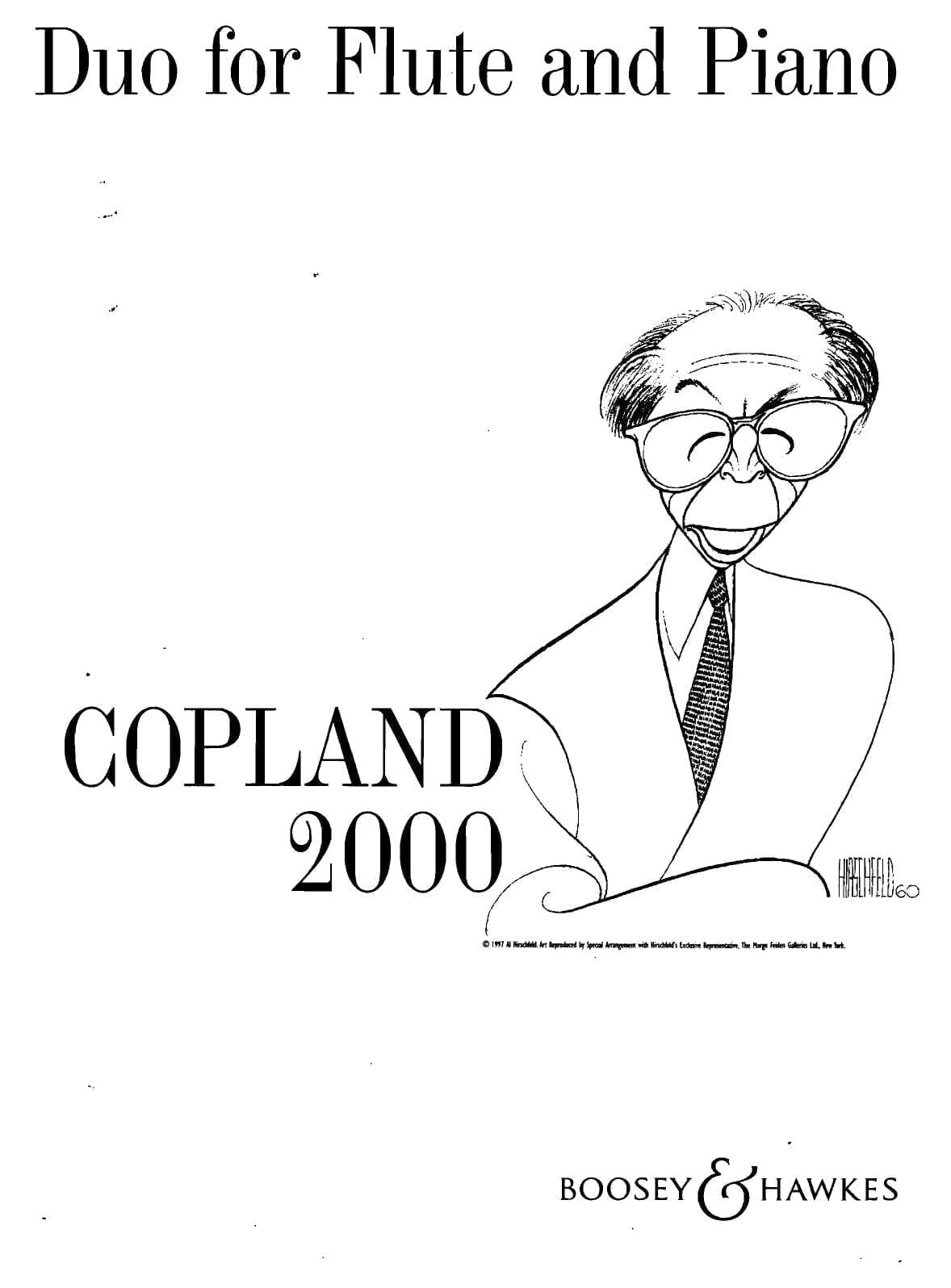
- Duo for Flute and Piano (1971) – A late, lyrical masterwork in his distilled, transparent style.
Vocal/Choral Works
- Old American Songs (1950, 1952) – Two sets of exquisite arrangements of 19th‑century tunes, including “Simple Gifts,” “The Boatmen’s Dance,” and “I Bought Me a Cat.”
Discography: A Listener’s Guide
Copland himself made numerous recordings as conductor, often with the London Symphony Orchestra or the Philharmonia. His authorial interpretations are invaluable, though some later recordings by other conductors surpass them in orchestral execution.
Copland Conducts Copland (CBS/Sony)
- The essential collection. Includes Appalachian Spring (both the chamber and orchestral versions), Billy the Kid, Rodeo, and Fanfare in performances led by the composer. The sound is dry, rhythmically incisive, and wonderfully unsentimental.
Leonard Bernstein & New York Philharmonic
- Bernstein’s Copland recordings on Sony and Deutsche Grammophon are the most famous. His Appalachian Spring (with the NY Phil) brims with tenderness, and his Third Symphony (which incorporates Fanfare) is a magnificent document.
Michael Tilson Thomas & San Francisco Symphony (RCA)
- Tilson Thomas studied with Copland and brings both insight and superb recorded sound. His disc of the Organ Symphony and Music for the Theatre is a highlight.
Benny Goodman’s Clarinet Concerto Recordings
- Goodman’s première recording under Copland’s baton (available on CBS) is priceless, but later versions by Richard Stoltzman and Martin Fröst show how the interpretive tradition has expanded.
Film‑Score Compilations
- Copland’s film music has been re‑recorded by many, but the suite Music for Movies conducted by Copland himself is a perfect primer.
Jazz Interpretations
- Not purely Copland, but Bill Frisell’s album Have a Little Faith (1993) features an arrangement of Billy the Kid that reimagines the music through the lens of American folk, jazz, and country guitar. It demonstrates how deeply Copland’s “licks” permeate American improvisation.
Books and Writings by and about Copland
By Copland
- What to Listen for in Music (1939) – A lucid, non‑technical guide to musical understanding. Still widely used in university courses, it reflects Copland’s democratic belief that everyone can appreciate serious music.
- Music and Imagination (1952) – The Charles Eliot Norton lectures at Harvard, addressing creativity, tradition, and the role of the composer in society. Profound and accessible.
- The New Music 1900‑1960 (1968) – A brief but insightful survey of modern music, including his own.
- Copland on Music (1960) – A collection of essays, reviews, and speeches, offering an intimate picture of his thoughts on composers from Stravinsky to jazz musicians.
Biographies and Critical Studies
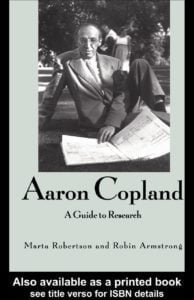
- Aaron Copland: The Life and Work of an Uncommon Man by Howard Pollack (1999) – The definitive scholarly biography. Exhaustive, deeply researched, and musically literate. Pollack covers every work, every friendship, and every phase.
- Copland: 1900 Through 1942 and Copland: Since 1943 by Vivian Perlis and Aaron Copland (1984, 1989) – A two‑volume oral‑history autobiography, woven from interviews with Copland and his circle. Uniquely engaging, full of anecdote and personality.
- Aaron Copland: A Reader edited by Richard Kostelanetz (2004) – A collection of primary‑source writings, including Copland’s early articles and letters.
- Copland Connotations edited by Peter Dickinson (2002) – A symposium of essays examining Copland’s work from multiple angles, including his Jewish identity, sexuality, and political engagement.
Documentaries and Films
- A Copland Portrait (1968, dir. Terry Sanders) – A 30‑minute documentary with Copland speaking about his life and music, interspersed with performances. A charming, first‑person introduction.
- Copland: Fanfare for America (2000, dir. Andreas Skipis) – A superb documentary produced for the composer’s centenary. It features interviews with Bernstein, Martha Graham, and others, plus performances by the San Francisco Symphony.
- Aaron Copland: A Self‑Portrait (1985, PBS) – Copland reflects on his own career in conversation with Vivian Perlis, complemented by archival footage. An intimate portrait of the elderly composer.
- The Music of Aaron Copland (1992, BBC) – An analytical documentary that breaks down several key works, ideal for musicians wanting to understand the “Copland sound.”
- American Masters: Aaron Copland (PBS) – A one‑hour episode that situates Copland within the broader cultural currents of the 20th century, from the jazz age to the Cold War.
Legacy: The Ever‑Present Sound of America
Aaron Copland’s legacy is paradoxical. His populist works are so ingrained in the American psyche — used in presidential inaugurations, advertising, film trailers — that they risk being taken for granted. Yet his more austere modern works still challenge listeners. Together they present a portrait of a composer who refused to be pigeonholed: modernist and populist, urban and pastoral, Jewish and quintessentially American.
In the realm of improvisation, his contribution is indirect but real. The open, quartal harmonies that he perfected have become part of the modern jazz vocabulary. The “licks” derived from his melodies — those fourth‑leaping, pentatonic‑spinning lines — are now among the archetypes that film composers, jazz soloists, and even electronic musicians draw upon when they want to evoke an expansive, democratic optimism.
Copland once wrote, “So long as the human spirit thrives on this planet, music in some living form will accompany and sustain it.” He built a body of music that, in its honesty, its clear‑eyed hope, and its stubborn individuality, has done exactly that. Through recordings, books, and documentaries, his voice remains available, ready to teach another generation not only what to listen for in music, but what to aspire to in life.
The best sheet music download from our Library.
Works
Main article: List of compositions by Aaron Copland
| Scherzo Humoristique: The Cat and the Mouse (1920) Four Motets (1921) Three Moods (piano solo) (1921) Passacaglia (piano solo) (1922) Symphony for Organ and Orchestra (1924) Music for the Theater (1925) Concerto for Piano and Orchestra (1926) Symphonic Ode (1927–1929) Piano Variations (1930) Grohg (ballet) (1925/32) Dance Symphony (1929) (using music from Grohg) Short Symphony (Symphony No. 2) (1931–33) Statements for Orchestra (1932–35) The Second Hurricane, play-opera for high school performance (1936) El Salón México (1936) Billy the Kid (ballet) (1938) Quiet City (1940) Our Town (1940) Piano Sonata (1939–41) An Outdoor Overture, written for high school orchestras (1938) and transcribed for wind band (1941) Fanfare for the Common Man (1942) Lincoln Portrait (1942) Rodeo (ballet) (1942) Danzón cubano (1942) | Music for Movies (1942) Sonata for violin and piano (1943) Appalachian Spring (ballet) (1944) Third Symphony (1944–1946) In the Beginning (1947) The Red Pony (1948) Clarinet Concerto (commissioned by Benny Goodman) (1947–1948) Film score for The Heiress (1949, Academy Award) Twelve Poems of Emily Dickinson (1950) Piano Quartet (1950) Old American Songs (Book One 1950, Book Two 1952) The Tender Land (opera) (1954) Canticle of Freedom (1955) Orchestral Variations (orchestration of Piano Variations) (1957) Piano Fantasy (1957) Dance Panels (ballet) (1959; revised 1962) Connotations (1962) Down A Country Lane (1962) Music for a Great City (1964) (based on his score of the 1961 film Something Wild) Emblems, for wind band (1964); orchestral transcription by D. Wilson Ochoa (2006) Inscape (1967) Duo for flute and piano (1971); piano accompaniment orchestrated by D. Wilson Ochoa (2020) Night-Thoughts (1972) Three Latin American Sketches (1972) |
Browse in the Sheet Music Library:
Or browse in the categories menus & download the Library Catalog PDF: