
Scores for all instruments: 16,000+ (active and growing), over 236,000 pages.
All genres and levels: Jazz & Blues, Rock & Pop, Classical & Contemporary, Film & Musicals;
books & biographies; methods, études, play-along tracks (MP3) for Jazz & Rock.
Access & benefits: US$15.99 one-time payment, valid for lifetime, full Library access.
Table of Contents
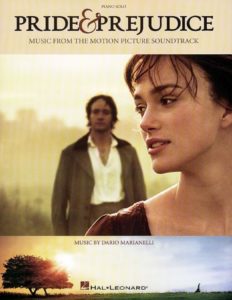
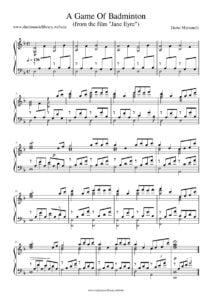
Dario Marianelli: Dawn (From "Pride & Prejudice" Soundtrack)
Please, subscribe to our Sheet Music Library. Sheet music should be accessible and affordable for all musicians, from professionals to absolute beginners.


The best sheet music download from our Library.
Scores for all instruments: 16,000+ (active and growing), over 236,000 pages.
All genres and levels: Jazz & Blues, Rock & Pop, Classical & Contemporary, Film & Musicals;
books & biographies; methods, études, play-along tracks (MP3) for Jazz & Rock.
Access & benefits: US$15.99 one-time payment, valid for lifetime, full Library access.
Please, subscribe to our Sheet Music Library. Sheet music should be accessible and affordable for all musicians, from professionals to absolute beginners.
Who is Dario Marianelli?
Dario Marianelli: The Poetic Architect of Modern Film Music
Dario Marianelli is one of the most distinctive and celebrated film composers of his generation—an Italian artist who has made an indelible mark on British and international cinema through his lyrical, emotionally resonant scores. Unlike the bombastic, effects-driven soundtracks that dominate much of Hollywood, Marianelli's music is characterized by intimacy, melodic richness, and a deep sensitivity to character and story.
Biography — From Pisa to the World Stage
Early Life and Musical Formation
Dario Marianelli was born on June 21, 1963, in Pisa, Italy. He grew up in a family deeply sensitive to music; his parents, both music lovers, filled their home with classical sounds that would shape his passion from an early age. He began playing the piano and singing when he was just six years old and remained a member of a boys' choir until the age of fourteen.
Marianelli studied piano and composition first in Pisa and then in Florence. His formal education was rigorous and comprehensive, grounded in the classical tradition that would become the foundation of his compositional voice. He counts among his early influences the composers György Ligeti and Witold Lutosławski, whose modernist approaches to harmony and texture left a lasting impression. He also developed a deep affection for the music of Nino Rota, whose sensitivity and emotional generosity he has frequently acknowledged, as well as a profound gratitude toward Ennio Morricone for breaking down invisible barriers in film music.
The Move to London
In 1990, Marianelli moved to London—a decision that would prove decisive for his career. He enrolled in the postgraduate composition program at the prestigious Guildhall School of Music and Drama, where he also served as president of the Contemporary Music Society. After completing his year there, he received a scholarship from the Gulbenkian Foundation to study composition and choreography at Bretton University College under the tutelage of Judith Weir and Lloyd Newson.
His education culminated with a three-year postgraduate program at the National Film and Television School in Beaconsfield, just outside London, from which he graduated in 1997. This specialized training in film music—combined with his classical foundation—gave him the technical tools and creative vocabulary that would define his professional life.
Early Career
During his time at the National Film and Television School, Marianelli undertook small projects, composing for concerts and theatre productions. He wrote music for avant-garde theatre, contemporary dance, and fringe productions, honing his ability to respond to dramatic narrative with music.
His first significant encounter with cinema came through Irish director Paddy Breathnach, for whom he composed the scores for Ailsa (1994) and I Went Down (1997). This collaboration opened doors, and in 2002 he was given the opportunity to score Michael Winterbottom's In This World (Cose di questo mondo), a film that won the Golden Bear at the Berlin Film Festival. The critical attention that followed put Marianelli on the radar of major directors.
The Breakthrough — Terry Gilliam and Joe Wright
The Brothers Grimm (2005)
The turning point in Marianelli's career came when Terry Gilliam asked him to compose the score for The Brothers Grimm. It was a large-scale orchestral project that allowed Marianelli to demonstrate his ability to write symphonic music of considerable scope and complexity. He grew up with the symphonic music of the story's early 18th-century setting, as well as the 20th-century orchestral music that provided a strong influence for the soundtrack. The score proved that he could handle epic, fantastical material with sophistication and imagination.
Pride & Prejudice (2005) — First Oscar Nomination
Later that same year, Marianelli collaborated for the first time with director Joe Wright on Pride & Prejudice—a partnership that would become the defining creative relationship of his career. The film, starring Keira Knightley, required a score that could capture the emotional restraint and quiet passion of Jane Austen's world.
Marianelli responded with a work of exquisite subtlety: a 19th-century pastiche for orchestra and piano that drew on the rhetoric of Beethoven's early piano sonatas, as well as the more florid language of Chopin, Brahms, and Ravel. Performed by French classical pianist Jean-Yves Thibaudet and the English Chamber Orchestra, the score became an instant classic. Tracks like Dawn and Your Hands Are Cold remain among the most beloved film music of the 21st century.
The score earned Marianelli his first Academy Award nomination for Best Original Score, as well as a Classical Brit Award for Soundtrack/Musical Theatre Composer of the Year.
V for Vendetta (2006)
In 2006, Marianelli composed the score for the Wachowski siblings' dystopian thriller V for Vendetta, directed by James McTeigue. The score required a darker, more aggressive sound, and Marianelli rose to the challenge, creating a musical tapestry that complemented the film's revolutionary themes.
The Masterpiece — Atonement (2007)
The Score That Won Everything
Marianelli's crowning achievement came in 2007 with Joe Wright's Atonement, adapted from Ian McEwan's novel. The score is a work of profound emotional intelligence—a chamber orchestra piece with solos written for piano, clarinet, oboe, and harmonica. It functions both as a grand throwback to the sweeping movie music of the past and as an exceptionally smart compositional take on the storytelling complexities of the film itself.
The score's most famous track, Briony, features the main piano theme that Marianelli developed through improvisation. He also incorporated the rhythmic clatter of a typewriter into the score—a brilliant device that ties the music directly to the film's narrative about writing, memory, and guilt. The result is music that is hauntingly effective in the film and just as powerful when listened to on its own.
For Atonement, Marianelli won the Academy Award for Best Original Score, the Golden Globe, and the Ivor Novello Award. He was also nominated for a BAFTA and a Classical Brit Award. The score cemented his reputation as one of the finest composers working in film.
Musical Style and Compositional Philosophy
The Signature Sound
Marianelli's music is characterized by several distinctive qualities:
Unashamed Melodicism: Unlike many contemporary film composers who prioritize atmosphere over melody, Marianelli writes themes that are bold, memorable, and emotionally direct. His music pulses with "bold themes, exquisite instrumental colours and dynamic orchestration".
Classical Fluency: His training in piano and composition gives him a command of classical techniques—counterpoint, harmonic structure, motivic development—that he deploys with skill and elegance. He is one of a select few composers who successfully combine Romantic motifs and post-minimalist tropes into film music of rare power and intelligence.
Emotional Restraint: Even in his most sweeping moments, Marianelli's music never loses sight of what is at stake emotionally for the film's characters. He composes with a kind of psychological intimacy that makes his scores feel personal rather than merely decorative.
Eclectic Range: Marianelli has scored action movies, period pieces, thrillers, and animated films. His IMDb filmography runs the spectrum of genre, format, and sound—from the epic orchestral landscapes of Agora to the playful whimsy of Paddington 2.
The Role of Improvisation
Improvisation plays a crucial role in Marianelli's creative process. For Atonement, he began with an improvisational phase that gave birth to some of the score's most important material. He has described the challenge of composition in universal terms: "The problems of writing are always the same, for theatre, or television, or cinema: getting past the impact of the blank page and finding ideas that work with the characters, with the structure, and with the rhythm of the story".
His approach to improvisation is not about virtuosic display but about discovery—finding the thematic kernel that will grow into a full score. This improvisational instinct, combined with his classical discipline, gives his music its sense of spontaneity and life.
On Contemporary Music and Tradition
Marianelli has a refreshingly unpretentious attitude toward musical labels. When asked about "contemporary" or "avant-garde" music, he replied: "To tell the truth, I don't really know how to define 'contemporary' or 'avant-garde' music. Written now? But film music is written now, and therefore it's contemporary. These are vague concepts for me. Bach wrote contemporary music. But he also wrote a cantata a week, for several years, written, rehearsed, and performed between one Sunday and the next, and then put away: music for a specific use".
He has expressed deep affection for Nino Rota, finding his music "generous, emotional," and a profound sense of gratitude toward Morricone for "having broken invisible barriers, and brought into cinema a sense of sonic invention that revolutionized film music".
Major Collaborations
Joe Wright
The collaboration with Joe Wright is the centerpiece of Marianelli's career. Together they have created:
- Pride & Prejudice (2005) — Oscar nomination
- Atonement (2007) — Oscar win
- The Soloist (2009)
- Anna Karenina (2012) — Oscar, BAFTA, and Golden Globe nominations; Ivor Novello win
- Darkest Hour (2017)
Wright has described Marianelli as a composer who understands character and story on a profound level, and their creative partnership has produced some of the most memorable film music of the past two decades.
Other Directors
Marianelli has worked with a wide range of directors:
| Director | Notable Films |
|---|---|
| Terry Gilliam | The Brothers Grimm (2005) |
| James McTeigue | V for Vendetta (2006) |
| Neil Jordan | The Brave One (2007) |
| Bille August | Goodbye Bafana (2007) |
| Alejandro Amenábar | Agora (2009) |
| Ryan Murphy | Eat Pray Love (2010) |
| Cary Fukunaga | Jane Eyre (2011) |
| Lasse Hallström | Salmon Fishing in the Yemen (2011) |
| Anthony Stacchi/Graham Annable | The Boxtrolls (2014) |
| Travis Knight | Kubo and the Two Strings (2016); Bumblebee (2018) |
| Paul King | Paddington 2 (2017) |
| Asif Kapadia | Ali and Nino (2016) |
| Matteo Garrone | Pinocchio (2019) |
| Gil Kenan | A Boy Called Christmas (2021) |
Performers and Orchestras
Marianelli has collaborated with some of the world's finest musicians and ensembles. His regular collaborator is Jean-Yves Thibaudet, the French classical pianist who has performed on Pride & Prejudice, Atonement, and Anna Karenina. He has also worked with cellist Caroline Dale and violinist Jack Liebeck.
His orchestral music has been performed by the London Symphony Orchestra, the London Philharmonic Orchestra, the BBC Symphony Orchestra, the English Chamber Orchestra, the Queensland Symphony Orchestra, and the Britten-Pears Orchestra. He has written vocal music for the BBC Singers and incidental music for the Royal Shakespeare Company.
Filmography (Selected)
Marianelli's filmography spans more than fifty titles. Key works include:
2000s:
- The Warrior (2001)
- In This World (2002)
- The Brothers Grimm (2005)
- Pride & Prejudice (2005)
- V for Vendetta (2006)
- Atonement (2007)
- The Brave One (2007)
- The Soloist (2009)
- Agora (2009)
2010s:
- Eat Pray Love (2010)
- Jane Eyre (2011)
- Salmon Fishing in the Yemen (2011)
- Anna Karenina (2012)
- The Boxtrolls (2014)
- Everest (2015)
- Kubo and the Two Strings (2016)
- Paddington 2 (2017)
- Darkest Hour (2017)
- Bumblebee (2018)
- Pinocchio (2019)
2020s:
- The Secret Garden (2020)
- A Boy Called Christmas (2021)
- Ghostbusters: Frozen Empire (2024)
- Paddington in Peru (2024)
Most Famous Songs and Themes
From Pride & Prejudice
- Dawn — A luminous piano piece that captures the quiet beauty of the English countryside
- Your Hands Are Cold — Perhaps the score's most beloved track
- Meryton Townhall — A lively, dance-like cue
From Atonement
- Briony — The main piano theme, developed through improvisation
- Elegy for Dunkirk — A devastatingly beautiful cue that accompanies the famous five-minute tracking shot on the beach
- Denouement — The closing theme
From Anna Karenina
- Anna Karenina Overture — A sweeping, waltz-infused theme
From Kubo and the Two Strings
- Kubo's Theme — A haunting, Japanese-influenced melody
Discography
Marianelli's discography includes over 25 soundtrack albums. Notable releases include:
- Pride & Prejudice (Original Motion Picture Soundtrack) — 2005
- The Brothers Grimm (Original Motion Picture Soundtrack) — 2005
- V for Vendetta (Original Motion Picture Soundtrack) — 2006
- Atonement (Original Motion Picture Soundtrack) — 2007
- The Brave One (Original Motion Picture Soundtrack) — 2007
- The Soloist (Original Motion Picture Soundtrack) — 2009
- Eat Pray Love (Original Motion Picture Soundtrack) — 2010
- Jane Eyre (Original Motion Picture Soundtrack) — 2011
- Anna Karenina (Original Motion Picture Soundtrack) — 2012
- The Boxtrolls (Original Motion Picture Soundtrack) — 2014
- Everest (Original Motion Picture Soundtrack) — 2015
- Kubo and the Two Strings (Original Motion Picture Soundtrack) — 2016
- Paddington 2 (Original Motion Picture Soundtrack) — 2017
- Darkest Hour (Original Motion Picture Soundtrack) — 2017
- Bumblebee (Motion Picture Score) — 2018
- The Secret Garden (Original Motion Picture Soundtrack) — 2020
- A Boy Called Christmas (Original Motion Picture Soundtrack) — 2021
- Ghostbusters: Frozen Empire (Original Motion Picture Soundtrack) — 2024
- Paddington in Peru (Original Motion Picture Soundtrack) — 2024
Concert Works
Beyond film, Marianelli has written extensively for the concert hall:
- Voyager — Violin Concerto, premiered in Brisbane, Australia (2014), performed by the Queensland Symphony Orchestra
- Orchestral works for the BBC Symphony Orchestra
- Vocal music for the BBC Singers
- Ballet The Unknown Soldier for the Royal Opera House, premiered November 2018
Documentaries and Non-Fiction Film Work
Marianelli has composed for numerous documentaries and documentary-style projects:
- We Are Together (Thina Siminye) (2007) — A documentary about a children's choir in South Africa, featuring music performed by the Children of Agape Choir
- Federer: Twelve Final Days (2024) — A feature-length documentary chronicling the final 12 days of Roger Federer's professional tennis career, directed by Asif Kapadia and Joe Sabia
His involvement in documentary work demonstrates his versatility and his ability to respond to non-fiction narratives with the same emotional intelligence he brings to fiction films.
Awards and Accolades
Marianelli's trophy case is substantial:
- Academy Award for Best Original Score — Atonement (2008)
- Golden Globe for Best Original Score — Atonement (2008)
- Ivor Novello Award for Best Original Film Score — Atonement (2008)
- Ivor Novello Award for Best Original Film Score — Anna Karenina (2013)
- Ivor Novello Award — Kubo and the Two Strings (2016)
- World Soundtrack Award — Atonement
- Classical Brit Award — Pride & Prejudice (Soundtrack/Musical Theatre Composer of the Year)
- Academy Award nomination — Pride & Prejudice (2006)
- Academy Award nomination — Anna Karenina (2012)
- BAFTA nomination — Atonement (2008)
- BAFTA nomination — Anna Karenina (2012)
- Ivor Novello Award nomination — The Boxtrolls (2014)
Legacy and Influence
Dario Marianelli occupies a unique position in contemporary film music. He is an Italian composer who has made his career largely in British cinema, bringing a European sensibility—lyrical, emotionally direct, classically informed—to films that span genres and periods.
His influence can be heard in the work of younger composers who have embraced his approach: melodic clarity, orchestral warmth, and a deep respect for the relationship between music and narrative. He has shown that film music can be both accessible and sophisticated, emotionally powerful without being manipulative.
Marianelli himself remains characteristically humble about his achievements. He has spoken of the importance of communicating deeply with audiences through a stylistically elevated approach that is free from intellectualist posturing. His music speaks directly to the heart—and that, perhaps, is the secret of its enduring appeal.
Part XII: Conclusion
Dario Marianelli is a composer of rare gifts: a classically trained musician who found his voice in the collaborative crucible of cinema, an artist who can write for the intimate spaces of a chamber piece or the vast canvas of a symphonic score with equal assurance. From the delicate piano figures of Pride & Prejudice to the devastating orchestral sweep of Atonement, from the dark energy of V for Vendetta to the playful charm of Paddington 2, his music has enriched some of the most memorable films of the past two decades.
Born in Pisa, trained in Florence and London, and now recognized around the world, Marianelli has created a body of work that stands as a testament to the power of melody, the importance of emotional truth, and the enduring value of classical craftsmanship in an age of digital soundscapes. He is, in the truest sense, a poet of the screen—and his music will continue to move audiences for generations to come.
Browse in the Sheet Music Library:
Or browse in the categories menus & download the Library Catalog PDF: