Scores for all instruments: 16,000+ (active and growing), over 236,000 pages.
All genres and levels: Jazz & Blues, Rock & Pop, Classical & Contemporary, Film & Musicals;
books & biographies; methods, études, play-along tracks (MP3) for Jazz & Rock.
Access & benefits: US$15.99 one-time payment, valid for lifetime, full Library access.
Table of Contents
Dave Grusin Random Hearts (Theme) Piano Solo sheet music, Noten, partitura, spartiti, partition, 楽譜
Please, subscribe to our Sheet Music Library.
The best sheet music download from our Library.
Scores for all instruments: 16,000+ (active and growing), over 236,000 pages.
All genres and levels: Jazz & Blues, Rock & Pop, Classical & Contemporary, Film & Musicals;
books & biographies; methods, études, play-along tracks (MP3) for Jazz & Rock.
Access & benefits: US$15.99 one-time payment, valid for lifetime, full Library access.
Please, subscribe to our Sheet Music Library.
Who is Dave Grusin?





The best sheet music download from our Library.
Dave Grusin: A Comprehensive Portrait of a Musical Renaissance Man
Robert David "Dave" Grusin (born June 26, 1934) stands as one of the most versatile and accomplished figures in American music. His career spans over six decades, during which he has distinguished himself as a composer, arranger, producer, jazz pianist, and bandleader. With an Academy Award and ten Grammy Awards to his name, Grusin has composed scores for feature films and television, produced groundbreaking recordings, co-founded a legendary jazz label, and performed with some of the most illustrious names in music. His journey from the plains of Colorado to the heights of Hollywood and the pinnacles of jazz represents one of the most remarkable trajectories in modern American music.
Biography
Early Life and Education
Dave Grusin was born in Littleton, Colorado, to Henri and Rosabelle (née de Poyster) Grusin. His family background is notably distinguished: his ancestry traces to the Gruzinsky princely line of the Bagrationi dynasty, the royal family that ruled the Kingdom of Georgia from the ninth to nineteenth centuries. His father, Henri, was a violinist of Jewish ancestry born and raised in Riga, Latvia, who emigrated to the United States in 1913. His mother, Rosabelle, was from a prominent New York family. The family surname "Grusin" functions as an ethnonym for Georgians in Slavic languages.
Grusin's musical education began early. He studied music at the University of Colorado at Boulder, where his teachers included composer Cecil Effinger and Wayne Scott, a longtime pianist, arranger, and professor of jazz. While still a student, Grusin often performed with Colorado tenor saxophonist Spike Robinson. He was awarded his bachelor's degree in music in 1956.
Early Career
After graduation, Grusin began building his reputation as a performer, composer, and arranger in progressive jazz and instrumental pop. He provided piano accompaniment for Andy Williams in the late 1950s and remained with him on and off for over a decade, serving as orchestra leader for The Andy Williams Show from 1963 to 1966. This position gave him invaluable experience in television music and conducting.
During this period, Grusin also worked as an arranger for a diverse array of artists, including Benny Goodman, Quincy Jones, and Paul Simon. His first single, "Subways Are for Sleeping," was produced in 1962.
Breakthrough and Film Scoring
Grusin's first film score was for the Norman Lear/Bud Yorkin comedy Divorce American Style in 1967. That same year, he contributed significantly to one of the most iconic soundtracks in cinema history: The Graduate. Six of the fourteen cuts on the soundtrack from The Graduate are his compositions, including "The Singleman Party Foxtrot" and "Sunporch Cha-Cha-Cha".
This breakthrough led to a prolific career in film and television scoring. Over his career, Grusin has composed music for over 75 films and accumulated approximately 100 film and television credits.
Search your favorite sheet music in the Sheet Music Library Catalog
GRP Records and Digital Recording
In 1978, Grusin co-founded GRP Records (Grusin-Rosen Productions) with producer Larry Rosen. The label was launched as an independent outgrowth of the contemporary jazz projects they had collaborated on. GRP was among the first labels to release commercial digital recordings, and Grusin was an early pioneer of digital recording technology.
GRP Records made an enormous impact on the jazz world, applying high standards for audio production to recordings featuring jazz masters like Dizzy Gillespie and Gerry Mulligan, as well as fast-rising newcomers. In 1994, GRP was placed in charge of MCA's (later Universal Music Group) jazz operations. Grusin and Rosen left the label in 1995. In 1997, they co-founded N2K Encoded Music (later renamed N-Coded Music).
Later Career and Recognition
Throughout the 1990s and beyond, Grusin continued to compose, perform, and record. He released critically acclaimed tribute albums honoring George Gershwin, Duke Ellington, Henry Mancini, and Leonard Bernstein's West Side Story. In 2004, he released Now Playing, a solo piano collection of his film themes. In 2011, he released the concert album and DVD An Evening with Dave Grusin, featuring him backed by the 75-piece Henry Mancini Institute Orchestra revisiting works from throughout his varied career.
Grusin holds honorary doctoral degrees from the University of Colorado, the Berklee College of Music, and the Manhattan School of Music. He is also co-founder (with Rosen) of the National Foundation for Jazz Education, a philanthropic group dedicated to helping young jazz musicians.
Personal Life
Grusin is married to Nan Newton and has three children. He is the father of music editor Stuart Grusin, music editor and musician Scott Grusin, and engineer Mike Grusin. He is also the elder brother of keyboardist Don Grusin. Grusin resides on a ranch in Montana, where he enjoys fly-fishing—an activity he has described as one of his greatest passions.
Music Style
A Dizzyingly Eclectic Approach
Dave Grusin's music defies easy categorization. Described as "a dizzyingly eclectic jazz/pop piano player, producer, and arranger," he has worked in numerous musical styles throughout his career. While often thought of as a jazz or smooth jazz artist, his work encompasses pop, classical, Latin, and orchestral music.
The Grusin Sound: Signature Elements
In his soundtrack work, Grusin has forged a signature sound characterized by largely strings- and piano-dominated, through-composed themes with a solid melodic foundation. He frequently injects strong jazz sensibilities into his compositions and fuses pop and classical stylings.
His playing leans toward contemporary jazz, though he is completely conversant in hard bop, as evidenced by his 1965 album Kaleidoscope. Early fusion albums like Mountain Dance, Harlequin, and Migration showcased his embrace of electric instruments and digital technology.
Harmonic Language and Chord Progressions
Grusin's harmonic approach is sophisticated and distinctive. A hallmark of his style is his use of harmonic substitutions, including alternate chord voicings and altered chords, which refresh familiar tunes with a cooler, modern edge.
Musicians and analysts have noted several characteristic features of Grusin's harmonic language:
Quartal Harmony: Grusin frequently employs quartal harmony—chords built on fourths rather than thirds. This is evident in his use of open fourths, suspensions, and unresolved cadences.
Sus4 Chords: His compositions often feature 9sus4 chords, creating a characteristic contemporary jazz sound.
Fluid Harmonic Movement: The harmony in Grusin's music moves fluidly through ii-V progressions and chromatic passing chords, offering a rich but logical framework for improvisation.
Key Signatures: Analysis of his album An Evening With Dave Grusin reveals nine different key signatures, with G, F♯, D, C, and F being the most used, and major being the most recurrent mode.
Voice Leading: Grusin's approach to voicing chords and scale choices for soloing is distinctive. Musicians trying to replicate his sound have noted the importance of quartal harmony and open voicings in achieving that "Grusin sound".
Relationships with Other Artists
Collaborations with Directors
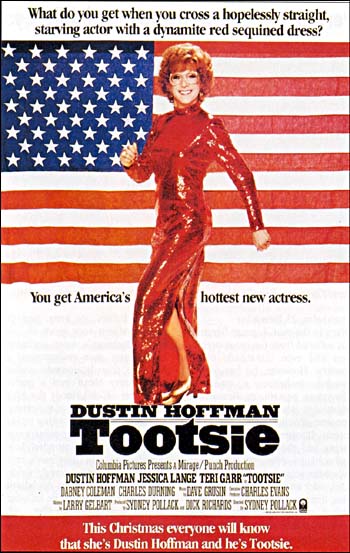
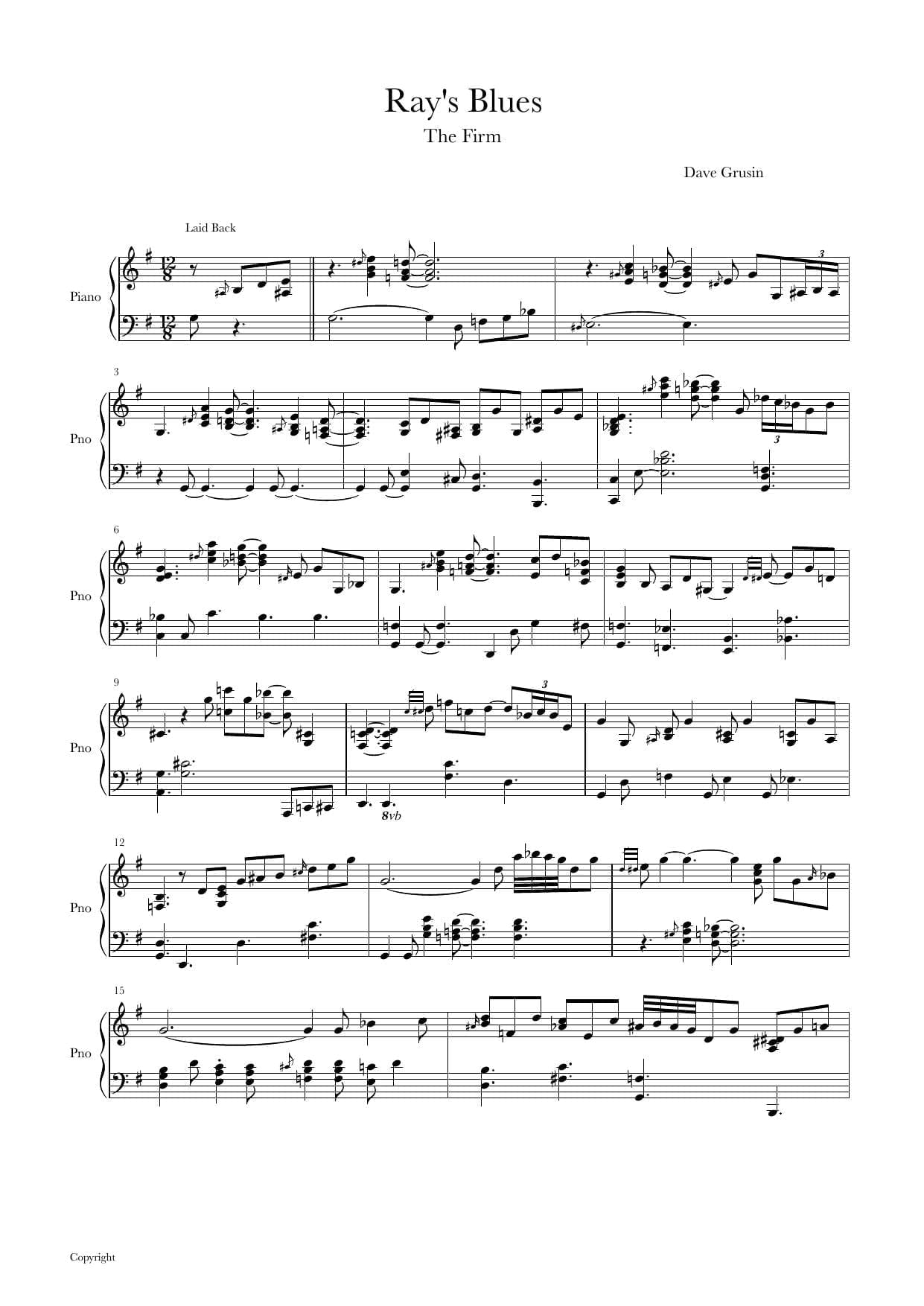
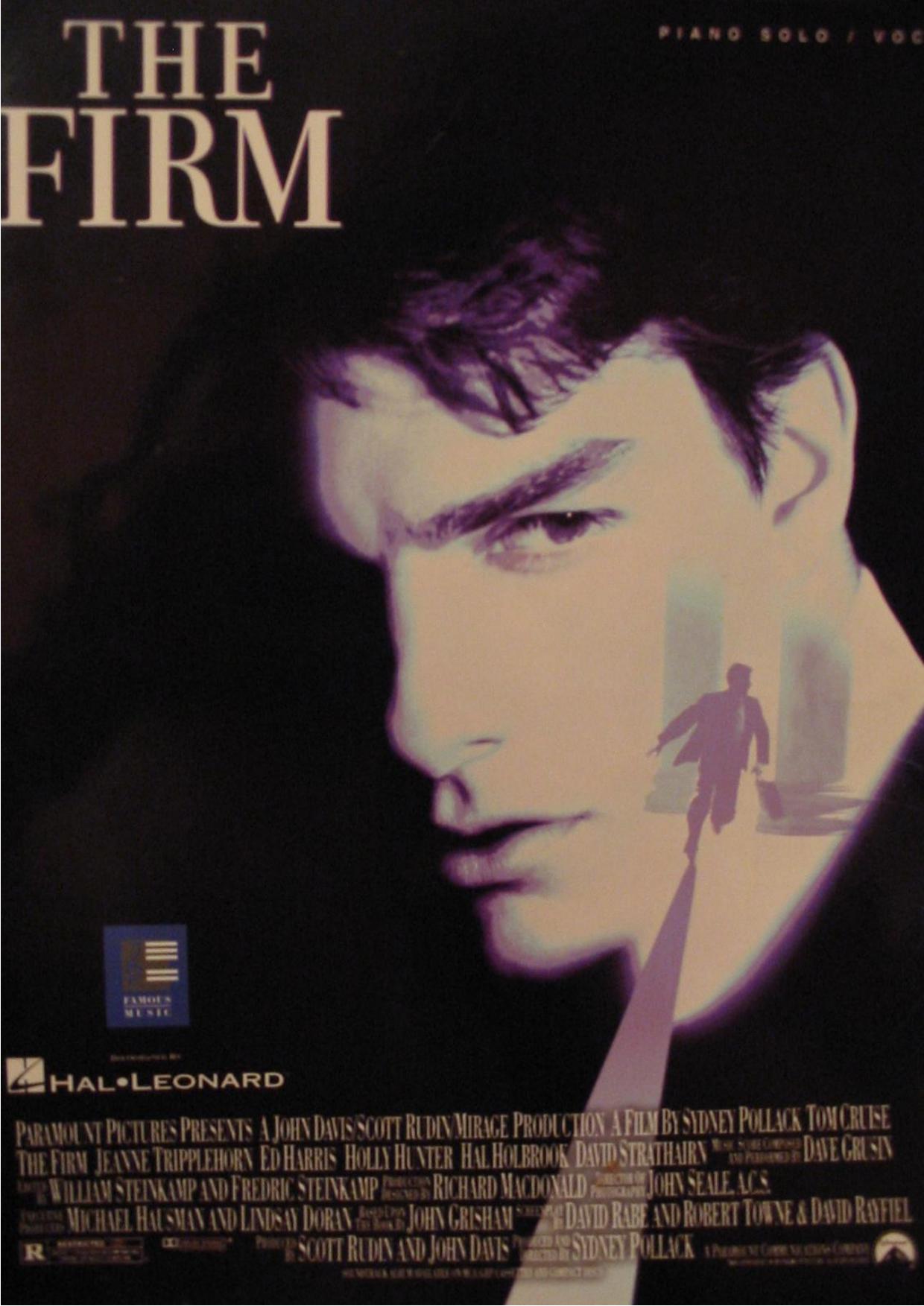
Grusin's most significant directorial collaboration has been with Sydney Pollack. He provided music for most of Pollack's films from the mid-1970s onward, including Three Days of the Condor (1975), Absence of Malice (1981), Tootsie (1982), The Firm (1993), and Random Hearts (1999). He received Oscar nominations for his scores for Tootsie, Havana, and The Firm.
Grusin also worked extensively with director Mike Nichols, contributing to films including The Graduate.
Musical Collaborations
Grusin has worked as an arranger, producer, and performer with a vast array of artists across genres:
- Jazz legends: Benny Goodman, Gerry Mulligan, Quincy Jones, Art Pepper
- Pop icons: Billy Joel, Paul Simon, James Taylor
- Brazilian music: Antônio Carlos Jobim
- Vocalists: Patti Austin, Diana Krall
The Grusin-Ritenour Partnership
Grusin and guitarist Lee Ritenour have worked together for decades, resulting in albums such as Harlequin (1985), Two Worlds (2000), Amparo (2008), and Brasil (2024). Their friendship and musical partnership began in the 1970s. The Brasil project, recorded in 2024, was influenced by Ritenour's Brazilian wife and features many outstanding Brazilian musicians.
The Bergman Collaboration
Grusin frequently collaborated with songwriting duo Alan and Marilyn Bergman, who wrote lyrics for many of his film songs.
The GRP Family
Through GRP Records, Grusin worked with and mentored numerous artists. Bassist Marcus Miller, who began playing with Grusin at age 17 or 18, recalled watching Grusin effortlessly switch between roles—running a session during the day and scoring a movie at night—and assuming this was simply what musicians did.
Influences
Grusin's influences are wide-ranging, reflecting his eclectic musical personality. His piano playing drew upon the influences of jazz piano giants Art Tatum, Bill Evans, and Red Garland.
In film scoring, Henry Mancini was a particularly significant influence. Grusin has described Mancini as one of the first composers to capture a West Coast jazz vibe, favoring organic jazz twists and motifs over wall-to-wall strings. Grusin first met Mancini in the mid-1960s, just before launching his own film scoring career. He has said that Mancini's music was instrumental in convincing him to go into film in the first place.
Other influences include Jerry Goldsmith, Elmer Bernstein, Benny Goodman, Duke Ellington, Herbie Mann, Nat King Cole, Herb Alpert, Erroll Garner, and Buddy Baker. Grusin has been described as Henry Mancini's heir in jazz-influenced film scoring.
Legacy
Impact on Film Scoring
Considered one of the top ten film scorers of his generation, Grusin helped establish the jazz-inflected film score as a viable and prestigious approach to cinematic music. His work demonstrated that sophisticated jazz harmony and improvisation could serve dramatic purposes as effectively as traditional orchestral scoring.
Pioneering Digital Recording
Grusin's role in pioneering digital recording through GRP Records had a lasting impact on the music industry. He was instrumental in developing quality recording using digital techniques and was one of the first artists to create purely digital CDs.
The GRP Legacy
The label Grusin co-founded left an impressive legacy. From its start as an independent label in 1982, GRP broke ground both artistically and commercially. The "GRP sound"—characterized by pristine digital production and sophisticated contemporary jazz—became synonymous with a certain era of jazz recording.
Influence on Other Musicians
Grusin's influence extends through the musicians he mentored and the standards he set. His work ethic, versatility, and artistic integrity inspired a generation of musicians. As Marcus Miller noted, Grusin's example taught young musicians that excellence required dedication across multiple disciplines.
Recognition and Honors
Grusin's legacy is reflected in his numerous honors:
- Academy Award: Best Original Score for The Milagro Beanfield War (1988)
- Academy Award nominations: Heaven Can Wait (1978), The Champ (1979), On Golden Pond (1981), Tootsie (1982), The Fabulous Baker Boys (1989), Havana (1990), The Firm (1993)
- Best Original Song nomination: "It Might Be You" from Tootsie
- 10 Grammy Awards
- 80 Grammy Award nominations (across GRP Records)
- 38 personal Grammy nominations
- Four Golden Globe nominations
- One Emmy nomination
- Three honorary doctorate degrees
Works
Film Scores (Selected)
Grusin has composed scores for over 75 films. Notable titles include:
- Divorce American Style (1967) — his first film score
- The Graduate (1967) — contributed six instrumental cues
- Winning (1969)
- The Friends of Eddie Coyle (1973)
- The Midnight Man (1974)
- Three Days of the Condor (1975)
- Heaven Can Wait (1978)
- The Champ (1979)
- On Golden Pond (1981)
- Absence of Malice (1981)
- Tootsie (1982)
- The Milagro Beanfield War (1988) — Academy Award winner
- The Fabulous Baker Boys (1989)
- Havana (1990)
- The Firm (1993)
- The Goonies (1985)
- Tequila Sunrise (1988)
- Hope Floats (1998)
- Random Hearts (1999)
- The Heart Is a Lonely Hunter (1968)
- Mulholland Falls (1996)
- Where Were You When the Lights Went Out? (1968)
Grusin also composed the original opening fanfare for TriStar Pictures.
Television Work
Grusin was the conductor for The Andy Williams Show (1963–1965). He composed theme songs for numerous television series, including:
- It Takes a Thief (1968)
- The Name of the Game (1968)
- Dan August (1970)
- The Sandy Duncan Show (1971–72)
- Maude (1972)
- Good Times (1974)
- Baretta (1975)
- St. Elsewhere (1982)
- One Life to Live (theme from 1984–92)
- Tres Generaciones (1987, for Televisa in Mexico)
His other television credits include The Wild Wild West (1966), The Girl from U.N.C.L.E. (1966), and Columbo: Prescription: Murder (1968).
Discography
Selected Albums as Leader
Grusin has released more than 25 albums as a leader. Notable releases include:
- Kaleidoscope (1965) — hard bop jazz
- Mountain Dance (1979) — early fusion
- Harlequin (1985) — with Lee Ritenour
- The Gershwin Connection (1991) — tribute to George Gershwin
- Homage to Duke (1993) — tribute to Duke Ellington
- Two for the Road — tribute to Henry Mancini
- Out of the Shadows — pop-influenced jazz compositions
- Now Playing (2004) — solo piano collection of film themes
- Amparo (2008) — with Lee Ritenour
- Two Worlds (2000) — with Lee Ritenour
- Brasil (2024) — with Lee Ritenour
GRP Records Discography
In addition to his numerous GRP releases, Grusin has recorded for Columbia, Sheffield Lab, and Polygram.
Soundtrack Albums
Grusin's film scores have been released on numerous soundtrack albums, including:
- The Graduate (Original Soundtrack Recording)
- Havana (Original Motion Picture Soundtrack)
- The Firm
- The Milagro Beanfield War
- On Golden Pond
- Tootsie
Most Known Compositions and Performances
Iconic Film Themes
- "The Singleman Party Foxtrot" — from The Graduate (1967)
- Theme from Three Days of the Condor (1975)
- Theme from On Golden Pond (1981) — ranked in AFI's 100 Years of Film Scores
- "It Might Be You" — from Tootsie (1982), Oscar-nominated song
- Score for The Milagro Beanfield War (1988) — Academy Award winner
- Score for The Fabulous Baker Boys (1989) — featuring Michelle Pfeiffer's iconic piano performance
- Theme from St. Elsewhere (1982)
Television Themes
- Theme from Maude (1972) — one of the most recognizable TV themes of the 1970s
- Theme from Good Times (1974)
- Theme from Baretta (1975)
- Theme from St. Elsewhere (1982)
Tribute Albums
- The Gershwin Connection (1991) — jazz interpretations of George Gershwin's music
- Homage to Duke (1993) — tributes to Duke Ellington
- Two for the Road — interpretations of Henry Mancini's catalog
Notable Performances
- An Evening with Dave Grusin (2011) — concert with the 75-piece Henry Mancini Institute Orchestra
- GRP All-Star Big Band — Grusin served as one of the leaders of this ensemble
Documentaries
Dave Grusin: Not Enough Time (2023)
The definitive documentary about Grusin's life and career is Dave Grusin: Not Enough Time, which premiered on PBS in 2023. The film's title reflects Grusin's lament that there aren't enough hours in the day or days in the year for all the music that needs to be made.
Content: The documentary traces Grusin's journey "from Colorado cowboy to Oscar and Grammy winning composer". It is packed with archival images and concert footage, and features intimate interviews with:
- Quincy Jones
- Tom Brokaw
- Michael Keaton
- Tommy LiPuma
- Marcus Miller
- And many others
Production: The documentary was directed by Barbara Bentree. For a long time, the crew joked about calling the film "He Did That?" because of the constant discoveries about Grusin's extensive career.
Themes: The documentary shows Grusin's ability to juggle multiple roles—film scorer, concert performer, producer, and label mogul—often all at once. It also captures his personal side, including scenes of him fly-fishing on his Montana ranch and playing piano at his home in New Mexico.
Notable Moments: At a post-screening Q&A, Marcus Miller spoke about being a youthful protégé and watching Grusin casually change hats mid-day. Quincy Jones offered remarks about Grusin from the audience, noting that "your music will never be more or less than you are as a human being".
Dave Grusin's career represents a remarkable synthesis of artistic excellence, commercial success, and technical innovation. From his early days as a pianist and arranger for Andy Williams to his Oscar-winning film scores and his pioneering work in digital recording, Grusin has consistently pushed boundaries while maintaining an unmistakable musical identity.
His harmonic language—characterized by quartal harmony, sus4 chords, fluid ii-V progressions, and sophisticated voice leading—has influenced countless musicians. His film scores have become part of the cultural fabric, with themes from The Graduate, On Golden Pond, St. Elsewhere, and many others instantly recognizable to generations of listeners.
As a co-founder of GRP Records, Grusin helped shape the sound of contemporary jazz and pioneered digital recording techniques that transformed the industry. His philanthropic work through the National Foundation for Jazz Education ensures that his legacy will continue through future generations of musicians.
The documentary Dave Grusin: Not Enough Time captures the essence of a man whose creative drive seems boundless—a musician who, even after six decades, still laments that there aren't enough hours for all the music he wants to make. In a career that spans the full spectrum of American music—from jazz clubs to Hollywood soundstages, from television studios to concert halls—Dave Grusin has left an indelible mark on the musical landscape of the twentieth and twenty-first centuries.
Search your favorite sheet music in the Sheet Music Library Catalog
Lee Ritenour & Dave Grusin SAN JAVIER 2024
Lee Ritenor: guitar. Dave Grusin: piano and keyboards. Wesley Ritenour: drums. Munir Hossn: bass and vocals. Special guests: Ivan Lins: singer and keyboards. Tatiana Parra: singer.
Presenting its new album “Brasil”, recorded in Sao Paulo in 2023, with guest artists such as Ivan Lins, Celso Fonseca or Tatiana Parra, Jazz San Javier once again invites two of the artists most loved and admired by the festival audience. Lee Ritenour, with 45 albums recorded, winner of a Grammy and nominated 16 times, with more than 3,000 recording sessions, among others, with Frank Sinatra, Pink Floyd, B.B. King or Tony Bennett, considered one of the best jazz guitarists of all time.
Dave Grusin, genius pianist and composer, co-founder of the prestigious GRP record label, winner of 7 Grammy Awards and composer of soundtracks for films such as “The Graduate”, “The Three Days of the Condor”, “Champion ”, “Tootsie”, “On Golden Pond”, “The Fabulous Baker Boys” or the Oscar-winning “A Place Called Miracle”. And as special guests, the Brazilian superstar Ivan Lins, wonderful singer, pianist and composer, on par with A.C. Jobim, admired and covered by George Benson, Sara Vaughan, Diana Krall, Quincy Jones and Ella Fitgerald, among many others; and the admired brazilian singer Tatiana Parra. A concert that brings together some of the best musicians on the planet, a dream for any lover of good music.