Table of Contents
Debussy Clair De Lune Easy Piano for beginners, Piano Facile pour Débutants (partition, sheet music)
Search the best Debussy’s sheet music, books, and arrangements (also for guitar) in the Library.
Search your favorite sheet music in the Sheet Music Library Catalog

Scores for all instruments: 16,000+ (active and growing), over 236,000 pages.
All genres and levels: Jazz & Blues, Rock & Pop, Classical & Contemporary, Film & Musicals;
books & biographies; methods, études, play-along tracks (MP3) for Jazz & Rock.
Access & benefits: US$15.99 one-time payment, valid for lifetime, full Library access.
Please, subscribe to our Sheet Music Library.
Who was Debussy (1862-1918)?
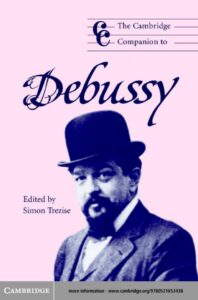
The best sheet music download from our Library.
Claude Debussy stands as one of the most transformative figures in Western music, a composer who dismantled the grammatical certainties of 19th‑century tonality and replaced them with a language of nuance, colour and sensuous suggestion. Labelled an “Impressionist” — a term he largely detested — Debussy forged a style that prioritised atmosphere over argument, sonority over function, and fleeting beauty over architectural rigour. This article offers an exhaustive portrait of the man, his artistic relationships, his harmonic revolution, his legacy, and the ways his music continues to permeate culture, including its pervasive presence on the screen.
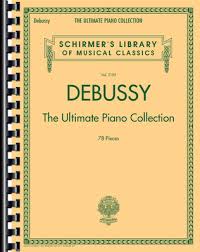
Biography
Achille‑Claude Debussy was born on 22 August 1862 in Saint‑Germain‑en‑Laye, on the western fringe of Paris. His parents, Manuel‑Achille Debussy and Victorine Manoury, ran a china shop; there was little music in the household. His first piano lessons came from an aunt, and his precocious gifts were soon spotted. At the age of ten he entered the Paris Conservatoire, where he would spend the next eleven years studying piano, solfège, organ, composition and music history. Though his teachers recognised his talent, they were routinely baffled by his stubborn harmonic experiments. In 1880, the young Debussy was engaged as a domestic pianist for Nadezhda von Meck — Tchaikovsky’s patroness — and travelled with her family to Switzerland, Italy and Russia. That exposure to Russian music, particularly the works of Mussorgsky and Borodin, left a deep imprint.
Please, subscribe to our Sheet Music Library.
In 1884, at the second attempt, Debussy won the Prix de Rome with his cantata L’Enfant prodigue. The obligatory residency at the Villa Medici he found stultifying, and he escaped back to Paris as soon as decency permitted. The late 1880s and 1890s were a period of absorption and gestation. He frequented the symbolist salons of Stéphane Mallarmé, where the idea that art should evoke rather than describe resonated profoundly. His reading of Baudelaire, Verlaine and Maeterlinck, his encounters with Javanese gamelan at the 1889 Exposition Universelle, and his conflicted pilgrimage to Bayreuth (where Wagner’s Parsifal both overwhelmed and appalled him) all fed the stream that would become his mature style.
The 1890s saw the creation of the first unequivocally Debussyan masterpieces: the Suite bergamasque (begun around 1890, revised and published in 1905), the String Quartet in G minor (1893), and, above all, the orchestral Prélude à l’après‑midi d’un faune (1894), a ten‑minute tone poem that Pierre Boulez later called the moment “modern music was awakened.” In 1902, after nearly a decade of labour, Debussy’s only completed opera, Pelléas et Mélisande, was premiered at the Opéra‑Comique. The work, a setting of Maeterlinck’s shadowy symbolist drama in which every syllable is sung in a kind of heightened speech, polarised opinion but immediately established Debussy as the most radical voice in French music.

Search your favorite sheet music in the Sheet Music Library Catalog
The years that followed were prodigiously fertile. The orchestral triptych La Mer (1905), the piano collections Estampes (1903) and the two books of Images (1905, 1907), the first book of Préludes (1910) and the ballet Jeux (1913) all poured forth. By then, however, Debussy’s private life was in turmoil. His first marriage to the fashion model Rosalie (“Lilly”) Texier ended acrimoniously in 1904 when he left her for Emma Bardac, a singer and the mother of one of his pupils. The ensuing scandal lost him friends, and Lilly attempted suicide. Debussy and Emma had a daughter, Claude‑Emma (“Chouchou”), in 1905; she became the dedicatee of Children’s Corner and the composer’s deepest emotional attachment.
In 1909 Debussy was diagnosed with colorectal cancer. The final decade of his life, increasingly shadowed by illness, nonetheless produced works of astonishing vitality: the second book of Préludes (1913), the Études for piano (1915), the three chamber sonatas (Cello Sonata, 1915; Sonata for Flute, Viola and Harp, 1915; Violin Sonata, 1917), and the “poème dansé” Jeux. The outbreak of the First World War appalled him, and his late works are often inscribed with the defiant phrase “musicien français.” He gave his last public performance in 1916 and died in Paris on 25 March 1918, during the German Spring Offensive, his funeral cortège moving through streets under artillery bombardment. He was buried in Père Lachaise Cemetery.
Music Style
Debussy’s style is usually described as Impressionism, a label borrowed from painting — especially Monet’s evanescent landscapes and Whistler’s mist‑veiled nocturnes. The composer himself preferred to align his art with Symbolist poetry, asserting that music should deal in “the inexpressible” and that it was “made up of colours and rhythmised time.” Whatever the label, the essence of his style lies in the primacy of sonority. Rather than constructing phrases that drive towards a goal, Debussy presents discrete sonic images that shimmer and dissolve. Melody is often fragmentary, more akin to a curve of speech than a symmetrical tune. Rhythm is fluid and supple, avoiding heavy downbeats and regular periodic phrasing.
Form is freed from the sonata‑allegro archetype. Debussy favours mosaic‑like structures, blocks of material juxtaposed in a way that resembles the cuts of film or the flow of consciousness. Repetition is used less for development than for coloured variation. The orchestra is treated as a palette of pure timbres: divided strings, muted brass, solo woodwinds in unusual registers, harp glissandi, antique cymbals. The piano, his laboratory, becomes a resonance box of overtones, with extensive use of the sustaining and soft pedals to create a halo around each note.
A key element is his evocation of water, wind, moonlight, perfumes and the distant Orient. Titles such as Reflets dans l’eau, Nuages, Les sons et les parfums tournent dans l’air du soir and Pagodes indicate that extra‑musical suggestion is integral to the conception, yet the music remains utterly autonomous, never descending into literal storytelling.
Relationships with Other Artists
Debussy’s aesthetic was shaped in dialogue — and sometimes conflict — with an extraordinary network of artists.
Poets and writers. He set Verlaine’s Fêtes galantes, Baudelaire’s Cinq poèmes and Mallarmé’s L’Après‑midi d’un faune. Mallarmé, after hearing the Prélude, wrote to Debussy: “I did not expect anything like this. Your illustration of the Faun presents no dissonance with my text, except that it goes further, truly, into nostalgia and into light, with finesse, with disquiet, with richness.” Maeterlinck, however, fell out bitterly with Debussy over the casting of Pelléas, refusing to attend the premiere and even threatening a duel.
Painters. Debussy owned prints by Hokusai and Hiroshige; the famous wave of The Great Wave off Kanagawa adorned the cover of the first edition of La Mer. He was friendly with the Impressionist painters, though his sensibilities often aligned more with the atmospheric nocturnes of Whistler and the luminous, Turner‑inspired visions of Monet. He dedicated Estampes to the painter Jacques‑Émile Blanche.
Fellow composers. With Erik Satie, there was a mutual admiration founded on a shared loathing of pomposity. Satie’s stripped‑down, anti‑Romantic aesthetic encouraged Debussy’s radical thinking. With Maurice Ravel, things were more complex. Early on, both men championed similar ideals, but a public spat erupted in 1907 when critics accused Ravel of plagiarising Debussy’s style — a charge Debussy did not unequivocally deny — leading to a lasting coolness, though mutual respect never entirely vanished. Igor Stravinsky became a close friend after the 1910 premiere of The Firebird; the two exchanged scores, and Stravinsky later declared that “the musicians of my generation and I myself owe the most to Debussy.” Gabriel Fauré, the elder statesman of French music, had an affectionate but uneasy relationship with Debussy, admiring his craft while remaining rooted in a more classical tradition. Ernest Chausson, a generous friend and patron, was bewildered by some of Debussy’s harmonic adventures but supported him financially and emotionally until his own death.
Chord Progressions and Musical Harmony
Debussy’s harmonic language constitutes a revolution every bit as decisive as that of Schoenberg. His innovation was not to abandon tonality but to suspend its gravitational pull, creating a style in which chords exist as sound‑objects in their own right, freed from the obligation to resolve. He drew on a wide range of resources:
Non‑functional harmony. In functional tonality, a dominant seventh chord creates tension that seeks resolution on the tonic. Debussy’s dominant sevenths (and ninths, elevenths, thirteenths) float in chains, moving in parallel motion without any of the leading‑tone expectations of traditional practice. The opening of Prélude à l’après‑midi d’un faune presents an unaccompanied flute melody that falls from C♯ to G — a tritone — over which the orchestra enters with a richly ambiguous seventh chord that refuses to behave functionally.
Planing. Parallel motion of identical chord shapes — often root‑position triads or seventh chords — is a Debussy fingerprint. In La Cathédrale engloutie, passages of parallel fifths and octaves evoke the organum of medieval music and the reverberation of underwater bells. In Nuages, muted strings slide in parallel ninth chords, creating a static, veiled atmosphere.
Added‑note chords and extended tertian harmony. Debussy frequently enriches triads with added seconds, sixths and sevenths, producing sonorities that are neither purely consonant nor functionally dissonant. The gentle bell chords of Clair de lune are a chain of such floating harmonies. He also builds chords in thirds beyond the octave — ninth, eleventh and thirteenth chords — treating them as stable entities rather than as structures requiring resolution.
Modal and synthetic scales. He revived the medieval church modes (Dorian, Phrygian, Mixolydian) to escape the tyranny of major‑minor tonality. Whole‑tone scale passages occur in Voiles (from the first book of Préludes), where a six‑note whole‑tone collection erases all sense of central pitch. The pentatonic scale, often with an Eastern flavour, dominates Pagodes and La fille aux cheveux de lin. The octatonic scale (alternating whole and half steps) also appears. These scales generate harmonies that are native to them, not imported from functional logic.
Quartal and quintal harmony. Chords built on fourths or fifths, rather than thirds, appear in works such as La Mer and Et la lune descend sur le temple qui fut, creating an open, archaic resonance.
Unresolved dissonance and pedal points. Debussy’s textures often sustain a long pedal note or drone over which dissonant harmonies come and go, never resolving in a classical sense. In L’Isle joyeuse, an ecstatic whole‑tone apotheosis caps a work built largely on Lydian‑inflected harmony and the juxtaposition of distant key areas.
Debussy’s harmonic practice can be understood as a return to the pre‑tonal world of organum and the melodic‑driven modality of plainchant, fused with the shimmer of the gamelan’s non‑developmental, cyclical structures and the nuanced colour of symbolist poetry. It gave composers permission to conceive of harmony as a timbral, not merely syntactical, parameter.
Influences
Wagner. The early Debussy was intoxicated by Wagner’s Tristan‑esque chromaticism, but he came to see the German master’s art as a “poison” from which French music had to be detoxified. Pelléas is often described as an anti‑Tristan: a love story drained of heroic grandiloquence, sung in a whisper.
Russian music. Mussorgsky’s Boris Godunov and songs revealed a declamatory vocal style and an un‑Germanic harmonic freedom that Debussy admired; Borodin’s and Rimsky‑Korsakov’s brightly coloured orchestration also left traces. The contact with von Meck’s household in Russia was his first window into that world.
Javanese gamelan. At the 1889 Paris Exposition, Debussy heard a full Javanese gamelan ensemble. The experience was revelatory: the interlocking percussion patterns, the static, non‑directional harmonic flow, the five‑note slendro scale and the principle of stratified time all fed directly into pieces such as Pagodes, Estampes and La Mer.
Medieval and Renaissance music. Debussy studied Gregorian chant and the music of Palestrina, Victoria and Lassus at the Conservatoire and during his Rome years. The modal purity, the smooth voice‑leading and the avoidance of strong dominant tonic cadences are everywhere in his work.
Chopin. Debussy revered Chopin as the supreme poet of the piano and edited an edition of his works. Chopin’s use of the sustaining pedal, his harmonic subtlety and his avoidance of Germanic developmental logic made him, in Debussy’s eyes, a true musical aristocrat.
Symbolist literature and painting. Mallarmé’s dictum “to name is to destroy, to suggest is to create” became Debussy’s aesthetic manifesto. Whistler’s Nocturnes gave their name and inspiration to the orchestral triptych of 1899.
Legacy
Debussy’s legacy is almost incalculable. He taught the 20th century that music need not be a form of argument; it could be a state of being. His influence is heard in the sensuous harmonies of Ravel, the stripped‑down clarity of Stravinsky’s neo‑classical works, the orchestral tapestries of Olivier Messiaen, the delicate, noise‑edged sonorities of Toru Takemitsu, the modal jazz of Bill Evans and Miles Davis (Evans’s impressionistic piano chords are unthinkable without Debussy), the film scores of Bernard Herrmann and John Williams, and even in the ambient music of Brian Eno. Boulez, the great avatar of post‑war modernism, considered the Prélude à l’après‑midi d’un faune the beginning of contemporary music because it dispensed with the tyranny of the bar‑line and thematic development. Debussy’s harmonic emancipation also prepared ears for the atonality of Schoenberg, though the two composers went in diametrically opposite directions.
Works (List of compositions by Claude Debussy)
Debussy’s output, while not enormous, is of exceptional density and consistency. Below is a curated overview.
Orchestral works: Prélude à l’après‑midi d’un faune (1894), Nocturnes (1899, with wordless female chorus in the third movement), La Mer (1905), Images pour orchestre (1905–12: Gigues, Ibéria, Rondes de printemps), Children’s Corner (orchestrated by André Caplet), the ballet Jeux (1913), and the mysterious Le martyre de Saint Sébastien (1911, incidental music to d’Annunzio’s mystery play).
Piano music: The keyboard was Debussy’s intimate diary. Milestones include Suite bergamasque (culminating in Clair de lune), Pour le piano (1901), Estampes (1903), L’Isle joyeuse (1904), the two books of Images (1905, 1907), Children’s Corner (1908), the two books of Préludes (1910, 1913), and the twelve Études (1915), dedicated to Chopin. The Préludes contain some of his most beloved miniatures: La Cathédrale engloutie, Voiles, La fille aux cheveux de lin, Feux d’artifice.
Chamber music: The String Quartet in G minor (1893) is a miracle of cyclic form and colour. The late sonatas — Cello Sonata, Sonata for Flute, Viola and Harp, and Violin Sonata — distil his language to its essence, fragile, witty and achingly beautiful.
Opera and vocal music: Pelléas et Mélisande (1902) remains the supreme operatic expression of Symbolism. Debussy’s more than eighty mélodies (art songs) on texts by Verlaine, Baudelaire, Mallarmé, Villon and others are a treasury of prosodic subtlety, among them Fêtes galantes, Chansons de Bilitis, Trois Ballades de François Villon and the late Trois poèmes de Stéphane Mallarmé.
Unfinished projects: Debussy planned an opera based on Edgar Allan Poe’s The Fall of the House of Usher and a series of six chamber sonatas; only three were completed.
Works on Films
Debussy never composed for the cinema, but his music has been an extraordinarily rich resource for filmmakers. Its ability to create mood without dominating a scene — to be both emotionally specific and suggestively ambiguous — has made it a favourite of directors seeking to evoke nostalgia, reverie, melancholy or refined beauty.
Clair de lune is ubiquitous. In Steven Soderbergh’s Ocean’s Eleven (2001), it accompanies the final fountain scene, lending a hushed, bittersweet grace to the heist’s aftermath. In Joe Wright’s Atonement (2007), it underscores a five‑minute Steadicam tracking shot of the Dunkirk beach, transforming carnage into a surreal, poetic landscape. Tony Scott’s Man on Fire (2004) uses it as a fragile leitmotif of lost innocence. Philip Kaufman’s The Right Stuff (1983) choreographs a NASA celebration to its strains. Even a popular series like Doctor Who has used Clair de lune in an episode (“The Girl Who Waited”, 2011), proving the piece’s limitless adaptability.
Prélude à l’après‑midi d’un faune appears in Oliver Stone’s The Doors (1991), scoring Jim Morrison’s desert peyote trip and death‑by‑excess sequence, its sensual languor mirroring the boundary‑dissolving aesthetic of the 1960s. The same work haunts Ken Russell’s film The Music Lovers (1970) and many others. Terrence Malick, a connoisseur of classical music, placed the Nocturnes in The Thin Red Line (1998), where the melting cloud‑formations of Nuages blend with the Pacific island mist. Rêverie has underscored scenes in The West Wing (“Noël”, 2000), where its trance‑like calm serves a dramatic purpose. Arabesque No. 1 has been used in The Favourite (2018) and numerous other films. La Mer and La fille aux cheveux de lin regularly surface in documentaries, advertisements and feature films, demonstrating that Debussy’s palette is, in a very practical sense, a part of the modern audio‑visual vocabulary.
Discography (Selected Landmark Recordings)
A comprehensive discography of Debussy is far beyond the scope of this article, but certain recordings hold canonical status.
Piano works. The German pianist Walter Gieseking recorded the complete solo piano music for EMI in the 1950s; his crystalline touch and disembodied pianissimos set a benchmark that still influences interpretation. Arturo Benedetti Michelangeli’s Debussy (for Deutsche Grammophon) is a miracle of texture and control — his Images and Préludes sound as if chiselled from marble yet retain a magical inner life. Sviatoslav Richter, Claudio Arrau, Krystian Zimerman and Mitsuko Uchida have all produced revelatory recordings. Zimerman’s Préludes (1994, DG) are especially celebrated for their colouristic range. Debussy himself recorded several piano rolls (including La plus que lente and excerpts from Children’s Corner) which give a tantalising glimpse of his own performance style — crisp, unsentimental, with a freely swaying rhythm.
Orchestral works. Pierre Boulez’s cycles with the Cleveland Orchestra and the New Philharmonia Orchestra (Sony/Columbia) combine analytical clarity with sensuous precision. Charles Munch and the Boston Symphony Orchestra’s La Mer (RCA, 1956) remains a classic of visceral passion. Herbert von Karajan’s Debussy with the Berlin Philharmonic (especially the 1964 La Mer and Prélude à l’après‑midi d’un faune) is sumptuous and intoxicating. Bernard Haitink and the Concertgebouw, and more recently Simon Rattle with the Berlin Philharmonic, have offered distinguished modern interpretations.
Chamber music and opera. The Melos Quartet and the Quatuor Ébène have given compelling accounts of the String Quartet. The sonatas have been recorded by a host of artists; the combination of Emmanuel Pahud (flute), Gérard Caussé (viola) and Marie‑Pierre Langlamet (harp) for Erato is a benchmark. Pelléas et Mélisande has been captured in three classic recordings: Roger Désormière’s pioneering 1941 set with Irène Joachim; Boulez’s 1970 version for CBS with Elisabeth Söderström and George Shirley; and Herbert von Karajan’s 1978 Berlin Philharmonic recording (EMI), luxuriously sung by Frederica von Stade and Richard Stilwell.
Most Known Compositions and Performances
Certain works have entered the collective consciousness to an almost clichéd degree, yet they never lose their lustre. Any list would include:
- Clair de lune (from Suite bergamasque, 1905) — The single most famous piece of French piano music.
- Prélude à l’après‑midi d’un faune (1894) — The slow‑motion birth of modernism, its opening flute solo arguably the most consequential four bars in 20th‑century music.
- La Mer (1905) — Three symphonic sketches that evoke the sea less as pictorial seascape than as elemental force.
- Arabesque No. 1 in E major (1891) — An early, flowing gem of melodic grace.
- Rêverie (1890) — A simple, dreamy piano piece that became an accidental hit.
- Children’s Corner (1908) — A suite of six pieces for his daughter, including the cakewalk parody Golliwog’s Cakewalk, which cheekily quotes the Tristan chord.
- Pelléas et Mélisande (1902) — Debussy’s operatic masterpiece, an anti‑romantic romance of muted desperation.
- String Quartet in G minor (1893) — Glowing, folk‑inflected, structurally flawless.
- Préludes, Books I and II (1910, 1913) — A cosmos of 24 miniatures, from the sunken cathedral to the fireworks display.
- La fille aux cheveux de lin — A prelude of melting tenderness.
- L’Isle joyeuse (1904) — An ecstatic piano tour‑de‑force inspired by a Watteau painting and a summer of love.
- Sonata for Flute, Viola and Harp (1915) — An aural gossamer, melancholy and exquisite.
Famous early performances include the premiere of Faune in December 1894, conducted by Gustave Doret, which had to be encored immediately; the raucous Pelléas opening night in 1902; and Debussy’s own rendition of his piano works in the salons of Paris, always noted for its understated refinement and the soft, even touch that became a trademark.
Documentaries and Films about Debussy
Debussy has been the subject of several notable documentaries and biographical films. Ken Russell’s The Debussy Film (1965), made for the BBC arts series Monitor and starring Oliver Reed as the composer, was a breakthrough in the televisual treatment of composers. Russell’s characteristic mix of historical biopic and surrealistic fantasy — bleeding events from Debussy’s life into dramatisations of his works — remains controversial but undeniably influential.
Claude Debussy: As His Music Played (1980), a documentary by Paul Smaczny, intersperses performance with archival footage and interviews. Frank Scheffer’s Debussy, l’inquiétude d’un siècle (1995) is a more experimental film that explores the composer’s modernity through the eyes of contemporary musicians. Debussy: La musique et les arts (2012) accompanied the exhibition at the Musée de l’Orangerie, tracing the deep links between the composer’s world and the visual arts. The French television film Les amours de Debussy (1981) dramatised his turbulent emotional life. Additionally, many educational documentaries — notably Phil Grabsky’s In Search of Debussy (2012) — offer accessible introductions to the man and his music, weaving together piano performances with visits to the places that shaped his art.
In the end, Debussy remains as elusive as the faun of Mallarmé’s poem, always just out of reach yet so present that one can almost smell the perfumes and feel the breeze of the oncoming night. His music, a delicate equilibrium between intellect and sensuality, continues to whisper that art’s highest purpose may not be to explain the world but to let it resonate, pure and mysterious, in the silence between the notes.
Please, subscribe to our Sheet Music Library.
Browse in the Sheet Music Library:
Or browse in the categories menus & download the Library Catalog PDF:
The Best of Debussy / Classical Piano Music
0:01 Clair de lune 5:24 Arabesque No. 1 10:18 Reverie 16:25 Arabesque No. 2 20:03 La Fille aux cheveux de lin