Scores for all instruments: 16,000+ (active and growing), over 236,000 pages.
All genres and levels: Jazz & Blues, Rock & Pop, Classical & Contemporary, Film & Musicals;
books & biographies; methods, études, play-along tracks (MP3) for Jazz & Rock.
Access & benefits: US$15.99 one-time payment, valid for lifetime, full Library access.
Table of Contents
Deep Purple - Child In Time - Live (1970)
Taken from their fourth album Deep Purple In Rock, the band performs 'Child In Time' live on the British TV show "Doing Their Thing". The performance features the "Mark II line-up": Ritchie Blackmore, Ian Gillan, Roger Glover, Jon Lord and Ian Paice.
The best sheet music download from our Library.
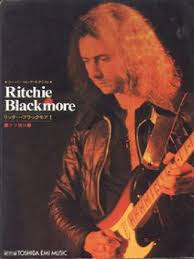
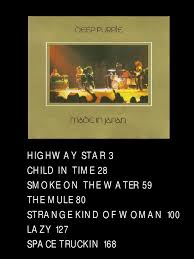
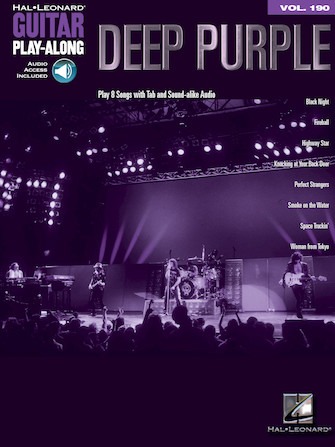
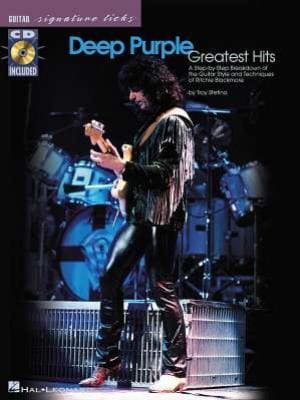
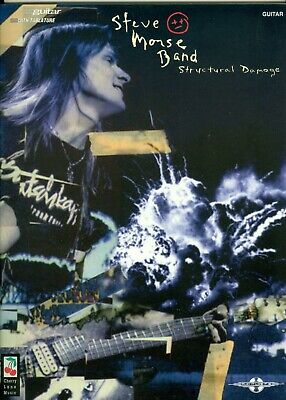
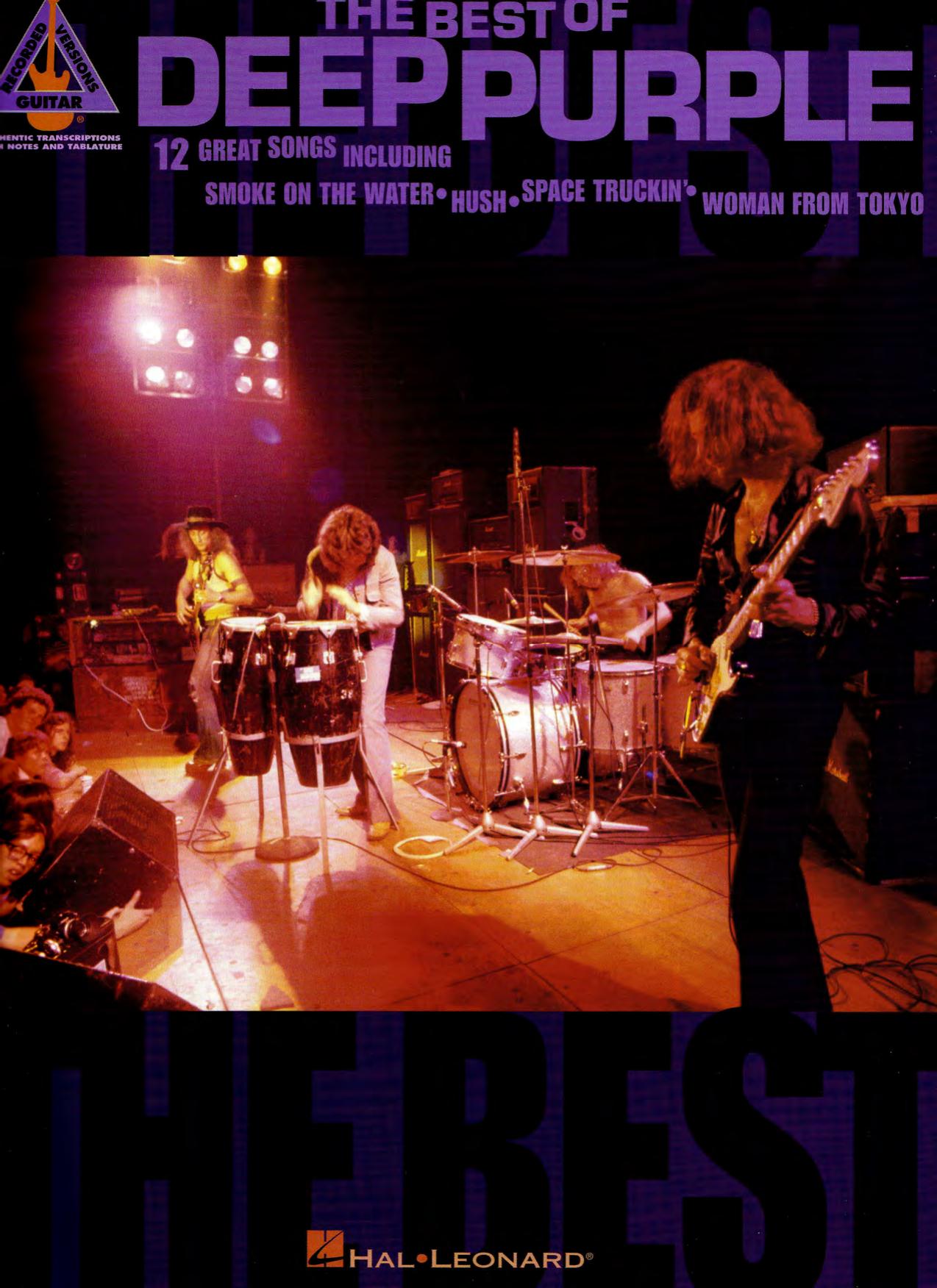



Please, subscribe to our Sheet Music Library.
Who are Deep Purple?
Deep Purple: The Architects of Hard Rock – A Comprehensive Exploration
Deep Purple are more than a rock band; they are an institution that helped forge the very architecture of heavy metal and hard rock. Formed in Hertfordshire, England, in 1968, the group’s pioneering fusion of blues-rooted ferocity, classical virtuosity, and raw volume placed them alongside Black Sabbath and Led Zeppelin as the “unholy trinity” of British hard rock. Their sound, driven by Jon Lord’s distorted Hammond organ and Ritchie Blackmore’s neoclassical guitar heroics, created a template that countless bands would follow. Deep Purple: their turbulent biography and ever-shifting personnel, yet their sophisticated harmonic language, enduring legacy, and presence on screen and stage.
Search your favorite sheet music in the Sheet Music Library Catalog
Biography
The story of Deep Purple is one of perpetual reinvention, marked by distinct “Mark” lineups that each brought a unique sonic identity.
Formation and Mk I (1968–1969)
The band was conceived by drummer Chris Curtis, formerly of The Searchers, who wanted to form a group called Roundabout that would allow musicians to rotate in and out. He recruited keyboardist Jon Lord, a classically trained organist with a background in jazz and R&B, and guitarist Ritchie Blackmore, a session player noted for his precise, neo-medieval style. Bassist Nick Simper and vocalist Rod Evans completed the first stable lineup, along with drummer Ian Paice, who replaced Curtis early on. The name “Deep Purple” was chosen from a list of potential band names; it was the title of a song that was a favourite of Blackmore’s grandmother.
Mk I produced three albums: Shades of Deep Purple (1968), The Book of Taliesyn (1968), and Deep Purple (1969). Their sound was a psychedelic-tinged blend of hard rock and orchestral pop, featuring covers like Joe South’s “Hush,” which became a US Top 5 hit. However, commercial success in their home country eluded them, and a desire for a heavier direction led to the dismissal of Evans and Simper.
Mk II: The Golden Age (1969–1973)
Vocalist Ian Gillan and bassist Roger Glover, both from the band Episode Six, joined in mid-1969. This lineup—Gillan, Blackmore, Lord, Glover, Paice—became the definitive Deep Purple. Their first album together, Deep Purple in Rock (1970), was a landmark. With tracks like “Speed King” and “Child in Time,” it stripped away pop pretensions in favour of screaming vocals, breakneck tempos, and classical organ bombast. The album entered the UK Top 5, establishing the band as a major force.
The follow-up, Fireball (1971), hit number one in the UK and showcased a more experimental edge, with the title track’s swinging rhythm and the proto-prog of “The Mule.” Then came Machine Head (1972), recorded in a Montreux hotel hallway using the Rolling Stones Mobile Studio after the casino they intended to use burned down during a Frank Zappa concert. This incident inspired “Smoke on the Water,” a song built on one of the most recognisable guitar riffs in history. Machine Head became their most commercially successful studio album, and the double live set Made in Japan (1972) cemented their reputation as one of the greatest live acts on earth.
Tensions, particularly between Blackmore and Gillan, grew unbearable. Who Do We Think We Are (1973) was a troubled production, and despite the hit “Woman from Tokyo,” Gillan and Glover left the band shortly after its release.
Mk III and Mk IV (1973–1976)
Bassist-vocalist Glenn Hughes (from Trapeze) and then-unknown singer David Coverdale joined, creating a new twin-lead-vocal lineup. The Mk III band released Burn (1974), a fiery blend of hard rock and funk-soul, with the title track and “Mistreated” becoming instant classics. Stormbringer (1974) leaned further into funk and soul, alienating Blackmore, who felt the band was moving too far from its rock roots. He departed in 1975 to form Rainbow.
American guitarist Tommy Bolin replaced Blackmore, bringing a jazz-fusion and blues-rock sensibility to the band’s final 1970s album, Come Taste the Band (1975). Bolin’s tenure was marred by heroin addiction, erratic performances, and waning audiences. After a disastrous UK tour, the band dissolved in July 1976. Tragically, Bolin died of a drug overdose later that year.
Hiatus, Solo Projects, and Reunion (1976–1989)
The members scattered: Coverdale formed Whitesnake, initially hiring Lord and Paice; Blackmore’s Rainbow soared with vocalist Ronnie James Dio; Gillan fronted the Ian Gillan Band and later Gillan, while Glover became a producer. By the early 1980s, the legacy of Deep Purple was being celebrated by a new generation of metal bands. In 1984, the classic Mk II lineup reunited for the album Perfect Strangers, a global commercial triumph that proved their chemistry was intact. They released The House of Blue Light in 1987, but old tensions resurfaced, and Ian Gillan was fired in 1989.
The JLT Era and Blackmore’s Departure (1989–1993)
Former Rainbow vocalist Joe Lynn Turner was recruited for Slaves and Masters (1990), a slick AOR album that divided fans. The rest of the band soon missed Gillan, and Turner was asked to leave in 1992. The classic Mk II reformed for the 25th-anniversary album The Battle Rages On… (1993). However, Blackmore’s heart was no longer in the hard rock style; he wanted to explore Renaissance-inspired acoustic music. After a tumultuous European tour, he quit for good, later forming Blackmore’s Night with his partner Candice Night.
The Steve Morse Era (1994–2022)
American guitarist Steve Morse, formerly of the Dixie Dregs and Kansas, was chosen as Blackmore’s replacement. His intricate fusion style injected new life into the band. Morse’s first album with the group, Purpendicular (1996), was acclaimed for its adventurous writing. Lineup stability followed for nearly two decades, producing albums like Abandon (1998), Bananas (2003), and Rapture of the Deep (2005). In 2002, founding keyboardist Jon Lord retired amicably, handing the organ stool to Don Airey, a veteran of Rainbow and Ozzy Osbourne’s band. Airey seamlessly carried Lord’s torch while adding his own flair.
Lord’s death in 2012 from pancreatic cancer was a profound loss, but the band soldiered on, releasing Now What?! (2013), Infinite (2017), and the covers album Turning to Crime (2021). The Morse era demonstrated remarkable resilience and musicianship, even as the core sound evolved into a modern, progressive-tinged hard rock.
Post-Morse and the Present (2022–)
In 2022, Steve Morse stepped down to care for his wife, who was battling cancer. Northern Irish guitarist Simon McBride, a long-standing protégé who had already substituted for Morse, became a permanent member. This lineup has continued to tour extensively, keeping the Deep Purple legacy blazing.
Personnel
Deep Purple’s history is defined by its lineups, often labelled by Mark numbers
- Mk I (1968–1969): Rod Evans (vocals), Ritchie Blackmore (guitar), Jon Lord (organ), Nick Simper (bass), Ian Paice (drums).
- Mk II (1969–1973, 1984–1989, 1992–1993): Ian Gillan (vocals), Ritchie Blackmore (guitar), Jon Lord (organ), Roger Glover (bass), Ian Paice (drums). This is the classic, most commercially successful incarnation.
- Mk III (1973–1975): David Coverdale (vocals), Ritchie Blackmore (guitar), Jon Lord (organ), Glenn Hughes (bass, vocals), Ian Paice (drums).
- Mk IV (1975–1976): David Coverdale (vocals), Tommy Bolin (guitar), Jon Lord (organ), Glenn Hughes (bass, vocals), Ian Paice (drums).
- Mk V (1989–1992): Joe Lynn Turner (vocals), Ritchie Blackmore (guitar), Jon Lord (organ), Roger Glover (bass), Ian Paice (drums).
- Mk VI (1994–2002): Ian Gillan (vocals), Steve Morse (guitar), Jon Lord (organ), Roger Glover (bass), Ian Paice (drums).
- Mk VII (2002–2022): Ian Gillan (vocals), Steve Morse (guitar), Don Airey (organ), Roger Glover (bass), Ian Paice (drums).
- Mk VIII (2022–present): Ian Gillan (vocals), Simon McBride (guitar), Don Airey (organ), Roger Glover (bass), Ian Paice (drums).
Ian Paice is the only member to have played in every single lineup, the rhythmic bedrock throughout the band’s entire existence. Roger Glover’s cumulative tenure (Mk II, V, VI, VII, VIII) spans over 40 years. Jon Lord was the harmonic anchor until 2002. Ritchie Blackmore’s shadow looms large over every guitarist who followed, though Steve Morse’s 28-year stint is a testament to his own indelible mark.
Music Style and Evolution
Deep Purple’s sound is a synthesis of blues, classical, jazz, and raw rock energy. The hallmark of their early style was the duel between Blackmore’s aggressive, classically-tinged guitar and Jon Lord’s overdriven Hammond organ run through Marshall stacks. This produced a rich, orchestral density that distinguished them from contemporaries.
In the Mk I era, the music was heavily psychedelic, with swirling organ, prominent bass, and baroque pop arrangements. With Mk II, the band stripped back the pop elements and embraced a high-speed, high-volume approach. Songs like “Hard Lovin’ Man” and “Fireball” pushed tempos to proto-speed-metal territory, while the twelve-minute “Child in Time” built from a delicate organ drone to an explosive, soul-baring crescendo.
Mk III introduced funk and soul, largely due to Glenn Hughes’s influence and Coverdale’s bluesier timbre. “Sail Away” and “You Fool No One” are underpinned by funky bass grooves, while “Burn” injects a relentless rock drive. The Bolin era ventured further into jazz-fusion, with tracks like “Owed to ‘G’” displaying complex harmonies and improvisation.
Upon reunion, Perfect Strangers blended the classic Mk II heaviness with 1980s production sheen and a touch of mysticism. The Morse era albums are progressively complex, featuring odd time signatures, extended instrumental passages, and a more democratic writing process. Throughout, the band maintained an improvisational spirit on stage, often stretching three-minute songs into epic, fifteen-minute explorations.
Relationship with Other Artists
Deep Purple’s connections across the rock spectrum are vast. Ritchie Blackmore’s Rainbow launched the careers of vocalists Ronnie James Dio, Graham Bonnet, and Joe Lynn Turner. David Coverdale’s Whitesnake became an arena-rock giant in the 1980s, employing Jon Lord and Ian Paice for several albums. Glenn Hughes became a revered figure in hard rock and soul, collaborating with everyone from Black Sabbath guitarist Tony Iommi to the Red Hot Chili Peppers. Ian Gillan sang on Black Sabbath’s Born Again album and performed the role of Jesus on Andrew Lloyd Webber’s original studio recording of Jesus Christ Superstar.
Deep Purple’s rivalry with Led Zeppelin and Black Sabbath was largely a media creation, though competition for the “loudest band” title was genuine. All three groups shared mutual respect. Later metal acts like Metallica, Iron Maiden, and Judas Priest cite Deep Purple as foundational influences. Metallica covered “When a Blind Man Cries” and inducted Deep Purple into the Rock and Roll Hall of Fame, with drummer Lars Ulrich stating that without Made in Japan, thrash metal might not have evolved as it did. Progressive metal band Dream Theater has often covered Deep Purple’s extended epics, and guitarist Steve Morse’s prior work with the Dixie Dregs forged a link between Southern fusion and British hard rock.
Chord Progressions and Music Harmony
The harmonic language of Deep Purple is a fascinating blend of blues simplicity and classical sophistication, often within the same song.
- “Smoke on the Water”: The immortal riff is a series of parallel perfect fourths and fifths played on guitar, doubled on organ: G5–B♭5–C5, G5–B♭5–D♭5–C5. The notes imply a G blues scale (G, B♭, C, D♭, D, F), but the inclusion of D♭ (flat five) over a C power chord creates a tritone that injects a sinister, metallic edge. The verse is a simple i–IV alternation in G minor (Gm–C), while the chorus blossoms into a IV–♭III–IV–♭III progression (C–B♭–C–B♭), a common rock move that mixes the Dorian-inflected major IV with the flattened III borrowed from the natural minor scale.
- “Child in Time”: Built on an Am–G–Am ostinato that draws heavily from the Dorian mode (the F# in the G chord is the raised sixth degree of A minor). The organ solo and vocal improvisations use the A natural minor scale with occasional chromatic passing tones. The dramatic dynamic arc, from a whisper to a scream, is achieved not through harmonic complexity but through sheer textural and timbral escalation.
- “Highway Star”: The main riff is a lightning-fast descent through the G blues scale, with the organ and guitar locked in unison. The solo section modulates through a classical-inspired harmonic minor progression: Am–G–F–E (i–♭VII–♭VI–V), a textbook Andalusian cadence. Blackmore’s solo is a masterclass in neoclassical shredding, heavily influenced by Bach’s violin partitas, using sequences of sixteenth notes that outline arpeggios and scale patterns, often employing harmonic minor and Phrygian dominant modes. Lord’s answering solo mimics a baroque fugue, with rapid-fire Hammond lines that incorporate diminished seventh arpeggios.
- “Perfect Strangers”: The track is in D minor, opening with a haunting Dm–B♭–C–Dm progression that capitalises on the minor key’s dark, modal flavour. The pre-chorus uses a chromatic walk-up (D–E♭–E–F) that heightens tension before the chorus bursts into a majestic Dm–C–G–B♭ sequence, employing the flat VII and IV chords to create an anthemic, spacious sound. The harmonic vocabulary here is pure hard rock, but the sense of drama is distinctly Deep Purple.
- “Lazy”: A twelve-bar blues in F, but with a twist. The organ intro is a dizzying display of jazz-blues chromaticism, with Lord using tritone substitutions and altered dominant chords (e.g., G♭9 substituting for C7). The song is a demonstration of how Deep Purple could take a simple blues form and inject it with virtuosic harmonic complexity.
- “Concerto for Group and Orchestra” (1969): Jon Lord’s ambitious three-movement work fused a rock band with a full symphony orchestra. The harmonic language borrows heavily from late Romantic and early twentieth-century composers, particularly Holst, Elgar, and Bartók. The third movement features a section where the band plays a 5/4 blues rock riff against the orchestra’s string glissandi, creating polyrhythmic and polytonal collisions that were revolutionary for the time.
Throughout their catalogue, the interplay between Blackmore and Lord was rooted in counterpoint—two lead voices weaving independent lines that create harmonic depth. Parallel thirds, call-and-response phrases, and unison riffing were their signatures. The bass and drums typically provided a solid, straightforward groove, allowing the soloists to explore modal and chromatic flights. The band’s willingness to step outside standard I–IV–V blues patterns and embrace classical modal interchange, chromatic mediants, and pedal-point drones set them apart as architects of progressive hard rock.
Influences
Deep Purple’s members brought diverse influences to the table. Ritchie Blackmore was enamoured with the swashbuckling melodies of Renaissance lute music, the electric blues of Freddie King and Albert King, and the classical virtuosity of Paganini and Bach. Jon Lord’s primary inspiration came from J.S. Bach’s organ fugues and the symphonic works of Mahler and Rimsky-Korsakov, but he also revered jazz organists Jimmy Smith and Billy Preston. Ian Gillan’s vocal style was shaped by Elvis Presley, Little Richard, and the rock-and-soul shouters of the early 1960s. Ian Paice built his crisp, swinging drumming on jazz greats like Buddy Rich and Gene Krupa. Roger Glover’s bass lines were rooted in Motown and British R&B. Glenn Hughes brought the funk-soul of Stevie Wonder and Sly Stone, while Steve Morse’s playing reflects a deep knowledge of bluegrass, classical guitar, and jazz fusion.
Legacy and Impact
Deep Purple’s legacy is monumental. They are consistently cited as pioneers of heavy metal, with In Rock often described as the album that codified the genre’s sonic aggression. The Guinness Book of World Records once named Deep Purple the “loudest band in the world” after a 1972 concert at London’s Rainbow Theatre reached 117 dB. Machine Head and Made in Japan are perpetual fixtures on “greatest albums” lists; the latter is widely considered one of the finest live rock albums ever recorded.
Their influence transcends hard rock. The riff of “Smoke on the Water” is the first thing countless guitarists learn, a universal rite of passage. Progressive bands from Yes to Dream Theater, metal titans from Iron Maiden to Opeth, and alternative acts like the Flaming Lips have all acknowledged their debt. The classical-rock fusion Jon Lord pioneered paved the way for symphonic metal acts like Nightwish and Trans-Siberian Orchestra. After years of fan campaigning, Deep Purple were inducted into the Rock and Roll Hall of Fame in 2016, with the ceremony acknowledging their role in shaping modern rock guitar and live performance. They have sold over 100 million albums worldwide, a testament to their enduring appeal.
Works: Discography Overview
Studio Albums
- Shades of Deep Purple (1968)
- The Book of Taliesyn (1968)
- Deep Purple (1969)
- Deep Purple in Rock (1970)
- Fireball (1971)
- Machine Head (1972)
- Who Do We Think We Are (1973)
- Burn (1974)
- Stormbringer (1974)
- Come Taste the Band (1975)
- Perfect Strangers (1984)
- The House of Blue Light (1987)
- Slaves and Masters (1990)
- The Battle Rages On… (1993)
- Purpendicular (1996)
- Abandon (1998)
- Bananas (2003)
- Rapture of the Deep (2005)
- Now What?! (2013)
- Infinite (2017)
- Whoosh! (2020)
- Turning to Crime (2021)
Key Live Albums and Compilations
- Concerto for Group and Orchestra (1969)
- Made in Japan (1972)
- Made in Europe (1976)
- Last Concert in Japan (1977)
- Nobody’s Perfect (1988)
- In the Absence of Pink: Knebworth ’85 (1991)
- Live at the Olympia ’96 (1997)
- Total Abandon: Australia ’99 (1999)
- Live at the Royal Albert Hall (2001)
- The Soundboard Series (2001)
- Live in Paris 1975 (2004)
- They All Came Down to Montreux (2007)
- Live at Montreux 1996 (2006)
- Long Beach 1976 (2016)
- The Infinite Live Recordings, Vol 1 (2017)
Discography
For a more comprehensive list, see Deep Purple discography.
Studio albums
- Shades of Deep Purple (1968)
- The Book of Taliesyn (1968)
- Deep Purple (1969)
- Deep Purple in Rock (1970)
- Fireball (1971)
- Machine Head (1972)
- Who Do We Think We Are (1973)
- Burn (1974)
- Stormbringer (1974)
- Come Taste the Band (1975)
- Perfect Strangers (1984)
- The House of Blue Light (1987)
- Slaves and Masters (1990)
- The Battle Rages On... (1993)
- Purpendicular (1996)
- Abandon (1998)
- Bananas (2003)
- Rapture of the Deep (2005)
- Now What?! (2013)
- infinite (2017)
- Whoosh! (2020)
- Turning to Crime (2021)
- =1 (2024)
- SPLAT! (2026)
Works on Films
Deep Purple’s music has underscored and soundtracked numerous films, often as a shorthand for rock rebellion or 1970s nostalgia.
- “Smoke on the Water” appears in Harley Davidson and the Marlboro Man (1991), The Adventures of Ford Fairlane (1990), Full Metal Jacket (1987, as part of a bar scene), and is famously referenced in This Is Spinal Tap (1984), where Nigel Tufnel plays it on his guitar.
- “Hush” was used to electrifying effect in the airborne tank sequence of The A-Team (2010), and appears in Apollo 13 (1995) during a period-evoking radio montage. The original Deep Purple version also features in Once Upon a Time… in Hollywood (2019), capturing the late-60s vibe.
- “Highway Star” soundtracks the high school parking-lot scene in Dazed and Confused (1993), perfectly encapsulating 1970s adolescent swagger.
- “Space Truckin’” is heard in Lords of Dogtown (2005), a film about 1970s skateboarders.
- “Burn” powers a montage in the horror-comedy This Is the End (2013) and has been used in trailers for action films.
- “Perfect Strangers” featured prominently in the trailer for the Oscar-winning film Argo (2012) and in an episode of the TV series The Americans.
- “Lazy” and “Mary Long” appear in the 1970s-set TV drama Life on Mars, using Deep Purple to conjure the period’s soundscape.
- The band themselves appeared performing “Sweet Child in Time” (sic, actually “Child in Time”) in the 1970 film The Other Side of the Bed (El otro lado de la cama – no, wait, that’s a Spanish film from 2002 that actually features a Deep Purple song). More historically, they filmed a concert for the 1970 movie Doing Their Thing in a studio, and footage of the band features in rockumentaries like The Decline of Western Civilization Part II: The Metal Years.
Most Known Compositions and Performances
- “Smoke on the Water”: The quintessential guitar riff, immortalised in Machine Head. The live version from Made in Japan is considered definitive.
- “Highway Star”: A relentless speed-rock anthem that opens Machine Head and was frequently used as the concert opener. The Made in Japan rendition, with its extended organ and guitar solos, is a masterclass in live dynamics.
- “Child in Time”: An epic anti-war statement from In Rock. The performance on Made in Japan stretches to twelve minutes and features Gillan’s most breathtaking vocal display.
- “Woman from Tokyo”: A swaggering, riff-driven single from Who Do We Think We Are that became a staple of reunion tours.
- “Burn”: The title track from Mk III’s debut, showcasing Coverdale and Hughes’s vocal interplay. The 1974 California Jam performance, complete with Blackmore’s explosive stage antics (including torching an amplifier), is legendary.
- “Perfect Strangers”: The triumphant comeback track from 1984, its mystical, mid-tempo groove and immense chorus encapsulating the reformed band’s chemistry.
- “Hush”: Their breakthrough US hit, with a groovy organ riff and Evans’s crooning vocal. The 1968 Playboy After Dark TV appearance captured their early energy.
- “Black Night”: A non-album single from 1970 that gave them their first major UK hit, built on a hypnotic descending blues progression.
- “Space Truckin’”: A rollicking sci-fi boogie from Machine Head, transformed live into a canvas for wild improvisation, as captured on Made in Japan.
- “Lazy”: A slow-burning blues instrumental showcase that highlights Lord’s keyboard virtuosity and Blackmore’s fluid phrasing.
- “Mistreated”: A slow, soulful blues from Burn, originally sung by Coverdale, that remains a tour-de-force of emotional heaviness.
Documentaries
Deep Purple’s career has been examined in several documentary films that offer deep dives into their music and mythology.
- Deep Purple: Heavy Metal Pioneers (1991): A comprehensive Warner Bros.-produced documentary charting the band’s history up to the Mk II reunion, with interviews and rare footage.
- Deep Purple: History, Hits & Highlights ’68–’76 (2009): A two-DVD set that combines archival performance clips, television appearances, and documentary segments covering the band’s classic 1970s period.
- Deep Purple: Around the World Live (2008): A four-DVD box set collecting concerts from 1995 to 2007, interspersed with behind-the-scenes material that documents the Morse era.
- Deep Purple: From Here to InFinite (2017): A full-length documentary film focusing on the band’s journey up to the Infinite album, featuring interviews with all surviving members. It explores the creative process, the loss of Jon Lord, and their enduring friendship.
- Machine Head: The Untold Story (included in the 40th-anniversary edition of Machine Head): A mini-documentary detailing the chaotic Montreux recording sessions and the genesis of “Smoke on the Water.”
- The Ritchie Blackmore Story (2015): Though a solo documentary, it provides extensive insight into his Deep Purple years, with archival interviews and performance footage.
- Jon Lord: It’s All Music (2014): A posthumous documentary celebrating Lord’s life and work, from classical compositions to his founding role in the band.
- Several concert films also function as documentaries of specific eras: California Jam (1974), Come Hell or High Water (1994, documenting Blackmore’s final Mk II tour), and Live at Montreux 2006 with a bonus interview disc.
Deep Purple’s odyssey from psychedelic pop experimentalists to godfathers of heavy metal is a saga of artistic evolution, personality clashes, and musical triumph. Their synthesis of blues power and classical erudition created a language that not only defined a genre but also inspired generations of musicians across metal, prog, and beyond. With a half-century of music that encompasses some of the most elemental riffs and electrifying performances ever captured on record, Deep Purple remain an inextinguishable flame in the pantheon of rock. As they continue to perform and record into their eighth decade, the proof is in the sound: the smouldering hum of a Hammond organ, the snap of a snare, and a riff that the whole world knows by heart.
Concert tours
Browse in the Sheet Music Library:
Or browse in the categories menus & download the Library Catalog PDF: