
Scores for all instruments: 16,000+ (active and growing), over 236,000 pages.
All genres and levels: Jazz & Blues, Rock & Pop, Classical & Contemporary, Film & Musicals;
books & biographies; methods, études, play-along tracks (MP3) for Jazz & Rock.
Access & benefits: US$15.99 one-time payment, valid for lifetime, full Library access.
Table of Contents
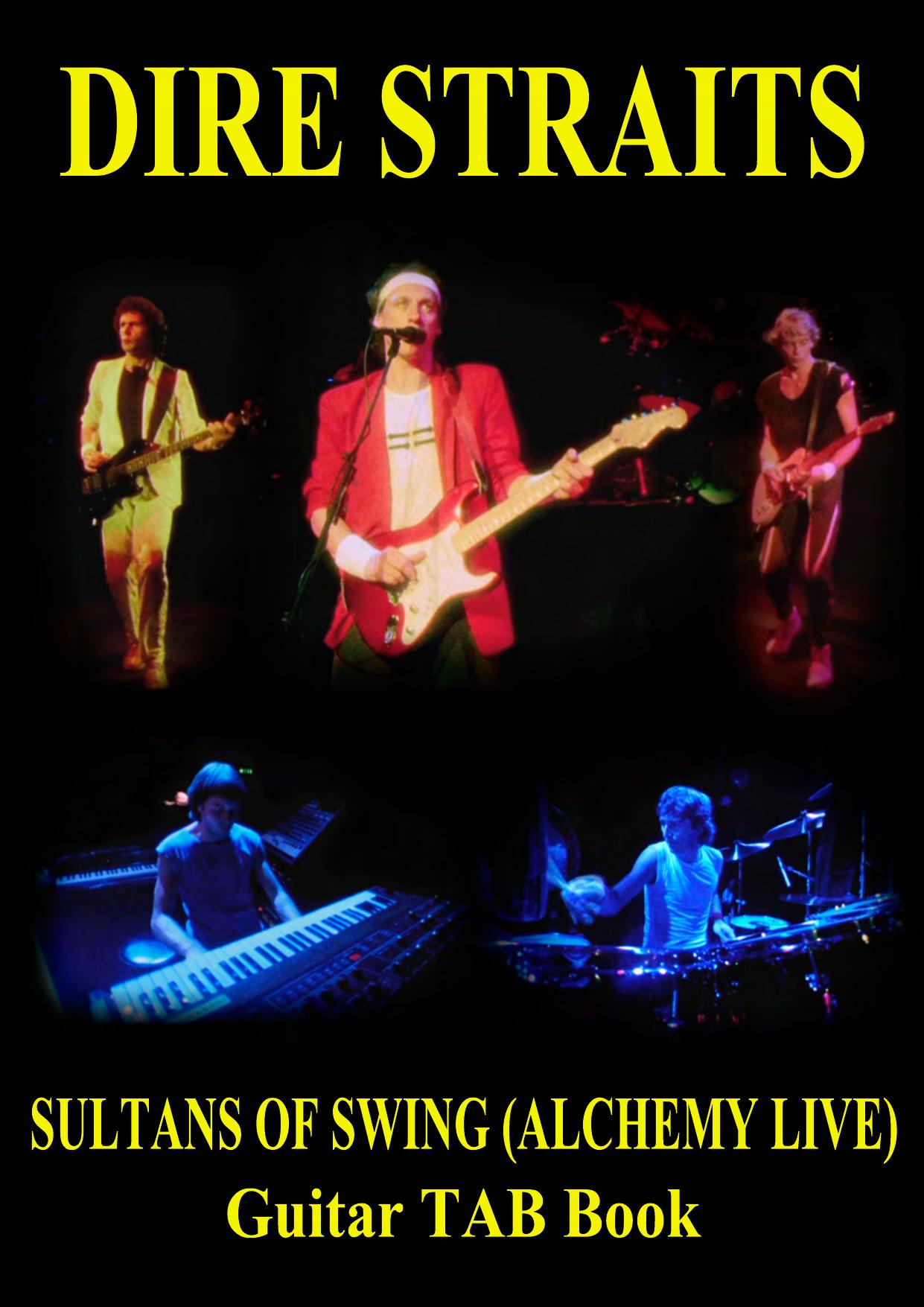
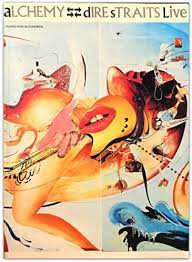
Dire Straits - Sultans Of Swing (Alchemy Live)
The best sheet music download from our Library.

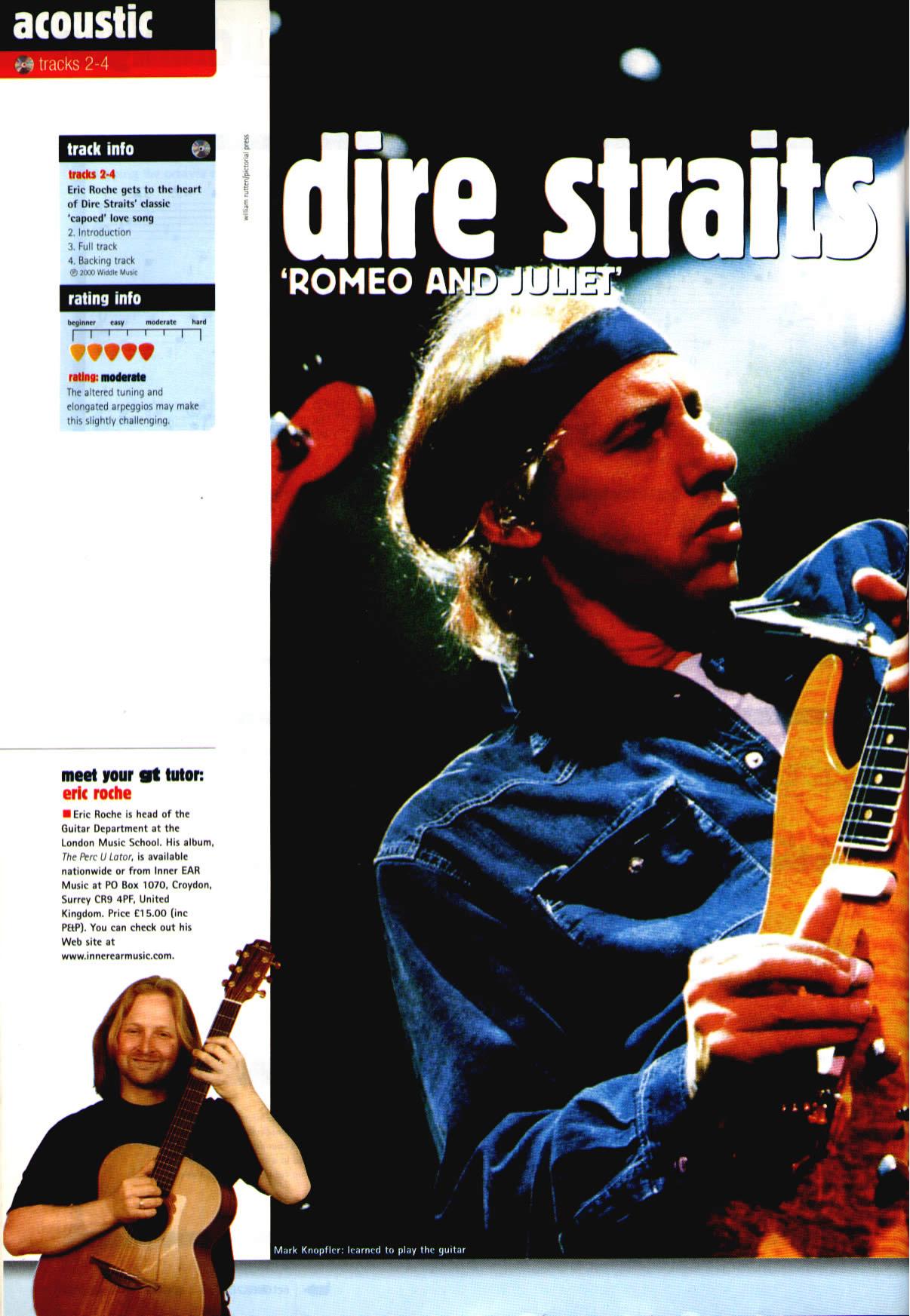
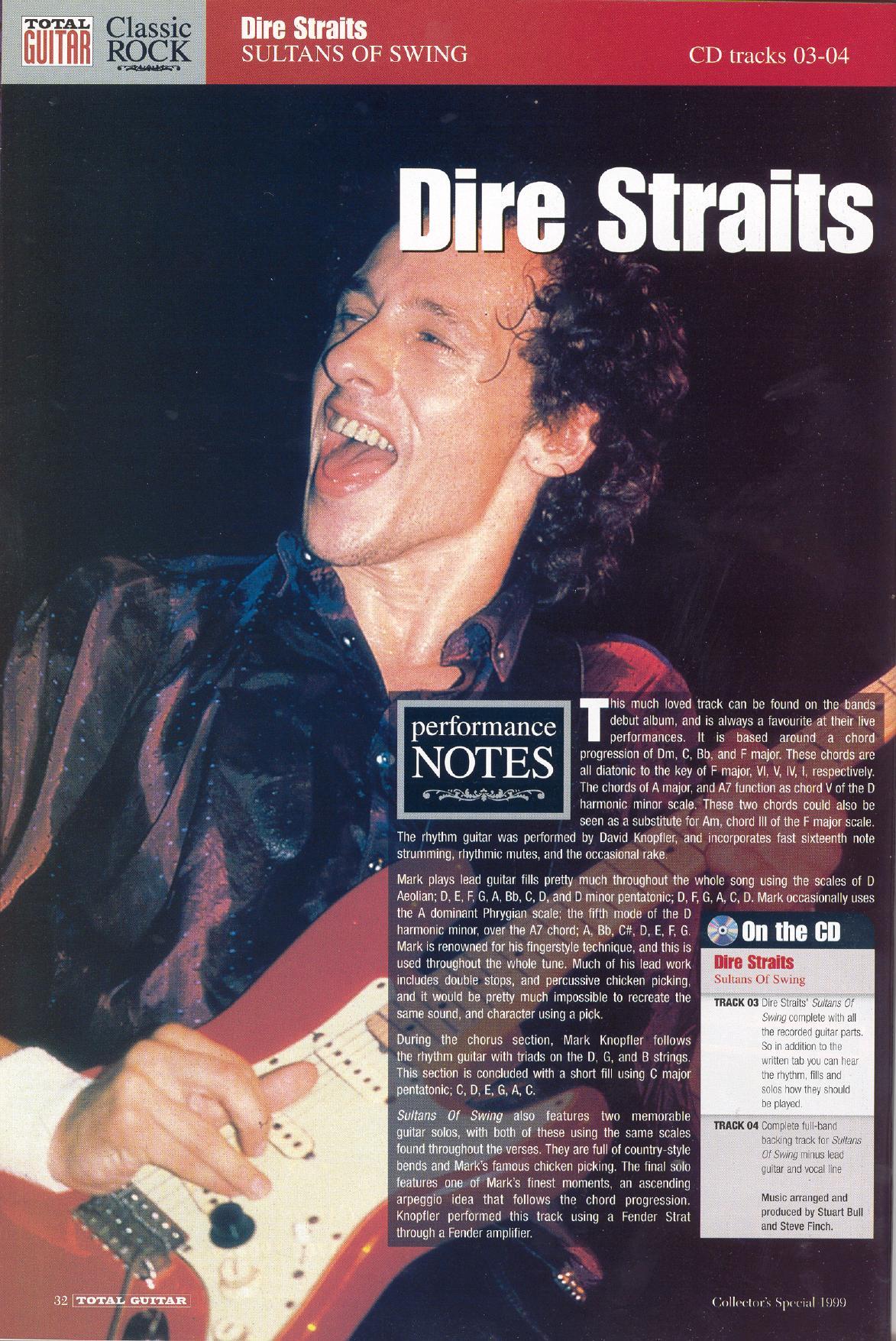
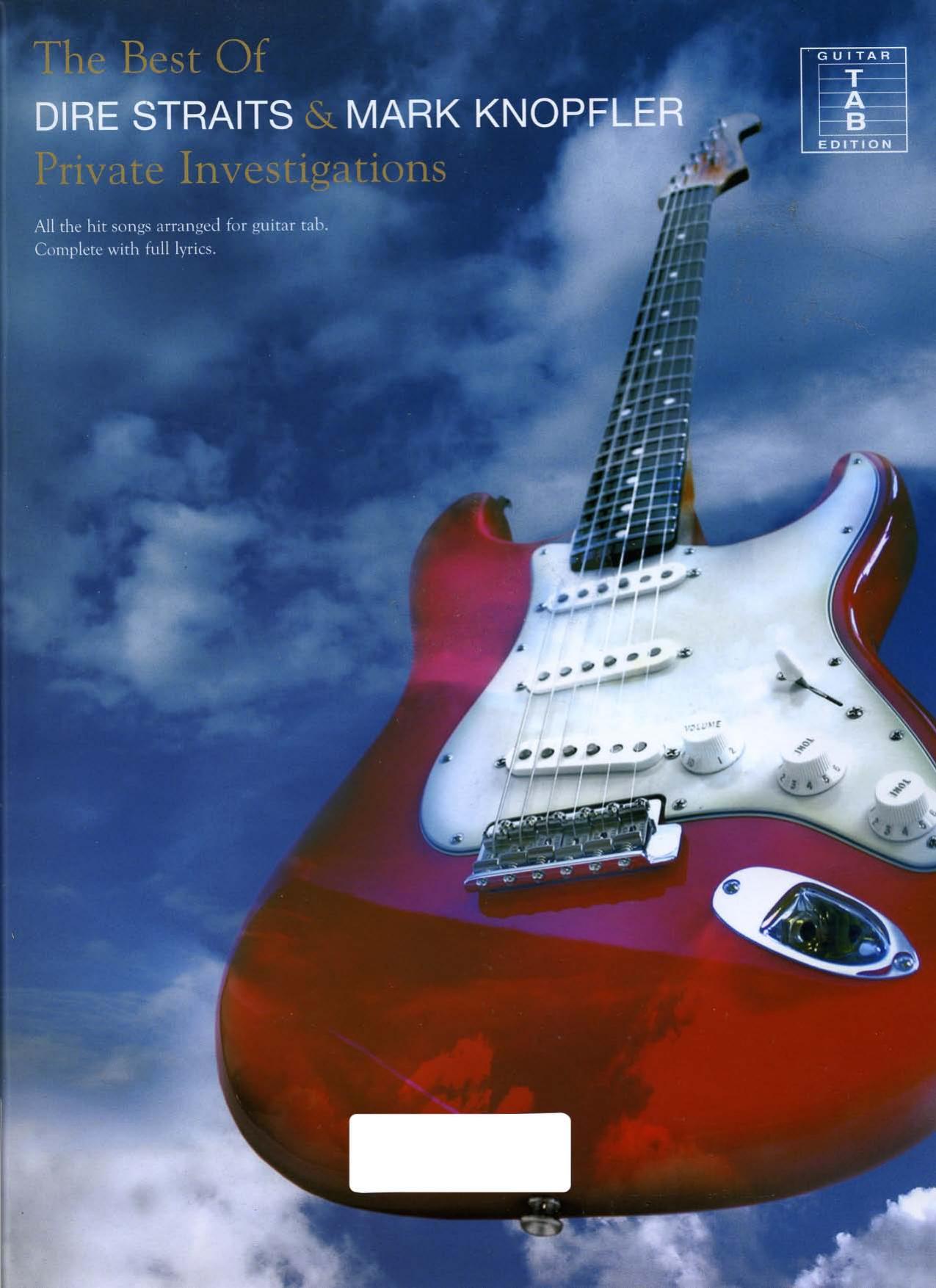

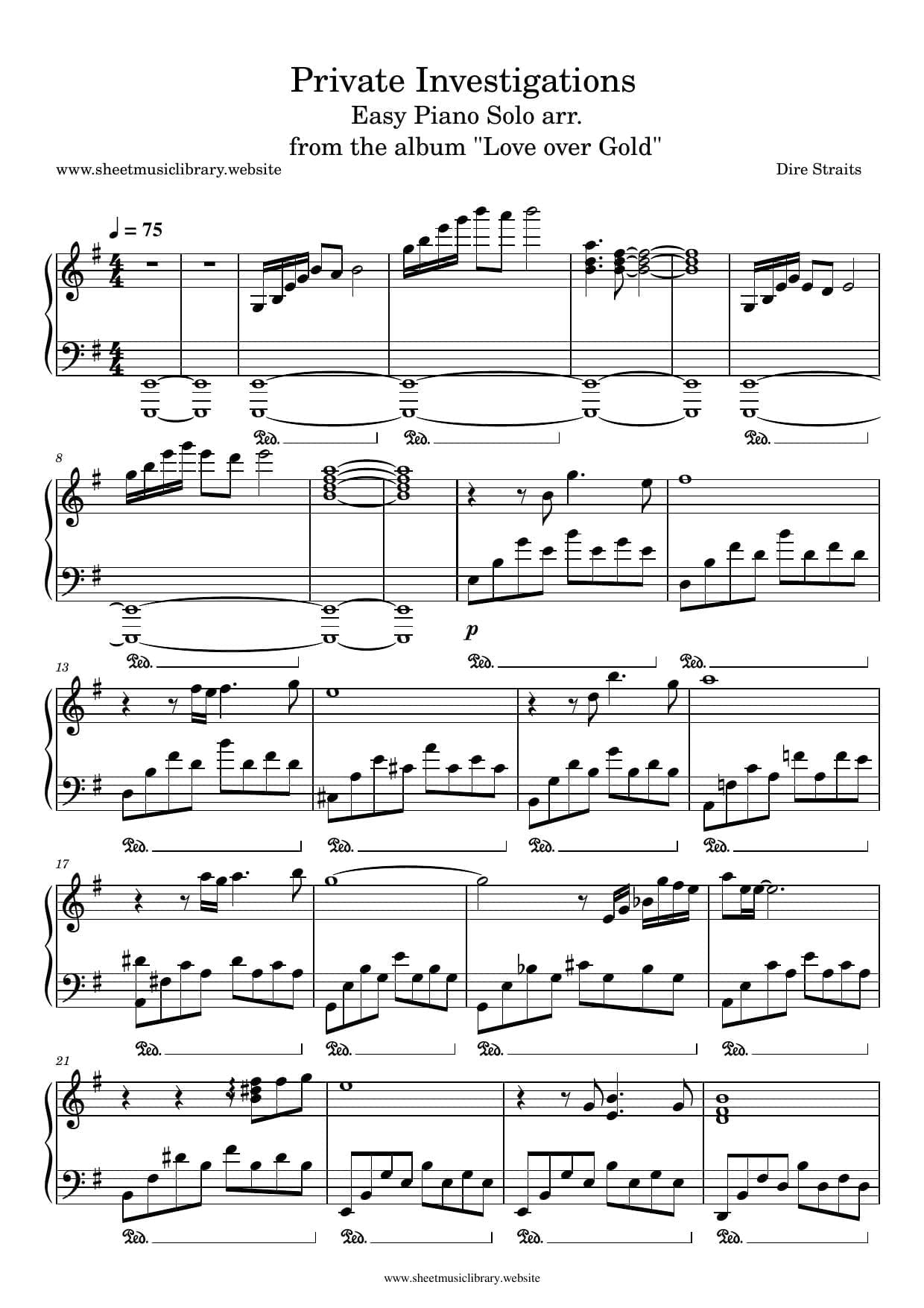
Please, subscribe to our Sheet Music Library.
Who were Dire Straits?
Dire Straits: An Exhaustive Chronicle of the Sultans of Swing
Dire Straits emerged from the London pub-rock scene in 1977 and within a few years had become one of the most celebrated, sonically distinctive bands on the planet. Powered by the unmistakable fingerstyle guitar work and wry, narrative songwriting of Mark Knopfler, the group married roots-rock with progressive ambition, jazz-tinged harmony, and a meticulous production sheen. Their 1985 album Brothers in Arms was a landmark of the compact disc era, selling over 30 million copies and cementing the band’s place in rock history. By the time they quietly disbanded in 1995, Dire Straits had sold over 100 million records, collected four Grammy Awards, and left behind a body of work that continues to be studied, covered, and revered.
Search your favorite sheet music in the Sheet Music Library Catalog
Members and Biographies
Mark Knopfler (lead vocals, lead guitar) was born in Glasgow, Scotland, in 1949 and grew up in Blyth, Northumberland. A former journalist and college lecturer, he formed Dire Straits while living in a Deptford flat with his brother David and bassist John Illsley. Knopfler’s playing style—thumb and two fingers without a pick, producing a liquid, clean tone—became the band’s sonic trademark. After the dissolution of Dire Straits, he built a prolific solo career composing film scores (Local Hero, The Princess Bride) and exploring Celtic, country, and folk traditions.
David Knopfler (rhythm guitar) was born in Glasgow in 1952 and was a founding member. His chugging acoustic strumming and electric rhythm parts were an essential textural layer on the first two albums. Creative tensions with his brother led to his departure in 1980 during the recording of Making Movies; he was replaced by Hal Lindes.
John Illsley (bass guitar, backing vocals) was born in Leicester in 1949 and remained the only member besides Mark Knopfler to stay with the band from its first demo to its last tour. His fluid, melodic bass lines and understated stage presence provided a foundation that anchored even the most sprawling live improvisations. Illsley later became a painter and has released solo work.
Pick Withers (drums) was a seasoned session musician who had played with Dave Edmunds and others. His crisp, jazz-influenced timekeeping defined the early Dire Straits sound—tight hi-hat work and subtle fills that breathed life into songs like “Sultans of Swing.” Withers left in 1982 after the Love Over Gold sessions.
Alan Clark (keyboards) joined in 1980 for the Making Movies tour and quickly became the band’s main pianist and organist. Classically trained, Clark added grand, cinematic textures (piano, Hammond organ, synthesizers) that elevated the epic scope of “Telegraph Road” and “Private Investigations.” He remained a constant presence until the band’s final tour.
Guy Fletcher (keyboards, synthesizers, backing vocals) came aboard in 1984 during the Brothers in Arms sessions. A multi-instrumentalist with a knack for atmospheric synthesizer pads and Hammond swells, Fletcher formed a seamless twin-keyboard partnership with Clark. He has continued to tour and record with Mark Knopfler as a core solo collaborator.
Terry Williams (drums) replaced Pick Withers in 1982. Known for his work with Rockpile, Williams brought a heavier, rock-solid backbeat to the band’s evolving stadium sound. He played on the Brothers in Arms album and the subsequent world tours.
Other notable contributors include guitarist Hal Lindes (1980–1985), who filled David Knopfler’s role; second guitarist Jack Sonni, a longtime friend brought in for the Brothers in Arms tour whose “walk of life” stage antics became a fan favourite; saxophonist Mel Collins, who added lush tenor lines to Love Over Gold and live shows; percussionist Danny Cummings; and pedal steel guitarist Paul Franklin, who enhanced the country undercurrent of the final album and tour.
Music Style and Instrumentation
Dire Straits defied easy categorisation. At heart a roots-rock band drawing on blues, country, and folk, they also absorbed the expansive arrangements of progressive rock and the harmonic sophistication of jazz. Mark Knopfler’s fingerstyle technique—plucking strings with his thumb, index, and middle fingers—produced a broad tonal palette ranging from muted, percussive chucking to singing, violin-like sustain. He rarely used a plectrum, a choice that contributed to his instantly identifiable “vocal” phrasing.
His primary instrument during the classic years was a Fender Stratocaster, often a sunburst 1961 model, paired with a Mesa/Boogie Mark I combo amplifier. The amp’s clean, high-headroom tone was pushed just to the edge of breakup, yielding a bell-like clarity that cut through even dense arrangements. For slide parts (such as the resonator guitar on “Romeo and Juliet”) he often turned to a National Style O. On Brothers in Arms he also played a Gibson Les Paul Standard, notably on the title track, where the thicker, creamier humbucker tone delivered its emotional solo.
The rhythm section of Illsley and Withers or Williams maintained a tight, uncluttered pocket, allowing Knopfler’s voice and guitar to occupy the foreground. Illsley’s bass lines were melodic counterpoints rather than simple root notes, often walking through passing tones that gave songs a subtle, jazzy lift. The dual-keyboard setup from Brothers in Arms onward filled the midrange with organ swells, synth pads, and honky-tonk piano, creating a widescreen landscape that suited stadiums and headphones alike.
Chord Progressions and Music Harmony
Dire Straits’ harmonic language is deceptively simple on the surface, yet rich in detail. The band frequently employed diatonic chord progressions from natural minor or Mixolydian modes, then coloured them with suspended chords, added ninths, major sevenths, and chromatic passing chords. Knopfler’s fingerpicking often arpeggiated chords in a way that implied counterpoint, with bass movement, inner voices, and melody all ringing from a single guitar.
“Sultans of Swing” is built on a i–bVII–bVI–V progression in D minor (Dm–C–B♭–A). The verse cycles hypnotically through this sequence, while the pre-chorus lifts into the relative major key of F (F–C–B♭–Dm), providing a bright, storytelling relief. The famous closing solo leans heavily on D natural minor and the D minor pentatonic scale, with frequent chromatic passing tones (such as the ♯4 and ♭5) that Knopfler bends into with microtonal precision. Each phrase is shaped like a sung line, complete with rests and breath points.
“Romeo and Juliet” uses open G tuning (DGDGBD) with a capo on the third fret, making the sounding key of B♭ major / G minor. The main riff exploits the open strings to create a harp-like cascade. The chord sequence I–IV–V–vi (shapes G, C, D, Em) is straightforward, but the tuning generates suspended seconds and fourths that shimmer against the fretted notes. The resonator slide solo adds an aching, vocal quality that perfectly mirrors the song’s nostalgic lyric.
“Brothers in Arms” is set in C♯ minor and opens with a spacious arpeggiation of i–♭VI–♭III–♭VII (C♯m–A–E–B). This progression moves from a sombre tonic to a bright submediant, then lifts to the mediant major before dropping to the subtonic, creating a circular, unresolved melancholy. Knopfler’s solo on the Les Paul uses the natural minor scale with bent blue notes, and the controlled use of the guitar’s volume knob allows notes to fade and swell like a human voice.
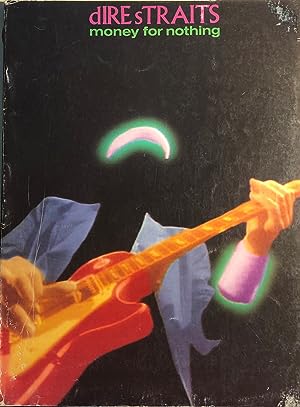
“Money for Nothing” is rooted in G minor and is driven by the now-iconic riff that outlines a Gm7–B♭–C–D (i–III–IV–V) framework. The riff’s syncopated stabs and the mixolydian-flavoured chorus (E♭–B♭–F–G) give the track its triumphant, arena-sized swagger. The rare use of a wah-wah pedal during the solo, combined with pinched harmonics, produced a tone that was both guttural and soaring—a deliberate caricature of the “heavy metal” music the song’s narrator dismisses.
Other notable examples include “Tunnel of Love,” whose waltz-time intro (borrowed from Rodgers and Hammerstein’s “Carousel Waltz”) moves into a 6/8 I–V–vi–IV progression, and “Telegraph Road,” a fourteen-minute epic that begins with a pastoral instrumental in E minor and evolves through a series of key centres, dynamic shifts, and modal explorations, displaying the band’s progressive rock ambition. “Private Investigations” abandons traditional chord progressions for much of its run, relying instead on arpeggiated classical guitar figures, sparse minor chords, and atmospheric sound design punctuated by explosive drum crashes.
Influences
Mark Knopfler’s biggest avowed influence was J.J. Cale, the Oklahoma-born architect of the “Tulsa sound.” From Cale, Knopfler absorbed the power of understatement: relaxed, grooving tempos; muted guitar tones; and vocals that were conversational rather than histrionic. Bob Dylan’s lyrical density and nasal, character-driven delivery likewise left a deep mark, as did the clean, melodic instrumental rock of The Shadows—especially Hank Marvin’s echo-laden Stratocaster sound. Chet Atkins and Merle Travis inspired the fingerpicking technique, while Scotty Moore (Elvis Presley’s guitarist) and B.B. King supplied the blues vocabulary that Knopfler bent to his own melodic ends. Celtic folk music, heard in the band’s jig-like runs and storytelling ballads, was another thread woven into the tapestry. This synthesis of American roots music and British folk tradition gave Dire Straits a transatlantic appeal that few of their peers could match.
Relationship with Other Artists
Dire Straits’ most famous collaborative moment was the 1985 single “Money for Nothing,” which featured Sting singing the falsetto “I want my MTV” hook—a melody that inadvertently echoed Sting’s own Police hit “Don’t Stand So Close to Me.” Sting was credited as co-writer. The partnership continued at Live Aid that same year, where the two artists shared a stage for a memorable set.
Mark Knopfler’s production and guitar work for Bob Dylan significantly deepened the connection between the two songwriters. Knopfler played on Dylan’s 1979 gospel album Slow Train Coming, and later produced 1983’s Infidels, a celebrated return to secular songwriting. The sessions yielded outtakes like “Blind Willie McTell” and showcased Knopfler’s ability to frame Dylan’s voice in sympathetic, organic arrangements.
Knopfler also wrote “Private Dancer” for Tina Turner, a career-redefining hit that anchored her 1984 comeback album of the same name. With Eric Clapton, he shared stages and mutual admiration; Knopfler was one of the guitarists invited to perform at Clapton’s 70th-birthday concerts. He played on Phil Collins’ No Jacket Required and joined an all-star ensemble for the Nelson Mandela 70th Birthday Tribute in 1988, where Dire Straits (with Eric Clapton) backed various artists. His duet album Neck and Neck (1990) with Chet Atkins remains a masterclass in genteel, virtuosic guitar interplay.
Knopfler’s roots side project, The Notting Hillbillies, formed in 1986 with Steve Phillips, Brendan Croker, and Guy Fletcher, released the country-blues album Missing… Presumed Having a Good Time and further solidified his ties to the British folk-blues community. Later, his album All the Roadrunning (2006) with Emmylou Harris confirmed that his collaborative instincts extended gracefully beyond rock.
Discography and Most Known Works
Discography
Main article: Dire Straits discography
- Dire Straits (1978)
- Communiqué (1979)
- Making Movies (1980)
- Love over Gold (1982)
- Brothers in Arms (1985)
- On Every Street (1991)
Studio Albums
- Dire Straits (1978) – Featuring “Sultans of Swing,” “Down to the Waterline,” “Water of Love.” The debut introduced the band’s clean, rootsy aesthetic.
- Communiqué (1979) – A mellow follow-up with “Lady Writer” and “Once Upon a Time in the West,” often unfairly overlooked.
- Making Movies (1980) – Marked a leap in ambition. Contains the epics “Tunnel of Love,” “Romeo and Juliet,” and “Skateaway,” with Roy Bittan (E Street Band) on piano.
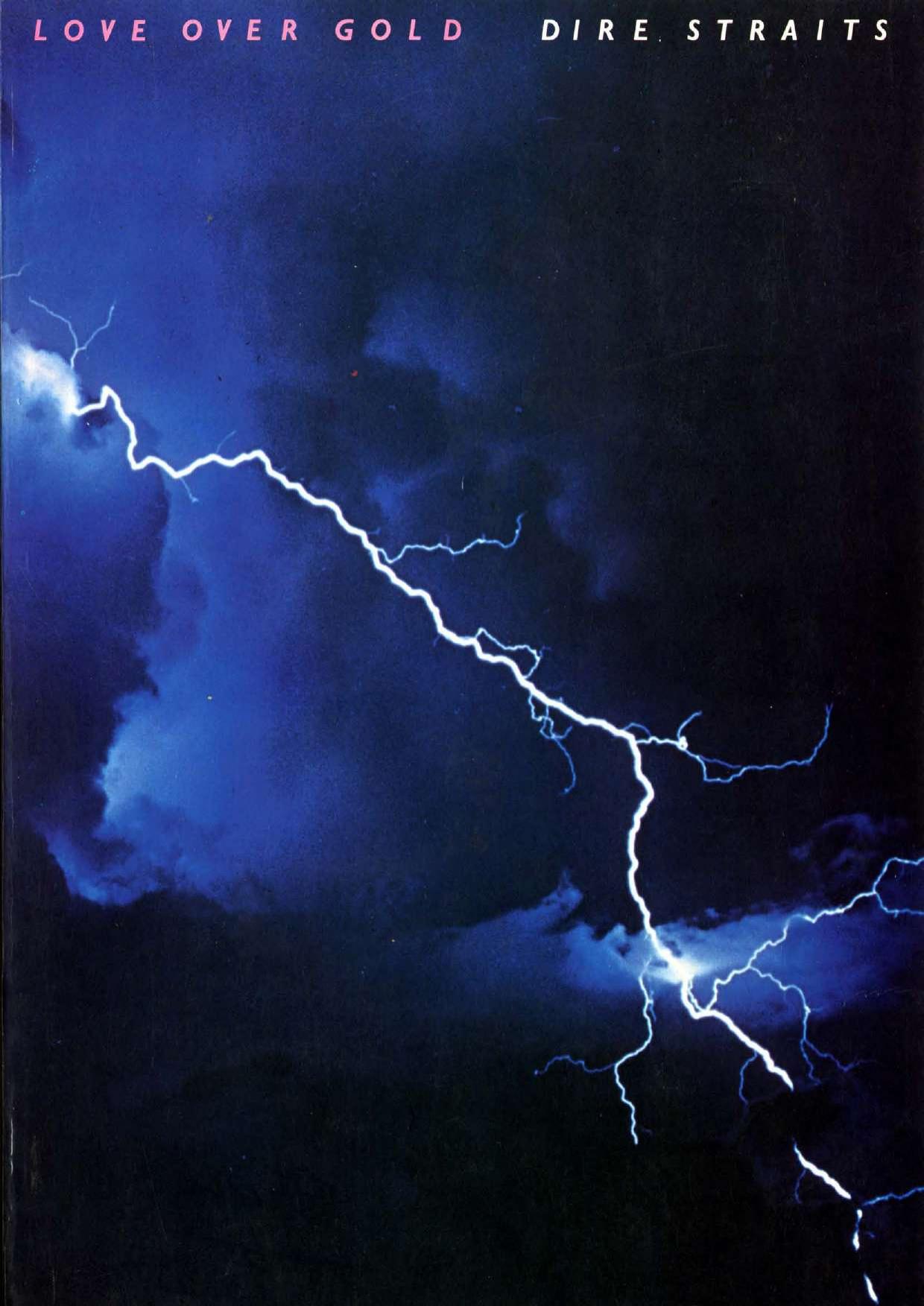
- Love Over Gold (1982) – The band’s most progressive statement, opening with the 14-minute “Telegraph Road” and including the stark “Private Investigations.” Only five tracks, yet a masterpiece of atmospheric rock.
- Brothers in Arms (1985) – A commercial colossus and artistic peak. Singles include “Money for Nothing,” “Walk of Life,” “So Far Away,” and the title track. One of the first albums fully embraced by the CD generation.
- On Every Street (1991) – The final studio album, a mature, country-tinged set with “Calling Elvis,” “Heavy Fuel,” and the epic title track.
Live Albums
- Alchemy: Dire Straits Live (1984) – Recorded at London’s Hammersmith Odeon in July 1983. Widely regarded as one of the greatest live albums ever, capturing the band at a transitional peak with stretched, incendiary versions of “Sultans of Swing” and “Telegraph Road.”
- On the Night (1993) – Documents the On Every Street tour with a larger ensemble including sax, pedal steel, and percussion.
- Live at the BBC (1995) – A compilation of early radio sessions and concerts from 1978–1981.
Most Known Works
“Sultans of Swing,” “Romeo and Juliet,” “Tunnel of Love,” “Private Investigations,” “Telegraph Road,” “Money for Nothing,” “Walk of Life,” “Brothers in Arms,” “So Far Away,” and “Calling Elvis” form the canonical core. “Sultans of Swing” alone is one of the most famous guitar songs in rock, its solo a rite of passage for aspiring players.
Works on Films and Television
Dire Straits’ music has been widely licensed for film and television, though the band as a unit did not compose soundtracks—that territory belongs to Mark Knopfler’s solo career, which yielded classic scores for Local Hero, The Princess Bride, Cal, and Last Exit to Brooklyn, often featuring Dire Straits personnel.
Nonetheless, the band’s songs have underscored iconic moments on screen. “Brothers in Arms” was used to devastating effect in the final sequence of The West Wing episode “Two Cathedrals” (2001), where it accompanied President Bartlet’s funeral decision and rain-soaked monologue. “Money for Nothing” introduced a cartoon violence scene in Kingsman: The Golden Circle (2017), its riff perfectly matching the mayhem of a robotic dog attack. “Sultans of Swing” appears in the 2005 remake of The Longest Yard, and was featured in Coyote Ugly (2000) during a barroom dance scene. The song “Walk of Life” has soundtracked sporting events and feel-good montages, including the 2010 romantic comedy Going the Distance.
The band’s pioneering, partially computer-animated music video for “Money for Nothing”—created using early CGI by Ian Pearson and Gavin Blair—was a staple on MTV and is now considered a milestone in visual effects history. It won Video of the Year at the 1986 MTV Video Music Awards and is preserved in museum exhibitions on digital art.
Live Performances
Dire Straits built their reputation on relentless touring and instrumental virtuosity. Early pub and club gigs sharpened their tightness, but by the Making Movies tour they were filling theatres. Their 1983 Hammersmith Odeon residency, immortalised as Alchemy, captured a band in full flight: “Once Upon a Time in the West” opened with a brooding keyboard swath, “Sultans of Swing” stretched beyond ten minutes with a jaw-dropping final solo, and “Telegraph Road” became a self-contained rock symphony. Mark Knopfler’s ability to improvise new melodic lines night after night gave each performance a fresh, spontaneous feel.
The 1985–1986 Brothers in Arms world tour was a global phenomenon, playing to over 2.5 million people across 247 shows. Their Live Aid appearance at Wembley Stadium in July 1985—with Sting joining for “Money for Nothing”—was one of the day’s highlights. In 1988, the band performed at the Nelson Mandela 70th Birthday Tribute, sharing the Wembley stage with Eric Clapton and backing a roster of stars.
The final On Every Street tour (1991–1992) was a logistical behemoth, featuring a nine-piece line-up and a stage set that mirrored a city skyline. It became one of the highest-grossing tours in history up to that point. The concert recorded in Nîmes and Rotterdam was released as On the Night. After the tour’s conclusion in Zaragoza, Spain, in October 1992, Mark Knopfler quietly drew the curtain on the band, and aside from a one-off charity performance in 1993, Dire Straits never played again. For fans, the live recordings remain a testament to a band that preferred musical dialogue to arena-rock cliché.
Documentaries and Films
- Classic Albums: Dire Straits – Brothers in Arms (2000) – Part of the acclaimed Eagle Rock series, this documentary features interviews with Knopfler, Illsley, Fletcher, and engineer Neil Dorfsman, dissecting the making of the album track by track, with isolated multi-track breakdowns of the recordings.
- Dire Straits: Alchemy Live (1984, VHS/DVD/Blu-ray) – The full concert film of the legendary Hammersmith Odeon show, intercut with backstage footage.
- Dire Straits: On the Night (1993) – Concert film from the final tour, showcasing the expanded band and a setlist that spanned the catalogue.
- Sultans of Swing: The Very Best of Dire Straits (1998) – A DVD compilation of all the major music videos, with some interviews and commentary.
- Various BBC “Omnibus” and “Arena” specials have profiled the band and Knopfler over the years, while the 2011 documentary Mark Knopfler: A Life in Songs delves into the frontman’s full songwriting journey.
Though no theatrical feature documentary strictly under the Dire Straits name exists, the combination of Alchemy, Classic Albums, and the video anthology provides a rich visual archive.
Legacy
Dire Straits were inducted into the Rock and Roll Hall of Fame in 2018, a long-overdue recognition of their influence and commercial achievements. The ceremony brought together the classic line-up—though Mark and David Knopfler did not attend, Illsley, Clark, and Fletcher accepted the honour with gracious speeches. With over 100 million albums sold, four Grammy Awards (including Best Rock Performance by a Duo or Group and Best Music Video), three Brit Awards, and a catalogue that consistently streams in the hundreds of millions, their numbers tell a story of immense popularity.
Their musical legacy is heard in generations of guitarists who adopted Knopfler’s fingerstyle approach, from John Mayer to countless YouTube learners decoding the “Sultans of Swing” solo. Producers continue to cite Brothers in Arms as a reference standard for audiophile recording quality. The band’s willingness to fuse pub-rock intimacy with progressive scope, and to let songs breathe through instrumental dialogue rather than formulaic structures, set them apart from many of their MTV-era contemporaries.
Perhaps most importantly, Dire Straits demonstrated that in an age of increasing visual spectacle and keyboard-driven pop, a band built around storytelling lyrics, a clean guitar tone, and the chemistry of musicians listening to one another could conquer the world. The music remains timeless because it was never tied to a fashion; it was simply the sound of five players in a room, serving the song with taste, touch, and an unshakeable conviction that less could be infinitely more.
Awards
Listen to Dire Straits music on Spotify
Browse in the Sheet Music Library:
Or browse in the categories menus & download the Library Catalog PDF:
Dire Straits - FULL CONCERT (Rockpop In Concert, 1980)
Dire Straits performing on the show 'Rockpop In Concert' in Germany on December 19, 1980 as part of their Making Movies tour.
Track List:
00:00:00 Once Upon A Time In The West 00:09:58 Down To The Waterline 00:14:50 Lions 00:22:22 News 00:28:07 Sultans Of Swing 00:37:39 Tunnel Of Love 00:50:00 Solid Rock