Table of Contents
Who was Django Reinhardt?
Django Reinhardt – The Best of Jazz Guitar (The Greatest Jazz Masterpieces)
00:00 Django Reinhardt – Crazy Strings (1936) 03:18 Django Reinhardt – Nagasaki (1936) 06:03 Django Reinhardt – Sweet Chorus (1936) 08:41 Django Reinhardt – I Can’t Give You Anything But Love (1936) 11:59 Django Reinhardt – Chicago (1937) 15:21 Django Reinhardt – Hot Lips (1937) 18:22 Django Reinhardt – Swanee River (1935) 21:22 Django Reinhardt – Ultrafox (1935) 24:40 Django Reinhardt – Sweet Serenade (1936) 27:42 Django Reinhardt – Swing Guitars (1936) 30:04 Django Reinhardt – Cloud Castles (1936) 32:58 Django Reinhardt – Avalon (1935) 35:44 Django Reinhardt – Novel Pets (1936) 39:09 Django Reinhardt – I’se A Muggin’ (1936) 42:12 Django Reinhardt – Magic Strings (1936) 45:19 Django Reinhardt – Charleston (1937)
48:08 Django Reinhardt – Lady Be Good (1934) 51:20 Django Reinhardt – Oriental Shuffle (1936) 53:55 Django Reinhardt – Georgia On My Mind (1936) 57:04 Django Reinhardt – Limehouse Blues (1936) 59:47 Django Reinhardt – Budding Dancers (1936) 01:02:23 Django Reinhardt – You Rascal, You (1937) 01:05:25 Django Reinhardt – Smoke Rings (1935) 01:08:00 Django Reinhardt – In The Still Of The Night (1936) 01:10:52 Django Reinhardt – Dinah (1934) 01:13:22 Django Reinhardt – Are You In The Mood (1936) 01:16:06 Django Reinhardt – After You’ve Gone (1936) 01:19:09 Django Reinhardt – Tiger Rag (1934) 01:21:37 Django Reinhardt – Parfum (1937) 01:24:22 Django Reinhardt – Shine (1936)
Search best Django Reinhardt’s sheet music, books, and transcriptions in the Library:
The best sheet music download from our Library.
Scores for all instruments: 16,000+ (active and growing), over 236,000 pages.
All genres and levels: Jazz & Blues, Rock & Pop, Classical & Contemporary, Film & Musicals;
books & biographies; methods, études, play-along tracks (MP3) for Jazz & Rock.
Access & benefits: US$15.99 one-time payment, valid for lifetime, full Library access.
Please, subscribe to our Sheet Music Library. Sheet music should be accessible and affordable for all musicians, from professionals to absolute beginners.
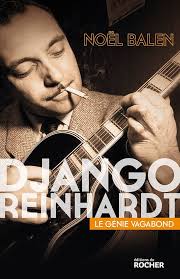
Django Reinhardt: The Gypsy Genius Who Revolutionized Jazz Guitar
Jean Reinhardt, known universally by his Romani nickname Django (French: [dʒãŋɡo ʁɛjnaʁt]), was born on 23 January 1910 in Liberchies, Pont-à-Celles, Belgium, and died on 16 May 1953 in Fontainebleau, France, at the age of 43. He was a French jazz guitarist and composer who became one of the first major jazz talents to emerge in Europe and has been hailed as one of its most significant exponents. With his virtuosic technique, innovative harmonic approach, and unforgettable melodic sensibility, Reinhardt fundamentally transformed the role of the guitar in jazz, establishing it as a lead instrument capable of extraordinary expressiveness.
His life story is one of remarkable triumph over adversity. At the age of 18, Reinhardt was severely injured in a fire that destroyed the caravan he called home, leaving his left hand badly burned and his fourth and fifth fingers paralyzed. Against all odds, he relearned the instrument using only his thumb and first two fingers for soloing, developing a completely original technique that would become the foundation of an entirely new musical genre.
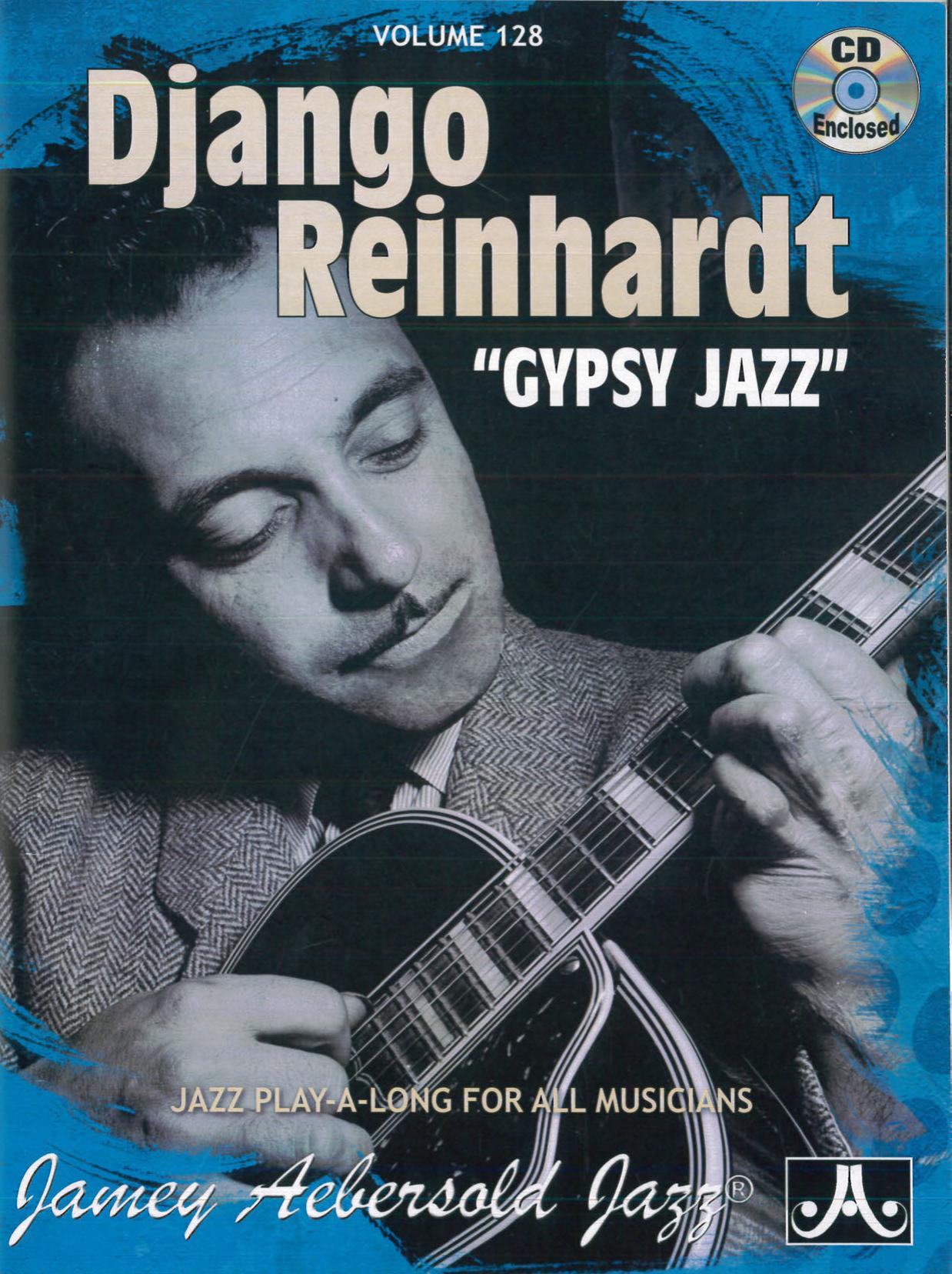

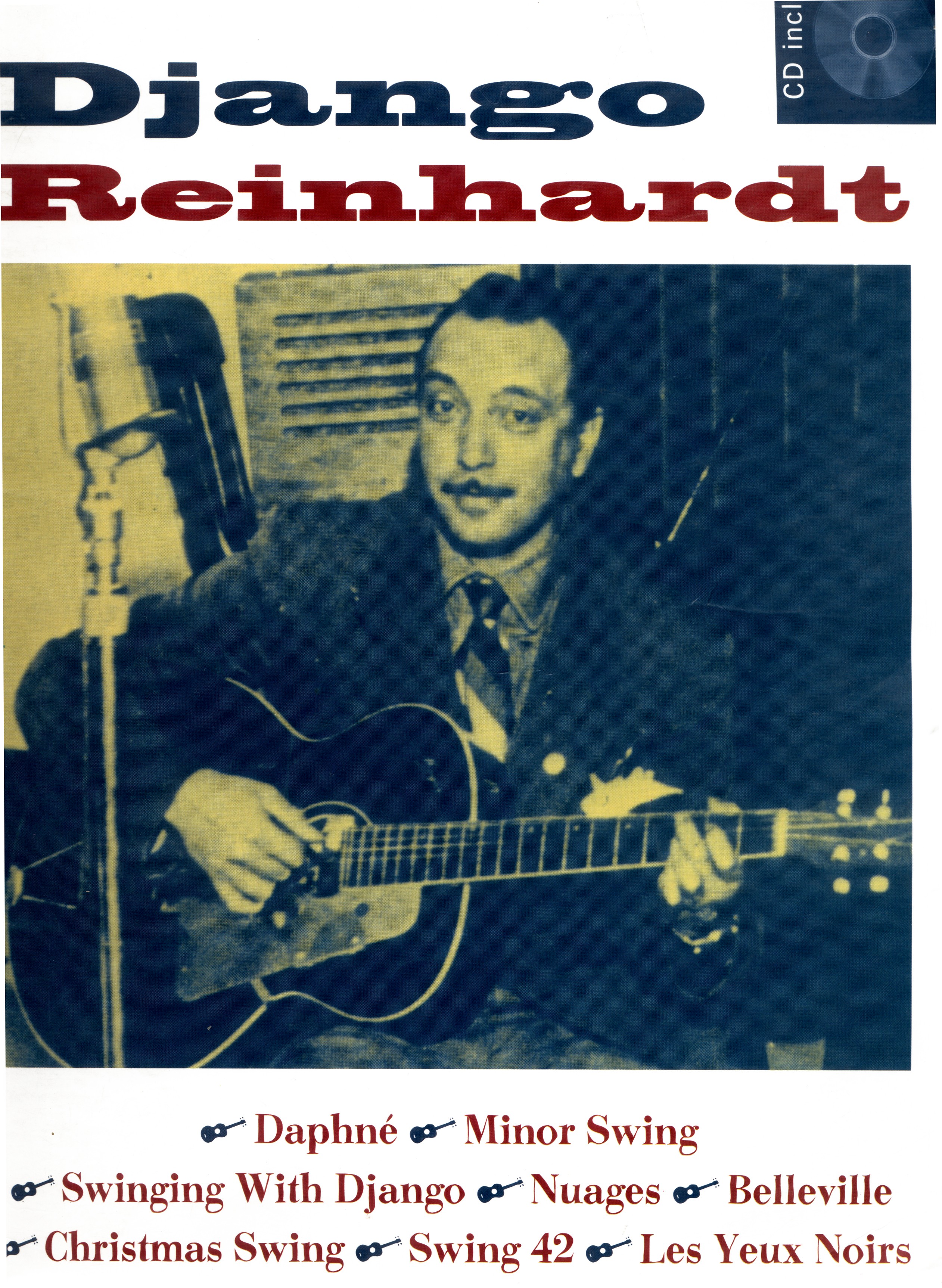
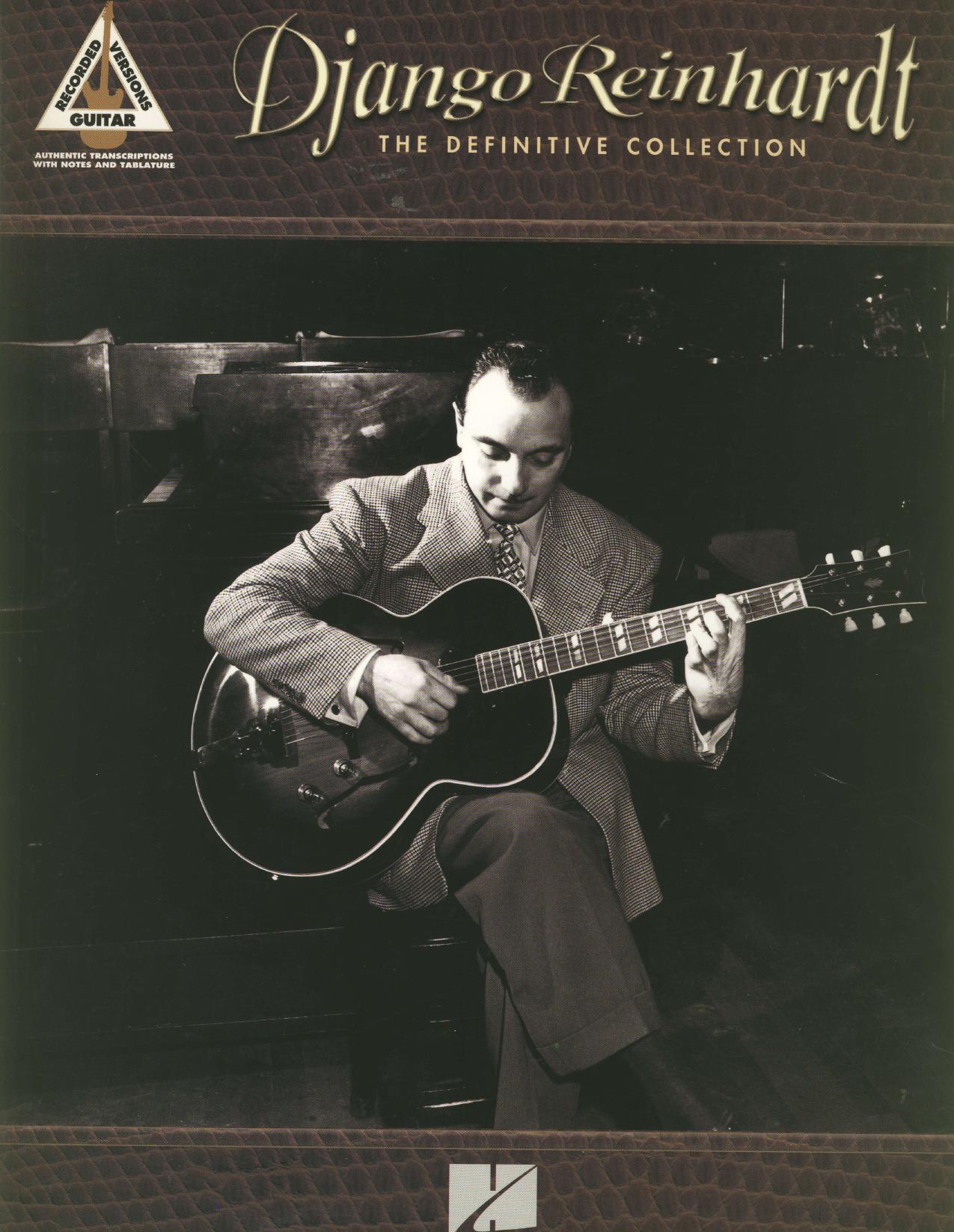
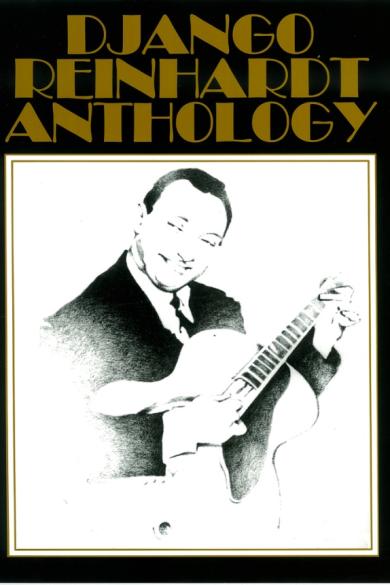
Biography: The Man Behind the Legend
Early Life and Romani Heritage
Django was born into a family of Manouche Romani people, a community with deep musical traditions. His Romani name "Django" means "I awake". He began his musical journey on the violin before switching to the banjo-guitar, at which he excelled from a very young age. By the age of 13, Reinhardt was already a working musician in the dancehalls of Paris. During this formative period, he was influenced by two older gypsy musicians—the banjoist Gusti Mahla and the guitarist Jean "Poulette" Castro.
The Fire and Its Aftermath
The pivotal moment in Reinhardt's life came in 1928. After returning home from an evening gig, the caravan he shared with his wife Florine Mayer (known as Bella) was set ablaze by a candle that ignited celluloid flowers made by Bella. Both survived, but Django suffered extensive damage to his left hand, with his ring finger and pinky severely burned and paralyzed. Doctors doubted he would ever play again.
Yet during a long recovery period, Reinhardt refused to accept this prognosis. He painstakingly relearned the guitar, developing a technique that used his thumb and first two fingers for fretting, while his damaged fingers remained largely unusable for soloing (though he reportedly managed to use them for certain chord shapes). This physical limitation paradoxically became the crucible for one of the most original and influential guitar styles in history.
The Quintette du Hot Club de France
In 1934, Reinhardt, along with violinist Stéphane Grappelli, formed the Paris-based Quintette du Hot Club de France. The group's most famous lineup featured Reinhardt on guitar, Grappelli on violin, Louis Vola on bass, and rhythm guitarists Roger Chaput and Joseph Reinhardt (Django's brother). The quintet was revolutionary for its time—an all-string ensemble that featured the guitar as a lead instrument, something virtually unprecedented in jazz. The group was among the first to play jazz that featured the guitar as a lead instrument.
The Quintette du Hot Club de France set the precedent for what would become known as Gypsy jazz, with its distinctive instrumentation of lead guitar, violin, two rhythm guitars, and upright bass. This configuration remains the template for Gypsy jazz ensembles to this day.
Later Years and American Tour
Reinhardt recorded in France with many visiting American musicians, including Coleman Hawkins and Benny Carter. In 1946, he briefly toured the United States with Duke Ellington's orchestra. However, the tour was something of a disappointment—Ellington did not write any special compositions or arrangements to feature Reinhardt, who only performed a short solo set.
In his final years, Reinhardt embraced the emerging bebop style, playing electric guitar and incorporating modern harmonic concepts into his playing. He continued performing and recording until his sudden death from a brain hemorrhage in 1953 at the age of 43.
Personal Life
Reinhardt was married twice—first to Florine Mayer (m. 1927) and later to Sophie Ziegler (m. 1943). He had two sons: Lousson Reinhardt and Babik Reinhardt, both of whom became musicians. His brother Joseph Reinhardt was also a guitarist who played alongside him in the Quintette.
Members and Key Collaborators
The Quintette du Hot Club de France Lineup
The classic Quintette du Hot Club de France lineup consisted of:
- Django Reinhardt – lead guitar
- Stéphane Grappelli – violin
- Joseph Reinhardt (Django's brother) – rhythm guitar
- Roger Chaput – rhythm guitar
- Louis Vola – upright bass
Later, after Grappelli's departure during World War II, Reinhardt continued using the Quintette name with a different group, featuring Hubert Rostaing as the first of several clarinetists, backed by a more conventional rhythm section with drums, bass, and a rhythm guitar played by Reinhardt's son Lousson or his brother Joseph.
Stéphane Grappelli: The Musical Partnership
The partnership between Reinhardt and violinist Stéphane Grappelli was one of the most celebrated in jazz history. Their musical relationship was long and deeply productive. As described by biographer Michael Dregni, Grappelli was "suave and smooth" while Reinhardt was "sharper and more dissonant"—their contrasting styles created a perfect musical tension.
Other Key Collaborators
Reinhardt worked with numerous other significant musicians throughout his career:
- Coleman Hawkins and Benny Carter – American jazz giants who recorded with Reinhardt in France
- Duke Ellington – with whose orchestra Reinhardt toured the United States in 1946
- Jean Sablon and Germaine Sablon – cabaret entertainers and motion picture industry figures with whom Reinhardt had a working relationship
- Alexander Lagoya – the classical guitarist, who recalled Reinhardt's deep appreciation for Bach: "We met often, and every time he asked me to play him Bach. He adored Bach"
- Dizzy Gillespie – Reinhardt sat in with Gillespie's quintet at a Paris concert on March 1, 1953, just months before his death
Music Style: The Birth of Gypsy Jazz
Jazz Manouche
Reinhardt was the first European jazz musician to carve out a unique style—jazz manouche (Gypsy jazz)—wedding the virtuosic speed and rhythmic conception of Roma traditional music with jazz improvisation. This style, also known as Gypsy swing, became his enduring legacy.
The Acoustic Sound
Unlike many jazz guitarists who embraced amplification, Reinhardt's classic recordings feature the acoustic guitar prominently. His sound was characterized by:
- Rapid, blazing arpeggios
- Propulsive, spiky rhythms
- A relentless sense of swing
- Horn-like improvisations that predated Charlie Christian's work
- Use of doubled octaves and block chords that foreshadowed Wes Montgomery
Technical Innovations
Despite—or perhaps because of—his physical limitations, Reinhardt developed a highly distinctive technical approach:
- Two-finger soloing: Using only his thumb and first two fingers for fretting
- Movable chord shapes: Most of his chords were movable shapes that could be slid up and down the neck
- Arpeggio-based lines: His improvisations were heavily built around arpeggios, using triads and diminished shapes
Chord Progressions and Music Harmony
The Harmonic Language of Gypsy Jazz
Reinhardt's harmonic approach was innovative and distinctive. As one guitar lesson notes, "A lot of the charm and feel of Gypsy jazz is made up by its harmonies. The chords create the strong warm drive and different feels of this music".
Common Chord Types
Gypsy jazz harmony employs specific chord types that give the music its characteristic sound:
- 6ths, 9ths, and minor 7ths – the most common added intervals
- Major 7ths – less common
- 13ths and other extensions – used occasionally
These "flavor notes" can be complimentary to the melody or used to create special tension or "ring". The notes are often spread apart across the strings in wide intervals.
Minor and Major Chord Voicings
Minor chords (tonic):
m6th-chords have a special "minor" feel and create lots of tension. The m7th and m9th can be very light and uplifting, providing the drive that pulses through many of Django's tunes such as "Minor Swing" and "Anniversary Song".
Major chords (tonic):
Major-6th-chords have a folky and positive undertone, more commonly heard in slower tempos in pieces like "Artillerie Lourde," "Nuages," and "A Little Love, a Little Kiss".
Chord Progressions and Bass Lines
Chord progressions in Gypsy jazz are often based on bass lines, requiring chord voicings with a bass note other than the root. This approach creates the characteristic harmonic motion of the style.
Rhythmic Approach
Rhythm guitar in Gypsy jazz requires a specific technique—controlling the ringing of the strings and playing with crisp, articulated quarter-notes. The rhythm guitar does not let chords ring from one beat to the next, creating the propulsive, driving feel that defines the genre.
Influences
Early Influences
Reinhardt's early musical development was shaped by:
- Gusti Mahla and Jean "Poulette" Castro – older gypsy musicians who influenced him in his youth
- American jazz musicians – including guitarist Eddie Lang, violinist Joe Venuti, and trumpeter Louis Armstrong
- Classical music – particularly Bach, whom he adored
- Ravel and Debussy – whose impressionistic harmonies influenced his later compositions, including symphonic pieces
The Jazz Revelation
When Reinhardt first heard American jazz musicians, his improvisatory language—and, by extension, jazz guitar as we know it—was transformed. He absorbed the swing and rhythmic vitality of American jazz and filtered it through his unique Romani musical sensibility.
Legacy and Influence
Influence on Guitarists
Reinhardt's influence on the guitar world is immeasurable. Jazz guitarist Frank Vignola said that nearly every major popular music guitarist in the world has been influenced by Reinhardt.
Among the American guitarists who sought out Reinhardt on visits to France after World War II were Charlie Byrd, Les Paul, and Barney Kessel. Others who subsequently cited him as an influence include:
- Wes Montgomery – the premiere hard bop guitarist
- Chet Atkins – country music legend
- B.B. King – the blues giant
- John McLaughlin – fusion pioneer
- Carlos Santana and Vernon Reid – rock-oriented artists
- Jerry Garcia – of the Grateful Dead
- Charlie Christian – the pioneering electric jazz guitarist
- Les Paul – the inventor and guitarist
As Rex Stewart, the American cornetist who recorded with Reinhardt in 1939 and 1947, recalled: "Django was to the guitar what Louis Armstrong was to the trumpet or Art Tatum to the piano. He inspired the playing and thinking of countless hundreds of guitar players all over the world".
The Gypsy Jazz Tradition
Where Reinhardt's influence is most apparent today is in the so-called "gypsy jazz" genre. Gypsy jazz's best-known exponents include Biréli Lagrène, Boulou Ferré, and Stochelo Rosenberg, who hail from western European gypsy communities. Today, the genre has gained a widespread following of musicians and listeners who keep Reinhardt's music alive throughout the globe.
Annual Festivals
Over the last few decades, annual Django festivals have been held throughout Europe and the United States. In February 2017, the Django 100 Centennial Tour gathered one hundred of his disciples, including his grandson David Reinhardt, to honor the 100th anniversary of his birth.
Biographical Studies
Michael Dregni's biography, Django: The Life and Music of a Gypsy Legend, offers a definitive portrait of this great guitarist. Benjamin Givan's The Music of Django Reinhardt provides an analytical study of his music, including his process, improvisational style, and instrumental technique.
Discography and Most Known Works
Major Recordings
Reinhardt's Hot Club recordings from the 1930s are his most irresistible legacy; their spirit and sound can still be felt in contemporary groups like Holland's Rosenberg Trio. His discography spans from the late 1920s to 1953 and encompasses:
- Banjo recordings from the late 1920s with accordion-led musette trios
- Classic acoustic guitar improvisations alongside Stéphane Grappelli in the Quintette du Hot Club de France
- Post-war recordings as a bebop-influenced electric guitarist
Most Famous Compositions
Reinhardt's most popular compositions have become standards within gypsy jazz:
- "Minor Swing" – perhaps his most famous composition
- "Nuages" – one of his best-known works, recorded at least thirteen times
- "Daphne"
- "Belleville"
- "Djangology"
- "Swing '42"
- "Manoir de Mes Reves"
"Nuages": A Deep Dive
"Nuages" (French for "Clouds") is probably the best-known composition of Django Reinhardt. This lovely ballad has been recorded by countless artists in the jazz and popular music fields. In 1940, Django made two recordings of Nuages in F major with a clarinet melody (later recordings are in G major, perhaps to suit the violin). Unhappy with the first recording, Reinhardt added a second clarinet, creating a renowned arrangement for the December 1940 recording. As all Reinhardt fans are aware, Django never played Nuages, or anything else, the same way twice.
Notable Compilation Albums
- Retrospective 1934-53 – includes classics like "Minor Swing," "Sweet Georgia Brown," and "Swing 39"
- The Great Artistry of Django Reinhardt
- BD Music Presents Django Reinhardt, Vol. 2
Works on Film
Soundtrack Appearances
Reinhardt's music has been a staple of movie soundtracks for decades. His compositions have graced the soundtracks of dozens of films:
- The Matrix trilogy – including "Minor Swing" in the oracle scene and "Nuages" in The Matrix Revolutions
- Gattaca – featuring "Nuages"
- The Aviator – including "Rhythm Futur" and "I Can't Give You Anything But Love"
- The Curious Case of Benjamin Button
- Lacombe Lucien
Woody Allen Films
Woody Allen has used Reinhardt's tracks in numerous films, most famously in Sweet and Lowdown, which is a playful homage to Reinhardt where Sean Penn plays a fictional jazz guitarist.
Biographical Film
In 2017, a French biographical film titled Django was released, directed by Étienne Comar. The film chronicles the life of the gypsy musician Django Reinhardt and his flight from German-occupied Paris in 1943. It opened the Berlin Film Festival that year.
Live Performances
The Quintette Era
The Quintette du Hot Club de France performed extensively throughout the 1930s, bringing their unique sound to audiences across Europe. Their live performances were characterized by the interplay between Reinhardt's blazing guitar and Grappelli's soaring violin.
The 1946 American Tour
In 1946, Reinhardt toured extensively in the United States with the Duke Ellington Orchestra. The tour included concert broadcasts and recordings that have been collected in various releases. As one review notes, "the post-war Django has lost none of his touch—the 1946 Duke Ellington concert was, on the evidence here, of a high standard".
Final Performances
On March 1, 1953, just months before his death, Reinhardt sat in with Dizzy Gillespie's quintet at a Paris concert. It was one of his last public performances, demonstrating that even in his final days, he remained connected to the cutting edge of jazz.
Radio and Broadcast Recordings
A box set titled Django On The Radio collects most of the broadcast and concert recordings Reinhardt made in his last eight years. These recordings provide invaluable documentation of his live performances.
Documentaries
Several documentaries have been made about Reinhardt's life and music:
- "Swing Guitar: The Genius of Django Reinhardt" – a documentary film biography featuring all existing film footage of Django Reinhardt, including a complete version of Django, Stéphane Grappelli, and the Hot Club Quintette playing "J'Attendrai"
- "Jazz Guitar Radio Documentary - The Guitar In Jazz - Episode 2 - Django Reinhardt" – examines his playing and collaborations, featuring select tracks recorded with Grappelli and the Quintette
- Heinz Becker's documentary series – multiple parts covering Django's story
- "Stephane Grappelli: A Life in the Jazz Century" – contains all known film footage of Django Reinhardt, including seven minutes of the Hot Club Quintet of France
Django Reinhardt
Django Reinhardt's life was a testament to the triumph of artistic vision over physical limitation. Born into a Romani family, severely injured in a fire that should have ended his career, he instead forged one of the most original and influential guitar styles in history. His work with Stéphane Grappelli and the Quintette du Hot Club de France created a new genre—gypsy jazz—that continues to thrive today.
His influence extends across virtually every style of popular music, from jazz and blues to rock and country. His compositions have become standards, his recordings remain essential listening, and his spirit lives on in the countless guitarists who have followed in his footsteps.
As Frank Vignola observed, nearly every major popular music guitarist in the world has been influenced by Reinhardt. From Les Paul and Charlie Christian to B.B. King and Jerry Garcia, from Wes Montgomery to Carlos Santana, the lineage of guitarists who owe a debt to Django Reinhardt is vast and varied.
Django Reinhardt was more than a guitarist—he was a revolutionary who fundamentally changed the way the guitar is played and heard in jazz. His music, born from adversity and shaped by genius, remains as vital and inspiring today as it was during his all-too-brief lifetime.