Scores for all instruments: 16,000+ (active and growing), over 236,000 pages.
All genres and levels: Jazz & Blues, Rock & Pop, Classical & Contemporary, Film & Musicals;
books & biographies; methods, études, play-along tracks (MP3) for Jazz & Rock.
Access & benefits: US$15.99 one-time payment, valid for lifetime, full Library access.
Table of Contents
The best sheet music download from our Library.
Erroll Garner - Copenhagen Concert (1968) ES
0:00 - Misty 1:12 - On Green Dolphin Street 5:58 - The Shadow of Your Smile 10:53 - I Can't Get Started 16:19 - Blue Moon 20:05 - More (Theme from 'Mondo Cane') 24:03 - Misty
Who was Erroll Garner?
Erroll Garner: The Complete Portrait of a Jazz Genius
Erroll Louis Garner (June 15, 1921–January 2, 1977) stands as one of the most distinctive and beloved figures in jazz history—a self-taught virtuoso whose innovations in harmony, rhythm, and pianistic technique reshaped the possibilities of jazz piano. Though he never learned to read music, Garner composed one of the most enduring jazz standards of all time, "Misty," and produced a live album, Concert by the Sea, that became one of the best-selling jazz recordings in history. Scott Yanow of AllMusic called him "one of the most distinctive of all pianists" and a "brilliant virtuoso". His influence extends across generations of pianists, from Red Garland to Ahmad Jamal to Jason Moran, and his music continues to captivate audiences more than four decades after his passing.
Please, subscribe to our Sheet Music Library.
Biography: The Early Years
Pittsburgh Roots
Garner was born in Pittsburgh, Pennsylvania, the youngest of six children, along with his twin brother, Ernest. His father, Louis Ernest Garner, was an electrical worker, cook, musician, and dance and pool-hall entrepreneur; his mother, Estella Darcus, was a dressmaker. Music permeated the Garner household—his father was a pianist, as were his brother and three sisters.
Garner began playing piano at the age of three—some sources say as early as age two. He was recognized as a prodigy early on, and by age ten he was playing on local radio. He attended George Westinghouse High School in Pittsburgh, the same school that produced fellow pianists Billy Strayhorn and Ahmad Jamal.
Search your favorite sheet music in the Sheet Music Library Catalog
A Self-Taught Prodigy
What makes Garner's story remarkable is that he never learned to read music. He played entirely by ear, possessing an extraordinary musical memory that allowed him to reproduce any tune he heard. His high school band teacher famously encouraged him not to take formal lessons, fearing it would corrupt his extraordinary natural talents.
Garner's sister observed, "Erroll's hands had complete independence… It was almost like being able to split your thinking in half". This independence between his hands would become the cornerstone of his revolutionary piano style.
By the time he withdrew from Westinghouse High School in 1939, Garner was already locally famous in Pittsburgh. He played at clubs such as the Crawford Grill and made his first local recordings at age sixteen. He briefly led a sextet and worked for Leroy Brown's big band.
The New York Breakthrough
In 1944, Garner moved to New York, where he was "discovered" by record producer Timme Rosenkrantz. His first recordings were made that fall in Rosenkrantz's apartment. In 1945, Garner substituted for Art Tatum in his trio at the Three Deuces on 52nd Street. When Tatum left for good, Garner and bassist Slam Stewart formed the Slam Stewart Trio.
By late 1946, Garner had moved to Los Angeles and formed his own trio, beginning a career that would make him one of the most popular and successful jazz musicians in the world.
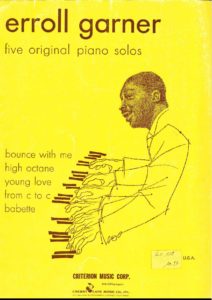
The Trio: Members and Personnel
The Classic Trio (1950s)
Garner's most celebrated trio configuration, heard on Concert by the Sea and many other classic recordings, consisted of:
- Eddie Calhoun (bass)—A solid, swinging bassist who provided the harmonic and rhythmic foundation for Garner's flights of fancy
- Denzil Best (drums)—An innovative drummer known for his work with bebop pioneers, Best provided crisp, propulsive accompaniment
This trio recorded the legendary Concert by the Sea on September 19, 1955, at the Sunset School in Carmel, California. Garner, who would have turned 94 that day, appeared with Calhoun and Best, who "sometimes sounded, by the recorded evidence, as if they had little choice but to just hang on for the ride".
Later Personnel
Over the course of his career, Garner worked with numerous distinguished musicians:
- Wyatt "Bull" Ruther — Childhood friend and bassist who took piano lessons from Garner's sister
- Kelly Martin (drums) — Worked with Garner in the 1960s, appearing on albums like A Night at the Movies
- Milt Hinton (bass) — Appeared on That's My Kick (1967)
- Grady Tate (percussion) — Featured on Magician (1974)
- Bob Cranshaw (bass) — Appeared on Magician
- José Mangual (conga) — A percussionist who would go on to play with Garner for the rest of his career
Music Style: The Garner Sound
The Piano as Orchestra
Garner's musical vision was audacious: he wanted to make his piano sound like an orchestra. He loved big bands so much that he sought to replicate their fullness, dynamic range, and inexorable swing feel on a single instrument. He cited Duke Ellington, Jimmie Lunceford, and Count Basie as his favorite bands.
His orchestrative approach meant that he seamlessly switched meter, tempo, and key from section to section, establishing polyrhythmic patterns and beat subdivisions within his melodic flow. As pianist Jason Moran put it, "He made the piano sparkle and glow".
Left Hand / Right Hand Independence
The hallmark of Garner's style was the complete independence of his hands. His powerful left hand provided a swinging, guitar-like rhythm that was often likened to a guitar, tuba, or drum. This left-hand "rhythm-guitar" approach was rock-solid, maintaining a steady four-beat pulse while his right hand played with astonishing freedom.
His right hand, meanwhile, embellished the melody, taking liberties with time and often lagging the beat by as much as an eighth note. This created a nearly contrapuntal effect—two musical voices operating in different temporal spaces simultaneously.
Block Chords and Dense Voicings
Garner was a master of block chords—dense, orchestral chord voicings that filled the harmonic space. His left hand often played wide-spaced voicings similar to swing rhythm-guitar playing, and he frequently "kicked" the beat in a style comparable to a swing drummer.
His chord voicings characteristically spanned wide intervals. When his right hand spanned a 9th, his thumb would often play two notes a step apart—typically the root and the seventh of the chord. He used seconds, rich chords, passing and substitute chords, and voicings with altered notes.
Rhythmic Innovations
Garner's approach to rhythm was perhaps his most revolutionary contribution. His guitar-like strumming in the left hand often included the root, with occasional eight-note pickups adding forward motion and excitement. He imitated the voicings of Freddie Green, Count Basie's legendary guitarist.
He devised a solo style that eliminated the need for rhythm accompaniment altogether. With block chords setting the rhythmic tempo in his left hand, his right hand was free to embellish, taking astonishing liberties with melody and time.
The Signature Intros
One of Garner's most identifiable traits was his pizzicato, super-syncopated introductions. These intros were often highly independent of the main part of the piece, ranging from fanciful to sassy. Their choppy staccato served to heighten the driving effect once Garner turned on his relentless left-hand rhythm.
The major seventh arpeggio in octaves that introduces "Misty" is a perfect example of this approach. It announces the song with a flourish that is simultaneously grand and intimate.
Chord Progressions and Music Harmony
The Harmonic Language
Garner's harmonic vocabulary was rich and sophisticated, despite—or perhaps because of—his lack of formal training. His approach to harmony was intuitive and groundbreaking.
Like Debussy, Garner used thirds and fourths, parallel chords, and chromatic modulations. His style was antiphonal, with a definite dialogue between his hands or between the statements and answers in his melodies.
Harmonic Progressions
The basic jazz progression of I-vi-ii-V-I (or ii-V-I) formed the foundation of much of Garner's playing. But he transformed these standard progressions through his distinctive voicings and rhythmic approach.
"Misty" itself is built on a 32-bar format and has been analyzed for its sophisticated harmonic structure. The chord changes employ a II-V-I progression that has made it a favorite among jazz musicians for improvisation.
Rich Voicings
Garner's chord voicings were extraordinarily rich. He used inversions, ninths, and tenths, creating a full, orchestral sound. His chords were often so dense that, as one observer noted, "He was practically a big band inside a piano".
The "Strumming" Technique
A distinctive element of Garner's harmonic approach was his piano "strumming" technique. His guitar-like strumming in the left hand typically included the root and created chords typical of the guitar. The result was a percussive, rhythmic harmonic foundation that propelled his music forward with relentless swing.
Jazz Licks and Improvisation Riffs
The Improvisational Approach
Garner's approach to improvisation was uniquely his own. Though formally unschooled, his improvisations were driven by a rhythmic scheme powered by his left hand. His right hand would then improvise melodies that often lagged behind the beat, creating a tension-filled, deeply swinging sound.
Octave Treatments
One of Garner's most identifiable improvisational devices was his octaval treatment of melodies and solo lines. The major seventh arpeggio in octaves that opens "Misty" is the quintessential example. This technique gave his playing a powerful, declarative quality.
Call and Response
Garner's improvisations often featured a call-and-response structure, either between his two hands or between different phrases in his melodies. He would begin with an ascending line of four notes followed by four chords, the clusters acting as a response to the call of the single notes.
Rhythmic Displacement
Perhaps Garner's most distinctive improvisational trait was his rhythmic displacement. His right hand would often lag behind the beat, creating a sense of relaxed swing even at the fastest tempos. This was not a matter of poor time but a deliberate, highly expressive choice that became his signature.
The Grunts
A beloved and frequently noted aspect of Garner's performances was his vocalization—he would grunt with pleasure and call out chords as he played. As a Belgian critic observed, his face lit up, his eyebrows waggled, and "appreciative grunts rumbled out of him" as "he dominates the keyboard, masters it and imposes his own laws on it".
Relationship with Other Artists
Influences
Garner was influenced by a range of earlier pianists. His style evolved out of the "novelty rags" of the 1920s, particularly the work of Zez Confrey. More contemporary influences included:
- Fats Waller — Garner was influenced by Waller's rhythmic stride piano playing
- Earl Hines — Another Pittsburgh native, Hines was a major influence
- Art Tatum — The legendary virtuoso was a clear influence, and Garner famously substituted for Tatum in his trio in 1945
- Freddie Green — Count Basie's guitarist influenced Garner's left-hand "rhythm-guitar" approach
- Duke Ellington — Garner cited Ellington as one of his favorite bandleaders
Contemporaries and Peers
Garner's peers held him in the highest regard. Art Tatum, Cecil Taylor, and Thelonious Monk were all fans. George Shearing was so taken with Garner's style that he once explicitly parodied Garner on a recording of "I Could Have Danced All Night".
Influence on Younger Pianists
Garner's influence on subsequent generations of pianists was profound and far-reaching:
- Ahmad Jamal — A fellow alumnus of Pittsburgh's Westinghouse High School, Jamal emulated and expanded Garner's piano-as-orchestra approach
- Red Garland — The Miles Davis pianist was deeply influenced by Garner's block chord style
- Dave McKenna, Buddy Montgomery, and Jaki Byard — All brilliant individualists who drew from Garner's approach
The Critical Reception
Despite his enormous popularity and influence, Garner was not always treated with respect by the jazz press. Jazz critic Whitney Balliett, writing in The New Yorker, tagged Garner as a practitioner of "primitive art" and a "folk" musician—though he also applied these terms to Ellington and Armstrong. Some observers thought his ear-playing denoted "feckless immaturity".
But as Jazz Journal noted in 2021, Garner was "often characterised as a glorified swing-style cocktail pianist" but was in fact "a witty—and open-minded—individualist". Though his roots in earlier styles were obvious, "he was not hostile to contemporary developments".
Influences and Legacy
The Radical Legacy
Garner's legacy is, as JazzTimes titled a major feature, "radical". He opened new horizons for jazz pianists while remaining a popular musician admired around the world. He was simultaneously an innovator and a crowd-pleaser.
His piano-as-orchestra approach influenced generations of pianists and fundamentally changed what was possible on the instrument. He influenced brilliant individualists across the spectrum of jazz piano.
Recognition
Despite the mixed critical reception during his lifetime, Garner received significant recognition:
- A star on the Hollywood Walk of Fame at 6363 Hollywood Boulevard
- Induction of both his original "Misty" recording and Johnny Mathis's vocal version into the Grammy Hall of Fame
- "Misty" ranked number 174 in the Songs of the Century compiled by the RIAA and National Endowment for the Arts
The Erroll Garner Archive
In 2015, the University of Pittsburgh established the first official Erroll Garner Archive, a trove of recordings, film reels, photographs, and correspondence. This archive ensures that Garner's legacy will be preserved and studied for generations to come.
Discography
Garner recorded prolifically throughout his career, leaving behind an extensive body of work. Key albums include:
Major Studio Albums
| Album | Year | Label | Notes |
|---|---|---|---|
| Contrasts | 1955 | Mercury | First recording of "Misty" |
| The Most Happy Piano | 1956 | Columbia | Studio sessions from 1956 |
| Other Voices | 1956 | Columbia | |
| Soliloquy | 1957 | Columbia | |
| Paris Impressions | 1958 | Columbia | |
| Dreamy | 1958 | Columbia | |
| One World Concert | 1963 | Columbia | Live at Seattle World's Fair |
| A Night at the Movies | 1965 | Columbia | 12 songs from films |
| That's My Kick | 1967 | MGM | First traditional studio album in five years |
| Gemini | 1972 | London | |
| Magician | 1974 | London | Garner's last studio album |
| Plays Gershwin and Kern | 1974 | Octave | Final Octave album |
The Live Masterpiece: Concert by the Sea
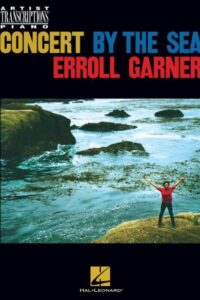
Concert by the Sea (1955) stands as Garner's crowning achievement. Recorded live on September 19, 1955, at the Sunset School in Carmel, California, with Eddie Calhoun on bass and Denzil Best on drums, it became one of the best-selling jazz albums in history.
The recording came about almost by accident. There was no plan to record the concert officially. The acoustics were poor, the piano was somewhat out of tune, and the balance of instruments was far from ideal. Yet despite—or perhaps because of—these limitations, the album captured Garner at his most inspired.
In 2015, Sony Legacy and Octave Music released The Complete Concert by the Sea, a 3-CD boxed set featuring 11 previously unissued tracks, doubling the available music from the concert. The set included a hard-charging, nearly eight-minute version of "Caravan".
The New York Times called it one of the few jazz albums to have "reached as wide an audience" as Garner's masterpiece.
The Octave Remastered Series
Beginning in 2019, Mack Avenue Records launched a twelve-disc series reissuing Garner's Octave albums, representing the heart of his recorded catalogue. This series has brought Garner's music to new generations of listeners.
Most Known Works
"Misty"
"Misty" is Garner's most famous composition and one of the most enduring jazz standards of all time.
According to legend, Garner composed the song on a flight from San Francisco to Chicago. As the plane descended through a thunderstorm into O'Hare Airport, Garner looked through the window to see a rainbow glowing through a haze and was moved to begin composing on the spot. He struck imaginary piano keys on his knees as he hummed the notes, causing his neighboring passenger to summon a flight attendant.
Garner recorded "Misty" on July 27, 1954, for the album Contrasts. Lyrics were added later by Johnny Burke. Johnny Mathis's 1959 vocal recording reached number 12 on the U.S. Pop Singles chart. The song has been recorded by countless artists, including Ella Fitzgerald, Sarah Vaughan, and Ray Stevens.
Other Notable Originals
- "That's My Kick" — The title track of his 1967 album
- "Erroll's Theme" — A frequent concert staple
- "Dreamy" — Another beloved original
- "Moments Delight" — A rarely recorded original
Works on Film
Play Misty for Me (1971)
Garner's most significant contribution to cinema came through Clint Eastwood's directorial debut, Play Misty for Me. The film, a suspense thriller about an obsessed fan, takes its title from Garner's composition. Garner's recording of "Misty" serves as the film's thematic centerpiece.
The song's use in the film is remarkably effective. As AllMusic observed, "this Erroll Garner classic is so beautiful on record that, in a very effective way, it provides an incredible diversion from the violence that is so very prevalent in the film".
Garner recorded a new trio version of "Misty" on February 27, 1971, specifically for use in the film.
Other Film Appearances
Garner's music has appeared in various other films:
- Drive-In (1976)
- Poto and Cabengo (1982)
- Italian films including Una Donna Tutta Nuda (1968) and Il Mio Amore con Samantha (1963)
A Night at the Movies (1965)
This album, released on Columbia, found Garner improvising on 12 songs from films, reflecting his impressions of the stars and their times. Recorded in 1965, it features some of the last studio sessions of Garner's longest-running trio, with Eddie Calhoun on bass and Kelly Martin on drums.
Live Performances
The Concert by the Sea Performance
The September 19, 1955 concert at Sunset School in Carmel, California, was produced by jazz radio personality Jimmy Lyons, just a few years before he founded the Monterey Jazz Festival. Servicemen from nearby Fort Ord were bused to join the enthusiastic audience.
The concert hall was a gothic-revivalist styled assembly hall with poor acoustics. Despite these limitations—or perhaps because they forced Garner to rise above them—the performance became legendary.
Carnegie Hall (1959)
Garner played Carnegie Hall in 1959 to a sold-out house, receiving rousing receptions for his "boisterous, flamboyant up-tempo forays". A New York Times review noted that "for a pianist who has, essentially, only two ways of playing—fast and slow—Erroll Garner manages to make a small set of devices produce a great deal of music".
Seattle World's Fair (1962/1963)
Garner performed at the Seattle World's Fair, a concert later released as One World Concert. This was his first live album since Concert by the Sea.
The Maisonette and Persian Room
Garner broke new ground by bringing jazz to prestigious venues traditionally reserved for classical music or supper club entertainment. In 1970, he introduced jazz to the Persian Room of the Plaza Hotel for the first time. In 1971, he did the same at the Maisonette of the St. Regis-Sheraton.
Later Years
During the 1960s and 1970s, Garner continued to travel and record, adding Latin rhythms to his repertoire. He remained popular and sold out venues around the world. In 1975, declining health forced him off the road. He collapsed while performing at Mr. Kelly's in Chicago in March 1975 and was later diagnosed with lung cancer.
Documentaries
Misty – The Erroll Garner Story (2024)
The definitive documentary about Garner, directed by Georges Gachot, premiered in 2024. The 100-minute film features interviews with those closest to Garner, including bassist Ernest McCarty, Garner biographer Jim Doran, and his daughter Kim Garner.
The documentary explores Garner's childhood in Pittsburgh, his meteoric rise while playing on 52nd Street, his complex private life, and his lasting impact on jazz. It blends black-and-white and color sequences, offering "an intimate and musical perspective on the life of an artist whose talent left an indelible mark on jazz history".
As the synopsis states: "Erroll Garner was a self-taught American Jazz pianist considered a genius by his peers. He juggled a tremendously successful career with a complex private life. Through the eyes of those who were closest to him, Misty – The Erroll Garner Story examines the destiny of a man who changed Jazz forever".
Erroll Garner: No One Can Hear You Read (2014)
A 53-minute documentary exploring Garner's career, described as a film about a man who "pushed the playability of the piano to its limits, developed an international reputation, and made an indelible mark on the jazz world".
Live Performance DVDs
Erroll Garner - Live in '63 & '64 presents two beautifully filmed concerts featuring Garner's classic trio of bassist Eddie Calhoun and drummer Kelly Martin. This DVD showcases his improvisational brilliance on a parade of his most classic numbers.
Physical Appearance and Stage Presence
Garner was a short, wiry man—just 5'2"—with massive hands and tapered fingers that were disproportionate to his small frame. He had long arms and hands that could reach a thirteenth. Jazz critic Whitney Balliett said his hands "moved like thieves on the keyboard".
Because of his short stature, Garner sat on a telephone book while performing. Off stage, he was shy and relatively inarticulate. But once he put his fingers on the keyboard, he blossomed. His face lit up, his eyebrows waggled, and a vast, happy grin spread across his face. He would accompany his inventions with emphatic grunts.
He approached the piano "with the spring-toed jauntiness of a boxer," a profession he once considered following.
The Myth of the "Unlettered" Genius
Garner's inability to read music became a central part of his mythology. He was refused membership in the musicians union in Pittsburgh because he couldn't read music. "I'll play here someday," Garner vowed, "and I'll sound like a whole band and I won't play with none of you".
In 1956, the Pittsburgh musicians union backed down from its original position by making him an honorary member. By then, both the New York and Los Angeles locals had already admitted him.
Despite this initial rejection, Garner's inability to read music was, if anything, a boost to his ability to play in a completely original style. As one observer noted, "It became obvious that Erroll's inability to read music was, if anything, a boost to his ability to play in a completely original style".
Erroll Garner
Erroll Garner was, as Jazz Journal put it, "a witty—and open-minded—individualist" who brought "much pleasure to jazz followers the world over". His music radiates joy, spontaneity, and an infectious swing that transcends the boundaries of style and era.
He was simultaneously a popular entertainer and a profound innovator—a rare combination in any art form. His influence on subsequent generations of pianists, from Ahmad Jamal to Jason Moran, ensures that his legacy will endure.
Garner's music remains as fresh and exciting today as it was when he first sat down at the piano. As NPR put it, "Garner's significance as a major jazz innovator easily rivals his status as a successful composer. His approach to melody, harmony, and especially rhythm were fresh and inventive".
He will long be remembered for remaining true to his art and for "the spirit and joy that he gave to his audiences all over the world". In a career that lasted forty years, Erroll Garner pushed the playability of the piano to its limits, developed an international reputation, and made an indelible mark on the jazz world.
Search your favorite sheet music in the category of Jazz, Blues, Soul, & Gospel.
Browse in the Sheet Music Library:
Or browse in the categories menus & download the Library Catalog PDF: