
Scores for all instruments: 16,000+ (active and growing), over 236,000 pages.
All genres and levels: Jazz & Blues, Rock & Pop, Classical & Contemporary, Film & Musicals;
books & biographies; methods, études, play-along tracks (MP3) for Jazz & Rock.
Access & benefits: US$15.99 one-time payment, valid for lifetime, full Library access.
Table of Contents
Who was Gary Moore?
Search your favorite sheet music in the Sheet Music Library Catalog
Gary Moore - Still Got The Blues (Gary Moore Live - From Baloise Session)
Gary Moore: The Irish Blues Master Who Burned Bright
Gary Moore remains one of the most compelling and technically brilliant guitarists in rock and blues history. A musician of extraordinary passion and versatility, he seamlessly navigated hard rock, heavy metal, jazz fusion, and the blues with a ferocity and feel that few could match. His journey, from a teenage prodigy in war-torn Belfast to sharing stages with the genre's titans, is a story of relentless dedication to his muse, even when it led him down paths that confused critics and fans alike.
The best sheet music download from our Library.
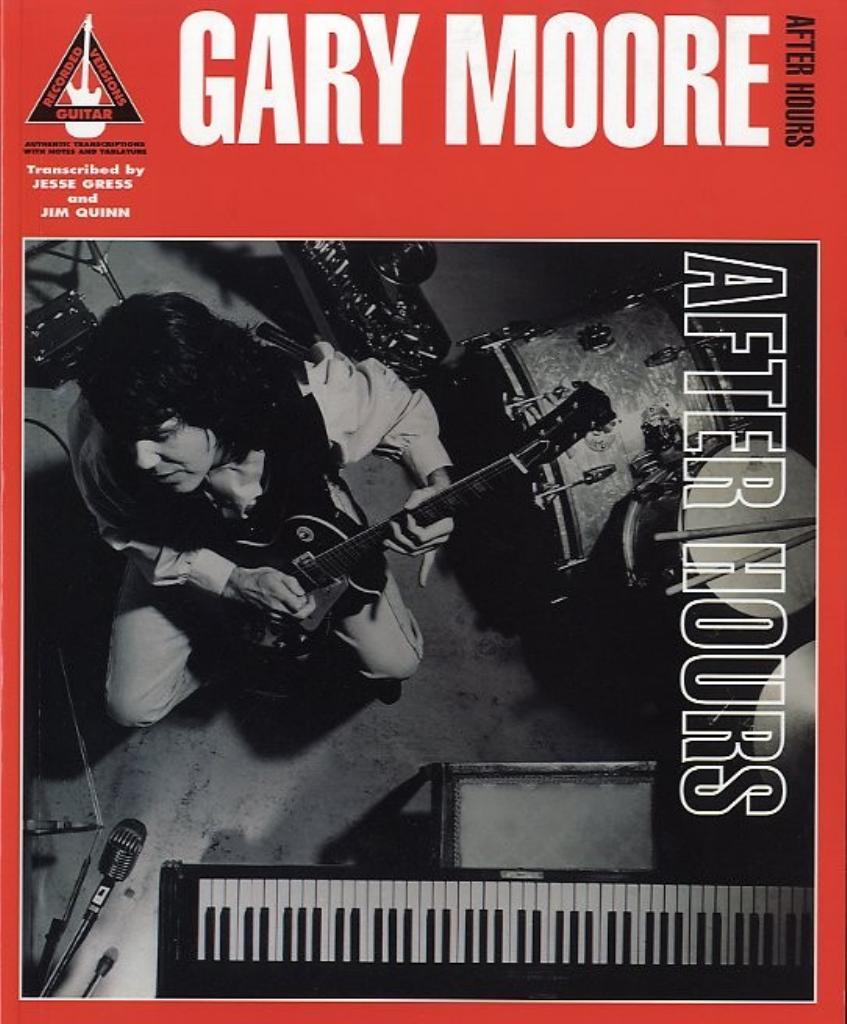
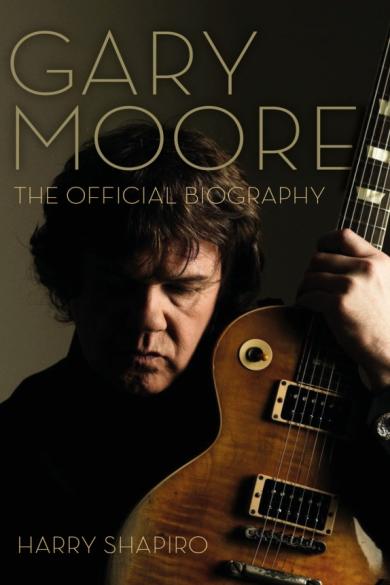
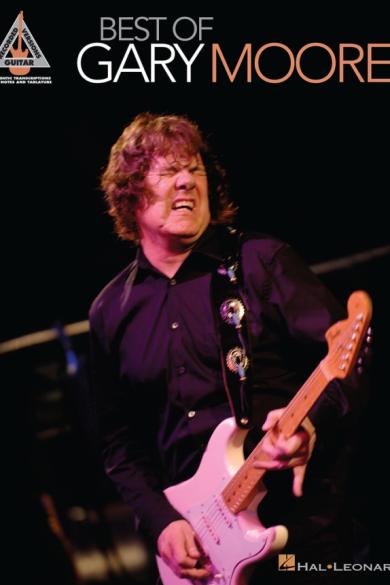


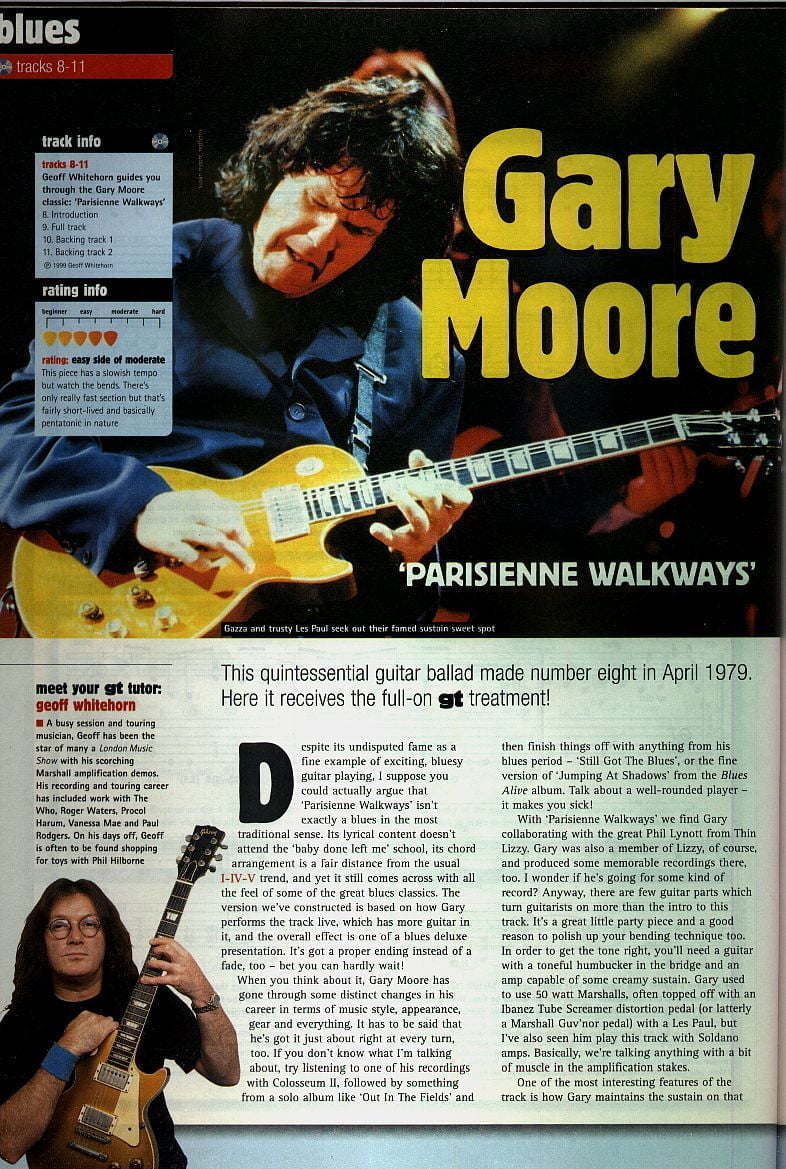
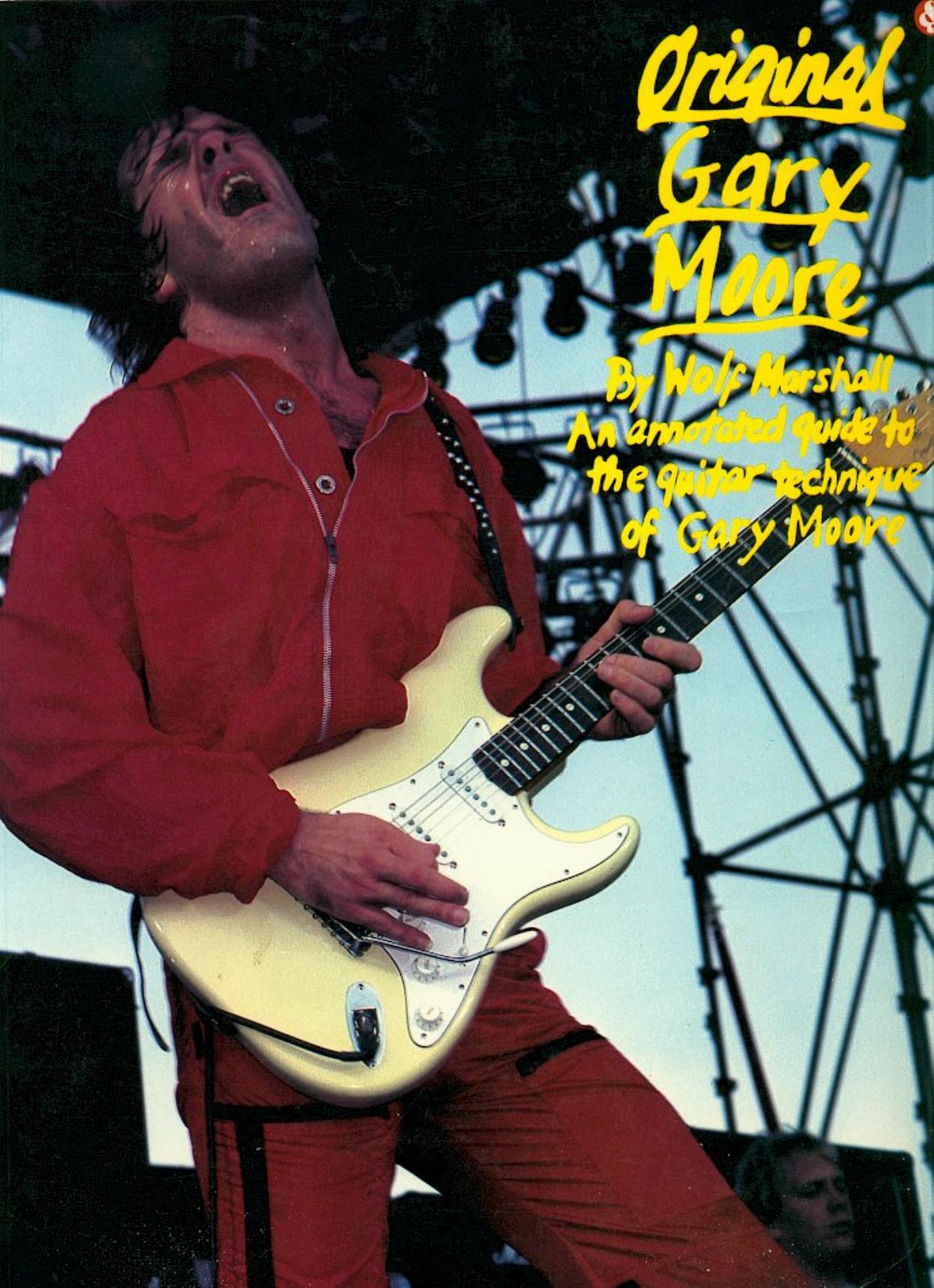
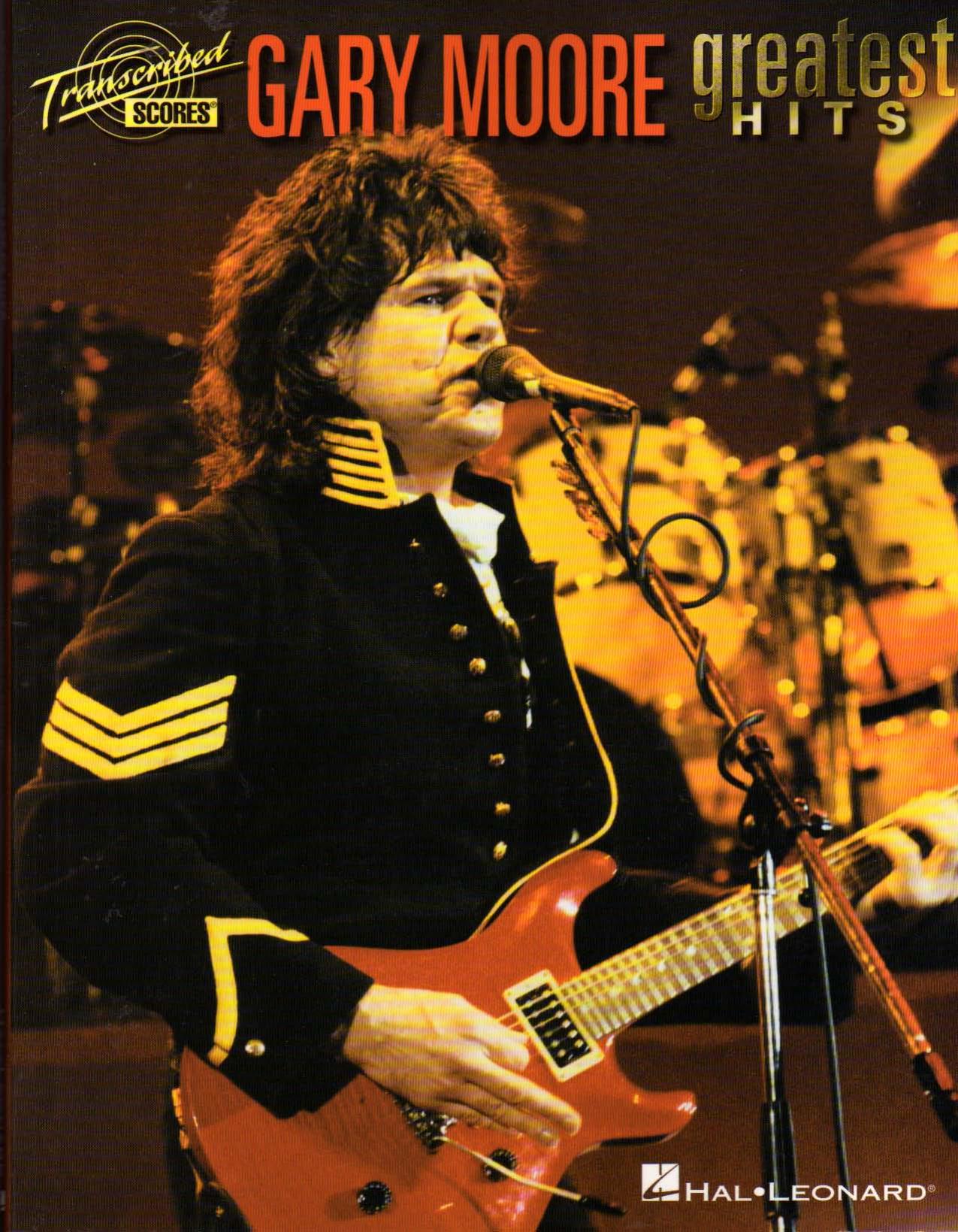
Biography: From Belfast Prodigy to Global Star
Robert William Gary Moore was born in Belfast, Northern Ireland, on April 4, 1952, in the same area as another iconic Irish musician, Van Morrison . His path in life was set when, as a teenager, he witnessed two legendary performances in his hometown: Jimi Hendrix and John Mayall's Bluesbreakers . These experiences ignited a fire in the young Moore. He was also inspired by earlier artists like Elvis Presley, The Shadows, and The Beatles .
At just 16, driven by ambition, Moore moved to Dublin to immerse himself in the burgeoning Irish rock scene . It was there that his career began in earnest when he joined the band Skid Row (not to be confused with the later American heavy metal band). This group featured another young talent: Philip Parris Lynott, who would become a lifelong friend, collaborator, and soulmate in music, Phil Lynott .
Search your favorite sheet music in the Sheet Music Library Catalog
Moore’s relationship with Lynott and Thin Lizzy would define much of his early career. He was first asked to join Thin Lizzy in 1973, replacing founding guitarist Eric Bell . This initial stint was brief, but he returned in 1977, a period that proved highly successful. The combination of Lynott's melodic vocals and Moore's searing, virtuosic guitar work created a powerful and distinctive sound . Lynott's vocal melodies blended perfectly with the edgy sound produced by Moore's virtuosity . His contribution to the Black Rose: A Rock Legend album (1979) is considered legendary . However, Moore's commitment to his solo career was unwavering, and he would famously flit in and out of the band over the years .
Despite his success, Moore was known as a relatively quiet and reserved individual, dedicated to his artistic vision . This intensity often led him to change direction. In the 1980s, he achieved chart success with hard rock and metal-infused solo albums. Frustrated by the commercial pressures of this era, he made a triumphant return to his first love: the blues .
The 1990 album Still Got the Blues was a watershed moment, becoming his most successful and best-known release . He remained largely in blues mode for the rest of his career, producing a prolific output of albums in the 21st century, including Back to the Blues (2001), Close as You Get (2007), and Bad for You Baby (2008), his final studio album .
Tragically, Gary Moore passed away on February 6, 2011, at the age of 58, from a heart attack while on holiday in Spain . His death was a profound shock to the music world, cutting short the life of a musician many considered one of the greatest Irish bluesmen of all time .
Please, subscribe to our Sheet Music Library.
Music Style and Harmonic Approach
Gary Moore’s musical identity was rooted in an extraordinary technical command of the guitar. Metallica's Kirk Hammett described his style as "very modern, but his guitar style was very blues-based," noting his ability to combine long, sustained notes with "really super fast-picked notes and a great legato style" . His tone was famously organic and powerful, based on a simple setup of "a guitar, an amp, a fuzz box and his hands" . He is often cited as an influence alongside legends like Jimi Hendrix, Eddie Van Halen, and Stevie Ray Vaughan .
His approach to chord progressions and harmony was deeply rooted in the blues, but his virtuosity allowed him to explore complex harmonic territories. Two songs perfectly illustrate this blend: his signature hit, "Parisienne Walkways," and the epic instrumental, "The Loner."
"Parisienne Walkways": A Study in Melancholy Jazz-Blues
The song, a Top 10 UK hit in 1979, is a masterclass in creating a mood through harmony . The progression is built on a descending bass line that weaves through a series of complex chords:
- Am | Dm7 | Dm7/G | Cmaj7 | Fmaj7 | Bm7b5 | E7 | Am
This progression is not a standard 12-bar blues. The use of the Bm7b5 (B half-diminished) and E7 creates a strong pull back to the tonic (Am), while the Cmaj7 and Fmaj7 introduce a jazzier, more sophisticated colour. Moore was inspired by the jazz standard "Blue Bossa," which he had played with his fusion group Colosseum II . This harmonic sophistication underpins the melody's sense of longing and melancholy, setting a perfect stage for his expressive, vocal-like bends.
"The Loner": A Symphonic Blues
Originally an instrumental track by his hero Peter Green, Moore's version takes it to a new level. The harmony is reminiscent of orchestral film scores, creating a sense of epic, brooding drama. The chord structure uses various voicings of G minor, moving through a cycle of chords:
- Gm | Cm | F | Bb | Eb | Cm | Cm/A | D
This progression uses diatonic chords from the G minor scale to create a sweeping, cinematic feel. The shifts to chords like Eb and Bb give the piece a sense of grandeur, while the turnarounds (like the sequence from Eb to Dm7) keep the tension alive. Moore's soloing on this track showcases his ability to sing through his guitar, using the harmonic framework to build a monumental, emotional narrative.
Relationship With Other Artists
Gary Moore's career was marked by collaborations with some of the most important figures in music. His musical partnership with Phil Lynott was the most significant of his life. Their songwriting collaboration produced Thin Lizzy classics and solo hits like the duet "Out in the Fields" .
His 1990 comeback album, Still Got the Blues, featured a pantheon of blues royalty: Albert King, Albert Collins, and George Harrison . The fact that George Harrison was a contributor and is reported to have said that Moore "makes me sound like a skiffler" speaks volumes about the respect he commanded .
He also worked extensively with other legends, including B.B. King, Greg Lake, Jack Bruce, Ginger Baker, and Bob Dylan . In 1994, he formed the supergroup BBM with Jack Bruce and Ginger Baker (two-thirds of Cream), releasing the album Around the Next Dream . He also recorded a tribute album to his mentor, Peter Green, titled Blues for Greeny (1995), using one of Green's own 1959 Gibson Les Paul guitars .
Influences and Legacy
Moore's primary influences were the British blues boom and the legendary players it spawned. He was deeply inspired by seeing Jimi Hendrix and John Mayall's Bluesbreakers . His style was heavily shaped by Peter Green, whose lyrical, emotional phrasing became a template for Moore's own approach . He also revered the American blues greats Albert King and B.B. King . His fellow countryman, Rory Gallagher, was another significant peer and influence .
Gary Moore's legacy is immense, particularly among guitarists. Kirk Hammett of Metallica has been incredibly open about his influence, stating that Moore's playing inspired the opening lick of the "Master of Puppets" solo and riffs on "The Unforgiven" . He is cited as a major influence by modern blues-rock stars like Joe Bonamassa, who said, "Gary opened the door for me and a lot of other blues-rock guitarists" . Jack Bruce called him "the most powerful, genuine, authentic blues-rock guitarist of his day" . His legacy is that of a musician who never compromised his passion, and whose soulful, fiery playing continues to inspire new generations.
Works: A Journey Through Albums
Gary Moore's solo discography is extensive, reflecting his restless musical spirit. Key albums in his career include:
- Back on the Streets (1978): His breakthrough solo album, featuring the hit "Parisienne Walkways" .
- G-Force (1980): Recorded with the band of the same name to tour with Van Halen .
- Wild Frontier (1987): A successful hard rock album with the hit "Over the Hills and Far Away" .
- Still Got the Blues (1990): His landmark blues album featuring a star-studded guest list. It brought him back to his roots and became his best-selling release .
- Blues for Greeny (1995): A tribute album to his mentor, Peter Green, showcasing his deep connection to the blues .
- Back to the Blues (2001): A return to a raw, traditional blues sound after his mid-90s experiments .
- Close as You Get (2007) and Bad for You Baby (2008): Solid, late-career blues albums proving his mastery of the genre.
Discography
Main article: Gary Moore discography
Solo albums
- Back on the Streets (1978)
- Corridors of Power (1982)
- Dirty Fingers (1983)
- Victims of the Future (1984)
- Run for Cover (1985)
- Wild Frontier (1987)
- After the War (1989)
- Still Got the Blues (1990)
- After Hours (1992)
- Blues for Greeny (1995)
- Dark Days in Paradise (1997)
- A Different Beat (1999)
- Back to the Blues (2001)
- Power of the Blues (2004)
- Old New Ballads Blues (2006)
- Close as You Get (2007)
- Bad for You Baby (2008)
- How Blue Can You Get (2021)
Film Appearances and Documentaries
Gary Moore's presence extended to film and documentary media. He was a frequent and beloved performer at the prestigious Montreux Jazz Festival, and several of his performances there were released as concert films, including:
- Gary Moore: Live at Montreux 1997
- Gary Moore: Live at Montreux 1990
- Gary Moore: Live at Montreux 2010
He also appeared in other notable concert films such as The Strat Pack: Live in Concert (2005), which celebrated 50 years of the Fender Stratocaster . There are instructional documentaries like Lick Library: Learn to Play Gary Moore, which teaches guitarists his most famous songs .
Most Known Compositions and Performances
While his discography is deep, a few songs and performances have become iconic:
- "Parisienne Walkways": His signature hit, a slow, melancholic blues that captures the essence of his lyrical guitar style .
- "Still Got the Blues": The title track from his 1990 comeback album, showcasing his soulful vocal and lead playing .
- "Out in the Fields": A powerful duet with Phil Lynott from his 1985 album Run for Cover .
- "The Loner": An epic instrumental showcasing his ability to create drama and emotion without words .
- "Over the Hills and Far Away": A signature track from the Wild Frontier album, fusing Celtic elements with hard rock .
- Performance at the "Strat Pack" Concert: A standout performance of "Still Got the Blues" that is often cited by fans as a definitive live take .
- BBM Album Around the Next Dream: Showcased his power-trio chemistry with Cream's rhythm section .
Gary Moore's career was a testament to the power of guitar-driven music, a journey through the heart of the blues and the peaks of rock. His music remains a vital touchstone for fans and players, ensuring his legacy as one of the greats will endure.
Browse in the Sheet Music Library:
Or browse in the categories menus & download the Library Catalog PDF: