Scores for all instruments: 16,000+ (active and growing), over 236,000 pages.
All genres and levels: Jazz & Blues, Rock & Pop, Classical & Contemporary, Film & Musicals;
books & biographies; methods, études, play-along tracks (MP3) for Jazz & Rock.
Access & benefits: US$15.99 one-time payment, valid for lifetime, full Library access.
Table of Contents
The best sheet music download from our Library.
Please, subscribe to our Sheet Music Library. Sheet music should be accessible and affordable for all musicians, from professionals to absolute beginners.
Henry Mancini - His Piano & Orchestra (Romantic Piano)
1. 00:00:00 Moon River (from Breakfast at Tiffany's) 2. 00:02:20 Evergreen (Love Theme From 'A Star Is Born') 3. 00:05:55 Smoke Gets In Your Eyes (from Roberta) 4. 00:08:39 Love Theme from Romeo and Juliet 5. 00:11:05 No Other Love 6. 00:14:24 Tenderly 7. 00:16:56 Long Ago (And Far Away)(from Cover Girl) 8. 00:20:28 Send In The Clowns (from A Little Night Music) 9. 00:24:11 Brian's Song
10. 00:27:21 As Time Goes By (from Casablanca) 11. 00:29:45 Theme From Love Story 12. 00:32:36 Misty 13. 00:35:54 Annie's Song 14. 00:38:51 Feelings 15. 00:42:38 Days Of Wine And Roses 16. 00:45:58 The Way We Were 17. 00:49:54 I'm Always Chasing Rainbows 18. 00:52:53 MoonLight Sonata 19. 00:55:58 Song From 10 (It's Easy To Say) 20. 00:59:25 What I did For Love (from A Chorus Line)
Henry Mancini: The Composer Who Reinvented Film Music
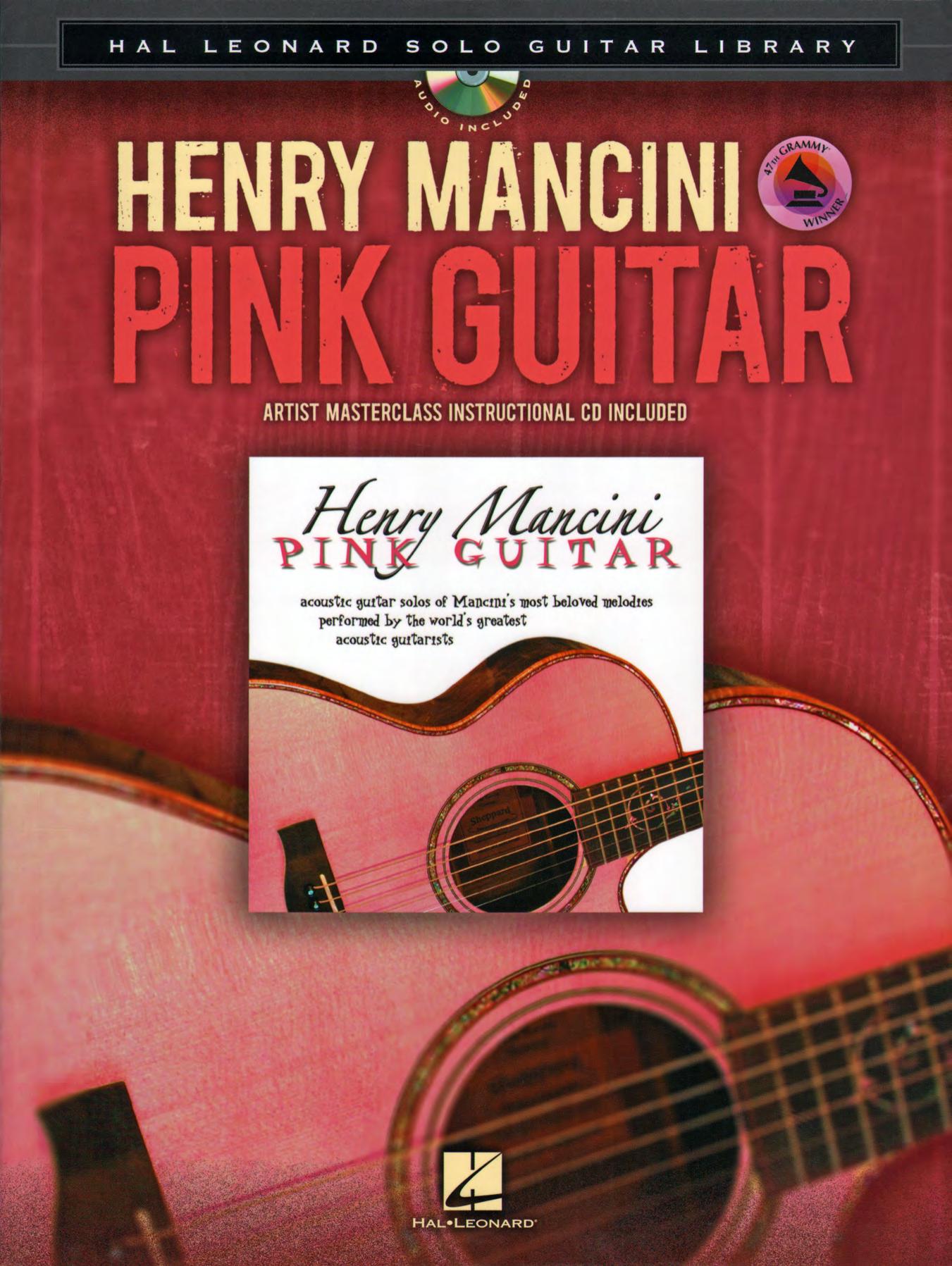
Born Enrico Nicola Mancini on April 16, 1924, in Cleveland, Ohio, Henry Mancini became one of the most influential and beloved composers in the history of American music. Over a career spanning more than four decades, he reshaped the sound of film and television scoring, introducing jazz harmonies, pop sensibilities, and unforgettable melodies to the cinematic landscape. With 20 Grammy Awards, four Academy Awards, and a legacy that includes “Moon River,” “The Pink Panther Theme,” and “Peter Gunn,” Mancini’s music continues to enchant audiences around the world.
Search your favorite sheet music in the Sheet Music Library Catalog


Early Life and Musical Foundations
Henry Mancini was born to Italian immigrants Quinto and Anna Mancini in the Little Italy neighborhood of Cleveland, Ohio. His father, an avid flutist, introduced him to music at the age of eight, starting him on the piccolo and flute. The family soon relocated to West Aliquippa, Pennsylvania, a small mill town near Pittsburgh, where Mancini’s musical education truly began.
At age twelve, Mancini took up the piano under the tutelage of Max Adkins, a Pittsburgh concert pianist and conductor at the Stanley Theatre. Adkins recognized the boy’s extraordinary talent and became a pivotal mentor. It was during these formative years that Mancini developed a deep love for arranging, an art that would become his professional signature.
After graduating from Aliquippa High School in 1942, Mancini enrolled at the Carnegie Institute of Technology (now Carnegie Mellon University) before transferring to the Juilliard School of Music in New York. His studies at Juilliard, however, were short-lived. In 1943, he was drafted into the United States Army, interrupting his formal education.
Mancini’s military service proved unexpectedly fortuitous. Assigned to the 28th Air Force Band, he made connections that would serve him well in the post-war years. He later served overseas in the infantry, and was among the soldiers who liberated the Mauthausen-Gusen concentration camp in Austria. This harrowing experience left a lasting impression on the young musician.
From the Glenn Miller Orchestra to Universal Studios
After his discharge in 1946, Mancini joined the Glenn Miller–Tex Beneke Orchestra as a pianist and arranger. The orchestra, reassembled after Glenn Miller’s tragic disappearance in 1944, included a thirteen-piece string section and a strong brass section. This environment challenged Mancini to create balanced sounds and develop new techniques for orchestrating finely crafted works for full ensembles. He was also introduced to post-war jazz music, an influence that would permeate his later work.
It was with the Miller orchestra that Mancini met Ginny O’Connor, a singer with the Mello-Larks vocal group. The couple married in Hollywood in 1947, and Ginny became Mancini’s lifelong partner and closest collaborator.
In 1952, Mancini joined the Universal-International Studios music department. Over the next six years, he contributed to more than 100 films, including The Glenn Miller Story (1954), which earned him his first Academy Award nomination, The Benny Goodman Story, and Orson Welles’s film noir Touch of Evil (1958). At Universal, Mancini honed his craft, learning to write music quickly and efficiently for a wide variety of genres. It was during this period that his distinctive musical voice began to emerge.
Mancini left Universal in 1958 to work as an independent composer and arranger. It was a bold move that would soon pay off in spectacular fashion.
The Breakthrough: Peter Gunn and Blake Edwards
The turning point in Mancini’s career came when he reunited with Blake Edwards, a former Universal director who was creating a new television series called Peter Gunn. Edwards asked Mancini to write the music for the show, and the result was nothing short of revolutionary.
Before Peter Gunn, television theme songs were either composed in a grand, classical style for serious dramas or as peppy, repetitive melodies reminiscent of commercial jingles. Mancini introduced contemporary jazz as an alternative, painting the world of the titular private eye with a darker, grittier sound. The Peter Gunn theme, with its insistent bass line and cool jazz horns, became an instant sensation. It reached number one on the Billboard chart, where it stayed for ten weeks, and earned Mancini his first Emmy nomination and two Grammy Awards. The album The Music from Peter Gunn won the very first Grammy Award for Album of the Year in 1959.
The success of Peter Gunn cemented the creative partnership between Mancini and Blake Edwards. Over the next three decades, they would collaborate on 26 films, a partnership that would produce some of the most beloved film music of all time.
The Golden Age: Breakfast at Tiffany’s, The Pink Panther, and Beyond
In 1961, Edwards hired Mancini to score Breakfast at Tiffany’s, starring Audrey Hepburn. Mancini worked with lyricist Johnny Mercer to create “Moon River,” a song that would become one of the most covered and cherished melodies in American popular music. The song was nearly cut from the film, but Hepburn’s intervention saved it. At the 1962 Academy Awards, Mancini and Mercer won the Oscar for Best Original Song, and Mancini also won for Best Original Score.
The following year, Mancini and Mercer won their second consecutive Oscar for “Days of Wine and Roses,” the title song from the 1962 film about alcoholism. This back-to-back achievement made Mancini the first composer to win consecutive Oscars for Best Original Song.
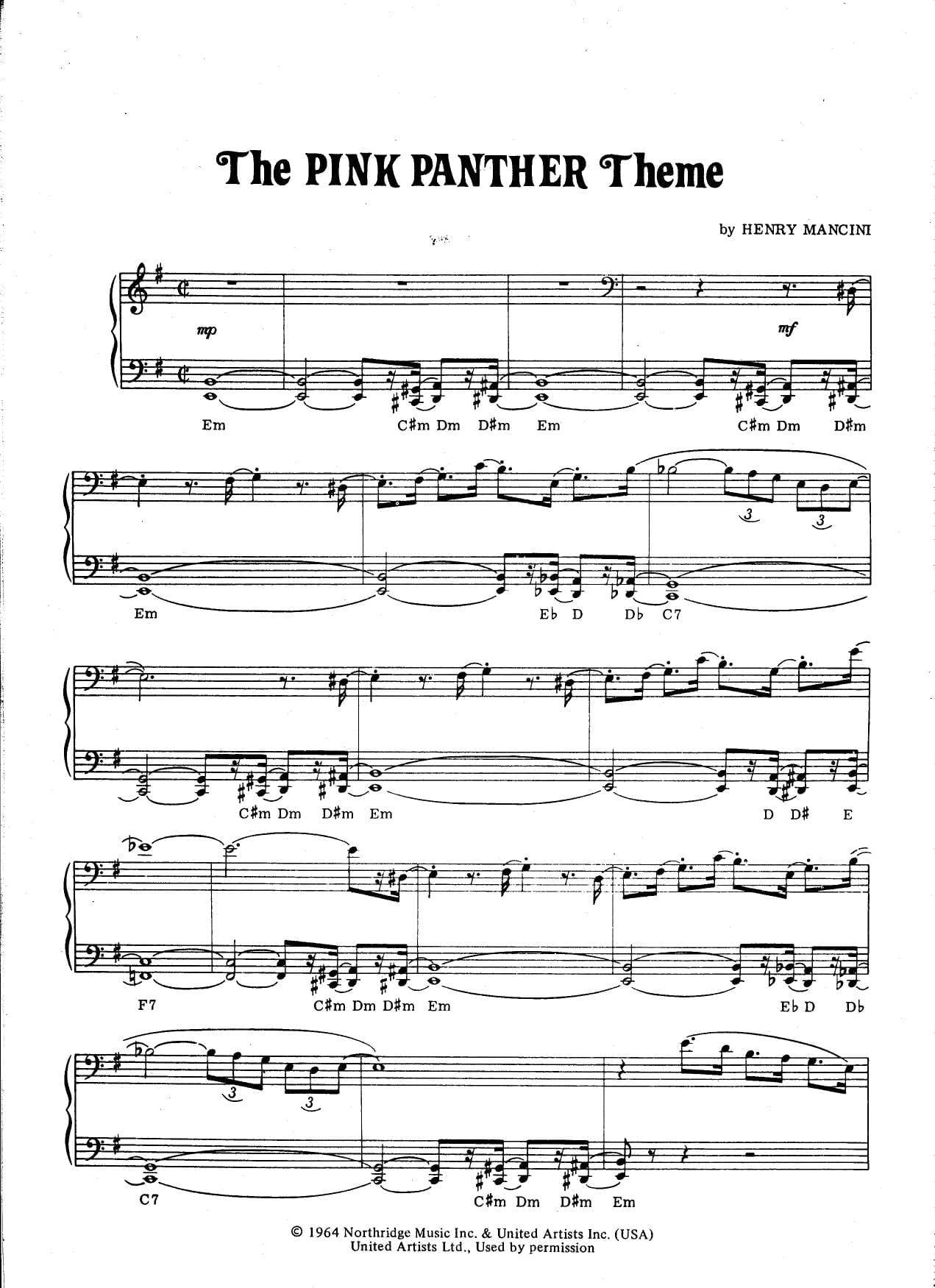
In 1963, Mancini composed the score for The Pink Panther, a comedy starring Peter Sellers as the bumbling Inspector Clouseau. The main theme, with its sly saxophone melody and quirky rhythms, became one of the most recognizable pieces of film music ever written. It was nominated for an Academy Award and won a Grammy for Best Instrumental Arrangement.
The 1960s were a period of extraordinary productivity for Mancini. He composed scores for Charade (1963), Hatari! (1962), featuring the playful “Baby Elephant Walk,” The Great Race (1965), Arabesque (1966), and Two for the Road (1967), among many others. His music for The Pink Panther and its sequels became a franchise in themselves, with each new installment featuring fresh variations on the beloved theme.
The Art of Musical Style and Harmony
Henry Mancini’s musical style defies easy categorization. He was equally at home writing jazz, pop, classical, and big band music, often blending these idioms into a seamless and sophisticated whole. His music is characterized by a rare combination of melodic accessibility and harmonic sophistication, a balance that made his work both commercially successful and critically respected.
Melodic Characteristics
Mancini’s melodies are renowned for their lyrical beauty and emotional directness. A study of his film songs revealed several recurring melodic traits. After any leap in the melody larger than a perfect fourth, the melody usually continues in the opposite direction of the leap. This principle of contrary motion gives his melodies a sense of balance and natural flow. His phrases are often symmetrical, and he frequently used motivic fragments—the first two to four notes of a theme—as building blocks for entire scores. This technique allowed him to create a sense of unity throughout a film while maintaining variety and interest.
Harmonic Language
Mancini’s harmonic language is one of his most distinctive signatures. A “trademark” harmonic progression linked to the melodic device of stepwise descending counter lines is the use of descending parallel chord structures. Multi-measure segments constructed from successive major, minor, and dominant seventh chords are found in several of his compositions, such as “Lujon” from Mr. Lucky (1961) and the “Theme from Harry and Son”. This technique creates a rich, shimmering harmonic texture that is both modern and accessible.
Another frequently appearing harmonic device is the superimposition of a chord structure over a bass note other than that chord structure’s root. This creates harmonic tension and ambiguity, adding depth to his music. In “Moon River,” over 85% of the chords are purely diatonic, with the only digressions falling on significant words in the lyrics. This deliberate alignment of harmonic color with lyrical meaning demonstrates Mancini’s acute sensitivity to text and narrative.
Rhythm and Orchestration
Mancini’s rhythmic language is equally distinctive. He often employed polyrhythms and unusual meters, particularly in his jazz-oriented scores. The Pink Panther Theme, for example, features a sly, syncopated melody over a steady, almost hypnotic bass line. His orchestration was eclectic and colorful, frequently featuring unusual instrumental combinations. He showed a fondness for the moods of cool jazz, typically with the brass section playing in a slow chordal style. He also made heavy use of vocals, particularly in the form of a mixed pop choir, adding a lush, cinematic quality to his scores.
The Mancini Sound
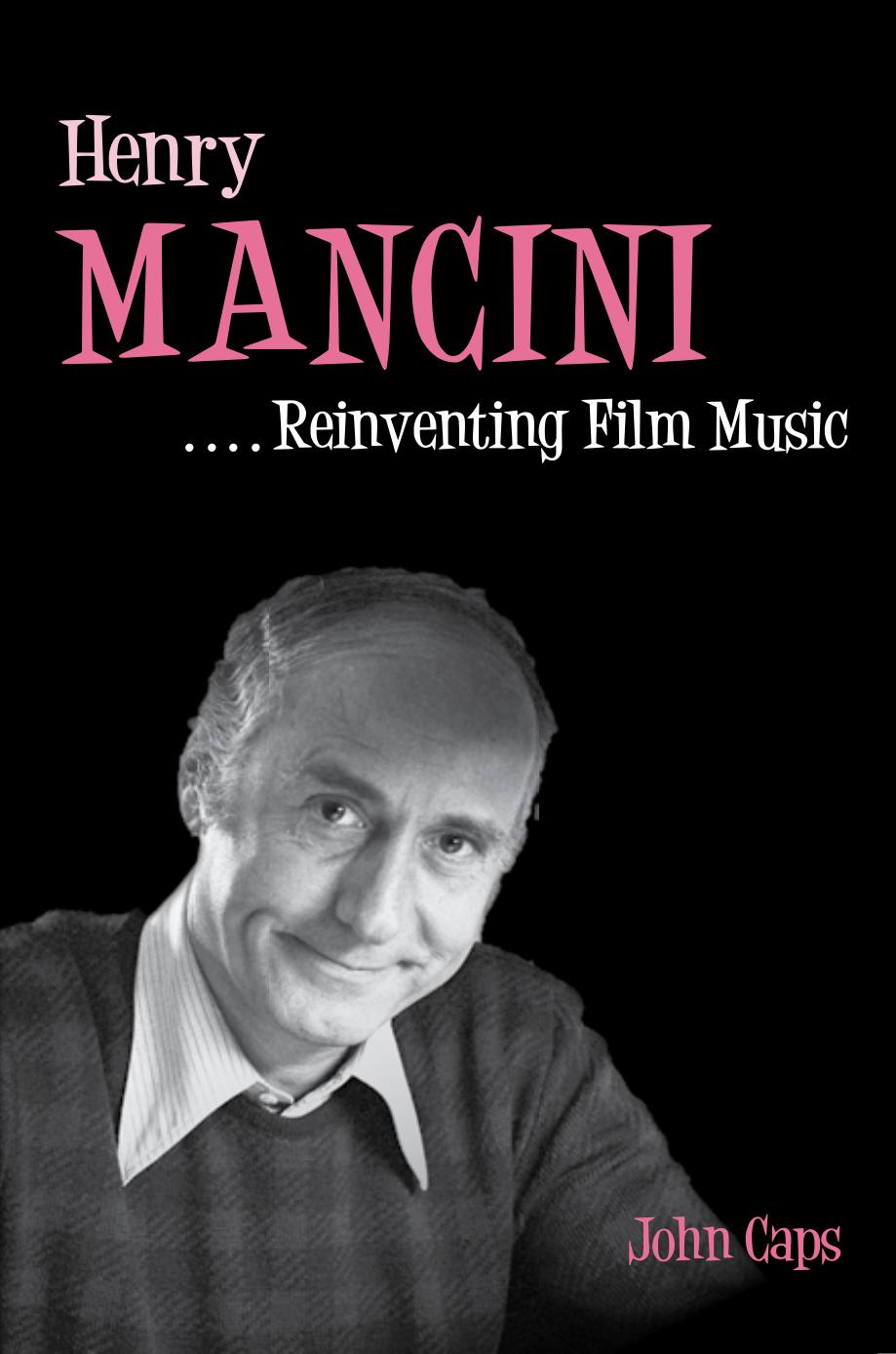
What critics and fellow composers came to call the “Mancini sound” was a fusion of these elements: memorable melodies, sophisticated harmonies, inventive orchestrations, and a rhythmic vitality drawn from jazz and pop. It was a sound that was immediately recognizable and endlessly adaptable, capable of expressing romance, suspense, whimsy, and melancholy with equal conviction. As John Caps argues in his biography Henry Mancini: Reinventing Film Music, Mancini captured the newly prosperous, middle-class zeitgeist of the early 1960s with more acuity than any of his contemporaries.
The Essential Compositions
Henry Mancini’s catalog is vast, encompassing film scores, television themes, popular songs, and concert works. Among his most enduring compositions are:
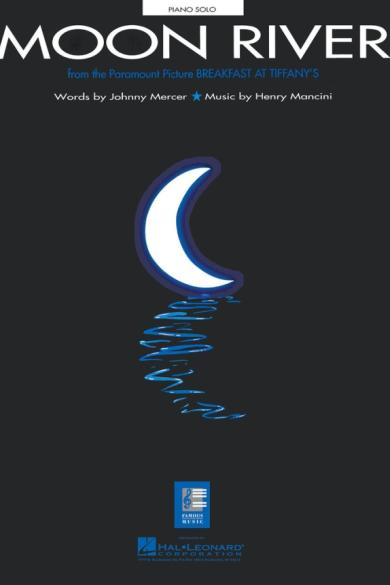
“Moon River” (from Breakfast at Tiffany’s, 1961) — With lyrics by Johnny Mercer, this wistful ballad became Mancini’s signature song. Its simple, folk-like melody and evocative lyrics about “my Huckleberry friend” have made it a standard, recorded by countless artists from Andy Williams to Frank Sinatra to Barbra Streisand.
“The Pink Panther Theme” (from The Pink Panther, 1963) — A masterclass in musical characterization, this theme’s slinky saxophone melody and quirky rhythms perfectly capture the film’s blend of comedy and sophistication. It remains one of the most recognizable pieces of film music ever written.
“Peter Gunn Theme” (from Peter Gunn, 1958) — A driving, jazz-inflected piece that revolutionized television music. Its iconic bass line and cool horn arrangement set a new standard for dramatic scoring.
“Days of Wine and Roses” (from Days of Wine and Roses, 1962) — Another Mancini–Mercer collaboration, this haunting ballad won the Academy Award for Best Original Song and became a jazz standard.
“Baby Elephant Walk” (from Hatari!, 1962) — A playful, whimsical tune that showcases Mancini’s lighter side. Its catchy melody and jaunty rhythm have made it a favorite in children’s music and commercials.
“Charade” (from Charade, 1963) — A sophisticated, Parisian-flavored waltz with lyrics by Johnny Mercer, performed by Audrey Hepburn in the film.
“Love Theme from Romeo and Juliet” (1968) — Mancini’s instrumental arrangement of Nino Rota’s theme became a massive hit, reaching number one on the Billboard Hot 100.
“Two for the Road” (1967) — A tender, melancholic theme from the film of the same name, featuring lyrics by Leslie Bricusse.
“It’s Easy to Say” (from 10, 1979) — A romantic ballad with lyrics by Robert Wells, nominated for an Academy Award.
Music for Film and Television
Henry Mancini’s contributions to film and television music are staggering in both volume and quality. He scored more than 100 films during his six years at Universal alone, and continued to compose for the screen until his death in 1994. His filmography includes comedies, dramas, thrillers, romances, and musicals, demonstrating an astonishing versatility.
The Blake Edwards Partnership
Mancini’s most important creative relationship was with director Blake Edwards. Their collaboration spanned 26 films over more than three decades, beginning with Peter Gunn and continuing through Breakfast at Tiffany’s, The Pink Panther series, Days of Wine and Roses, The Great Race, Darling Lili, 10, Victor/Victoria, and The Return of the Pink Panther, among many others. Edwards trusted Mancini implicitly, often giving him minimal direction and allowing him to respond intuitively to the footage. This trust produced some of the most memorable music in cinema history.
Their partnership was not without its challenges. Following the advent of New Hollywood in the early 1980s, production company accountants began to oust auteurs like Edwards as Hollywood’s power brokers, and more film soundtracks were compiled from previously released hit songs rather than original scores. Nevertheless, Mancini and Edwards continued to work together until Mancini’s death.
Beyond Edwards
Mancini also composed for other major directors and projects. He scored Orson Welles’s Touch of Evil (1958), a film noir that allowed him to explore the jazz-blues sound that would become a signature of his later work. He wrote the music for Experiment in Terror (1962), a thriller that showcased his ability to create suspense through music. In 1971, he composed the score for Alfred Hitchcock’s Frenzy, but Hitchcock rejected it, replacing it with a score by Ron Goodwin. This was the only rejected project of Mancini’s career, and it remains a fascinating footnote in his biography.
Television Themes
Mancini’s television work was equally influential. In addition to Peter Gunn, he composed the themes for Mr. Lucky (1959), Newhart (1982), Remington Steele (1982), and Hotel (1983). His theme for Mr. Lucky, a show about a professional gambler, was another jazz-inflected hit, and the album Mr. Lucky Goes Latin showcased his love of Latin rhythms. His later television themes, such as Newhart and Remington Steele, demonstrated his ability to adapt his style to changing musical tastes while retaining his distinctive voice.
Collaborations
Henry Mancini was a generous and sought-after collaborator. His most important creative partnerships were with lyricist Johnny Mercer and director Blake Edwards, but he also worked with a wide range of other artists.
Johnny Mercer
Johnny Mercer was Mancini’s ideal lyricist. The two men shared a deep understanding of American popular song, and their collaborations produced some of the most enduring standards in the Great American Songbook. Mercer wrote the lyrics for “Moon River,” “Days of Wine and Roses,” “Charade,” and “It Had Better Be Tonight,” among others. Mancini later said of Mercer: “One thing about Johnny: he’ll take exactly what I do. He would never say, ‘Can we have another note here to fit a word?’ It would kill him before he’d do that. He’ll take the melody as I do it and find words to fit. This is the challenge”.
Leslie Bricusse
After Mercer’s death in 1976, Mancini enjoyed a productive relationship with British lyricist Leslie Bricusse. Together they wrote songs for Victor/Victoria (1982), which won Mancini his fourth Academy Award for Best Original Song Score, as well as Darling Lili (1970) and other projects.
Other Collaborators
Mancini collaborated with a remarkable array of artists across the musical spectrum. He worked with Sir James Galway, the renowned flutist, on several albums. He performed and recorded with Luciano Pavarotti, Johnny Mathis, Doc Severinsen, and Andy Williams. He conducted the London Symphony Orchestra, the Israel Philharmonic, the Boston Pops, the Los Angeles Philharmonic, and the Royal Philharmonic Orchestra, among many others. He appeared in command performances for the Royal Family in 1966, 1980, and 1984. His willingness to collaborate across genres and generations kept his music fresh and relevant throughout his career.
Influences and Legacy
Henry Mancini’s musical influences were diverse and deep. He was inspired by the music of Hollywood from a young age, particularly the score for Cecil B. DeMille’s The Crusades (1935). His early training in classical music at Juilliard and his apprenticeship with Max Adkins gave him a solid technical foundation. His time with the Glenn Miller Orchestra introduced him to the world of jazz and big band arranging, which became a lifelong passion. He also drew inspiration from composers such as Cole Porter, Robert Schumann, and Bernard Herrmann.
Mancini’s legacy is immense. He is widely credited with revolutionizing film music by bringing jazz and pop idioms into the mainstream of Hollywood scoring. As jazz critic Leonard Feather said, “He really turned around the tradition of writing movie music, moving from strictly classical themes to unprecedented contemporary music”. His use of jazz harmonies, unusual instrumentation, and contemporary rhythms paved the way for generations of film composers who followed.
His peers recognized his influence. By the mid-1960s, fellow composers in Hollywood spoke of “Mancini chords” and felt freer to write in their own voices because of his example. His protégé John Williams, who would go on to become one of the most celebrated film composers in history, acknowledged Mancini’s impact on his own career.
Mancini’s awards and honors are a testament to his enduring impact. He was nominated for 72 Grammy Awards, winning 20, and was nominated for 18 Academy Awards, winning four. He received a posthumous Lifetime Achievement Award from the Recording Academy in 1995. His recordings of “Moon River” and The Pink Panther have been inducted into the Grammy Hall of Fame. He has a star on the Hollywood Walk of Fame, and in 2024, his centennial was celebrated with a tribute at the BBC Proms.
Beyond his own music, Mancini was deeply committed to music education. He established scholarships and fellowships at top music schools, and his book Sounds and Scores: A Practical Guide to Professional Orchestration remains a standard text for students of arranging. His autobiography, Did They Mention the Music?, co-written with Gene Lees, offers an intimate look at his life and creative process.
Additional Information
Henry Mancini was a man of many talents and interests. In addition to his work as a composer and conductor, he was an accomplished pianist and flutist. He recorded over 90 albums, with styles ranging from big band to jazz to classical to pop, eight of which were certified gold. He was an in-demand concert performer, conducting over 50 engagements a year and resulting in more than 600 symphony performances.
Mancini was also a devoted family man. He and his wife Ginny had three children: twin daughters Monica and Felice, and a son, Christopher. Ginny was his constant companion and advisor, and their marriage was one of the great love stories of Hollywood.
In his later years, Mancini continued to work tirelessly. Despite being diagnosed with pancreatic and liver cancer in early 1994, he continued to compose, completing more than 25 new songs for a Broadway version of Victor/Victoria just months before his death. He died at his home in Beverly Hills on June 14, 1994, at the age of 70. His wife Ginny was by his side.
Tributes poured in from around the world. President Bill Clinton said, “Your name has become synonymous with 20th-Century music, and it is already clear that your legacy will live on for generations to come”. Luciano Pavarotti, who had serenaded Mancini at his 70th birthday celebration just two months earlier, was among the many artists who mourned his passing.
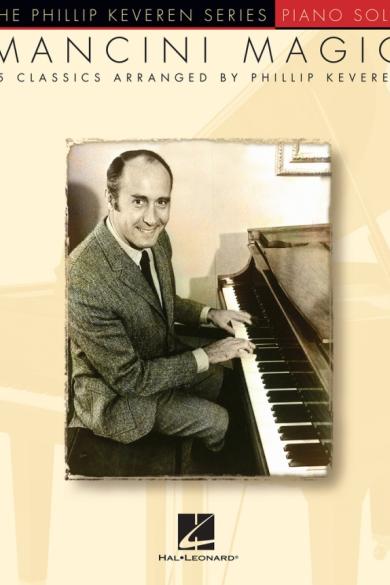
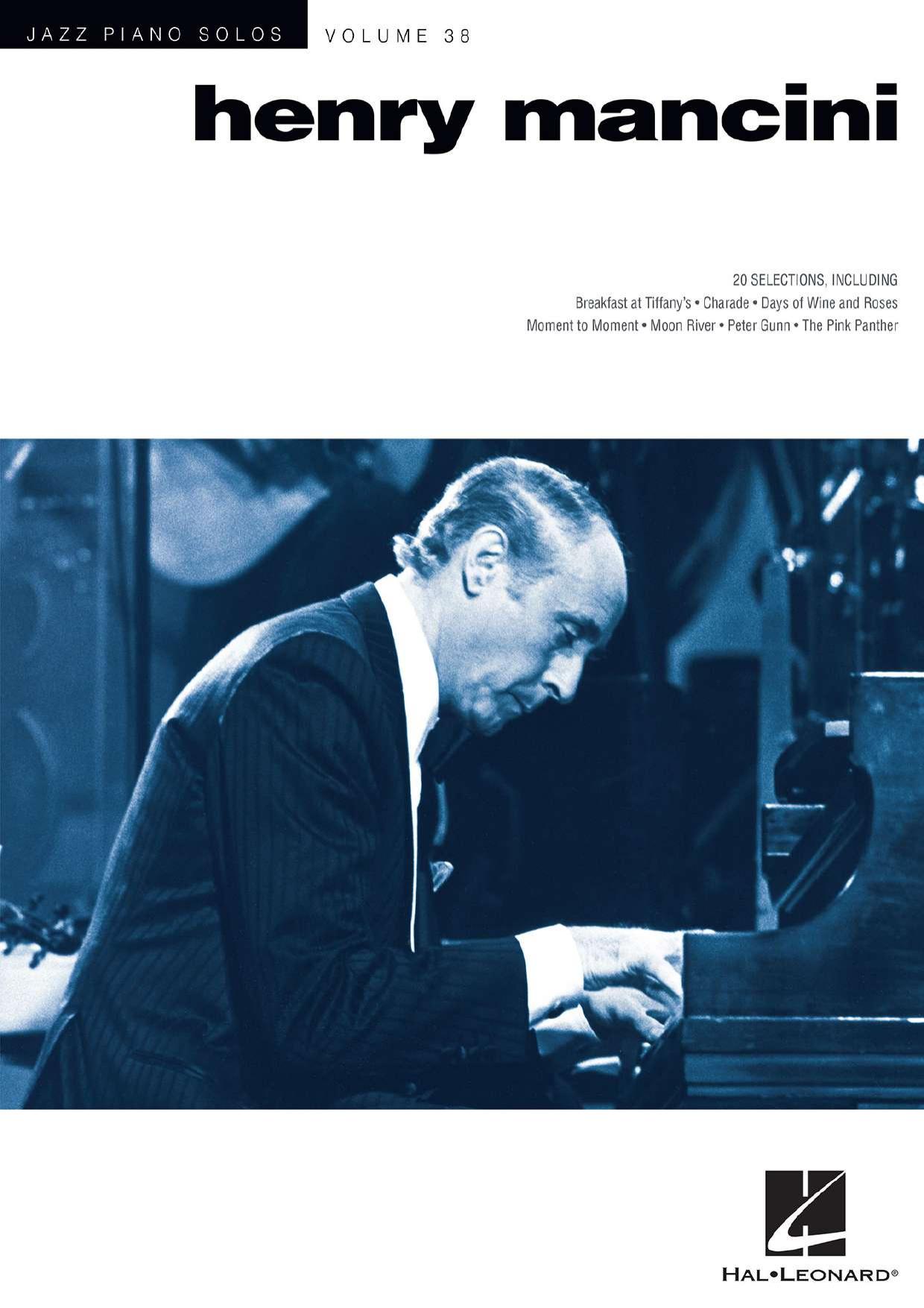
Henry Mancini, the magic composer and pianist
Henry Mancini was more than a composer; he was a musical storyteller whose melodies became part of the cultural fabric of the twentieth century. From the cool jazz of Peter Gunn to the wistful beauty of “Moon River,” from the sly sophistication of The Pink Panther to the romantic sweep of Victor/Victoria, his music defined the sound of an era. He brought jazz into the living rooms of America and elevated film music to an art form. His legacy is not only in the awards he won or the albums he sold, but in the countless musicians he inspired and the audiences he continues to enchant. As long as there are films to watch and songs to sing, the music of Henry Mancini will endure.
Browse in the Sheet Music Library:
Or browse in the categories menus & download the Library Catalog PDF:
Discography
Albums
- The Versatile Henry Mancini (Liberty LST-7121, 1957)
- Sousa in Stereo (Warner Bros. BS-1209, 1958)
- March Step in Hi-Fi (Warner Bros. BS-1312, 1959)
- The Music from Peter Gunn (RCA Victor LSP-1956, 1959)
- More Music from Peter Gunn (RCA Victor LSP-2040, 1959)
- The Mancini Touch (RCA Victor LSP-2101, 1959)
- The Blues and the Beat (RCA Victor LSP-2147, 1960)
- Music from Mr. Lucky, (RCA Victor LSP-2198, 1960)
- Mr. Lucky Goes Latin (RCA Victor LSP-2360, 1961)
- Combo! (RCA Victor LSP-2258, 1962)
- Our Man in Hollywood (RCA Victor LSP-2604, 1963)
- Uniquely Mancini (RCA Victor LSP-2692, 1963)
- The Best of Mancini [compilation] (RCA Victor LSP-2693, 1964)
- Mancini Plays Mancini (RCA Camden CAS-2158)
- Everybody's Favorite (RCA Camden CXS-9034)
- The Concert Sound of Henry Mancini (RCA Victor LSP-2897, 1964)
- Dear Heart (And Other Songs About Love) (RCA Victor LSP-2990, 1965)
- The Latin Sound of Henry Mancini (RCA Victor LSP-3356, 1965)
- The Academy Award Songs (RCA Victor LSP-6013, 1966)
- A Merry Mancini Christmas (RCA Victor LSP-3612, 1966)
- Mancini '67: The Big Band Sound of Henry Mancini (RCA Victor LSP-3694, 1967)
- Music of Hawaii (RCA Victor LSP-3713, 1967)
- Encore! More of the Concert Sound of Henry Mancini (RCA Victor LSP-3887, 1967)
- Mancini Plays Mancini (RCA Camden CAS-2158, 1967)
- The Mancini Sound (RCA Victor LSP-3943, 1968)
- The Big Latin Band of Henry Mancini (RCA Victor LSP-4049, 1968)
- Debut! Henry Mancini Conducting the First Recording of the Philadelphia Orchestra Pops (RCA Red Seal LSC-3106, 1969)
- A Warm Shade of Ivory (RCA Victor LSP-4140, 1969)
- Six Hours Past Sunset (RCA Victor LSP-4239, 1969)
- Mancini Country (RCA Victor LSP-4307, 1970)
- Theme from "Z" and Other Film Music (RCA Victor LSP-4350, 1970)
- Mancini Plays the Theme from "Love Story" (RCA Victor LSP-4466, 1970)
- This Is Henry Mancini [compilation] (RCA Victor VPS-6029, 1970)
- Mancini Magic (RCA Camden CXS-9005, 1971)
- Dream of You (RCA Camden CAS-2510, 1971)
- Mancini Concert (RCA Victor LSP-4542, 1971)
- Brass on Ivory with Doc Severinsen (RCA Victor LSP-4629, 1972)
- Big Screen - Little Screen (RCA Victor LSP-4630, 1972)
- Music from the TV Series "The Mancini Generation" (RCA Victor LSP-4689, 1972)
- Brass, Ivory & Strings with Doc Severinsen (RCA Victor APL1-0098, 1973)
- Film Music By Mancini (RCA Camden ADL2-0293, 1973)
- Country Gentleman (RCA Victor APL1-0270, 1974)
- Hangin' Out (RCA Victor CPL1-0672, 1974)
- Pure Gold [compilation] (RCA ANL1-0980, 1975)
- Symphonic Soul (RCA Victor APL1-1025, 1975)
- A Legendary Performer [compilation] (RCA CPL1-1843, 1976)
- The Cop Show Themes (RCA Victor APL1-1896, 1976)
- Mancini's Angels (RCA Victor CPL1-2290, 1977)
- The Theme Scene (RCA Victor APL1-3052, 1978)
- In the Pink with James Galway (RCA Red Seal CRC1-5315, 1984)
- The Hollywood Musicals with Johnny Mathis (Columbia CK-40372, 1986)
- As Time Goes by and Other Classic Movie Love Songs (RCA Victor 09026-60974-2, 1992)
Search your favorite sheet music in the Sheet Music Library Catalog
Soundtracks
Most of Mancini's scores were not released on LP soundtrack albums. His TV movie music albums were not soundtrack albums but are titled "Music from ..." or "Music from the Motion Picture ..." He routinely retained the rights to his music. Mancini's contracts allowed him to release his own albums for which he rearranged the score music into arrangements more appropriate for listening outside of the context of the film/theater. Actual film scores using players from Hollywood unions recording under major motion picture studio contracts were expensive to release on LP (ex: the soundtrack for Our Man Flint (not a Mancini score) cost $1 more than other LP albums of the day). Many soundtrack albums used to claim "Original Soundtrack" or words to that effect, but were not necessarily the actual soundtrack recordings. These albums were usually recorded with a smaller orchestra than that used for the actual scoring (ex: Dimitri Tiomkin's score to The Alamo). However, many Hollywood musicians were featured on Mancini's albums recorded in RCA's Hollywood recording studios and faux "Original Soundtrack" albums. Eventually some of his scores and faux "Original Soundtrack" scores by numerous composers were released in limited edition CDs.
- 10, Warner Bros. Records – BSK 3399
- Arabesque, RCA Victor LSP-3623
- Bachelor in Paradise, Film Score Monthly FSMCD vol. 7 nr. 18
- Breakfast at Tiffany's, RCA Victor LSP-2362
- Charade, RCA Victor LSP-2755
- Darling Lili, RCA LSPX-1000
- Experiment in Terror, RCA Victor LSP-2442
- Frenzy (along with the Ron Goodwin score), Quartet Records QR505
- Gaily, Gaily, United Artists UAS-5202
- The Glass Menagerie, MCA MCAD-6222
- The Great Mouse Detective, Varèse Sarabande/MCA VSD-5359
- The Great Race, RCA Victor LSP-3402
- The Great Waldo Pepper, MCA MCA-2085
- Gunn ...Number One!, RCA Victor LSP-3840
- Harry & Son, Quartet Records QRSCE-023
- Hatari!, RCA Victor LSP-2559
- The Hawaiians, United Artists UAS-5210
- High Time, RCA Victor LSP-2314
- Lifeforce, Varèse Sarabande STV-81249
- Me, Natalie, Columbia OS-03350
- The Molly Maguires, Paramount PAS-6000
- Mommie Dearest, Real Gone Music RGM-0640
- Mr. Hobbs Takes a Vacation, Intrada special collection vol. 11
- Nightwing, Varèse Sarabande VCL-0309-1091
- Oklahoma Crude, RCA Victor APL1-0271
- The Party, RCA Victor LSP-3997
- The Pink Panther, RCA Victor LSP-2795
- The Return of the Pink Panther, RCA Victor ABL1-0968
- The Pink Panther Strikes Again, United Artists UA-LA694
- Revenge of the Pink Panther, United Artists UA-LA913-H
- Santa Claus: The Movie, EMI America SJ-17177
- Silver Streak, Intrada special collection vol. 5
- Sometimes a Great Notion, Decca DL-79185
- Son of the Pink Panther, Milan/BMG 74321-16461-2
- Sunflower, Avco Embassy AVE-0-11001
- Sunset, Quartet Records QRSCE-045
- The Thief Who Came to Dinner, Warner Bros. BS-2700
- The Thorn Birds, Varèse Sarabande/UMG 302 066 564-2
- Tom and Jerry – The Movie, MCA MCAD-10721
- Touch of Evil, Challenge CHL-602
- Two for the Road, RCA Victor LSP-3802
- Victor Victoria, GNP Crescendo GNPD-8038
- Visions of Eight, RCA Victor ABL1-0231
- W.C. Fields and Me, MCA MCA-2092
- What Did You Do in the War, Daddy?, RCA Victor LSP-3648
- Who Is Killing the Great Chefs of Europe?, Epic SE-35692
- Without a Clue, BSX BSXCD-8832
Filmography
- The Raiders (1952)
- Girls in the Night (1953)
- It Came from Outer Space (1953)
- The Glenn Miller Story (1953)
- Abbott and Costello Go to Mars (1953)
- Law and Order (1953)
- City Beneath the Sea (1953)
- Destry (1954)
- Creature from the Black Lagoon (1954)
- The Private War of Major Benson (1955)
- The Benny Goodman Story (1956)
- The Creature Walks Among Us (1956)
- Rock, Pretty Baby (1956)
- Summer Love (1957)
- Damn Citizen (1958)
- Touch of Evil (1958)
- The Big Beat (1958)
- Operation Petticoat (1959)
- High Time (1960)
- The Great Impostor (1960)
- Breakfast at Tiffany's (1961)
- Bachelor in Paradise (1961)
- Experiment in Terror (1962)
- Mr. Hobbs Takes a Vacation (1962)
- Hatari! (1962)
- Days of Wine and Roses (1962)
- Soldier in the Rain (1963)
- Charade (1963)
- The Pink Panther (1963)
- Man's Favorite Sport? (1964)
- A Shot in the Dark (1964)
- Dear Heart (1964)
- The Great Race (1965)
- Moment to Moment (1966)
- Arabesque (1966)
- What Did You Do in the War, Daddy? (1966)
- Two for the Road (1967)
- Gunn ...Number One! (1967)
- Wait Until Dark (1967)
- The Party (1968)
- Me, Natalie (1969)
- Gaily, Gaily (1969)
- The Molly Maguires (1970)
- Sunflower (1970)
- The Hawaiians (1970)
- Darling Lili (1970)
- The Night Visitor (1971)
- Sometimes a Great Notion (1971)
- Frenzy (Rejected Score) (1972)
- The Thief Who Came To Dinner (1973)
- Visions of Eight (1973)
- Oklahoma Crude (1973)
- That's Entertainment! (1974)
- The White Dawn (1974)
- The Girl from Petrovka (1974)
- 99 and 44/100% Dead (1974)
- The Great Waldo Pepper (1975)
- The Return of the Pink Panther (1975)
- Jacqueline Susann's Once Is Not Enough (1975)
- W.C. Fields and Me (1976)
- Silver Streak (1976)
- The Pink Panther Strikes Again (1976)
- Angela (1977)
- House Calls (1978)
- Revenge of the Pink Panther (1978)
- Who Is Killing the Great Chefs of Europe? (1978)
- The Prisoner of Zenda (1979)
- Nightwing (1979)
- 10 (1979)
- Little Miss Marker (1980)
- A Change of Seasons (1980)
- Back Roads (1981)
- S.O.B. (1981)
- Condorman (1981)
- Mommie Dearest (1981)
- Victor Victoria (1982)
- Trail of the Pink Panther (1982)
- Better Late Than Never (1983)
- Second Thoughts (1983)
- Curse of the Pink Panther (1983)
- The Man Who Loved Women (1983)
- Harry & Son (1984)
- That's Dancing (1985)
- Lifeforce (1985)
- Santa Claus: The Movie (1985)
- The Great Mouse Detective (1986) - First score for an animated film
- A Fine Mess (1986)
- That's Life! (1986)
- Blind Date (1987)
- The Glass Menagerie (1987)
- Sunset (1988)
- Without a Clue (1988)
- Physical Evidence (1989)
- Welcome Home (1989)
- Ghost Dad (1990)
- Fear (1990)
- Switch (1991)
- Married to It (1991)
- Tom and Jerry: The Movie (1992)
- Son of the Pink Panther (1993)
TV themes
- Peter Gunn (1958)
- Mr. Lucky (1959)
- Man of the World (1962)
- The Richard Boone Show (1963)
- Blaulicht (1968)
- The Pink Panther Show (1969)
- Curiosity Shop (1971)
- Cade's County (1971)
- The NBC Mystery Movie (1971)
- The Blue Knight (1975)
- What's Happening!! (1976)
- Kingston: Confidential (1977)
- Sanford Arms (1977)
- The All-New Pink Panther Show (1978)
- NBC Nightly News (1978)
- Newhart (1982, one of the few shows to credit Mancini in the opening credits)
- Remington Steele (1982)
- Ripley's Believe It or Not! (1982)
- Hotel (1983)
- Pink Panther and Sons (1984)
- What's Happening Now!! (1985)
- Tic Tac Dough (1990)
- Julie (1992)
- Pink Panther and Pals (2010)