
Scores for all instruments: 16,000+ (active and growing), over 236,000 pages.
All genres and levels: Jazz & Blues, Rock & Pop, Classical & Contemporary, Film & Musicals;
books & biographies; methods, études, play-along tracks (MP3) for Jazz & Rock.
Access & benefits: US$15.99 one-time payment, valid for lifetime, full Library access.
Table of Contents

The best sheet music download from our Library.

Please, subscribe to our Sheet Music Library. Sheet music should be accessible and affordable for all musicians, from professionals to absolute beginners.
The Best of Herbie Hancock
00:00:00 Watermelon Man 00:07:05 Alone and I 00:13:31 And What If I Don't 00:20:04 Blind Man, Blind Man 00:28:21 Driftin' 00:35:14 Empty Pockets 00:41:23 King Cobra 00:48:17 The Maze 00:55:04 The Pleasure Is Mine 00:59:07 Three Bags Full
Herbie Hancock: The Infinite Voyage of a Jazz Revolutionary
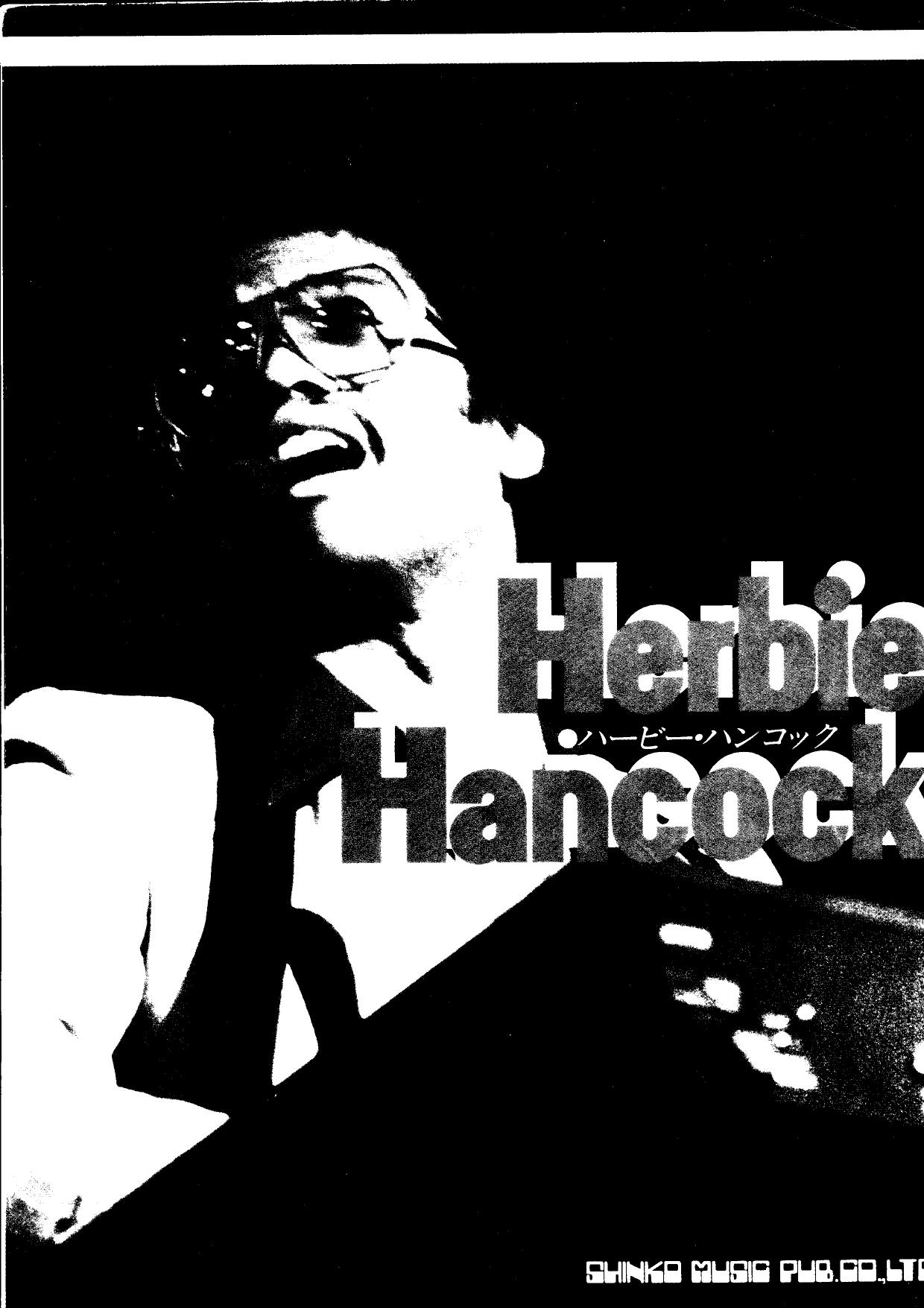
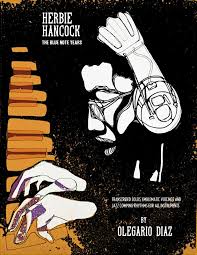
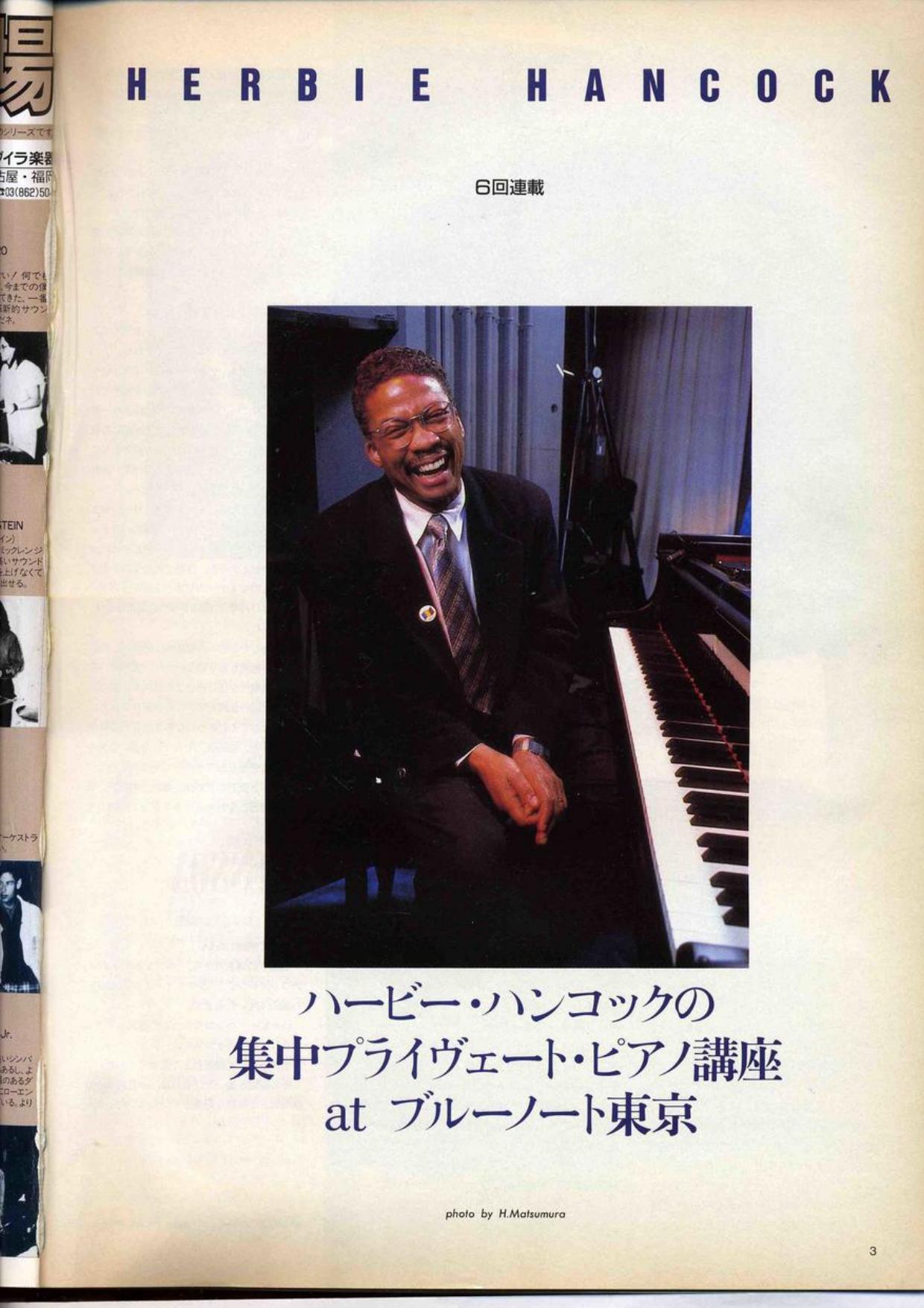
Herbie Hancock stands as one of the most consequential figures in the history of American music. A pianist, keyboardist, bandleader, composer, and cultural ambassador, Hancock has spent more than six decades charting a zigzagging path through virtually every significant development in jazz, funk, R&B, and electronic music. As the immortal Miles Davis once declared, "Herbie was the step after Bud Powell and Thelonious Monk, and I haven't heard anybody yet who has come after him". With fourteen Grammy Awards, an Academy Award, a Kennedy Center Honor, and a Grammy Lifetime Achievement Award, Hancock's legacy extends far beyond the jazz world into the broader landscape of popular culture.
Born Herbert Jeffrey Hancock on April 12, 1940, in Chicago, Illinois, he was named after the singer-songwriter Herb Jeffries by his parents, Winnie and Wayman. From his earliest years as a classical piano prodigy performing Mozart with the Chicago Symphony Orchestra to his later innovations in electronic music and hip-hop, Hancock has consistently defied categorization. As Blue Note Records observes, "Hancock has cut a zigzagging forward path, shuttling between almost every development in electronic and acoustic jazz and R&B over the last third of the 20th century and into the 21st".
Search your favorite sheet music in the Sheet Music Library Catalog

Early Life and Musical Formation
Hancock's musical journey began at age seven when he started studying European classical music, a foundation that would continue to influence both his playing and composing throughout his career. His family was not particularly musical, but his parents enrolled him in piano lessons from a young age. By age eleven, his prodigious talent was already evident: he performed a Mozart piano concerto with the Chicago Symphony Orchestra, an achievement that signaled the arrival of a remarkable musical mind.
During his teenage years, Hancock developed a dual passion for jazz and science. He began playing jazz in high school, initially influenced by Oscar Peterson and Bill Evans, and spent countless hours transcribing their solos to develop his ear and harmonic sensibility. Simultaneously, he was drawn to electronics and engineering, a fascination that would later inform his pioneering work with synthesizers and electronic instruments.
Hancock's intellectual curiosity led him to Grinnell College, where he double-majored in music and electrical engineering, studying from 1956 to 1960. This unusual combination of disciplines would prove prophetic, as Hancock later became one of the first jazz musicians to seriously explore the creative potential of electronic instruments. As he explained, "I showed interest in science even before I showed interest in music when I was a kid. My first major in college, I chose electrical engineering because I was afraid of choosing music for practical purposes".
The harmonic foundations of Hancock's style were shaped by a diverse array of influences. He often cited Clare Fischer's arrangements for the vocal group the Hi-Lo's as a major influence on his harmonic concept, along with Bill Evans, Ravel, and Gil Evans. Hancock stated, "Almost all the harmony that I play can be traced to one of those four people and whoever their influences were". He also acknowledged the profound impact of pianist Chris Anderson, whom he met in 1960 and whom he often described as his "harmonic guru".

Discovery and Early Career
Hancock's professional career began in earnest when he was discovered by trumpeter Donald Byrd in 1960. Byrd, who was attending the Manhattan School of Music at the time, encouraged Hancock to come to New York, where he quickly established himself as a sought-after session musician. During this period, Hancock performed and recorded with a remarkable array of artists, including Phil Woods, Oliver Nelson, and Eric Dolphy, gaining invaluable experience in both hard bop and more experimental contexts.
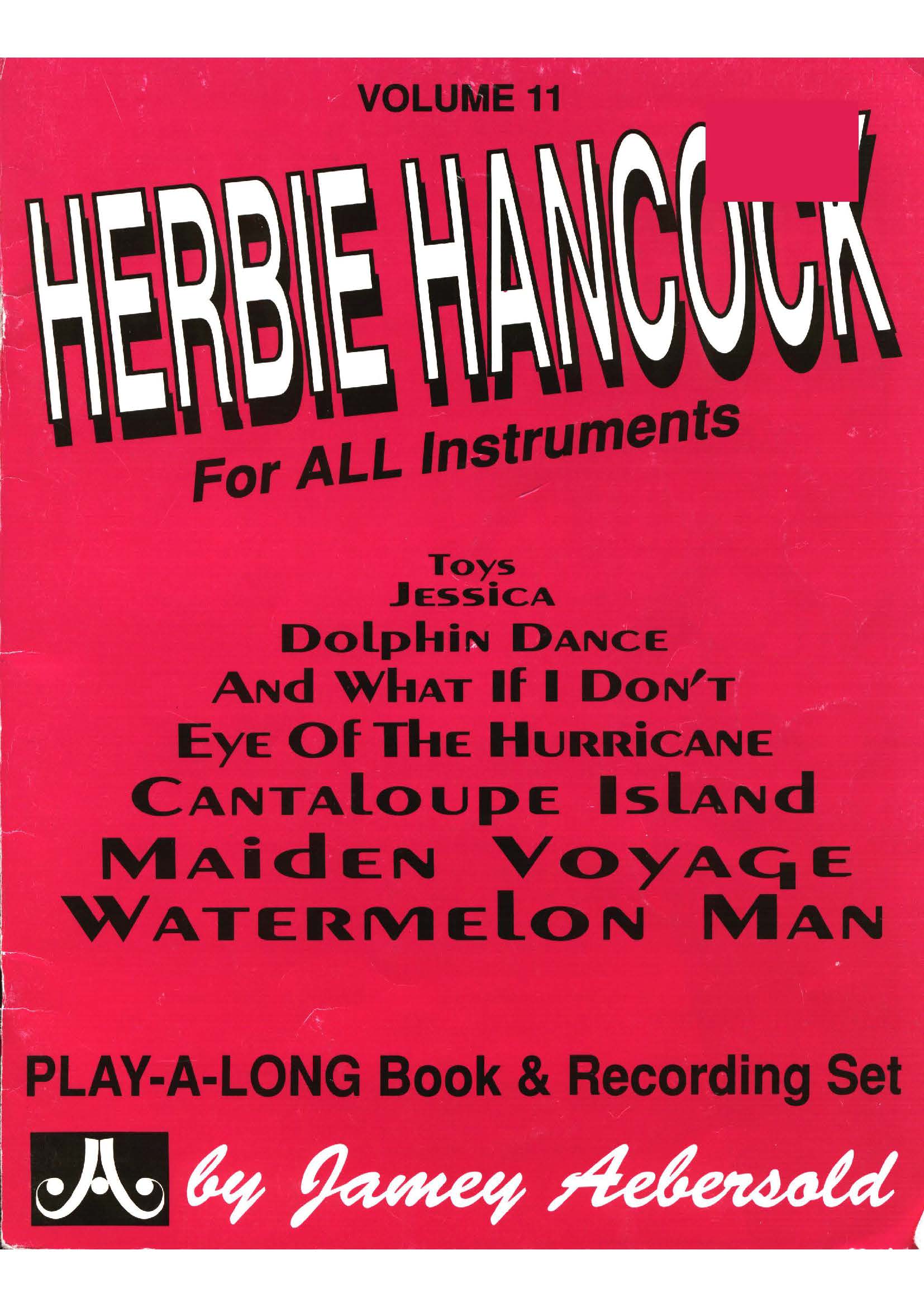
His first solo recording sessions for Blue Note Records in 1962 resulted in the album Takin' Off, a debut that would prove historic. Blue Note co-founder Alfred Lion was so impressed by Hancock's compositional skills that he urged the young pianist to focus solely on original compositions, making Takin' Off the first debut album in Blue Note's history to contain all original material. The album produced "Watermelon Man," a composition that would become a jazz standard, later covered by Mongo Santamaría and reinterpreted by Hancock himself as a funk classic on his 1973 Head Hunters album.
The Miles Davis Quintet: Redefining the Rhythm Section
In May 1963, Hancock received the call that would transform his career: Miles Davis invited him to join his band. At just twenty-three years old, Hancock became the pianist in what would become known as Miles Davis's "second great quintet," alongside Wayne Shorter on tenor saxophone, Ron Carter on bass, and Tony Williams on drums. This ensemble would go on to be recognized as one of the most enduring and influential small groups in jazz history.
During his five years with Davis (1963-1968), Hancock helped redefine the role of the jazz rhythm section. The quintet's approach to improvisation was revolutionary: rather than being strictly bound by chord changes, the musicians relied on close listening, collective intuition, and spontaneous interaction. This approach, which represented a middle path between the experimental artists' sensibilities of Ornette Coleman and John Coltrane and more traditional jazz forms, profoundly influenced Hancock's own musical philosophy.
Hancock's contributions to the Davis quintet are documented on classic albums including ESP (1965), Nefertiti (1967), and Sorcerer (1967), as well as Davis's groundbreaking In a Silent Way (1969). It was during this period, upon Davis's suggestion, that Hancock began playing the Fender Rhodes electric piano, a development that would prove pivotal in his subsequent explorations of electronic jazz fusion.

The collaborative dynamic within the quintet was extraordinary. As Hancock biographer Steven Pond has analyzed, the degree of musical communication among the players was remarkable, with members stepping in to clarify formal or metric discrepancies that arose during performances. This experience taught Hancock the value of collective improvisation and the importance of responding to the moment, lessons that would inform all his subsequent work as a bandleader.
Blue Note Masterworks: The 1960s Solo Career
While performing with Miles Davis, Hancock's solo career flourished on Blue Note Records. He poured forth increasingly sophisticated compositions that expanded the harmonic vocabulary of post-bop jazz. The 1965 album Maiden Voyage is perhaps the quintessential statement of Hancock's compositional genius. The title track, which ironically began as a commercial jingle for Yardley's Men's Cologne, has become one of the most beloved compositions in the jazz canon. Hancock has described Maiden Voyage as an attempt to capture "the splendor of a sea-going vessel on its maiden voyage," and he considers it his favorite of all his compositions.
The harmonic structure of "Maiden Voyage" exemplifies Hancock's innovative approach to modality and voicing. The composition follows a 32-bar AABA form with only two chords in each section, yet the chord voicings make extensive use of perfect fourths, creating what can be interpreted as quartal harmonies. As Ted Gioia of Jazz.com describes, the progression consists of "four suspended chords," creating an ambiguous harmonic landscape that avoids conventional dominant-tonic resolutions. This approach to harmony—suspending traditional functional progressions in favor of coloristic chord voicings—became a hallmark of Hancock's style.
Other important Blue Note albums from this period include Empyrean Isles (1964), which featured the funky "Cantaloupe Island," and Speak Like a Child (1968), which showcased Hancock's advanced harmonic concepts and included the exquisite title track. His third album, Inventions and Dimensions (1963), was a radical departure that explored Latin-inflected post-bop with a quartet, with melodies and chords improvised spontaneously in the studio.
The Mwandishi Years: Electronic Exploration
After leaving Miles Davis in 1968, Hancock embarked on a period of intense experimentation that would fundamentally alter his musical trajectory. He recorded the elegant funk album Fat Albert Rotunda (1969), which included music commissioned for Bill Cosby's animated television special, and then formed a sextet that evolved into one of the most exciting and forward-looking jazz-rock groups of the era.
This ensemble, which became known as the Mwandishi Band, represented Hancock's first serious foray into electronic music and collective improvisation outside the Davis context. The band included Bennie Maupin on reeds, Eddie Henderson on trumpet, Julian Priester on trombone, Buster Williams on bass, and Billy Hart on drums, with synthesizer pioneer Patrick Gleeson joining for the later recordings. By 1970, all the musicians had adopted African names—Hancock's was Mwandishi, Swahili for "writer" or "composer".
The Mwandishi Band produced three albums—Mwandishi (1971), Crossings (1972), and Sextant (1973)—that blended acoustic and electronic sounds, contemporary classical music, African textures, and thought leaders improvisation. The use of studio post-production as a compositional tool, with tape loops and electronic manipulation, helped pave the way for Hancock's subsequent breakthroughs. These recordings represent some of the most innovative music of the 1970s, though the band struggled financially and disbanded in 1973.
Headhunters and the Fusion Revolution
The dissolution of the Mwandishi Band led to one of the most significant pivots in Hancock's career. Having studied Buddhism, he concluded that his ultimate goal should be to make his audiences happy, and the next step was a funk group whose first album would become a landmark of popular music.
Head Hunters (1973) was a revolutionary album that charted a new course for Hancock. With its Sly Stone-influenced hit single "Chameleon," the album became the biggest-selling jazz LP up to that time and the first jazz album to go platinum. The album's music was unapologetically popular and danceable, merging jazz with funk in a way that reached a broad audience while maintaining artistic integrity.
The Head Hunters band featured a new lineup including Bennie Maupin on saxophones, Paul Jackson on bass, Harvey Mason on drums, and Bill Summers on percussion. This ensemble created a sound that was tighter and more groove-oriented than the Mwandishi Band, with Hancock handling all synthesizers himself and his heavily rhythmic comping often becoming part of the rhythm section. The album's influence extended far beyond jazz, paving the way for electronic music and hip-hop, and providing samples for generations of hip-hop and dance music artists.
The 1970s: Commercial Success and Artistic Experimentation
The success of Head Hunters propelled Hancock into a period of unprecedented commercial success. By the mid-1970s, he was playing for stadium-sized crowds all over the world and had no fewer than four albums in the pop charts at once, with eleven albums in the pop charts during the decade. Albums such as Thrust (1974), Man-Child (1975), and Secrets (1976) continued his explorations of jazz-funk, while Sunlight (1978) found him fully embracing vocal possibilities through the newly invented Sennheiser Vocoder, allowing him to sing and harmonize in his own voice.
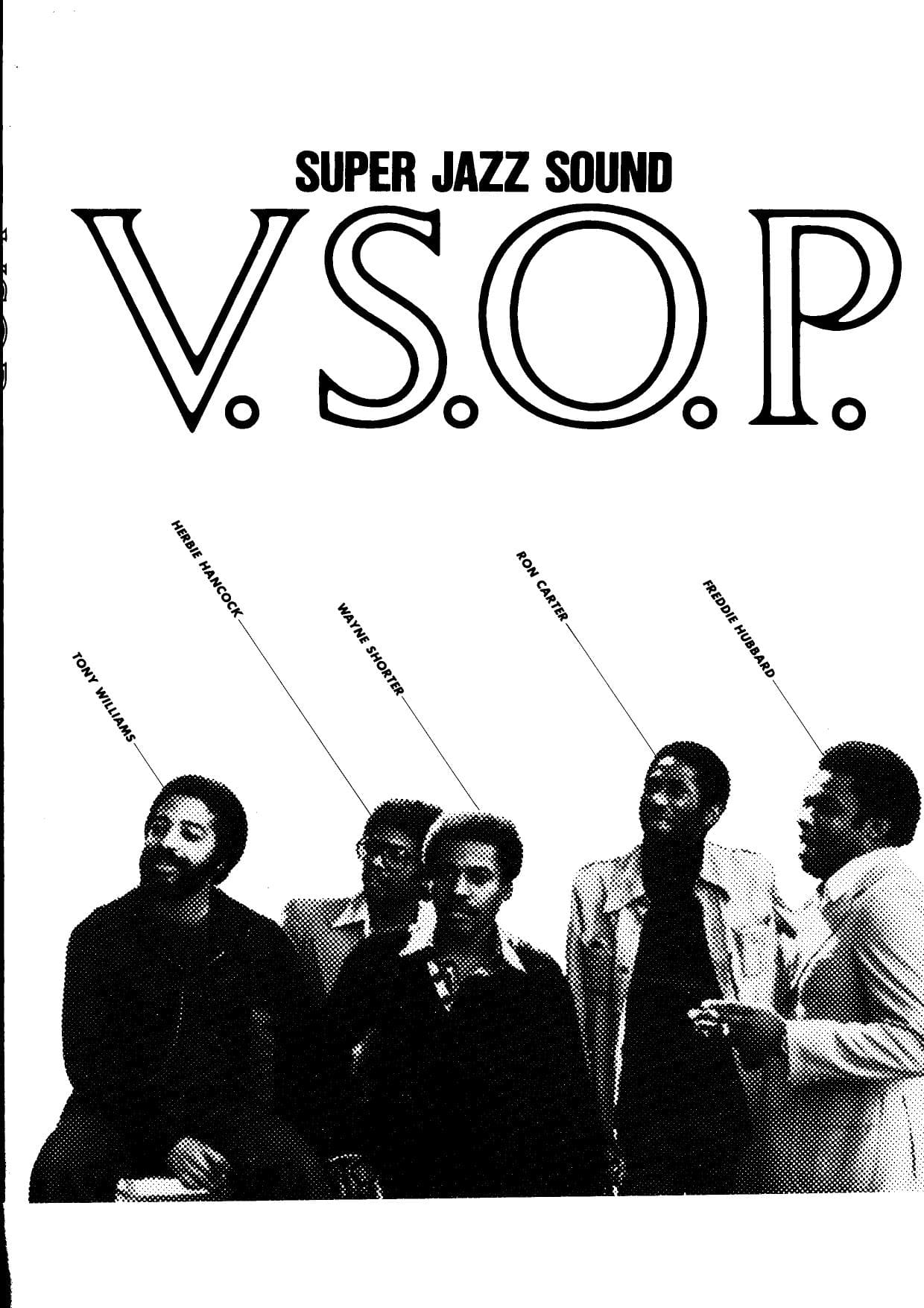
Despite his immersion in electronic music, Hancock never abandoned his love for acoustic jazz. He recorded and performed with VSOP, a quintet reuniting him with his Miles Davis colleagues—Freddie Hubbard, Wayne Shorter, Ron Carter, and Tony Williams—and engaged in duet settings with Chick Corea and Oscar Peterson. This ability to move fluidly between acoustic and electric contexts, and to be equally convincing in both, became one of Hancock's defining characteristics as an artist.
The 1980s: "Rockit" and New Directions
The 1980s brought another dramatic shift in Hancock's career. In 1983, a new pull to the alternative side led him to a series of collaborations with bassist and producer Bill Laswell. The first result, Future Shock, struck platinum and produced the single "Rockit," which became a groundbreaking fusion of jazz and hip-hop.
"Rockit" was a major radio hit and its music video, directed by the British duo Godley & Creme, was among the earliest videos by African American artists to feature on MTV. The song won a Grammy for Best R&B Instrumental Performance—Hancock's first career Grammy—and the video won five MTV Video Music Awards, topping Michael Jackson's three wins that year. Many later turntablists have cited "Rockit" as revelatory, inspiring their interest in the craft, and it helped pave the way for mainstream acceptance of hip-hop.
In 1986, Hancock won an Academy Award for his score to the film 'Round Midnight, in which he also appeared as an actor. This period also saw him serve as host for two television programs: "Rock School" on PBS and "Coast to Coast" on Showtime. In 1980, he introduced trumpeter Wynton Marsalis to the world as a solo artist, producing Marsalis's debut album and touring with him.
The 1990s and Beyond: Continued Evolution
Hancock's restless creativity continued unabated through the 1990s and into the new millennium. Dis Is da Drum (1994) saw him return to acid jazz, and he appeared on the Red Hot Organization's compilation Stolen Moments: Red Hot + Cool, which was heralded as "Album of the Year" by Time magazine. The New Standard (1995) found Hancock and an all-star band interpreting pop songs by Nirvana, Stevie Wonder, the Beatles, Prince, and Peter Gabriel, demonstrating his ability to find jazz possibilities in unexpected sources.
A 1997 duet album with Wayne Shorter, 1+1, was successful, with the song "Aung San Suu Kyi" winning the Grammy Award for Best Instrumental Composition. Hancock achieved further success in 1998 with Gershwin's World, which featured readings of George and Ira Gershwin standards with guest stars including Stevie Wonder, Joni Mitchell, and Shorter, and won three Grammy Awards.
In the 2000s, Hancock continued to explore new territory. Future2Future (2001) reunited him with Bill Laswell and featured electronica and turntablism. He partnered with Michael Brecker and Roy Hargrove for Directions in Music: Live at Massey Hall (2001), saluting Davis and John Coltrane. Possibilities (2005) featured duets with an extraordinary range of artists including Carlos Santana, Paul Simon, Annie Lennox, John Mayer, Christina Aguilera, and Sting. This album was nominated for Grammy Awards in two categories, including Best Pop Instrumental Performance for "A Song for You" featuring Aguilera.
River: The Joni Letters and Late-Career Triumph
One of the crowning achievements of Hancock's later career came with River: The Joni Letters (2007), a tribute to the music of Joni Mitchell. The album featured Hancock's band—Lionel Loueke on guitar, Wayne Shorter on saxophones, Dave Holland on bass, and Vinnie Colaiuta on drums—along with vocalists including Norah Jones, Corinne Bailey Rae, Tina Turner, and Leonard Cohen. River: The Joni Letters won two Grammy Awards, including the prestigious Album of the Year, making Hancock one of only a handful of jazz musicians ever to receive that honor. As one review noted, "This GRAMMY®-winning album isn't simply a collection of Joni Mitchell covers by the pianist Herbie Hancock; it's an expansive tribute album that imaginatively honors the legendary Canadian singer/songwriter from a number of different angles".
The album was significant not only for its artistic merit but for its commercial success, demonstrating that jazz could still reach a wide audience when presented with integrity and imagination. Hancock's decision to interpret Mitchell's compositions as jazz rather than attempting to replicate her original recordings showed his deep understanding of her music's harmonic and rhythmic adventurousness.
Musical Style and Harmonic Approach
Herbie Hancock's musical style defies easy categorization, drawing from an extraordinarily diverse range of influences while maintaining a distinctive voice. As Blue Note Records notes, "Though grounded in Bill Evans and able to absorb blues, funk, gospel, and even modern classical influences, Hancock's piano and keyboard voices are entirely his own, with their own urbane harmonic and complex, earthy rhythmic signatures—and young pianists cop his licks constantly".
Hancock's harmonic approach is characterized by several distinctive features. He makes extensive use of quartal voicings—chords built in fourths rather than the traditional thirds—which create an open, ambiguous sound that avoids conventional functional harmony. This approach is evident in compositions like "Maiden Voyage," where the opening chord Am7/D can be interpreted as a series of perfect fourths creating a quartal chord.
Another hallmark of Hancock's style is his use of negative harmony, a concept that involves mirroring chord progressions around an axis to create substitute harmonies. His famous composition "Cantaloupe Island" demonstrates this technique, with the chord progression Fm – Db7 – Dm – Fm utilizing negative harmonic relationships.
Hancock's compositional language evolved significantly during his time with Miles Davis, expanding his treatment of harmony and harmonic color. His post-bop compositions provided some of the signature sounds of the 1960s, often relying on both major third and minor third axis progressions and employing slash-chord vocabulary.
Improvisational Style and Signature Licks
Hancock's improvisational style is marked by a strong lyrical sense, a reliance on motivic improvisation rather than melodic formulas, and a sense of dramatic pacing that frequently leads to a culminating high point. Rather than running through learned licks and ii-V lines, Hancock aims to improvise with musical ideas, developing and transforming them throughout a solo.
His early improvisations synthesized hard bop pianism with Bill Evans's harmonic vocabulary and touch, and they already showed many features of his mature playing in embryonic form. Even in his earliest recordings, Hancock demonstrated a willingness to break free of harmonic constraints and a commitment to more dissonant harmonies, particularly in his work with Eric Dolphy.
One notable example of Hancock's improvisational approach is his solo on "Seven Steps to Heaven," where he begins with a D-minor pentatonic figure before anticipating the G7 harmony by a beat, playing a flat thirteenth going to the third of the chord before landing on the sharp ninth on beat one. This kind of harmonic sophistication and rhythmic displacement is characteristic of his style.
Hancock's improvisation on "So What" from Miles Davis's Kind of Blue has been the subject of extensive analysis, with researchers examining the common licks he used and the modal harmony he employed. His Fender Rhodes electric piano solos of the 1970s, recorded primarily within jazz-funk contexts, represent a high point of improvisation over groove-based forms, predominantly in riff-driven settings based on a single harmonic area or few chord changes.
In his improvisations, Hancock has been noted for implementing significant harmonic and metrical disruption, using techniques such as polymeter and accent shift, as well as dissonant chromatic planing. These techniques contribute to the sense of adventure and unpredictability that characterizes his finest work.
Key Compositions
Main article on Wikipedia: Herbie Hancock discography
Hancock's compositional legacy is vast, with several pieces becoming permanent additions to the jazz canon. "Watermelon Man," from his debut album Takin' Off, became a hit for Mongo Santamaría and was later reimagined as a funk classic on Head Hunters. "Cantaloupe Island" has become one of the most recognizable jazz tunes, its modal vamp and catchy melody making it a favorite of jazz musicians and audiences alike.
"Maiden Voyage," perhaps Hancock's most beloved composition, is a modal masterpiece built on suspended chords and quartal harmony. Its haunting melody and ambiguous harmonic landscape have made it a staple of jazz education and performance. "Dolphin Dance," from Empyrean Isles, is another composition widely recognized for its postbop blend of modal and tonal harmony, exploring major-third key centers that create a sense of harmonic ambiguity and beauty.
"Chameleon," from Head Hunters, represents a different side of Hancock's compositional genius—a funk groove built on a memorable synthesizer riff that became a dance floor classic. "Rockit" demonstrated his ability to incorporate emerging hip-hop production techniques into his music, while River: The Joni Letters showcased his interpretive skills in reimagining the work of a great songwriter.
Collaborations
Throughout his career, Hancock has been a prolific collaborator, working with an astonishing range of artists across genres. His most significant early collaboration was with Miles Davis, but he also worked extensively with Donald Byrd, Phil Woods, Oliver Nelson, and Eric Dolphy. With Wayne Shorter, his bandmate in the Davis quintet, Hancock maintained a musical partnership that spanned decades, including the duet album 1+1 and Shorter's participation in River: The Joni Letters.
In the 1970s, Hancock collaborated with the musicians who became the Head Hunters—Bennie Maupin, Paul Jackson, Harvey Mason, and Bill Summers—as well as with guitarist Wah Wah Watson, bassist Freddie Washington, and percussionist Sheila Escovedo (later Sheila E.). The album Monster (1980) featured Carlos Santana on the dance single "Saturday Night".
His 1980s collaboration with Bill Laswell produced the groundbreaking Future Shock and the hit single "Rockit," as well as later albums including Sound System and Future2Future. In the 1990s and 2000s, Hancock collaborated with an increasingly diverse array of artists. Possibilities (2005) featured duets with Christina Aguilera, Annie Lennox, John Mayer, Damien Rice, Carlos Santana, Paul Simon, Sting, and Joss Stone. The Imagine Project (2010) included collaborations with Anoushka Shankar, Chaka Khan, Seal, Pink, Jeff Beck, Oumou Sangare, Dave Matthews, and Marcus Miller, among others.
In 2001, Hancock partnered with Michael Brecker and Roy Hargrove to record Directions in Music: Live at Massey Hall, saluting Davis and John Coltrane, and the threesome toured on and off through 2005. He also recorded with Josh Groban and Eric Mouquet on the song "Machine" for Groban's album Awake.
Influences and Legacy
Herbie Hancock's influence on music is difficult to overstate. As the first recipient of the Polar Music Prize in 2025 and a 2013 Kennedy Center Honoree, his contributions have been recognized at the highest levels of cultural achievement. Neil McCormick of The Daily Telegraph ranked Hancock as the greatest keyboard player of all time in 2024.
Hancock's impact extends across multiple dimensions. As a pianist, he is widely regarded as the most influential practitioner of modern jazz piano since Thelonious Monk, forging a style that synthesized elements from Bud Powell, Wynton Kelly, Bill Evans, Ravel, and Debussy, among others. As a composer, his works have become jazz standards performed by countless musicians around the world. As a bandleader, he pioneered new approaches to collective improvisation and electronic jazz.
His influence on hip-hop and electronic music has been particularly profound. His 1970s output inspired and provided samples for generations of hip-hop and dance music artists. "Rockit" is widely credited with helping to pave the way for mainstream acceptance of hip-hop, and its music video was among the earliest by an African American artist to appear on MTV.
Hancock's personal philosophy has also influenced his music in profound ways. A practicing Nichiren Buddhist since 1972, he has spoken extensively about how his Buddhist practice has transformed and enhanced his life and creativity. He has explained that Buddhism "modifies our state of being, and expands our creativity," a perspective that has informed his approach to improvisation and composition.
In 2011, Hancock was designated a UNESCO Goodwill Ambassador, helping to foster mutual understanding between global cultures and encouraging creativity among youth around the world. He has also been active in philanthropy through the Rhythm of Life Foundation, which he founded.
Awards
Herbie Hancock, the jazz seeker
Herbie Hancock's career represents one of the most remarkable journeys in American music. From his early days as a classical prodigy in Chicago to his groundbreaking work with Miles Davis, from the electronic explorations of the Mwandishi Band to the funk revolution of Head Hunters, from the hip-hop innovations of "Rockit" to the Grammy-winning River: The Joni Letters, Hancock has consistently pushed the boundaries of what jazz can be while maintaining an unmistakable musical identity.
His willingness to take risks, to embrace new technologies, and to collaborate across genres has made him a model for what a jazz musician can be in the modern era. As he himself has said, "I think risk-taking is a great adventure. And life should be full of adventures". That adventurous spirit has defined Hancock's career and ensured his place as one of the most important and influential musicians of our time. Whether playing acoustic piano in an intimate trio setting or manipulating synthesizers and vocoders in a stadium, Herbie Hancock has remained true to his artistic vision while always seeking new horizons—a true maiden voyage that continues to this day.
Browse in the Sheet Music Library:
Or browse in the categories menus & download the Library Catalog PDF: