Scores for all instruments: 16,000+ (active and growing), over 236,000 pages.
All genres and levels: Jazz & Blues, Rock & Pop, Classical & Contemporary, Film & Musicals;
books & biographies; methods, études, play-along tracks (MP3) for Jazz & Rock.
Access & benefits: US$15.99 one-time payment, valid for lifetime, full Library access.
Table of Contents
The best sheet music download from our Library.

Please, subscribe to our Sheet Music Library. Sheet music should be accessible and affordable for all musicians, from professionals to absolute beginners.
The Horace Silver Septet - Full Concert [HD] | Live at North Sea Jazz Festival 1996
- I want you
- The hippest cat in Hollywood
- I got the Blues in Santa Cruz
- We got Silver at six
- Song for my father
- Diggin` on Dexter
Horace Silver: The Architect of Hard Bop
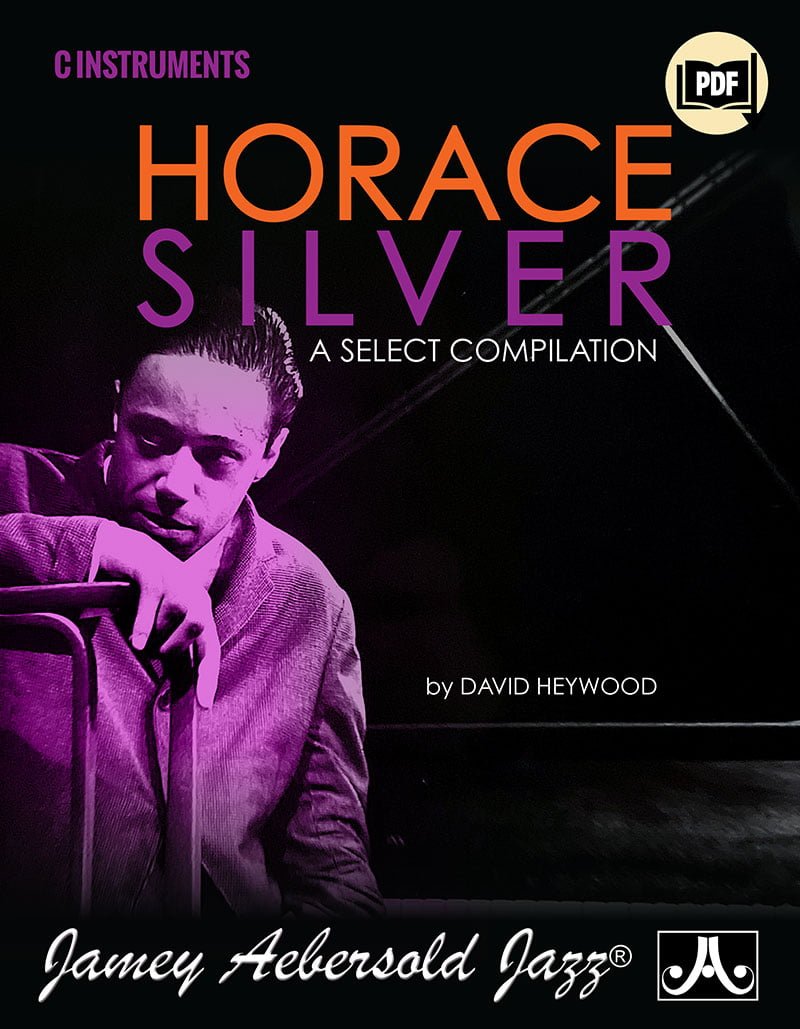
Few figures in jazz history have shaped the sound of an entire era as decisively as Horace Silver. As a pianist, composer, and bandleader, Silver was the primary architect of hard bop, a style that infused bebop’s harmonic sophistication with the earthy power of blues, gospel, and Latin music. His compositions—"The Preacher," "Señor Blues," "Song for My Father," "Sister Sadie," and "Nica’s Dream"—have become permanent fixtures of the jazz repertoire, played by musicians of every generation. His piano style, terse yet endlessly inventive, funky yet harmonically daring, became a model for mainstream pianists for decades. More than a musician, Silver was a mentor whose bands served as finishing schools for some of the most influential horn players of the postwar era. This article explores the full arc of Horace Silver’s life and artistry, from his Cape Verdean roots in Connecticut to his enduring legacy as one of jazz’s most vital composers.
Search your favorite sheet music in the Sheet Music Library Catalog
Early Life and Musical Beginnings
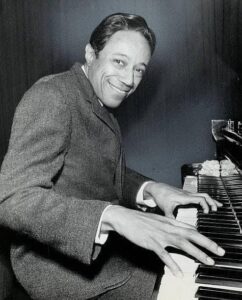
Horace Ward Martin Tavares Silver was born on September 2, 1928, in Norwalk, Connecticut. His mother, Gertrude, was a maid who sang in a church choir, and his father, John Tavares Silver, was born on the island of Maio in Cape Verde and immigrated to the United States as a young man, working for a tire company. This Cape Verdean heritage would turn out to be one of the most distinctive ingredients in Silver’s musical identity. His father played multiple instruments—including the violin, guitar, and mandolin—and the folk melodies of the Portuguese-speaking islands off the coast of West Africa were a constant presence in the Silver household.
Silver’s first formal introduction to music came in high school, where he played tenor saxophone in the marching band and orchestra. He did not become serious about music, however, until he heard Jimmy Lunceford’s band perform. That experience galvanized him, and he switched from saxophone to piano, immersing himself in jazz and teaching himself to play by jamming with teenage friends. His early piano influences were diverse: the blues singers and boogie-woogie pianists he heard on records, as well as the bebop innovations of Thelonious Monk and Bud Powell.
Silver’s big break came when he was offered a job at the Sundown nightclub in Hartford, where he backed touring jazz stars. In 1950, Stan Getz played a concert in Hartford with a pickup rhythm section that included Silver, drummer Walter Bolden, and bassist Joe Calloway. Getz was so impressed that he hired the entire trio. Silver, who had been saving money to move to New York anyway, found his path to the city sealed by Getz’s offer. He worked with Getz for a year, then began freelancing around New York with such major figures as Coleman Hawkins, Lester Young, and Oscar Pettiford.
The Jazz Messengers and the Birth of Hard Bop
In 1952, Silver recorded with saxophonist Lou Donaldson for Blue Note Records, a session that led to his first recordings as a leader. The following year, he joined forces with drummer Art Blakey to form a cooperative band under their joint leadership. The group’s first album, Horace Silver and the Jazz Messengers, released in 1955, was a milestone in the development of hard bop. Many of the tunes Silver penned for that record—“The Preacher,” “Doodlin’,” and “Room 608”—became instant jazz classics.
The partnership with Blakey was a meeting of kindred spirits. Blakey, seven years Silver’s senior, had played in leading big bands of the swing era and shared Silver’s passion for creating a new, more polyglot musical style that retained the excitement and ensemble complexity of older jazz while embracing blues, gospel, and Latin elements. The Jazz Messengers’ first edition also included trumpeter Kenny Dorham, tenor saxophonist Hank Mobley, and bassist Doug Watkins. Their soulful sound became synonymous with Blue Note Records.
By 1956, Silver had left the Messengers to record on his own, but he maintained a relationship with Blue Note that lasted over 25 years, recording some of the label’s most treasured albums. His ensembles became hands-on training grounds for future jazz stars, including Donald Byrd, Art Farmer, Joe Henderson, and many others.




Musical Style and Piano Approach
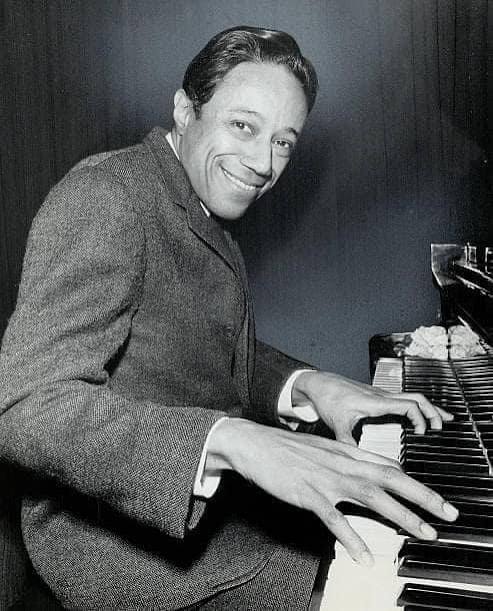
Silver’s piano style was immediately distinctive, and it evolved from the bebop tradition while departing from it in crucial ways. As a player, he transitioned from bebop to hard bop by stressing melody rather than complex harmony, combining clean and often humorous right-hand lines with darker notes and chords in a near-perpetual left-hand rumble. His solos were exceptionally clear and melodic, and he was not given to the standard practice—typified by his prime influence, Bud Powell—of improvising long, complex lines of eighth notes. Instead, Silver’s improvisations were marked by a conversational quality, with phrases that breathed and spoke rather than merely ran.
The French musicologist and critic André Hodeir observed that Silver’s piano solos were “exceptionally clear and melodic,” and that he did not habitually improvise the long, complex eight-note lines that the bebop tradition had established. This was not a limitation but a deliberate aesthetic choice. Silver worked brilliantly within his means, becoming an artist whose accompanying was as distinctive as his soloing.
His early recordings displayed what one critic called “a crisp, chipper but slightly wayward style, idiosyncratic enough to take him out of the increasingly stratified realms of bebop”. In contrast to the elaborate bebop piano of Bud Powell or Al Haig, Silver’s right hand provided cleanly played, often humorous lines while his left hand rumbled with a dark, almost percussive presence. This left-hand style—sometimes a walking bass line, sometimes a repeating rhythmic figure—became one of his signatures and a major influence on jazz organists and pianists alike.
Silver’s approach to improvisation was deeply rooted in the blues. NPR’s Jazz Profiles described him as “widely regarded as the father of hard bop piano,” noting that he placed heavy emphasis on the blues and even gospel roots of jazz while working in intricate, original improvisations. His energetic playing and infectious compositions never failed to get listeners moving to the rhythm. As pianist Ramsey Lewis put it, “Horace Silver was one of the hardest swinging piano players in jazz, both as a section player and a soloist”.
Compositional Style and Harmonic Innovation
If Silver’s piano playing was influential, his composing was revolutionary. He fundamentally rethought how a small jazz ensemble could function, moving beyond the bebop convention of using chord progressions from popular standards as vehicles for improvisation. Instead, Silver wrote original tunes with unusual structures, and he strategically placed ensemble passages within and between improvised solos, rather than merely bookending them at the beginning and end of a piece.
One of Silver’s most significant innovations was his use of repeating accompaniment patterns instead of conventional “comping”—the sporadic, syncopated bursts of chording that pianists typically use to respond to an improvising soloist. He also wrote bass lines to fit his left-hand piano figures, creating a tightly integrated rhythmic foundation that gave his quintets a cohesion and drive rare in small-group jazz.
Silver’s harmonic writing for horns was equally distinctive. The harmonies he wrote for saxophone and trumpet, often built in fourths and fifths, made the quintet sound much larger than most bebop quintets. In his landmark composition “Song for My Father,” Silver uses a blues scale on the dominant and tonic chords, with flat thirds, fifths, and sevenths. In the second chorus, from the twenty-fifth bar onward, he shifts from harmony in thirds to harmony in fourths, creating a striking textural change that has been analyzed by jazz scholars for decades.
His compositions similarly emphasized catchy melodies but often contained dissonant harmonies, creating a tension between accessibility and sophistication that became a hallmark of his style. Silver has been described as combining “the sophistication of various altered chords and scales and unusual harmonic sequences with a bluesy feeling to provide a unique synthesis in his compositions.” Another testament to his compositional genius is the fact that his harmony and melody are never altered or changed by other jazz musicians; when he writes a song, it is as good as it gets.
Silver’s compositional range was remarkably broad. He could write hard-swinging blues (“Filthy McNasty”), poignant ballads (“Peace”), Latin-tinged exotica (“Señor Blues,” “The Cape Verdean Blues”), and even Japanese-tinged harmonic explorations (“Sayonara Blues”). His music always betrayed his love for Latin rhythms, a connection that grew from listening to Cape Verdean folk songs played by his father and uncles.
The Classic Quintet and Essential Recordings
After leaving the Jazz Messengers, Silver formed his own quintet, establishing what became the standard small-group lineup: tenor saxophone, trumpet, piano, bass, and drums. His most successful and longest-lived quintet (1958–1964) featured trumpeter Blue Mitchell and tenor saxophonist Junior Cook, a lineup that recorded some of the most beloved albums in the Blue Note catalog.
6 Pieces of Silver (1956) introduced “Señor Blues,” one of Silver’s most enduring compositions. The tune’s minor-key Latin groove and evocative melody made it an instant classic, and it became a hit single for Blue Note. Blowin’ the Blues Away (1959) is one of Silver’s all-time Blue Note classics, upping the ante established on Finger Poppin’ for tightly constructed, joyful hard bop. The album features seven originals, including “Sister Sadie,” “Peace,” “The St. Vitus Dance,” and the title track, all of which have become jazz standards.
Song for My Father (1964) is probably Silver’s best-known album, and the composition of the same name is his most famous piece. The title track was inspired by Cape Verdean folk music and features one of the most recognizable bass lines in jazz history. That two-note bass figure was famously borrowed by Steely Dan for their 1974 hit “Rikki Don’t Lose That Number,” introducing Silver’s music to millions of rock fans who may never have known its source. The swirling horn lines toward the end of “Song for My Father” were also replicated in multitracked vocals on Stevie Wonder’s “Don’t You Worry ‘Bout a Thing,” further evidence of Silver’s far-reaching influence on popular music.
Other essential Silver recordings include The Cape Verdean Blues (1965), which drew directly on his father’s heritage; The Tokyo Blues (1962), recorded during a Japanese tour; and Further Explorations by the Horace Silver Quintet (1958), which captured the group at an early peak. Horace-Scope (1960) and Silver’s Serenade (1963) further demonstrated his compositional range, while Doin’ the Thing—Live at the Village Gate (1961) captured the quintet’s visceral live energy.
Collaborations and Sidemen
Silver’s career was defined not only by his own playing and writing but also by the extraordinary musicians who passed through his bands. As Blue Note Records observed, “Some of the most influential horn players of the ’50s, ’60s, and ’70s first attained a measure of prominence with Silver—musicians like Donald Byrd, Woody Shaw, Joe Henderson, Benny Golson, and the Brecker Brothers all played in Silver’s band at a point early in their careers”.
His collaboration with Art Blakey produced the foundational document of hard bop, and their partnership, though relatively brief, set the template for the style. Silver also worked extensively with trumpeter Art Farmer, and their complete recorded collaborations have been collected as a significant document of hard bop’s development. In the mid-1950s, Silver was heard on records with Stan Getz, Miles Davis, and Art Blakey, and he contributed memorable solos to Miles Davis’s 1954 Prestige album Walkin’, which caught the attention of many jazz musicians and critics.
The list of Silver’s sidemen reads like a who’s who of postwar jazz: saxophonists Hank Mobley, Junior Cook, Joe Henderson, and Michael Brecker; trumpeters Kenny Dorham, Donald Byrd, Blue Mitchell, Art Farmer, and Randy Brecker; bassists Doug Watkins, Gene Taylor, and Teddy Kotick; and drummers Roy Brooks, Al Foster, and Louis Hayes, among many others. Silver’s ability to identify and nurture young talent was legendary, and his bands functioned as a continuing education in the art of hard bop.
Film and Soundtrack Appearances
While Silver’s music has appeared in numerous films and television programs, his direct involvement in film work was relatively limited. The 2022 film Confess, Fletch, starring Jon Hamm, prominently featured Silver’s “Señor Blues” as part of a soundtrack dominated by classic Blue Note recordings. The soundtrack album, released by Blue Note Records, also included Art Blakey & The Jazz Messengers’ “Moanin’” along with selections from Hank Mobley, Dexter Gordon, Ike Quebec, Chet Baker, and Trombone Shorty.
One of the few opportunities to see Silver on film is the 1976 Horace Silver Quintet concert recording, captured live at the Umbria Jazz Festival. The film includes extended performances of “Adjustment,” “Barbara,” “In Pursuit of the 27th Man,” and “Song for My Father”. Another filmed performance from the 1994 Antibes Juan-les-Pins Jazz Festival features Silver performing his composition “Filthy McNasty”. These visual documents, though scarce, provide invaluable glimpses of Silver’s commanding presence as a bandleader and his distinctive approach to the piano.
Beyond these, Silver’s compositions have been used in films as diverse as The French Connection and Round Midnight, though often in the background rather than as featured soundtrack elements. His music’s cinematic quality—its blend of urban energy, rhythmic drive, and melodic memorability—has made it a natural choice for filmmakers seeking to evoke the atmosphere of mid-century American jazz culture.
Later Career: Spiritualism, Lyrics, and Independent Labels
The 1970s brought significant changes to Silver’s music and personal life. He disbanded his working group to spend more time with his wife and concentrate on composing, and he began writing lyrics to his compositions. His interest in spiritualism and metaphysics deepened, influenced by Indian philosophies and yoga, and these concerns became central to his work. The resulting United States of Mind series of albums—That Healin’ Feelin’ (1970), Total Response (1971), and All (1972)—was organized around the physical, mental, and spiritual dimensions of existence.
Though commercially unsuccessful by the standards of his Blue Note peak, these albums represented a sincere attempt to integrate Silver’s musical gifts with his philosophical and spiritual convictions. As he explained, “I got interested in writing lyrics about that time and became interested in metaphysics and Indian philosophies, and Yoga philosophies. So I was trying to get the physical thing, the mental thing, and the spiritual thing altogether”.
After leaving Blue Note in 1979—ending a relationship that had lasted over 25 years—Silver founded his own labels, Silveto and Emerald. His 1980s work was poorly distributed, but albums such as Music to Ease Your Disease and Spiritualizing the Senses exemplified his concern with music’s metaphysical powers. In 1985, he released Continuity of Spirit, which featured his unique orchestral collaborations.
Silver returned to major labels in the 1990s, releasing critically acclaimed albums for Columbia and Impulse! Records. The Hardbop Grandpop (1996), a septet recording, was nominated for two Grammy Awards: as an album for Best Instrumental Performance, Individual or Group, and for a composition. A Prescription for the Blues (1997) followed, reaffirming his stature as one of jazz’s most vital composers. In 1995, he received the National Endowment for the Arts Jazz Masters award, and in 2005, the Recording Academy presented him with its President’s Merit Award during the Grammy Salute to Jazz event.
Influences and Legacy
Silver’s influences were eclectic and deeply personal. His earliest musical exposure was the Cape Verdean folk music he heard from his Portuguese-born father. Later, after he began playing piano and saxophone as a high schooler, he came under the spell of blues singers and boogie-woogie pianists, as well as boppers like Thelonious Monk and Bud Powell. The blues remained the foundation of his musical language throughout his career, and he never strayed far from its emotional directness.
His legacy, however, extends far beyond his own recordings. Silver is one of the most influential and prolific composers in modern jazz, and many of his compositions have become durable classics frequently arranged for small ensembles and big bands. The hard bop style that he pioneered in the 1950s became the dominant mainstream jazz idiom, played not only by his contemporaries but also by musicians who had not yet been born when the style first emerged. From the perspective of the early 2000s, it is clear that few jazz musicians have had a greater impact on the contemporary mainstream than Horace Silver.
His influence on pianists and jazz organists has been profound. Silver touched many with the blues-derived aspects of his playing, and his terse, imaginative, and utterly funky piano style became a model for subsequent mainstream pianists to emulate. Even members of the experimental artists have acknowledged his influence: Cecil Taylor confessed a Silver influence, and trumpeter Dave Douglas played briefly in a Silver combo.
Silver’s bands served as a training ground for an astonishing number of major jazz artists over four decades. His considerable legacy encompasses both his influence on other pianists and composers and the development of young jazz talents who appeared in his bands. As bassist Christian McBride told NPR, “Horace Silver’s music has always represented what jazz musicians preach but don’t necessarily practice, and that’s simplicity. It sticks to the memory. It’s very singable. It gets in your blood easily. You can comprehend it easily. It’s very rooted, very soulful”.
Additional Information: Awards, Autobiography, and Personal Life
Silver’s autobiography, Let’s Get to the Nitty Gritty, was published in 2006 by the University of California Press, edited and with an afterword by Phil Pastras and a foreword by Joe Zawinul. The book takes readers from Silver’s childhood in Norwalk through his rise to fame, and also describes his spiritual awakening in the late 1970s. It remains one of the most engaging and personal memoirs by a major jazz figure.
In recognition of his contributions, Silver was inducted into the Down Beat Jazz Hall of Fame in 1996, and his album Song for My Father was inducted into the Grammy Hall of Fame in 1999. He was nominated for three Grammy Awards in his career and received the NEA Jazz Masters award in 1995, the highest honor the United States bestows on jazz artists.
Silver performed in public for the last time in 2004, appearing with an octet at the Blue Note Jazz Club in New York. He gradually withdrew from public view because of health problems, and he died on June 18, 2014, in New Rochelle, New York, at the age of 85. Tributes poured in from across the jazz world. Bassist Stanley Clarke wrote, “I enjoyed so much the time that I spent with Horace Silver. He was the greatest bandleader. On to higher places Horace!”. Pianist Mike LeDonne captured the essence of Silver’s musical philosophy: “Horace put the fun back in the music. His was an approach that put dance up front once again like the old days but reached forward harmonically at the same time”.
Horace Silver’s life was a testament to the power of music to bring joy, to build community, and to speak across boundaries of culture and generation. He was, in his own words, a musician who “spoke music, the international language”—and the world understood. His compositions continue to be played, studied, and loved by musicians and listeners around the globe, ensuring that the hard bop flame he lit more than half a century ago will burn brightly for generations to come.
Browse in the Sheet Music Library:
Or browse in the categories menus & download the Library Catalog PDF:
Compositions
Main article on Wikipedia: Horace Silver discography
Early in his career, Silver composed contrafacts and blues-based melodies, including "Doodlin'" and "Opus de Funk". The latter was "a typical Silver creation: advanced in its harmonic structure and general approach but with a catchy tune and finger-snapping beat." His innovative incorporation of gospel and blues sounds into jazz compositions took place while they were also being added to rock 'n' roll and R&B pieces.
Silver soon expanded the range and style of his writing, which grew to include "funky groove tunes, gentle mood pieces, vamp songs, outings in 34 and 68 time, Latin workouts of various stripes, up-tempo jam numbers, and examples of almost any and every other kind of approach congruent with the hard bop aesthetic." An unusual case is "Peace", a ballad that prioritizes a calm mood over melodic or harmonic effects. Owens observed that "Many of his compositions contain no folk blues or gospel music elements, but instead have highly chromatic melodies supported by richly dissonant harmonies". The compositions and arrangements were also designed to make Silver's typical lineup sound larger than a quintet.
Silver himself commented that inspiration came from multiple sources: "I'm inspired by nature and by some of the people I meet and some of the events that take place in my life. I'm inspired by my mentors. I'm inspired by various religious doctrines. Many of my songs are impressed on my mind just before I wake up. Others I get from just doodlin' around on the piano". He also wrote that, "when I wake up with a melody in my head, I jump right out of bed before I forget it and run to the piano and my tape recorder. I play the melody with my right hand and then harmonize it with my left. I put it down on my tape recorder, and then I work on getting a bridge or eight-bar release for the tune."