
Scores for all instruments: 16,000+ (active and growing), over 236,000 pages.
All genres and levels: Jazz & Blues, Rock & Pop, Classical & Contemporary, Film & Musicals;
books & biographies; methods, études, play-along tracks (MP3) for Jazz & Rock.
Access & benefits: US$15.99 one-time payment, valid for lifetime, full Library access.
Table of Contents
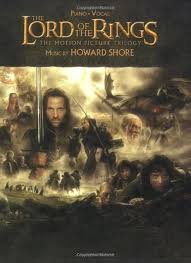
The best sheet music download from our Library.
Please, subscribe to our Sheet Music Library.
Lord of the Rings Symphony - Howard Shore
Howard Shore talks about creating the Lord of the Rings Symphony.
Search your favorite sheet music in the Sheet Music Library Catalog
Howard Shore: The Architect of Middle-earth and the Master of Cinematic Sound
Howard Shore stands as one of the most influential and versatile composers in the history of film music. With a career spanning over five decades, he has composed the scores for more than eighty films, won three Academy Awards, three Golden Globe Awards, and four Grammy Awards, and created some of the most recognizable musical themes in modern cinema. From the brooding, unsettling soundscapes of David Cronenberg's psychological horror to the sweeping, mythological grandeur of Peter Jackson's Middle-earth epics, Shore's music has shaped the emotional and narrative architecture of countless films. Yet his work extends far beyond the screen: he is an accomplished conductor, orchestrator, and composer of concert works, including an opera based on Cronenberg's The Fly, and he served as the original musical director of Saturday Night Live. This article explores Howard Shore's life, his compositional style and harmonic language, his most celebrated compositions, his collaborative relationships, and his enduring legacy in both film and concert music.
Early Life and Formative Years
Howard Leslie Shore was born on October 18, 1946, in Toronto, Ontario, Canada, to Jewish parents Bernice and Mac Shore. His musical education began around the age of eight or nine, when he started learning a multitude of instruments. By his early teens, he was already playing in bands, and he began studying the clarinet at age ten under Morris Weinzweig, who insisted that the young student learn counterpoint and harmony alongside his instrumental studies. This early grounding in compositional technique—writing exercises with pencil and paper—laid the foundation for a lifelong commitment to the craft of composition.
Shore's formative years were marked by a voracious appetite for musical discovery. He frequented a music library in Toronto, borrowing vinyl records of concert and symphonic music. It was there that he first encountered the work of film composers such as Tōru Takemitsu, Georges Delerue, and Nino Rota. Even earlier, at around age ten, his mother took him to see The Ten Commandments, and the experience of hearing Elmer Bernstein's score on the big screen left an indelible impression. "That was maybe the first time that I thought, 'Wow! This is really spectacular!'" Shore recalled.
A pivotal friendship also took root during his youth. At summer camp in northern Ontario, Shore met Lorne Michaels, a connection that would later prove instrumental in his career. After graduating from Forest Hill Collegiate Institute, Shore studied music at Berklee College of Music in Boston, where he focused on composition and was exposed to influential faculty members including John Bavicchi, John LaPorta, William Maloof, and Charlie Mariano. At Berklee, Shore studied piano, trumpet, and cello, but the pencil—the act of writing music—remained central to his identity as a musician.
From Rock Bands to Saturday Night Live
Shore's professional career began in the late 1960s as a founding member of the jazz fusion band Lighthouse, with whom he recorded and toured from 1969 to 1972. Playing saxophone, he gained invaluable experience as a performer and arranger, but his ambitions increasingly turned toward composition. In 1970, he became the music director for Lorne Michaels and Hart Pomerantz's short-lived television program The Hart & Lorne Terrific Hour. He also wrote the music for Canadian magician Doug Henning's magic musical Spellbound in 1974.
The most significant early break came when Michaels launched Saturday Night Live in 1975. Shore served as the show's original musical director from 1975 to 1980, conducting the live broadcasts and appearing in numerous musical sketches. This five-year tenure placed him at the center of a cultural phenomenon, working alongside emerging comedians and musicians. As he later explained, television had hiatus periods that allowed him to pursue other projects: "I would do the show during the winter months, then in the summer I'd write The Brood, Scanners...". This dual existence—immersed in the fast-paced world of live sketch comedy while quietly developing as a film composer—would prove formative.
The Cronenberg Partnership and the Birth of a Film Composer
Howard Shore's entry into film scoring came in 1978 with the low-budget film I Miss You, Hugs and Kisses. But the following year marked the beginning of a collaboration that would define much of his career: David Cronenberg's The Brood (1979). Shore has since scored all but one of Cronenberg's films, a partnership spanning over forty years and seventeen films, including Scanners, Videodrome, The Fly, Dead Ringers, Naked Lunch, Crash, A History of Violence, Eastern Promises, and The Shrouds.
The Cronenberg-Shore relationship is one of the most enduring and artistically significant composer-director partnerships in cinema history. Cronenberg gave Shore a great deal of creative freedom early on, which allowed the composer to take a sharply different approach with each film. "The ambiguity in [Cronenberg's] films was always an interesting thing to me," Shore explained, "because it allowed me to work around the edges of the frame and to really work with the subtext of story and not always have to approach things so head on". This willingness to explore the psychological and atmospheric dimensions of a film—rather than merely underlining its surface action—became a hallmark of Shore's approach.
Musical Style and Technique
The Wagnerian Inheritance and Leitmotif
Howard Shore's most celebrated achievement, the score for The Lord of the Rings trilogy, is widely recognized for its sophisticated use of leitmotifs—recurring musical themes associated with specific characters, places, objects, and ideas. This technique, derived from the operas of Richard Wagner, is central to Shore's approach to large-scale narrative composition. As scholars have noted, Shore "assumes a pointedly Wagnerian harmonic idiom" in these scores, summoning "a Wagnerian atmosphere without copying the original".
Music critic Alex Ross observed that Shore "knows the science of harmonic dread," employing "brooding, meandering strings of chords" that are free of "the neat strictures of classical harmony" and harken directly back to Wagner—even to the extent of utilizing the "Tarnhelm Progression" to color Tolkien's ring of invisibility. The Lord of the Rings scores are, in this sense, a goldmine of cinematic triadic chromaticism, where harmonic progressions serve not merely as accompaniment but as narrative agents in their own right.
Harmonic Language and Chromatic Mediants
Shore's harmonic language is characterized by a sophisticated use of chromatic mediants—chords whose roots are a third apart—and other chromatic relationships that create a sense of unease, wonder, or transcendence. In the Lord of the Rings scores, he distinguishes between different races and cultures through harmonic means. The Hobbits, the most "familiar" and relatable race, receive "familiar" harmony and tonality, while the Elves and Dwarves receive "unfamiliar" triadic harmony, third rotations, and polytonality—techniques that suggest nineteenth-century practices of signifying the fantastical in music.
Shore's music for Gollum, for example, is characterized by specific minor third and minor fourth progressions that shift from bar to bar, creating a sense of instability and fractured identity that mirrors the character's psychological state. The Dwarves, described as "Tolkien's abrasive stonecutters," receive "columns of parallel harmonies and a rough, guttural male chorus," their music built on "sturdy orchestral structures" with a "sense of line that is at once fluid yet stripped of frivolous ornamentation".
Orchestration and Textural Palette
Shore's orchestration is notable for its richness and its careful calibration to the dramatic needs of each moment. He writes "mostly in a chordal fashion, focusing on single melodic lines that stay largely within constricted parameters," relying on "a quick change of instrumentation or one more full-throttle crescendo to provide interest and a sense of dramatic flow". Yet within these constraints, he achieves remarkable sweep and textural richness, employing Celtic-like tunes, effective choral writing reminiscent of Carmina Burana, and a wide palette of instrumental colors.
In the Lord of the Rings scores, Shore took care to keep the orchestration to a limited "menu" so as to maintain a consistent musical vision across the three films. He used specific instruments and vocal timbres to evoke different cultures: the Hardanger fiddle for Rohan, the tin whistle and Celtic instruments for the Shire, and the male chorus for the Dwarves. The result is a musical world that feels both geographically grounded and mythologically expansive.
The Lord of the Rings: A Monumental Achievement
Peter Jackson's The Lord of the Rings trilogy (2001–2003) stands as Howard Shore's most towering achievement. Composed, orchestrated, conducted, and produced by Shore between 2000 and 2004, the score for the three films represents one of the most ambitious and comprehensive musical undertakings in the history of cinema. Shore has estimated that he wrote approximately twenty-one hours of music for The Lord of the Rings and The Hobbit trilogies combined.
The score for The Fellowship of the Ring (2001) won Shore his first Academy Award for Best Original Score and a Grammy Award. The Two Towers (2002) earned him another Grammy, and The Return of the King (2003) brought him two Oscars—one for Best Original Score and one for Best Original Song for "Into the West," shared with Annie Lennox and Fran Walsh. The soundtracks for the three films have sold more than six million copies worldwide, and British radio station Classic FM named the trilogy the "Best Film Soundtrack of All Time" for five consecutive years.
Shore's favorite piece from the trilogy is "The End of All Things," followed by "The Lighting of the Beacons" and "The Grey Havens." He has explained that these scenes were "wonderful moments" with "really inspired visuals". The score's most beloved cues include "Concerning Hobbits," a gentle, rustic theme that introduces the Shire and its inhabitants; "The Bridge of Khazad-dûm," a thunderous choral and orchestral set piece; "The Riders of Rohan," with its galloping Hardanger fiddle; and "Into the West," the elegiac closing song performed by Annie Lennox.
Beyond Middle-earth: The Diversity of Shore's Film Work
What distinguishes Howard Shore from many of his contemporaries is the remarkable diversity of his film scores. As one critic observed, "there's nothing instantly recognizable binding together his diverse scores". This is not a limitation but a deliberate artistic choice: Shore approaches each film as a unique problem requiring a unique musical solution.
His work with David Fincher on Seven (1995), The Game (1997), and Panic Room (2002) is characterized by dark, atmospheric textures that complement the director's meticulous, often unsettling visual style. For Jonathan Demme's The Silence of the Lambs (1991), Shore created a score of creeping dread that remains one of the most effective in the horror-thriller genre. His music for Martin Scorsese's After Hours (1985), Gangs of New York (2002), The Aviator (2004), The Departed (2006), and Hugo (2011) demonstrates his ability to adapt to vastly different historical and emotional registers, from the gritty streets of nineteenth-century New York to the magical realism of a Parisian train station.
Shore has also proven adept at comedy, writing the scores for Penny Marshall's Big (1988), Chris Columbus's Mrs. Doubtfire (1993), and Tim Burton's Ed Wood (1994). His score for Ed Wood, in particular, is a loving homage to the B-movie aesthetics of the 1950s, blending theremin, bongos, and orchestral textures into a pastiche that perfectly captures the film's affectionate portrayal of its subject.
Collaborations with Musicians and Performers
Howard Shore's collaborative spirit extends beyond his relationships with directors. Throughout his career, he has worked with an impressive array of vocalists and instrumentalists, bringing their unique voices into his scores.
For The Return of the King, Shore collaborated with the renowned soprano Renée Fleming, who performed the haunting "Twilight and Shadow" and "The End of All Things". Sir James Galway contributed his distinctive flute playing to the score, and Viggo Mortensen, who played Aragorn in the films, performed on several tracks. Annie Lennox's performance of "Into the West" became one of the most iconic film songs of the decade, earning the Academy Award for Best Original Song.
Shore's collaborative range also includes work with the Canadian indie rock band Metric on the score for David Cronenberg's Cosmopolis (2012), for which Shore enlisted the band to perform the music and co-write three tracks. This willingness to bridge the worlds of orchestral film scoring and contemporary popular music reflects Shore's origins as a rock and jazz musician and his enduring curiosity about different musical idioms.
For his opera The Fly, which premiered at the Théâtre du Châtelet in Paris in 2008, Shore worked with a cast of opera singers and a full orchestra, adapting the story of Cronenberg's 1986 film into a new dramatic form. The opera was subsequently staged in Los Angeles and Germany, further cementing Shore's reputation as a composer capable of moving fluidly between cinematic and concert worlds.
Concert Works and Other Projects
Beyond his film scores, Shore has composed a significant body of concert music. His opera The Fly, based on the George Langelaan short story that also inspired Cronenberg's film, was commissioned by the Los Angeles Opera and the Théâtre du Châtelet. He has also written Fanfare for the Wanamaker Organ and the Philadelphia Orchestra, a short overture for the Swiss 21st Century Symphony Orchestra, and a guitar concerto titled The Forest (2019) for the guitarist Miloš.
Shore expanded his Lord of the Rings scores into The Lord of the Rings Symphony, a two-hour instrumental and vocal concert work for orchestra and chorus. This symphony has been performed by orchestras around the world, bringing Shore's music to concert halls and introducing new audiences to the richness of his orchestral writing.
In 2023, Deutsche Grammophon released Anthology – The Paris Concerts, a double album recorded during Radio France's "Week-End Howard Shore" celebration. The album features highlights from a remarkable range of Shore's work, including The Fly, Naked Lunch, Ed Wood, Crash, Esther Kahn, The Lord of the Rings, and The Hobbit, performed by the Orchestre Philharmonique de Radio France and Le Balcon. This recording stands as a testament to the breadth and depth of Shore's compositional output.
Influences and Musical Inspirations
Howard Shore's musical influences are as diverse as his output. He has cited the Japanese composer Tōru Takemitsu as a significant influence, particularly in his use of sound and electronics. "I was certainly aware of the composer Toru Takemitsu who did a lot of work with sound and electronics as well as composed music," Shore has said. "That influenced me a lot in the sixties when I started listening". Alongside Takemitsu, Shore has acknowledged the influence of Georges Delerue and Nino Rota, whose work he discovered in the Toronto music library during his teenage years.
The classical tradition, particularly the Romantic era, looms large in Shore's harmonic language. His Wagnerian approach to leitmotif and chromatic harmony is the most obvious manifestation of this inheritance, but his music also reflects the influence of other nineteenth-century composers and the early twentieth-century modernists. Shore has spoken of his admiration for Miles Davis, particularly the album In a Silent Way, which he included in a list of compositions that inspired him.
Shore's compositional philosophy is rooted in a deep engagement with the emotional and narrative truth of a project. "The truthfulness is really important to me," he has said. "I want to express the ideas clearly, both musically and emotionally". This commitment to emotional truthfulness, combined with his technical mastery and his relentless curiosity, has allowed him to create music that resonates across genres and generations.
Legacy and Recognition
Howard Shore's legacy in film music is secure. He is the recipient of three Academy Awards, three Golden Globe Awards, four Grammy Awards, three Genie Awards, and nine Canadian Screen Awards. He has been honored with the Vision Award at the Locarno Film Festival, a Career Achievement Award from the Chicago International Film Festival, and a Lifetime Achievement Award from the Zurich Film Festival. In 2008, Berklee College of Music awarded him an honorary doctorate of music.
But perhaps the truest measure of his legacy lies in the enduring popularity of his music. The Lord of the Rings soundtrack has been voted the UK's favourite film score multiple times, and Classic FM has described Shore's music as "the gold standard for film scores". The music has become so deeply associated with Tolkien's world that it is difficult to imagine Middle-earth without Shore's themes—the Shire's gentle melody, the Ring's ominous chromaticism, the Riders of Rohan's galloping energy, or the elvish beauty of "May It Be" and "Into the West."
Shore's influence extends beyond his own compositions. He has set an example for how a film composer can work with a director over decades, developing a shared language and a mutual trust that allows for ever-deeper collaboration. His willingness to experiment—to move between horror, fantasy, drama, and comedy, between orchestral and electronic textures, between film and concert hall—has expanded the possibilities of what film music can be. And his meticulous use of leitmotif and harmonic characterization in The Lord of the Rings has raised the bar for what audiences can expect from a blockbuster score.
Search your favorite sheet music in the Sheet Music Library Catalog


Howard Shore is more than a film composer; he is a musical storyteller of extraordinary range and depth. From his early days as a saxophonist in a jazz fusion band and the musical director of Saturday Night Live, through his long partnership with David Cronenberg and his monumental achievement on The Lord of the Rings, to his ongoing work in opera, concert music, and film, Shore has consistently pursued a vision of music as a narrative and emotional force.
His harmonic language, rooted in the chromatic traditions of Wagner and the Romantic era but filtered through a distinctly modern sensibility, has given cinema some of its most memorable and evocative moments. His collaborative spirit, his technical mastery, and his unerring instinct for emotional truthfulness have made him one of the most respected and beloved composers of his generation. And his legacy—the music of Middle-earth, the brooding textures of Cronenberg's nightmares, the elegiac beauty of "Into the West"—will continue to resonate for as long as audiences return to the films he has enriched with his art.
Browse in the Sheet Music Library:
Or browse in the categories menus & download the Library Catalog PDF:
Filmography
Main article on Wikipedia: Howard Shore discography
- The Brood (1979)
- Scanners (1981)
- Videodrome (1983)
- Places in the Heart (1984)
- After Hours (1985)
- The Fly (1986)
- Big (1988)
- Dead Ringers (1988)
- The Silence of the Lambs (1991)
- Naked Lunch (1991)
- Mrs. Doubtfire (1993)
- Philadelphia (1993)
- The Client (1994)
- Ed Wood (1994)
- Seven (1995)
- Crash (1996)
- That Thing You Do! (1996)
- Cop Land (1997)
- The Game (1997)
- Analyze This (1999)
- Dogma (1999)
- High Fidelity (2000)
- The Cell (2000)
- The Score (2001)
- The Lord of the Rings: The Fellowship of the Ring (2001)
- Panic Room (2002)
- The Lord of the Rings: The Two Towers (2002)
- Gangs of New York (2002)
- The Lord of the Rings: The Return of the King (2003)
- The Aviator (2004)
- A History of Violence (2005)
- The Departed (2006)
- Eastern Promises (2007)
- The Last Mimzy (2007)
- Doubt (2008)
- Edge of Darkness (2010)
- The Twilight Saga: Eclipse (2010)
- A Dangerous Method (2011)
- Hugo (2011)
- Cosmopolis (2012)
- The Hobbit: An Unexpected Journey (2012)
- The Hobbit: The Desolation of Smaug (2013)
- Maps to the Stars (2014)
- Rosewater (2014)
- The Hobbit: The Battle of the Five Armies (2014)
- Spotlight (2015)
- Denial (2016)
- The Song of Names (2019)
- Pieces of a Woman (2020)
- Crimes of the Future (2022)
- The Pale Blue Eye (2022)
- The Shrouds (2025)