
Scores for all instruments: 16,000+ (active and growing), over 236,000 pages.
All genres and levels: Jazz & Blues, Rock & Pop, Classical & Contemporary, Film & Musicals;
books & biographies; methods, études, play-along tracks (MP3) for Jazz & Rock.
Access & benefits: US$15.99 one-time payment, valid for lifetime, full Library access.
Table of Contents
Irving Berlin Original Recordings
The best sheet music download from our Library.
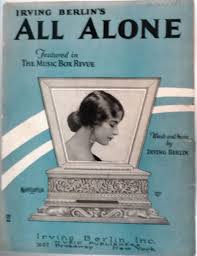
Tracklist: 0:00 Together, We Two 2:50 You Forgot To Remember 6:00 Shaking The Blues Away 9:09 Sunshine 12:28 Waiting At The End Of The Road 15:45 When You Walked Out Someone Else Walked Right In 18:39 Me! 21:37 Nobody Knows 24:15 Ooh! Maybe It's You 27:12 Puttin' On The Ritz 29:32 Russian Lullaby 32:47 It All Belongs To Me 35:28 Lazy 38:06 Learn To Do The Strut 41:07 Let Me Sing And I'm Happy 44:12 How Many Times 47:05 A Pretty Girl Is Like A Melody 50:07 Coquette 53:17 Everybody Step 56:40 Alexander's Ragtime Band 59:42 Blue Skies 1:03:01 All Alone 1:05:04 Always
Who was Irving Berlin?
Search your favorite sheet music in the Sheet Music Library Catalog

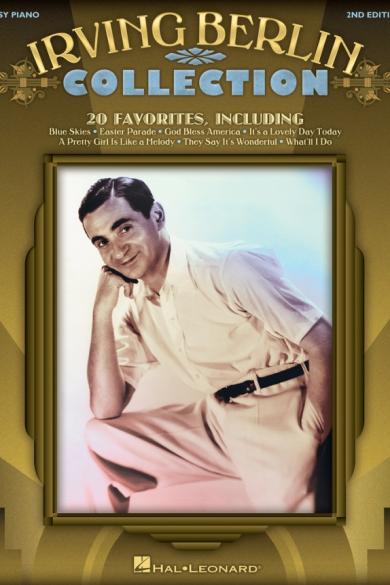
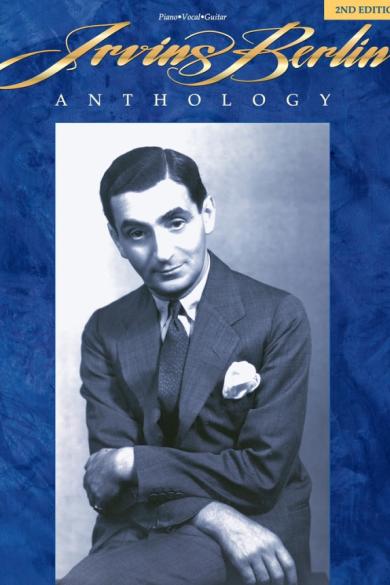
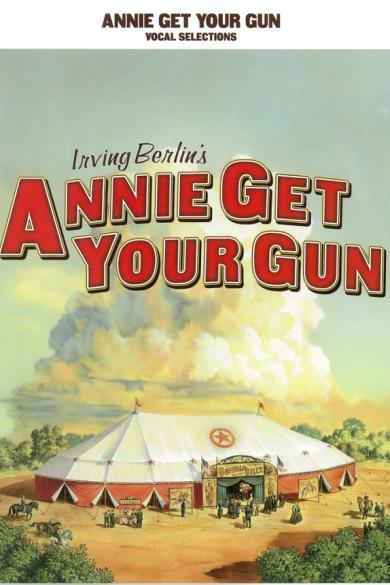
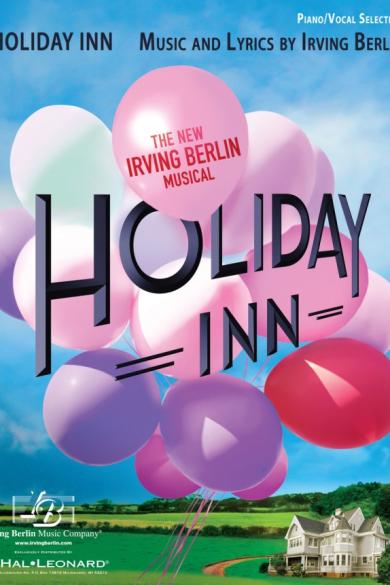

Irving Berlin: The Immigrant Who Became American Music
Jerome Kern, one of the most sophisticated composers of the American theater, famously declared: "Irving Berlin has no place in American music—he is American music." This seemingly paradoxical statement captures the essence of a man who, despite never learning to read or write musical notation, composed an estimated 1,500 songs across a career that spanned more than six decades. From the tenements of Manhattan's Lower East Side to the glittering stages of Broadway and the soundstages of Hollywood, Irving Berlin's journey represents the quintessential American story—one of immigrant ambition, relentless craft, and an uncanny ability to channel the spirit of a nation into song.
Please, subscribe to our Sheet Music Library. Sheet music should be accessible and affordable for all musicians, from professionals to absolute beginners.
From Israel Baline to Irving Berlin: The Making of a Songwriter
Irving Berlin was born Israel Baline on May 11, 1888, in the village of Temun (or possibly Tyumen), in czarist Russia. He was the youngest of eight children of Moses Baline, a Jewish cantor, and his wife Leah. The family fled the pogroms of Tsarist Russia and arrived in New York in 1893, settling in a tenement on the Lower East Side. The young Israel—known as "Izzy"—attended public school for only a few years before his father's death forced him to leave school at the age of eight to help support the family.
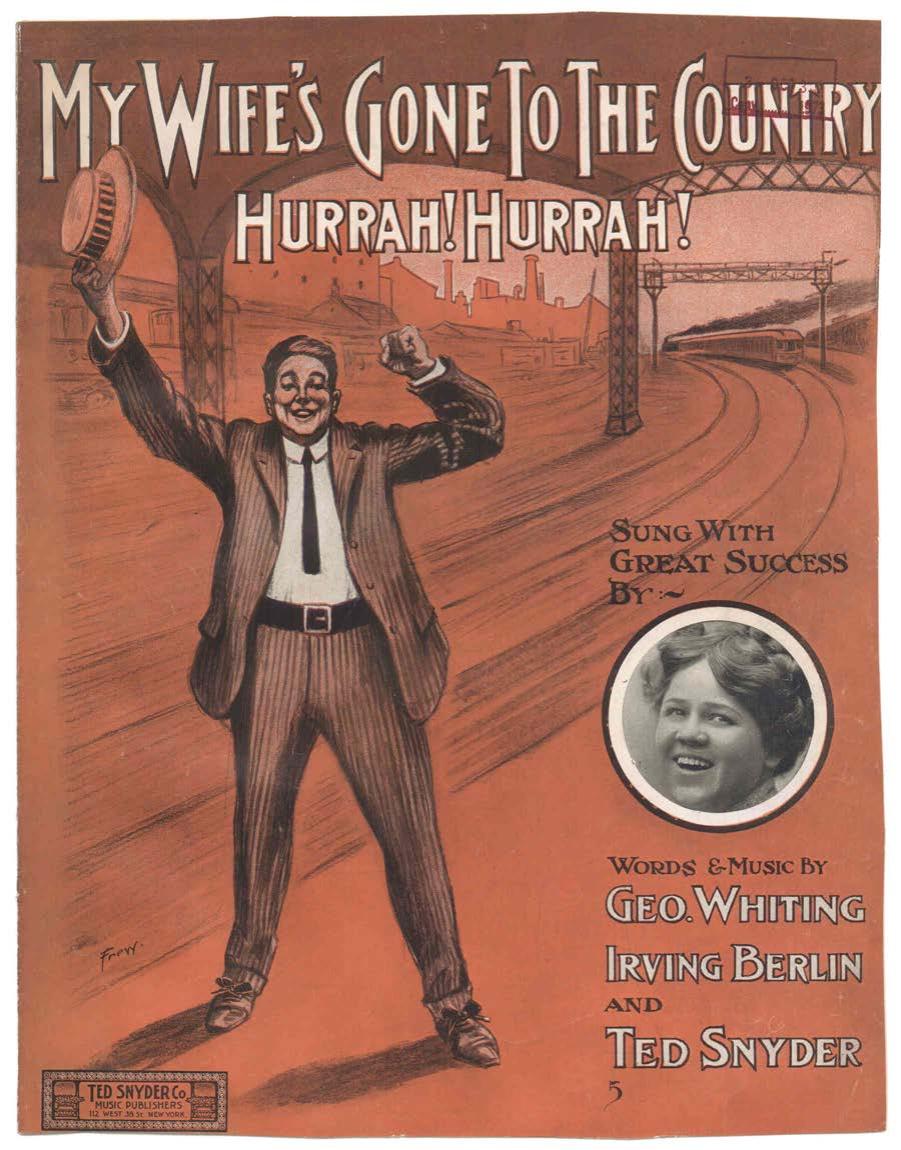
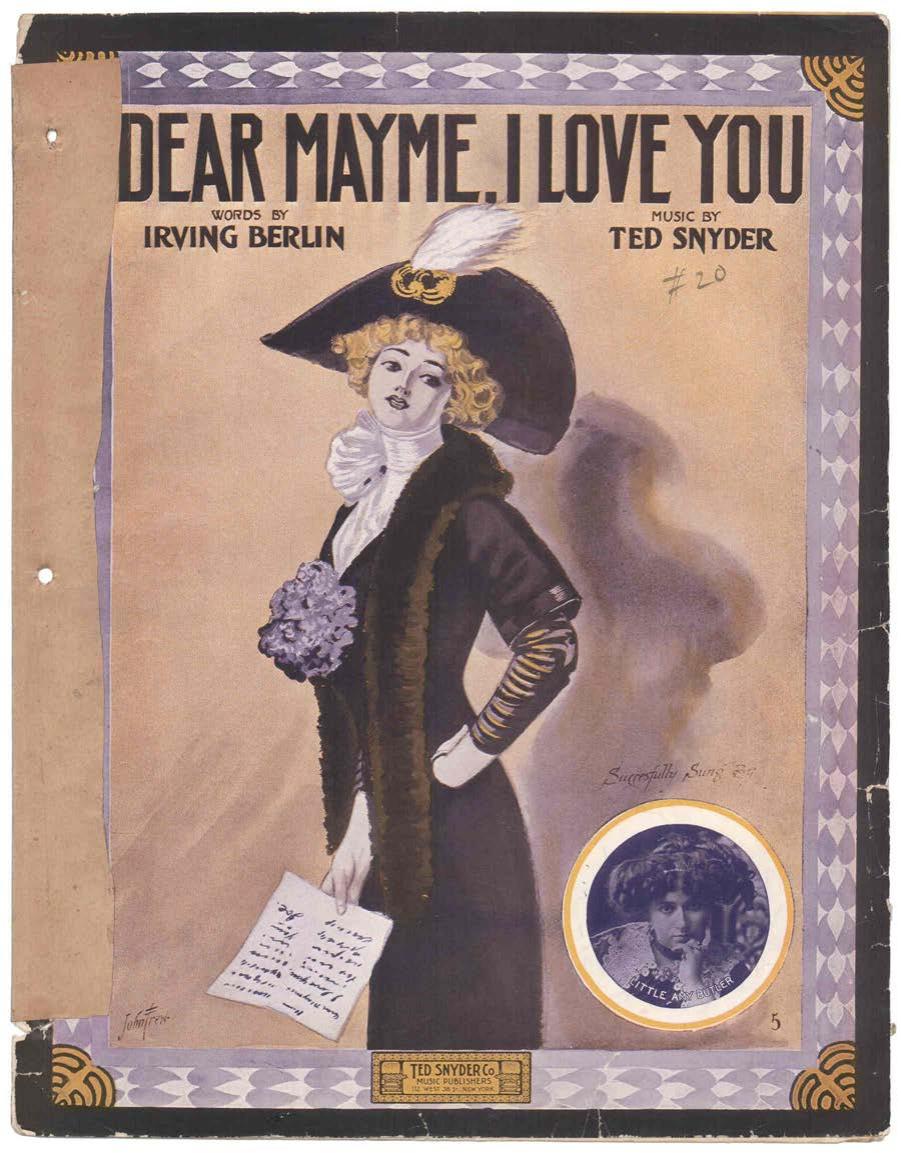
His early years were marked by grinding poverty. He sang for pennies on the sidewalks, slept in flophouses, and took whatever work he could find. He later recalled: "I sang for pennies and often slept in flophouses or on park benches". He changed his name to Irving Berlin around 1907, in part to mask his Jewish identity in an entertainment world rife with anti-Semitism. His first published song, "Marie from Sunny Italy," appeared in 1907, with Berlin contributing only the lyrics.
Berlin's rise was meteoric. He worked as a singing waiter at the Pelham Café in Chinatown, where he began writing parodies of popular songs. In 1911, his "Alexander's Ragtime Band" became a national sensation, earning him the title "King of Ragtime" and transforming him overnight into one of America's most celebrated songwriters. The song was not, strictly speaking, a ragtime composition in the authentic African American sense, but it popularized the ragtime idiom for a mass white audience, paving the way for the jazz age that followed.
His personal life was marked by both tragedy and scandal. In 1912, he married Dorothy Goetz, but she died of typhoid fever just five months later—a loss that inspired his first major ballad, "When I Lost You." In 1926, he eloped with Ellin Mackay, a wealthy Catholic socialite whose father, Clarence Mackay, strongly opposed the match and disinherited her. The marriage endured until Ellin's death in 1988, producing three daughters who survived infancy and one son, Irving Berlin Jr., who died shortly after birth on Christmas Day 1928.
Berlin was profoundly patriotic and wrote several wartime shows. During World War I, he produced "Yip, Yip, Yaphank" at Camp Upton, which raised over $150,000 and produced the immortal "Oh, How I Hate to Get Up in the Morning." During World War II, "This Is the Army" raised $10 million for Army Emergency Relief. Berlin donated the royalties from "God Bless America" to the Boy Scouts and Girl Scouts of America, and gave generously to Jewish charities. His last Broadway musical, "Mr. President" (1962), was a critical and commercial failure, as his style no longer resonated with rock-and-roll-era audiences. He died on September 22, 1989, at the age of 101.


The Songwriter's Craft: Style, Technique, and Harmony
Berlin's method of composition was as unconventional as his background. Unable to read or write musical notation, he worked with a series of musical assistants—including Helmy Kresa and Arthur Johnston—who transcribed his melodies and helped him explore harmonizations. He could only play the piano in the key of F-sharp major, using a special transposing piano that allowed him to shift keys mechanically. Yet this apparent limitation did not prevent him from crafting songs of remarkable sophistication.
Berlin came to songwriting as a lyricist first. He understood that a song needed to communicate immediately, and he often described his craft in terms of the marketplace: "the mob is always right". He believed his work was not good unless people wanted to sing it and buy it. This populist instinct, rooted in his Lower East Side experiences, gave his songs an accessibility that more technically accomplished composers often lacked.
His melodies are characterized by what critic Alec Wilder called "sheer all-conquering tunefulness". Berlin had a genius for the memorable phrase, the unexpected melodic turn, and the colloquial lyric that felt inevitable. As one analysis notes, he "knew all the music his audiences knew, and his songs make use of the common melodic, harmonic, and rhythmic patterns of this music". He was not an innovator in the avant-garde sense, but he was a master of synthesis—absorbing the musical idioms of his time and transforming them into something distinctly his own.
Berlin's harmonic language, while not as sophisticated as that of Kern or Rodgers, was nonetheless effective and often subtle. He made frequent use of the ii-V-I turnaround, particularly to return to the tonic between phrases. He employed chromatic alterations—especially the half-diminished seventh chord—to add color and tension at the midpoint of phrases. In "Cheek to Cheek," he shifts from C major to C minor in the C section, combined with third relationships, creating a striking moment of contrast. In "How Deep Is the Ocean," an unexpected move from I7 to iv7 briefly evokes the blues while adding emotional depth.
Berlin was also an innovator in song form. His "Cheek to Cheek" expands the conventional 32-bar AABA structure into a 72-bar AABCA form, with an opening so abrupt that it challenges the singer from the first note. He had a gift for starting melodies on unexpected tones of the scale and for building expansive structures that felt organic rather than forced. His lyrics, meanwhile, are models of economy and wit. They put "everyday idioms into an earthy poetry," and a trademark Berlin lyric often "flips itself around at the last minute to reveal a deeper meaning".


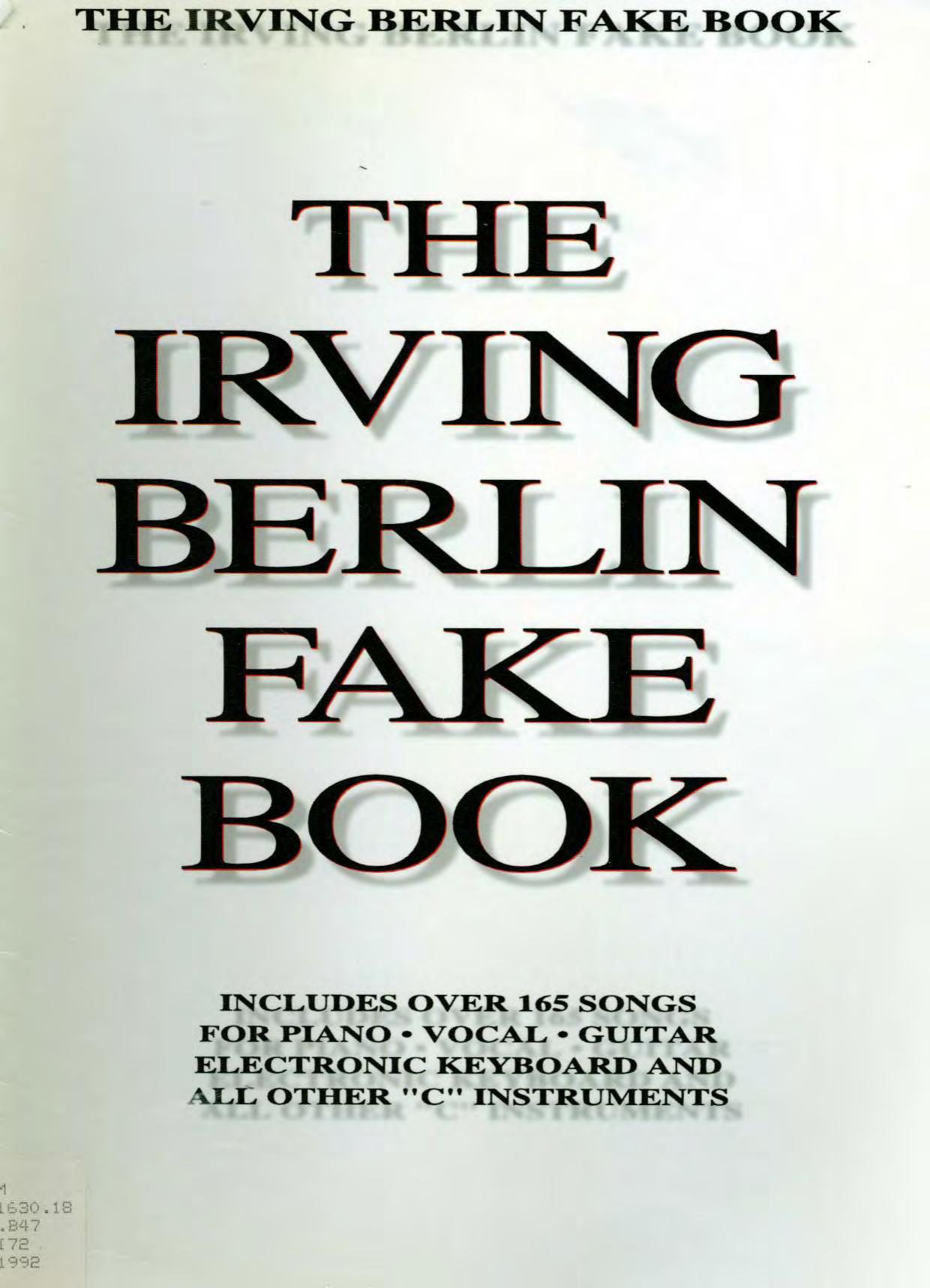
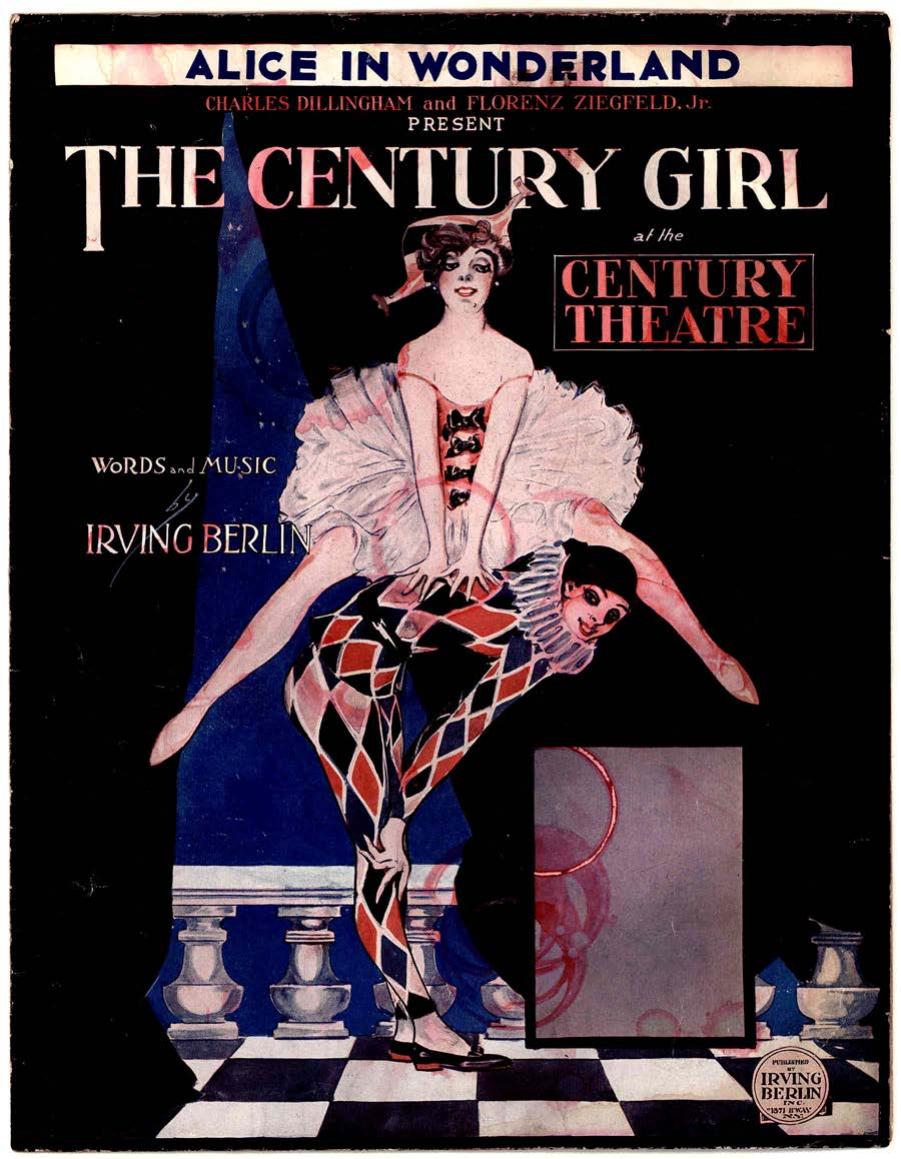
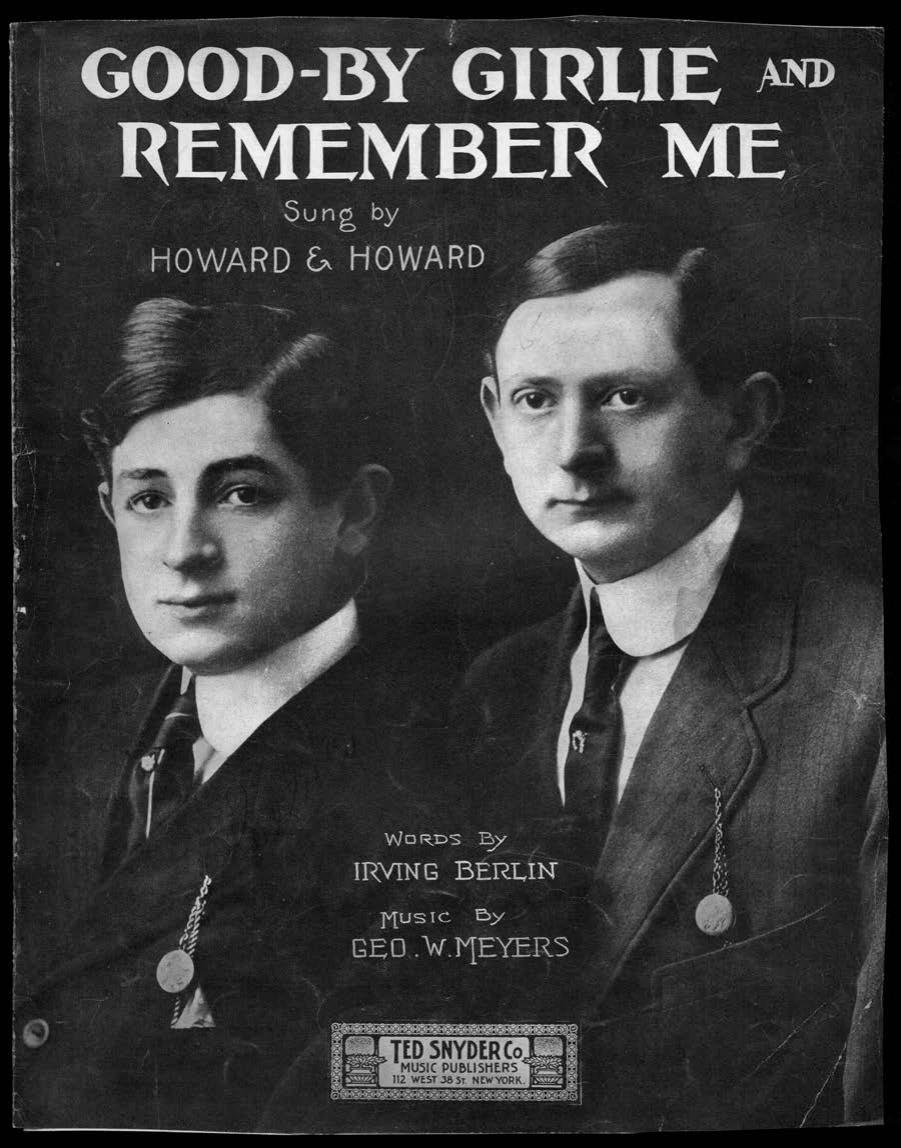
The Best Songs: A Century of Standards
Irving Berlin's catalog is astonishing in both quantity and quality. He wrote over 800 published songs, with estimates of his total output reaching 1,500. His own list of favorites included "Alexander's Ragtime Band," "Oh! How I Hate to Get Up in the Morning," "Say It With Music," "Always," "Blue Skies," "How Deep Is the Ocean," "Easter Parade," "White Christmas," "God Bless America," and "There's No Business Like Show Business". Notably, he equated "favorites" with "the ones that have won the widest acceptance," a telling reflection of his populist philosophy.
"Alexander's Ragtime Band" (1911) remains the song that launched his career. It was not authentic ragtime but a theatrical evocation of the style, and it became the first of many Berlin songs to define an era. "A Pretty Girl Is Like a Melody" (1919), written for the Ziegfeld Follies, marked his transition from ragtime novelty to lyrical balladry. "Always" (1925) was written for his wife Ellin and features the sliding chromaticism that became a Berlin hallmark. "Blue Skies" (1926) was written for the film The Jazz Singer and became one of his most enduring standards.
The 1930s saw Berlin at the height of his powers. "Cheek to Cheek" (1935), written for Top Hat, is a masterclass in melodic construction, with its interlocking thirds motif and sophisticated harmonic shifts. "Let's Face the Music and Dance" (1936) and "Change Partners" (1938) further demonstrated his ability to write for Fred Astaire's unique talents. "God Bless America" (1938) was written for Kate Smith and became an unofficial national anthem; after its popularity grew, Berlin signed the copyright over to the Boy Scouts and Girl Scouts.
"White Christmas" (1942), written for the film Holiday Inn, was Berlin's own choice for the best song he ever wrote. It won the Academy Award for Best Original Song and became one of the best-selling singles of all time. The song's use of the minorized fourth chord—a harmonic device also found in Mariah Carey's "All I Want for Christmas Is You"—gives it its distinctive melancholic warmth.
Other essential Berlin songs include "There's No Business Like Show Business" (from Annie Get Your Gun, 1946), which became the anthem of the American theater; "Easter Parade," a Tin Pan Alley standard that inspired the 1948 film of the same name; "Puttin' on the Ritz," a sophisticated evocation of high society; "I've Got My Love to Keep Me Warm"; "Steppin' Out with My Baby"; and "Count Your Blessings Instead of Sheep." The range is remarkable: patriotic anthems, romantic ballads, novelty numbers, dance tunes, and holiday classics—all delivered with the same craftsmanship and emotional directness.
Hollywood and Broadway: Berlin on Stage and Screen
Berlin's relationship with Hollywood began in the late 1920s, when talking pictures revolutionized the entertainment industry. Al Jolson's performance of "Blue Skies" in The Jazz Singer (1927) placed Berlin's music at the center of the new medium. Between 1928 and 1930, he wrote theme songs for several films, including "Puttin' on the Ritz" and "Marie." His first full score, for Reaching for the Moon (1930), was largely cut before release, a frustrating experience that kept him away from Hollywood for several years.
He returned triumphantly in 1935 with Top Hat, the fourth Astaire-Rogers film. Berlin wrote five songs for the picture, including "Cheek to Cheek" and "Isn't This a Lovely Day?" The film was the biggest financial success of all the Astaire-Rogers collaborations and remains one of the most enduring musicals of the 1930s. Berlin scored two more Astaire-Rogers films: Follow the Fleet (1936), which introduced "Let's Face the Music and Dance," and Carefree (1938), with "Change Partners".
The "omnibus" musical—a film built around a catalog of songs—became a Berlin specialty. Alexander's Ragtime Band (1938) contained 29 Berlin songs; Holiday Inn (1942) introduced "White Christmas"; Blue Skies (1946) featured "You Keep Coming Back Like a Song"; Easter Parade (1948) included "Steppin' Out with My Baby"; and White Christmas (1954) and There's No Business Like Show Business (1954) rounded out the cycle. Berlin carefully planned the musical numbers in his films to promote sheet music sales, understanding the commercial ecosystem of popular song better than almost anyone.
On Broadway, Berlin's influence was equally profound. His first major Broadway musical, Watch Your Step (1914), was the first complete score by a Tin Pan Alley songwriter to move "uptown" to the legitimate theater. He built his own Broadway theater, the Music Box, where he produced a new show almost every year. As Thousands Cheer (1933) was a topical revue that commented on Depression-era America; Louisiana Purchase (1940) was his most sensuous score; Annie Get Your Gun (1946) and Call Me Madam (1950) were his greatest commercial successes, both starring Ethel Merman. Annie Get Your Gun is considered his best musical theater score, not only for the number of hits it contains but for its integration of song and character.
Berlin's shows were, in his view, mirrors of the nation. Almost every show was set in the time and place in which it was written, and he wanted his work to be "distinctly American—sometimes even offering a glimpse of the world just outside the theater doors". Prohibition, the Depression, both world wars, and the Cold War all found their way into his scores. Even his historical shows, like Annie Get Your Gun, reflected contemporary concerns: when he revised the show in 1966, he added "Old-Fashioned Wedding," in which Annie sings that she "will love and honor, but not obey"—as close as the 78-year-old Berlin got to Betty Friedan.
Collaborations and Musical Relationships
Berlin's most important creative partnership was with Fred Astaire. The two met during the making of Top Hat in 1935 and formed a close friendship that lasted the rest of their lives. They were born on successive days—Astaire on May 10, 1899, and Berlin on May 11, 1888—and celebrated their birthdays together for decades. Berlin called Astaire "my closest and best friend" and cited Top Hat as his personal favorite of all his scores. "Top Hat, White Tie and Tails," he said, was "the best of the songs I wrote for the Astaire films". Astaire's elegant, understated style and limited vocal range shaped Berlin's writing for him; in "Cheek to Cheek," Berlin deliberately took the melody into a full octave, forcing Astaire to "speak" rather than sing the end of a line.
Berlin also had a fruitful partnership with Ethel Merman, who starred in both Annie Get Your Gun and Call Me Madam. Merman's powerful belt voice and brassy stage presence were ideally suited to Berlin's straightforward, declarative style. Their collaboration produced some of the most memorable performances in Broadway history, including "There's No Business Like Show Business," "You Can't Get a Man with a Gun," and "You're Just in Love".
Among his fellow songwriters, Berlin was widely respected. George Gershwin called him the greatest songwriter of the golden age of American popular song. Jerome Kern's famous tribute—"Irving Berlin has no place in American music; he is American music"—remains the most quoted assessment of his significance. Cole Porter, Richard Rodgers, and Harold Arlen all acknowledged his influence, even as they surpassed him in harmonic sophistication. Berlin's relationship with his publishers and business partners was famously shrewd; he was one of the first songwriters to insist on controlling his copyrights, and he founded his own publishing company, Irving Berlin Music Corporation, to manage his catalog.
Influences and Legacy
Berlin's influences were as diverse as the immigrant city that shaped him. He drew on the ethnic musical cultures of the Lower East Side—Jewish cantorial melodies, Italian operatic arias, Irish ballads, and African American ragtime. He was a brilliant exploiter of musical trends, from ragtime to jazz to swing, always absorbing the popular idioms of the moment and refashioning them for mass consumption. His early songs for vaudeville featured Jewish, Italian, German, Irish, and Black protagonists singing in appropriate dialects, reflecting the urban mix of New York's melting pot.
His legacy is immense and multifaceted. Berlin was the first Tin Pan Alley songwriter to move to Broadway with a complete score, establishing a template that Kern, Gershwin, and Rodgers would follow. He was a pioneer in the integration of song and narrative, and his shows helped transform the American musical from a loose collection of numbers into a coherent dramatic form. His work on Annie Get Your Gun demonstrated that a musical could be built around a strong central character and a consistent dramatic tone.
Berlin's songs have become part of the fabric of American life. "God Bless America" is sung at sporting events and patriotic gatherings; "White Christmas" is inseparable from the holiday season; "There's No Business Like Show Business" is the unofficial anthem of the entertainment industry. His songs have been recorded by everyone from Bing Crosby and Frank Sinatra to Ella Fitzgerald and Barbra Streisand, and they remain staples of the Great American Songbook. In the aftermath of the September 11 attacks, "God Bless America" once again supplied the nation with the words it needed to express its grief and resolve.
Critics have sometimes dismissed Berlin as a primitive, a tunesmith rather than a serious composer. But as one assessment notes, "genius can be primitive". Berlin's lack of formal training freed him from conventional rules; he heard music in his head and refused to settle until his assistants found the chording that matched his inner ear. His harmonic language, while not as complex as that of his contemporaries, was effective and often surprising. His melodies have an inevitability that masks their craft, and his lyrics achieve a colloquial poetry that few songwriters have matched.
Berlin was also a cultural trailblazer in ways that are less often acknowledged. As a Jewish immigrant who changed his name to avoid anti-Semitism, he embodied the assimilationist ambitions of his generation while never entirely abandoning his roots. He was a fierce patriot who wrote some of America's most beloved patriotic songs, yet he was also a victim of religious prejudice who understood the fragility of the immigrant experience. His marriage to Ellin Mackay, a Catholic socialite, was a scandal in its time, but it endured for more than six decades.
Additional Information and Significance
Berlin's total output—over 800 published songs, 19 Broadway shows, and 18 Hollywood scores—is staggering by any measure. He received seven Academy Award nominations and won once, for "White Christmas". He was awarded the Presidential Medal of Freedom in 1977 and the Congressional Gold Medal in 1988. His centennial in 1988 was celebrated with a star-studded tribute at Carnegie Hall, and his death the following year marked the end of an era in American popular music.
His working methods were as unusual as his career. He composed at the piano, often late at night, and would call his assistants to transcribe melodies as they came to him. He kept a notebook of lyric ideas and melodic fragments, and he was known for his relentless revision—he might spend weeks on a single line of a lyric until it felt right. He was a perfectionist who once declared that "Alexander's Ragtime Band" was "terrible," despite its enormous popularity, because he judged his work by his own exacting standards rather than public acclaim.
Berlin's music continues to be performed and recorded more than three decades after his death. Annie Get Your Gun has been revived multiple times on Broadway, and Top Hat was finally adapted for the stage in 2012. His songs appear in countless films, television shows, and commercials. The Irving Berlin Collection at the Smithsonian Institution preserves his papers and memorabilia, and his music remains a cornerstone of the American songbook.
In the end, Berlin's achievement is best understood in the context of his own philosophy. He was not an artist in the Romantic sense of the word; he was a songwriter, a craftsman, a businessman. He believed that art and commerce could go hand in hand, and he measured his success not by critical acclaim but by the affection of the public. "The mob is always right," he said, and in his case, the mob was right for more than half a century. From the sidewalks of the Lower East Side to the stages of Broadway and the soundstages of Hollywood, Irving Berlin wrote the soundtrack of American life—and in doing so, he became American music itself.
Search your favorite sheet music in the Sheet Music Library Catalog
Musical scores
The following list includes scores mostly produced by Berlin. Although some of the plays using his songs were later adapted to films, the list will not include the film unless he was the primary composer.
Stage
| Watch Your Step (1914) Stop! Look! Listen! (1915) The Century Girl (1916) Yip Yip Yaphank (1918) Ziegfeld Follies (1919) Ziegfeld Follies (1920) Music Box Revue (1921) Music Box Revue (1922) Music Box Revue (1923) Music Box Revue (1924) The Cocoanuts (1925) Ziegfeld Follies (1927) | Face the Music (1932) As Thousands Cheer (1933) Louisiana Purchase (1940) This Is The Army (1942) Annie Get Your Gun (1946) Miss Liberty (1949) Call Me Madam (1950) Mr. President (1962) White Christmas (2004 posthumous production) Top Hat (2012 posthumous production) Holiday Inn (2016 posthumous production) |
Film scores
| The Cocoanuts (1929) * Hallelujah (1929) Puttin' On the Ritz (1930) Mammy (1930) Reaching for the Moon (1930) Top Hat (1935) Follow the Fleet (1936) On the Avenue (1937) Carefree (1938) Alexander's Ragtime Band (1938) | Second Fiddle (1939) Holiday Inn (1942) This Is the Army (1943) * Blue Skies (1946) Easter Parade (1948) Annie Get Your Gun (1950) * Call Me Madam (1953) * There's No Business Like Show Business (1954) White Christmas (1954) Sayonara Sayonara Goodbay (1957) |
Browse in the Sheet Music Library:
Or browse in the categories menus & download the Library Catalog PDF: