
Scores for all instruments: 16,000+ (active and growing), over 236,000 pages.
All genres and levels: Jazz & Blues, Rock & Pop, Classical & Contemporary, Film & Musicals;
books & biographies; methods, études, play-along tracks (MP3) for Jazz & Rock.
Access & benefits: US$15.99 one-time payment, valid for lifetime, full Library access.
Table of Contents
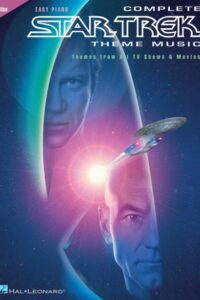
The best sheet music download from our Library.

Please, subscribe to our Sheet Music Library.
Jerry Goldsmith - Greatest Hits
Search your favorite sheet music in the Sheet Music Library Catalog
Jerry Goldsmith: The Maverick Maestro of Hollywood
Jerrald King Goldsmith, known professionally as Jerry Goldsmith, stands as one of the most innovative, prolific, and influential composers in the history of film and television music. Over a career that spanned nearly fifty years, he composed scores for more than 200 productions, earning eighteen Academy Award nominations, six Grammy nominations, five Primetime Emmy Awards, nine Golden Globe nominations, and four British Academy Film Awards. His single competitive Oscar win, for The Omen in 1977, belies the immense impact of his work, which fundamentally shaped the sound of modern cinematic storytelling. As one contemporary assessment noted, "I think he more than any other composer bridged the gap between the old Hollywood scoring style and the modern film composer".
Early Life and Musical Education
Jerry Goldsmith was born on February 10, 1929, in Los Angeles, California. His family background was a rich tapestry of Central European heritage, with his father being half Austrian and Hungarian, and half Romanian Jewish, while his mother, Tessa (née Rappaport), was a school teacher. This multicultural lineage would later inform the eclectic and worldly character of his musical language.
Goldsmith's musical journey began at the age of six when he started playing the piano, though he only "got serious" about the instrument by the time he was eleven. At thirteen, he began studying piano privately with the esteemed concert pianist and educator Jakob Gimpel, a relationship that would prove enduring—Goldsmith would later employ Gimpel to perform piano solos in his score to The Mephisto Waltz. By the age of sixteen, Goldsmith was studying both music theory and counterpoint under the Italian composer Mario Castelnuovo-Tedesco, a remarkable pedagogue who also tutored such luminaries as Henry Mancini, Nelson Riddle, André Previn, and John Williams.
Search your favorite sheet music in the Sheet Music Library Catalog
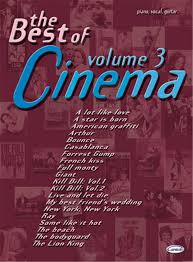
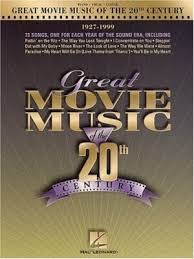
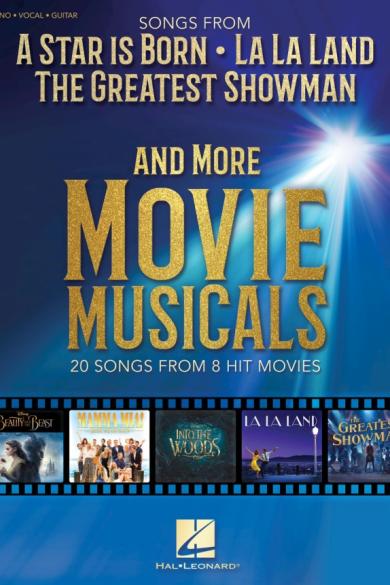
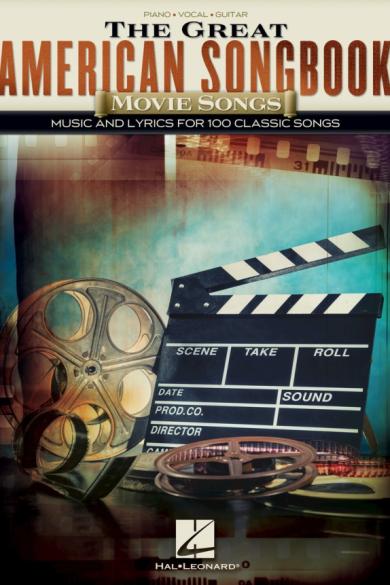
A pivotal moment in Goldsmith's young life came at sixteen when he saw the 1945 Alfred Hitchcock film Spellbound, featuring Miklós Rózsa's unconventional and psychologically complex score. This experience inspired him to pursue a career in film music. He subsequently enrolled at the University of Southern California, where he had the opportunity to attend courses taught by Rózsa himself. However, finding the academic environment insufficiently practical, Goldsmith dropped out after two years in favor of a more hands-on program at Los Angeles City College, where he coached singers, worked as an assistant choral director, played piano accompaniment, and served as an assistant conductor.
Career Beginnings: From CBS to the Silver Screen
In 1950, Goldsmith secured a position as a clerk typist in the music department at CBS under director Lud Gluskin. This seemingly modest role proved to be the gateway to his career. CBS operated a workshop program in which employees of any talent or position—ushers, typists, or otherwise—could produce radio shows. When the workshop needed someone to compose music, Goldsmith, with his musical training, stepped forward. He began writing scores for radio programs such as CBS Radio Workshop, Frontier Gentleman, and Romance, often composing one score per week for live broadcast.
Goldsmith remained at CBS until 1960, during which time he had already begun scoring for television, including episodes of The Twilight Zone. He was subsequently hired by Revue Studios to score their series Thriller, and it was during this period that he met the influential film composer Alfred Newman. Newman, recognizing Goldsmith's talent, hired him to score the 1962 film Lonely Are the Brave, marking Goldsmith's first major feature film score.
From this point forward, Goldsmith's career trajectory was meteoric. He rose rapidly to the top of his profession in the early to mid-1960s with scores such as Freud (1962), A Patch of Blue (1965), and The Sand Pebbles (1966), receiving Oscar nominations for all three. By the late 1960s and throughout the 1970s, his reputation was secure, and he scored an astonishing variety of films that would come to define his legacy.
Musical Style and Technique: The Goldsmith Sound
Jerry Goldsmith's musical style was characterized by an extraordinary versatility and a relentless experimentalism that constantly pushed the boundaries of what film music could be. He was renowned for his ability to blend various musical styles and techniques, creating scores that were both emotionally penetrating and technically innovative.
Orchestration and Unconventional Instrumentation
One of Goldsmith's most distinctive hallmarks was his adventurous approach to orchestration. He stressed that he often used standard orchestral instruments in unconventional ways to achieve novel sonic textures. For his landmark score to Planet of the Apes (1968), he famously directed French horn players to blow air through their instruments without producing pitched tones, and had a bass clarinetist finger notes without actually blowing, creating an eerie, unearthly soundscape. The score also incorporated a diverse array of percussion instruments, including ram's horns and cuicas, alongside electronic processing via an Echoplex tape delay unit.



Goldsmith was equally unafraid to employ the wide variety of electronic sounds and instruments that became available over the decades, though he was careful not to use them merely for their own sake. His blending of orchestral music with electro-acoustic techniques and unusual instruments became a signature of his most innovative work.
Harmony and Tonality
Goldsmith's harmonic language was sophisticated and often unconventional. His scores were marked by triadic chromaticism, involving rapid inter-triadic and regional motion that could cover large harmonic distances with little or no mediating material. This technique was particularly effective in his Star Trek scores, where rapid harmonic shifts mimicked the galactic distances traversed through the franchise's signature "warp" navigational plot device.
In works like The Omen, Goldsmith employed a mixture of traditional classical harmonics and modern harmonic techniques, along with dissonance and an avoidance of traditional tonality with suggestions of serialism to emphasize terror and unease. He also made effective use of the major flattened submediant as an embellishing chord, a progression that became a hallmark of his Star Trek musical voice. His use of inversions in pursuit of more vivid harmonic color and variation was another notable aspect of his harmonic technique.
Rhythm and Dynamics
Goldsmith was inventive with rhythm, employing odd meters, syncopation, and dissonance to create musical counterpoint to on-screen action. His action and horror scores frequently featured harsh, driving, and often syncopated rhythms that contributed to the tension and excitement of the films. The ostinato rhythm appeared extensively across his choral writing, particularly in The Omen, where rhythmic repetition reinforced the sense of impending doom.
Landmark Compositions and Film Scores
Jerry Goldsmith's filmography is remarkable not only for its sheer volume but for the consistently high quality and inventiveness of its music. Several scores stand out as landmarks in the history of film music.
Planet of the Apes (1968)
This score is widely regarded as a landmark in film-music history. Goldsmith's unearthly, Bartók- and Stravinsky-influenced soundscape strongly implied that Charlton Heston and his fellow astronauts were marooned on a far-off planet, when in fact they were on Earth all along. The score's radical approach to orchestration and its integration of electronic elements set a new standard for science fiction film music.
Patton (1970)
For this biopic of General George S. Patton, Goldsmith cleverly employed echoing trumpets to suggest the general's conviction that he had been present at every great battle in the history of warfare. To achieve this effect, he used an Echoplex to create tape delay on two trumpets playing a three-note pattern, which was then combined with a traditional orchestra and even a wind machine. The score is a masterclass in using music to illuminate character.
Chinatown (1974)
Goldsmith wrote and recorded this score in just ten days after an earlier score was discarded. His modernist ensemble included four pianos and four harps, and the sultry, solo-trumpet theme that emerged is among the most indelible in cinema history. Producer Robert Evans often said that Goldsmith "saved" Roman Polanski's noirish drama with his music.
The Omen (1976)
This score, Goldsmith's sole competitive Academy Award winner, was a choral-and-orchestral work for a summer popcorn movie about the Antichrist as a child, complete with Latin lyrics praising Satan. The composer's music for the sequence in which Gregory Peck is attacked by dogs in a darkened cemetery is among the scariest music of the decade. The score's integration of mixed chorus, organ, chimes, and extensive ostinato rhythms created a profoundly unsettling religious atmosphere.
Star Trek: The Motion Picture (1979)
Perhaps the most familiar of all Goldsmith themes, his score for the first Star Trek feature film established the heroic, symphonic sound of Kirk, Spock, and company that remains in use today. More than any other composer, Goldsmith's contributions to the franchise established the Star Trek universe's musical "voice," and he composed scores for five of the franchise's films as well as main title themes for two of its television series. The score for The Motion Picture is particularly notable for its thoroughgoing triadic chromaticism and its single-minded investment in the production of the sublime.
Poltergeist (1982)
For this Steven Spielberg-produced haunted-house film about a little girl abducted into another dimension, Goldsmith created one of his most brilliant musical ideas: a lullaby as the main theme, designed to remind listeners that a frightened child was at the heart of the story. The score perfectly balances the film's sense of wonder with its underlying terror.
Basic Instinct (1992)
Goldsmith's most provocative and sensual score, for Paul Verhoeven's infamous erotic thriller, uses both orchestra and electronics to create moods of intense passion and edge-of-seat suspense. The score's main theme, with its sinuous melody and pulsating accompaniment, became instantly iconic.
Television Music and Other Works
Beyond his film work, Goldsmith made significant contributions to television music. He composed scores for classic shows ranging from The Man from U.N.C.L.E. and Perry Mason to The Waltons and Dr. Kildare. His work on Star Trek: Voyager earned him an Emmy Award, as did his work on the television film Babe. He also composed the current fanfare for the Universal Pictures logo, which debuted in The Lost World: Jurassic Park, and wrote a fanfare used in the television coverage of the Academy Awards.
Goldsmith also wrote orchestral pieces outside the realm of film and television, and some of his motion picture scores were adapted for ballets. He taught occasional music classes at local universities, sharing his knowledge and experience with the next generation of composers.
Collaborations with Directors and Musicians
Goldsmith's career was marked by fruitful and enduring collaborations with some of the most significant directors of his era. He worked extensively with Franklin J. Schaffner, with whom he first collaborated on Planet of the Apes and later on Patton and Papillon (1973). His collaboration with Joe Dante produced some of his most beloved work, including Gremlins (1984) and Innerspace (1987). He also worked with Paul Verhoeven on Total Recall (1990) and Basic Instinct (1992), with Roman Polanski on Chinatown, with Ridley Scott on Alien (1979), and with Steven Spielberg on Poltergeist.
Goldsmith also collaborated with notable musicians. His score for Under Fire (1983) featured guest soloist Pat Metheny on guitar. The soundtrack for Innerspace featured songs by artists including Rod Stewart, Wang Chung, and Sam Cooke. His Star Trek scores were performed by the National Philharmonic Orchestra under the direction of Lionel Newman.
Influences and Musical Legacy
Goldsmith's musical influences were diverse and wide-ranging. He was inspired initially by Miklós Rózsa's score for Spellbound, and he studied under composers associated with the Second Viennese School of Schoenberg, Berg, and Webern. His personal influences included Stravinsky, Vaughan Williams, Copland, Bartók, and Berg. These varied influences are evident in the eclecticism and sophistication of his musical language.
Goldsmith's legacy in the world of film music is immense. Along with John Williams, John Barry, and Ennio Morricone, Goldsmith helped bring motion picture and television music into the modern era, writing music that was uniquely experimental and exciting while exploring a wide variety of styles. His stylistic versatility and his willingness to take risks made him a model for subsequent generations of film composers. James Horner, one of the many composers influenced by Goldsmith, acknowledged that he "was influenced by Goldsmith's large orchestral scores when I started out".
Goldsmith's work was of such vitality and importance that he remains an influence on motion picture and television music two decades after his death. He was posthumously honored with a star on the Hollywood Walk of Fame in 2017. Other accolades include Variety's first American Music Legend Award (1995), an honorary doctorate from Boston's Berklee College of Music (1990), and lifetime achievement awards from the American Society of Music Arrangers and Composers and the Society for the Preservation of Film Music.
Jerry Goldsmith: A Lasting Musical Legacy
Jerry Goldsmith died on July 21, 2004, at his home in Beverly Hills, California, after a long battle with cancer. He was seventy-five years old. He was survived by his wife, Carol, five children, six grandchildren, and a great-grandchild.
Goldsmith's passing marked the end of an era in film music. He was one of the few remaining exemplars of the old school of movie music composition, a classically trained composer who brought the techniques and sensibilities of the concert hall to the world of popular cinema. Yet he was also a relentless innovator, constantly pushing forward the bounds of what film music could be, experimenting with electronic sounds, unconventional instrumental techniques, and sophisticated harmonic language.
His music, for films ranging from Planet of the Apes to Chinatown to Star Trek to Basic Instinct, has become an indelible part of the cinematic experience. His themes are instantly recognizable, his orchestral textures endlessly inventive, and his ability to penetrate the emotional core of a scene remains unmatched. As Joe Dante once remarked, Goldsmith's contribution to his films was worth "tenfold" what he was paid. More than a composer, Jerry Goldsmith was a storyteller whose music gave voice to the visions of filmmakers and brought depth, dimension, and unforgettable emotion to the movies that millions have loved. His legacy endures not only in the scores he left behind but in the countless composers he inspired and the standard of excellence he set for the art of film music.
Browse in the Sheet Music Library:
Or browse in the categories menus & download the Library Catalog PDF: