Scores for all instruments: 16,000+ (active and growing), over 236,000 pages.
All genres and levels: Jazz & Blues, Rock & Pop, Classical & Contemporary, Film & Musicals;
books & biographies; methods, études, play-along tracks (MP3) for Jazz & Rock.
Access & benefits: US$15.99 one-time payment, valid for lifetime, full Library access.
Table of Contents
Who is John Adams?
Music Masters - John Adams (BBC)
Please, subscribe to our Sheet Music Library.
BBC documentary first transmitted in 2001. The minimalist composer John Adams talks about his career to conductor Charles Hazlewood, as Adams' opera, El Nino, prepares to open in Paris.
The best sheet music download from our Library.
John Adams: The Composer Who Reimagined American Music
John Coolidge Adams stands as one of the most vital and influential composers of our time, a figure whose music has fundamentally reshaped the landscape of contemporary classical composition. Born on February 15, 1947, in Worcester, Massachusetts, Adams has created a body of work that spans opera, orchestral music, chamber music, and vocal compositions, earning him a Pulitzer Prize, five Grammy Awards, and a place among the most performed living composers in the world.
His music, characterized by its rhythmic vitality, emotional directness, and profound humanist themes, has played a decisive role in turning the tide of contemporary musical aesthetics away from academic modernism and toward a more expansive, expressive language. Through landmark operas such as Nixon in China and Doctor Atomic, orchestral masterworks like Harmonielehre and Shaker Loops, and his Pulitzer Prize-winning On the Transmigration of Souls, Adams has demonstrated an uncanny ability to engage with the most pressing historical and political questions of our age while creating music of extraordinary beauty and accessibility.
Search your favorite sheet music in the Sheet Music Library Catalog
Early Life and Formative Years
John Adams was born into a musical family in Worcester, Massachusetts, and grew up in the neighboring states of Vermont and New Hampshire. His father was a clarinetist who taught him the instrument, and young John played in marching bands and community orchestras throughout his formative years. The Adams family operated a dance hall in New Hampshire, where the sounds of big band jazz would leave an indelible mark on the future composer's musical imagination. His mother sang in community musical theater productions, further enriching the household's musical environment. Adams began composing at the age of ten, and by thirteen, already an accomplished clarinetist, he was determined to pursue a life in music. He heard his first orchestral piece performed while still a teenager, an experience that confirmed his vocational calling.
After graduating from high school, Adams attended Harvard University from 1965 to 1971, where he studied composition with Leon Kirchner, Roger Sessions, and David Del Tredici, among others. Kirchner, a former student of Arnold Schoenberg, introduced Adams to the rigors of academic serialism and the complex problem of balancing instinct with method—a tension that would occupy Adams throughout his career. During his Harvard years, Adams also studied clarinet and conducting, and his earliest works were aligned with the modernist tradition. However, a crucial turning point came when he read John Cage's Silence: Lectures and Writings, which challenged the tenets of modernist orthodoxy and opened Adams's mind to alternative possibilities for musical organization and expression.
The California Years and the Birth of a New Aesthetic
After earning two degrees from Harvard—a Bachelor of Arts and a Master of Arts in music composition—Adams moved to Northern California in 1971, settling in the San Francisco Bay Area, where he has lived ever since. This relocation proved transformative. Adams joined the vibrant San Francisco experimental music scene and eventually established a voice as a distinctly American composer. He taught at the San Francisco Conservatory of Music for ten years before becoming composer-in-residence of the San Francisco Symphony from 1982 to 1985, where he created the orchestra's highly successful and controversial "New and Unusual Music" series.
It was during this period that Adams developed his distinctive minimalist aesthetic, first fully realized in Phrygian Gates (1977) and China Gates (1977), works that represented his initial foray into the strict minimalist style. These piano works, built upon repeating patterns and gradual transformations, demonstrated Adams's ability to harness the hypnotic power of minimalism while infusing it with a uniquely personal harmonic language. Soon thereafter, Adams began to integrate compositional techniques drawn from pre-Baroque to late-nineteenth-century Romantic styles, resulting in a series of works that would establish his international reputation. Shaker Loops (1978), a string septet that remains one of his most beloved works, Harmonium (1980-1981), a setting of poetry by John Donne and Emily Dickinson for chorus and orchestra, and the monumental Harmonielehre (1984-1985) all emerged from this fertile period of experimentation and synthesis.
Musical Style and Technique: Beyond Minimalism
John Adams is generally associated with Minimalism, the musical movement that emerged in the 1960s and 1970s characterized by the use of repetitive patterns, steady pulses, and gradual transformation of musical material. However, Adams's relationship to minimalism has always been more complex and ambivalent than a simple categorization would suggest. While his early works employed strictly minimalist procedures, Adams soon grew restless with what he perceived as the limitations of the style. As he has remarked, "On a purely technical level, my music doesn't seem as complicated as that of many other contemporary composers. My musical ideas have never required the complex forms we usually expect from serious composers today".
Adams's mature style represents a remarkable synthesis of seemingly opposing aesthetics. His music is characterized by steady rhythmic patterns and long melodic arcs, avoiding sharp contrasts in favor of continuous musical flow. Yet within this framework, Adams employs a remarkably rich and varied harmonic language that draws upon the entire history of Western music. The rhythmic vitality of Minimalism is blended with late-Romantic orchestral harmonies, creating a sound world that is at once familiar and entirely new. As the Berliner Philharmoniker's programme notes for Harmonielehre observe, "The shades of Mahler, Sibelius, Debussy, and the young Schoenberg are everywhere in this strange piece," to which Adams himself added, "This is a work that looks at the past in what I suspect is 'postmodernist' spirit".
Adams's orchestral writing is notable for its brilliance of sound and its ability to create large-scale architectural structures through the accumulation and transformation of relatively simple musical materials. Unlike many of his contemporaries, Adams favors oscillation over development: he takes one or more members of the local harmony and alternates them with adjacent tones, creating a sense of harmonic ambiguity and constant motion. His harmonies, while often consonant and triadic, are combined in unexpected ways that create tension and release on a large scale. The harmonic language of Adams's music is generally consonant, reflecting what scholars have described as his "honor of conventional musical sound," yet his treatment of harmony is anything but conventional.
Harmony: A Language of Transformation
Adams's approach to harmony deserves special consideration, as it forms the foundation of his distinctive musical voice. His harmonic language evolved significantly over his career, moving from the scale clusters of his early minimalist works to a more transparent and triadic style by the early 1980s. In works such as Harmonielehre and Harmonium, Adams demonstrated a mastery of harmonic transformation, using the control of harmonic areas and the alternation of consonance and dissonance to create large-scale dramatic structures.
Adams's harmonic language is distinguished by its use of modal and chromatic idioms, often juxtaposing different harmonic systems within a single work. In Nixon in China, for example, Adams employs a variety of harmonic techniques to depict the shifting moods of the characters, using what analysts have identified as a "Southern hexatonic system" to provide a stable harmonic underpinning to Nixon's thoughts at key moments in the drama. The composer's harmonic vocabulary also draws significantly from jazz, particularly the harmonic language of Duke Ellington, whose influence Adams has acknowledged as a recurrent source of inspiration.
The evolution of Adams's harmonic language reflects his broader artistic journey from minimalist orthodoxy toward a more inclusive and expressive idiom. While his early works were built almost exclusively on repeating patterns with minimal harmonic change, his later music engages with the full chromatic resources of Western tonality. Yet Adams never abandoned the rhythmic drive and structural clarity that are the hallmarks of his minimalist inheritance. As one scholarly analysis notes, Adams's music from the 1980s onward became "less ambiguous in its harmony and rhythm," with the rhythm becoming more regular and the harmony thinning out from scale clusters to simpler triads, while still retaining the composer's characteristic oscillation and additive procedures.
Major Works and Compositions
The Operas
Adams's operatic output stands at the center of his achievement as a composer, representing some of the most significant contributions to the genre in the late twentieth and early twenty-first centuries. His first opera, Nixon in China (1987), with a libretto by Alice Goodman and directed by Peter Sellars, recounts President Richard Nixon's historic 1972 visit to the People's Republic of China. The idea for the opera originated with Sellars, who recognized the dramatic potential of this unlikely encounter between two vastly different worlds. The work received a mixed reception upon its premiere but has become increasingly respected over the decades, receiving performances worldwide and entering the standard operatic repertoire. Nixon in China was the first of many collaborations with director Peter Sellars and librettist Alice Goodman, establishing a creative partnership that would produce some of the most provocative and acclaimed operatic works of the era.
The Death of Klinghoffer (1991), Adams's second opera, was based on the 1985 hijacking of the cruise ship Achille Lauro by the Palestinian Liberation Front and the murder of Jewish-American passenger Leon Klinghoffer. The work provoked considerable controversy for its subject matter and its sympathetic portrayal of the Palestinian hijackers, giving rise to a series of polemical debates about music, politics, and representation. Despite the controversy—or perhaps because of it—The Death of Klinghoffer remains one of Adams's most powerful and deeply felt works, a meditation on violence, grief, and the human capacity for both cruelty and compassion.
Adams returned to grand opera in the early 2000s with Doctor Atomic (2005), a work about J. Robert Oppenheimer and the creation of the first atomic bomb. Commissioned by the San Francisco Opera, the work was subsequently presented by the Lyric Opera of Chicago, the Netherlands Opera, and the Metropolitan Opera, in an entirely new production directed by Penny Woolcock. Doctor Atomic explores the moral and psychological dimensions of the Manhattan Project, culminating in the famous "Batter my heart" aria for Oppenheimer, set to a text by John Donne. The opera's exploration of the intersection of science, ethics, and power has been described as one of the most important operatic achievements of the new century.
Other stage works include A Flowering Tree (2006), inspired by Mozart's Magic Flute and based on a folk tale from southern India, which shares themes of youth, love, and the emergence of moral consciousness with its Mozartian model. El Niño (2000), a multilingual retelling of the Nativity story, was composed for the celebration of the millennium. The Gospel According to the Other Mary (2012), a Passion oratorio, and Girls of the Golden West (2017), set during the 1850s California Gold Rush, continue Adams's engagement with historical subjects and his collaboration with Peter Sellars. His most recent opera, Antony and Cleopatra, premiered at the San Francisco Opera in September 2022.
Orchestral Works
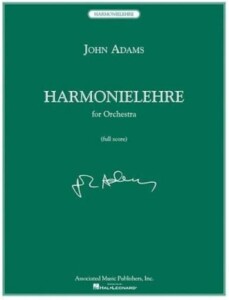
Adams's orchestral music represents the core of his instrumental output and includes some of the most frequently performed contemporary orchestral works in the repertoire. Harmonielehre (1985), a forty-minute orchestral composition, marked the end of a prolonged creative crisis and the beginning of a new creative phase. The title alludes to Arnold Schoenberg's 1911 theoretical treatise of the same name, and the work represents Adams's attempt to reconcile the minimalist techniques of repetition and gradual development with the orchestral language of the late nineteenth and early twentieth centuries. The work was inspired by a dream in which Adams saw a massive oil tanker gliding through San Francisco Bay and then lifting off like a rocket into the sky. The second movement, "The Anfortas Wound," unfolds in slow tempo and nods to Wagner's Parsifal, while the third movement, "Meister Eckhardt and Quackie," takes its title from another dream in which Adams envisioned his infant daughter riding on the shoulders of the medieval mystic Meister Eckhart.
Shaker Loops (1978), originally composed for string septet and later arranged for string orchestra, remains one of Adams's most beloved works. Built on repeating loops of melodic material that gradually transform and accumulate, the work captures the ecstatic energy of Shaker worship while demonstrating Adams's mastery of minimalist procedures. Short Ride in a Fast Machine (1986), a four-minute fanfare for orchestra, has become one of Adams's most popular works, its relentless rhythmic drive and brilliant orchestration making it a favorite concert opener. Other significant orchestral works include Harmonium (1981), Grand Pianola Music (1982), El Dorado (1991), Naïve and Sentimental Music (1999), My Father Knew Charles Ives (2003), and City Noir (2009), the last of which was inspired by the noir films of the 1940s and 1950s.
Adams's concertante works include his Violin Concerto (1993), which received the Grawemeyer Award in 1993, and The Dharma at Big Sur (2003), a concerto for electric violin and orchestra inspired by literary impressions of the Californian landscape. The Chamber Symphony (1992) is a compact, energetic work that draws on the composer's love of cartoon music and jazz. Absolute Jest (2012), for string quartet and orchestra, is a brilliantly inventive work that transforms fragments of Beethoven's late quartets into a joyous celebration of musical theft and transformation.
Vocal and Choral Works
Adams's vocal and choral music includes some of his most deeply moving compositions. On the Transmigration of Souls (2002), commissioned by the New York Philharmonic to commemorate the first anniversary of the September 11 attacks, received the 2003 Pulitzer Prize for Music and won a rare "triple crown" of Grammy Awards: Best Classical Recording, Best Orchestral Performance, and Best Classical Contemporary Composition. The work weaves together orchestral music, chorus, children's chorus, and pre-recorded sounds of the city—footsteps, voices, and reading of the names of the victims—into a haunting meditation on loss and memory.
Harmonium (1981), for large chorus and orchestra, sets poems by John Donne and Emily Dickinson in a work of enormous power and emotional range. El Niño (2000) retells the Nativity story through texts from the Bible, Latin American poetry, and other sources, creating a work of remarkable tenderness and spiritual depth. The Gospel According to the Other Mary (2012) offers a contemporary perspective on the Passion of Christ, emphasizing the role of Mary Magdalene and the social justice dimensions of the Gospel narrative.
Music in Films
Unlike his contemporaries Philip Glass and Osvaldo Golijov, John Adams has never composed an original score for a motion picture. He was once approached by Francis Ford Coppola to write the score for Megalopolis, a film that was eventually abandoned, but the composer was unable to commit to the project. However, Adams's music has been featured prominently in the films of director Luca Guadagnino, who has described his discovery of Adams's music as "transformative" and said that it "changed my life as a director forever".
The collaboration between Adams and Guadagnino began with I Am Love (2009), the first project for which Adams allowed his pre-existing works to be used as a complete film score. The soundtrack features more than an hour of music from seven of Adams's pieces, including The Chairman Dances, the first movement of Century Rolls, Lollapalooza, the third and fourth movements of Shaker Loops, the "Desert Chorus" from The Death of Klinghoffer, an excerpt from Fearful Symmetries, and parts two and three from Harmonielehre. Adams's music was subsequently featured in Guadagnino's A Bigger Splash (2015), Call Me by Your Name (2017), and the HBO series We Are Who We Are (2020). Most recently, Adams's music appears in Guadagnino's After the Hunt (2025), with selections from Gnarly Buttons, The Death of Klinghoffer, and City Noir deepening the film's emotional and narrative texture.
Adams's music has also been featured in other films, including Birdman or (The Unexpected Virtue of Ignorance) (2014), Shutter Island (2010), and The Better Angels (2014). His Harmonielehre appears in the Modern Era soundtrack of the computer game Civilization IV. A film version of The Death of Klinghoffer, directed by Penny Woolcock for Channel Four Television, was released in theaters, on television, and on DVD, and won such international prizes as the Prix Italia and the Vienna TV Award. Wonders Are Many, a documentary by Jon Else about the creation and premiere of Doctor Atomic, premiered at the 2007 Sundance Film Festival.
Collaborations
Adams's career has been defined by a series of extraordinarily productive collaborations, most notably with stage director Peter Sellars and librettist Alice Goodman. The Adams-Sellars partnership began in 1985 and has produced Nixon in China (1987), The Death of Klinghoffer (1991), El Niño (2000), Doctor Atomic (2005), A Flowering Tree (2006), The Gospel According to the Other Mary (2012), Girls of the Golden West (2017), and Antony and Cleopatra (2022). Sellars has described his collaboration with Adams as one of the most important creative relationships of his life, and their work together has transformed the genre of contemporary music theater.
Adams's collaboration with Alice Goodman, who wrote the libretti for Nixon in China and The Death of Klinghoffer, was equally significant. Goodman's libretti, with their poetic density and psychological insight, provided Adams with texts of unusual richness and complexity. Other important collaborators include the poet June Jordan, who wrote the libretto for the 1995 "songplay" I Was Looking at the Ceiling and Then I Saw the Sky, and the choreographer Lucinda Childs, who has staged several of Adams's works.
As a conductor, Adams has been a tireless advocate for the music of his contemporaries, conducting the world premieres of more than a hundred new works by composers such as Philip Glass, Terry Riley, Wolfgang Rihm, Julia Wolfe, and Michael Gordon. He has appeared with the world's major orchestras, including the Berliner Philharmoniker, Royal Concertgebouw Orchestra, London Symphony Orchestra, Wiener Symphoniker, and the Los Angeles Philharmonic, in programs that combine his own works with a wide variety of repertoire ranging from Beethoven and Mozart to Ives, Carter, Zappa, Glass, and Ellington. Since 2009, he has held the position of Creative Chair with the Los Angeles Philharmonic.
Influences and Legacy
John Adams's musical influences are remarkably diverse, reflecting the rich tapestry of American musical culture. He grew up listening to big band jazz in his family's dance hall, and the music of Duke Ellington has been a recurrent source of inspiration. The minimalist aesthetic of Steve Reich and Philip Glass provided Adams with a way to reactivate the energetic pulsation and tonal basis of jazz and rock idioms, legitimizing what Adams has called the "pleasure principle" of listening. Classical composers from Mahler, Debussy, and Sibelius to Stravinsky and the young Schoenberg have all left their mark on Adams's music, as has the music of Charles Ives, whose influence is explicitly acknowledged in Adams's orchestral work My Father Knew Charles Ives.
Adams has also acknowledged the profound influence of Leonard Bernstein, particularly through Bernstein's televised Young People's Concerts, which Adams watched as a child. The rock music of the 1960s, which Adams heard during his formative years, also left its mark on his musical imagination, as did the experimental spirit of the 1970s California music scene. As one critic has observed, Adams's music is "rooted in the driving pulses and emotional directness of American popular music" and stands "far away in style and approach from the dissonant modernism of much contemporary music".
Adams's legacy as a composer is already substantial and continues to grow. His works are among the very few written in our own time that have achieved repertory status, appearing regularly on programs by orchestras internationally. In 2003, Lincoln Center presented a festival titled "John Adams: An American Master," the most extensive festival the venue has ever devoted to a living composer. He has received countless awards and honorary degrees, including the 2019 Erasmus Prize, awarded for "notable contributions to European culture, society and social sciences". Harvard, Yale, Northwestern University, Cambridge University, the Juilliard School, and the Royal Academy of Music have all conferred honorary doctorates upon him.
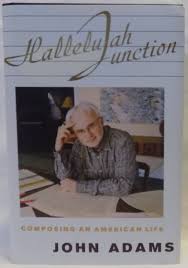
Adams is also a gifted writer, the author of the highly acclaimed autobiography Hallelujah Junction, named by the New York Times as one of the most notable books of 2008, and a contributor to the New York Times Book Review. In 2022, to celebrate his seventy-fifth birthday, Nonesuch Records released John Adams Collected Works, a box set featuring recordings spanning more than four decades of the composer's career.
Additional Information
Adams's music has been recognized with numerous awards beyond the Pulitzer Prize, including five Grammy Awards and the 1993 Grawemeyer Award for his Violin Concerto. He has been a visiting professor of composition at the Royal Academy of Music and has served as Creative Chair of the Los Angeles Philharmonic since 2009. His music has been choreographed by some of the world's leading dance companies, and his operas have been staged by major opera houses on both sides of the Atlantic.
Adams has also been an important advocate for music education and audience development. He instituted the New and Unusual Music series at the San Francisco Symphony and established the annual In Your Ear festival at New York's Carnegie Hall. His commitment to bringing new audiences to contemporary music has been a defining feature of his career, reflecting his belief that classical music should be a living, breathing art form that speaks to the concerns and experiences of contemporary listeners.
John Adams
John Adams occupies a unique position in the world of classical music, a composer whose works stand out among contemporary compositions for their depth of expression, brilliance of sound, and the profoundly humanist nature of their themes. His music has played a decisive role in turning the tide of contemporary musical aesthetics away from academic modernism and toward a more expansive, expressive language, entirely characteristic of his New World surroundings. Through his operas, orchestral works, and vocal compositions, Adams has demonstrated that contemporary classical music can engage with the most pressing historical and political questions of our age while remaining accessible, emotionally powerful, and deeply humane. As the Gramophone has noted, Adams is "one of the most widely-performed and influential composers of our time," and his music continues to inspire, challenge, and move audiences around the world.
Browse in the Sheet Music Library:
Or browse in the categories menus & download the Library Catalog PDF:
List of works of John Adams
Operas and stage works
- Nixon in China (1987)
- The Death of Klinghoffer (1991)
- I Was Looking at the Ceiling and Then I Saw the Sky (song play) (1995)
- El Niño (opera-oratorio) (2000)
- Doctor Atomic (2005)
- A Flowering Tree (2006)
- The Gospel According to the Other Mary (opera-oratorio) (2013)
- Girls of the Golden West (2017)
- Antony and Cleopatra (2022)
Orchestral works
- Common Tones in Simple Time (1979)
- Grand Pianola Music (1982)
- Shaker Loops (adaptation of the 1978 string septet for string orchestra) (1983)
- Harmonielehre (1985)
- The Chairman Dances (1985)
- Tromba Lontana (1986)
- Short Ride in a Fast Machine (1986)
- Fearful Symmetries (1988)
- El Dorado (1991)
- Lollapalooza (1995)
- Slonimsky's Earbox (1996)
- Naïve and Sentimental Music (1998)
- Guide to Strange Places (2001)
- My Father Knew Charles Ives (2003)
- Doctor Atomic Symphony (2007)
- City Noir (2009)
- I Still Dance (2019)
- Frenzy (2023)
- The Rock You Stand On (2025)
Concertante
- piano
- Eros Piano (for piano and orchestra) (1989)
- Century Rolls (concerto for piano and orchestra) (1997)
- Must the Devil Have All the Good Tunes? (concerto for piano and orchestra) (2018)
- After the Fall (concerto for piano and orchestra) (2024)
- violin
- Violin Concerto (1995 Grawemeyer Award for Music composition) (1993)
- The Dharma at Big Sur (concerto for solo electric violin and orchestra) (2003)
- Scheherazade.2 (dramatic symphony for violin and orchestra) (2014)
- others
- Absolute Jest (for string quartet and orchestra) (2012)
- Saxophone Concerto (2013)
Vocal and choral works
- Ktaadn (1974)
- Harmonium (1980-1)
- The Nixon Tapes (three suites from Nixon in China) (1987)
- The Wound-Dresser (1989)
- Choruses from The Death of Klinghoffer (1991)
- On the Transmigration of Souls (2002)
Chamber music
- Piano Quintet (1970)
- Wavemaker (for string quartet, voices, tape, and live electronics, 1975)
- Shaker Loops (for string septet, 1978, revised version of Wavemaker)
- Chamber Symphony (1992)
- John's Book of Alleged Dances (for string quartet, 1994)
- Road Movies (for violin and piano, 1995)
- Gnarly Buttons (for clarinet and chamber ensemble, 1996)
- Son of Chamber Symphony (2007)
- Fellow Traveler (for string quartet, 2007)
- String Quartet No. 1 (2008)
- String Quartet No. 2 (2014)
- Iron Jig (for string quartet, 2026)
Other ensemble works
- American Standard, including "Christian Zeal and Activity" (1973)
- Grounding (1975)
- Scratchband (1996)
- Nancy's Fancy (2001)
Tape and electronic compositions
- Heavy Metal (1970)
- Hockey Seen: A Nightmare in Three Periods and Sudden Death (1972)
- Studebaker Love Music (1976)
- Onyx (1976)
- Light Over Water (1983)
- Hoodoo Zephyr (1993)
Piano
- Ragamarole (1973)
- Blue Light (1976)
- A Fox at Forty (1978)
- Phrygian Gates (1977)
- China Gates (1977)
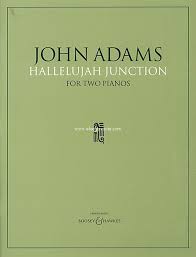
- Hallelujah Junction (for two pianos, 1996)
- American Berserk (2001)
- Roll Over Beethoven (for two pianos, 2014)
- I Still Play (2017)
Film scores
- Matter of Heart (1982)
- The Cabinet of Dr. Ramirez (1991)
- American Tapestry (1999)
- I Am Love (Io sono l'amore) – preexisting pieces by Adams (2010)
- Call Me by Your Name, contributions (2017)
Orchestrations and arrangements
- The Black Gondola (Liszt's La lugubre gondola II (1882)) (1989)
- Berceuse élégiaque (Busoni's Berceuse élégiaque (1907)) (1989)
- Wiegenlied (Liszt's Wiegenlied (1881)) (1989)
- Six Songs by Charles Ives (Ives songs) (1989–93)
- Le Livre de Baudelaire (Debussy's Cinq poèmes de Charles Baudelaire, 1994)
- La Mufa (Piazzolla tango, 1995)
- Todo Buenos Aires (Piazzolla tango, 1996)
Awards and recognition
Search your favorite sheet music in the Sheet Music Library Catalog
Listen to John Adams music on Spotify
Related Links
- BBC Music: John Adams
- John Adams: Official website (www.earbox.com)
- Wikipedia: John Adams (en.wikipedia.org)
- American Master: A Portrait of John Adams
- Southbank Centre - 20th Century music festival (www.southbankcentre.co.uk)