Scores for all instruments: 16,000+ (active and growing), over 236,000 pages.
All genres and levels: Jazz & Blues, Rock & Pop, Classical & Contemporary, Film & Musicals;
books & biographies; methods, études, play-along tracks (MP3) for Jazz & Rock.
Access & benefits: US$15.99 one-time payment, valid for lifetime, full Library access.
Table of Contents
The best sheet music download from our Library.
Please, subscribe to our Sheet Music Library. Sheet music should be accessible and affordable for all musicians, from professionals to absolute beginners.
'Adiemus' - Sir Karl Jenkins
Search your favorite sheet music in the Sheet Music Library Catalog
The Musical Alchemist: A Deep Dive into the World of Karl Jenkins
A Welsh composer and multi-instrumentalist, Karl Jenkins has forged a remarkable career that defies easy categorization. He first rose to prominence as a key architect of the progressive and jazz-rock movements of the 1970s, before reinventing himself as one of the most performed living composers in the world. His music, often characterized by sweeping, evocative melodies, hypnotic world-music rhythms, and a profound sense of spirituality, has resonated with millions far beyond the traditional confines of the concert hall. From the hauntingly beautiful "Adiemus" to the global phenomenon of The Armed Man: A Mass for Peace, Jenkins's work is a testament to a restless creative spirit who has consistently bridged the worlds of popular and classical music.
Please, subscribe to our Sheet Music Library. Sheet music should be accessible and affordable for all musicians, from professionals to absolute beginners.
The Formative Years and the Jazz-Rock Revolution (1944-1980)
Karl William Pamp Jenkins was born on February 17, 1944, in Penclawdd, a village on the Gower Peninsula in South Wales. His musical foundations were laid early. His father, a local schoolteacher and church organist, was his first musical guide. Young Karl learned to play the piano and the oboe, and by the age of six, he was playing the organ for Sunday services. This early immersion in music, particularly the hymns and choral traditions of Welsh chapel life, would leave an indelible mark on his later work, instilling in him a deep appreciation for simple, powerful melodies and communal singing.
His formal musical education took him to Cardiff University, where he studied composition, and then to the Royal Academy of Music in London, where he specialized in oboe performance. His time at the Royal Academy was pivotal, not just for his instrumental prowess but also for the connections he made. It was here that he met his future wife and frequent collaborator, Carol Barratt, a talented composer and pianist.
Upon graduating, Jenkins embarked on a career as a freelance musician. He was a highly sought-after oboist, performing with prestigious orchestras like the Royal Opera House and the Royal Philharmonic Orchestra. However, the conservative world of classical music performance felt increasingly restrictive. The late 1960s and early 1970s were a time of explosive musical experimentation, and Jenkins was drawn to the possibilities of jazz, rock, and the emerging genre of fusion.
The best sheet music download from our Library.
His big break came in 1972 when he joined the pioneering jazz-rock band Nucleus, led by the influential trumpeter Ian Carr. Nucleus was at the vanguard of the British jazz fusion scene, and Jenkins's skills as a keyboardist, oboist, and composer were a perfect fit. His contributions to albums like Roots and Under the Sun showcased his burgeoning talent for crafting intricate, genre-bending compositions. His work with Nucleus earned him critical acclaim and, notably, a prestigious Montreux Jazz Festival award.
Jenkins's reputation as a formidable talent in the fusion world soon caught the attention of another Welsh musical giant: Mike Ratledge of the iconic Canterbury scene band Soft Machine. In 1972, Jenkins was invited to join Soft Machine, initially as a guest, and soon became a full-time member. This was a defining period in his career. He replaced fellow Welshman Hugh Hopper and, alongside Ratledge, drummer John Marshall, and later bassist Roy Babbington, steered the band through its most experimental and ambitious phase.
Search your favorite sheet music in the Sheet Music Library Catalog
With Soft Machine, Jenkins's role expanded from instrumentalist to primary composer. He was the driving force behind their ambitious, sprawling albums of the mid-1970s: Six, Seven, Bundles, and Softs. His compositions from this era, such as the epic "Hazard Profile" and the intricate "The Floating World," were characterized by complex time signatures, dense orchestration, and a fearless integration of jazz improvisation, rock energy, and classical structure. He introduced the electric piano and synthesizers as central voices in the band's sound, and his use of the oboe and soprano saxophone added a unique, lyrical quality to their sonic assault. This period cemented his reputation as a musical visionary, capable of leading a band through challenging and rewarding musical territory. By the time Soft Machine disbanded in 1981, Jenkins had established himself as a composer of significant depth and ambition.
The Dawn of Adiemus and a New Musical Language
The 1980s saw a shift in Jenkins's focus. He became a prolific composer of music for advertising, a move that would prove to be both financially lucrative and artistically liberating. It was in this commercial sphere that he honed his ability to create music with immediate emotional impact, a skill that would become a hallmark of his later work. His iconic theme for Levi's ("The Inside") and his work for Renault and Volvo made his music familiar to a vast television audience long before his name was widely known. He also composed the celebrated theme for The Delta Air Lines commercial, a piece that perfectly encapsulated the composer's ability to blend grandeur with accessibility.
This period of commercial work was interrupted by a monumental project that would define the next phase of his career: Adiemus. The concept began as a commission for a Japanese airline commercial in 1994. Jenkins was asked to create a piece of music that sounded "ethnic" and "timeless." His revolutionary idea was to compose music for a female choir and orchestra, but instead of using a real language, he invented a phonetic, "non-language" – a technique he called "invented language." The lyrics were not meant to be understood semantically, but rather to function purely as another set of instrumental sounds, chosen for their sonic texture and vocal quality.
The resulting album, Adiemus: Songs of Sanctuary (1995), was a global phenomenon. The title track, with its soaring, wordless vocals and driving percussion, became an international hit, used in everything from television commercials to sporting events. The success of Adiemus was a watershed moment. It established Jenkins as a composer with a unique and powerful voice, one that spoke a universal language of sound and emotion. The album spawned several sequels – Adiemus II: Cantata Mundi, Adiemus III: Dances of Time, and Adiemus IV: The Eternal Knot – each exploring different sonic and cultural landscapes, but all anchored by Jenkins's signature blend of classical, world, and new-age music.
The People's Composer – Masses, Anthems, and Global Acclaim
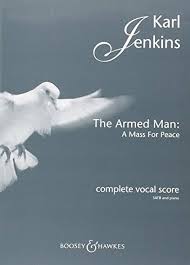
While Adiemus made him a star in the world of crossover music, it was his next major project that would secure his place as a composer of profound significance. The new millennium was approaching, and Jenkins was commissioned by the Royal Armouries to write a piece to commemorate the passing of the 20th century and to mark the millennium. The result was The Armed Man: A Mass for Peace (2000).
This monumental work for soloists, chorus, and orchestra is dedicated to the victims of the Kosovo crisis. It is a powerful and deeply moving anti-war testament, structured around the traditional Latin Mass but interspersed with texts from various sources, including the Islamic call to prayer (the Adhan), Hindu scriptures, the Mahabharata, and poems by Rudyard Kipling, Sankichi Toge, and others. The work’s emotional arc is masterful, moving from the ominous build-up to war in the opening "The Armed Man" to the searing pain of "Charge!" and ultimately to the fragile hope of the final movement, "Better is Peace." The haunting "Benedictus," with its sublime cello solo, and the Agnus Dei, setting the moving words of a Japanese poet, have become some of the most beloved choral pieces of the modern era. The Armed Man has been performed over 2,500 times worldwide, making it one of the most popular choral works of the 21st century.
This success was followed by a series of major choral works that cemented his reputation as a composer who could connect with a massive public:
- Requiem (2005): A deeply personal and eclectic setting of the Requiem Mass, incorporating Japanese death poems (haiku) and moving away from the traditional fire-and-brimstone imagery towards a more contemplative and consoling view of death and remembrance.
- Stabat Mater (2008): A haunting and beautiful setting of the 13th-century hymn about the suffering of Mary at the crucifixion. Jenkins augmented the Latin text with ancient Middle Eastern texts and poems, creating a work of immense emotional power and cross-cultural empathy.
- The Peacemakers (2011): A choral masterpiece setting the words of great peacemakers throughout history, including Gandhi, Martin Luther King Jr., Mother Teresa, and Nelson Mandela, alongside texts from the Bible, the Quran, and other spiritual sources.
- Miserere: Songs of Mercy and Redemption (2019): A profound and intimate work that explores themes of forgiveness and compassion, featuring a haunting setting of Psalm 51 and a poignant use of the Islamic call to prayer.
The Anatomy of a Musical Style
Karl Jenkins's music is instantly recognizable, a testament to a distinct and well-defined personal style. It is a style built on a foundation of accessibility, emotional directness, and a masterful fusion of disparate musical worlds. His harmonic language, while not averse to moments of dissonance for dramatic effect, is fundamentally tonal and consonant. He has a remarkable gift for melody, often crafting simple, singable tunes that become immediately memorable. This melodic gift is perhaps his greatest strength, allowing his music to bypass intellectual analysis and speak directly to the heart.
Melody and Harmony:
Jenkins's melodies are often modal, frequently drawing on the Dorian and Aeolian modes, which gives his music an ancient, folk-like, and often melancholic quality. The influence of Welsh hymnody is palpable in the simplicity and directness of his themes. Harmonically, he favors rich, open chords, often employing suspensions and added-note chords (like sus2 and sus4) that create a sense of yearning and spaciousness without resorting to complex functional harmony. His chord progressions are often cyclical and hypnotic, building tension through repetition and orchestral layering rather than through traditional harmonic development.
Rhythm and Texture:
Rhythm is a crucial element of the Jenkins sound. His background in jazz and rock is evident in his use of driving, often primal, percussion. He frequently employs complex, multi-layered rhythmic patterns inspired by world music traditions, particularly from Africa and the Middle East. This rhythmic vitality provides a powerful counterpoint to the often-serene and contemplative nature of his melodies. His textures are similarly layered, building from simple, sparse beginnings to massive, overwhelming climaxes. He is a master of orchestration, using the full palette of the symphony orchestra, but he also knows when to pull back to a single, poignant instrument, such as the solo cello in "Benedictus."
The Voice as an Instrument:
As demonstrated in Adiemus, Jenkins often treats the human voice not just as a vehicle for text but as a pure instrument. Even in his works with significant texts, the sound of the choir is paramount. He uses vocal textures—from the pure, ethereal sound of a treble soloist to the raw power of a full chorus—to create atmosphere and emotion. The "invented language" of Adiemus is the ultimate expression of this philosophy, freeing the voice from semantic meaning to become a vessel for pure, unadulterated sound.
Eclecticism and Spirituality:
Jenkins is a musical magpie, borrowing freely from a vast array of traditions. His music is a global tapestry, weaving together elements of Western classical music, jazz, rock, and the folk and spiritual music of cultures from around the world. This eclecticism is not a gimmick but a genuine reflection of his musical curiosity and his desire to create music that speaks to a shared human experience. This is most evident in his choice of texts, which frequently transcend a single religious tradition to embrace a universal spirituality. His works are less about dogma and more about the shared human quest for peace, meaning, and connection.
Beyond the Concert Hall – Film, Collaborations, and Iconic Themes
While his major choral works have defined his legacy, Karl Jenkins's music has permeated popular culture in other significant ways.
Music for Film and Television:
Jenkins has composed several film scores, though his most famous contributions to cinema are often his concert works that have been adopted for the screen. His music is a favorite of filmmakers for its ability to convey immense emotion.
- The Journey (1987): A film score for a documentary.
- The Ghost and Mrs. Muir (1992): He provided the score for a TV movie adaptation.
- The Ruby in the Smoke (2006): A BBC television film.
- Documentary Work: His music has been used extensively in documentaries, most notably in the films of the BBC's Planet Earth series, where his ability to write music of scale and wonder perfectly complements the breathtaking visuals.
- Advertising: As mentioned, his work for Levi's, Delta Air Lines, and De Beers ("A Diamond is Forever") are among the most recognizable advertising themes ever written, embedding his music in the public consciousness for decades.
Key Collaborations:
Jenkins is a collaborative artist who thrives on working with others.
- Mike Ratledge and Soft Machine: His most significant early collaboration, which shaped his compositional approach.
- Carol Barratt: His wife is a constant collaborator, often acting as a sounding board and editor of his work. Her influence is deeply woven into the fabric of his music.
- The Adiemus Project: He worked with a core group of musicians, including vocalist Miriam Stockley, whose voice became the signature sound of Adiemus, and the London Philharmonic Orchestra.
- Diverse Artists: He has collaborated with a wide range of artists, from jazz musicians like Ian Carr to opera singers like Bryn Terfel and Catrin Finch, the former Royal Harpist. His ability to work across genres has made him a sought-after partner for artists from all musical backgrounds.
Influences, Honors, and a Living Legacy
Karl Jenkins's influences are as diverse as his music. They range from the Welsh choral tradition and the hymns of his childhood to the progressive rock of King Crimson, the jazz of Miles Davis, and the minimalism of composers like Steve Reich. He has also drawn inspiration from world music traditions, particularly the rhythmic and melodic patterns of African and Middle Eastern music. The directness and emotional clarity of composers like Samuel Barber and John Tavener can also be heard in his work.
His contributions to music have been widely recognized. He was appointed an OBE (Officer of the Order of the British Empire) in 2005 and was knighted in 2015 for his services to music. He has received numerous honorary doctorates and fellowships from universities across the UK. His albums consistently top the classical charts, and he is regularly cited as one of the world's most performed living composers.
The Legacy:
Karl Jenkins's legacy is multifaceted. First and foremost, he is a composer for the people. He has written music that is both artistically ambitious and emotionally accessible, filling concert halls and cathedrals with a new, diverse audience. He has proven that contemporary classical music does not have to be esoteric or alienating to be taken seriously.
Secondly, he is a musical unifier. His work with Adiemus and his major choral works have demonstrated the power of music to transcend cultural and religious boundaries. By setting texts from multiple faiths and traditions, he has created a body of work that promotes a message of global understanding and peace.
Finally, he is a master of fusion. His career is a blueprint for how a musician can successfully navigate the worlds of jazz, rock, and classical music, synthesizing these influences into a unique and personal style. He shows that a musician's identity need not be confined to a single genre.
Sir Karl Jenkins is a living legend, a composer who has consistently followed his own artistic path with integrity and conviction. From the complexities of Soft Machine to the sublime simplicity of The Armed Man, his journey is a testament to the power of melody, the universality of rhythm, and the profound emotional impact of well-crafted music. His compositions are not just heard; they are felt. They will continue to inspire, comfort, and move audiences for generations to come, ensuring his place as one of the most significant and beloved composers of our time.
Browse in the Sheet Music Library:
Or browse in the categories menus & download the Library Catalog PDF:
‘Benedictus’ from The Armed Man – Karl Jenkins
Discography
With Graham Collier
The Graham Collier Septet
- Deep Dark Blue Center (1967) – Jenkins: Baritone saxophone. With John Marshall on drums, future Soft Machine
The Graham Collier Sextet
- Down Another Road (1969) Piano, oboe. Jenkins composed Lullaby For A Lonely Child, John Marshall on drums
Compilations
- Workpoints (2005) – Jenkins, soprano and baritone sax
- Deep Dark Blue Centre / Portraits / The Alternate Mosaics (2008) 2 CD – With Alan Wakeman, John Marshall, Harold Beckett, Kenny Wheeler.
- Relook : Graham Collier 1937–2011: A Memorial 75th Birthday Celebration (2012) With John Marshall, Nick Evans, Gary Burton, Frank Ricotti, Roy Babbington, Kenny Wheeler, Alan Wakeman etc.
With Neil Ardley – Don Rendell – Ian Carr
- Greek Variations & Other Aegean Exercises (1970) – with Jack Bruce, Jeff Clyne, Roy Babbington, John Marshall, Barbara Thompson, etc.
With Tim Rice and Andrew Lloyd Webber
- Jesus Christ Superstar – (1970) Starring John Marshall, Ian Gillan, Murray Head, J. Peter Robinson, Chris Spedding, etc.
With Nucleus
Nucleus
- Elastic Rock (1970) – Chris Spedding on guitar, John Marshall on drums, album cover by Roger Dean.
- We'll Talk About It Later (1971)
Ian Carr with Nucleus
- Solar Plexus (1971)
Compilation
- Direct Hits (1976)
- Elastic Rock / We'll Talk About It Later (1994) 2 CD
- Solar Plexus / Belladonna (2002) 2 CD
- Alleycat / Direct Hits (2004) 2 CD
With Elton John
- Tumbleweed Connection (1970) – Oboe on "Come Down in Time".
With The Chitinous Ensemble
- Chitinous (1971) – With Paul Buckmaster, Nucleus, Ian Carr, etc.
With Linda Hoyle
- Pieces of Me (1971) – Jenkins piano, oboe, arranging and conducting orchestra; Chris Spedding guitars; John Marshall drums, percussion; Jeff Clyne bass.
With Barry Guy/The London Jazz Composers' Orchestra
- Ode (1972) – Jenkins Oboe and soprano and baritone sax Marc Charig on bugle, Alan Wakeman on tenor and soprano saxes, future Soft Machine and cousin of Rick Wakeman.
With Soft Machine
Studio albums
- Six (1973) – Jenkins keyboards and horns, Mike Ratledge keyboards, Hugh Hopper bass guitar, John Marshall drums
- Seven (1973) – Same except Roy Babbington replaced Hopper on bass.
- Bundles (1975) – Allan Holdsworth added on guitar. Last album with Mike Ratledge.
- Softs (1976) – John Etheridge replaced Holdsworth and Alan Wakeman added on saxes. Jenkins only plays keyboards from this point.
- Rubber Riff (1976) – Originally an album for libraries providing "modern rock music featuring keyboards and guitar" composed by Karl Jenkins. As well as Jenkins some other then-current Soft Machine members played on the album. Reissued as in 1994 under the "Soft Machine" name.
- Land of Cockayne (1981) – Last Soft Machine album with Jenkins: Jenkins keyboards, John Taylor electric piano Fender Rhodes, Allan Holdsworth and Alan Parker guitars, Jack Bruce bass guitar, Ray Warleigh sax and flute, Dick Morrissey tenor sax, John Marshall drums.
Live albums
- Alive & Well: Recorded in Paris (1978) – Jenkins keyboards, John Etheridge guitar, Steve Cook bass guitar, John Marshall drums, Rick Sanders violin.
- BBC Radio 1971 – 1974 (2003)
- British Tour '75 (2005)
- Floating World Live (2006) – Recorded in 1975.
- NDR Jazz Workshop (2010) CD + DVD – Recorded in 1973
- Switzerland 1974 (2015) CD + DVD
Compilations
- Triple Echo (1977) – Available on vinyl on a triple album. Jenkins on the last 4 pieces
- The Untouchable (1990)
- As If... (1991) – Contains songs from the Third , Fourth , Fifth & Sixth albums.
- Softs / Alive And Well (Recorded In Paris) / Bundles (1992) – 3 CDs
- The Best Of Soft Machine – The Harvest Years (1995)
- De Wolfe Sessions (2002) – Presented as Karl Jenkins' Soft Machine.
- MP3 Collection (2003) – Contains albums Volume One (The Soft Machine) to Rubber Riff + At the beginning
- Six + Seven (2004) – 2 CDs
- Out-Bloody-Rageous An Anthology 1967–1973 (2005) – 2 CDs
- Tales Of Taliesin (The EMI Years Anthology 1975–1981) (2010) – 2 CDs
- Original Album Classics (2010) – Contains albums from Third to Seven.
With Mike Oldfield
- Tubular Bells – BBC 1973 – Recorded live in studio for the BBC in November 1973 and released in 1993. Available on DVD Elements – The Best of Mike Oldfield.
- Music of the spheres (2008) – Jenkins; orchestrations, string direction and production.
With Planet Earth
- Planet Earth – Avec Mike Ratledge, Tristan Fry, etc. (1978)
With Plaza
- Plaza – With Mike Thorne and Mike Ratledge. (1979)
With Rollercoaster
- Wonderin' – With Mike Ratledge, Dick Morrisey, Ray Warleigh, etc. (1980)
With Mike Ratledge
- Cuts For Commercials Volume 3 (1981)
- For Christmas, For Children (1981)
- Movement (2010)
- Some Shufflin' (2010)
With JAR
- Only You/Ballad From An Unmade Movie – Single from The Projet Jenkins Aspery Ratledge, JAR (1988)
With Kiri Te Kanawa
- Kiri Sings Karl (2006) – Jenkins orchestration and production
Adiemus
Main article: Adiemus (albums) Studio albums
- Adiemus: Songs of Sanctuary (1995) – With Mike Ratledge on drums programming and production
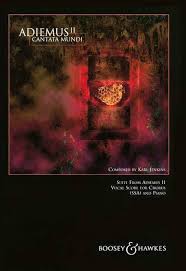
- Adiemus II: Cantata Mundi (1997)
- Adiemus III: Dances of Time (1998)
- Adiemus IV: The Eternal Knot (2001)
- Adiemus Live (2001)
- Adiemus V: Vocalise (2003)
- Adiemus Colores (2013)
- Symphonic Adiemus (2017)
Compilations
- Diamond Music (1996) – Jenkins/The London Philharmonic/The Smith Quartet
- The Best Of Adiemus – The Journey (1999)
- The Essential Collection (2006)
- The Very Best of Karl Jenkins (2011) – 2 CDs
- Adiemus The Collection (2013) – Coffret 6 CDs
- Still With The Music (The Album) (2015)
- Voices – 8-CD boxset including the premiere of The Healer – A Cantata for St Luke. (2015)
- The Very Best of Karl Jenkins (2019)
- The Very Best Of Karl Jenkins (80th Birthday Edition) (2024)
Film score
- River Queen – Original Motion Picture Soundtrack (2007)
Other works
- Nomination (1976) – Jenkins/Peter Milray
- Topsy Turvy (1986) – Jenkins/Jack Trombey
- Merry Christmas to the World (1995) – Collection of traditional Christmas carols orchestrated by Jenkins (In Adiemus Style)
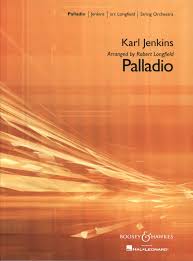
- Palladio (1996)
- Eloise (1997) – Opéra
- Imagined Oceans (1998)
- New Music from Karl Jenkins (1998) – Sampler
- Harmonia – Le Chant des rêves (1998) – Compilation with Mike Oldfield and Vangelis
- Dewi Sant (1999)
- The Armed Man: A Mass for Peace (1999)
- Over the Stone (2002) – Concerto for two harps
- Crossing the Stone (2003)
- Ave Verum (2004)
- Quirk (2004)
- La Folia (2004)
- In These Stones Horizons Sing (2004)
- Requiem (2005)
- River Queen (2005) – original film score River Queen by New Zealand director Vincent Ward
- Tlep (2006)
- This Land of Ours (2007) – with Cory Band and Cantorion
- Sarikiz (2008)
- Stabat Mater (2008)
- Quirk – The Concertos (2008) – This album is a compilation of concertos by the composer that were previously commercially unavailable. These are "Over the Stone" (2002), La Folia (2004), Quirk (2004) and also includes the new concerto "Sarikiz" (2008).
- Stella Natalis (2009)
- Gloria / Te Deum (2010) – with Hayley Westenra
- The Bards of Wales (2011)
- Motets (2014)
- Cantata Memoria (2016) – in tribute to the victims (116 children and 28 adults) of the Aberfan disaster, on 21 October 1966
- Songs Of Mercy And Redemption (2019)
- Piano (2019)
- One World (2021–2022)
- Stravaganza (2024) – with Jess Gillam and the Royal Philharmonic Orchestra
- Fragile Earth (2024) — for the National Youth Brass Band of Great Britain