Scores for all instruments: 16,000+ (active and growing), over 236,000 pages.
All genres and levels: Jazz & Blues, Rock & Pop, Classical & Contemporary, Film & Musicals;
books & biographies; methods, études, play-along tracks (MP3) for Jazz & Rock.
Access & benefits: US$15.99 one-time payment, valid for lifetime, full Library access.
Table of Contents
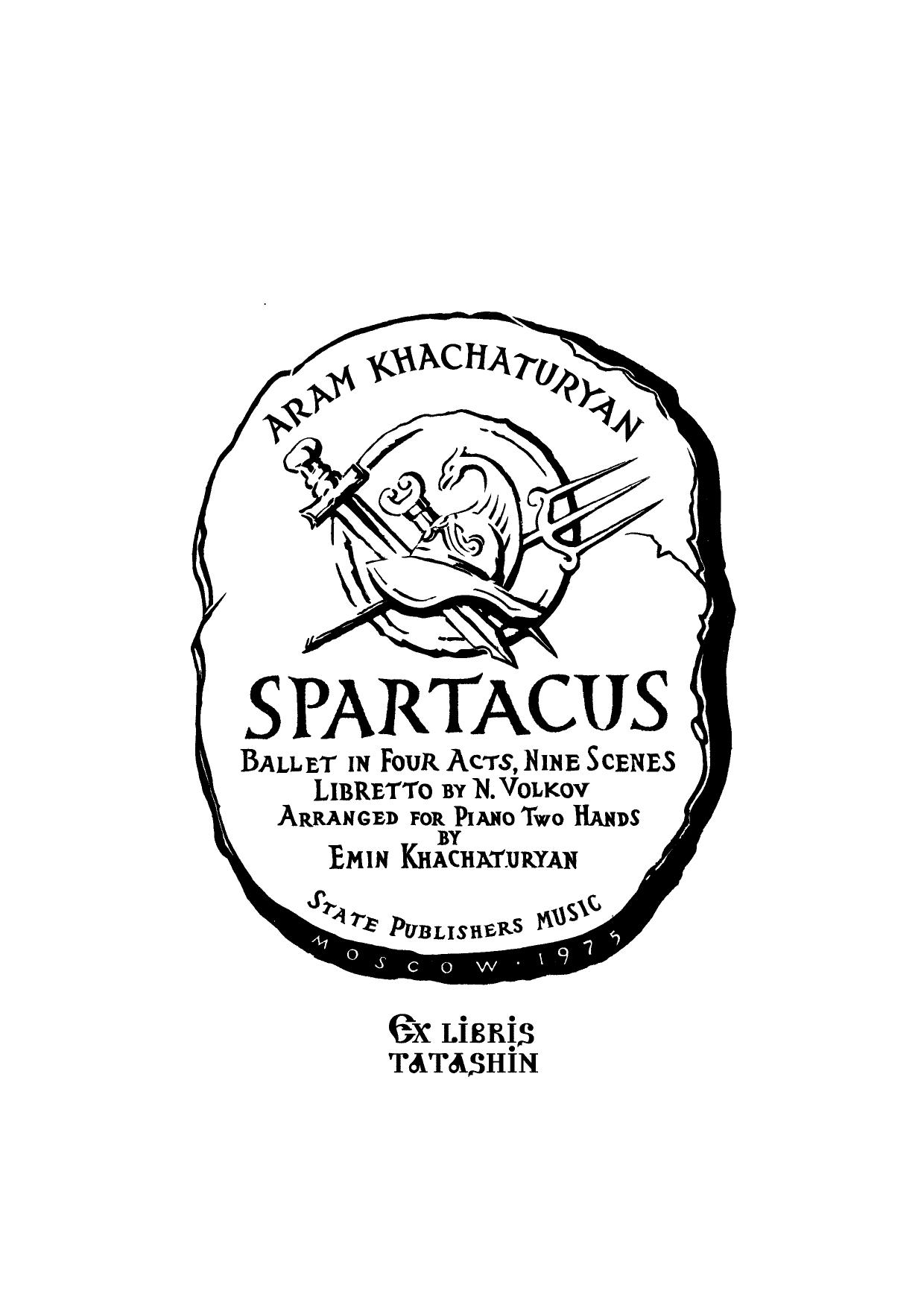
Khachaturian - Spartacus (from Suite No 34 Adagio of Spartacus and Phrygia ) Piano Solo sheet music
Aram Khachaturian: The Musical Bridge Between the Caucasus and the Concert Hall
Few composers have managed to capture the rhythmic vitality of a region and translate it into a language that resonates with global audiences. Aram Khachaturian did precisely that. Born in Tiflis (now Tbilisi, Georgia) to an Armenian family, he became one of the three titans of Soviet music, alongside Sergei Prokofiev and Dmitri Shostakovich, and the first Soviet composer to write music for sound films. His "Sabre Dance" from the ballet Gayane became, at one point, the most frequently played piece of music in the world. His Adagio of Spartacus and Phrygia became a beloved theme for BBC television and appeared in films from Caligula to Ice Age: The Meltdown. Yet behind this popular success lies a complex artistic personality—a composer whose music was deeply rooted in Armenian and Transcaucasian folklore, who navigated the treacherous waters of Stalinist cultural politics, and who forged a distinctive harmonic language that was simultaneously exotic and accessible.
Please, subscribe to our Sheet Music Library. Sheet music should be accessible and affordable for all musicians, from professionals to absolute beginners.
Early Life and Musical Awakening
Aram Ilyich Khachaturian was born on June 6, 1903, in Tiflis, then part of the Russian Empire, to a poor Armenian family from the Nakhchivan region. He was the fourth son in a modest family; his father was a bookbinder and craftsman. The young Khachaturian was surrounded by the rich musical tapestry of Tiflis—a city where Armenian, Georgian, Azerbaijani, and Russian cultural currents intersected. He was fascinated by the music he heard around him, but remarkably, he showed no formal interest in music until his nineteenth year. The folk songs and dances he absorbed as a boy would remain with him throughout his life, forming the bedrock of his compositional identity.
The best sheet music download from our Library.
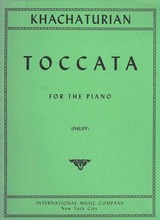
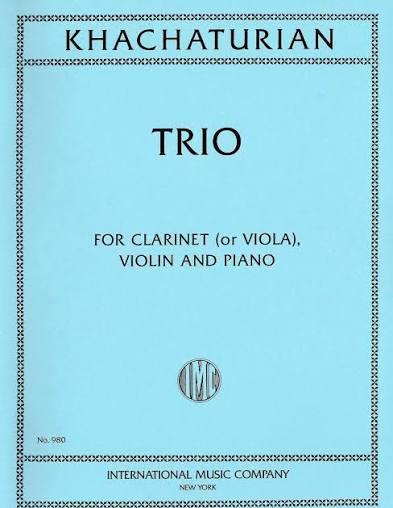
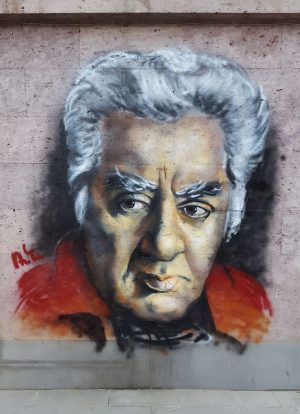
In 1921, at the age of nineteen, Khachaturian moved to Moscow. The story of his arrival is almost legendary: he had no formal musical training, could not read music, and had never attended a professional concert. Yet he was admitted to the Gnessin Musical Institute, where he studied cello and composition. His first important teacher was Mikhail Gnessin. He later had private lessons with Reinhold Glière before entering the Moscow Conservatory, where he studied composition with Nikolai Myaskovsky and orchestration with Vasilenko. He graduated in 1934.
His student years were marked by remarkable precocity. While still at the Conservatory, he composed his Trio for clarinet, violin, and piano (1932), a work that made a considerable stir. Sergei Prokofiev, who heard the piece, was sufficiently impressed to take a copy with him to Paris to have it performed there. This early recognition signaled the arrival of a distinctive new voice in Soviet music.
Personal Life and Career Milestones
In 1933, Khachaturian married Nina Makarova, a fellow student and composer. Their marriage was a lifelong partnership, and Nina became a significant influence on his life and work. The couple had a son, Karen, who would later become a composer himself.
Khachaturian's career trajectory was meteoric. His Symphony No. 1 (1934) was his first major orchestral success. The Piano Concerto (1936) followed, and its premiere in Moscow and subsequent performances in New York established him as a composer of international significance. The Violin Concerto (1940) further consolidated his reputation. These three concertos—for piano, violin, and cello—remain cornerstones of the twentieth-century concerto repertoire.
Search your favorite sheet music in the Sheet Music Library Catalog

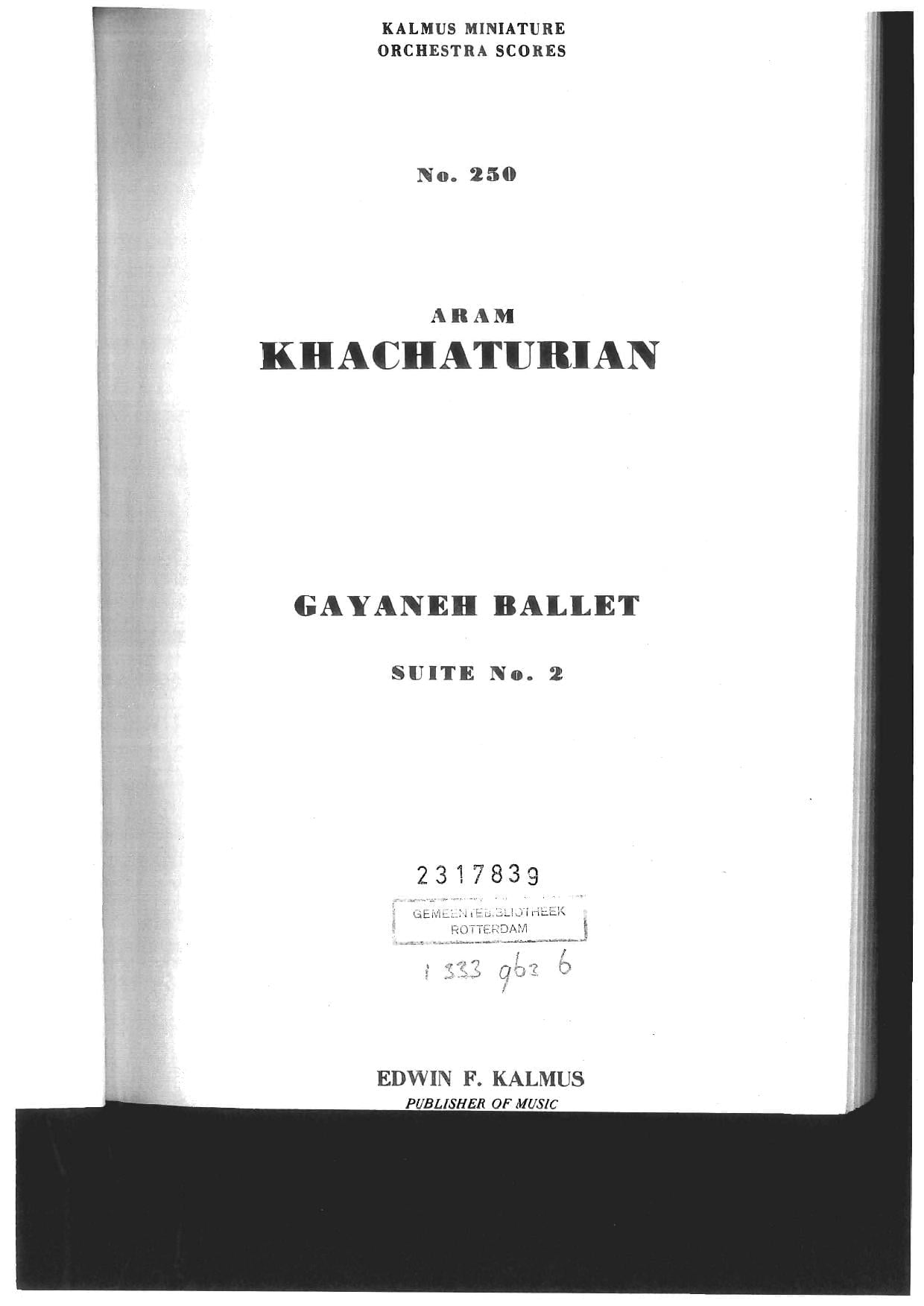

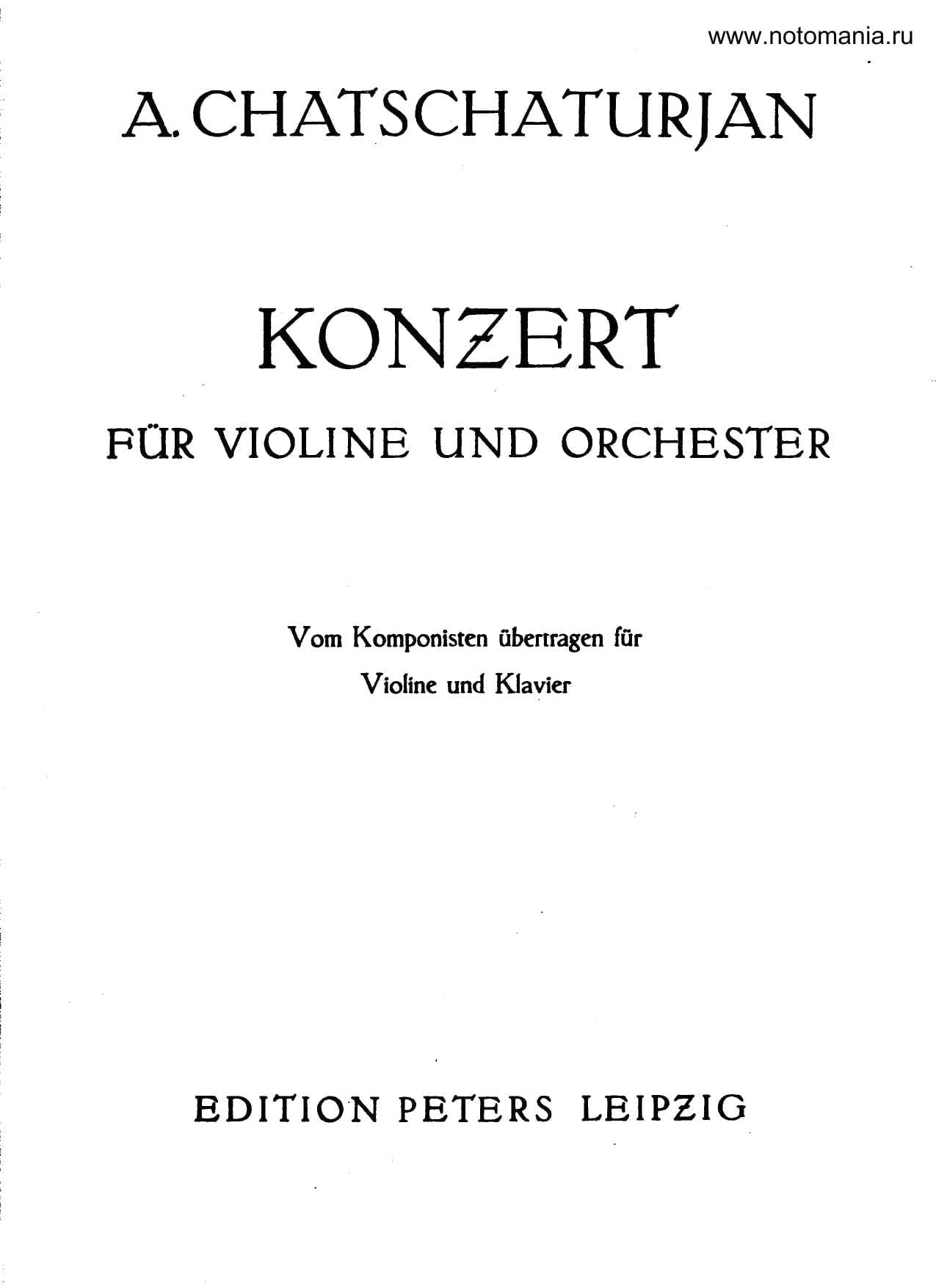
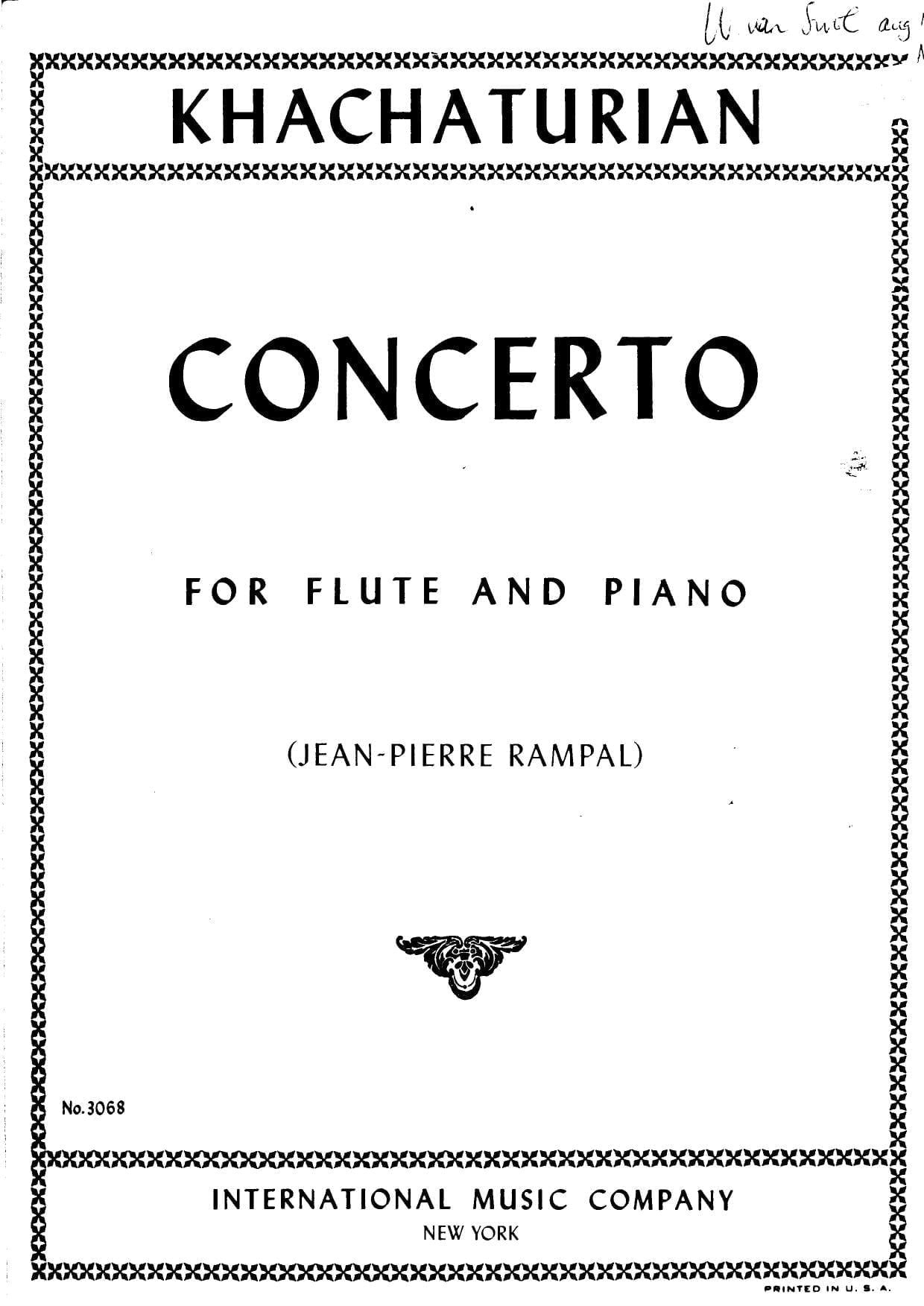
The year 1939 brought a significant honor: Khachaturian was elected to the board of the Union of Soviet Composers. He won the Stalin Prize twice, and was awarded the Order of Lenin. By the early 1940s, he was one of the most celebrated composers in the Soviet Union.
Ballet: The Heart of Khachaturian's Legacy
While Khachaturian composed in many genres, it is his ballet music for which he is best known internationally. His three ballets—Happiness (1939), Gayane (1942), and Spartacus (1954)—represent the culmination of his artistic vision.
Gayane was largely reworked from Happiness, his first ballet. The story, with libretto by K. N. Derzhavin, concerns a collective farm, a traitor, and a love story. It premiered at the Kirov Theatre in Molotov on December 9, 1942, and received the Stalin Prize. Anna Kisselgoff called it "one of the staples of the Soviet and Eastern European ballet repertory". From this ballet came the "Sabre Dance," which became a global phenomenon. The ballet also includes such memorable numbers as "Lullaby," "Dance of the Rose Maidens," "Hopak," "Dance of the Kurds," and "Russian Dance".
Spartacus became Khachaturian's most acclaimed work in the post-Stalin period. It was first performed at the Kirov Theatre in Leningrad in 1956. The ballet depicts the slave revolt led by Spartacus in ancient Rome, and its Adagio of Spartacus and Phrygia is one of the most beautiful and enduring melodies Khachaturian ever wrote. The Adagio appears in Act II when the two lovers celebrate their escape from slavery. According to Jonathan McCollum and Andy Nercessian, the music for Gayane and Spartacus "can safely be included among the best known pieces of classical music throughout the world, a fact that is vitalized by perception that these are perhaps the only works through that the world really knows Armenian music".
Musical Style and Technique
Khachaturian's music is characterized by a unique synthesis of Armenian folk music, Russian classical traditions, and contemporary orchestral techniques. Musicologist James Bakst identified what made him unique among Soviet composers as "the blending of national Armenian vocal and instrumental intonations with contemporary orchestral techniques". Edward Greenfield noted that Khachaturian "notably outshone other Soviet contemporaries in creating a sharply identifiable style, something which his successors have found impossible to emulate".
His music is characterized by an active rhythmic development, which reaches either a mere repetition of the basic formula (ostinato) or "a game of emphasis within this formula". This rhythmic drive is one of the most distinctive features of his music, giving it a propulsive energy that is immediately recognizable.
Harmony and Modal Language
Khachaturian's harmonic language is as distinctive as his rhythmic style. His music is deeply rooted in Armenian folk melodies, and his harmonic language is shaped by these modal inflections. The use of added intervals to basic triads—particularly major and minor seconds—expands the harmonic vocabulary and creates a sound that is simultaneously consonant and piquant.
One of the most notable features of Khachaturian's harmonic style is his use of percussive harmonic seconds, often with added intervals. He himself suggested that this predilection had an Armenian basis. These seconds are not merely decorative; they are structural elements that create tension and color. His music frequently employs pedal points and organ points, which create a sense of stability against the harmonic and rhythmic activity above.
Khachaturian's modal language draws on the scales of Armenian folk music, with their characteristic augmented seconds and specific interval patterns. The "Orientalism" in his music is recognizable in the structure of his melodies, with a stress on small intervals in eight-note and nine-note scales. The exotic, romanza-like effect of many of his slow movements is achieved through a combination of fresh harmonies, folk mood, and laconic expression, giving an impression of severe simplicity.
His harmonic style also includes elements of chromaticism, with a profusion of sharply expressive augmented and diminished intervals. These chromatic elements are integrated into a fundamentally modal framework, creating a distinctive tension between the modal foundation and chromatic superstructure.
Major Works and Compositions
See also: List of compositions by Aram Khachaturian
Concertos
Khachaturian's three concertos—for piano (1936), violin (1940), and cello (1946)—are among his most important works. The Piano Concerto was an immediate success and established his international reputation. The slow movement, described by Soviet critic Georgi Khubov as "an epitome of modern lyricism, with its perfect inner harmony, its vitality, and its folk character," remains one of his most beloved creations. The concerto's thematic unity is remarkable: material first expounded in the opening movement returns with redoubled force in the finale, with the festive, animated theme dominating the concerto like a cyclic motif.
The Violin Concerto (1940) is considered by many to be his masterpiece in the genre, a work that perfectly illustrates the duality of his musical personality—the synthesis of folk inspiration and classical form. The Cello Concerto (1946), later reworked as the Cello Concerto-Rhapsody (1963) and dedicated to Mstislav Rostropovich, is a sprawling, aptly named work that undergoes a series of colorful and fantastical gyrations.
Symphonies
Khachaturian wrote three symphonies: the First (1934/5), the Second (1943), and the Third (1947). The Second Symphony, composed during World War II, reflects the impact of that grave struggle on the composer. The suffering of the people is described in the third movement, while the finale pays tribute to their heroism. The work was introduced in Moscow on December 30, 1943, and received its American première under Leonard Bernstein on April 13, 1945.
Incidental Music and Suites
Khachaturian wrote incidental music for several plays, including Macbeth (1934, 1955), The Widow from Valencia (1940), Masquerade (1941), and King Lear (1958). The Masquerade Suite, drawn from his music for Mikhail Lermontov's play, is one of his most popular concert works. The suite's "Waltz" and "Romance" are particularly beloved.
His Lullaby for Violin and Piano (1926), though little known for many years, has recently gained international exposure through recordings.
Film Music: A Pioneer of Cinematic Sound
Khachaturian was the first Soviet composer to write music for sound films, and he produced around 25 film scores. His work in cinema was not merely a sideline but a significant part of his creative output, and his film music opened ways for the convergence of traditional musical culture of Eastern nations with European classical culture.
His first film score was for Pepo (1934), the first Armenian sound film. The music for Pepo was written in the form of an opera, and the people sang Pepo's song as if it were a national song. This was followed by Zangezur, whose military march became so popular that it was adopted as a contemporary military march and played during parades on Red Square. Khachaturian observed that "the most successful works are those, where the author does not think of crossing the borders of the dramaturgic task, on the contrary, aspires for his 'utilitarian' goal of expressing as well as possible the concrete content".
Other notable film scores include Salavat Yulaev (1938), for which he immersed himself in Bashkirian folklore; The Battle of Stalingrad (1949), for which he was awarded the Stalin Prize; Admiral Ushakov (1953); and Othello (1956). His film music was characterized by a symphonic approach, with an overture, songs, and large-scale dramatic scenes that often transcended the cinematic context.
His music has also been extensively used in foreign films. The Adagio of Spartacus and Phrygia became the theme for the BBC drama series The Onedin Line during the 1970s. The climax of Spartacus was used in Caligula (1979) and Ice Age: The Meltdown (2006), while Joel Coen's The Hudsucker Proxy (1994) prominently featured music from Spartacus and Gayane, including the "Sabre Dance". Gayane's "Adagio" was used in Stanley Kubrick's 2001: A Space Odyssey. The "Sabre Dance" also became a jukebox hit in the United States in 1948, with three different versions reaching number one on the Billboard Best-Selling Records by Classical Artists list.
Collaborations with Other Musicians
Khachaturian collaborated with many of the leading musicians of his time. His Cello Concerto-Rhapsody (1963) was dedicated to Mstislav Rostropovich, one of the greatest cellists of the twentieth century and an old friend of the composer. The two toured together in 1968, with Khachaturian conducting the National Symphony Orchestra and Rostropovich performing as soloist.
His Violin Concerto was championed by David Oistrakh, one of the preeminent violinists of the Soviet era. The work has since become a staple of the violin repertoire, performed by such artists as Sergey Khachatryan, who has described it as one of his signature pieces.
Khachaturian also collaborated with the Armenian Philharmonic Orchestra and conductor Loris Tjeknavorian on recordings of his film music. His works have been recorded by numerous leading conductors and orchestras, including the Wiener Philharmoniker, the London Symphony Orchestra, and the Los Angeles Philharmonic.
Influences and Legacy
Khachaturian's music has been profoundly influenced by the folk songs and dances of Armenia. As Kabalevsky wrote, "The especially attractive features of Khatchaturian's music are in its rootings in national folk fountainheads. Captivating rhythmic diversity of dances of the peoples of Transcaucasia and inspired improvisations of ashugs (bards)—such are the roots from which have sprung the composer's creative endeavors".
His music was also influenced by classical European music and Armenian folk music. He was particularly drawn to the works of Borodin and Liszt, whose sweep and surge of theme and thematic unity of structure are reflected in his own music. The influence of Russian composers such as Tchaikovsky and Rimsky-Korsakov is also evident in his orchestral writing.
Khachaturian's legacy extends far beyond his own compositions. He encouraged young composers to experiment with new sounds and find their own voices. His colorful orchestration technique, admired by Shostakovich and others, continues to be studied and emulated by modern composers. His influence can be traced in nearly all trends of the Armenian classical tradition, whether in symphonic or chamber music. He raised the Armenian composition school to a new classical level, ensuring its place in world culture, and his works influenced the formation of composition schools in the South Caucasus and Central Asian Republics.
Alongside Prokofiev and Shostakovich, Khachaturian is called one of the three "titans" of Soviet music. His works constitute a precious contribution to the treasury of Soviet and world classical music of the twentieth century.
The Stalinist Years: Formalism and Rehabilitation
Khachaturian's career was not without its dark chapters. In 1948, he was accused of "formalism," along with Shostakovich, Prokofiev, and Myaskovsky. The denunciation, orchestrated by Stalin's cultural commissars, was a severe blow. These once-lauded composers found themselves shunned, their works removed from concert programs. Khachaturian's music was criticized for its supposed decadence and its departure from the principles of Socialist Realism.
The experience was traumatic, and Khachaturian's creative output slowed considerably in the years following the denunciation. Despite his formal restoration, he only succeeded in composing one internationally acclaimed work in the last thirty years of his life: the ballet Spartacus. Nevertheless, he continued to compose, conduct, and teach, and his reputation was gradually rehabilitated. After Stalin's death, things began to change, and Khachaturian soon found himself as popular as ever, undertaking conducting tours around the world, including trips to the UK, Mexico, and the USA.
Final Years and Death
Aram Khachaturian died in Moscow on May 1, 1978. He was buried in Armenia, the land of his ancestors. His passing marked the end of an era in Soviet music, but his music has continued to grow in popularity and esteem.
Khachaturian: Personality and Anecdotes
Khachaturian was known as a man of open, sincere character, completely devoted to his beloved work. As a student, he played in the college brass band, though he frequently argued with the conductor. It was only after he moved to Moscow that he heard a professional classical piano recital for the first time—a remarkable fact for someone who would become one of the most celebrated composers of the twentieth century.
His "Sabre Dance" achieved a level of popular success that few classical compositions ever attain. In 1948, it was a jukebox hit in the United States. It has been covered by countless musicians worldwide, from jazz arrangements to rock versions. The piece's frenetic energy and exotic flavor made it a natural fit for popular culture, and it has been used in everything from animated films to television commercials.
Aram Khachaturian was a composer who bridged worlds. He brought the rhythms and melodies of the Caucasus to the concert halls of Moscow, New York, and London. He navigated the treacherous politics of Stalinist culture while maintaining his artistic integrity. His music, with its distinctive blend of folk inspiration and classical technique, continues to delight audiences around the world.
His ballets Gayane and Spartacus remain staples of the repertoire. His concertos are performed by leading soloists. His film music helped establish the symphonic score as an integral part of cinematic storytelling. And his "Sabre Dance" remains one of the most recognizable pieces of classical music ever written.
Khachaturian once said, "I do not see how modern composers could isolate themselves from life and not want to work among society. The more impressions that come from contact with life, the more and better the creative ideas". His own life was a testament to this belief. He drew inspiration from the world around him—from the folk songs of his childhood, from the political struggles of his time, from the films and plays he scored—and transformed those impressions into music of enduring power and beauty. His legacy is a reminder that the most personal expressions of national identity can also be the most universal.
The best sheet music download from our Library.
Browse in the Sheet Music Library:
Or browse in the categories menus & download the Library Catalog PDF: