
Scores for all instruments: 16,000+ (active and growing), over 236,000 pages.
All genres and levels: Jazz & Blues, Rock & Pop, Classical & Contemporary, Film & Musicals;
books & biographies; methods, études, play-along tracks (MP3) for Jazz & Rock.
Access & benefits: US$15.99 one-time payment, valid for lifetime, full Library access.
Table of Contents
Lady Gaga - Poker Face
The best sheet music download from our Library.
Please, subscribe to our Sheet Music Library. Sheet music should be accessible and affordable for all musicians, from professionals to absolute beginners.
Who is Lady Gaga?


Search your favorite sheet music in the Sheet Music Library Catalog
Lady Gaga: The Anatomy of a Pop Polymath
Few artists in the 21st century have reshaped the boundaries of popular music with the audacity and technical precision of Lady Gaga. Born Stefani Joanne Angelina Germanotta in Manhattan on March 28, 1986, she has evolved from a downtown club performer into a global icon whose influence spans music, film, fashion, and activism. With estimated record sales of 170 million and a trophy case that includes Academy, Grammy, BAFTA, and Golden Globe Awards, Gaga occupies a singular position in contemporary culture: she is simultaneously a student of pop history and one of its most radical innovators. This article examines the full arc of her career—her biography, the architecture of her musical style, the harmonic foundations of her songwriting, her most significant compositions, her work in film, her collaborative ventures, her artistic influences, and her enduring legacy.
Early Life and the Making of a Monster
Stefani Germanotta was born into an Italian American family in New York City and demonstrated musical aptitude from an extraordinarily young age. She began piano lessons at four, was performing at open mic nights in Manhattan clubs by fourteen, and gained early admission to New York University's Collaborative Arts Project 21 at seventeen. Her education at the Convent of the Sacred Heart, an all-girls school in Manhattan, provided a disciplined foundation, but it was the downtown club scene that shaped her artistic sensibility.
After a brief and painful contract cancellation by Def Jam Recordings, Germanotta pivoted to songwriting, penning tracks for Britney Spears, Fergie, the Pussycat Dolls, and New Kids on the Block. This period of behind-the-scenes labor proved formative: she learned the mechanics of hit-making from the inside while developing the theatrical persona that would become Lady Gaga—a name derived from Queen's "Radio Ga Ga". In 2007, she signed with Interscope Records and KonLive Distribution, and the following year, her debut album The Fame changed the trajectory of pop music.
Musical Style and Technique: The Gaga Framework
Lady Gaga's musical identity rests on a set of deliberate, almost manifesto-like principles that she and her primary collaborator, producer RedOne, established early in her career. As the musicologist Owen Pallett observed in his analysis of "Bad Romance," these principles constitute a coherent aesthetic he termed "Gagaism": the use of minor keys, the avoidance of syncopated rhythms, intentional single-pitch melodies, and the strategic deployment of spoken-word passages. This framework is not a limitation but a signature—a vocabulary that allows Gaga to operate within narrow parameters while generating remarkable variety.
The first principle is tonal gravity. From her earliest singles onward—"Just Dance," "Poker Face," "LoveGame," "Paparazzi," "Bad Romance," "Alejandro," and "Judas"—Gaga refused to release major-key singles. The minor key is the sonic equivalent of her aesthetic: sexy, spooky, and slightly dangerous. Within this minor-key world, she begins every verse on the establishing i chord, the root of the minor key, creating a sense of permanence and inevitability. This harmonic anchoring gives her songs a monolithic quality, as if the music has always existed and will continue to exist regardless of the listener's participation.
The second principle is rhythmic consistency. Gaga's dance-floor fillers feature "repetitious juggernaut eighth-note patterns" rather than syncopated rhythms. This choice is strategic: by eliminating rhythmic surprise, she foregrounds melody, vocal performance, and production texture. The result is music that functions as an unstoppable force—a wall of sound that moves the body without requiring conscious negotiation. The rare exceptions, such as "LoveGame," prove the rule by standing out as anomalies within her catalog.
The third principle is melodic directness. Gaga favors "simple, laserlike single-pitch melodies" that are easy to sing, remember, and translate across language barriers. She repeats song titles with almost ritualistic frequency: "Poker Face" repeats its title thirty times, "Just Dance" eighteen times, and "Bad Romance" thirty-six times. This repetition is not laziness but a deliberate strategy for global penetration. Gaga has always had her sights on the world stage, not just English-speaking markets, and her melodic architecture is designed for universal accessibility.
The fourth principle is theatricality. Gaga's music is inseparable from her visual presentation—the costumes, the choreography, the music videos that function as miniature films. But even in purely sonic terms, her songs contain dramatic elements: operatic introductions, unexpected chord shifts, and stylistic surprises that disrupt the four-on-the-floor club beat. Her spoken-word breakdowns—"disco stick" from "LoveGame," the French intro to "Alejandro"—add a layer of camp performance that transforms pop songs into theatrical events.
Harmony and Compositional Technique
Lady Gaga's harmonic language is deceptively sophisticated beneath its accessible surface. While her chord progressions are often simple, she deploys them with a composer's instinct for tension and release. The chorus of "Alejandro," for example, turns to an A major harmony within a progression of G–D–A–Bm, a move that can be traced to the final section of the chorus in "Don't Turn Around". This modal mixture—the intrusion of a major chord into a minor-key context—creates a momentary lift that feels both surprising and inevitable, a hallmark of her best work.
Pallett's analysis of "Bad Romance" identifies one of Gaga's most striking harmonic gestures: the use of a raised seventh that "does something that would make Tchaikovsky proud". The raised seventh is a characteristic of harmonic minor, the scale that gives classical music its most dramatic tensions. By incorporating this device into a dance-pop context, Gaga bridges the gap between the concert hall and the nightclub, investing her music with a latent classicism that rewards close listening.
Her work across albums demonstrates increasing harmonic ambition. Born This Way (2011) features "frequent use of minor keys, Lydian mode lifts, and even rare touches like Locrian melodies". The Lydian mode, with its raised fourth degree, is associated with wonder and transcendence in Western music—an appropriate choice for an album whose title track became an anthem of self-acceptance. The Locrian mode, the most unstable of the church modes, appears only rarely, but its presence signals Gaga's willingness to explore tonal territories that most pop artists avoid entirely.
"Abracadabra," from her 2025 album Mayhem, demonstrates the continued evolution of her harmonic vocabulary. The song's chord progression shows a "novelty" rating of 63 on Hooktheory's analysis scale, indicating a progression that is significantly less predictable than the average pop song. Its melody spans from C4 to C5, a comfortable but expressive range, and the overall mood is characterized as "smooth, unexpected"—a fitting description of Gaga's mature style.
The Essential Songs: A Canon of Pop Masterpieces
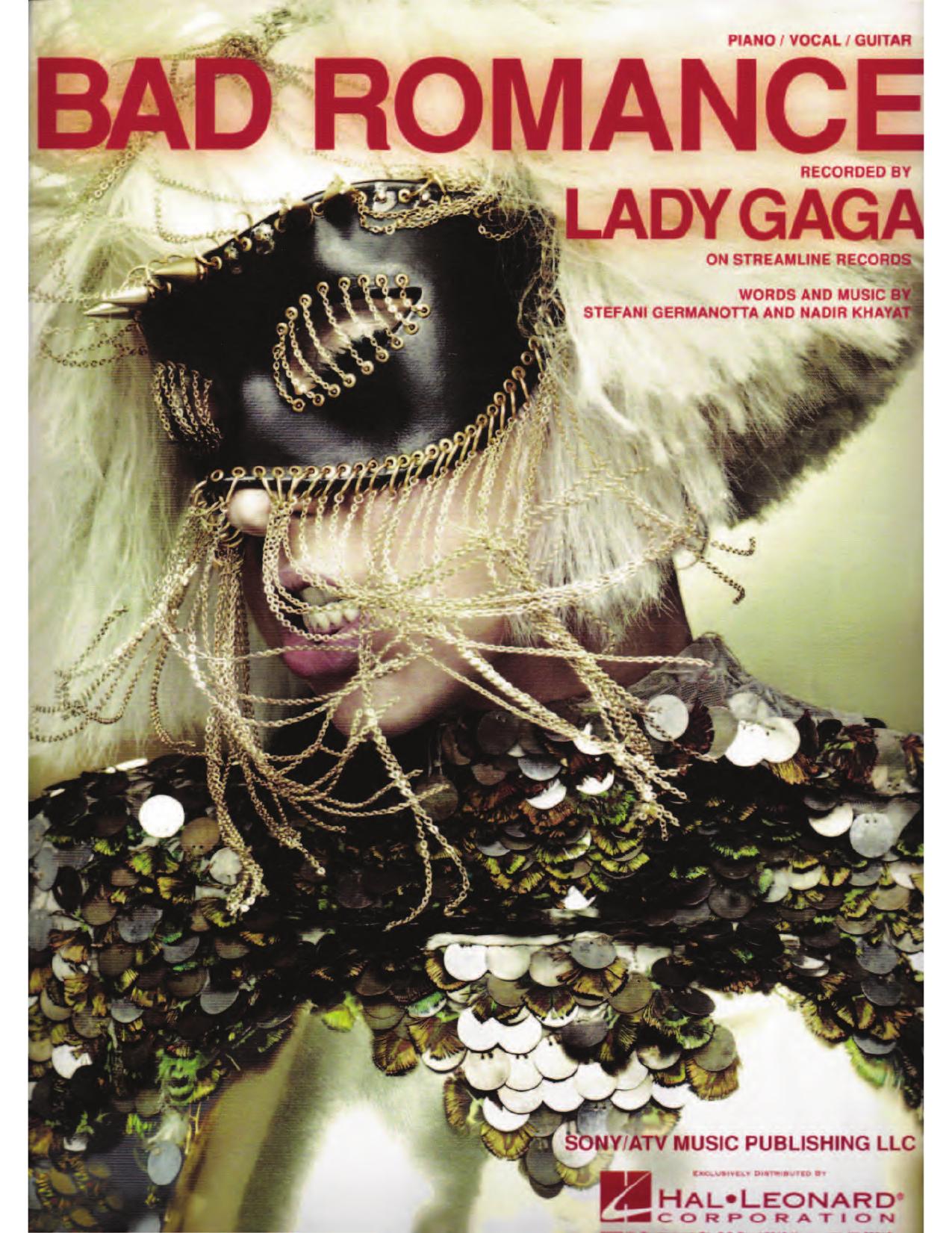
Any assessment of Lady Gaga's catalog must begin with "Bad Romance," widely regarded as her magnum opus. Pallett calls it "a summation of her musical vocabulary," and the song's structure bears this out: the minor-key verses, the relentless eighth-note pulse, the melismatic "Rah-rah-ah-ah-ah" hook, the spoken-word bridge, and the climactic final chorus all represent Gagaism in its purest form. The song's music video, a surreal epic directed by Francis Lawrence, transformed the medium into a platform for high-concept visual storytelling.
"Poker Face," from The Fame, is the song that announced Gaga to the world. Its lyrical ambiguity—ostensibly about gambling but widely interpreted as a coded reference to bisexuality—established her as an artist who could smuggle subversive content into the mainstream. The song won her first Grammy for Best Dance Recording, and its international ubiquity made her a household name.
"Just Dance," her debut single, remains a perfect pop artifact: a hedonistic club anthem that captures the euphoria of a night out while hinting at the darker undercurrents that would define her later work. "Telephone," her collaboration with Beyoncé, is a masterclass in pop maximalism—a song about the compulsion to escape that became, paradoxically, inescapable. The music video, a continuation of the narrative from "Paparazzi," is a cinematic achievement in its own right.
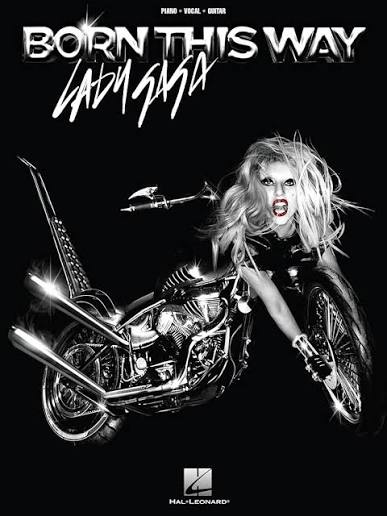
"Born This Way" arrived in 2011 as a cultural event. The title track, with its message of LGBTQ+ affirmation and its thumping electronic rock production, became an anthem for a generation. It was the fastest-selling song in iTunes history at the time, with over one million downloads in less than a week. The album Born This Way explored electronic rock and techno-pop and sold more than one million copies in its first week.
"The Edge of Glory" showcases Gaga's ability to write an arena-sized power ballad without sacrificing her signature aesthetic. The song's "initiation–buildup–arrival trajectory" across verse, prechorus, and chorus operates simultaneously in harmony, texture, and vocal performance, creating a structural coherence that is rare in pop music.
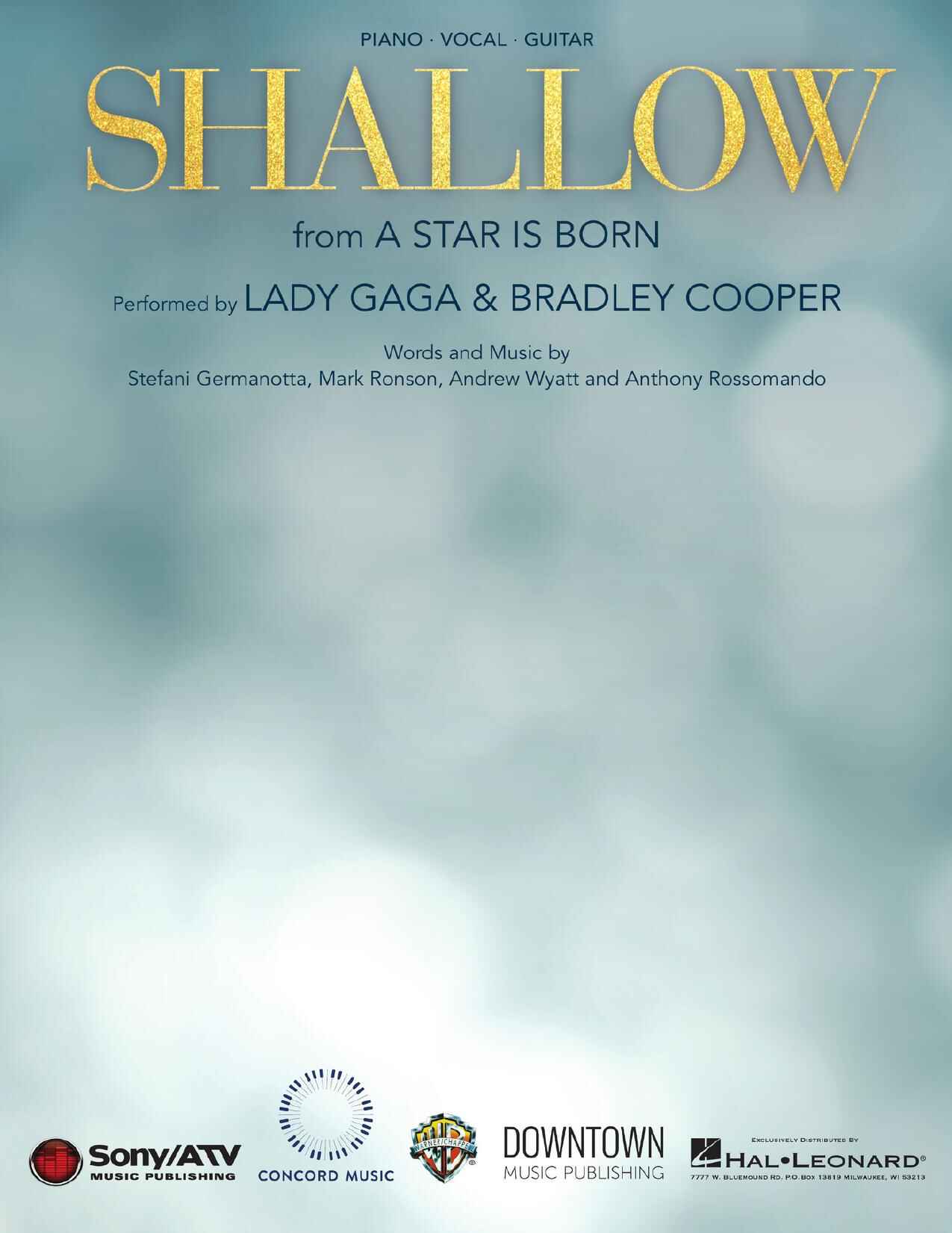
"Shallow," from A Star Is Born, represents a different kind of achievement: a song that works both as a narrative device within a film and as a standalone emotional experience. Its chorus—"I'm off the deep end, watch as I dive in"—is one of the most recognizable melodic phrases of the 21st century. The song won the Academy Award for Best Original Song and made Gaga the first woman to win an Oscar, BAFTA, Golden Globe, and Grammy in a single year.
"Rain on Me," her 2020 collaboration with Ariana Grande, demonstrated that Gaga could still dominate the charts two decades into her career. The song's disco-inflected production and its theme of resilience in the face of emotional turmoil resonated during the COVID-19 pandemic, and it gave Gaga her fifth number-one single on the Billboard Hot 100.
Music in Film: From Soundtrack to Performance
Lady Gaga's relationship with cinema extends beyond mere soundtrack contributions; she has become a genuinely significant actor whose musical work and dramatic roles are deeply intertwined. Her film career began with supporting roles in Machete Kills (2013) and Sin City: A Dame to Kill For (2014), but it was A Star Is Born (2018) that transformed her reputation.
In Bradley Cooper's remake of the classic Hollywood story, Gaga played Ally, an aspiring singer whose rise to fame is shadowed by the decline of her mentor and lover. The soundtrack she co-wrote and performed is not incidental to the film but constitutive of it: the songs are the narrative, tracing Ally's artistic evolution from a waitress singing in a drag bar to a stadium-filling pop star. "Shallow," "Always Remember Us This Way," "I'll Never Love Again," and "Is That Alright?" function as dramatic beats as much as musical numbers. The soundtrack debuted at number one on the Billboard 200, making Gaga the first woman with five number-one albums in the 2010s.
Her performance in House of Gucci (2021) demonstrated that she could command a screen without singing a note. As Patrizia Reggiani, she delivered a performance of operatic intensity that earned her a Golden Globe nomination for Best Actress. Ridley Scott's film was not a musical, but Gaga's understanding of theatrical gesture—honed through years of stage performance—infused the role with a larger-than-life quality that suited the material.
In Joker: Folie à Deux (2024), Gaga returned to musical territory as Harley Quinn, releasing a companion album titled Harlequin that delved into her character's psychology. The film's reception was divisive, but Gaga's commitment to the role and her willingness to experiment with the musical format—the film incorporates song-and-dance sequences in unexpected ways—confirmed her status as an artist unafraid of risk.
Her most recent film music includes three original songs for The Devil Wears Prada 2: "Runway" (a collaboration with Doechii), "Shape of a Woman," and "Glamorous Life," the latter two reuniting her with the collaborators behind Mayhem. She also wrote "The Dead Dance" for Wednesday Season 2, accompanied by a Tim Burton-directed music video.
Collaborations: A Career of Strategic Partnerships
Lady Gaga's collaborative instincts are among her most distinctive artistic traits. She has consistently sought out partners who challenge her and expand her range, from pop royalty to jazz legends to K-pop idols.
Her partnership with Beyoncé produced "Telephone," one of the defining pop collaborations of the 21st century. The song, from The Fame Monster, paired two of the most formidable performers of their generation in a narrative of escapism and compulsion. The music video, a sequel to "Paparazzi," became a cultural event in itself, and the two artists also collaborated on a remix of Beyoncé's "Video Phone".
The most artistically consequential collaboration of Gaga's career has been with Tony Bennett. Their first album together, Cheek to Cheek (2014), paired the pop provocateur with the last of the great traditional pop singers in a collection of jazz standards. The album won a Grammy and demonstrated that Gaga's vocal technique—her phrasing, her breath control, her interpretive intelligence—was rooted in the Great American Songbook. Their second collaboration, Love for Sale (2021), was recorded as Bennett's health declined, and it stands as both a musical document and a testament to their friendship. The album's title track and "But Beautiful" showcase Gaga's ability to inhabit a standard with the same commitment she brings to her own material.
Her collaboration with Ariana Grande on "Rain on Me" (2020) was a meeting of two generations of pop stardom, and the song's message of mutual support and resilience gave it an emotional weight that transcended its dancefloor setting. "Sour Candy," her 2020 collaboration with BLACKPINK, blended English and Korean lyrics over a slick house beat, demonstrating her willingness to engage with global pop idioms.
She has also collaborated with Elton John ("Sine From Above"), Bruno Mars ("Die With A Smile," which won the Grammy for Best Pop Duo/Group Performance), Brian May of Queen ("You and I"), Metallica (a Grammy performance of "Moth Into Flame"), The Rolling Stones, and U2. Each collaboration serves a different purpose—jazz credibility, rock authenticity, pop relevance—but together they form a portrait of an artist who refuses to be confined to a single genre or audience.
Influences: The Glam Rock Lineage
Lady Gaga's artistic DNA is a double helix of pop and glam rock. She has consistently cited David Bowie and Freddie Mercury as foundational influences, and the connection is not merely stylistic but philosophical. Bowie's Ziggy Stardust era established the template for the rock star as alien messiah—a figure who uses theatricality and sexual ambiguity to critique and transcend the limitations of ordinary identity. Mercury's Queen combined operatic grandeur with arena-rock spectacle, and Gaga's adoption of the name "Lady Gaga" from the band's "Radio Ga Ga" is a tribute to that lineage.
Madonna represents a different but equally profound influence. Like Gaga, Madonna built a career on reinvention, on the strategic deployment of image as artistic statement, and on the refusal to accept the limitations imposed on female pop stars. Gaga has acknowledged this debt explicitly, and the comparisons between the two artists—both Italian American, both raised in New York, both dance-pop innovators—have been a recurring theme in her critical reception.
Beyond these titans, Gaga's influences include Prince, Michael Jackson, Grace Jones, Andy Warhol, ABBA, and Ace of Base. The presence of ABBA and Ace of Base in her musical DNA is particularly telling: beneath the theatricality and the avant-garde impulses, Gaga is a student of Scandinavian pop craftsmanship, of the science of the perfect hook and the irresistible chorus. Her willingness to cite these influences—to acknowledge that her art is built on the foundations of commercial pop—distinguishes her from artists who affect a posture of outsider authenticity.
Her most recent work has drawn on a new set of influences. For Mayhem (2025), she has cited Prince, David Bowie, Nine Inch Nails, Radiohead, and Earth, Wind & Fire as touchstones, signaling a continued engagement with rock and funk textures.
Legacy: The Architect of 21st-Century Pop Stardom
Lady Gaga's legacy is already substantial, and it continues to expand. She has sold an estimated 170 million records and is the only female artist to achieve four singles each selling at least 10 million copies globally. Her accolades include 13 Grammy Awards (with 38 nominations), 2 Golden Globe Awards, 18 MTV Video Music Awards, and recognition from the Songwriters Hall of Fame. Billboard named her Artist of the Year in 2010 and Woman of the Year in 2015, and she ranked fourth on VH1's Greatest Women in Music. Time named her one of the 100 most influential people in the world in 2010 and 2019.
But her influence extends beyond awards and sales figures. Gaga raised the bar for what a pop star could be: a singer, yes, but also a performance artist, a fashion icon, a songwriter, an actor, and an activist. She demonstrated that pop music could be intellectually rigorous without sacrificing accessibility, that the dance floor could be a site of both pleasure and critique, and that the female pop star need not be a passive object of the gaze but could be its controlling subject. Her inheritors—artists as diverse as Chappell Roan, Charli XCX, and Olivia Rodrigo—operate in a landscape that she helped to shape.
Her activism has been equally consequential. The Born This Way Foundation, founded in 2011, supports the wellness of young people and has become a significant voice in the conversation about mental health. Her advocacy for LGBTQ+ rights, her openness about her own experiences with trauma and chronic pain, and her willingness to use her platform for political statements—from dedicating "The Edge of Glory" to women after the overturning of Roe v. Wade to her speech at the ELLE Women in Hollywood event—have established her as a moral voice as well as a musical one.
Her business ventures include Haus Labs, a vegan cosmetics brand launched in 2019, which reflects her commitment to cruelty-free products and her understanding of the relationship between beauty, identity, and performance.
Lady Gaga: The Monster at the Center of the Maze
Lady Gaga is not merely a pop star; she is a system of ideas about what popular music can be. Her career demonstrates that commercial success and artistic ambition are not mutually exclusive, that theatricality and sincerity can coexist, and that the most personal expressions can become the most universal. She has moved from downtown clubs to stadiums, from dance-pop to jazz to country to rock, from music to film to fashion to activism, without ever losing the thread that connects these disparate activities: a commitment to the transformative power of performance.
At the center of this system is a voice—powerful, precise, and endlessly expressive—and a set of songs that have become part of the collective memory of the 21st century. "Bad Romance" will outlive us all. "Shallow" will be sung at karaoke bars for decades. "Born This Way" will continue to give courage to those who need it. And somewhere, a teenager is discovering The Fame for the first time, beginning a journey that will change their life, just as it changed hers. That is the legacy of Lady Gaga: not just the awards, not just the sales, but the promise that pop music can still be a vehicle for radical self-invention, for community, for joy, and for the strange, beautiful, monstrous truth of being alive.
Discography
Main articles: Lady Gaga discography and List of songs recorded by Lady Gaga
| Solo studio albums The Fame (2008) (reissued in 2009 as The Fame Monster) Born This Way (2011) Artpop (2013) Joanne (2016) Chromatica (2020) Mayhem (2025) | Collaborative studio albums Cheek to Cheek (with Tony Bennett) (2014) Love for Sale (with Tony Bennett) (2021) |