
Scores for all instruments: 16,000+ (active and growing), over 236,000 pages.
All genres and levels: Jazz & Blues, Rock & Pop, Classical & Contemporary, Film & Musicals;
books & biographies; methods, études, play-along tracks (MP3) for Jazz & Rock.
Access & benefits: US$15.99 one-time payment, valid for lifetime, full Library access.
Table of Contents
The best sheet music download from our Library.

Please, subscribe to our Sheet Music Library. Sheet music should be accessible and affordable for all musicians, from professionals to absolute beginners.
Michael Bublé: The Architect of the Modern Neo-Crooner Renaissance
Michael Bublé (Michael Steven Bublé), born on September 9, 1975, in Burnaby, British Columbia, is far more than a successful singer; he is the defining neo-crooner of his generation and a cultural bridge between the Great American Songbook and contemporary pop sensibility. With over 75 million records sold worldwide, five Grammy Awards, and fifteen Juno Awards, Bublé has achieved a level of commercial and critical success that few artists in the traditional pop genre could imagine. His journey from the smoky hotel lounges of Vancouver to the world’s most prestigious arenas is a testament to extraordinary perseverance, a once-in-a-generation voice, and a profound understanding of how to make timeless music feel urgently modern.
Browse in the Sheet Music Library:
Or browse in the categories menus & download the Library Catalog PDF:
From Fisherman’s Son to Crooner’s Heir: The Making of a Star
Bublé’s story begins in a working-class family. The son of Lewis Bublé, a fisherman, and Amber Santaga, a homemaker, he was raised in a household where hard work was a given. From the age of fourteen, he spent six summers working as a commercial fisherman alongside his father, an experience he later described as “the most deadly physical work I'll ever know”. Yet, a different destiny was being forged at home, largely through the influence of his maternal grandfather, Demetrio Santagà, a plumber from Italy. It was his grandfather’s record collection that first introduced a five-year-old Bublé to the sounds of Bing Crosby’s White Christmas, and later, to the Mills Brothers, Ella Fitzgerald, and Frank Sinatra. Bublé has often credited his grandfather as his “best friend” and the person who “opened me up to a whole world of music”.
Search your favorite sheet music in the Sheet Music Library Catalog

The path to stardom was neither swift nor linear. Bublé’s first singing engagements came at sixteen, facilitated by his grandfather, who offered his plumbing services to venue owners in exchange for stage time for his grandson. For years, he honed his craft in any venue that would have him—clubs, conventions, cruise ships, and hotel lounges. He won the Canadian Youth Talent Search, released several independent albums, and performed in a musical revue titled Swing across the United States, all while never learning to read or write music, relying instead on emotion and an exceptional ear.

The turning point came through a series of serendipitous events. An aide to former Canadian Prime Minister Brian Mulroney saw Bublé perform and passed his self-financed album to the Mulroney family. This led to an invitation to sing at the wedding of Mulroney’s daughter, where Bublé performed “Mack the Knife” and was introduced to the legendary Grammy-winning producer David Foster. Foster, initially reluctant, agreed to produce Bublé’s major-label debut if the singer could raise $500,000—a sum Bublé managed to secure. With Foster’s backing and a contract with Reprise Records, the foundation was laid for a career that would redefine the boundaries of traditional pop.
The Sound of Bublé: Vocal Technique and Harmonic Identity
At the heart of Bublé’s appeal is a voice that critics have variously described as “velvety,” “buttery,” and “burnished”. His instrument is a warm baritone that moves with seemingly effortless grace from a “craggy” lower register to a “boyish purity” on his high notes. This technical range allows him to inhabit both the swaggering confidence of a big-band leader and the vulnerable intimacy of a confessional balladeer.
His phrasing is a study in the crooner’s art. Bublé frequently employs back-phrasing, singing slightly behind the beat to create a sense of relaxed, conversational intimacy, before pushing ahead with rhythmic urgency when the emotion demands it. His use of syncopation and vibrato is central to his expressive palette. Research into his vocal expression techniques highlights his adept use of marcato (emphasis on a note) and sincopation to accentuate key words and drive the rhythmic momentum of a song. His vibrato, often fast and pronounced, adds a shimmer of emotional intensity to sustained notes, while a technique of vocal “fry” is occasionally used to add a gritty, textural depth to lower notes.
The “Bublé Sound” is equally defined by its harmonic sophistication. Arrangements for his music, whether for his own band or for choral adaptation, are masterclasses in modern vocal jazz. Rather than relying on simple triads, the harmonic language leans heavily into extended chords—9ths, 11ths, and 13ths—that create a lush, cinematic backdrop. The signature “big band vocal warmth” comes from tight, crunchy harmonies in the inner voices, particularly the tenor and baritone parts, which are highly chromatic and move in small, expressive steps to bridge the melody and the bass line. This approach, which mimics the rich voicings of a jazz orchestra, provides a resonant, sophisticated foundation for Bublé’s lead vocal, allowing him to float above the texture with a breathy, intimate head voice or to soar with full-throated power during climactic moments.
The Essential Bublé: Best Songs and Compositions
While Bublé is a master interpreter of standards, his original songs and definitive covers form the core of his artistic identity. His discography is a carefully curated journey through the American Songbook, reinvented with a contemporary pop sheen.
“Home” (2005) : This is arguably Bublé’s signature song and his first major foray into songwriting. Co-written with his musical director Alan Chang and Amy Foster-Gilles, the ballad’s simple, aching melody and lyrics about longing for domestic comfort struck a universal chord. It topped the Billboard Adult Contemporary chart and became a crossover hit, proving that Bublé could create new standards of his own.
“Haven’t Met You Yet” (2009) : A burst of exuberant, optimistic pop, this song showcased Bublé’s ability to marry a swinging, horn-drenched arrangement with a modern, radio-friendly hook. It became a global smash and remains one of his most joyful and recognizable performances.
“Feeling Good” (2005) : Bublé’s powerful, swaggering rendition of the Anthony Newley and Leslie Bricusse classic became a concert staple. His performance is a masterclass in building tension, moving from a simmering, restrained verse to a triumphant, full-voiced chorus that showcases the power and control of his baritone.
“Everything” (2007) : From the album Call Me Irresponsible, this original composition is a beautifully crafted love song that balances a gentle, acoustic-led verse with a sweeping, orchestral chorus. It demonstrates his knack for writing melodies that feel both classic and fresh.
“Crazy Love” (2009) : The title track from his Grammy-winning album, this Van Morrison cover is transformed by Bublé into a lush, string-laden ballad. His tender, restrained vocal and the song’s slow-burning arrangement highlight his ability to convey deep emotion without over-singing.
“Sway” (2003) : A staple of his live shows, Bublé’s version of this Latin-flavored standard is a showcase for his rhythmic agility and charismatic showmanship, complete with a driving big-band arrangement.
His 2022 album Higher further solidified his artistic range, featuring interpretations of songs by Paul McCartney and Bob Dylan alongside original co-writes with Ryan Tedder, and a poignant duet with Willie Nelson on “Crazy”. In 2024, the release of The Best of Bublé served as a definitive summary of a career built on consistently excellent interpretations and emotionally resonant originals.
Bublé on the Big Screen: Music for Films
Bublé’s music has frequently been used to evoke a sense of sophistication, romance, or retro charm in cinema. His early career was closely tied to film soundtracks. Songs from his debut album, including “For Once in My Life” and “Kissing a Fool,” were featured in the 2003 romantic comedy Down with Love, and the soundtrack also included a previously unreleased duet with Holly Palmer on the film’s title theme. A Junkie XL remix of his version of the Spider-Man theme was used during the closing credits of Spider-Man 2 (2004).
His cover of “Sway” was prominently featured in the 2007 film No Reservations. More recently, his recording of “Love” was included in the soundtrack for the 2022 action-comedy Shotgun Wedding. Bublé also had a co-starring role as a nightclub singer in the 2001 film Totally Blonde, and the songs he recorded for that project were later released as the album Totally Bublé, a release he has stated he did not authorize. Beyond these, his music is a constant presence in television shows, commercials, and competition programs like Dancing with the Stars and The X Factor, where his songs are frequently covered by contestants.
The Art of the Duet: Key Collaborations
Bublé’s collaborative spirit has produced some of his most memorable musical moments, spanning genres and generations. He has duetted with country icons (Willie Nelson, Blake Shelton), pop stars (Meghan Trainor, Jason Derulo), and R&B groups (Boyz II Men).
His most significant collaborations, however, are those that connect him directly to the legacy he upholds. He recorded “Just in Time” and “Don’t Get Around Much Anymore” with his hero, Tony Bennett, for Bennett’s Duets albums. He has also worked with Nelly Furtado on a playful version of “Quando, Quando, Quando” and with Sharon Jones on a gritty, soulful take of “Baby (You’ve Got What It Takes)”. More recent collaborations include a 2024 duet with Jason Derulo on “Spicy Margarita,” a holiday song with Sofronio Vasquez, a French-language reimagining of “Home” with Roxane Bruneau, and a technologically created duet with Elvis Presley on “Fever”. These pairings demonstrate his generosity as a performer and his unwavering desire to place his voice in new and unexpected contexts.
A Cabinet of Honors: Awards and Recognition
Bublé’s trophy cabinet is a reflection of his sustained excellence. He has won five Grammy Awards, all in the category of Best Traditional Pop Vocal Album, for Call Me Irresponsible (2008), Crazy Love (2010), Michael Bublé Meets Madison Square Garden (2010), To Be Loved (2014), and Higher (2023). In Canada, his success is even more pronounced, with fifteen Juno Awards to his name, including multiple wins for Album of the Year and Artist of the Year. In 2006, he won four Junos in a single night, a testament to his dominance in the Canadian music industry.
Beyond these major awards, he has received a star on the Hollywood Walk of Fame (2018) and was inducted into Canada’s Walk of Fame (2015). He was also recognized with Variety’s International Achievement in Music Award in 2023, cementing his status as a global ambassador for Canadian music.
Discography
Main article: Michael Bublé discography
- BaBalu (2001)
- Dream (2002)
- Michael Bublé (2003)
- It's Time (2005)
- Call Me Irresponsible (2007)
- Crazy Love (2009)
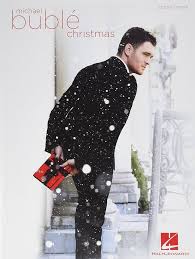
- Christmas (2011)
- To Be Loved (2013)
- Nobody but Me (2016)
- Love (2018)
- Higher (2022)
The Inheritance and the Influence: Bublé’s Legacy
Michael Bublé’s legacy is twofold. First, he is the preeminent neo-crooner of his generation, a title he has earned by not only reviving but revitalizing the Great American Songbook for a modern audience. He stands in a lineage that includes his heroes—Frank Sinatra, Dean Martin, Tony Bennett, and the more contemporary Harry Connick, Jr.—but he has carved out a distinct identity. While Sinatra exuded a singular, masculine swagger, Bublé’s charm is more self-deprecating, his humor more disarming, and his connection with his audience built on a sense of shared joy rather than aloof idolatry.
His influence is evident in the resurgence of traditional pop as a viable commercial force. He has demonstrated that standards, when performed with sincerity, technical brilliance, and modern production, can fill arenas and top charts worldwide. His enduring Christmas album, which returns to the Top 10 every holiday season, has become a modern seasonal standard in its own right, reaching multi-platinum status in thirteen countries.
Moreover, Bublé has built a legacy as a consummate live entertainer. His concerts are not mere recitals but full-scale productions, where his world-class showmanship, storytelling, and comedic timing are as integral to the experience as his singing. In 2024, he further expanded his cultural footprint by joining the coaching panel of The Voice, passing on his hard-won wisdom to a new generation of singers and introducing his artistry to an even broader audience.
From the plumbing-funded gigs of his youth to the world’s most iconic stages, Michael Bublé’s career is a remarkable narrative of talent, tenacity, and timing. He did not merely imitate the crooners of the past; he absorbed their lessons, added his own emotional honesty and modern sensibility, and in doing so, ensured that the flame of the Great American Songbook would continue to burn brightly for generations to come.