Scores for all instruments: 16,000+ (active and growing), over 236,000 pages.
All genres and levels: Jazz & Blues, Rock & Pop, Classical & Contemporary, Film & Musicals;
books & biographies; methods, études, play-along tracks (MP3) for Jazz & Rock.
Access & benefits: US$15.99 one-time payment, valid for lifetime, full Library access.
Table of Contents

The best sheet music download from our Library.

Please, subscribe to our Sheet Music Library. Sheet music should be accessible and affordable for all musicians, from professionals to absolute beginners.
Ola Gjeilo
Discover the Musical Genius of Ola Gjeilo: A Profound Journey
Ola Gjeilo (pronounced “Yay-lo”) stands as one of the most frequently performed and widely embraced composers in the contemporary choral world. A Norwegian-born, American-based composer and pianist, Gjeilo has forged a distinctive musical language that bridges the worlds of classical choral tradition, jazz improvisation, and the lush, evocative textures of film music. His works, characterized by rich harmonies, soaring melodies, and a profound sense of atmosphere, have resonated with choirs and audiences globally, earning him a dedicated following and establishing him as a singular voice in twenty-first-century music.
Ola Gjeilo - Gjeilo: Night
Search your favorite sheet music in the Sheet Music Library Catalog
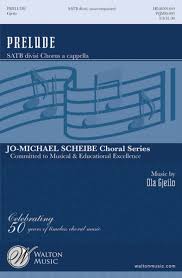


Full Biography
Ola Gjeilo was born on May 5, 1978, in Skui, a village near Oslo, Norway, to parents Inge and Anne-May Gjeilo. His musical journey began remarkably early. He started playing piano and composing at the age of five and learned to read music by the time he was seven. Growing up in a musically eclectic household, he was exposed to a wide spectrum of sounds, from classical giants like Brahms and Rachmaninoff to jazz legends and pop music, a diverse background that would later profoundly shape his compositional voice. He received his early classical training from the Norwegian composer Wolfgang Plagge.
His formal education took him across continents. He began his undergraduate studies at the Norwegian Academy of Music in Oslo (1999–2001) before transferring to the prestigious Juilliard School in New York City in 2001. His time at Juilliard was transformative, and he later continued his studies at the Royal College of Music in London (2002–2004), where he earned his bachelor's degree in composition. He returned to Juilliard to complete his master's degree in composition in 2006. During this period, he also studied film music at the University of Southern California in Los Angeles (2006–2007), an experience that would leave an indelible mark on his musical aesthetic.
Gjeilo's professional career has been marked by significant residencies and a deep relationship with recording. From 2009 to 2010, he served as the first-ever composer-in-residence for the Grammy-winning Phoenix Chorale, a fruitful partnership that produced the acclaimed album Northern Lights. He is currently a composer-in-residence with Distinguished Concerts International New York (DCINY) and Albany Pro Musica. An exclusive artist for Decca Classics, Gjeilo has released a series of successful albums, both choral and solo piano, that have collectively amassed over 250 million global streams. Despite his international career, he maintains a deep connection to his roots while embracing his adopted country; he now resides in Laguna Niguel, California, with his wife, Irene.
Musical Style, Harmony, and Technique
Ola Gjeilo's music is often described as cinematic, evocative, and possessing a lush, harmonious sound. This description captures the immediate emotional impact of his work, but a deeper analysis reveals a sophisticated and deliberate compositional approach. His style is a unique synthesis of his diverse influences: the structural grandeur of classical composers, the spontaneous freedom of jazz, and the atmospheric power of film scores.
Harmonic Language
At the core of Gjeilo's style is his harmonic language. While his music is predominantly tonal and rooted in functional harmony, he expands this framework with a palette of colors drawn from jazz and impressionism. His harmonic thinking is profoundly interwoven with the texture of his compositions, serving as a primary expressive device. Several key features define his harmonic approach:
- Rich, Extended Chords and Tertian Relationships: Gjeilo frequently employs lush, extended chords—such as major sevenths, ninths, and added-note chords—that create a sense of warmth and fullness. His music often explores tertian relationships (chords built in thirds), leading to smooth, sometimes unexpected, modulations that feel both fresh and inevitable.
- Diatonic Modality: He often uses diatonic modes, which contribute to the music's accessible yet slightly otherworldly quality, avoiding the predictability of strict major or minor keys.
- Enharmonic Modulations: A hallmark of Gjeilo's technique is the use of enharmonic modulations. This involves reinterpreting a note (e.g., G-sharp as A-flat) to pivot smoothly into a distant key. This device is used to create climactic moments and dramatic shifts in color, as prominently featured in works like Sacred Heart (Ubi Caritas III).
- Role of Dissonance: In Gjeilo's tonal framework, dissonance is carefully controlled and purposeful. He often uses suspensions and appoggiaturas to create tension that is subsequently released, highlighting structural points and adding emotional depth to the music.
Texture and Technique
Gjeilo's compositional technique is characterized by a seamless blending of vertical sonority (harmony) and horizontal motion (melody and rhythm). His choral writing often features:
- Symphonic Sonorities: He frequently writes for choir in a way that mimics the expansive, blended sound of an orchestra, creating "symphonic sonorities" through close harmonies and carefully voiced chords.
- Rhythmic Ostinatos: A driving, repetitive rhythmic figure (ostinato) in one section of the choir is often juxtaposed against a soaring, lyrical melody in another. This technique, evident in works like Sacred Heart, creates a sense of forward momentum and layered complexity.
- Text as a Rhythmic Element: Gjeilo sometimes treats the text itself as a percussive or rhythmic element, repeating syllables to create texture and drive, as seen in the "Caritas et Amor" sections of his Ubi Caritas settings.
- Improvisation: As an accomplished pianist, Gjeilo's own improvisations over his published choral works have become a trademark of his live performances and recordings. This jazz-informed approach adds a layer of spontaneity and personal expression to his meticulously crafted compositions.
Best Songs and Compositions
Ola Gjeilo's catalog spans choral, orchestral, and piano works, but he is best known for his choral output. His most celebrated and frequently performed pieces have become staples of the modern choral repertoire. Among his most beloved works are:
- Ubi Caritas: A setting of the traditional Latin hymn, this early work (2001) established his signature sound and remains one of his most performed pieces.
- Northern Lights: A luminous, atmospheric choral work inspired by the aurora borealis, it was featured on the Phoenix Chorale's award-winning album of the same name.
- Serenity (O Magnum Mysterium): A deeply contemplative and beautiful setting, this piece was performed at the prestigious BBC-televised Christmas Eve service by the Choir of King's College, Cambridge, in 2015.
- Sunrise Mass: A major orchestral-choral work that showcases his ability to write on a larger scale, blending strings and voices in a sweeping, cinematic narrative.
- Dark Night of the Soul and Luminous Night of the Soul: These paired works, often performed together, explore themes of spiritual journey and transformation, featuring rich harmonies and powerful climaxes.
- The Ground: A popular choral piece known for its grounding, meditative quality and beautiful melodic lines.
- Dreamweaver: Set to a medieval Norwegian ballad, this large-scale work for choir, piano, and string orchestra is a testament to his storytelling abilities and his collaboration with lyricist Charles Anthony Silvestri.
- The River: Composed for the 2016 Brock Commission by the American Choral Directors Association (ACDA), this work for choir, piano, and string quartet is a significant addition to the contemporary repertoire.
- Sacred Heart: A compelling work that demonstrates his use of enharmonic modulation to create a powerful climactic moment.
- Piano Works: Albums like Stone Rose, Piano Improvisations, Night, and Dawn showcase his lyrical and improvisational piano style, with popular tracks such as "Still," "Home," "City Lights," and "Manhattan Sunrise".
Music in Films
While Ola Gjeilo is primarily a concert composer, his cinematic style has naturally led to opportunities in film. His music has been featured in and he has contributed to several film projects. Most notably, his Sunrise Mass was used in the soundtrack for the 2016 sci-fi thriller Midnight Special, directed by Jeff Nichols. He also collaborated with composer David Wingo on additional music for the film, with tracks like "Marshland" featuring his work. Furthermore, his piece Song of the Universal (a setting of Walt Whitman) was used in the 2016 Norwegian film La decisión del rey (The King's Choice). Gjeilo's deep interest in film is a foundational element of his artistic identity, and his music often draws direct inspiration from cinematic sound worlds.
Discography
Note: Piano performed by Ola Gjeilo on all albums.
Choral:
Dreamweaver (Universal Music, 2023) (with The Choir of Royal Holloway & Royal Philharmonic Orchestra & Rupert Gough)
Winter Songs (Decca Classics, 2017) (with Choir of Royal Holloway and 12 Ensemble)
Ola Gjeilo (Decca Classics, 2016) (with Voces8, Tenebrae, and the Chamber Orchestra of London)
Northern Lights (Chandos, 2012) (with the Phoenix Chorale)
Piano:
Ordinary Moments (Decca, 2026)
Dawn (Decca, 2022)
Night (Decca, 2020)
Piano Improvisations (2L, 2012)
Stone Rose (2L, 2007)
Collaborations with Other Musicians
Gjeilo's career has been defined by fruitful and enduring collaborations with some of the world's finest vocal and instrumental ensembles.
- Voces8: He has a particularly special relationship with the British vocal ensemble Voces8, serving as their composer-in-residence. Together they have premiered major works, including The River, and have performed at ACDA conventions across the United States.
- Tenebrae: The renowned British choir Tenebrae has been a key interpreter of Gjeilo's music, featuring on his debut Decca Classics album and performing works like Dark Night of the Soul and Luminous Night of the Soul.
- Phoenix Chorale: His residency with this Grammy-winning American choir produced the landmark Northern Lights album, which was named iTunes' Best Classical Vocal Album of 2012.
- Choir of Royal Holloway: This ensemble, along with the 12 Ensemble and the Royal Philharmonic Orchestra, has collaborated with Gjeilo on albums like Winter Songs and Dreamweaver.
- Charles Anthony Silvestri: A regular collaborator, Silvestri is a lyricist and poet who has provided texts for several of Gjeilo's major works, including Dreamweaver.
Awards and Recognition
Gjeilo's contributions to music have been recognized with several prestigious awards and honors. While he has not personally won a Grammy, his work has been closely associated with Grammy-winning artists and projects. His album Northern Lights with the Phoenix Chorale was named iTunes Best Classical Vocal Album of the Year in 2012. In 2016, he was awarded the Raymond W. Brock Memorial Commission from the American Choral Directors Association (ACDA), one of the highest honors for a choral composer, which resulted in the creation of The River. His debut solo piano album, Stone Rose, was released on the Grammy-nominated label 2L and was a finalist in the Indie Acoustic Project's "Best CDs of 2007". His music's popularity is further evidenced by its performance in over 25 countries and its inclusion in the repertoires of professional and amateur choirs worldwide.
Influences and Legacy
Influences
Ola Gjeilo's musical influences are a rich tapestry woven from disparate threads, and understanding them is key to understanding his music. He has cited a wide range of sources of inspiration:
- Classical Composers: His classical foundations are rooted in the works of Handel, Beethoven, Mozart, and Brahms, but he reserves a special place for Sergei Rachmaninoff, whose lush, sweeping melodies and rich harmonic language have profoundly shaped Gjeilo's own expressive style.
- Jazz Legends: The improvisational freedom and harmonic sophistication of jazz pianists Keith Jarrett (whom Gjeilo considers the best jazz pianist of all time) and guitarist Pat Metheny are constant sources of inspiration.
- Film Composers: The atmospheric, textural, and emotionally direct scores of Thomas Newman have had a significant impact on Gjeilo's "cinematic" approach to composition.
- Visual Artists and Architects: Beyond music, Gjeilo draws inspiration from the organic forms of glass artist Dale Chihuly and the innovative, flowing structures of architect Frank Gehry.
- Scandinavian Heritage: His music retains a connection to a Scandinavian aesthetic, with some critics noting a taste indebted to spectralism, filtered through his North American, film-music-influenced perspective.
Legacy
Ola Gjeilo's legacy is being written in real-time, as his music continues to be embraced by a global community of singers and listeners. His primary contribution is the revitalization of the choral repertoire with works that are both artistically sophisticated and deeply accessible to a wide audience. He has demonstrated that contemporary classical music can be emotionally direct, spiritually resonant, and technically rewarding without sacrificing complexity or integrity.
His music has become a staple in churches, schools, and concert halls worldwide, serving as a gateway for many singers into the world of contemporary choral music. By seamlessly integrating elements of jazz, film music, and classical tradition, he has helped to break down genre barriers and expand the expressive possibilities of the choir. As an exclusive Decca Classics artist with hundreds of millions of streams, he has also proven that choral and piano music can achieve remarkable popular success in the digital age. His role as a mentor and composer-in-residence for ensembles like Voces8 ensures that his influence will continue to shape the next generation of performers and composers.
About Ola Gjeilo
Ola Gjeilo is a multifaceted artist whose work extends beyond composition. He is an accomplished and active pianist, frequently performing his own works and improvising in concert. His solo piano albums, such as Night and Dawn, offer a more intimate glimpse into his creative world, showcasing his lyrical touch and improvisational skills. His music is published by major houses, including Walton Music for choral works, Boosey & Hawkes for wind band, and Edition Peters for piano pieces. This broad publishing reach underscores the demand for his music across different instrumental and vocal mediums. In an era where the definition of "classical" music is constantly evolving, Ola Gjeilo stands as a defining figure—a composer who honors the past while crafting a sound that is unmistakably, and beautifully, of the present.