Scores for all instruments: 16,000+ (active and growing), over 236,000 pages.
All genres and levels: Jazz & Blues, Rock & Pop, Classical & Contemporary, Film & Musicals;
books & biographies; methods, études, play-along tracks (MP3) for Jazz & Rock.
Access & benefits: US$15.99 one-time payment, valid for lifetime, full Library access.
Table of Contents
The best sheet music download from our Library.
Please, subscribe to our Sheet Music Library. Sheet music should be accessible and affordable for all musicians, from professionals to absolute beginners.
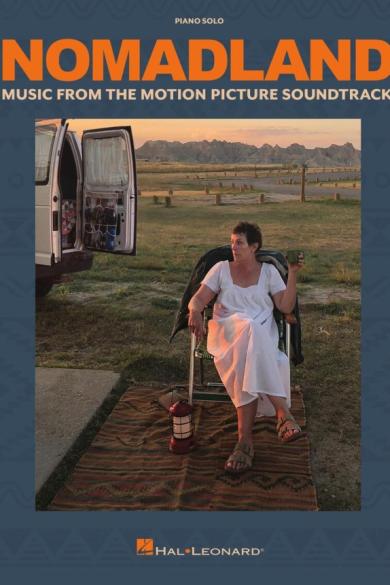
Epilogue · Ólafur Arnalds Nomadland
Search your favorite sheet music in the Sheet Music Library Catalog
Ólafur Arnalds: The Icelandic Composer Redefining Contemporary Classical Music
Ólafur Arnalds stands as one of the most distinctive and influential voices in contemporary music. An Icelandic multi-instrumentalist, composer, and producer, Arnalds has carved out a unique sonic territory that defies easy categorization, blending elements of classical composition, ambient music, electronic production, and atmospheric pop into something entirely his own. Born in 1986 in the suburban Icelandic town of Mosfellsbær, just a few kilometers outside of Reykjavík, Arnalds has evolved from a hardcore metal drummer into a BAFTA-winning composer, a Grammy-nominated recording artist, and a cultural force whose influence extends across film, television, contemporary dance, and the experimental music scene.
Search your favorite sheet music in the Sheet Music Library Catalog
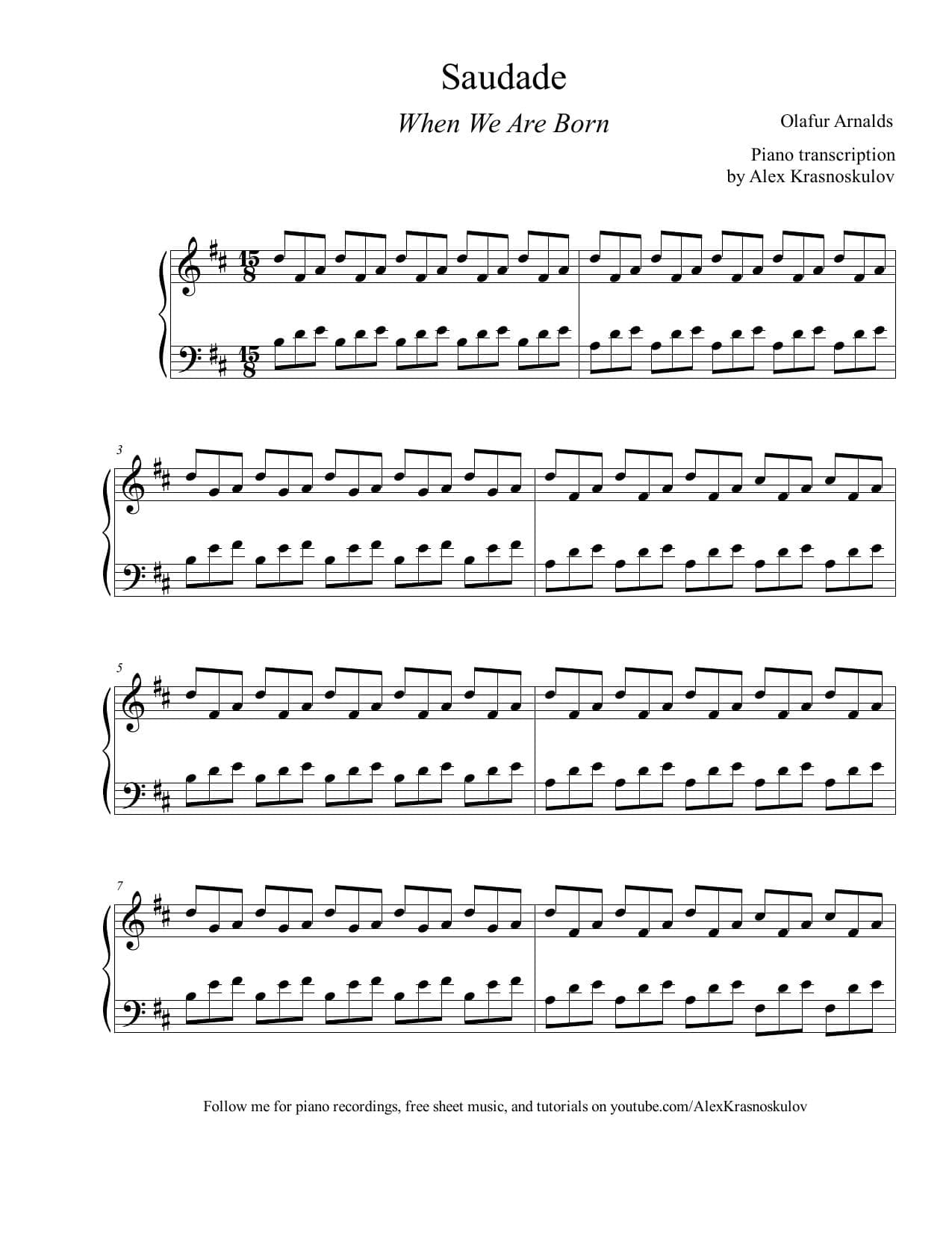
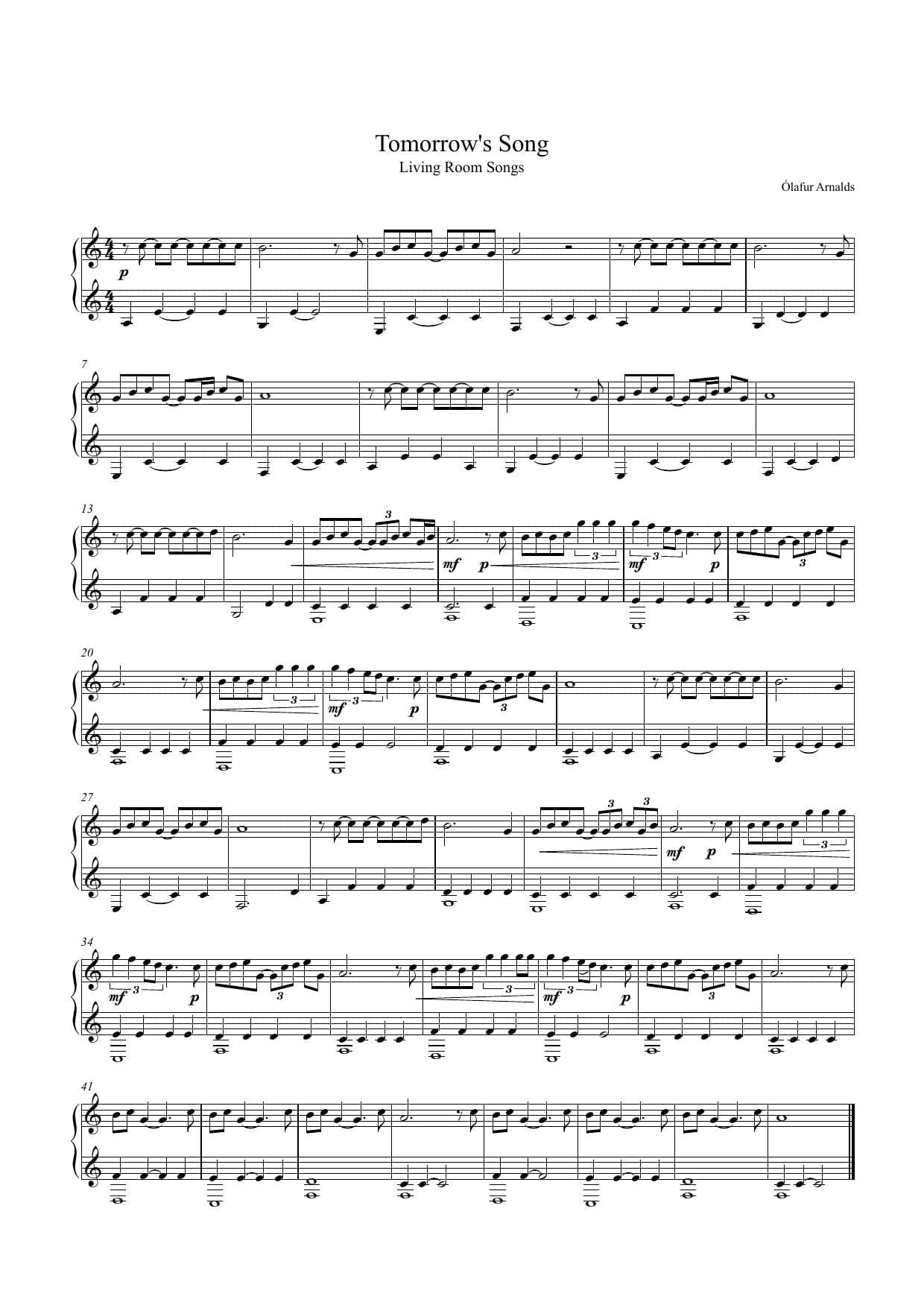

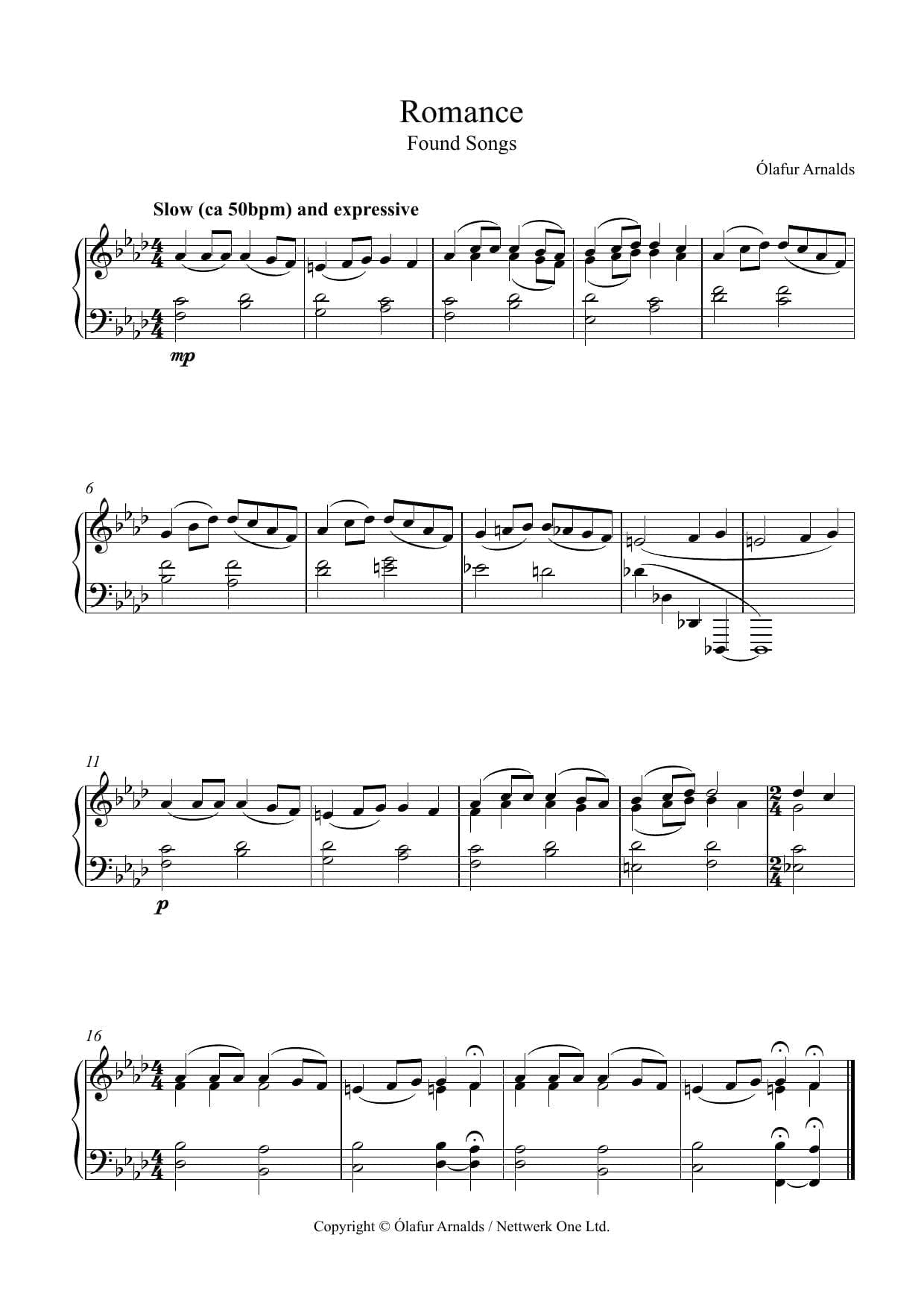
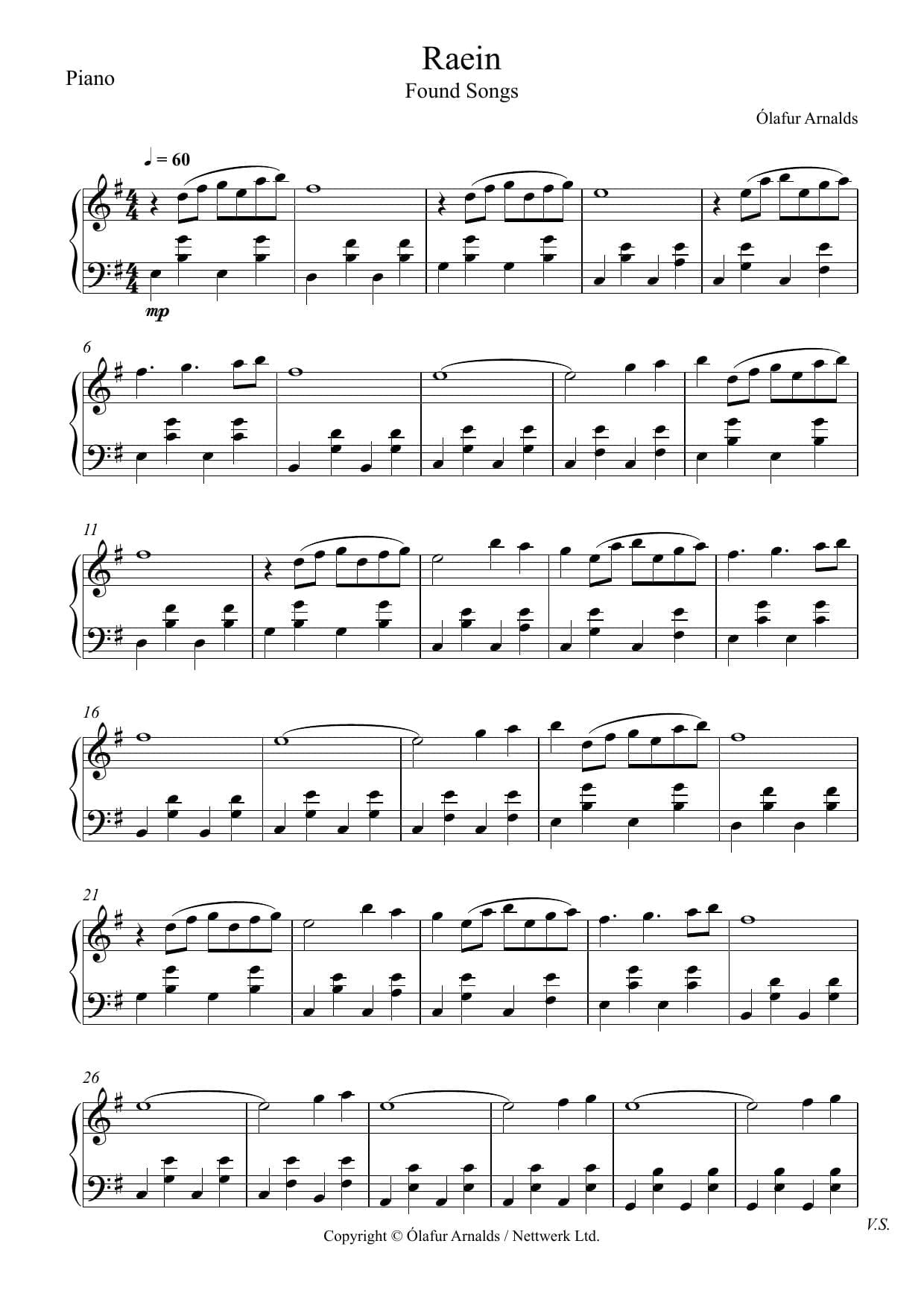
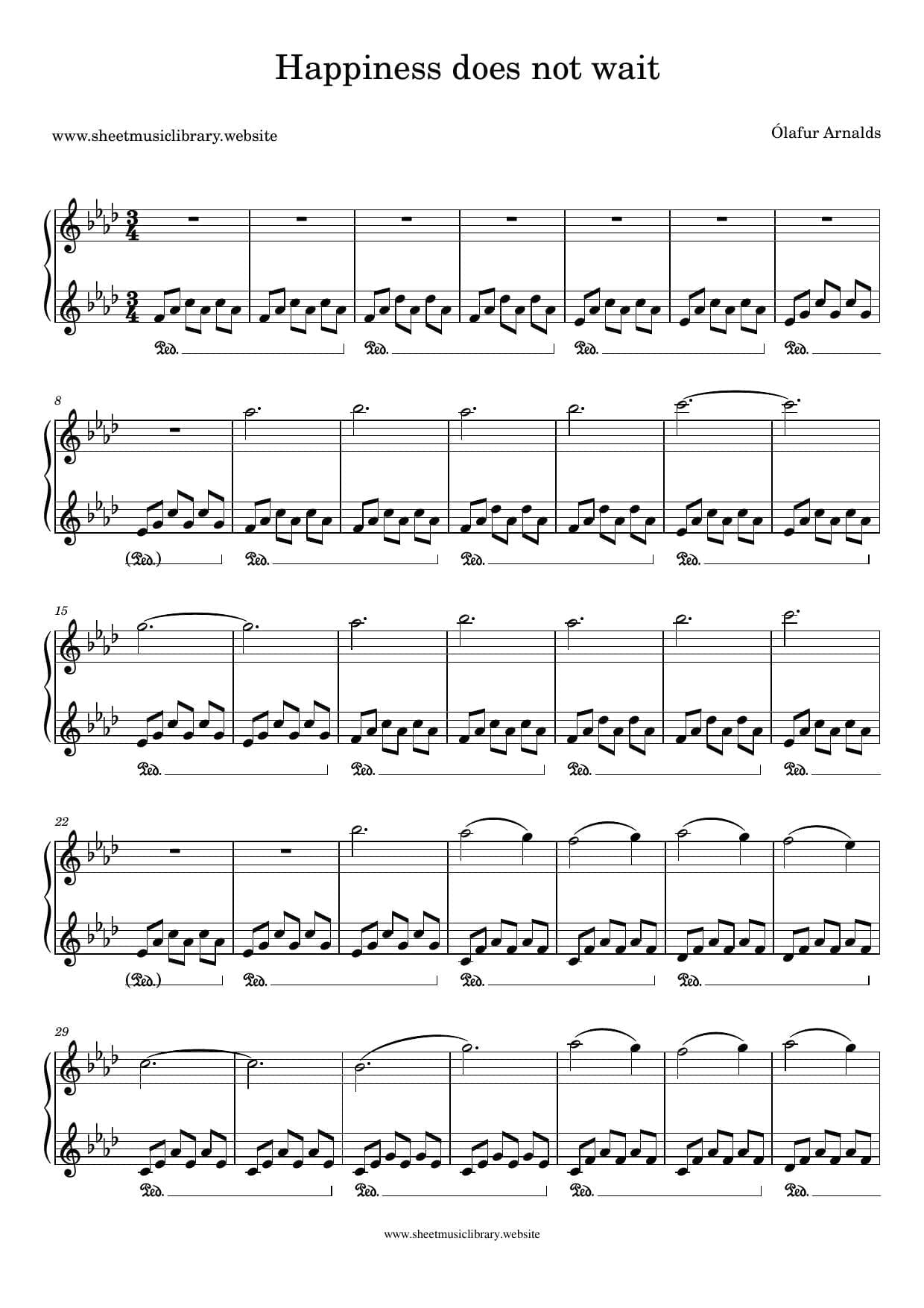
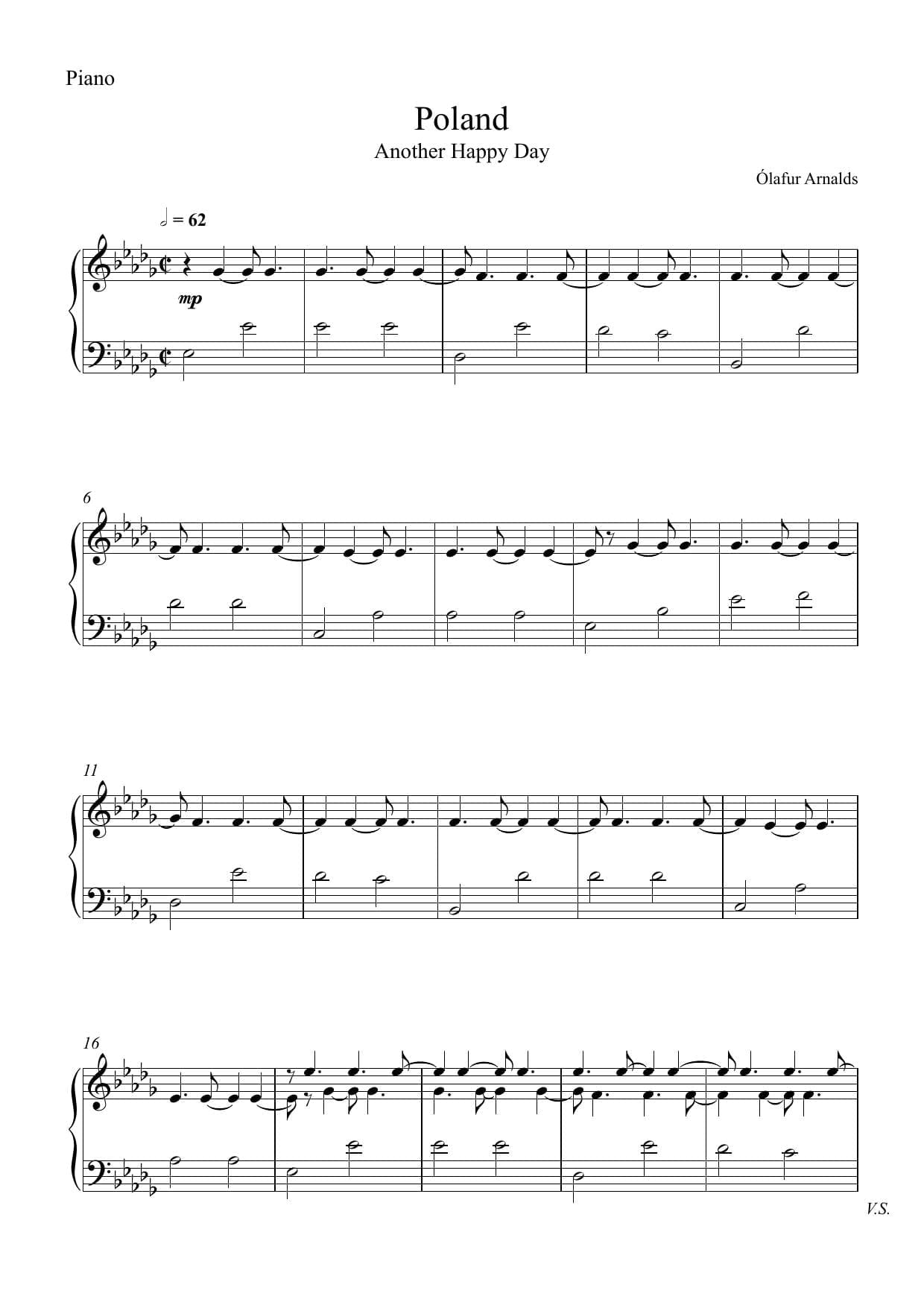
His journey is a testament to the power of artistic reinvention. As a teenager, Arnalds was drawn to the intensity and catharsis of punk and heavy metal, playing drums in bands such as Fighting Shit and Celestine. Yet beneath this aggressive exterior lay a deep appreciation for the classical tradition, nurtured by a grandmother who introduced him to the music of Frédéric Chopin from an early age. This duality—the raw energy of rock and the refined emotional depth of classical music—would become the foundation of his artistic identity, allowing him to create music that speaks to both the head and the heart, to both concert halls and intimate headphones.
Over the course of a career spanning nearly two decades, Arnalds has released five full-length solo albums, numerous EPs, and a series of high-profile collaborations that have expanded the boundaries of what contemporary classical music can be. He has scored acclaimed television series and films, formed the experimental techno duo Kiasmos with Janus Rasmussen, and worked with an extraordinary range of artists, including Nils Frahm, Alice Sara Ott, Bonobo, Loreen, and the late Irish musician Talos. His music has been streamed hundreds of millions of times, his live performances have sold out some of the world's most prestigious venues, and his influence can be heard in the work of a new generation of composers who are similarly unafraid to blur the lines between genres.
This article explores the many facets of Ólafur Arnalds' artistry: his biography and career trajectory, his distinctive musical style and harmonic language, his most significant compositions, his work in film and television, his collaborative projects, and his lasting legacy as one of Iceland's foremost cultural exports.
Biography: From Mosfellsbær to the World Stage
Early Life and Musical Beginnings
Ólafur Arnalds was born on 3 November 1986 in Mosfellsbær, Iceland. His early musical education came not from formal conservatory training but from the diverse and often contradictory influences that surrounded him. His grandmother's love of Chopin provided an early introduction to the emotional power of classical music, while the vibrant Icelandic rock scene of the 1990s and early 2000s offered an outlet for youthful energy and rebellion.
At the age of eighteen, Arnalds made a decisive move that would shape his artistic development: he left Iceland for London, where he lived in a squat and immersed himself in the city's punk and heavy metal underground. This period of his life was formative not only musically but personally, exposing him to a world far removed from the quiet suburbs of Mosfellsbær and instilling in him a sense of independence and self-reliance that would serve him well throughout his career.
The turning point came in 2004, when Arnalds composed and recorded the intro and two outros for the album Antigone by German metal band Heaven Shall Burn. The story of how this came about is characteristic of Arnalds' opportunistic and open-minded approach to music-making. As he recounted on his Facebook page: "I was playing drums in a hardcore band and we were supporting the German metal band Heaven Shall Burn on their Icelandic tour. Being a huge fan, I gave them a demo with some very overly dramatic prog-rock songs I had been making at home – it was not so classic like this but had some badly computerized strings and piano in it. A few months later they contacted me asked if I would write some intros and outros for their new album, but only with the piano/strings elements – So I wrote my first classical pieces".
The album was a significant success in Europe, and the exposure led to a phone call from a label asking if Arnalds would be interested in making a full album of similar compositions. As he later admitted, "I hadn't really considered continuing writing music like this, but said yes". This serendipitous moment marked the beginning of his career as a composer of contemporary classical music.
Debut and Early Career (2007–2010)
On 12 October 2007, Arnalds released his first solo album, Eulogy for Evolution, through the Erased Tapes label, becoming one of the first artists to join the label that would later become synonymous with the modern classical movement. The album showcased his ability to create near-weightless orchestral pieces, combining chamber strings and piano with discreet electronics in a way that transcended the traditional divide between classical and popular music.
The following year saw the release of the EP Variations of Static, which earned Arnalds acclaim from both the contemporary and classical fields. He also toured with Sigur Rós, an experience that introduced his music to a wider audience and established him as a significant new voice in Icelandic music. In 2008, BBC radio presenter Gilles Peterson awarded Arnalds Best Live Session, further cementing his reputation as a compelling live performer.
In April 2009, Arnalds undertook an ambitious creative experiment: the Found Songs series, for which he recorded a song a day for seven days and made each track immediately available for free download. This project exemplified his commitment to accessibility and his belief that classical music should not be confined to the elite few who have studied it formally. As he stated, "The classical scene is kind of closed to people who haven't been studying music all their lives. I would like to bring my classical influence to the people who don't usually listen to this kind of music, to open people's minds".
The same year, Arnalds received a commission from the award-winning British choreographer Wayne McGregor to compose the contemporary dance score Dyad 1909. Inspired by Shackleton's South Pole expedition, the piece premiered at the Sadler's Wells Theatre and became a much-talked-about five-night run of live music, dance, and visuals that was broadcast on primetime television.
International Recognition and Evolution (2010–2015)
In 2010, Arnalds embarked on a sold-out tour to China, demonstrating his growing international appeal. The following year, he completed a second instalment of his seven-songs-in-seven-days experiment, this time filming each recording live in his new home in downtown Reykjavík, aptly titled Living Room Songs.
The year 2013 marked a significant milestone in Arnalds' career when he composed the score for the ITV series Broadchurch. The show reached top ratings in the UK and France, and Arnalds' hauntingly beautiful score earned him the prestigious BAFTA TV Craft Award for Best Original Music in 2014. This recognition opened doors to further film and television work and established him as a composer of considerable range and sensitivity.
Also in 2013, Arnalds released For Now I Am Winter, his third solo album and his first to feature vocals prominently, with the American singer Arnór Dan providing lyrics and vocals on several tracks. The album represented a significant evolution in his sound, incorporating more overt pop sensibilities while retaining the introspective, minimalist core that had defined his earlier work.
Maturation and Experimentation (2015–Present)
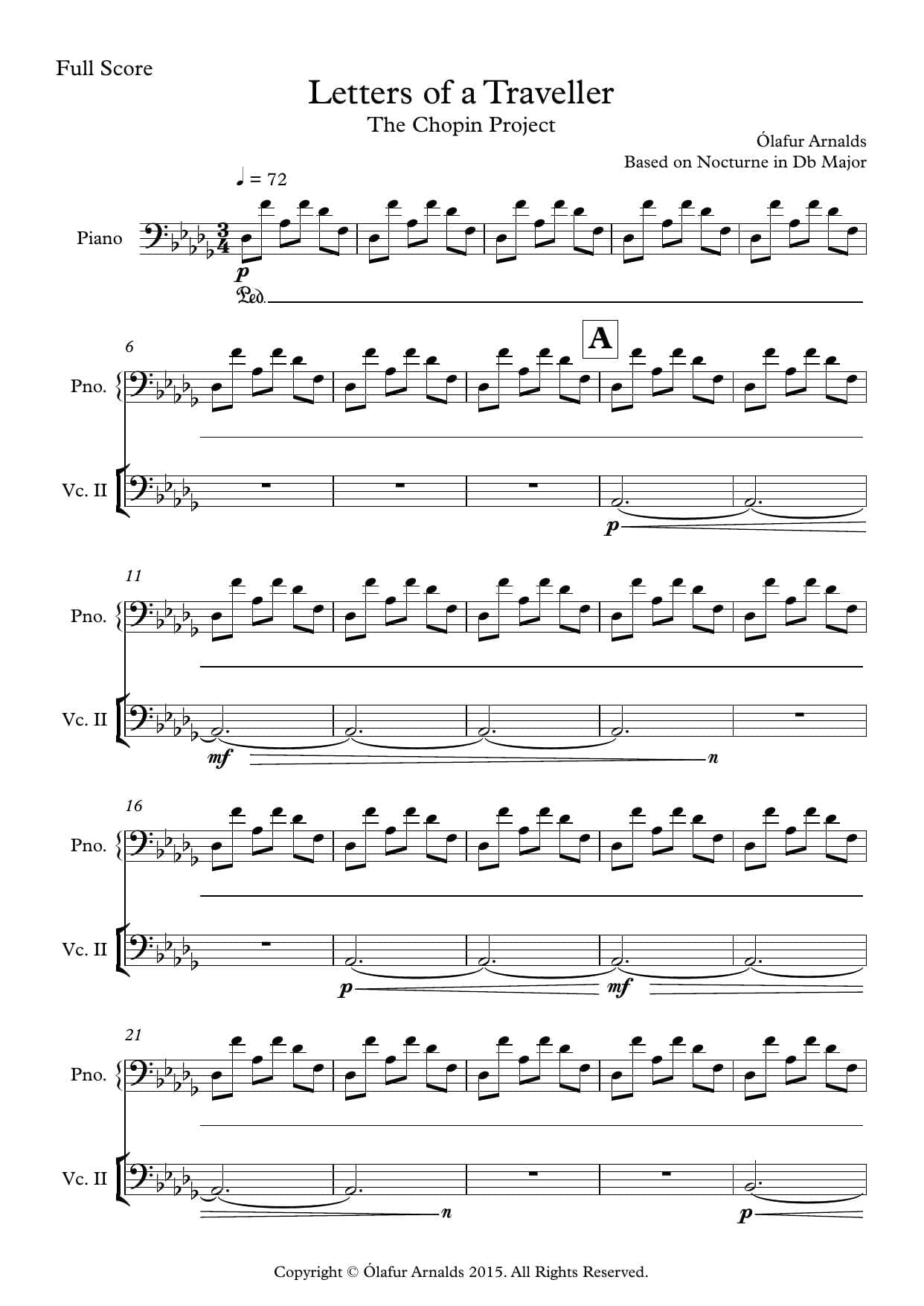
The mid-2010s saw Arnalds continue to expand his horizons. In 2015, he released Collaborative Works, a collection of improvisations with German composer and pianist Nils Frahm that had been recorded over several years in their respective studios in Berlin and Reykjavík. The same year, The Chopin Project, his collaboration with German-Japanese pianist Alice Sara Ott, offered a radical reimagining of Chopin's music, with Arnalds composing linking sections for string quintet, piano, and synthesizer based on the atmosphere and motifs of the original pieces.
In 2016, Arnalds released Island Songs, a unique project that found him travelling around Iceland and collaborating with different artists in each location. The album included the beautiful ballad "Particles" with Nanna Bryndís from the Icelandic band Of Monsters and Men, among other collaborations.
Arnalds' fourth solo album, re:member (2018), showcased his continued fascination with technology and its potential to expand the boundaries of composition. The album featured the innovative Stratus technology, which allowed notes played on a main piano to generate different notes on two supplementary pianos, creating novel harmonic effects. As one reviewer noted, "Arnalds is far too intelligent and sophisticated a musician to allow this innovation to be anything other than a means to explore novel effects of harmony that can take his compositional talents ever further".
In 2020, Arnalds released Some Kind of Peace, his fifth studio album, which earned him two Grammy nominations: "Loom (feat. Bonobo)" was nominated in the Best Dance/Electronic Recording category, and "The Bottom Line" was nominated in the Best Arrangement, Instrumental and Vocals category. The album charted in the UK's Top 40 and was named album of the year by NPR's Bob Boilen.
Arnalds was also nominated for a Primetime Emmy Award in 2020 for Outstanding Original Main Title Theme Music for his work on the Apple TV+ series Defending Jacob.
Most recently, Arnalds has continued to collaborate with a diverse range of artists. In 2025, he released A Dawning, a collaborative album with the late Irish singer-songwriter Eoin French, known as Talos, who passed away from cancer before the album was completed. The same year, he announced SAGES, a collaboration with Swedish singer Loreen, blending electronica, modern classical, and alt-pop.
Musical Style and Harmony: The Architecture of Silence
The Philosophy of Minimalism and Silence
At the heart of Ólafur Arnalds' musical practice lies a profound engagement with silence—not merely as the absence of sound, but as an active compositional element that gives shape and meaning to the notes that surround it. Arnalds has spoken eloquently about this concept, recounting a lesson from his music college days: "He drew a 'C' and then he said, 'Here's a thinking exercise. I want you to tell me what the next note should be—the note that is closest to this one, yet not the same.'" The answer, Arnalds explains, was C again: "C again is not the same again as C, because there has been a silence between them".
This understanding of silence as a generative force, rather than a void to be filled, is central to Arnalds' compositional approach. His tracks are often described as architectural in their construction, built around the distance between notes rather than the notes themselves. This spatial quality gives his music a sense of expansiveness that belies its often sparse instrumentation, allowing listeners to inhabit the spaces he creates.
Olafur Arnalds' use of repetition is another hallmark of his style, one that he connects to the ritualistic nature of music. "Meaning gets compounded in music," he explains. "You can almost think of it as interest, like interest rates. And that build can be exponential as well. You might reach a point when you've heard the thing just enough, when suddenly something just switches in your brain. You don't know why it happened the 40th time and not the 39th, but it tells us a lot about the ritualistic nature of music". This understanding of repetition as a means of deepening emotional resonance rather than mere redundancy is fundamental to his minimalist aesthetic.
Harmonic Language
Arnalds' harmonic language is distinctive for its combination of simplicity and sophistication. He often builds his compositions around slow, open chords—frequently quartal or add9 structures that "breathe rather than progress". This approach creates a sense of harmonic stasis that is nonetheless emotionally dynamic, as subtle shifts in voicing and orchestration create a sense of movement within an apparently static framework.
Unlike many contemporary classical composers who favor dissonance and complexity, Arnalds is unafraid of consonance and accessibility. As one critic observed, "Arnalds may be a modernist in terms of pushing stylistic boundaries, but he still has some old-school, downright romantic notions." Rather than rejecting traditional harmonic conventions outright, he "prefers instead to repurpose old-school harmonic conventions in a new context, offering the listener a readily accessible emotional connection but still breaking new ground".
This approach is evident in tracks like "Doria," where slow, open chords create a sense of meditative stillness, and "The Bottom Line," which is built around a simple harmonic framework in D♭ major but gains its emotional power through the interplay of dynamics, texture, and subtle rhythmic variation.
Instrumentation and Texture
Arnalds' music is characterized by a distinctive instrumental palette: piano and strings form the core, with electronics and subtle percussion adding texture and depth. He often processes his piano sounds through various effects, creating a sense of distance and atmosphere that recalls the work of ambient pioneers such as Brian Eno while retaining the emotional directness of the classical tradition.
The interplay between acoustic and electronic elements is a constant in his work. On re:member, for instance, he used the Stratus technology to create complex, evolving patterns of notes that would be impossible for a human performer to execute, yet the results never feel mechanical. As the reviewer for The Line of Best Fit noted, "It's actually the sense of restraint, of beautifully controlled use of what is available to him, that is predominant here".
Arnalds has also demonstrated a willingness to experiment with unusual instrumental combinations, as in The Chopin Project, where he combined classical piano with string quintet and synthesizer, or his work with the choir Voces8.
The Influence of Technology
Arnalds has been at the forefront of integrating new technologies into contemporary classical composition. The Stratus system used on re:member represents a significant innovation in the field, allowing for the creation of complex, evolving harmonic structures that would be impossible to achieve through traditional means. Yet as critics have noted, the technology is always "subservient to formal, but never narrowly-defined, considerations".
Arnalds has also been involved in the development of music software, collaborating with Spitfire Audio on the "Ólafur Arnalds Cells" sample library, which makes his distinctive sonic palette available to other composers.
Best Songs and Compositions
"Ljósið" (2009)
Perhaps Arnalds' most beloved composition, "Ljósið" (Icelandic for "The Light") from the Found Songs series, exemplifies his ability to create profound emotional resonance through the simplest means. Built around a gentle piano ostinato and subtle string accompaniment, the piece builds gradually to a quietly cathartic climax before receding into silence. It remains one of his most-streamed works and a cornerstone of his live performances.
"Near Light" (2010)
From the album ...And They Have Escaped the Weight of Darkness, "Near Light" showcases Arnalds' gift for creating a sense of expansive space within a chamber music framework. The piece opens with a simple piano figure, gradually adding layers of strings and electronics, building to an emotionally overwhelming crescendo before dissolving into a delicate coda.
"Old Skin" (2013)
Featuring vocals from Arnór Dan, "Old Skin" from For Now I Am Winter represents Arnalds' successful integration of pop song structures into his classically-influenced sound world. The song's haunting melody and atmospheric production demonstrate his ability to work effectively with vocalists while maintaining his distinctive compositional voice.
"So Far" (2015)
From The Chopin Project, "So Far" is an original composition by Arnalds that serves as a linking section between Chopin pieces. It exemplifies his ability to absorb and transform historical influences, creating something that feels both timeless and contemporary.
"Particles" (2016)
A collaboration with Nanna Bryndís from Of Monsters and Men, "Particles" is a beautiful ballad that showcases Arnalds' skill at writing for voice. The song's delicate arrangement and emotional directness make it one of his most accessible and affecting compositions.
"Saman" (2018)
The title track from re:member, "Saman" (Icelandic for "Together") demonstrates Arnalds' use of the Stratus technology to create complex, interlocking piano patterns. The piece builds from a simple opening into a densely layered but never cluttered composition, showcasing his mastery of texture and dynamics.
"The Bottom Line" (2020)
One of the highlights of Some Kind of Peace, "The Bottom Line" earned Arnalds a Grammy nomination for Best Arrangement, Instruments and Vocals. The piece features the voice of Arnór Dan and demonstrates Arnalds' continued evolution as a composer unafraid to embrace emotional directness while maintaining compositional sophistication.
"Loom" (2020)
A collaboration with Bonobo, "Loom" was nominated for Best Dance/Electronic Recording at the 64th Annual Grammy Awards. The track represents a meeting point between Arnalds' atmospheric sensibility and Bonobo's electronic production, resulting in a piece that is both danceable and deeply evocative.
"Doria" (2020)
A solo piano piece from Some Kind of Peace, "Doria" exemplifies Arnalds' ability to create profound emotional resonance through the simplest means. Built around slow, open chords that "breathe rather than progress," the piece creates a sense of meditative stillness that is characteristic of his finest work.
"The Land of Nod" (2011)
From the soundtrack to Another Happy Day, "The Land of Nod" showcases Arnalds' ability to create music that supports and enhances visual storytelling. The piece's gentle, melancholic tone perfectly captures the film's exploration of family dysfunction and emotional isolation.
Film and Television Music
Ólafur Arnalds has established himself as one of the most sought-after composers for film and television, bringing his distinctive sensibility to a wide range of projects. His work in this field has earned him critical acclaim and major awards, demonstrating his ability to create music that serves the needs of visual storytelling while remaining compelling as standalone compositions.
Another Happy Day (2011)
Arnalds' first major film score was for Sam Levinson's Another Happy Day, a drama starring Ellen Barkin and Demi Moore. The soundtrack, released on Erased Tapes, features eleven tracks that showcase Arnalds' ability to create music of emotional depth and subtlety. Tracks such as "The Land of Nod," "Lynn's Theme," and "Everything Must Change" demonstrate his gift for capturing the inner lives of characters through music that is at once intimate and expansive.
Broadchurch (2013–2017)
Arnalds' score for the ITV crime drama Broadchurch represents one of his most significant achievements in television. The show, which starred David Tennant and Olivia Colman, became a national obsession in the UK, and Arnalds' hauntingly beautiful score was a crucial element of its success. The main theme, with its evocative piano melody and atmospheric string textures, became instantly recognizable and earned Arnalds the 2014 BAFTA TV Craft Award for Best Original Music.
The soundtrack was released in multiple volumes, including Broadchurch: The Final Chapter, which features music from the third and final season. The complete collection of music from the first two seasons was also released, allowing listeners to experience the full range of Arnalds' work on the series.
Defending Jacob (2020)
Arnalds composed the main title theme for the Apple TV+ limited series Defending Jacob, starring Chris Evans and Michelle Dockery. His work on the show earned him a Primetime Emmy Award nomination for Outstanding Original Main Title Theme Music, further cementing his reputation as one of the finest composers working in television.
Other Film and Television Work
Arnalds has also contributed music to a wide range of other film and television projects, including the Icelandic film Vonarstræti (Life in a Fishbowl), for which he won the Edda Icelandic Film Award for Best Music in 2015. His music has been featured in numerous other films and television shows, including Bridget Jones: Mad About the Boy (2025), for which his compositions "Doria," "Haegt, Kemur Ljosid," "The Pianette," and "Carry Me" were used. The track "A Dawning" from his collaboration with Talos was featured in Outlander Season 8.
Collaborations
Kiasmos
In 2009, Arnalds formed the experimental techno duo Kiasmos with Janus Rasmussen of the Icelandic electro-pop band Bloodgroup. The project represents a significant departure from Arnalds' solo work, exploring the intersection of minimal techno, ambient music, and modern classical composition. Their eponymous debut album, released in 2014, was met with widespread acclaim, and they have since released several EPs and a second album, II, in 2024.
Kiasmos has allowed Arnalds to explore his love of electronic music and his interest in creating music for movement and dance. As he told Apple Music, "In the Icelandic winter, life slows down"—a statement that captures the contemplative quality that Kiasmos brings to the techno format.
Nils Frahm
Arnalds' collaboration with German composer and pianist Nils Frahm is one of the most celebrated partnerships in contemporary classical music. Since 2012, the two have spent many hours together in their studios across Berlin and Reykjavík, freely improvising and occasionally capturing the music for their fans. Their collaborative releases include the EPs Stare, Life Story Love and Glory, and Trance Frendz, which were collected on the 2015 album Collaborative Works.
The duo's improvisations on pianos and synthesizers represent "an astoundingly rich, tonally pure example of synth-driven experimentation", showcasing the chemistry between two of the most innovative composers of their generation.
Alice Sara Ott and The Chopin Project
The Chopin Project (2015) brought Arnalds together with German-Japanese pianist Alice Sara Ott for a radical reimagining of Chopin's music. Arnalds chose a program of Chopin works to create an emotional arc through the disc, then composed linking sections for string quintet, piano, and synthesizer based on the atmosphere and motifs of those pieces. The result is a recording that honors the spirit of Chopin while placing his music in a thoroughly contemporary context.
Island Songs
Island Songs (2016) was a unique collaborative project that found Arnalds traveling around Iceland and working with different artists in each location. The album features collaborations with Nanna Bryndís from Of Monsters and Men, among others, and represents a celebration of Icelandic musical culture in all its diversity.
A Dawning with Talos
One of Arnalds' most moving recent collaborations is A Dawning (2025), a joint album with the late Irish singer-songwriter Eoin French, known as Talos. French passed away from cancer before the album was completed, and Arnalds and his fellow musicians worked to finish the project as a tribute to their friend and collaborator. The album is both a meditation on the nature of musical collaboration and a fitting legacy for an artist lost too soon.
SAGES with Loreen
In 2025, Arnalds announced SAGES, a collaboration with Swedish singer Loreen, the only woman to have won the Eurovision Song Contest twice. The project blends electronica, modern classical, and alt-pop, pairing Loreen's otherworldly vocals with Arnalds' lush soundscapes. What began as an unlikely collaboration evolved into something extraordinary, demonstrating Arnalds' continued willingness to venture into new musical territory.
Other Collaborations
Arnalds has also collaborated with a wide range of other artists, including Bonobo (on the Grammy-nominated "Loom"), the choir Voces8, saxophonist Jess Gillam, and fellow Icelandic composer Atli Örvarsson.
Influences and Legacy
Musical Influences
Ólafur Arnalds' musical influences are as diverse as his output. The most significant early influence was Frédéric Chopin, introduced to him by his grandmother. Chopin's emotional directness and his ability to create profound effects through the piano alone have clearly left their mark on Arnalds' compositional approach.
The punk and metal bands Arnalds played in during his youth—Fighting Shit, Celestine, and others—also shaped his musical sensibility, instilling in him a sense of intensity and a willingness to challenge conventions that persists in his classical work. As he has noted, his compositions have "an element of rebellion, not so different to the vicious sort found in the music he recorded with the German metal band Heaven Shall Burn when he was just starting out".
Other influences include the ambient music of Brian Eno, the minimalism of composers such as Steve Reich and Arvo Pärt, and the experimental electronic music of artists like Aphex Twin and Boards of Canada. Arnalds has also cited the Icelandic musical tradition—particularly the work of Sigur Rós, with whom he toured early in his career—as an important context for his development.
Legacy
Ólafur Arnalds has played a crucial role in the rise of what has come to be known as "modern classical" or "neo-classical" music. Along with contemporaries such as Nils Frahm, Max Richter, and Jóhann Jóhannsson, he has helped to create a new audience for instrumental music that draws on classical traditions while embracing the possibilities of electronic production and popular music forms.
His influence can be heard in the work of a new generation of composers who are similarly unafraid to blur genre boundaries—artists such as Hania Rani, Lambert, and Poppy Ackroyd, to name just a few. His commitment to accessibility, exemplified by projects such as Found Songs and Living Room Songs, has helped to democratize classical music in ways that few contemporary composers have managed.
Arnalds has also been an important ambassador for Icelandic music, bringing the country's distinctive cultural sensibility to a global audience. His music often evokes the Icelandic landscape—its vast expanses, its stark beauty, its sense of isolation and wonder—without resorting to obvious pictorialism.
In 2023, Arnalds launched OPIA Community, a multidisciplinary initiative focused on strengthening the scene where modern classical music meets electronic music. Born out of his desire to create an environment that encourages experimentation and collaboration, OPIA encompasses a travelling festival, a record label, and a hub for collaborative projects. This initiative represents Arnalds' commitment to nurturing the next generation of artists and ensuring that the scene he has helped to build continues to thrive.
Additional Information
Awards and Recognition
Throughout his career, Ólafur Arnalds has received numerous awards and nominations. His BAFTA win for Broadchurch in 2014 remains a career highlight, but he has also been recognized with the Television Bulldog Award for Best Music (2014), the Edda Icelandic Film Award for Best Music for Vonarstræti (2015), and the Icelandic Music Award for Best Film and TV Score for Defending Jacob (2021).
His Grammy nominations—for "Loom (feat. Bonobo)" in Best Dance/Electronic Recording and "The Bottom Line" in Best Arrangement, Instruments, and Vocals—demonstrate the respect he commands across musical communities. His Emmy nomination for Defending Jacob further underscores his standing as one of the finest composers working in visual media today.
OPIA Community
OPIA Community represents Arnalds' vision for the future of modern classical music. What began in 2019 as a one-day festival at the Southbank Centre in London has evolved into a three-part venture encompassing a traveling festival, a record label, and a hub for collaborative projects. With Decca Records serving as the exclusive partner and distributor for the label wing, and Wise Music handling the publishing side for OPIA label artists, the initiative has the infrastructure to support a new generation of artists.
The second edition of the OPIA Festival took place at Utrecht's Tivoli-Vredenburg, demonstrating the initiative's growing reach and influence.
Live Performances
Arnalds' live shows are known for being "quite unorthodox for a neo-classical composer". He has sold out many of the world's most prestigious venues, including The Royal Albert Hall, Sydney Opera Hall, Elbphilharmonie, and The Warfield. His performances often feature him playing multiple instruments simultaneously, using looping technology to build complex textures in real-time.
Recently, Arnalds has become increasingly interested in the power of silence in live performance, sometimes taking his audience to a place where there is no sound at all and leaving them there as long as he can. As he told RNZ Concert, "He believes something important happens to people when they take a break from the 'noise' of the modern world. They start paying more attention to the flesh and blood people around them".
Radio and Broadcasting
Since late 2025, Arnalds has hosted a radio program on the digital-only UK station BBC Radio 3 Unwind called Ultimate Calm, normally broadcast between 21:00 and 22:00 at least once a week. The program allows him to share his favorite calming music, including film soundtracks and ambient compositions, with a wider audience.
The Power of Silence
One of the recurring themes in Arnalds' recent interviews is the importance of silence in an increasingly noisy world. He has spoken about his own struggles with the "buzzing din" of modern life, noting that he can only handle "max two or three days" in London before needing to retreat to the quiet of Iceland. His music, with its emphasis on space, restraint, and the generative power of silence, can be understood as a form of resistance to the cacophony of contemporary existence—an invitation to listeners to slow down, pay attention, and inhabit the spaces between notes.
Ólafur Arnalds is that rare artist who has managed to achieve both critical acclaim and popular success without compromising his artistic vision. From his unlikely beginnings as a hardcore drummer in suburban Iceland to his current status as one of the world's most respected composers, his journey has been characterized by curiosity, openness, and a willingness to take risks.
His music—whether composed for solo piano, chamber ensemble, electronic textures, or full orchestra—is united by a distinctive sensibility that values space, silence, and emotional directness. He has helped to redefine what contemporary classical music can be, creating a body of work that speaks to audiences far beyond the traditional concert hall.
As he continues to evolve as an artist—collaborating with everyone from pop stars to experimental electronic musicians, scoring films and television, and nurturing the next generation through the OPIA Community—Ólafur Arnalds remains one of the most vital and compelling voices in music today. His legacy is not merely a catalog of beautiful compositions, but a demonstration of what is possible when an artist refuses to be confined by genre, convention, or expectation.
Soundtracks
- Dyad 1909 (2009)
- Blinky TM (2010)
- Jitters (2010)
- Another Happy Day (2012)
- Gimme Shelter (2013)
- Vonarstræti/Life in a Fishbowl (2014)
- The Invisible Front (2014)
- Broadchurch (2015)
- Defending Jacob (2020)
- Surface (2022)
- Moonhaven (2022)
- Deep rising (2023)
Browse in the Sheet Music Library:
Or browse in the categories menus & download the Library Catalog PDF: