
Scores for all instruments: 16,000+ (active and growing), over 236,000 pages.
All genres and levels: Jazz & Blues, Rock & Pop, Classical & Contemporary, Film & Musicals;
books & biographies; methods, études, play-along tracks (MP3) for Jazz & Rock.
Access & benefits: US$15.99 one-time payment, valid for lifetime, full Library access.
Table of Contents
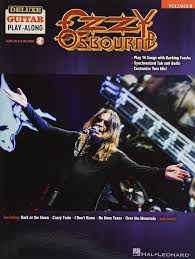
The best sheet music download from our Library.

Please, subscribe to our Sheet Music Library. Sheet music should be accessible and affordable for all musicians, from professionals to absolute beginners.
Ozzy Osbourne - Ozzmosis Sessions (Full Album)
Ozzy Osbourne: Life, Music and Legacy
The Prince of Darkness and the voice of heavy metal, 1948 to 2025
Few figures in popular music are as instantly recognizable as John Michael "Ozzy" Osbourne. As the original singer of Black Sabbath and later as a hugely successful solo artist, he helped invent heavy metal, gave it a voice that was eerie, vulnerable and unmistakable, and then spent more than five decades turning himself into a cultural institution. He died on 22 July 2025 at the age of 76, only weeks after a farewell concert in his home city of Birmingham. This article follows his life, his sound, his best-known songs, his collaborations, his screen appearances, his honours and his enduring influence.
Search your favorite sheet music in the Sheet Music Library Catalog


Early Life in Aston
Ozzy Osbourne was born on 3 December 1948 in Aston, a working-class district of Birmingham, England, into a large family. His father worked as a toolmaker and his mother worked in a factory. Money was short, the house was crowded, and school was difficult: Ozzy struggled with dyslexia and attention problems long before such difficulties were widely understood, and he left school at fifteen.
He drifted through a series of unglamorous jobs, including work in a slaughterhouse, a car factory and a stint as a labourer, and he fell into petty crime. A burglary conviction led to a short spell in prison, an experience he later described as the moment he realized he needed a different path. Music was the obvious escape. Like many young Britons, he was transfixed by the Beatles, and he later said that hearing them made him believe that someone from an ordinary background could change his life through singing.

The Birth of Black Sabbath
In the late 1960s Ozzy placed a handwritten advertisement seeking a band. It was answered by guitarist Tony Iommi, whom he already knew, bassist and lyricist Geezer Butler, and drummer Bill Ward. After a brief period under other names, including the Polka Tulk Blues Band and Earth, the group settled on the name Black Sabbath in 1969, taking it from a Boris Karloff horror film and from a song Butler had written.
The decision to embrace dark imagery was partly practical. Birmingham was an industrial city of factories, bomb-damaged streets and limited prospects, and the band wanted to play something heavier and more unsettling than the blues-rock and psychedelia of the day. Iommi's guitar sound had also been shaped by a factory accident in which he lost the tips of two fingers on his fretting hand. He made himself prosthetic fingertips out of plastic and leather, tuned his strings down to ease the tension, and in the process created a thicker, lower and more ominous guitar tone.
The band's self-titled debut album appeared on Friday 13 February 1970. Critics were often dismissive, but audiences were not. Within months came Paranoid (1970), which contained "Paranoid", "Iron Man" and "War Pigs", and then a run of landmark records: Master of Reality (1971), Vol. 4 (1972), Sabbath Bloody Sabbath (1973) and Sabotage (1975). Together these albums established the template of heavy metal: down-tuned riffs, slow and crushing tempos, dark subject matter and a singer who sounded like a warning siren.
Decline and Dismissal
By the later 1970s the band was exhausted. Years of touring, heavy drinking and drug use had taken a toll, and relationships inside the group had frayed. Technical Ecstasy (1976) and Never Say Die! (1978) were less focused than their predecessors, and Ozzy's behaviour became increasingly unreliable. In 1979 he was dismissed from Black Sabbath, and Ronnie James Dio took his place. Ozzy, by his own account, retreated into a haze of alcohol and despair, convinced his career was over.
The Solo Career Begins
His rescue came largely through Sharon Arden, daughter of the manager Don Arden, who took over his management and later became his wife. She pushed him to form a new band. The result was Blizzard of Ozz (1980), recorded with guitarist Randy Rhoads, bassist Bob Daisley and drummer Lee Kerslake. The album produced "Crazy Train", "Mr. Crowley" and "Goodbye to Romance", and it showed that Ozzy could thrive without Sabbath.
Randy Rhoads was central to that success. A classically trained player with a fluid, precise and melodic style, he brought a very different sensibility from Iommi's grinding riffs. His playing on Blizzard of Ozz and Diary of a Madman (1981) influenced a generation of guitarists. On 19 March 1982 Rhoads was killed in a small-plane accident in Florida at the age of 25. The loss devastated Ozzy and remains one of the great tragedies of rock.
The early 1980s also produced the incidents that built Ozzy's notorious public image. In January 1982, at a show in Des Moines, Iowa, he bit the head off a bat that he believed was a rubber toy. Earlier, at a record-company meeting, he had famously bitten the head off a dove. These episodes were chaotic rather than planned, but they gave the press a legend to retell, and Ozzy leaned into the persona of the madman, the Prince of Darkness.
The Solo Albums
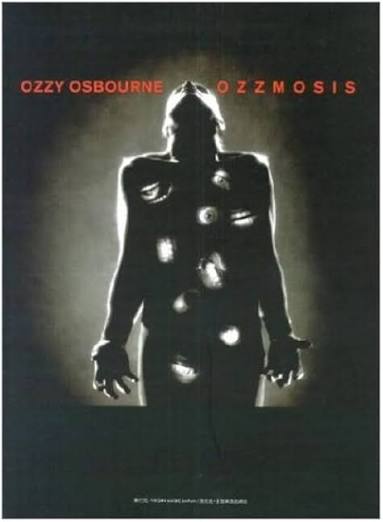
After Rhoads, a succession of guitarists passed through Ozzy's band, and he developed a gift for finding exceptional players. Jake E. Lee played on Bark at the Moon (1983) and The Ultimate Sin (1986). Zakk Wylde, who joined in 1987, became the most durable of them, appearing on No Rest for the Wicked (1988), No More Tears (1991), Ozzmosis (1995), Down to Earth (2001) and later work. Other significant players over the years included Brad Gillis, Joe Holmes and Gus G.
No More Tears was a commercial peak, and its title track, with its pulsing bass line and sweeping chorus, remains one of his most admired pieces. The record, along with its ballad "Mama, I'm Coming Home", co-written with Lemmy of Motorhead, proved that Ozzy could write mature, melodic hard rock as well as thunderous metal.
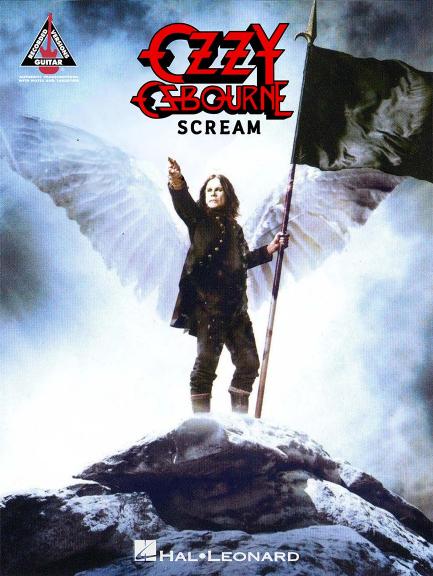
He announced a retirement tour in the early 1990s, but it did not last. In 1996 he and Sharon founded Ozzfest, a touring festival that gave younger heavy bands a major platform and became a defining institution of the metal scene for years. Later albums included Black Rain (2007), Scream (2010), Ordinary Man (2020) and Patient Number 9 (2022).
Reunions and the Final Chapter
Black Sabbath reunited several times, first at Live Aid in 1985 and then more permanently in the late 1990s. The original lineup released the album 13 in 2013, which reached number one in the United Kingdom and the United States, and embarked on a farewell world tour called The End. The band played its final show in Birmingham on 4 February 2017.
Ozzy's health, however, had been declining. He suffered a serious injury in a fall in 2019 that aggravated old spinal damage, and in 2020 he publicly revealed that he had been diagnosed with a form of Parkinson's disease. He underwent several surgeries and a long period of rehabilitation, and his live appearances became rarer. Even so, he performed at the closing ceremony of the 2022 Commonwealth Games in Birmingham and made occasional guest appearances.
On 5 July 2025 he took part in a farewell concert titled Back to the Beginning at Villa Park in Birmingham. The event gathered an extraordinary list of artists and the original Black Sabbath lineup, and Ozzy performed seated on a throne-like chair, singing both solo songs and Sabbath classics. It was a moving farewell to the city that made him. He died less than three weeks later, on 22 July 2025.
Musical Style
Ozzy Osbourne's musical identity grew from two sources: the doom-laden heaviness of Black Sabbath and the more polished hard rock of his solo career. Across both, the common thread was a style rooted in the blues but transformed by volume, distortion and darkness.
Harmony and Composition
Black Sabbath's early sound was built on a handful of distinctive harmonic habits. The most famous is the use of the tritone, the interval of an augmented fourth or diminished fifth, which was historically nicknamed the "devil in music". The opening of "Black Sabbath" is the clearest example, with its slow, tolling pattern that outlines the tritone and creates an immediate sense of dread. Riffs were typically built from the minor pentatonic and blues scales, often with added chromatic notes, and they leaned on the minor and Phrygian or Aeolian sounds rather than bright major harmony.
Tuning also shaped the harmony. Because Iommi tuned down, the band's chords sounded thicker and lower, and power chords, made up of roots and fifths, replaced the fuller chords of traditional rock. Tempo was another tool: a slow, heavy pulse allowed each note to ring and decay, emphasizing weight rather than speed. Yet the band was more varied than its reputation suggests. "Planet Caravan" is a hazy, jazz-tinged piece, "Changes" is a piano ballad, and "Sweet Leaf" and "Children of the Grave" use galloping rhythmic drive that anticipated later metal styles.
In the solo years the harmonic language broadened. Randy Rhoads brought classical ideas to the band, including arpeggiated patterns, pedal tones, modal passages and counterpoint-influenced lines. "Crazy Train" is built on a driving riff in A minor, with a tonal shift that gives the chorus lift, and its solo uses fast, structured phrases rather than simple blues bends. Later songs such as "No More Tears" and "Mama, I'm Coming Home" used more spacious arrangements, keyboard textures and verse-chorus structures closer to arena rock.
Vocal Technique
Ozzy was never a technical virtuoso in the operatic sense, but his voice was one of the most recognizable in rock. His natural register sat in the tenor range, with a nasal, slightly keening tone and a strong sense of vulnerability. Rather than belting in a showy way, he often sang melodic lines that doubled the guitar riff, creating a unified, hypnotic effect. He used long, drawn-out vowels, a distinctive wavering vibrato and a tendency to slide into notes, giving his performances a ghostly quality.
Producers also used studio techniques such as double-tracking and layered harmonies to enrich his voice, particularly on solo albums. On stage, he was a performer more than a technician: he commanded crowds through gesture, energy and humour, famously raising his arms and urging audiences to clap along.
Lyrics and Themes
Most of Black Sabbath's lyrics were written by Geezer Butler, who drew on horror, war, religion, addiction and social anxiety. "War Pigs" is an anti-war protest, "Paranoid" addresses depression and isolation, and "Iron Man" tells a science-fiction tale of a time-travelling prophet. In his solo career Ozzy wrote or co-wrote with a rotating group of collaborators including Bob Daisley, Zakk Wylde, Lemmy, Mike Inez and later producers. Themes became more personal, touching on addiction, mortality and redemption.
The Best Songs and Compositions
Choosing a short list is difficult, but several songs stand out for their quality and influence.
With Black Sabbath
- "Black Sabbath" (1970): the founding statement of heavy metal, with its tritone riff and ominous atmosphere.
- "Paranoid" (1970): a short, fast, riff-driven single that became the band's biggest hit.
- "Iron Man" (1970): one of the most famous riffs in rock history.
- "War Pigs" (1970): a long, dynamic protest song with a changing structure.
- "N.I.B." (1970): notable for Geezer Butler's bass introduction.
- "Children of the Grave" (1971) and "Sweet Leaf" (1971): driving, heavy tracks from Master of Reality.
- "Snowblind" (1972) and "Changes" (1972): contrasting highlights of Vol. 4.
- "Sabbath Bloody Sabbath" (1973): a progressive, layered piece with a complex structure.
Solo
- "Crazy Train" (1980): his signature solo song, built on one of the great hard-rock riffs.
- "Mr. Crowley" (1980): an atmospheric piece with a keyboard introduction and a celebrated solo.
- "Goodbye to Romance" (1980): a melodic, reflective piece that showed a gentler side.
- "Over the Mountain" and "Flying High Again" (1981): energetic songs from Diary of a Madman.
- "Bark at the Moon" (1983): a theatrical, riff-heavy title track.
- "Shot in the Dark" (1986): a commercial hard-rock hit.
- "No More Tears" (1991): a long, atmospheric piece with a memorable bass line.
- "Mama, I'm Coming Home" (1991): his most successful ballad.
- "I Don't Want to Change the World" (1992): a live version of the song won him a Grammy.
- "Dreamer" (2001): a reflective, piano-led song with a message about hope.
- "Under the Graveyard" (2019) and "Ordinary Man" (2020): late-career songs that confronted mortality.
Collaborations
Ozzy's career is full of notable partnerships. With Black Sabbath, the chemistry of Iommi, Butler, Ward and Ozzy was unique and has rarely been matched. Randy Rhoads and Zakk Wylde, two very different guitarists, defined the solo years. Lemmy Kilmister of Motorhead co-wrote "Mama, I'm Coming Home" and several other songs, and Lemmy appeared in Ozzy's circle for decades.
He also worked with a wide range of other artists. His duet with his daughter Kelly Osbourne on a version of "Changes" reached number one in the United Kingdom in 2003. He contributed to projects involving Type O Negative, Metallica, Slash and many others. In his final period he collaborated with producer Andrew Watt, who helped shape Ordinary Man and Patient Number 9. The title track of Ordinary Man featured Elton John, and the song "Take What You Want" (2019) paired him with Post Malone and Travis Scott. Patient Number 9 included guests such as Jeff Beck, Eric Clapton, Tony Iommi, Zakk Wylde and members of other major bands, which made it a kind of summit of rock musicians.
Ozzy on Screen and in Film
Ozzy's music and presence appeared widely in film and television.
- In the horror-comedy Trick or Treat (1986), he made a cameo appearance as a television evangelist, playing on his public image as a corrupter of youth.
- The documentary The Decline of Western Civilization Part II: The Metal Years (1988) featured him as part of the Los Angeles heavy-metal scene.
- In Little Nicky (2000), a comedy starring Adam Sandler, he appeared in a cameo role.
- His songs have been used in many soundtracks and trailers. "Crazy Train" and "Paranoid" have featured in numerous films, television shows and video games, and "Iron Man" is closely associated with the Marvel character.
- Concert films and documentaries such as Don't Blame Me and later biographical programmes documented his tours and personal life.
His greatest screen success, however, was the reality series The Osbournes, which aired on MTV from 2002. The show followed his chaotic but affectionate family life with Sharon, Kelly and Jack, and it became a cultural phenomenon, revealing a warm, bewildered and very funny side of the supposedly fearsome rock star. It reshaped his public image from demonic figure to lovable eccentric. He also wrote an autobiography, I Am Ozzy (2009), which was widely praised for its candour and humour.
Awards and Honours
Ozzy collected a long list of honours across his career.
- Grammy Awards: Ozzy won a Grammy for Best Metal Performance in 1994 for a live version of "I Don't Want to Change the World". With Black Sabbath he later won Grammy Awards for the live recording of "Iron Man" (2000) and for "God Is Dead?" (2014). In 2023 he won again for Patient Number 9, including recognition in the rock and metal categories.
- Rock and Roll Hall of Fame: Black Sabbath was inducted in 2006, and Ozzy was inducted as a solo artist in 2024.
- Hollywood Walk of Fame: He received a star in 2002.
- Other honours: Ozzy was recognized by various music organizations in the United Kingdom and United States, and Birmingham celebrated him in public ceremonies, including a memorial and permanent tributes in his home city.
Influences and Legacy
Ozzy's own influences were not metal, which did not yet exist. He cited the Beatles above all, and he also admired the blues-based rock and psychedelic bands of the late 1960s. Black Sabbath's heaviness came from a blend of those sources with the harsh industrial environment of Birmingham.
The band's legacy is hard to overstate. Without Black Sabbath, there would be no recognizable heavy metal. Almost every metal subgenre, including doom, stoner, thrash, death and black metal, traces roots to their riffs, atmosphere and themes. Artists as varied as Metallica, Iron Maiden, Judas Priest, Pantera, Slayer, Soundgarden, Nirvana, Black Flag and Tool have acknowledged the debt. Ozzy's solo career added another dimension: it proved that a metal singer could achieve sustained mainstream success, that a showman could be both fearsome and funny, and that a heavy-music festival could be a major commercial event.
His style as a frontman influenced countless vocalists, from the shrieking wail of early metal to the melodic delivery of modern hard rock. His talent for discovering guitarists helped launch the careers of several of the genre's greatest players. And his public candour about addiction, mental health and ageing, delivered with humour rather than self-pity, left a broader human mark.
Personal Life and Other Details
Ozzy married Thelma Riley in 1971, and they had two children, Jessica and Louis. After that marriage ended, he married Sharon Arden in 1982. Together they had three children: Aimee, Kelly and Jack. Sharon was the driving force behind his career, handling management, business strategy and the creation of Ozzfest, and their partnership lasted more than four decades.
He struggled for many years with alcohol and drug dependency, going through repeated rehabilitation attempts, and he spoke openly about those struggles. Later in life he was also publicly honest about physical suffering and the limitations imposed by illness. In many ways he turned a notoriously unruly life into a story of survival.
His nicknames included the Prince of Darkness and the Godfather of Heavy Metal, and his catchphrase-like shouts of "Let the madness begin!" and "I love you all!" became part of rock folklore. He also had a fondness for animals, a quieter side of his character that his family often emphasized.
Ozzy Osbourne's story
Ozzy Osbourne's story runs from the grey streets of post-war Birmingham to the largest stages in the world. He helped create a genre, nearly destroyed himself, rebuilt his career, became an unlikely television star and ended his life as a revered elder statesman of rock. His voice, strange, plaintive and unmistakable, carried songs that spoke to outsiders everywhere. Heavy metal is now a global culture with countless branches, but every one of them can still be traced back to a small group of young men in Birmingham and to the singer who sounded, in the words of many fans, like the voice of their own fears and defiance. Ozzy is gone, but the music he made remains loud, dark and very much alive.
Browse in the Sheet Music Library:
Or browse in the categories menus & download the Library Catalog PDF:
Discography
Main articles on Wikipedia: Ozzy Osbourne discography and Black Sabbath discography
Solo studio albums
- Blizzard of Ozz (1980)
- Diary of a Madman (1981)
- Bark at the Moon (1983)
- The Ultimate Sin (1986)
- No Rest for the Wicked (1988)
- No More Tears (1991)
- Ozzmosis (1995)
- Down to Earth (2001)
- Under Cover (2005)
- Black Rain (2007)
- Scream (2010)
- Ordinary Man (2020)
- Patient Number 9 (2022)
Black Sabbath studio albums
- Black Sabbath (1970)
- Paranoid (1970)
- Master of Reality (1971)
- Vol. 4 (1972)
- Sabbath Bloody Sabbath (1973)
- Sabotage (1975)
- Technical Ecstasy (1976)
- Never Say Die! (1978)
- 13 (2013)